
Sunday, February 03, 2019
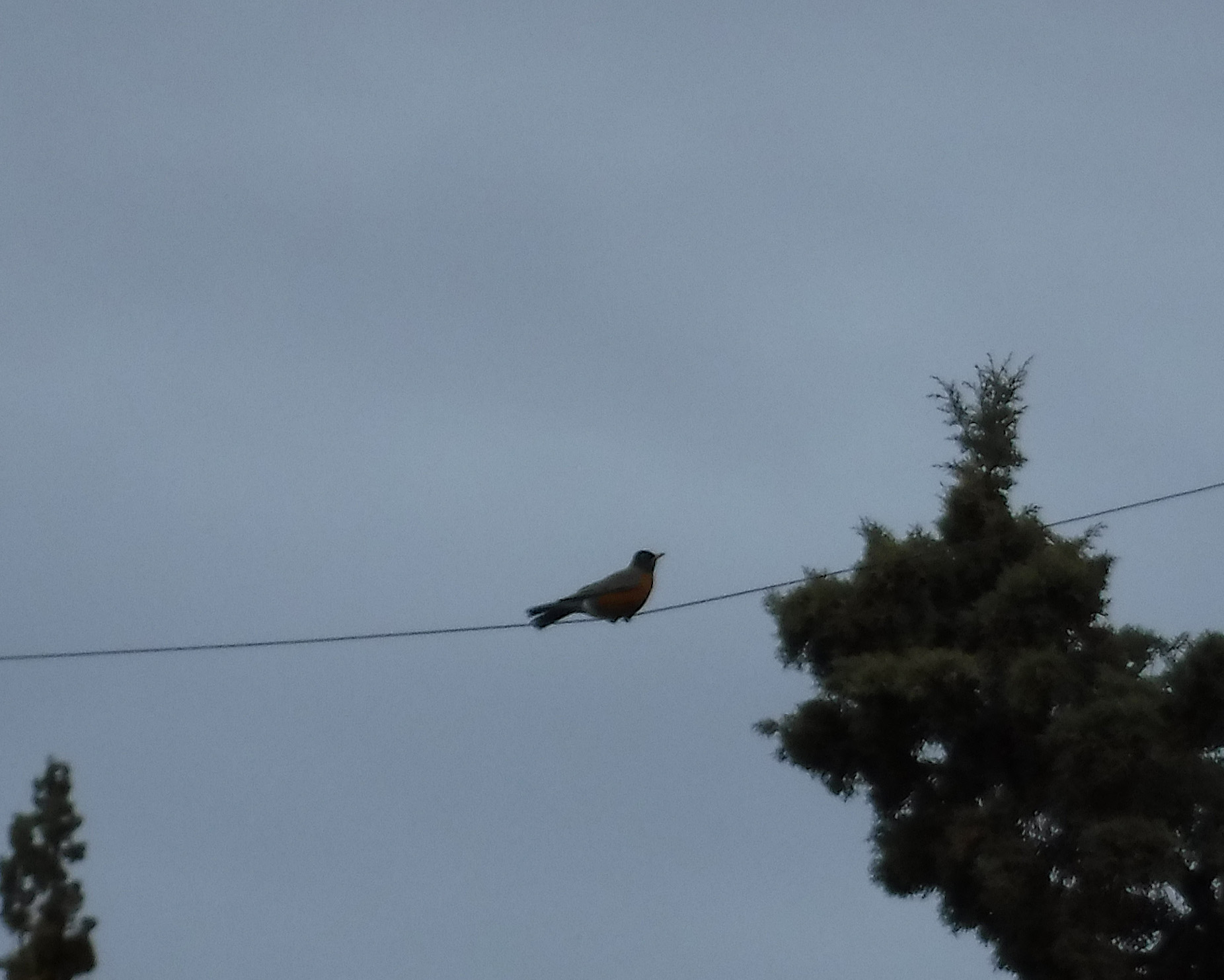
I went for a late-morning walk in our unusually warm and moist weather without noticing the silence until suddenly a bird broke it with a noisy string of weird buzzes. I spotted only one bird in a distant tree, maybe warning others? I peered but the bird was very high and distant, so I walked on. Soon, I heard lots of bird-chatter and then saw a bunch of them, excited, noisy, and scrambling among the branches of a tall juniper. While watching through my camera, I saw one bird fly from the tree and wing overhead before coming to rest on a nearby wire that was too thin for support. The bird, a Robin, worked hard to balance on that swaying wire while trying to watch me. I laughed, those birds were drunk on juniper berries!
Warmer days in this early spring are ripening berries. My horses alerted me to such changes by appearing happier while grazing on my neighbor’s pasture. During freezing weather, the winter grass seemed to bore them. A few days ago, some friends mentioned seeing spots of new grass. At my place, the only greens are patches of damp moss adhering to craggy lava rocks.
I love watching Robins, bold birds that spend lots of time on the ground and don’t mind me nearby while they hunt. With acute eyesight and hearing, a Robin races on foot, suddenly stopping, rock-still and staring at the ground, before making a quick dive toward its prey. This hunting style reminds me of working dogs. So, to me, Robins are “the Border Collies of birds”. They reside here year-round, and in the summertime, their numbers increase.
Birds fascinate also because I live with two that I admire, appreciate, and respect. I learn from my domestic birds, and then, observe wild birds, and learn from wild birds, and then, observe my tame birds. Serendipity plays a part in learning. The other day, while cleaning a long-neglected bookcase, I found a book that recently popped into my mind, The Beak of the Finch (1995) by Jonathan Weiner. It details years-long studies of finches on the Galapagos archipelago, to identify physical attributes, that (aside from natural selection) alter from changes in climate, environment, and food availability.
I tried reading the book in 1995 but wasn’t informed enough to stay with it and learn. Now, I’m ready (speaking of evolvement). As we move toward summer, I’ll borrow enlightenment from this book to observe all my birds inside and outside.
Dear Readers, Enjoy some hours bird-watching. Diana.
 Diana's Morning Blog