
Monday, July 22, 2019
Several months ago, a NYT article caught my attention. It described scientific research on octopus, their genetics and behaviors. It explained how recognition is growing among marine scientific and aquarium-care folks of the animal’s high intelligence. Octopus is a creature about which many have known little. At a glance, an octopus is different, perhaps unappealing, and also fearsome–because of common and awful myths about its powerful eagerness to strangle and drown prey.
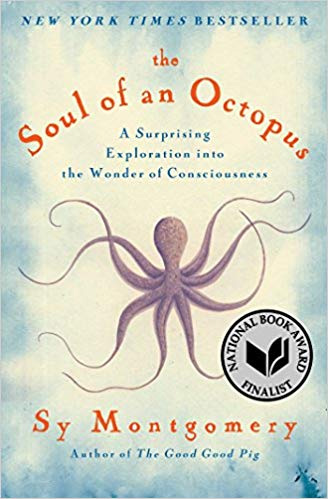
That’s all I knew about octopus before stumbling onto Sy Montgomery’s book (published in 2015). She made a point to learn first-hand about the species and can speak highly about octopus intelligence and behavior. She explains her own feelings and perceptions about octopus during hands-on contact and eye-to-eye interactions with them. She’s found the creatures to be physically complex, mentally perceptive, and often while interacting with humans, demonstrating appeal, fun, and aggression.
Besides the complex underwater behaviors scientists observe and document, they find that octopus in aquariums, interacting with humans, seem able to remember individuals, and also develop distinctive likes and dislikes toward individuals. They regularly spray jets of ink or water on people they dislike, dousing them accurately. On the other hand, octopus will hold, caress, and smell the limbs of people they like, and respond with pleasure to extended petting by preferred humans.
Besides being very clever escape artists, octopus can conjure up tricky ways to find food, and also, they do play–for example, by squirting through their jets to keep toys bouncing in the water. The book offers many examples of species specific and social behaviors that set these creatures as unique and wonderful.
Dear Friends: The world is incredibly more intelligent than many realize. Diana
 Diana's Morning Blog