
Saturday, March 16, 2024
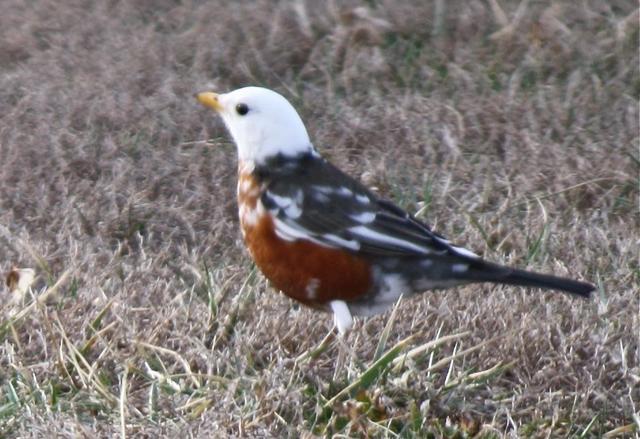
The other day, I spotted a partially albino Robin standing quietly on the ground near a fat Robin I’d seen the previous day and had paused, wondering why that Robin was so fat. When Fat Robin spotted me on this day, it didn’t fly but started hopping away. To my surprise and curiosity, the albino immediately followed the bigger bird, tenaciously. The two hopped away in ever-larger curves into the distance. Maybe that albino was a fledgling, still somewhat dependent on its mom or pop.
I love birds and enjoy watching Robins, which I consider the “Border Collies of birds,” stalking and rounding up worms. Thousands of Robins thrive here annually, with more in the summertime and fewer in the wintertime. I’ve never seen an albino Robin before.
This year, to my surprise, area bird photographers had mentioned albino Robins in my FB feed and even posted a photo or two. So, fortunately, I was slightly informed, but nonetheless, a bit shocked to see the albino Robin.
Since then, I have waited, hopefully, for a reappearance of the fat bird and/or its companion, but so far, no dice. That instant in time confirmed my recent learning, that it’s true. Albino Robins do exist, and are active in this area, at least for now.
Some research informs me that an albino’s unusual coloration is due to a lack of pigments. Ornithologists call the albino condition “leucistic” and say the key, most lacking pigment is melanin.
Dear Friends: We might think we know it all until we learn (again!) that we don’t. Diana
 Diana's Morning Blog