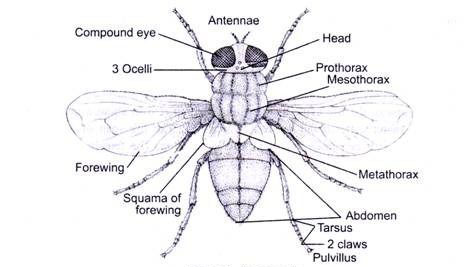
Musca domestica

Sunday, July 14, 2024

I am off from work today and tomorrow. This scorching weather will keep me battling newly popping hoards of houseflies. Yesterday, I killed many, for the flies were sluggish. My foot landed mightily on those standing motionless on the floor.

I wondered why this area’s searing heat activates unusually high numbers of these insects. A little research teaches that flies are cold-blooded, meaning they rely on external temperatures to regulate their body temperature. The hot weather increases their metabolic rate, making them more active and stimulated to find food and reproduce.

I’ll be racing around to stay ahead of the flies. That means cleaning carefully and ditching any food waste quickly. I must also make a few trips to the Dump, which I’ve avoided for weeks. That’s likely a clue as to why numerous flies are inside my house.

So, what’s a housefly? Their exact genesis (Musca domestic) isn’t definitively known. A common view is that they originated in the early Cenozoic Era, roughly 66 million years ago, and likely evolved in the Middle East.

Houseflies and humans have developed a close commensal relationship, meaning they benefit from our presence without generally harming us. Flies probably co-migrated with humans, and that spread them across the globe. Flys have adapted to diverse environments, becoming some of Earth’s most widespread insects.

Dear Friends: They’re ubiquitous in our lives, for better or worse. Diana

Space-Wacking

Saturday, July 13, 2024

Today, before I’m scheduled to work in my part-time jewelry sales role, I’ll be at home and doing serious weed-whacking. My target will be redefining too-long unused pathways in the “wild part” of my small acreage. I’ve been too busy for some time to continue a long habit of strolling regularly in the unused area and now want to revive the disappearing paths.

As our city grows in population and complexity, I’m ever more grateful for having a small acreage that still seems countrylike. It’s a space that lets me feel apart from anxiety-causing city stuff. Being outside while feeding my horses and chickens lets me feel distant from citylike unpleasant noises, problematic clusters, traffic problems, and overpowering construction.

A space of my own gives me feelings of connection to this location. I assume my more personal connection exists from finding this place and staying here. The deep connection might connect to early memories and cultural associations from growing up in semi-rural Oklahoma. Another connection, less deep but equally important, is that unique characteristics of my place, like those old pathways, still offer a sense of peace and joy.

Walking on these paths isn’t exactly pretty. I’ve fought through tall weeds and often have stumbled over hidden rocks. The area is entirely rocky and still wild. During my early years here, I wished for the area to be more garden-like, but that’s long past. I’ve learned that leaving a space unkempt encourages a sense of freedom.

Dear Friends: Leaving a space keeps a natural area lovely, in its own way. Diana

Tea Leaves

Friday, July 12, 2024

I am eschewing my typical morning coffees and instead sipping ice-cold sun tea. Several days ago, I was in a supermarket and reaching for a bottle of brewed tea when I stopped short and thought instead of sun tea. Making sun tea means placing tea bags (typically black tea) in a large glass jar filled with water and setting it outside in direct sunlight for several hours. The heat from the sun slowly brews the tea. It’s inexpensive and delicious, hot or cold.

Sun tea is a very natural and simple process. I’ve assumed it’s been popular throughout human development, but my research says that’s wrong. More correctly, Sun Tea probably originated in the Southern United States during the 1960s and 1970s and became popular for making iced tea without first boiling water.

Eventually, concerns about the safety of sun tea rose, involving the risk of bacterial contamination. Temperatures achieved by sun-brewing aren’t often high enough to kill potential bacteria. The solution would be cold brew tea, similar in concept to sun tea. Cold brew tea involves steeping tea bags in cold water in the refrigerator over a longer period (usually 6-12 hours). That method eliminates the risk of bacterial contamination.

Now I am aware that my long-time method of brewing sun tea has been wrong. Understanding there’s a better way, I will today start a new sun tea batch; one that evolves in the fridge by brewing without interruption until tomorrow.

Dear Friends: A nostalgic and charming way of making iced tea. Diana

Weathering

Thursday, July 11, 2024

Central Oregon is cooling off a little, and these days, a little seems a lot. Over the last day or two, temperatures have fallen, but they are barely under 100 degrees. Nonetheless, they’re bringing noticeably good differences. For example, while outside feeding horses and chickens, I do not have to battle the frequent misery of eye-stinging sweat.

Yesterday, I worked all day at the jewelry counter. A customer said that her family has been wintering in Arizona and summering here in Central Oregon for many years. She’s sure their summer spot next year will change because our weather too much resembles Arizona’s. She’s right, too. The intense heat had been forcing me to rush from my air-conditioned car into the nearest air-conditioned building, exactly as in my visits to Arizona.

When I moved here twenty years ago, Central Oregon’s weather was very different. I felt astonished by the area’s continuous coolness. Not until early September did the weather warm enough to wear summer dresses, and that usually lasted around a month. In mid-October, I began noticing a coming winter.

Now, besides the newly intense heat, this little city feels overly crowded with continually arriving new residents. Its already inadequate streets are packed with vehicles, and new buildings are being constructed in every direction.

While this morning is still cool, I will wear a straw hat and sunglasses and head outside to care for the horses and chickens. Hopefully, I will not have stinging eyes.

Dear Friends: At least it’s not Texas-like, scorching with oppressive storms. Diana

Deep Breathing

Chanel #5, first marketed in 1921, updated and modernized with Nicole Kidman

Wednesday, July 10, 2024

I’ve been chatting about fragrances with a young coworker, Sally, an expert in the Makeup Department. She also knows much about the co-evolution of fragrances and social changes. She made me aware of how the history of perfumery is intertwined with cultural shifts, technological advancements, and changing perceptions of gender, identity, and lifestyle.

We started with how, after many years away from Chanel #5, I still prefer its scent. Sally, who also likes it, explained that Chanel’s popularity dates from the early and mid-20th Century. That fragrance was pleasant and also reflected women’s wishes at the time to be associated with a pleasant and lasting scent, but subtle and lasting, and not overpowering. Chanel fit the bill.

She spoke of newer trending fragrances, like Christian Dior Poison, Yves Saint Laurent Opium, and Calvin Klein Obsession, explaining their evolution and popularity. She said that during the 1980s and 1990s, women gravitated towards stronger, bolder scents. The trend reflected that era’s evolving social landscape—pointedly, women’s growing financial independence and empowerment.

According to Sally, today’s young women’s fragrance preferences reflect their individuality and this generation’s varied lifestyles. Sally has observed that modern young women prefer stronger scents, and very often floral ones. They also prefer unique and unexpected combinations, like those trending toward unisex wearables.

That brief tour with Sally opened my eyes to social elements I’ve not considered much. Perfumes never were big elements in my personal world. However, after months of working in a large department store and having recently joined its Jewelry Department, I need to understand better why people generally tend to wish for, seek, and purchase “noncritical and impulse” items.

Dear Friends: I’m exploring a newfound fascination with the world of fragrance. Diana

Agatha

Tuesday, July 09, 2024

High heat remains the topic locally. Today, I’ll return to work after a couple of days off. Guess what: I’m looking forward to being there. With very hot sunshine covering this area, hanging around the house is too warm. So is hanging around outside, with sunshine heating metal garbage can lids, making them too hot for bare hands.

High temperatures forced me to spend most of yesterday draped in an easy chair, facing a high-blowing fan. I had the self-assignment of focusing on Agatha Christie’s first published mystery novel, And Then There Were None. It’s a suitable read when weather conditions discourage concentrating.

I previously read just one of Christie’s books, and that was many years ago, back when I was a big admirer of Charlotte Bronte. In UCLA’s Library, I discovered and loved a book by Christie; no, not a mystery, but a brilliant exploration of Bronte’s life and talent. I noted Christie’s fine writing skills and appreciated her sensitivity and insightfulness toward Bronte.

I never was much interested in mystery stories, but then decided to someday read at least some of Christie’s fiction. This current story, And Then There Were None, became her first published novel. Reading it reminds me of her sparse and clean writing style. To progress the story, she disravels details carefully, one by one. She had to have planned, step-by-step, the mystery’s development and flow of events.

Experience is a great teacher, and I anticipate her following stories (some now waiting on my reading table) to be better designed with more gripping plots. If I weren’t expecting that to be, another great teacher, History, would help me “get it.”

Here’s why: Agatha Christe (1890-1976) wrote 66 detective novels and 14 short story collections; research ranks her the bestselling author in history, reporting that only the Bible and Shakespeare have outsold her works.

I have learned that small everyday events and casual observations could become Christie’s ideas for new plots. She wove glimpses of life and her quick ideas into novels from endless notes in dozens of handwritten notebooks. She saw in her jotted erratic ideas potential plots and characters.

She reportedly dictated her initial drafts into a Dictaphone, leaving the typing to an assistant. She would then meticulously revise the typed manuscripts by hand and re-dictate the pages. To gauge audience reactions, Christie read chapters aloud to her family during dinnertimes. Her stories quickly moved from scribbled notes to finished products.

Dear Friends: I’m in awe, and will continue reading Christie and keeping you posted. Diana

Scenting

Monday, July 08, 2024

Yesterday, my “midday shift” at work was a dream. My hours were free from the usual opening and closing duties, meaning I had no heavy lifting, no bending, and no worries about getting everything done perfectly. The primary purpose of my shift was to cover a coworker’s lunch break.

The scorching heat kept customers scarce, leaving me with ample time to explore a nearby fragrance counter. I had avoided perfume for years since my earliest gym days when I became wary of combining scents with sweat. But yesterday was a scorcher and our store had few customers.

After years of steering clear of commercial fragrances and now having free time, I wandered to Fragrances. It was hard to resist free-spray opportunities from numerous tester bottles, and I opted for a few casual sprays. However, when Chanel No. 5, a fragrance I had long forgotten, landed on my wrist, it triggered a flood of memories. Another surprise is that the original Chanel version is still pleasing.

The familiar fragrance instantly transported me back to younger, more carefree times and prompted me to reconsider my perfume aversion. I often returned to the Chanel tray through the rest of that shift. That classic fragrance will come back into my life; perhaps in one of its newer, slightly altered iterations.

A pleasant bonus was the lingering, subtle scent at the end of the day. That entire fragrance experience got me thinking about the fascinating world of scent perception. I could delve deeper into it, but for now, yesterday’s olfactory adventure adequately satisfies.

Dear Friends: What a delightful surprise! Diana

Heating Up

Sunday, July 07, 2024

The cool of this early hour is ideal for tackling outdoor chores and sprucing up the property. Soon, the sun will blaze overhead, and any trace of refreshing coolness will vanish. Temperatures of 101 degrees are predicted for today and tomorrow here in Central Oregon. That gets worse on Tuesday, with our anticipated heat reaching 104 degrees.

Global warming is a deeply concerning issue. For instance, I try not to dwell on its impact on polar bears and places like Iceland. However, experiencing extreme heat firsthand reinforces the reality of the situation and makes it clear that this is not just a local issue. The stark reality is that we all are interconnected, and on a global scale, climate change has consequences that impact individuals and locations.

Personally, experiencing these very high temperatures makes me realize that I’m coping with some emotional distress, and it’s related to climate change. I am gathering, too, that anxious feelings like mine are becoming more common. They’re often referred to as climate anxiety or eco-grief.

Well, today’s environment creates such new “anxiety tags.” I did some research and learned that “Climate Anxiety” is a chronic fear or worry about the future due to the effects of climate change. More research also clarified “Eco-grief” as a profound sense of loss and mourning for the already occurring environmental damage and the potential loss of ecosystems, species, and even entire landscapes.

Climate change is a global crisis. It affects every corner of our planet and evokes personal grief. I’m challenged to comprehend the complex and often contentious political landscape surrounding the issue, and internationally.

As more people accept the reality of climate change and learn to move beyond personal grief, we may gain a better understanding of the global political conflicts surrounding climate change, commerce, and power. More understanding could empower us to have a greater influence on these issues.

Dear Friends: The thermometer’s reality extends beyond mere temperature. Diana

In the Tea Leaves

Saturday, July 06, 2024

Among things I’ve never done: Read a mystery novel by Agatha Christie. That’s about to change because I ordered, on an impulse, several of her classics. They’ve arrived, and I wonder why this seems a time for me to be reading, and why Christie, on an impulse. It’s not easily answerable.

As background, I seek quick information and deeper knowledge from online sources. For a long while, I’ve not sat reading a printed book. I’ve learned that the quick internet offers snapshots and summaries that satisfy most of my explorations, and these days, AI technology often speeds up discoveries.

I suppose Christie’s novels are attractive for various reasons. First, they are enduringly popular. All her books have remained viable for a very long time, testifying to their quality and appeal. Second, for unclear reasons, I lately am yearning to sit awhile and read a tactile book; one that’s well-written, easy to read, and entertaining. Christie popped into my mind.

I’ve been wondering why I’ll read mysteries; the genre never particularly appealed to me. Perhaps it’s that in these days of great political and social turmoil, I wish for the comfort and nostalgia of “simpler times.” Besides Christie’s stories having complex plots, what is also attractive is that her mysteries are solved in the old ways, through observation and deduction, instead of advanced technology.

I’ll start this reading project with, And Then There Were None, considered as Christie’s most popular book.

Dear Friends: On sweltering summer days, light reading becomes very inviting. Diana

Post-Day

Strolling with “Wellsummer” my 15-year-old hen.

Friday, July 05, 2024

(Note, edited later, to correct the joke about “winter’s two seasons.”)

The most stressful (from my perspective) annual holiday this nation celebrates once again is history. Throughout last evening and night, my dogs were constantly on edge, scurrying around in response to the endless fireworks and rockets. I downed a cocktail and went to bed.

Like many, I wish for our community’s celebrations to replace real fireworks with simulated lights projected into the sky. Although projected lights with simulated sounds still could cause some stress, they significantly would reduce the risks of injuries and property damage from traditional fireworks.

This morning mirrors yesterday’s pleasantly cool start. But again, Central Oregon’s temperatures are expected to climb to an uncomfortable high this afternoon, likely reaching the 90s as they did yesterday. I retrieved my trusty electric fans from storage to combat the heat without resorting to costly air conditioning. Their whirring blades circulating air effectively are cooling my home’s interior.

Today is another day off from work. I’ll take advantage of the morning to complete any pressing tasks before the summer heat arrives. There’s an old joke that Central Oregon has only two seasons: “winter and the 4th of July.” This year, that rings true. Just days ago, it felt like jacket weather, and now we’re facing the intense July 4th heat.

Dear Friends: Enjoy the day despite the heat; summer has finally arrived. Diana