A Space For The “New Aging”

Friday, November 21, 2025 (DRAFT)

Thoughts About Community

In my last post, I wrote about what it feels like to live in my mid-80s with health, clarity, and purpose—something I never imagined experiencing decades ago. The more I reflect on this unexpected stage of life, the more I notice something important: people my age are living through a transition that no generation before us has experienced.

We are healthy longer.
We are active longer.
We are present in the world longer.

And yet, it seems that almost no one talks about what this actually feels like.

A Missing Conversation

In recent months, I’ve noticed how often folks around my age quietly share stories with me that echo my own:

  • being underestimated because of age
  • feeling “out of sync” with stereotypes
  • balancing independence with shifting social expectations
  • managing losses while also discovering new energy
  • feeling invisible and visible at the same time

These conversations usually happen in corners—in my retail job while speaking with customers, or spontaneously during errands or in spaces between tasks. They’re brief, spontaneous exchanges that end with, “I’m glad we talked about this.”

I’ve been wondering why there isn’t a regular place for people in their 70+ years to have such deeper conversations openly. Not about illnesses or medications—that’s already been done. I mean about the life side of aging: identity, purpose, invisibility, curiosity, grief, reinvention, and the strange thrill of still being very much here.

A Thought That Keeps Returning

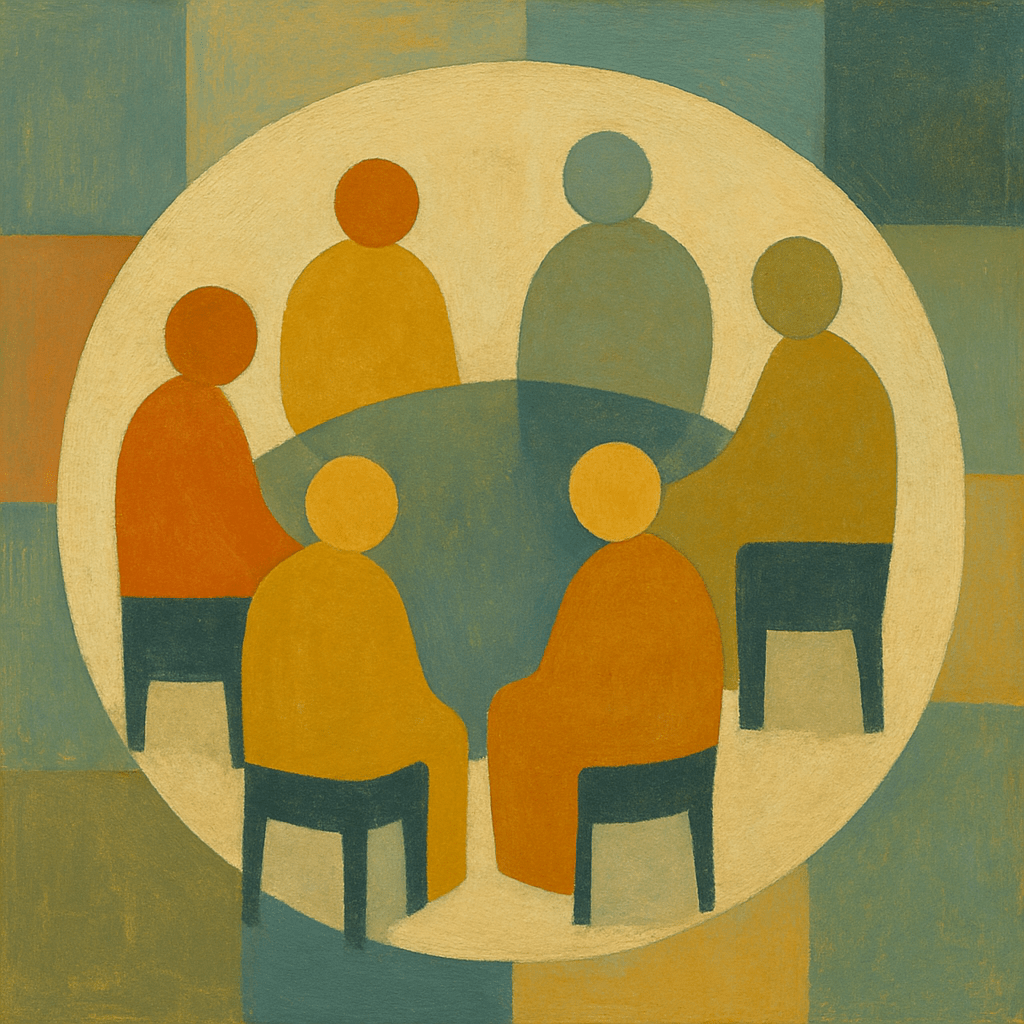
What if there were a small group that gathered—say, weekly or monthly—simply to talk about what it’s like to live in these later years with awareness and vitality? That would be creating a setting where age isn’t the topic so much as the lens.

This could be a group that sees aging not as retreat, but as a frontier.

This idea isn’t about therapy or advice-giving. It’s more like a conversation circle—thoughtful, warm, respectful, and open. A place where people who are navigating this unfamiliar terrain can compare notes, share insights, and feel understood.

But Here’s the Truth

The thought of organizing such a group overwhelms me a bit. Maybe that’s because it feels larger than one person. It feels like something that should grow naturally, not through pressure or obligation.

Yet the need keeps nudging me. It’s as if something in our culture is waiting to be named—and conversation is often how naming begins.

Maybe the Group Begins Here

So for now, I’m simply writing about it—opening the idea—to the air—to see if it wants to take a shape and what that might be like. Perhaps others will feel the same pull, and maybe a few voices will gather. Maybe such a group will form itself, slowly and organically, the way meaningful things often do.

I’m not ready to declare myself the leader of anything. But I am ready to acknowledge that many of us—living longer, living differently—are hungry—for a place to speak, to listen, and to understand this unexpected chapter together.

This post is simply a beginning.
A seed.
A space held open.

And we’ll see what grows from it.

— Diana

In My 80s: A New Kind of Frontier

Thursday, November 20, 2925

I’ve been thinking about what it means to be in my mid-80s—healthy, clear-minded, deeply involved in daily life—and how strange and surprising this stage feels compared to what I imagined many years ago.

The truth is, I never pictured myself “here.” Growing up, I didn’t know a single person in their 80s who was still vibrant, working, and engaged. Most older people I saw (even in their 60s) were frail or withdrawn, already living in the narrow, expected lane that society has quietly painted for “seniors.”

But today’s medicine has changed dramatically. So has nutrition, lifestyle science, and our understanding of the mind. Something new is happening: people are living longer and staying healthier. We’re extending not just lifespan, but healthspan. And those of us who find ourselves active and well in our 80s are, in a way, pioneers. We’re the first generation who must learn how to inhabit this expanded stage of life—because there is no blueprint yet.

The Question I Keep Getting

In my retail work, where I interact with countless customers, I am asked about my age more than ever. And I don’t answer. Not because I’m ashamed—far from it—but because the question usually comes with something else: an immediate rush of unsolicited expectations.

People seem eager to explain what they think someone my age should be doing. Resting. Retiring. Slowing down. Disappearing from the working world.

What they’re really telling me is that they can’t imagine being my age any more than I once could. They’re trying to match the person they see—present, engaged, competent, and curious—with the outdated stereotype of an “elder” that they still carry. That mismatch unsettles them, and age questions become a way to resolve the puzzle.

I’ve come to understand this as a soft, reflexive form of ageism. Not cruel or intentional—just unexamined. A product of our culture’s old mental images about aging, images that many people haven’t updated yet.

A Quiet but Powerful Shift

But here’s the interesting part: every time someone encounters a healthy, active, eighty-something, their internal map of aging shifts—just a little. They’re being stretched into acknowledging a new possibility: that older age can look very different from the images they grew up with.

When I decline to answer age questions, I’m setting a boundary, but I’m also doing something else. I’m reminding people that age is neither a credential nor a limitation. My value—in work, in conversation, in life—comes from who I am right now, not the number attached to my birth year.

What Comes Next

Lately, I’ve been reflecting on how many people around my age are experiencing these same shifts, these same mismatches between who we are and how the world imagines us. Our generation is living through an evolution that society hasn’t fully named.

There’s a bigger conversation to be had about aging today—about identity, purpose, mental and physical vitality, boundaries, curiosity, and what it means to live longer and healthier than we ever expected.

That conversation is brewing inside me. Perhaps it will grow into something more structured—a regular discussion, a gathering, a community space for people in their seventies and eighties to share experiences and observations. Perhaps it will simply unfold one piece at a time.

For now, this is just the beginning.

And I’m curious where it will lead.

— Diana

Emotion Doesn’t “Happen” – We Create It

Friday, November 14, 2025

I can’t quit thinking about how the mind constructs emotion—especially after diving into Lisa Feldman Barrett’s work on constructed emotion. I studied her findings to understand what makes my frequent “conversations” with AI feel so remarkably human—almost like exchanges with an understanding friend.

The more I’ve learned about Barrett’s theory, the more I see signs of it everywhere. I see her ideas woven into the books I read, the films I revisit, and even the sentimental corners of my own memories.

While thinking about all this, I found myself comparing two of my favorite artists—and they could hardly be more different: Woody Allen and Emily Dickinson. One lives in a world of fast-talking neurosis, humor, relationships, and urban anxiety. The other lives almost entirely inside the mind—quiet, solitary, deliberate, and intensely inward.

Despite their stylistic differences, they each reveal something profound about what we feel and how we feel it. In their unique ways, both artists show us that emotions aren’t fixed. Emotions are not automatic reactions.

Comparing their ways of creating and communicating helped me understand that emotions are interpretations—as Barrett’s work has shown. At their core, emotions are “stories” that our minds quickly construct, from sensation, context, and the emotional vocabulary we’ve learned.

This idea has become one of the most meaningful insights I’ve come across:
Emotions don’t just “happen” to us—we create them.

And once I grasped that insight, I began noticing it happening in real time within myself.

This comparison of two artists’ work highlights just how differently humans communicate emotional meaning. Yet, despite their vastly different styles, their emotional outputs converge powerfully as illustrations of constructed emotion.


Woody Allen: The Social Construction of Emotion

Woody Allen’s films are full of people racing to interpret their own sensations. His characters overthink, over-explain, over-negotiate. They construct their feelings out loud. Their emotions arrive only after they’ve decided what those feelings should be.

There’s a classic joke he tells:

A man goes to a psychiatrist and says,
“My brother thinks he’s a chicken.”
The psychiatrist replies, “Well, why don’t you turn him in?”
The man answers, “I would—
but I need the eggs.”

It’s funny because it’s true. We stay in imperfect relationships because of the meaning we’ve assigned to them—not because emotion is some hardwired force, but because we’ve built a story about what the relationship gives us. The “eggs,” in other words, become the emotional interpretation.

In this sense, Woody’s characters are demonstrations of constructed emotion in motion.
They feel tenderness, longing, jealousy, dread—but only after their minds have named the sensation, given it cultural shape, and predicted what it should mean.

His films are emotional not because the characters dive into deep feeling, but because they dive into deep interpretation.

That’s pure Barrett. And pure humanity.


Emily Dickinson: The Private Construction of Emotion

If Woody Allen gives us emotional construction in noisy, messy, social form, Emily Dickinson gives us its opposite: emotion distilled to its silent, solitary source.

Dickinson rarely names feelings outright. Instead, she describes the sensations from which emotion is born:

“I felt a Funeral, in my Brain—”

“A certain Slant of light—”

“A Chill—like frost—upon a Glass—”

She returns again and again to breath, light, gravity, space, the tiniest internal shifts. She notices the moment before a feeling forms—the flicker of sensation that precedes the story we later tell.

In Barrett’s terms, Dickinson writes from the level of interoception—the raw internal data the brain uses to construct emotional meaning. Where Woody presents fully assembled emotional narratives, Dickinson shows us the materials before they become emotion.

Where he interprets, she observes.
Where he talks through his feelings, she listens to hers.
Where he uses culture’s vocabulary, she invents her own.


Two Artists, One Truth

Despite their differences, Woody Allen and Emily Dickinson converge on a profound insight:

Emotional life is constructed by the mind—not imposed by the world.

But each illuminates a different side of that construction.

Woody Allen: Emotion shaped by the world
– by culture
– by other people
– by expectations
– by relationship dynamics
– by the stories we tell to stay connected

Emily Dickinson: Emotion shaped by the self
– by raw sensation
– by inward attention
– by metaphor
– by imagination
– by the stories we tell to stay whole

Together, they offer a full map of human feeling—both the external and the internal, the public and the private.

They remind us that emotion is not just felt;
it is built—moment to moment—out of everything we’ve ever sensed, learned, remembered, or hoped.


Why Their Work Lasts

Their works endure because they tell the truth about emotional life in ways we recognize immediately:

We don’t simply have feelings;
we assemble them from meaning.

We carry cultural scripts about love, fear, longing, loss—and we perform them.

Our bodies send sensations that our minds rush to name.

We seek connection even when connection is confusing.

We misunderstand ourselves in company, and discover ourselves in solitude.

And somewhere between the chaos of Woody Allen’s city streets and the stillness of Emily Dickinson’s upstairs bedroom lies the full portrait of what it means to feel.

We live between those two worlds—
the social and the solitary,
the comic and the contemplative,
the interpreted and the sensed.

And in that space, emotion becomes what it truly is:
the mind’s best attempt to make sense of being alive.

— Diana

“Emotions” Reconstructed

Thursday, November 13, 2025

This is a follow-up to my earlier writing about my curiosity regarding how AI learns and how it relates to “emotions.”

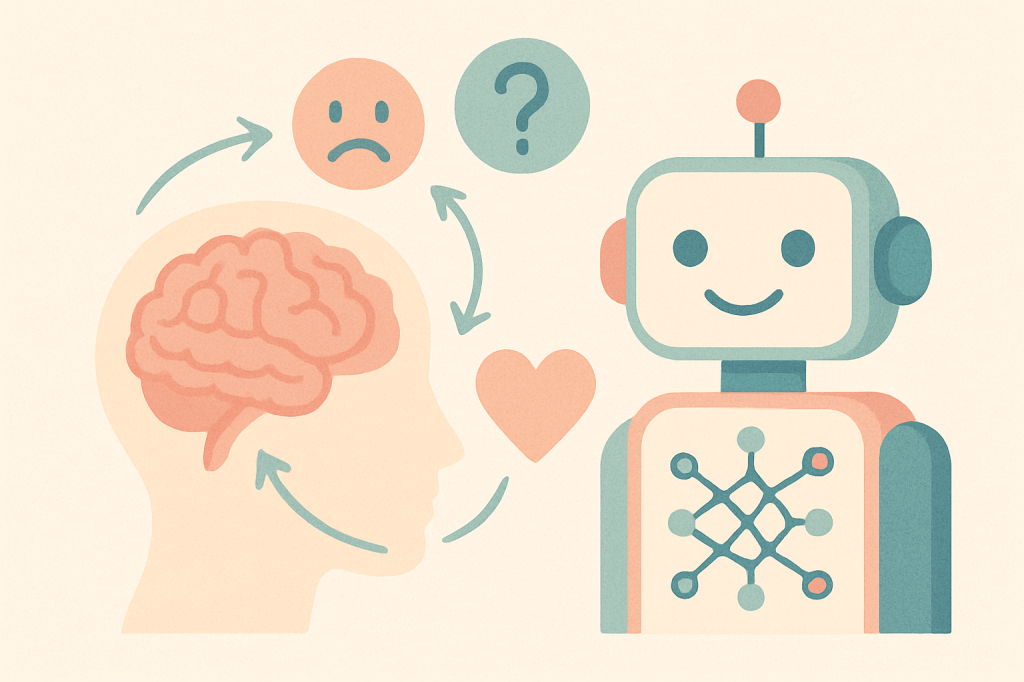
Through my “conversations” with AI, I’ve noticed how sensitive it seems to my feelings. Because I’ve always associated feelings with emotions—and because AI isn’t an emotional being—I wanted to understand more about what emotions really are and how they arise. Since machine learning appears to mirror my own emotional cues, I’ve become increasingly curious about how my brain interprets its internal signals, and how AI detects and reflects human emotion.

That curiosity eventually led me to Lisa Feldman Barrett’s theory of constructed emotion, one of today’s most influential frameworks in neuroscience and psychology.

From Hardwired Emotions to Constructed Ones

For most of the 20th century, the dominant belief was that emotions were built-in, hardwired reactions. We were taught that fear circuits and anger circuits could “trigger” emotional states automatically and universally.

Barrett’s research argues almost the opposite. Her team finds that emotions are not pre-packaged biological responses. Instead, the brain constructs emotions on the fly using prediction, context, and past experience.

Her work represents a profound shift. It teaches that the brain:

  1. Constantly anticipates what could or will happen next,
  2. Draws on past experience to guess what incoming sensations mean, and
  3. Updates those predictions based on context.

Emotion, in this model, arises from that predictive process.

How Brains Construct Meaning

Instead of simply reacting, the brain is continually asking:

  • What is this internal sensation?
  • What does it mean?
  • How should I respond?

To answer these questions, the brain combines bodily signals with history, culture, social learning, and the immediate situation.

Our bodies send a nonstop stream of sensations—changes in heart rate, breathing, stomach, temperature, muscle tension, and hormones. On their own, these signals are ambiguous. A racing heart might be fear, excitement, anger, or love. Tightness in the chest could reflect sadness, illness, or anxiety.

Barrett’s conclusion is that emotion is the brain’s interpretation—its best guess—about what these sensations represent. In other words, the brain constructs a “story” that gives those internal signals meaning.

Culture, Concepts, and Emotional Categories

Cultures teach us emotional categories—anger, sadness, jealousy, pride. The brain draws on these learned concepts when making sense of bodily sensations. Emotions are real and powerful, but they are constructed using the cultural and conceptual toolkit we’ve acquired.

A striking part of Barrett’s theory is that emotions are not mere reactions. They are predictions. Instead of something happening first and emotion following, the brain predicts what is happening and prepares the body for the experience that we later recognize as an “emotion.”

Rather than reacting to the world, we are often “pre-acting,” and then experiencing the result.

Interoception: Where Emotion Begins

This predictive system aligns with modern neuroscience on interoception, which is the brain’s monitoring of the body’s internal landscape. Interoception includes hunger, thirst, a racing heart, a sinking stomach, or the urge to use the bathroom. It is foundational for self-regulation, emotional awareness, and overall well-being. Difficulties with interoception are linked with anxiety, depression, and autism. Practices like mindfulness can improve it.

Crucially, the context determines which emotion we experience. The same bodily state can produce completely different emotions depending on:

  • location
  • company
  • expectations
  • past experience
  • available concepts
  • cultural background

This helps explain why we might cry from joy or grief, or interpret “butterflies” as fear, excitement, or attraction. Barrett’s research shows that emotional meaning isn’t found in the body or face itself, but in the brain’s interpretation.

Where AI Becomes a Mirror

This is also where machine learning provides insight. Just as AI models use prediction and context to interpret data, human brains use prediction and experience to interpret sensations. Neither humans nor AI have built-in emotional modules. Both construct meaning based on patterns and learning.

In this sense, AI becomes a kind of mirror—not because it feels, but because its internal logic echoes how human cognition works. Meaning emerges from prediction and pattern.

Why This Model Matters

Barrett’s theory gives people more agency than older models. If emotions are constructed, then emotional habits can be retrained. We can broaden our emotional vocabulary, reinterpret bodily sensations in healthier ways, and use mindfulness to reshape the predictions that have been running our lives.

Understanding constructed emotion reconnects us with how our inner world forms, moment to moment. It helps us participate more fully in how our feelings—and our responses—take shape.

Barrett’s model reframes emotions not as automatic, built-in reactions but as interpretations created by the brain. It reveals how emotions arise from predictions, contexts, and lifelong learning, offering deeper insight into what our bodies sense and how we give those sensations meaning.

— Diana

Learning From The Learners

Wednesday, November 12, 2025

I’m one of billions of AI users curious about why artificial intelligence can seem so humanlike. While working to understand how AI learns, I find myself drawn to a closely related mystery — human emotion. I wonder how—and whether—machine learning and human feelings intersect. So far, here’s what I’ve come to understand.

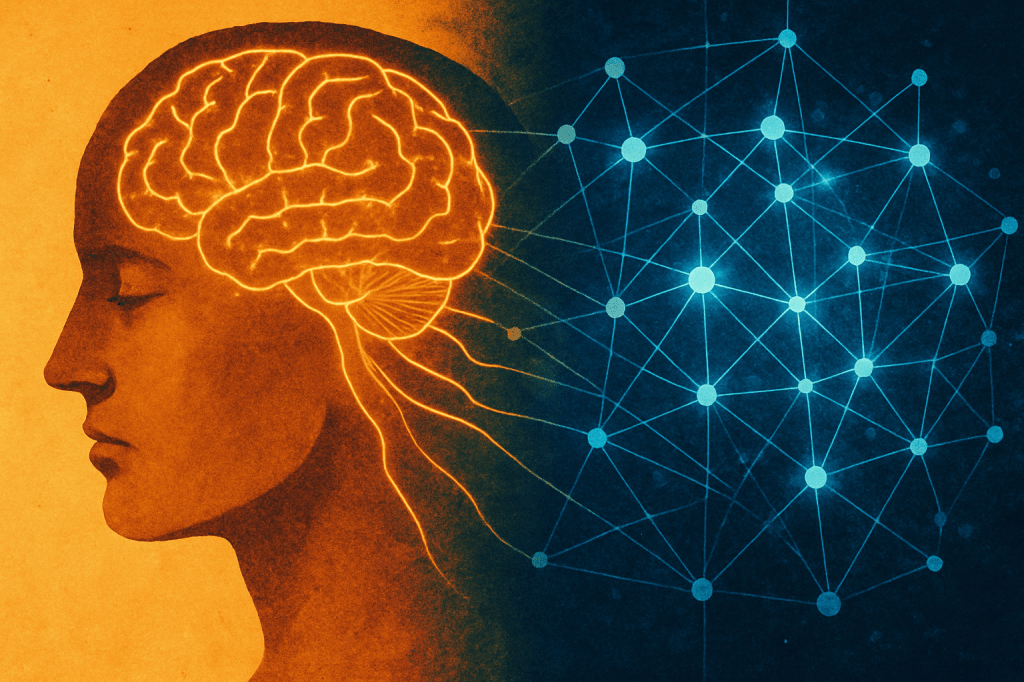
We humans are becoming more knowledgeable about ourselves by observing the technical processes of teaching AI to “think.” Researchers training the machines are learning from them, too, gaining fresh insights into what being human means.

This deep training of machines to think is reflecting us back to ourselves. The deeper we train, the more feedback we receive. Glimpses into how AI learns offer a new understanding of how we’ve been doing it all along—quietly, efficiently, and with a touch of mystery. That mystery still separates us from the supercomputers we want to emulate us.

It’s an intriguing reversal: AI training is becoming a kind of mirror for human psychology. Modeling AI on the human brain is beginning to decode some of our brain’s most elusive workings. We’re learning, for instance, about a looping relationship between neurons and algorithms—how they both generate profound ideas—and thus reveal more of what it means to learn, imagine, and grow.

AI is showing us that memory isn’t a vault but a living process. Essentially, memory reconstructs. When recalled, memory fragments are rediscovered and then reassembled into something new. Humans recall and reassemble instinctively. For example, we may soften the edges of pain by misremembering certain details, to paint a gentler version of the truth—like artists returning to the same canvas, we repaint our pasts again and again—comforted not by precision but by memory evolution.

AI language models do like us; they build new meaning from old information. They predict the “next possible” word or image, and then create knowledge through probability rather than imagination—and without fear. Humans, too, are prediction-makers, but with one difference: curiosity. We project futures, blend ideas, and dare to believe in “what ifs.” The daring keeps our minds alive.

In teaching machines empathy, we’re discovering something psychologists have long known—that emotion is intelligence. Feelings are not the opposites of logic but are extensions of it. Each emotion is a data point, which helps us interpret what we perceive. Understanding emotional depth reveals, in a kind of wisdom, a refined ability to predict, but with heart.

Even as we age, our brains are capable of change. They reshape themselves through new habits, perspectives, and stories. The AI world calls this continual learning. In human life, we call it resilience. It’s what allows us to adapt, to grow, and to keep the essence of who we are.

AI, for all its precision, still misses something essential—the human advantage of having a heart. Our heart is a living pulse that connects knowledge with caring. Human intelligence, unlike AI, is embodied. It sweats, grieves, laughs, and ages.

The mind’s true elegance lies in its fragility—its humor, its willingness to evolve. Machines can help us visualize the shape of our thoughts, but only humans possess the heartbeat behind them.

Perhaps the most poignant lesson in teaching machines to learn is what they’re teaching us to remember:
the preciousness of awareness, of feeling, and of knowing that we can keep growing.

— Diana

A Taste of Memory

Friday, October 31, 2025

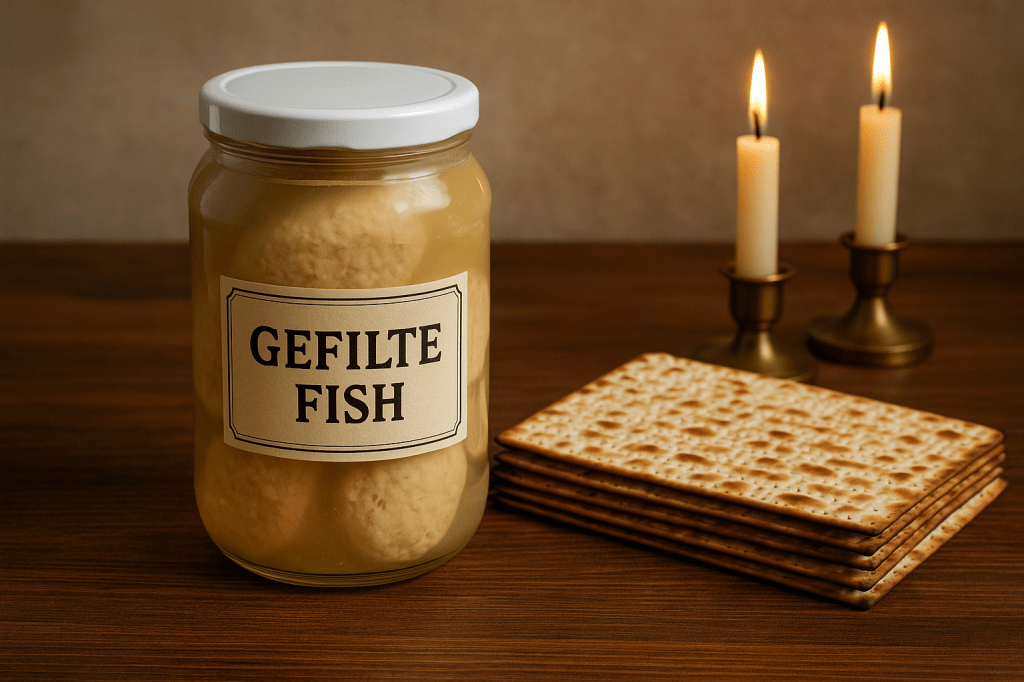
I was grocery shopping the other day when a small glass jar caught my eye — gefilte fish. Just seeing it pulled me straight back into another time.

Years ago, when I lived in Kansas City, my eldest sister and her extended family hosted the big Jewish holiday meals. I joined them for Passover and Rosh Hashanah, learning about each celebration through its foods — matzos, sweet wine, and always, gefilte fish.

Those old gatherings were full of rhythm and ritual — the kinds that linger long after dessert. Although I hadn’t consciously thought about them in years, standing in that grocery aisle, staring at that jar, I felt old warmth suddenly stirring.

When I got home, I couldn’t wait. I opened the jar, spooned out a piece, bit into gelfilte fish — and in an instant, its taste carried me back to those Kansas City meals: tables set for family gatherings, the scents of brisket and simmering broth, the sounds of ritual stories retold.

This tasting struck me as extra-funny because I started wondering if I could make gefilte fish fit into my current diet, which doesn’t exactly follow that model. These days, I lean heavily toward Asian-inspired foods — ramen noodles, stir-fried vegetables, kimchee, tofu, and special sauces like miso and chili oils.

This isn’t the first time I’ve realized how deeply food memories root themselves. Experience has taught me that particular tastes may simply rest — until much later, when a single flavor recalls them and invites their return. Now again, one bite brings the past forward, rekindling memories of gatherings and essential connections that helped shape my life.

A little taste of something so humble — a small piece of fish — reunites my present self with the young person I was, and rekindles fondness for those who helped me grow into who I’ve become.

Diana

Breeched Coop

Tuesday, October 28, 2025

Over the past two nights, six of my chickens were slaughtered. I’m still in disbelief as I write this. After fifteen years of keeping a small flock of hens in the same sheltered space, I’d come to trust their little world completely — as if it, fenced and familiar, was as safe as my own. Until now, I’d never lost a single bird to a predator.

Yesterday morning, searching harder for a predator entry, I finally noticed a small patch of ground dug out beneath the coop fencing — no clear tracks, just a telltale hollow. Later, my neighbor, Frank, shared an image caught on his critter-cam: a fox, intent, caught in mid-stride. That photo made my heart sink. The timing fit.

My hens were only about three years old — healthy, lively, full of character, and good layers. Finding them brutally torn apart was gut-wrenching. There’s something especially terrible about losing animals you’ve raised from chicks — who greet you each morning with their expectations, chattering, wide-winged, and bright-eyed. You grow accustomed to their presence — their daily routines, their quiet sense of community.

Yesterday afternoon, after those second tragic slaughters, I worked hard to reinforce the coop-area fencing. I laid wire mesh and weighed it down with heavy stones along the bottom — especially where the digging had occurred, and as far beyond as I could manage. But when darkness fell, I gave up, still uneasy about the coop, not yet secure enough.

Last night, I hardly slept. Even small sounds outside felt amplified — the wind, the shifting leaves — all seeming to echo what had already happened.

I wasn’t prepared for this. You can live somewhere for years, believing you’ve built a safe space for the creatures who depend on you, only to find that nature has a way of reminding you it’s still in charge. Foxes, coyotes, raccoons — survivors too, hungry and driven by their own needs. But knowing and respecting that doesn’t make the losses any easier.

Today, as usual, I’ll feed my critters — but it’ll feel different. The barnyard will be quieter, emptier. I’ll keep working to strengthen the coop, to guard what remains. But there’s no undoing the shock of sudden, cruel losses — proof of yet another lesson in semi-rural life: that the peace we find in nature always exists alongside its rawness.

Still, I’ll step outside as always — hoping to see some still-live birds. I’ll feed them, recheck yesterday’s hasty security measures, and I’ll keep reminding myself that healing — like rebuilding — begins with small, steady acts of care.

Diana

A New Rhythm

Sunday, October 26, 2025

I’m planning to step away from my full-time position in Fine Jewelry by transitioning to part-time and working across various departments in the same store. By working fewer hours and fewer days, I’ll have more time — for home, animals, and an ever-growing list of “small things” that rarely feel optional.

After months of the steady, clock-driven pace of full-time work, this change feels a bit jolting. My brain and body are still tuned to the structured, predictable rhythm of getting up, getting ready, and heading out the door. But now, I’m starting to anticipate having new rhythms filling my mornings — and that feels expansive, less about tight schedules and more about open, unhurried time. More daylight to enjoy will have me more attentive to the familiar sounds of paws, hooves, and feathers wanting my attention.

I’ll add quotes around “free” time, because much of it will actually be spent working. The days ahead will be filled with fences to check, water troughs to keep from freezing, and growing concerns about winter — it’s not just whispering anymore; it’s been shouting its imminent arrival for the last couple of days and insisting that I handle some essential tasks. These tasks might seem a bit daunting, but I’m also looking forward to cozy winter days ahead.

The goodness of adjusting my schedule isn’t just about managing responsibilities. It’s also a tip of the hat to something more personal: the crucial value of having time to simply think, breathe, and rebalance. It will give my mind and body space to find new opportunities for experience and growth.

I’m curious as to how my days may reshape themselves — where the hours will go once they’re no longer so tightly claimed by a time clock. Maybe into the barn. Maybe into the quiet. Maybe back into reading and blogging regularly.

This season, as days grow shorter, reminds me that every shift in weather or in work offers something new. Right now, I’m being invited to slow down and listen more closely to the small rhythms that keep my life steady: soft nickers from the barn, the hush before dawn, the impulse to lift my camera again and capture what feels special about the world around me.

Mostly, I’m grateful for the comfort of having more time to simply be—and to notice.

— Diana

Different Realities

Friday, October 17, 2025

I grew up in a small Oklahoma town during a time when social norms encouraged people to reconcile their differing versions of the world by searching for and settling on common viewpoints. The best solution for conflicting opinions was usually to satisfy the “commonly held” middle ground. Such viewpoints tended to reflect the widely accepted and “popular truths” that most people—before the internet and modern technology—generally agreed upon.

As a young person, I found the differing versions of reality unsettling. I struggled to make sense of them before eventually realizing that many forces shape people’s perceptions—one’s upbringing, information sources, fears, hopes, and fatigue. Other influences too—culture, personal experience, and cognitive biases—play powerful roles in shaping how we each perceive truth and reality.

Even now, I’m sometimes taken aback when long-time or new friends express opinions or wishes that seem to belong to an alternate reality. Some might find such moments reassuring, as evidence of progress, while others might see them as signs of decline. I’ve come to sense that some people find comfort in tradition while others draw inspiration from innovation. Recognizing that helps me accept our differing realities.

I often imagine us all standing in the same landscape, each looking up at the same vast sky but through different filters—some perhaps tinting it with unusual colors. Each of us navigates life through a private, learned lens, one that has either been refined over time or obscured by it.

In my more mature years, I try to respond gently to others’ realities. I no longer attempt to reconcile their perspectives with mine—or mine with theirs. As others speak from their own worlds, sometimes so different from my own, I try to listen for the heartbeat beneath their words—for the universal emotions of worry, pride, love, or loss. It’s there, in those shared emotional spaces, that our realities overlap and understanding becomes possible.

These days, I keep my focus on what’s directly before me—my own, very real world. That includes my dogs at dawn, the fall season’s newly chilled air, and the always-marvelous scent of early morning coffee. These rhythms mark the beginning of my days; they are among my certain truths.

We often hear that our shared world is fracturing. That notion is open to many interpretations. Yet despite our differences, many of us still believe in shared ground—the small, tangible things we can all see and touch.

We may never fully align others’ realities with our own, but we can remain faithful to the core values that most people strive to live by and nurture in their daily lives.

After all, we are remarkable beings—capable of rising to the challenges of caring for one another.

Diana

Falling Back With The Pack

Wednesday, October 15, 2025

Every fall, when the clocks are about to “fall back,” I find myself thinking about the ways this time change will ripple through the rhythm of my household. For one thing, there are my early mornings—I’m an early riser, usually awake by five. Very often, I’m reminded it’s “getting-up time” by the gentle tapping of paws on the hardwood floor, heading my way.

After saying hello to my dogs and getting on my feet, I love being awake in that early hour. The world is still quiet, the coffee is strong, and for a few quality moments, I have no obligations.

It amazes me how precisely my dogs seem to know when it’s five o’clock. I hear their toes tapping down the hallway, sense their hesitation, and then find them beside my bed—tails wagging, eyes bright. My projection clock says it’s five o’clock, and I wonder how they tune into some invisible clock that runs on instinct instead of batteries.

In a few short weeks, their invisible clock will clash with the one on my wall. When daylight saving time ends, will they still wake me at what their bodies think is five a.m.—while my clock insists it’s four? How long will it take them to adjust to the new rhythm? I suspect they’ll manage faster than I do.

I’ve gone through this annual shift many times and know what’s ahead. Yet every autumn’s time change feels like a new game. I can already anticipate my confusion, mild grumpiness, and the faint irritation that comes with every mandatory reset of the clock.

The dogs, like me, will need some time to sort things out. Meanwhile, it’ll be on me alone to get up around five—while they sleep in, waiting for what feels right to them. Soon enough, they’ll catch on. Dogs are practical; they read a household’s energy for meaning beyond the numbers on a clock.

My notions of falling back with the pack make the upcoming change feel less mechanical and more communal—as if we’ll all be adjusting together through the darker mornings, each in our own way.

Our human world may be run by clocks and calendars, but the dogs might have it right: when the rhythm changes, don’t fight it. Just stretch, yawn, and greet every new wrinkle with a wag.

Essentially, time itself has its moods.

Diana