Looking Again

Thursday, January 01, 2026

“Happy New Year!”

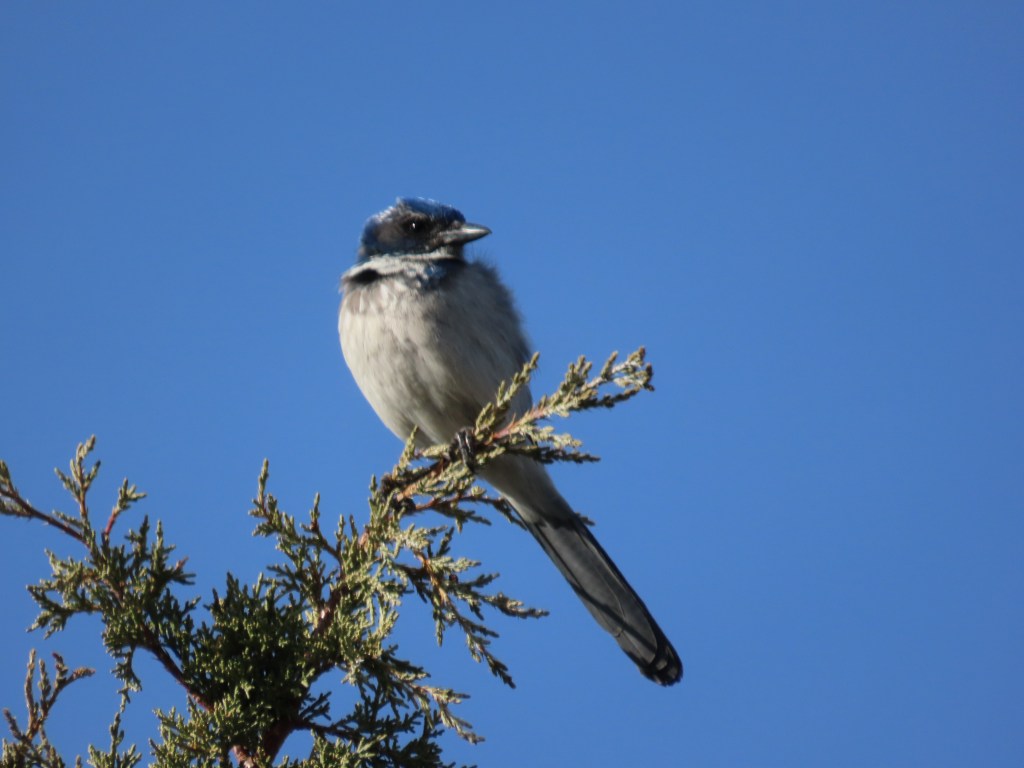
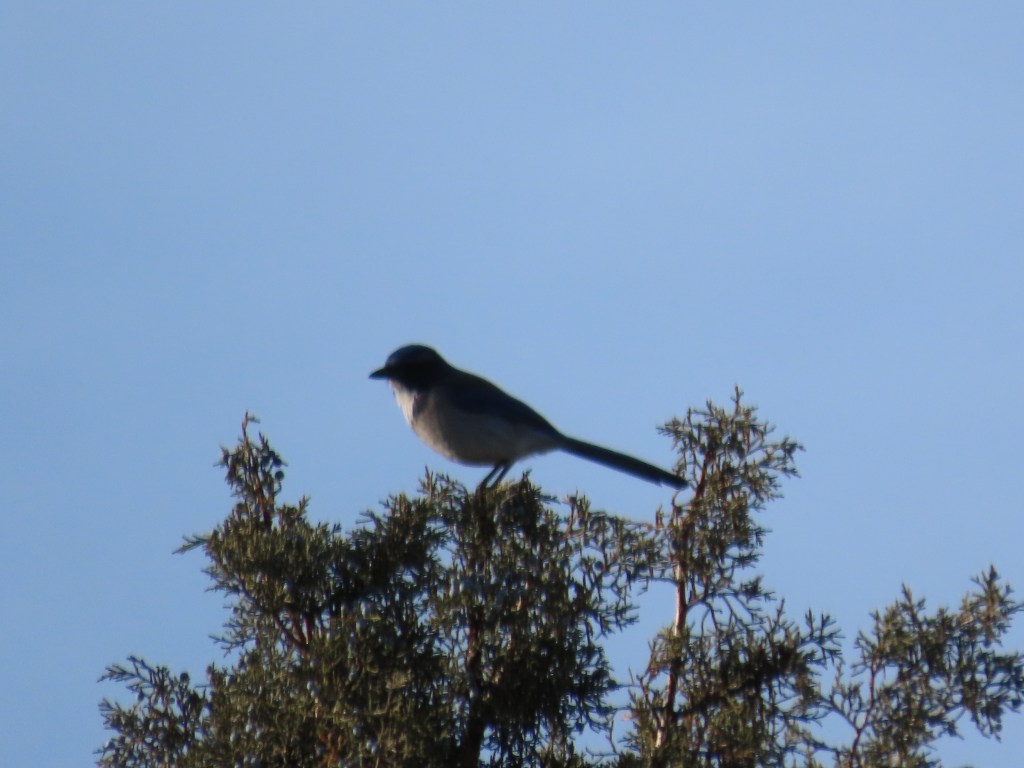
I’m outside on this very chilly first morning of the year, along with the pictured brave House Sparrow (a male, I believe). My camera isn’t yet capturing the light correctly, but today’s photograph is pleasingly straightforward and clear, with a strong graphic shape and a compelling composition.

While it isn’t perfect, it’s a good photograph—one that rewards attention, though lacking technical polish. For my purposes this morning, the image speaks to looking again, which is very much aligned with what I’ve been thinking and writing about lately.

“Looking again” isn’t so much a technique as a shift in stance. It’s not about better equipment, sharper focus, getting the right answer faster, or proving competence. Those habits are useful, but they can be shallow.

Looking again means staying after the initial judgment.

Take today’s header photo. At first glance—my reflexive response—it seemed too dark, not sharp enough, and frankly, disappointing. Fortunately, I didn’t stop there. I looked again. And with that second look, something changed.

The first look asked, Is this good enough?
The second look asked, What’s actually here?

Those are entirely different questions.

Suddenly, I began to see the bird less as a detail and more as a presence: a small weight on a branch, a balance point, a pause in winter—as a life holding still against a pale sky. These impressions appeared only after I quit scanning for what was “wrong.”

This is reminding me of my recent blog series about listening to music. In those posts, I wasn’t categorizing voices by genre, ranking them by power or novelty, or asking what they were trying to accomplish. Instead, I stayed. I listened long enough to feel how those voices inhabit sound. That was me “listening again”—a nonvisual equivalent of looking again.

This header photograph of an ordinary bird matters—not because it’s exotic, rare, or dramatic—but matters because I paused. I noticed. I asked. I stayed. Our contemporary world pushes us to move on instantly, but pausing and looking again turns paying attention into a quiet form of resistance.

And that kind of attention calls for some courage.

Looking—or listening—again represents a decision. It’s to pause and allow what seems ordinary to reveal more of itself. These days, I find myself doing less dismissing of what initially appears unremarkable, and doing more walking with it—slowly, thoughtfully—letting it deepen rather than resolving it too quickly.

Those impressions draw me, again and again, back to other worlds, offered even by the simplest of cameras. And that might be why so many of us—including those who are only minimally technically inclined—are finding something essential to our inner selves there.

I’m thinking about drafting another blog to explore looking again, more deeply, which I often associate with wishing to understand—not faster, but better. Maybe that’s something having to do with aging. Perhaps “looking again” is an emerging trait, one that gently offsets our earlier need for urgency—maybe that need is often softened by time.

Looking again, like aging itself, can blur edges and soften details—and thus, let form, balance, and essence come into our clearer view.

Hang in with me for the rest of this journey.

Diana

Re-Beginning — Paying Attention

Tuesday, December 29, 2025

This header image features a Red-tailed Hawk—my first bird capture in a long while—and it’s clear enough to count. I seized this opportunity to capture on December’s coldest day, working quickly and efficiently as my camera resisted doing its job. Its body felt cold, uncooperative, and proved that by refusing to take more than a single shot.

Back home, I reviewed the image, thought it initially disappointing—soft, unclear, not what I’d hoped for. But closer, more patient attention began turning the capture into something else: more engaging, even compelling. On seeing the watchful predator perched among bare branches beneath an icy blue sky, I suddenly understood this image as a beginning.

This capture symbolizes the start of engaging with one of my key resolutions for the New Year: I will make time to have fun with photography.

That thought naturally turns my attention toward the almost-here New Year itself. I want to wish everyone a Happy New Year, although recognizing that 2026 will likely continue many of the same uncomfortable dynamics and struggles we recognized throughout 2025. Because of that, the responsibility falls to each of us—individually—to locate and protect moments offering personal enjoyment.

Finding those moments requires looking inward first: to know what genuinely engages us, what rewards us, what leaves us feeling satisfied when effort meets intention. Daily stresses that keep us moving can also flatten us, unless we deliberately choose the activities that restore motivation and curiosity.

I’m beginning very simply. A new planning book, a clean 2026 calendar, and a large notebook, all sitting ready. They’ll capture my goals, notes, impressions, and—hopefully—evidence of progress. Like that hawk on its winter perch, I’m starting the year alert, attentive, and willing to stay so, and long enough to gain what’s possible.

Here’s to beginnings—including the quiet ones.

— Diana

Goals In 2026

Saturday, December 27, 2025

I usually fail at traditional goal-setting. Not because I lack interests—quite the opposite—it’s because I can’t seem to choose just one direction.

Goal setting has always felt artificial to me. I try, but my beginnings drift toward their endings quickly. Time has taught me that my mind works best when I am noticing, listening, and following threads. My lists of desired outcomes tend to harden too quickly into expectations—and expectations often drain my energy rather than organize it.

So in setting goals for 2026, I’m applying personal insights gained over many years. Instead of declaring ambitions, I’m taking another approach: naming practices—ways of living that support curiosity without turning it into a series of obligations.

These are my plans for the new year.

I will take steps to learn basic Spanish, gently—mostly by listening. There will be no fluency deadline and no pressure to perform. I’ll choose programs that allow me to hear the language without strain and give me enough time to absorb vocabulary naturally.

I will keep writing my blog, but with clearer boundaries. I want to practice blogging from multiple perspectives rather than maintaining a single voice that tries to cover everything. A friend has suggested that I experiment with Substack, and I may—using a time-limited trial. Clarity matters more to me than reach.

I will work more with my camera and focus on small, coherent projects—one subject at a time. I won’t try to build a portfolio. What I want is to learn how to see more carefully.

I will do physical core exercises daily for 10 or 15 minutes. My focus will be continuity, not intensity.

Retail work will remain part of my life—not as identity, but as social engagement. I’ve learned that being among people matters, even when the work itself is ordinary.

Property care will continue, emphasizing seasonal, more realistic goals. One improvement per season is enough. I will aim for stewardship, not perfection.

I will finish a back-shelf creative project—Little Miss Merry—which has stayed with me. Finish it this year. Not expand it. Finish it.

I will invest in the stock market by employing a simple strategy: I’ll remain calm. And continue learning how to evaluate possibilities more clearly, stay steady, and avoid reactive moves.

I intend to strengthen my “mental core” by making regular room for intellectual experimentation—reading, listening, thinking—and release any feelings that I must carry everything forward. I will be an interested visitor, not a collector.

Finally, I’m adopting a simple rule to keep my 2026 plans viable:
If a goal or intention begins to demand urgency—something that must be proven, measured, or justified—it’s likely unaligned with how I want to live now.

None of that’s a retreat.
It’s refinement.

Diana

Hearing Is Knowing

Friday, December 26, 2025

I had planned to wind down this listening series—focused on long-appreciated vocal artists—by stepping back and making observations about sound and musical genres. But something unexpected has happened along the way. By focusing closely on artistic styles, writing about musicians’ unique deliveries, and staying deeply attentive to how musical communication actually works, I’ve found that I can’t quit listening.

I’m no longer paying much attention to genres, backgrounds, or music as accompaniment to productivity or outcomes. Instead, I’m listening, paying attention itself—and seeking presence. I want to stay with sounds longer—to hear them doing their work.

Many of my earlier thoughts about “hearing music” resurfaced recently when I was visiting a neighbor’s garage. On most Friday nights, a group of long-time friends gathers there simply to play music together. No audience. No metrics. No urgencies beyond the shared pleasure of making sound and keeping time.

My “hearing memories” revived and renewed something essential. I have known—personally experienced careful listening and how it compels. Such listening feels vital. Yet, today, we mostly listen differently. Because we’re immersed in musical worlds that too often demand performance, circulation, and justification.

I’m not into re-circling nostalgia. I’m not into longing for vanished eras or arguing that music was once “better.” I’m into something more elemental that’s happening. By listening carefully, again, to humans singing, vocally or instrumentally—I am hearing them—as fully inside their voices.

This listening slows one down. Asks for patience. Asks not to scan ahead for what might be coming. Instead, it asks for staying with what’s here, now. Close listening alters the sense of time: it makes songs stretch, silences matter, and imperfections more meaningful than distracting. A sincere listener is less interested in quantity—or heavy listening—and far more in depth.

Something within me softens while listening to a singular voice, human or instrumental. There are sounds that don’t carry a brand or a narrative. They carry a “life”—shaped by contradiction, limitation, courage, and persistence.

Listening closely and hearing an artist’s lived history is a form of genuine respect.

I don’t expect others to hear exactly as I do, or to be drawn to the same voices. I’m simply inviting participation and noticing. Consider what sounds make you stop and lean in? Consider what sounds refuse to fade, even after a song ends, and a voice winds down?

Close listening helps us know where originality truly lives—and, equally important, in the encounters between the sounds and listening. It’s renewing my feelings of curiosity and wonder, pairing them with the acceptance that not everything needs sorting, explaining, or resolving.

Some things ask only to be heard.

I plan to keep listening—slowly, attentively, and without rushing to name what I find.

If you’ve been listening along with me, we’ve shared those quiet spaces between notes. We feel quietly grateful—and very much in the know.

Diana

Unique Voices

Wednesday (Christmas Eve), December 14, 1015

I’m delighted to find myself right around Christmas—perhaps the most musical time of the year—thinking about music again and wanting to write about it.

My recent music-related posts have been about listening, particularly to performers with unmistakable presence and unique delivery styles. Their voices cannot be replicated, which leads to questions worth considering.

Why do some voices resist imitation completely? Why do certain singers and musicians remain instantly recognizable, even though there have been generations of covers, tributes, and technical study?

We often say a voice is “one of a kind.” That’s rather vague—almost sentimental. Actually, it’s because listening itself is remarkably precise. We hear a single note and recognize the artist immediately—before melody, before lyric, before context. We know who it is almost at once.

That recognition doesn’t come just from technique. We know that vocal ranges can be matched. Timbres approximated. Phrasing analyzed and rehearsed. And yet, we hear some artists as possessing something essential that never transfers.

There have been countless tributes to Ella Fitzgerald, Nina Simone, Janis Joplin, and Amy Winehouse. Many are impressive; some are genuinely beautiful. But they don’t feel complete. The outer shape may be there, but the interior weight is missing.

It seems logical, then, that a singular voice isn’t built from sound alone. It’s built from a life—and a particular life is audible, in timing, pressure, and its collision with the world.

Louis Armstrong could not have sounded as he did had he been born into comfort. Nina Simone’s music cannot be separated from her intelligence, her anger, her discipline, or her refusal to soften herself. Janis Joplin’s voice—carrying both defiance and hunger—is inseparable from the era that shaped her and constrained her. Amy Winehouse sang with an emotional directness that felt almost too exposed in a culture that practices concealment. Peggy Lee, writing deeply emotional songs, sang in a soft voice, creating impact not through force but through rhythmic shifts and carefully placed pauses.

Imitating artists cannot replicate another’s suffering—or the precise way an individual metabolizes experience prior to releasing it as sound.

And releases aren’t always tidy. Singular voices may include strain, cracks, or unevenness. They often ignore rules of prettiness or balance. In fact, polish can become the enemy of recognizability. Too much smoothing erases the friction that makes a voice distinct.

Many technically perfect performances leave us untouched because they arrive fully resolved—closed, complete, leaving no space for a listener to enter. I’m always wanting to feel a connection, sensing a presence that’s still unfolding.

Unrepeatable voices leave room and feel porous. They allow us to sense the human being “inside the sound”—the one thinking, remembering, insisting, sometimes even breaking.

Social timing matters, too, because certain voices emerge when the world is ready—or perhaps not ready—for them. They arrive as tensions that matter to listeners. A voice shaped in opposition, one that defies erasure, carries an urgency that cannot be rehearsed into existence later.

Voices that last are reminders that originality does not belong only to the past. They show us that originality is fragile, and dependent on conditions—social, cultural, personal—that cannot be mass-produced.

And so I return, again and again, to certain artists. Not drawn by nostalgia, but by recognition. They keep reminding me that music is one of the rare places where individuality can survive intact—and unflattened.

Another post will focus on genre, and why it can fail us when we try to describe what moves us most. Meanwhile, I’ll keep listening for what refuses to be copied—and wondering what it costs, and what it requires, to sound like no one else.

Diana

Perspectives

Tuesday, December 23, 2025

There’s something uniquely grounding about reconnecting with long-time friends. The conversations are nostalgic, and often honest in ways that only shared time allows. By the time we reach old age, we’ve weathered unexpected challenges, made adjustments, and lost assumptions. We’ve quietly revised our earlier plans. Our gatherings feel open and rewarding—usually because we no longer feel the need to pretend.

Old age—spoken plainly—exerts a powerful influence. Especially when it’s allowed to surface not as a deficit, but as a lens shaped by experience. It reflects years of altered priorities, softened ambitions, and a growing clarity about what matters. Old age draws not from our younger decades—when we were busy projecting forward and planning futures—but from what we’ve learned, and continue to learn, after those early plans met reality.

The more I understand about human evolution and adaptation, the more I appreciate being in this stage of life known as old age. Recently, a minor car accident prompted me to visit urgent care—less out of alarm than out of prudence.

The physical evaluation itself was unremarkable. What surprised me instead were the reactions of the healthcare providers. Each commented on my high activity levels, absence of medications, and continued engagement in work outside the home—observations I had never considered notable before.

That attention lingered and raised unexpected questions. Would this new awareness be helpful—or might it subtly alter my internal balance?

When things once taken for granted are suddenly labeled “remarkable,” does ordinary confidence shift into something more like pressure? Does acknowledgment invite risk—physical or otherwise—where caution once lived comfortably?

These thoughts can easily spiral into philosophy. But they also point to something real. Over time, we learn that new knowledge recalibrates perspective. It changes posture—how we carry ourselves—not just outwardly and physically, but inwardly and psychologically as well.

Nothing dramatic emerged from that medical visit. We acknowledged the ordinary strains and stiffness of a well-used body. I sought the evaluation less out of fear than out of mindfulness—a desire to be attentive, and to have the incident documented should anything develop later.

Perhaps this, too, is part of aging well: not resisting uncertainty, but noticing it, holding it lightly, and then returning—more comfortably—to the quiet business of living.

Diana

Hearing A Presence

Friday, December 19, 2025

Tomorrow is the winter solstice of 2025—the day our planet offers its fewest hours of light and quietly turns back toward longer days. The semi-annual solstices are about timing. And that has this one reawakening me to a listening experience I’ve somehow overlooked.

While I’ve reflected on—and written about—voices that enter a room and change its atmosphere, I’ve left one essential vocal artist standing quietly at the doorway:

Peggy Lee.

Not because she demands attention—but because she never does. With Peggy Lee, less is always more.

Listening to her becomes an exercise in recalibration. Lee doesn’t lean forward into the listener; she lets the listener come to her. In doing so, she alters the very terms of engagement. You don’t consume a Peggy Lee song. You lean in. You adjust your breathing. You become careful.

Where Louis Armstrong carries weight—joy braided with sorrow—and Ella Fitzgerald moves with brilliance and lift, Peggy Lee works in a narrower register. A deliberate narrowness. A choice. And within it, something quietly commands—and happens.

Peggy Lee’s timing is everything.

She doesn’t rush toward a lyric; she places it. Sometimes she arrives a fraction late. Sometimes she lets a word trail off, as if deciding—mid-phrase—how much truth to reveal. Silence, for her, isn’t an absence but a tool: a held breath, a raised eyebrow—one you can hear.

In songs like “Fever,” the drama isn’t in volume or flourish; it’s in restraint. Lee barely raises her voice. She doesn’t sell the song; she assumes it. Her confidence isn’t showy. It’s settled. Adult. World-aware.

Listening to her, I’m struck by how much authority can live inside softness.

Peggy Lee’s presence feels personal without being confessional. She doesn’t invite us into her interior life so much as let us sit nearby. She doesn’t ask us to identify with her pain or her triumphs; she asks simply that we notice—and pay attention.

Perhaps that is why Peggy Lee’s singing still feels so modern.

In an era when performance often leans toward maximal expression, she reminds us that meaning can reside in what is withheld—that intimacy can be created less by exposure than by precision. She teaches us that timing—true timing—isn’t just musical, but emotional.

Listening to Peggy Lee, I don’t feel dazzled. I feel addressed. She seems to change the room not by rearranging the furniture, but by lowering the lights.

Today, finding her again, I’m not merely listening to the music. I’m listening for something within it—a presence that doesn’t announce itself, but waits. Patiently and unmistakably, for anyone who slows down enough to hear it.

Diana

Listening for Presence

Thursday, December 18, 2025

Yesterday, I wrote my first of several planned posts about listening to music, and I paused. Soon, something different and subtle struck me. I was highly focused on writing about music, but wasn’t rushing off to research or make lists. Nor was I working on organizing sections, say about eras, or trying to build arguments toward a point of view. Instead, I found myself involved in actively listening itself.

I wasn’t listening constantly, nor methodically—but differently, very thoughtfully. More slowly. More attentively. I found myself listening for something, and not simply to something. That “something” has always been hard to name, but it’s something I constantly search for–and I always recognize it instantly when it appears.

To me, certain voices don’t merely enter a room—they change the space. The air feels altered, and as a listener, I feel myself being addressed—and personally. This doesn’t depend on volume or virtuosity. It’s likely to arrive in a whisper, a pause, a cracked note, a breath held just a beat longer than expected.

Here are examples: While listening to Louis Armstrong, I realized I’m not just hearing sound; I’m hearing weight—as if he’s carrying joy alongside sorrow, humor braided with endurance. When Ella Fitzgerald sings, I hear something like generosity in her phrasing—as though she’s opening space rather than filling it. Nina Simone’s voice creates a world where feeling becomes thought itself—urgent, unyielding, refusing comfort. Janis Joplin sang as if nothing were protected. Amy Winehouse sang as if she already knew the cost.

Here’s what strikes me: these are voices that don’t ask permission. They don’t soften themselves for acceptability. They don’t sound engineered to land well—they sound natural and necessary.

When I hear them, the idea of “performance” feels inadequate. Performance suggests polish, presentation, and a certain distance. Instead, I hear presence. I sense the singer fully inside the moment, and bringing me along without barriers between experience and expression.

Presence can’t be trained into someone, and presence can’t be copied. One can imitate another’s phrasing, tone, and even style. But “real presence” isn’t a technique; it’s a condition. And listeners know it when they hear it.

I often think about how rare this feels today—not because artists lack talent, but because so much contemporary music is filtered through expectations of marketability, branding, perfection, and constant visibility. Today’s technologies create pressure to be seamless, consistent, and endlessly repeatable. Earlier music, by contrast, often allowed unevenness. Performances included roughness, surprise, and even discomfort.

That may be why I return so often to voices from earlier decades—or search for modern artists who feel somehow outside the machine. I seek those whose sounds are as though something real is happening to them as they sing, not just through them.

I’m not suggesting that suffering creates great art, or that pain is a requirement for authenticity. But lived experience—fully inhabited—leaves traces. Great artists allow those traces to remain audible.

Listening in this way makes me consider my own habits. How often do I listen while doing something else? How quickly do I move on when a song doesn’t immediately reward me? How conditioned have I become to smoothness—to ease?

This is my second post about listening to music. Not to make a conclusion, but to create something more like a tuning fork. A small way of noticing what resonates—and what doesn’t.

In another post on this topic, I hope to stay close to this question: What makes a voice unrepeatable? Not better. Not more famous. But singular—so that no matter how many imitators try to cover an original, something essential refuses to transfer.

For now, I’ll keep listening for presence. And I’ll gamble that once you hear it, you can’t un-hear it either.

Diana

Hearing The Originals

Wednesday, December 17, 2025

My neighbor—professionally an engineering type—recently introduced me to his garage-based music studio. He and several long-time friends meet there every Friday night to play together. They don’t bother with advance planning; they simply gather and do.

The garage, a crowded but tidy man cave, half houses a skateboard collection, several motorcycles, and a pristine classic BMW convertible. The other half is filled with musical gear—guitars, a professional drum set, a keyboard, seating, and a large TV tuned to YouTube, making music videos instantly accessible. My neighbor says he’s felt intimately connected to music of all genres since he was a little boy.

I sat at the keyboard as he softly strummed a guitar, and we talked about music. I confessed—somewhat sadly—that I’ve fallen out of touch with much of today’s popular music. He queued up a few videos, introducing me to some of it. I was honest and explained that I’m a fan of what I call “the originals.” He understood immediately and shifted the screen to Louis Armstrong, singing alternately through his famous horn and his unmistakable voice. Then came Ella Fitzgerald, gently and passionately interpreting Summertime. We discovered that we share a love for a very modern original as well—Alison Krauss—and listened to her duet with Brad Paisley. Our wandering also touched briefly on cool jazz.

I keep myself too busy to pause and listen as often as I might wish. But after that evening, I revisited my old CD stacks from years of collecting and turned again to YouTube to hear artists I’ve loved for a long time. All of it stirred a familiar question: what is it that makes particular voices call to me so strongly—over equally talented and wildly popular newer artists?

I don’t consciously resist what’s new. Still, I find myself drawn back—almost involuntarily—to certain singers and musicians. Their work feels different, not just in style, but in kind. Especially the voices now gone: Louis Armstrong, Ella Fitzgerald, Nina Simone. Peggy Lee. Édith Piaf. Janis Joplin. Mama Cass. Amy Winehouse. And then there are current figures who still carry that same sense of singularity—Lady Gaga, Robert Plant, Alison Krauss, and a few others.

The word genre doesn’t help much. Jazz, blues, folk, pop, rock—the labels slide off what I’m trying to name. These artists don’t feel as though they belong to categories; instead, the categories seem to bend around them.

The same holds true for certain operatic voices that live vividly in my memory.

Perhaps what my favorite artists share isn’t an era, or even a particular sound. Maybe they share something closer to presence. When they sing—vocally or through an instrument—it feels as though something real is at stake. They aren’t merely performing a song; they seem to carry history, experience, contradiction, and truth all at once.

It’s striking, too, how many of these carrying voices are women’s. Not exclusively, of course—men like Sinatra and Nat King Cole clearly belong in this conversation. But with women, attention so often slides away from the work itself and toward their personal lives, their struggles, their supposed instabilities. Even celebrated women artists have rarely been allowed to remain simply artists. Their inner lives became public property, open to speculation, and too often eclipsed their undeniable musical intelligence.

I’m not going to look for neat answers to complex social realities here, and I’ll leave formal sociology aside. This is a more personal inquiry—an attempt to understand why certain musical patterns never release their hold on me.

Once I begin listening in this way, a much larger story presses in. Many of the voices that move me were shaped by what we now call American music—especially the blues and everything that grew from it—emerging from histories of profound suffering, endurance, and enforced silence. Acknowledging that responsibly requires slowing down, and resisting the urge to compress slavery, survival, and cultural inheritance into a paragraph or a slogan.

I’m not qualified to explain that essential history fully. Instead, I plan to begin here, at the edge of listening.

In future posts, I hope to explore this territory more carefully:
– what originality really sounds like
– why some voices can’t be replicated
– why genre so often fails to describe what moves us most
– and how social history—race, gender, power, visibility—shapes music and how we talk about it

This first post is simply a doorway—an acknowledgment that something important lives here, much like what keeps my neighbor’s Friday-night studio jams alive. And my growing wish to explore it deserves attention rather than speed.

For now, I’ll start listening again.

And I’m inviting you to listen with me.

Diana

Mindful, Limited, Hopeful

Tuesday, December 16, 2025

There are moments when public events collide with our private memories and leave us quietly shaken. Recently publicized acts of mass violence—followed, yet again, by hurried explanations and familiar debates—have stirred old, unresolved emotions in me. My unease is not because the questions surrounding these acts are new, but because I am reliving deep pain from long ago, having once lived close to one of the hardest edges of violence. Many years ago, a member of my family—medically diagnosed with paranoid schizophrenia—inflicted irreparable damage.

When my family first encountered that severe and unforgiving form of mental illness, we learned a great deal—lessons that have never left me. Those experiences continue to shape how I listen today when people speak about reconciling mental health, personal responsibility, and public safety, as if those elements might be easily aligned.

We all learn early that growing up is hard. Families are complicated, and each of us must adapt to a mix of expectations, disappointments, and emotional strain. Most people do so—imperfectly, but within a shared reality. We argue, withdraw, reconcile, and carry on.

Severe mental illness, however, belongs to a different category altogether.

Paranoid schizophrenia does not simply magnify ordinary anger or rebellion. It is rooted in fundamental differences in brain wiring—differences that can dismantle the mind’s ability to test reality. A loved one offering care may be experienced instead as a threat. In such altered states, fear replaces judgment, and delusion overrides relationship.

These distinctions matter. Without them, we risk explaining acts of extreme violence as mere emotional failure or as symbols of family dysfunction. Some acts—particularly violence directed at one’s own parents—signal a rupture far beyond ordinary conflict. They reflect a profound break in the mind itself.

A painful irony is that families confronting severe mental illness often recognize potential danger long before outside authorities can act. They seek help, pursue treatment, and remain vigilant—only to discover that intervention is typically permitted only after something legally wrong has occurred.

This creates an impossible waiting space, filled with dread, watchfulness, and the fragile hope that a shared reality might reassert itself. When tragedy does occur, families are left not only with grief, but with the knowledge that warning signs were visible, named, and understood—yet insufficient to trigger protection.

Another irony follows: we are a society that knows, and yet hesitates. We recognize patterns of paranoia, fixation, and violent ideation. We understand that some individuals are gravely unwell. Still, we remain paralyzed by unresolved tensions between individual liberty and collective safety.

Our early democracies were built on assumptions about rational actors living in a shared world. Since then, we have learned that severe psychoses can shatter those assumptions entirely. Yet we resist adapting our frameworks to what we now know. Instead, we pretend the old models still fit—and then express shock when they fail.

Compounding these failures is the widespread availability of weapons capable of causing rapid, large-scale harm. Such access has transformed private madness into public catastrophe.

And yet, there remains something hopeful worth holding onto: the human brain is both a marvel and a mystery. While it can be the source of devastating illness, it is also an extraordinary engine of creativity, empathy, adaptability, and meaning.

Modern humans have learned how to manipulate many physical and hormonal systems to improve performance. The brain, however, remains far less malleable—partly because of ethical restraint, and partly because attempts to “fix minds” raise dangerous questions. Who decides what should be fixed?

History offers sobering answers. Writers such as Margaret Atwood have explored futures in which well-intentioned interventions slip quietly into enforced conformity. These stories are not predictions, but warnings: compassion and coercion often share a fragile border.

So where does all this leave us?

Perhaps with humility—with a willingness to act where danger is clear, and equal restraint where it is not. Above all, with caution about altering identity itself. We may have to accept that some suffering cannot yet be resolved, without surrendering hope that understanding may grow.

In times like these, grand solutions often give way to smaller territories of care. What remains within reach is attending to what is near, speaking honestly without slogans, and resisting both denial and despair.

We live between what we know now and what we hope may one day become clearer—and therefore more wisely addressed. Perhaps one of the most human acts available to us is to hold these tensions patiently, without simplifying them away.

Diana