Perspective Update

Horse ranch in Lebanon, OR

Monday, August 19, 2019

This season, while driving my horses I’ve experimented with ways to photograph them in action using cameras in my possession. On various tries, I’ve connected a camera to the cart, tried to hold one along with the reins, and taped one to my helmet. Nothing has worked. Meanwhile, I kept looking at a new GoPro, wondering if I wanted to bother messing with the little gadget, its too-tight openings and many tiny parts.

About 10 years ago, when mostly I rode horseback, I tried using a GoPro and was unhappy with the results. Editing videos was limited, the software difficult, and the camera’s possibilities too limited for my purposes. I set the camera aside. Recently, I found it and its parts, and studied how it’s put together and what the associated loose pieces (connectors, straps, etc.) represent. By today’s standards my old unit’s software is out of date. Would a new version be easier to figure out and use? Would editing have become easier?

Typically, GoPro end users are runners, bicyclists, and boating types. Fewer people use it with horses for various reasons, but there are online videos shot from a rider’s perspective of horses on trails, and from a driver’s perspective of a horse or horse team pulling a vehicle. I wondered what I might want from a GoPro, and my best answer was looking back at how a horse might have been moving. That didn’t seem enough, but I decided to try a new GoPro.

At first, I disliked the camera, again finding inadequate instructions about how to assemble and use. It had a bunch of parts, similar to those for my old camera, and the case openings were too hard for my fingers and hands to work. I found tools and after figuring out the basics of working the camera, I took pictures.
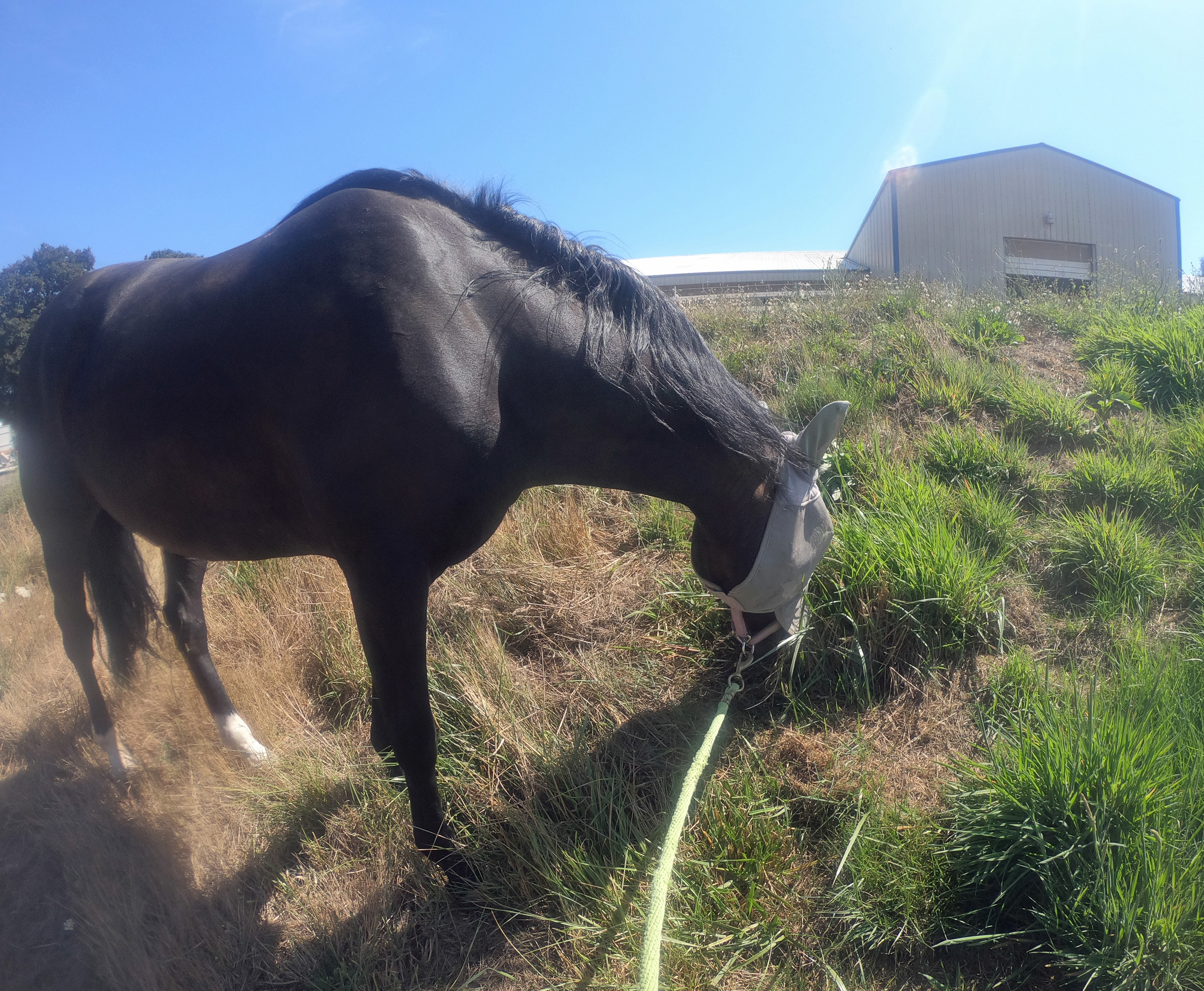
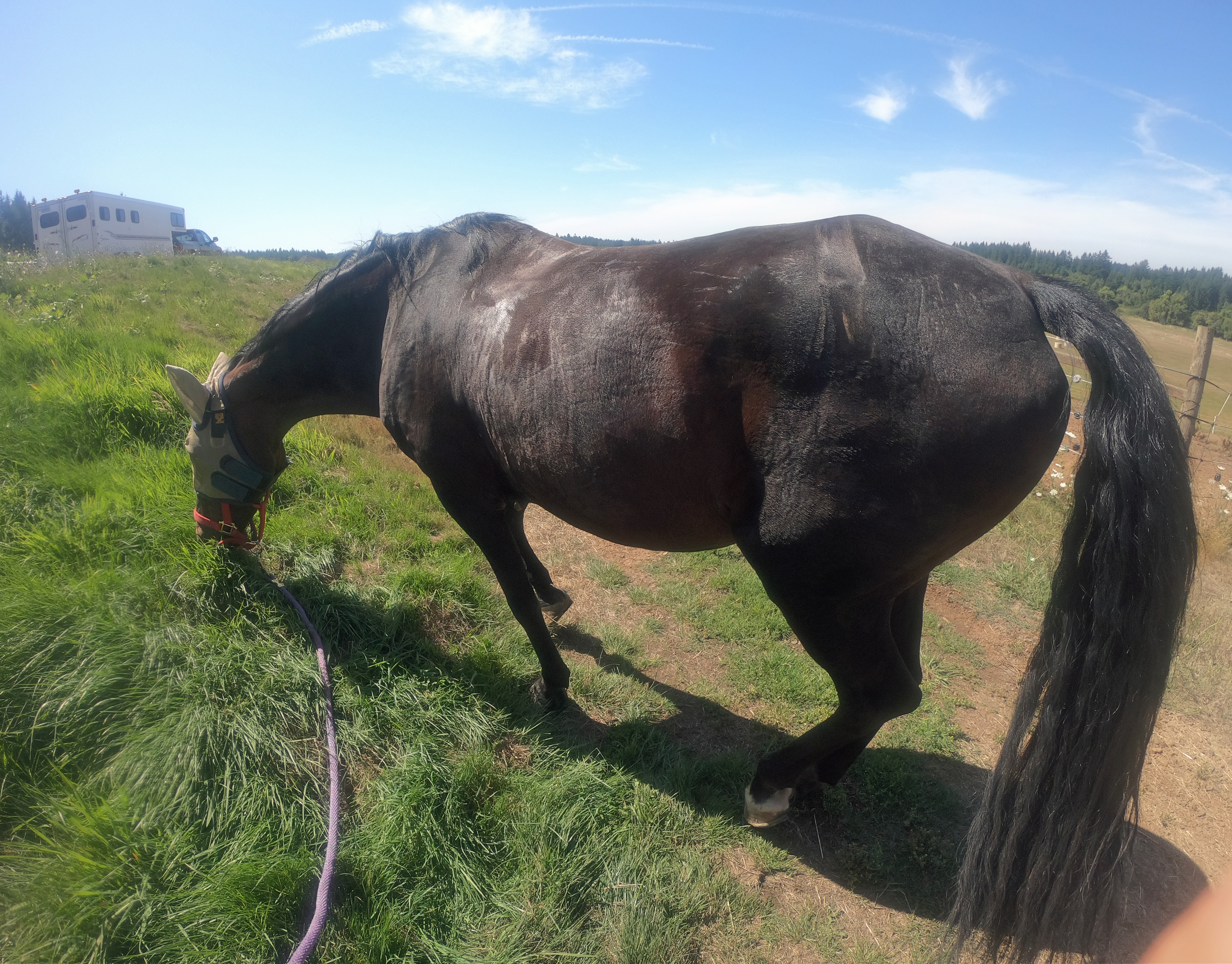
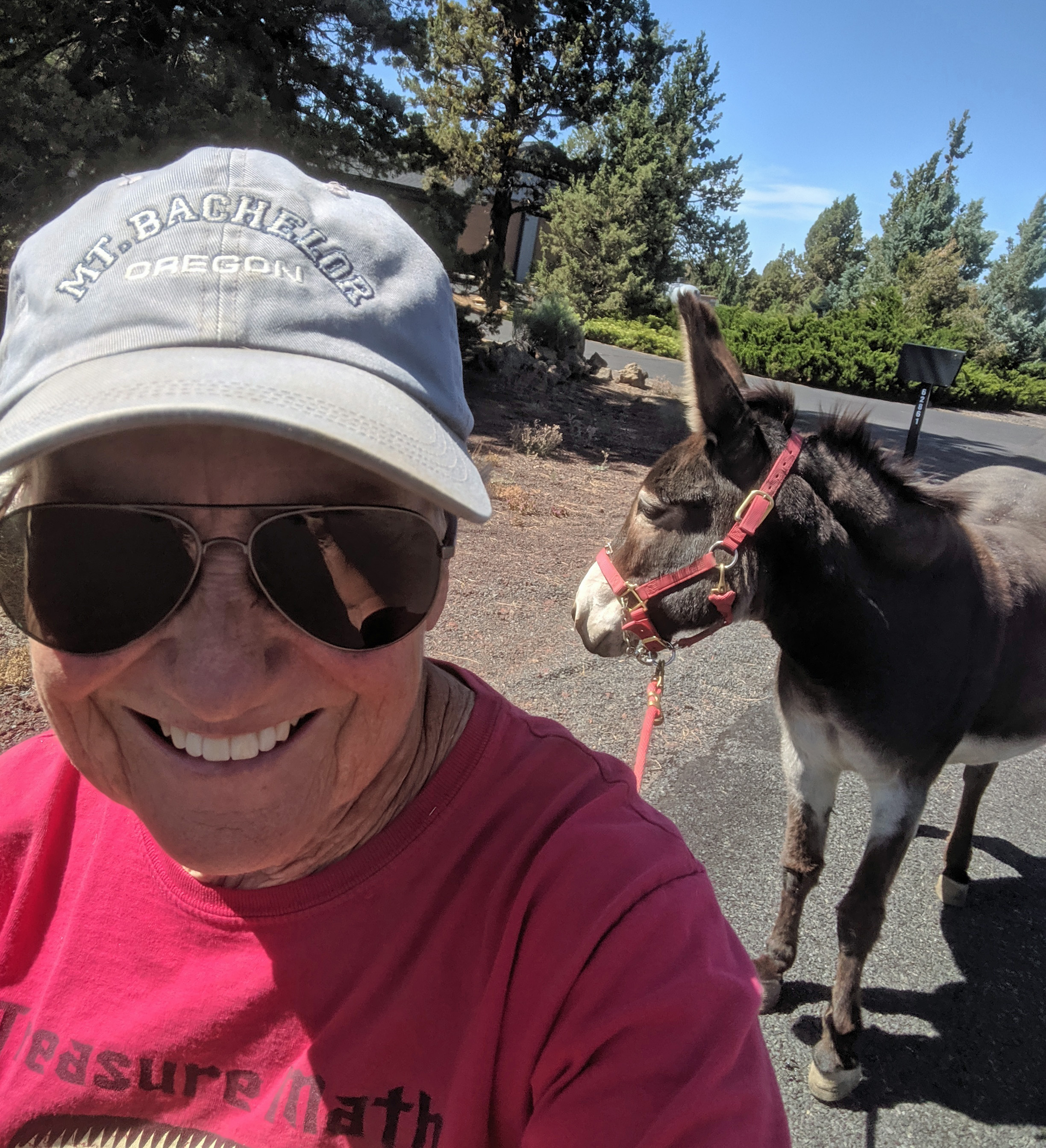
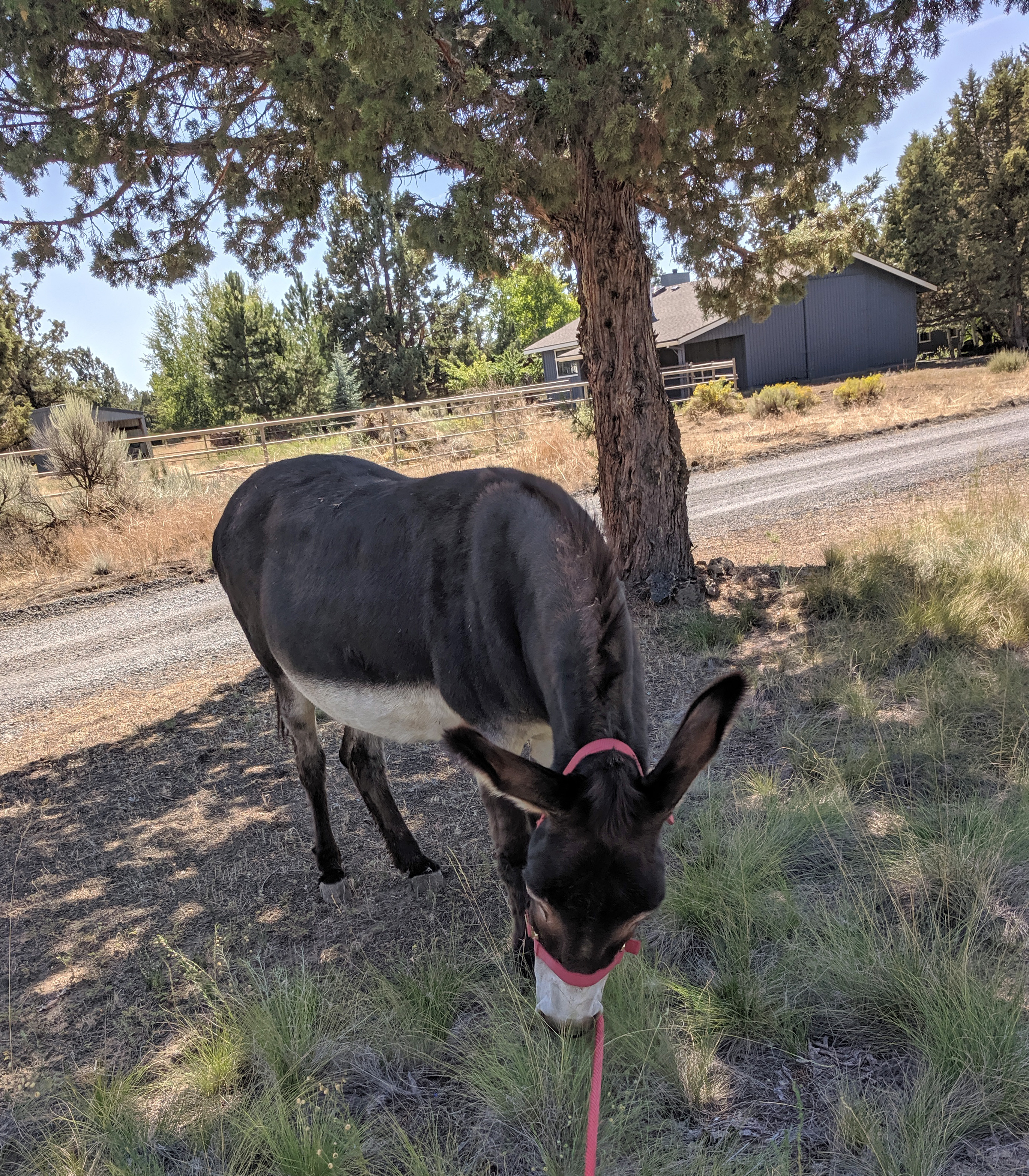
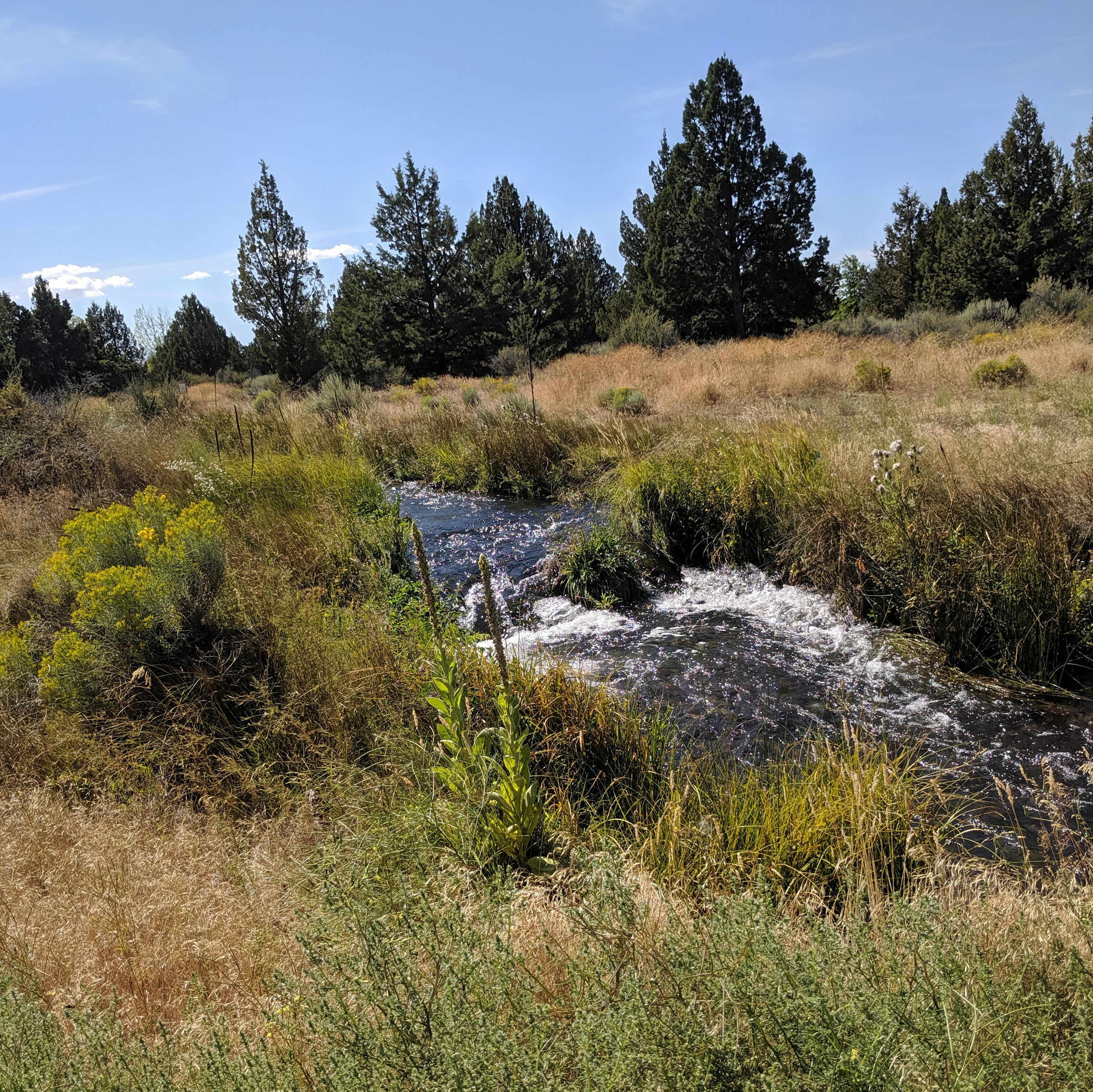
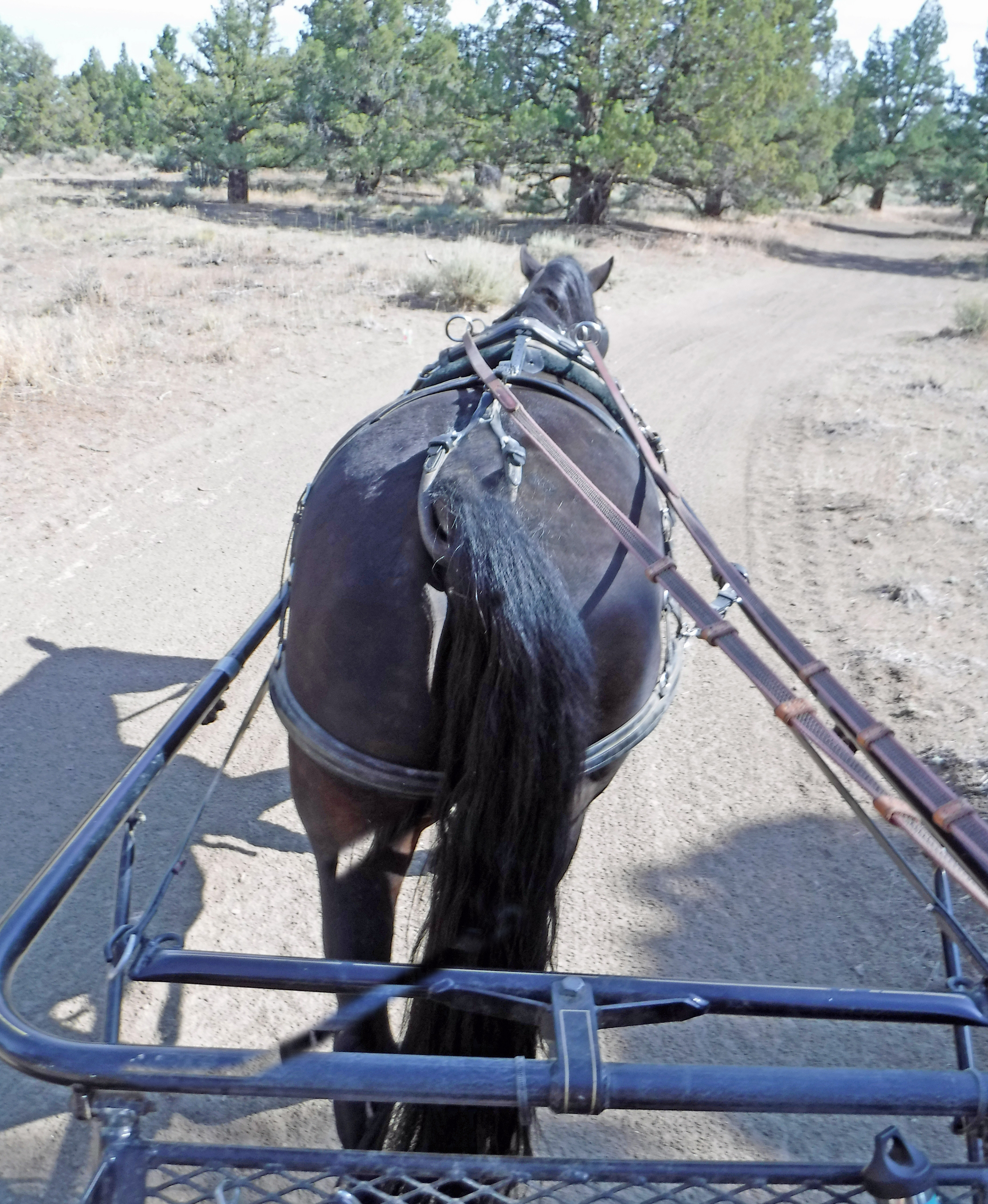
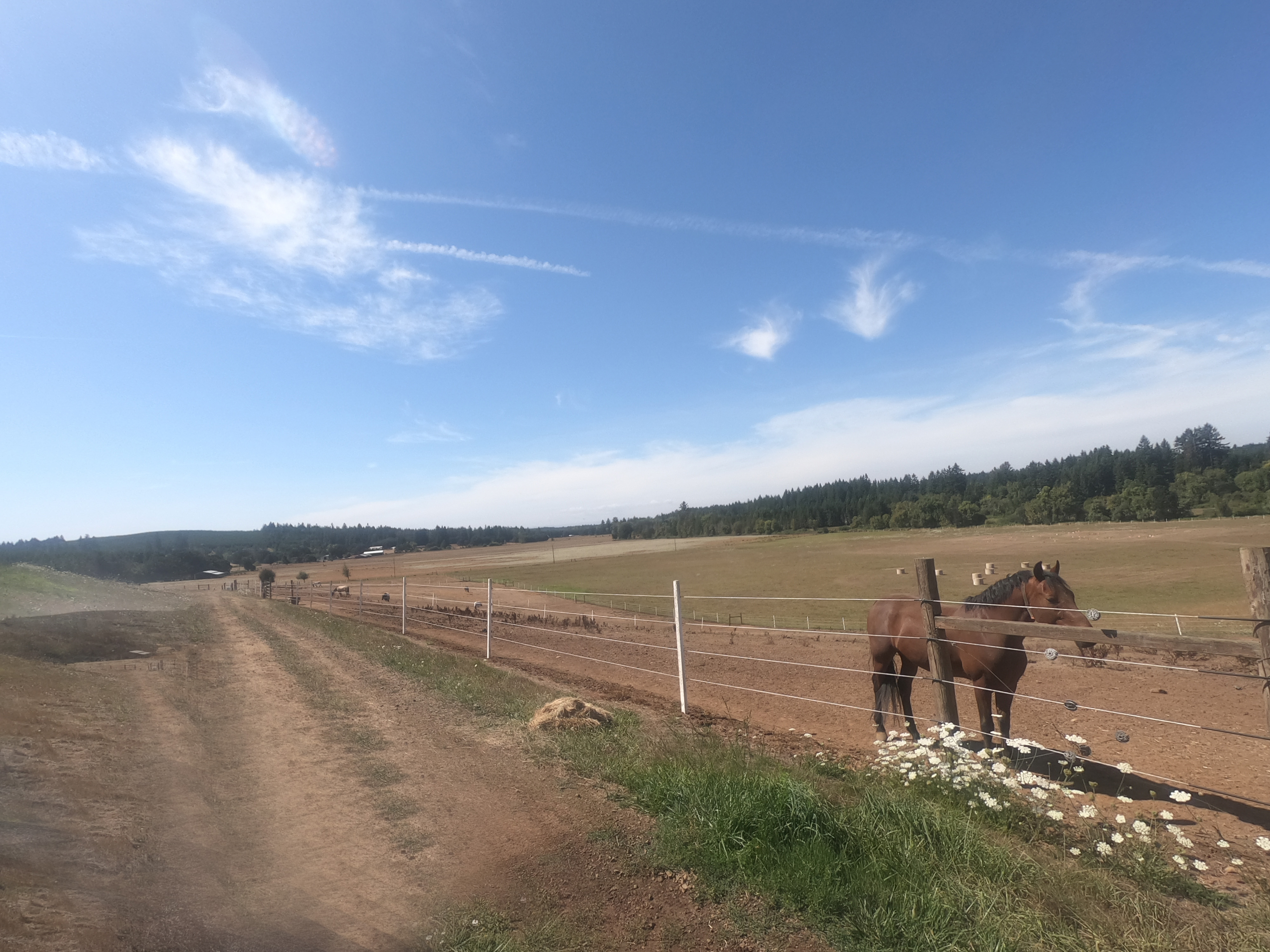
The quality is nice, but I wasn’t seeking wide perspectives. I found how to reset the aspect ratio and captured a scene with horse in the photo that heads this blog.

I explored more potential by using GoPro attachment aids to affix the camera onto my helmet and set it for video to capture a horse being driven. Now, I have bunches of raw video segments, some very nice, of the horse in action. I downloaded a highly recommended version of an editing app for GoPro. Tonight, I’ll attempt to interpret and apply it to create a 60-sec or 90-sec recording of yesterday’s action with my horse.

Stay tuned!

Dear Friends: Time and technology, moving quickly, force decisions and learning. Diana

Worldview

Sunday, August 18, 2019

Inspired by the current onslaught of world news, I purchased a brand new globe. My past globes were salvages from a public trash can or from a thrift shop and always out of date. Recently, after a remote Russian territory experienced a possible nuclear explosion, news media reported that a neighboring country Finland suddenly had noticed increased nuclear activity.

Where exactly is Finland? I wondered, finally deciding to get a globe. Now, I see that one of Finland’s two longest borders lays directly against Russia’s northwest border–near the remote area where that explosion occurred.

That has become quite a story, by the way. People hurt in the explosion were rushed to a local hospital and treated by emergency medical staff. Those staff had no forewarning of toxidity danger, and now, some of those medical workers are found to carry nuclear contamination.

Anyway about my globe, it feels empowering to get a quick eye-view of locations relative to news stories. This globe reminds me of my junior high student days and my home room hour of Geography 1. On its walls big maps, and on teacher’s desk a free-standing globe. He used those to teach us there’s a larger world, and by the way, it’s connected to our own little town in Oklahoma. I still can visualize our teacher, Mr. “Somebody”, a nice guy probably in his early 40s who then seemed very old. He had tried to enlist and fight in World War II, but the Army discharged him early-on after discovering his allergies to wool, a critical soldering component for warmth in remote locations.

This is leads to a question that I asked afterwards for years: whatever happened to good-old, plain “Geography”? It soon after seemed split-up into various studies, like political science, map studies, various histories, and such. But I always felt its disappearance as a loss for students. There was something holistic about the maps, that globe, a friendly and patriotic teacher with some military background, and my initial surprises on discovering that ours was a very large world.

Well, life’s journey often takes us on a large circle and back to our beginnings. We find ways to add our learning over years to our early humble amounts knowledge. Today, for me it’s about this globe. It reminds, lets me comprehend better what Mr. So-and-So attempted to teach many years ago. Then, I got a little of it, that Oklahoma is part of a world that includes Finland and Russia. There also was someplace he referred to as the “Middle East”, and another he called the “Near East”. For a long while I wondered how these two areas differed. Now, we all recognize the differences and know them clearly. Today, those once-faraway places are not at all remote.

I must have loved that geography class.

Dear Friends: We’ve much more to learn about our world, it’s so small now. Diana

Invasive & Determined

Saturday, August 17, 2019

(Today is kind of a big one in my family, as it’s my younger sister’s birthday. She lives in AZ, a long way from my current home in Oregon. She usually has a good birthday and I hope this day is another that’s fun. My, how quickly the years pass!)

Yesterday, I wore myself out pulling Russian Thistle down by the roadside. It wasn’t until I took the trash can to curbside that I saw the vigorous growths there of RT. I got busy, hooked a little wagon to my Gater, rolled down to the scene, and started pulling–an action that means bending (and causing today’s sore back).

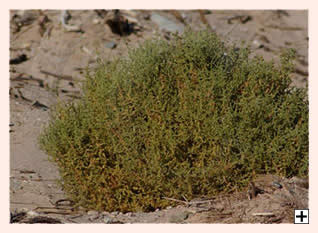
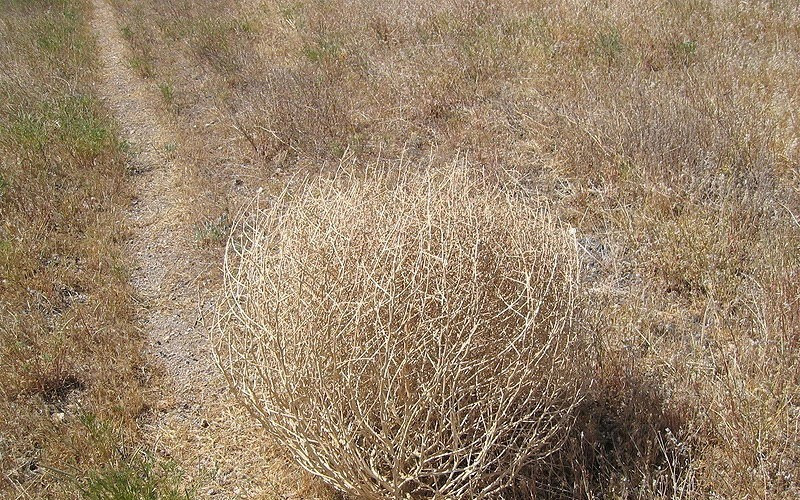
Not many weeds stress me so in their existence, but RT turns me into an active puller. It can grow up to four feet tall and nearly as wide. As the plants mature, their stems, leaves, and stickers, with rather shallow (but far-stretching) roots, come loose and turn into dried balls. By rolling in the winds, they can scatter as many as 250,000 seeds, and are difficult to collect because they’re loaded with stickers. In other words, Russian Thistle is that “tumbling tumbleweed” of Western lore.

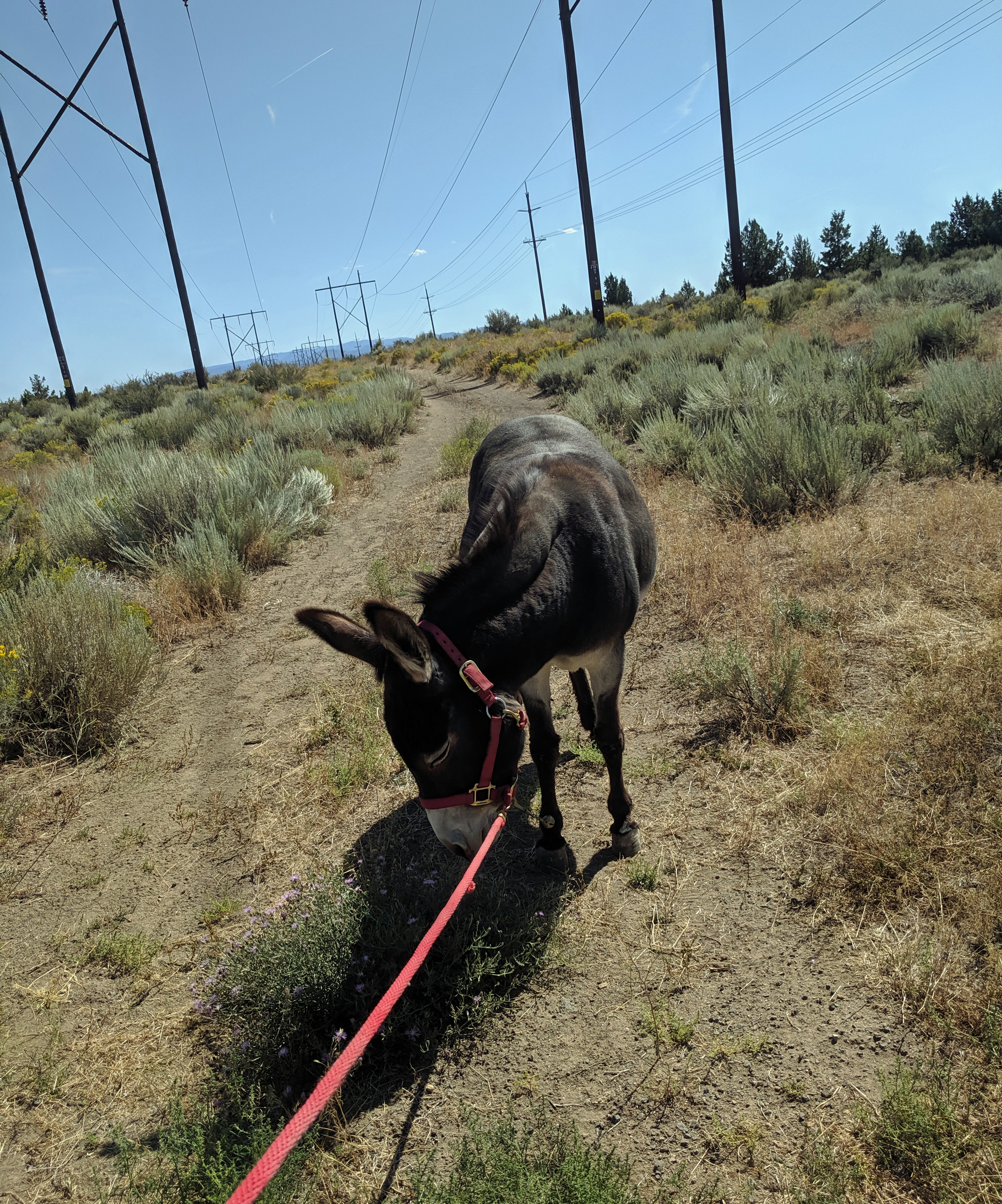
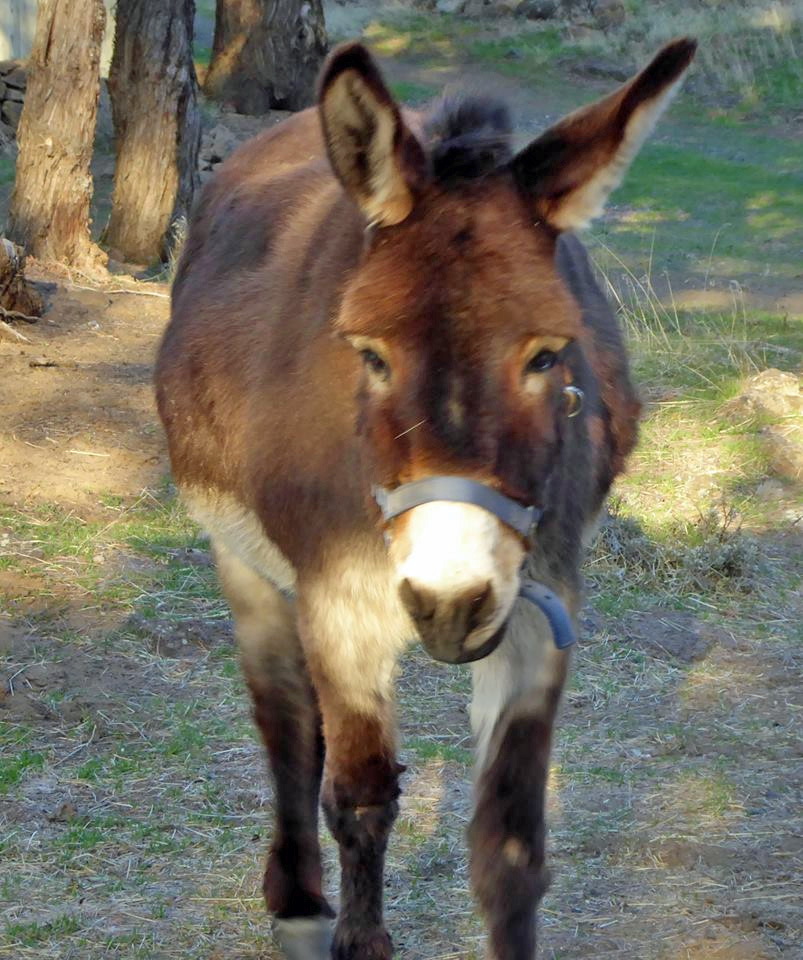
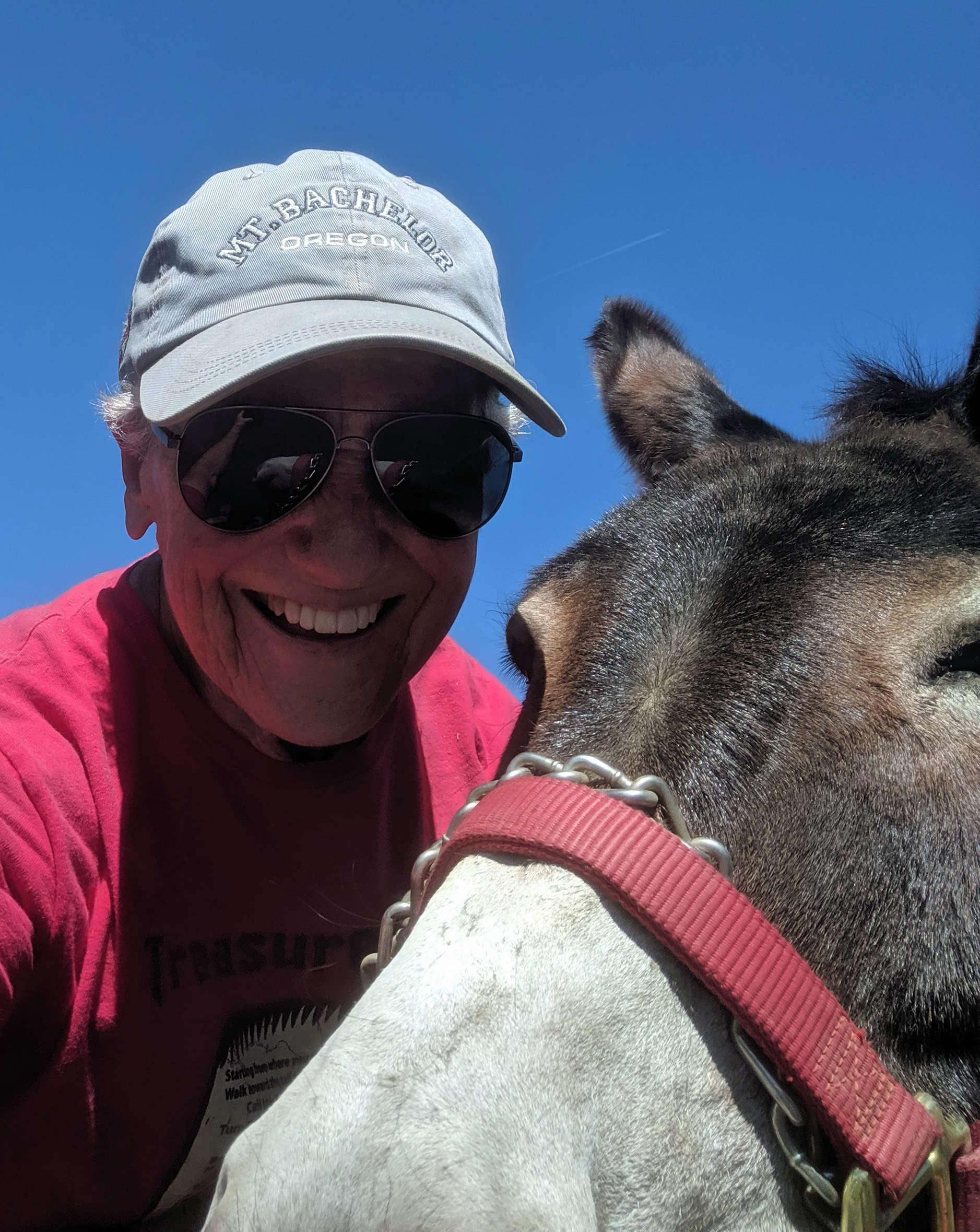
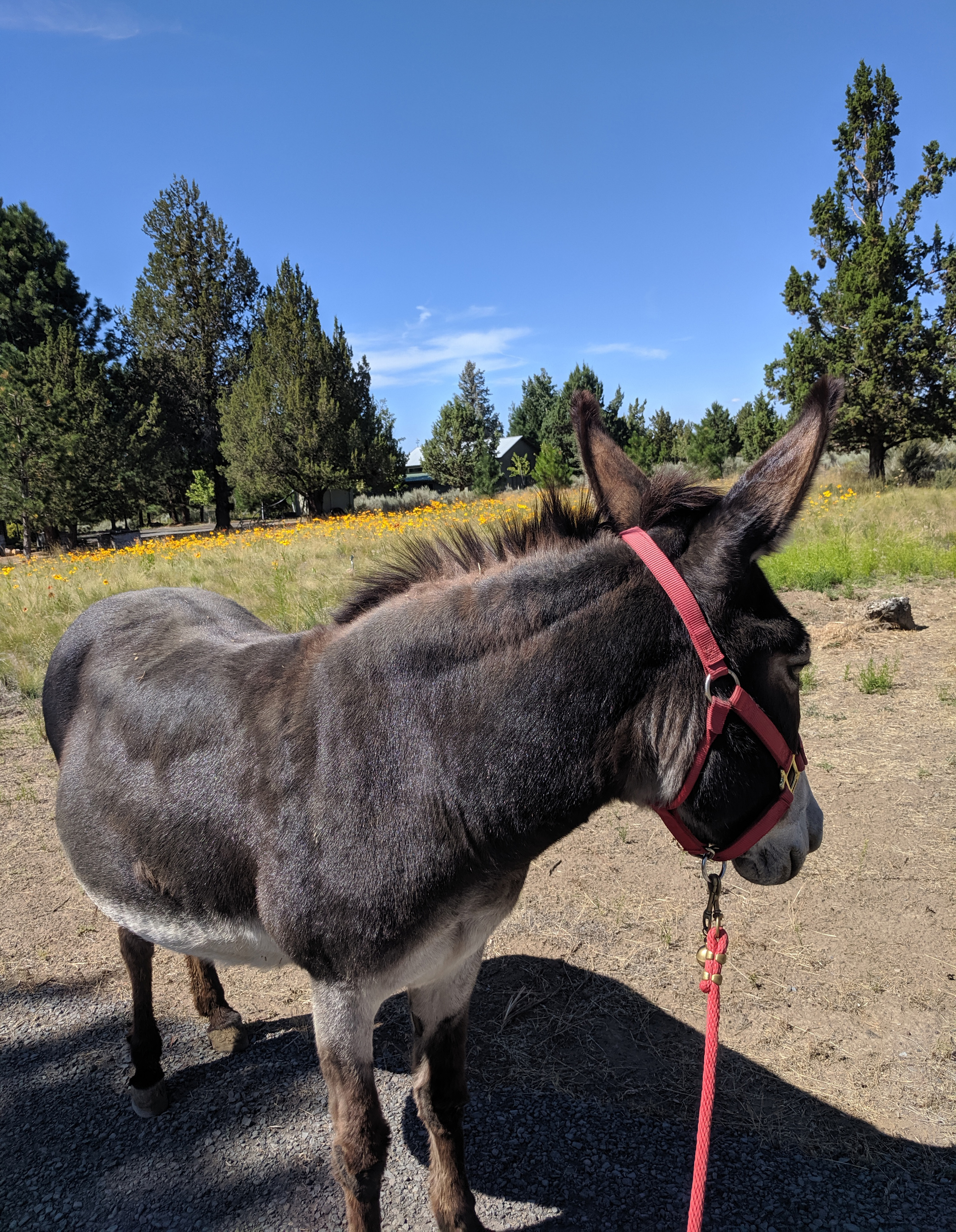
Interestingly, when there’s nothing else (or sometimes even when there is), equines will eat Russian Thistle. The other day while walking my donkey, Pimmy, she paused for bites of the stickery stuff.

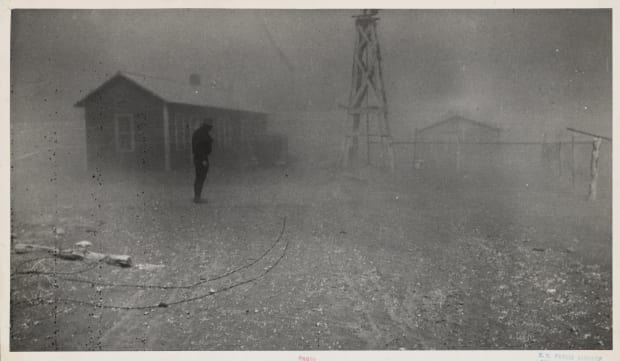
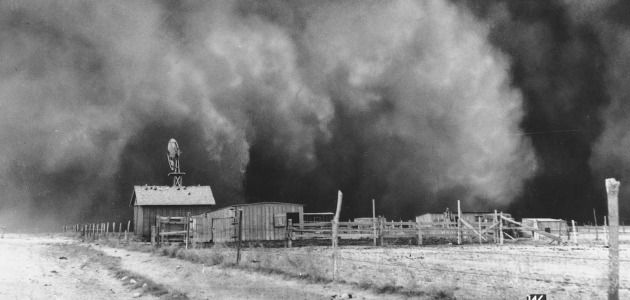
Apparently, these plants while young can be forage. Originally, Russian Thistle was imported as cattle feed during the 1930s Dust Bowl era.

At that time, animals were starving from feed shortages caused by massive dust storms. These ongoing storms damaged the ecology and agriculture of the American and Canadian prairies. Russian Thistle plants provided the feed that gave cattle a lifeline.

It’s a vigorous and stubborn plant that’s taken root and survived way beyond its Russian origins. It seeds and grows anywhere there’s space–in barren areas alongside roadways and among native plants on properties. Years ago, when I left city life and moved onto a small property, Russian Thistle battles were annual events. Many thistles that rolled onto my acreage were nearly as large as myself, and all difficult to collect and get rid of, until finally, I learned that eliminating baby versions helps to keep adult plants under control.

I’ll take ibuprofen today and hope for enough flexibility to tackle the remaining Russian Thistle plants. I dislike weed-spraying, and this season having done none, pulling has become my penance.

Dear Friends: Hate mixes with appreciation for such tough survivors. Diana

Neighborhood Adventures

Friday, August 15, 2019

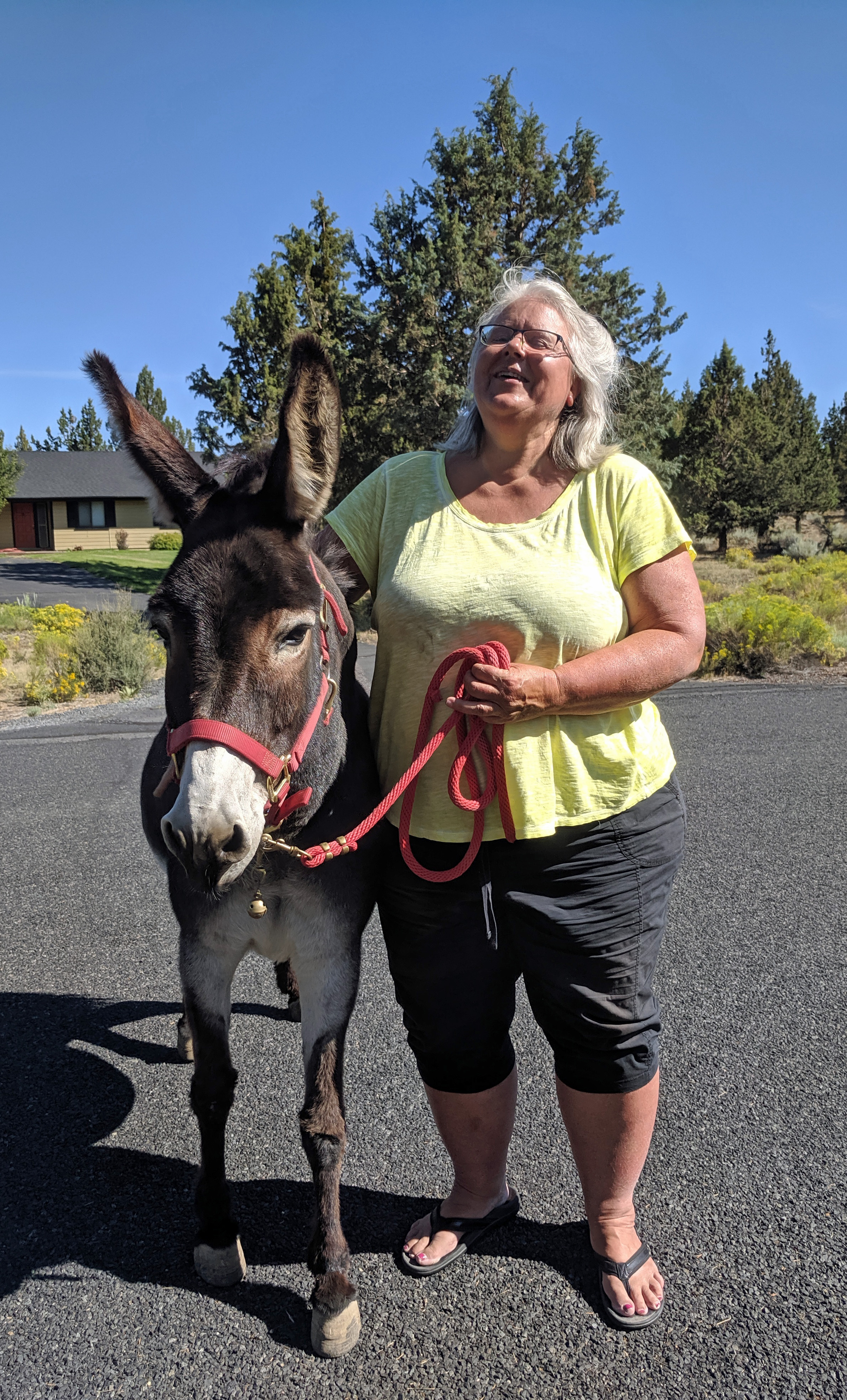
Yesterday, after exercising both horses and then noticing Pimmy hanging out beside a tree, I decided to do something I’ve not done in a long while–take Pimmy walking–and a good reason to get myself out walking, too. I slipped a halter on Pimmy, held her lead rope and led her from the barn. On seeing us heading toward the street, Pimmy wanted none of leaving her horses. I held onto her rope for dear life, but that pint-sized beer is stronger than she looks. Pimmy got loose and marched away, stopping beside a gate where Rosie waited.

You rascal! I slipped a chain around Pimmy’s nose and gave a tug. She quickly stopped resisting and followed me to the street.

Once there Pimmy walked cooperatively, and I removed the chain. Folks in the neighborhood might consider me nuts for coming around again, and yet with another equine, but that would be as it is. My donkey and I needed to stroll, and to start that process regularly. And so, for about a mile, we wandered along curvy streets lined with homes.

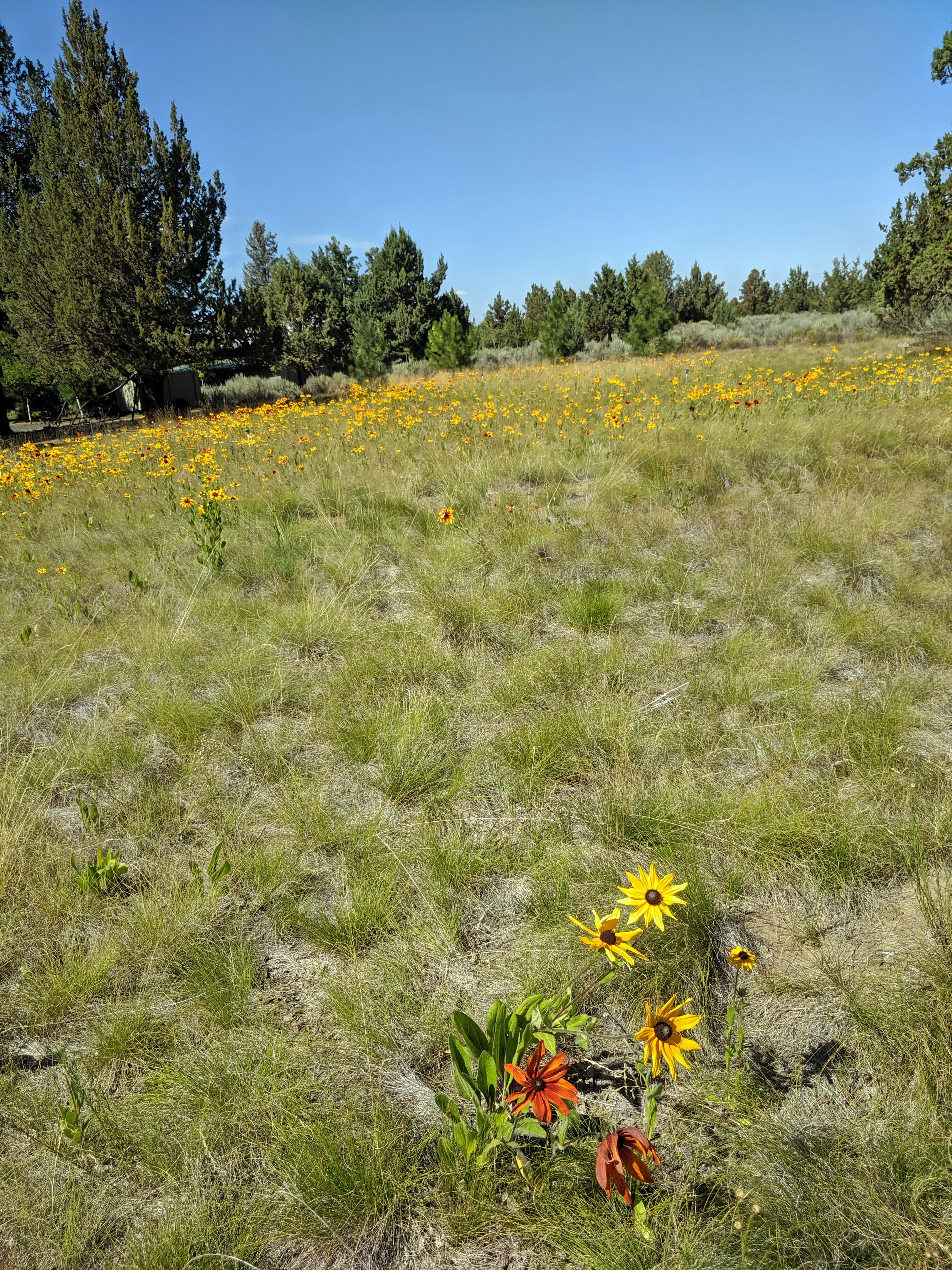
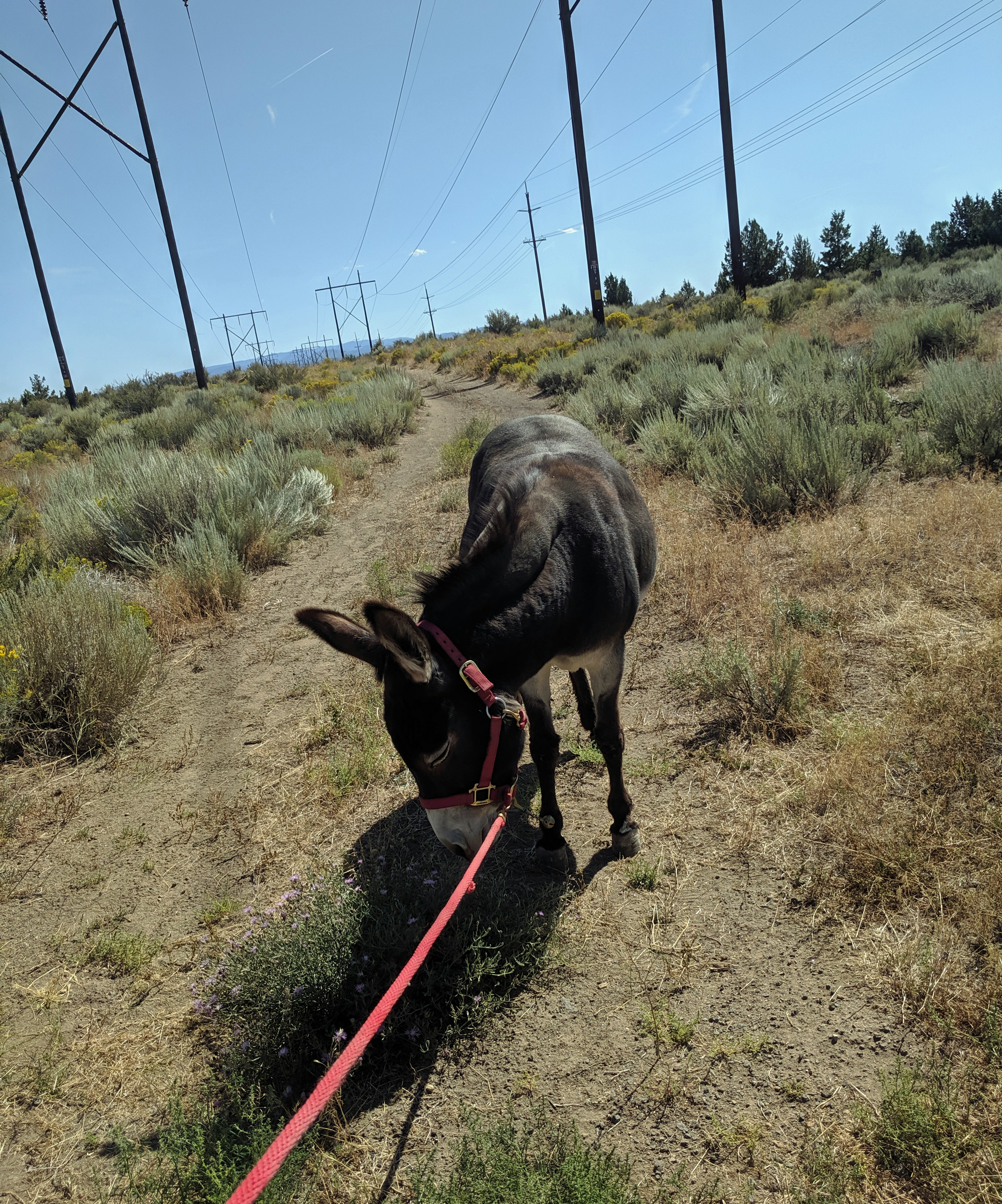
It occurred to me to head for a BLM-like area where there are giant power lines with trails beneath. We left the main street and turned onto a gravel road leading to the neighborhood wilds. First, we stopped to enjoy a field of flowers.

Walking under the power lines was slow-going, as Pimmy often paused and peered at things I couldn’t see or focused and listened to noises I couldn’t hear. She didn’t seem worried about anything, didn’t bypass tasty grasses and flowers.

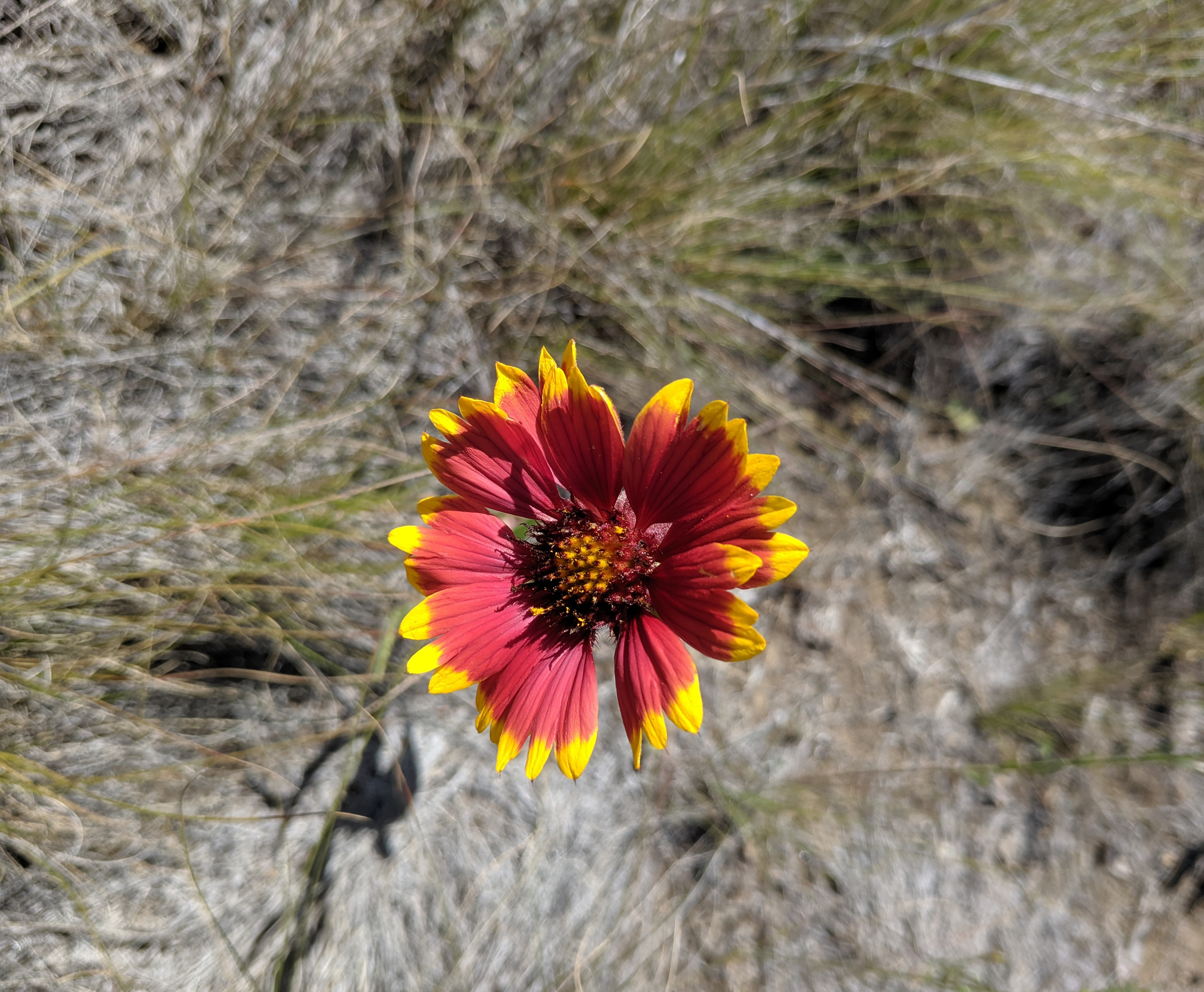
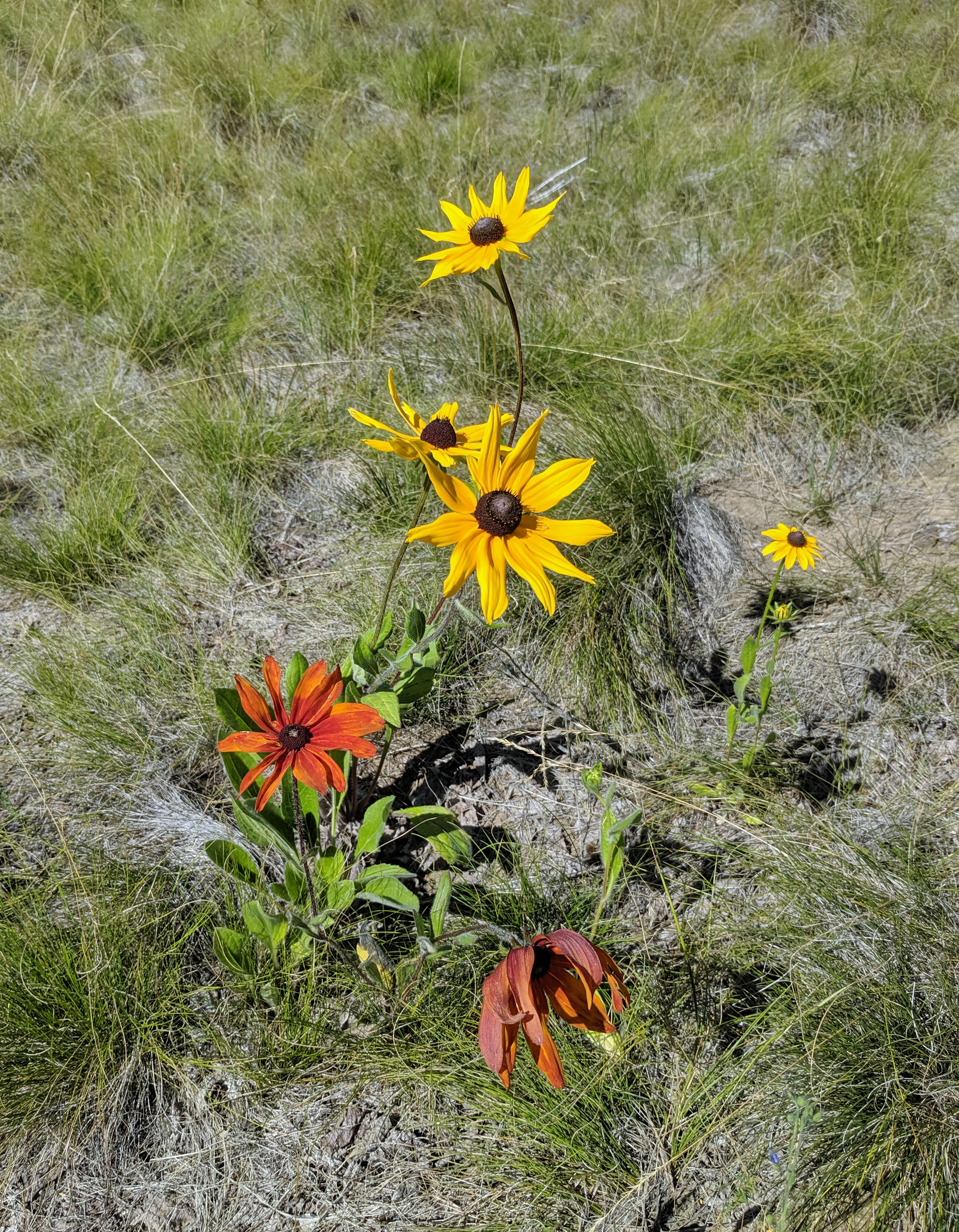
Pimmy is a joy to walk with, follows at a respectful distance, and doesn’t object to any direction we take. She keeps herself busy with eats while I pause to awaken my cell phone and capture flowers and insects.

We strolled under the power lines and finally arrived at a little bridge that went over a narrow busy canal.

And gradually led us toward a path that could bring us home.

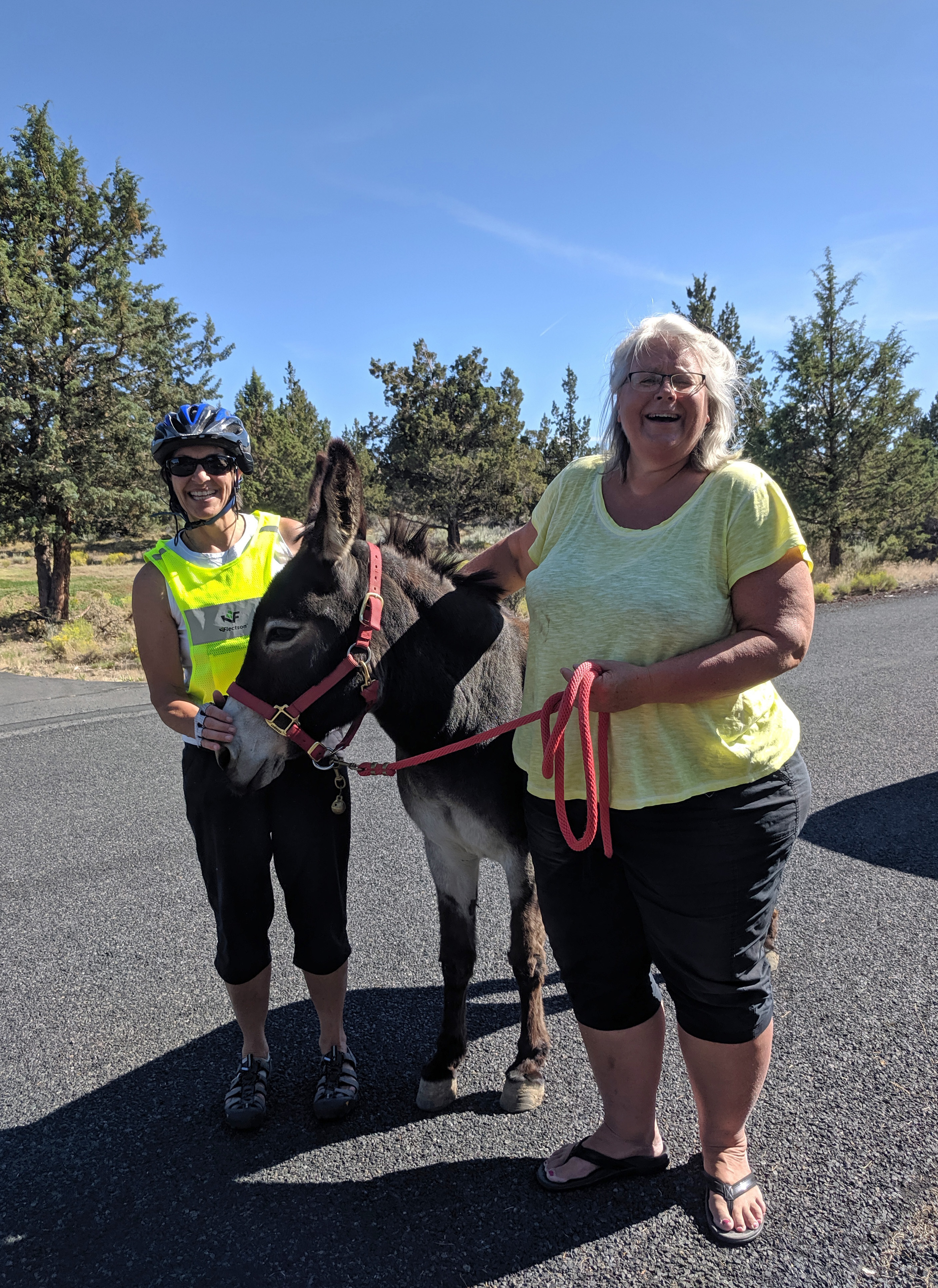
We were walking slowly on our street toward home when a vehicle pulled up alongside us and stopped. The lady driving inquired about Pimmy and asked if she could park and meet the donkey. Her name is Kristen, her smile is marvelous. She was curious about the donkey’s temperament and needs, and Kristen didn’t seem the least bothered by dust clouds that arose when she patted Pimmy.

It turns out that Kristen lives nearby, on the other side of our neighborhood, and has heard my horse trotting past her house. As we talked, another neighbor, Susie, riding her bicycle, stopped and joined us. She and Kristen already knew one another.

Susie has lived in this neighborhood many years. We met last year after I began exercising Sunni in the neighborhood. Sunni’s hoof-beats attracted Susie who once was very active with horses and still loves them. Occasionally, she takes time from her work to join me in the cart behind a horse. Last summer, she introduced us to the the local back country (where Pimmy and I had ventured for the canals and power lines).

This lovely experience could have ended at our goodbys. But we’ll all meet again, for it’s a wonderful example of how animals are friendship magnets. I’ve lived in this neighborhood 15 years, and before I began making the rounds of it with an animal, I felt close only to a few nearest neighbors.

Yesterday, towing Pimmy from the barn to the street and starting to walk, I wondered if folks would think me nuts for showing up again and with yet another animal. The pleasant mosey overcame my doubts, as did my donkey’s natural alertness, our pauses while she grazed or I took pictures. On that fine summer day, I was aware only of earth’s and sky’s sheer beauty. And to cap everything, those lovely spontaneous moments of hellos among neighbors.

Thanks again, little Pimmy!

Dear Friends: Before summer ends, go outside and explore your neighborhoods. Diana

New Horizons & Sunni

Thursday, August 15, 2019

Yesterday, I loaded the horses and drove over the mountains for sessions with our driving trainer, Megan. Each horse had individual goals. Sunni needed a workout to make sure she has recovered fully from an inoculation that stiffened her neck for several days. Rosie needed a trotting expedition down the road, to make several crossings over a bridge that previously she had resisted.

Both mares rose to their challenges. Sunni trotted in the arena, evenly and correctly curving her neck, while making circles of 40-meters (a dressage-competition requirement). Rosie trotted a mile down the road, and crossed that bridge back and forth a half-dozen times, soon not noticing it.

Megan is sponsoring a driving clinic at her barn and has invited me. The guest driver is a world-class, and consistently-winning competitor, for students to ride with. Megan suggests I bring Sunni for this, as she’s better-prepared than Rosie for driving formally. I have agreed to participate, for input from a different expert will enlighten our progress and needs.

Another element is that, without seriously having planned to compete, I’m going ahead and biting the bullet. I’ll start preparing Sunni and me to compete. A reason to move in this direction is knowing my horse is terrific. Sunni is dependable and capable, even-tempered and pleasant to drive, and in fabulous physical condition. New challenges are motivators that will keep us moving and practicing.

All this feels sort of overwhelming…and really happening. In the beginning, I wanted simply to know how to drive a horse.

Dear Friends: Be careful what you bite off, for no telling where it’ll lead. Diana

Disturbances In The Field

Wednesday, August 14, 2019

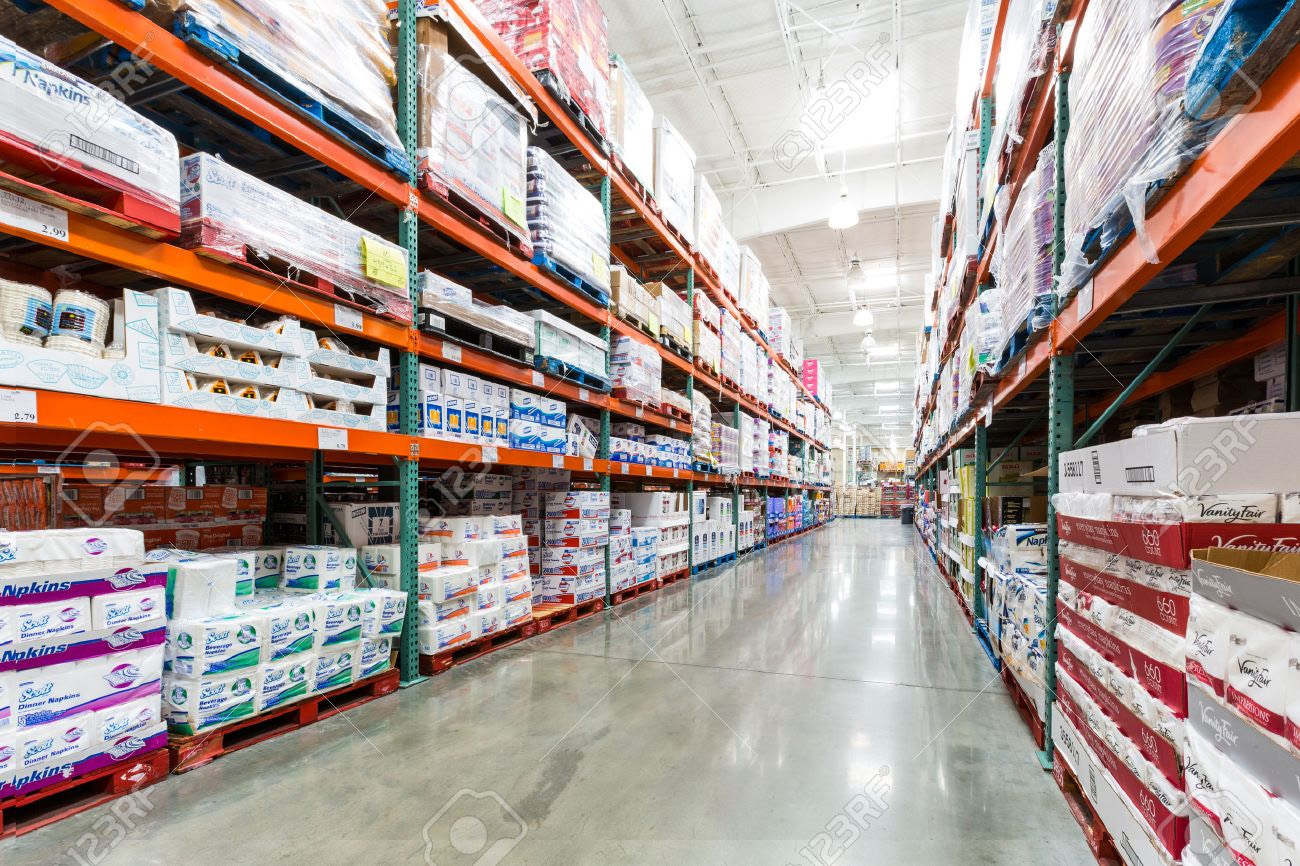
Finally, Costco’s management and that of its subcontractor that I work for have begun talking aloud about what to do if there’s an active shooter. Most of us working in Costco have for years whispered among ourselves, “Where could we hide?” The way Costco merchandises is to create full visibility from the floor to the tops of display tables and tall shelving in aisles. The solutions management proposes in case there’s an active shooter is to “quickly hide!” Another is to dash outside through alarmed exit doors that normally are off limits. Throughout the lecture on survival, I kept my mouth shut.

For one thing, reaching an alarmed exit door usually means making it safely across the store. As for hiding places, many of us for years have been trying to figure out “where’s hideable?” Most of us simply might hit the floor to play dead. Maybe workers could start packing little bottles of catchup and squirt themselves while falling?

Those would have been my retorts to the manager, but no use since everyone knows the facts of the matter. Like all people in busy places, we figure the odds favor us against the appearance of a sudden shooter. What’s different now is management addressing the possibility to employees. Makes me wonder what else might change, like for example, will the tight merchandising loosen enough to provide a little wiggle space beneath displays?

I’m reducing my working days to two-weekly, not fearing a shooter but because hours on my feet are wearing. And I want to be active on more summer days with my critters. I don’t wish to quit working altogether and miss out on the fun of schmoozing with the store’s workers and customers.

Dear Friends: How awful, that our norm must include possible shooters. Diana

Sparkle Plenty

Tuesday, August 13, 2019

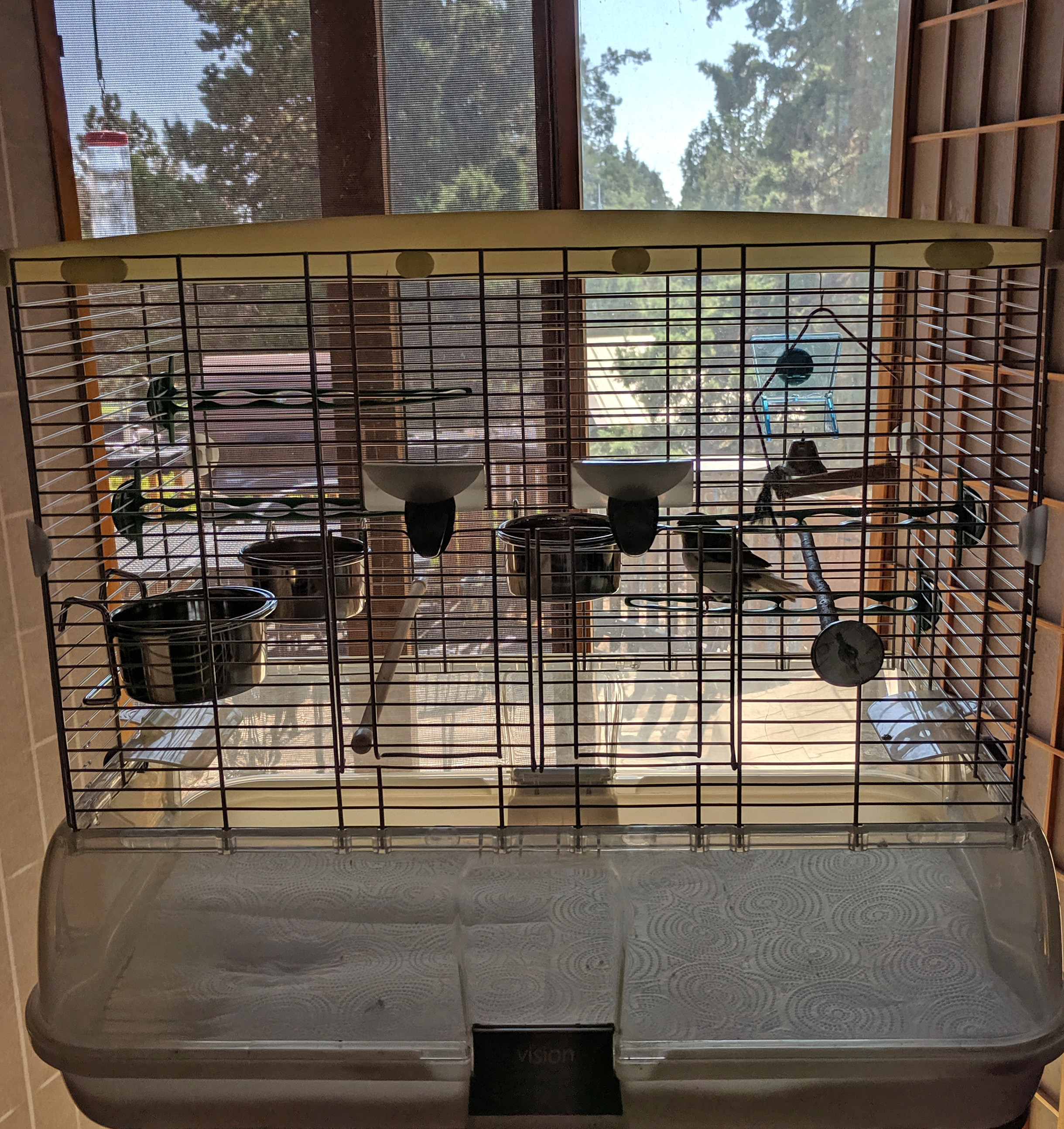
My recently-adopted canary has a new name and a bigger, brighter cage. I’m calling her Sparkle to match her tiny cuteness. She’s very small and barely a handful, unlike my previous and current birds. Sparkle tries to resist being caught and held. She might have originated from a quantity breeder who raised lots of birds and provided minimal physical contact–just enough to describe birds as having been hand-fed and handled. For a bird to feel really comfortable while resting in a hand or perched on a finger, it needs from infancy lots of gentle captures and loving handling.

Sparkle and I have work ahead as I hope to make her comfortable with the handling part. Right now it’s a slippery slope, for if she gets loose from my hands and flies toward my vaulted ceilings, catching her would be iffy and difficult. If that should happened, my best bet would be to set her cage somewhere visible with its door open, and hope she enters for food and comfort.

There’s also my cat, Maxwell. His watching eyes glitter as Sparkle flits in her cage. When Max is inside, she’s safely in another room. Usually in daylight hours, Max is outside and Sparkle can enjoy the company of my other birds–much bigger–a Cockatoo and a former racing pigeon. In large heavy cages, they’re unavailable to Maxwell. But Sparkle’s smaller and lightweight cage is less challenging.

In the beginning, Sparkle’s smallness surprised me. My littlest birds had been Quaker Parrots and a Cockatiel, all at least twice her size and much easier to hold. Sparkle is little enough to slip from between too-open fingers, and of course, she shouldn’t be gripped tightly. So, both of us are learning, about each other and how to live together.

Sparkle may be a tiny canary but all birds have some smarts. Maybe she can learn some new behaviors and expand her life experiences.

Dear Friends: Even the seemingly most-simple pets are big obligations. Diana

Reflecting Wisdom

Monday, August 12, 2019

I keep tracking how time and history may affect my sense of reality. Time is a huge mystery for it doesn’t exist except in the manner that humans created to dole it out. Eventually, our concept of time becomes blurred, seems to pass more rapidly. Instead of wishing for time to hurry, as we did while young, we begin wanting to hold onto moments. And, as for history, once it made more sense. In school, we learned that between certain years thus and such happened, and in ensuing years so did other major events. We learned a history sectioned into increasing knowledge that led to a modern age of industrialism, technology, and instantaneous communications.

We’ve congratulated ourselves as the smartest creatures on earth, and only lately starting recognizing that we’ve not been smart enough. We understand now that the planet’s resources are limited, that exploding populations will push social and political situations to “something like the max”. Time and history have become blurs of insensitivity.

Recently, I read that a 101-year-old woman, in an assisted-living facility and taking a poetry-writing course, had published her first and only book of poems. This after her years as a productive and creative professional, but not as a writer. I was curious about how she thinks and reflects from her aged and highly alert perspective.

I ordered and loved her book, easily readable and impressive in poems and wisdom. Here’s an example:

Meditations On Time
1
Time becomes slippery as we grow old,
yesterday's baby is now forty-five!
The past our parents could have told about
wasn't important when they were alive.

When she died, my mother was seventy.
We did not have the conversations then
that I do with my child, who's seventy.
Will we remember the where or the when?

Do questions important when we were young
remain as pertinent now that we're old,
are they not different, since we've lived longer?
What are the answers I would have been told?

Should we suggest to our grown children that
we use the years left to rid ourselves of
Curiosity, Resentments and Fears
and other bad thoughts that turn away love?

Clean out closets of Ruined Relations,
Hurting Feedings and Unanswered Letters.
Strenuous measures, tackled together
benefit all, the older the better.

II
Time is amorphous
drifts hither and yon
like a contrail in the sky

or it is stubborn
marching inexorably
into the unexplored future

often it's rigid
cannot be bent
from one epoch
into another

spirits in this sphere
and those who have left
can't make tears in Time's web
to reach one another

the morning paper tells me
that Einstein was right
gravity does have waves

Astonishingly, this means
that we can just now watch
two stars colliding
13,000,000 years ago

Five minutes writing time seems like a day,
Five minutes scrubbing floors can last forever.

Nowhere in books of physics have I read
that time can be elastic. It can act
as holder of a wisp of golden thread
or of a long, uninteresting tract.

III
Assembling my breakfast tray,
one of the rituals I invent
helps me to arrange my day.

Dear Readers: This small book is a lovely product of a wonderful mind. Diana

Rachel Carson Recognized It

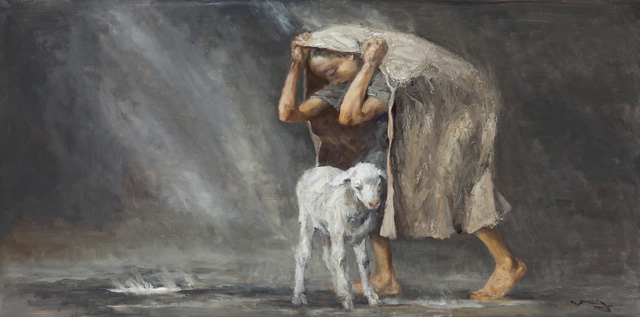
Painting: “Rainstorm 2015”, by Cen Long (Chinese Artist)

Sunday, August 11, 2019

Last evening was downright chilly after a rainfall that lasted about a half-hour, and mostly was a deluge. It filled and overpowered gutters with water pouring over sides and through section connections. This storm, preceded by roaring thunder and slices of lightening, terrified my dogs, and up at the house, I found Miles tearing the screen out of a bathroom window to get inside.

This is the high desert! It doesn’t rain much, or at least not until this year. That’s my perception after almost 15 years living here. This isn’t Portland or Seattle where everybody learns to live with rainy days. If asked, I’d have said we have one (okay, maybe a couple) rain storms annually. A week ago the weatherperson said there would be several days of rain this week and I poo-pooed it. In fact, forgot that forecast until three days ago when the sky darkened and thunder began. That was day one of rain, followed by two more of the same.

Each rain began in a late afternoon, producing furious moments and periodic hail. Usually, just as I was in the barn feeding large animals. I had to run to the house through the wet to comfort my dogs who were out of their minds. At least, it was cool and sleeping could have been easier but for my nervous, pacing dogs.

Back when I was in high school, my family lived in Southern California. In those days, we anticipated annual “rainy seasons” when daily rains were too heavy for windshield wipers to clear car windows. These episodes would last about two weeks, followed by typical So Cal weather, and provide good feedings to the area’s trees, flowers, and food crops. Soon after graduating I moved away, not returning to CA for many years. Whereupon I learned that the area no longer received annual stretches of heavy rain.

That significant change didn’t make sense to me, but I didn’t bother to explore the science that might have explained. Today, I wonder if it was an early hint of the climate changes we’ve come to know as global warming. Now as we watch weather changes occur, and here in the high desert, what’s new are frequent rains, variations in the numbers and densities of snow falls, and days that seem unusually hot or cool.

The weatherperson says that for a stretch it’s supposed to clear up and heat up, and this time I believe.

Dear Friends: I will start to understand more by re-reading “Silent Spring.” Diana

Tickled On The Trail

Saturday, August 10, 2019

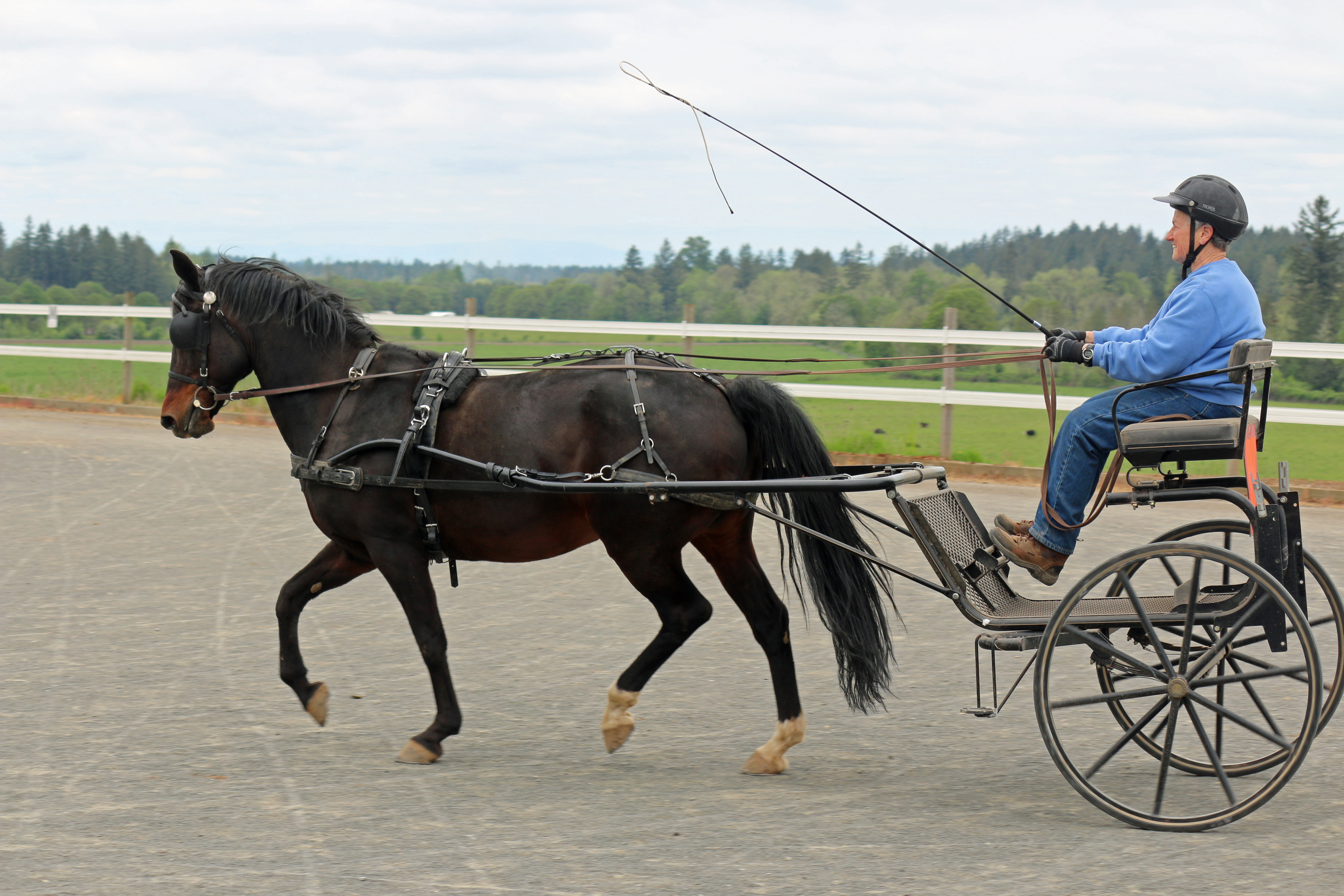
Here’s Sunni starting to pull our friend, Julie, and me along a country path east of town. A thunderstorm with some rain on Thursday evening lowered Friday morning’s temperature. Thus, in the hottest part of August our ride felt pleasantly cool. And could there be even more good to say about Sunni? As usual, she was wonderful. Upon being asked, she walked or trotted, or slowed her steps to near-halts in order to thread our cart through occasional rockiness.

It was almost 10 years ago that Julie traveled with me across the state to meet Sunni and to help assess if this mare might be a “right horse” for me, a novice rider. Julie, who rides a Morgan, loves the breed and was eager to meet Sunni. Me, too, for my dream horse had to be the “real deal”–a foundation Morgan, old-fashioned, Calvary-style, and favorite horse of olden-day Americans. Foundation Morgans were popular for riding, plowing, driving, and (sadly) warring.

My new horse had to be sized for a shortie and pony Sunni fit the bill. Plus, her owner-trainer, Jean, a lifelong expert with horses, had trained the little mare impeccably and genuinely loved her. Yesterday, remembering this, Julie reminded me that, in those days, once in Sunni’s saddle I couldn’t stop smiling.

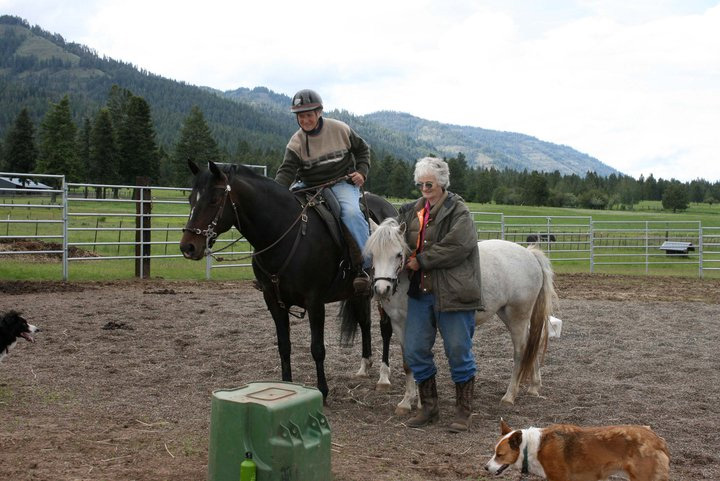
(2010) Meeting Sunni and Merry Leggs (with owner/trainer Jean Kornblum)

That wasn’t all. During that visit I fell in love with another pony, too, a little Welsh beauty, Merry Leggs. Jean assured me she’d be available to provide help to assist me with the two, and thus, began a new chapter in my adventures with horses.

Afterwards for years, Sunni carried me all over Central Oregon–its mountains, BLMs, and National Wilderness areas. She couldn’t have been a more perfect companion. Sadly along the way, I lost Merry Leggs during a severe colic episode. Later, Sunni’s big sister Rosie, a previously-experienced driving horse, joined us. Whereupon, I began thinking about learning to drive.

I had never in my entire life been a bit outdoorsy. Everything about having horses was new. Yesterday, Julie and I reflected on those days of anticipation, excitement, and adventure. We enjoyed recalling that trip to find the perfect horse for a novice rider.

Julie with Jean’s “Jackson” (2012)

Dear Friends: A bit back in time, none of this could have been predicted! Diana