A Wonder of Consciousness

Monday, July 22, 2019

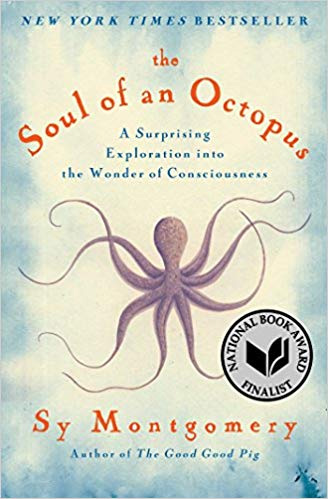
Several months ago, a NYT article caught my attention. It described scientific research on octopus, their genetics and behaviors. It explained how recognition is growing among marine scientific and aquarium-care folks of the animal’s high intelligence. Octopus is a creature about which many have known little. At a glance, an octopus is different, perhaps unappealing, and also fearsome–because of common and awful myths about its powerful eagerness to strangle and drown prey.

That’s all I knew about octopus before stumbling onto Sy Montgomery’s book (published in 2015). She made a point to learn first-hand about the species and can speak highly about octopus intelligence and behavior. She explains her own feelings and perceptions about octopus during hands-on contact and eye-to-eye interactions with them. She’s found the creatures to be physically complex, mentally perceptive, and often while interacting with humans, demonstrating appeal, fun, and aggression.

Besides the complex underwater behaviors scientists observe and document, they find that octopus in aquariums, interacting with humans, seem able to remember individuals, and also develop distinctive likes and dislikes toward individuals. They regularly spray jets of ink or water on people they dislike, dousing them accurately. On the other hand, octopus will hold, caress, and smell the limbs of people they like, and respond with pleasure to extended petting by preferred humans.

Besides being very clever escape artists, octopus can conjure up tricky ways to find food, and also, they do play–for example, by squirting through their jets to keep toys bouncing in the water. The book offers many examples of species specific and social behaviors that set these creatures as unique and wonderful.

Dear Friends: The world is incredibly more intelligent than many realize. Diana

Sunflower Summer

Sunday, July 21, 2019

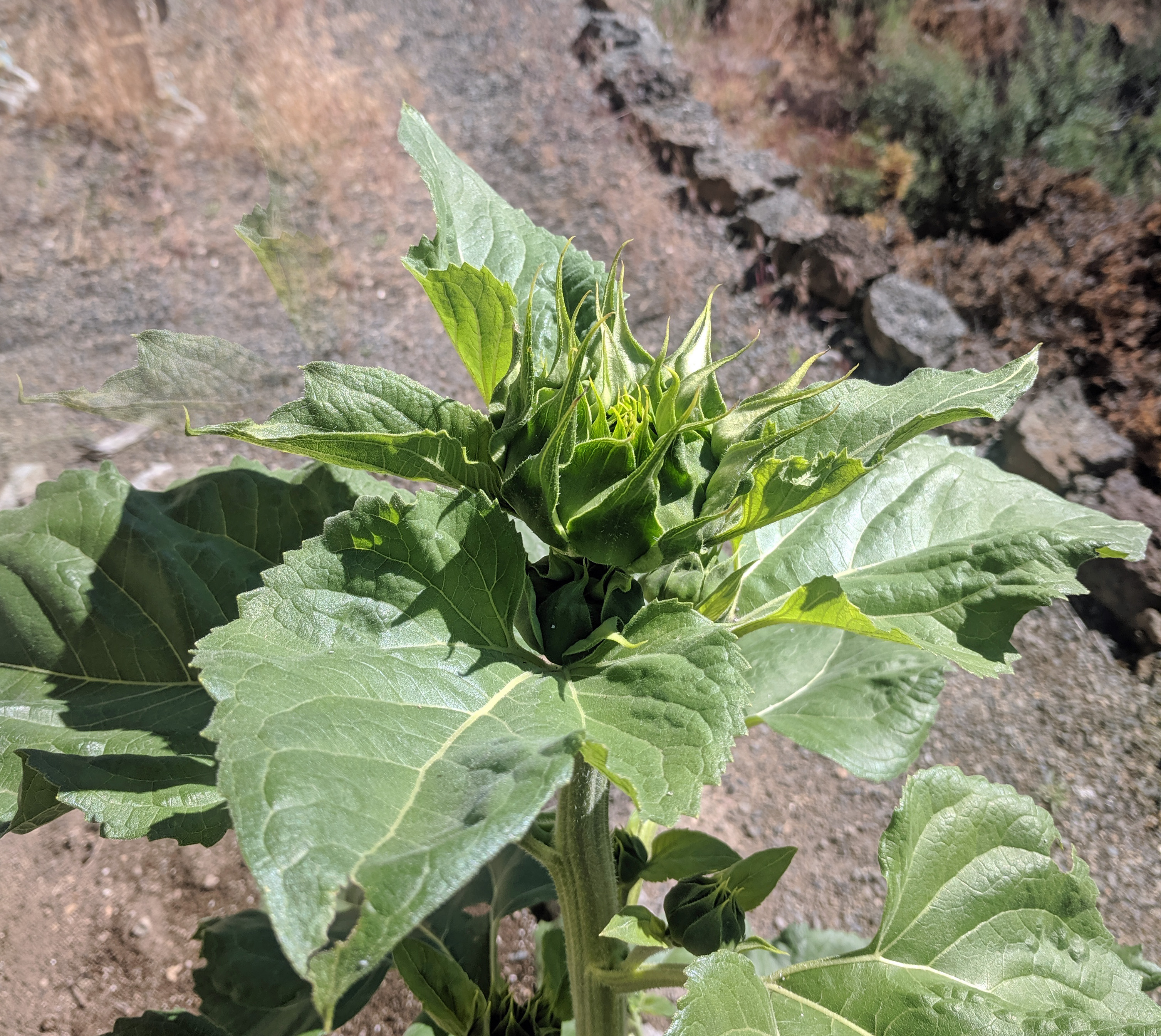
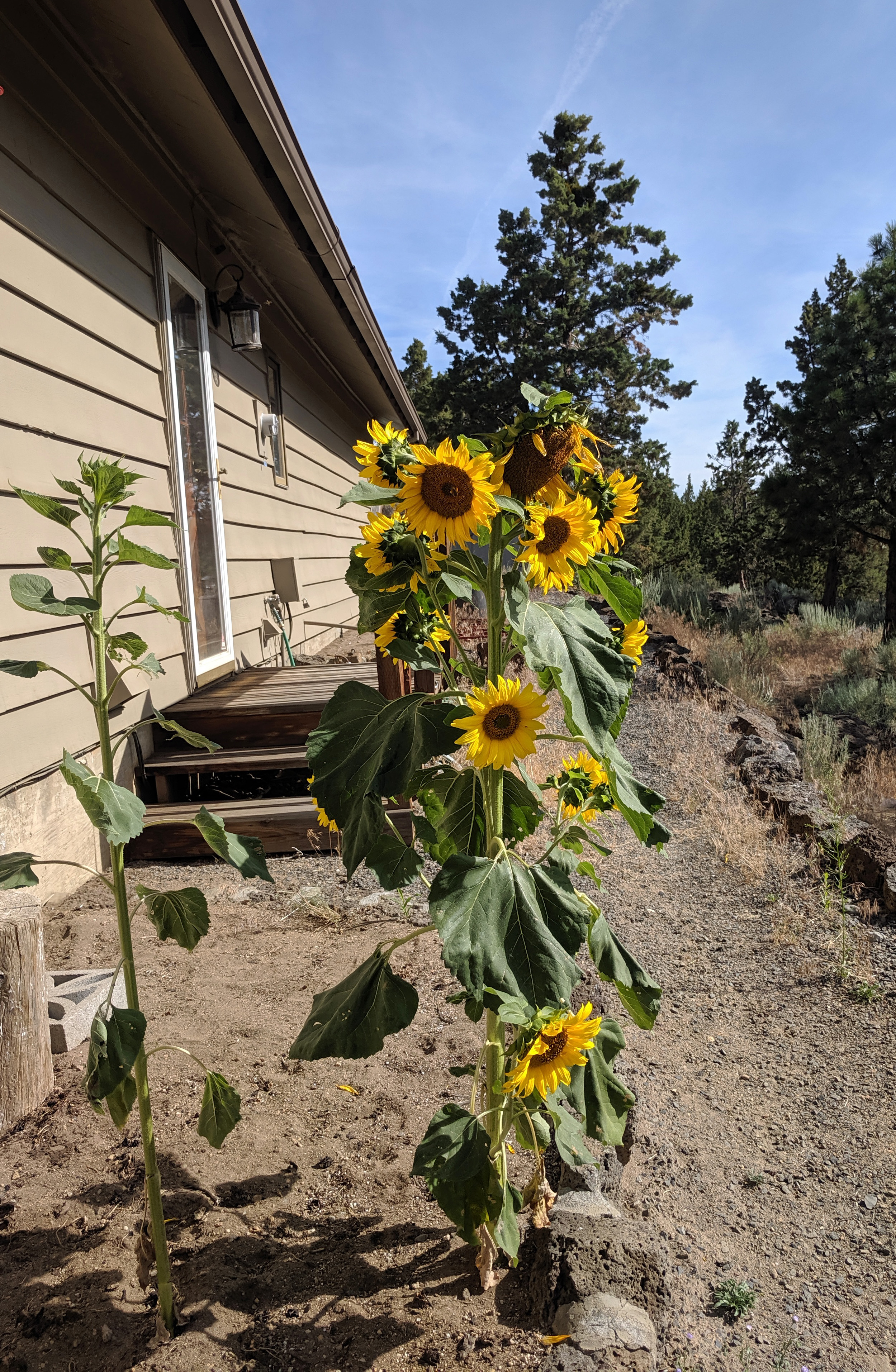
A couple of months ago, this sunflower plant appeared gratuitously on the sandy east side of my house. Beginning as two tiny leaves, probably gifted by a bird, it finally matured. Standing over five feet tall and laden with sunflowers, it’s drawn insects that pollinate, and likely, birds that love its seeds.

It’s a mighty symbol for me, a reminder of years when I resided on the Missouri side of a State Line that separated Kansas. Essentially, going physically to Kansas required crossing a dividing roadway. In America’s pre-high-tech days, Kansas was farm-like and cowboy-primitive. That began changing at the onset of the computer era which required lots of new development. In Kansas, industries found less costly and plentiful space for buildings and parking.

I moved away as Kansas began to explode, and so my memory of its side of that dividing state line is of a small town with surrounding farmlands. I’d drive along a two-lane highway passing spaced-out farms, with meadowlarks singing among tall sunflowers that grew in the constant, nearly overwhelming heat and humidity.

My Oregon sunflowers aren’t like those big Kansas sunflowers. To be sure, mine here are pleasantly nice and attractive in size. But those in my Kansas days seemed more huge. Their big smiling faces waving atop tall stalks somehow managed to wink and twink back toward an onlooker. Altogether, those Kansas sunflowers were most satisfying.

Locations and temperatures are support systems, they can redistribute and alter what lives. This fall, I’ll to go ahead and seed for sunflowers on my home’s east side but won’t expect these plants to grow into Kansas lookalikes. In all honesty, my sunflower memories start to beg questions about memory accuracy. But I wouldn’t travel back to Kansas to verify that those sunflowers still grow on tall stalks with huge faces that speak back to me.

Dear Readers: May your summer be another wonderful period of learning. Diana

A Peterson Ridge Adventure

Saturday, July 20, 2019

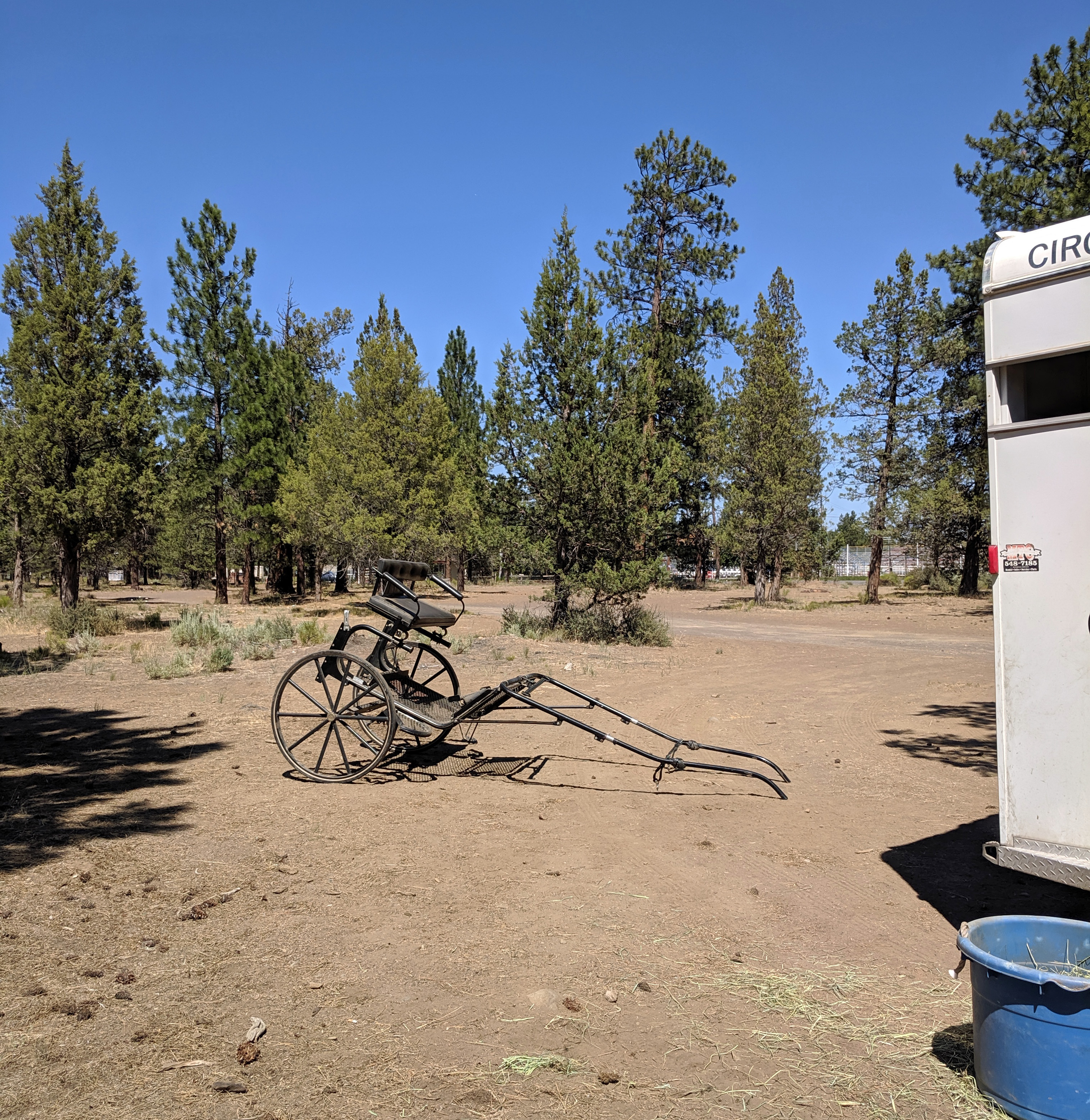
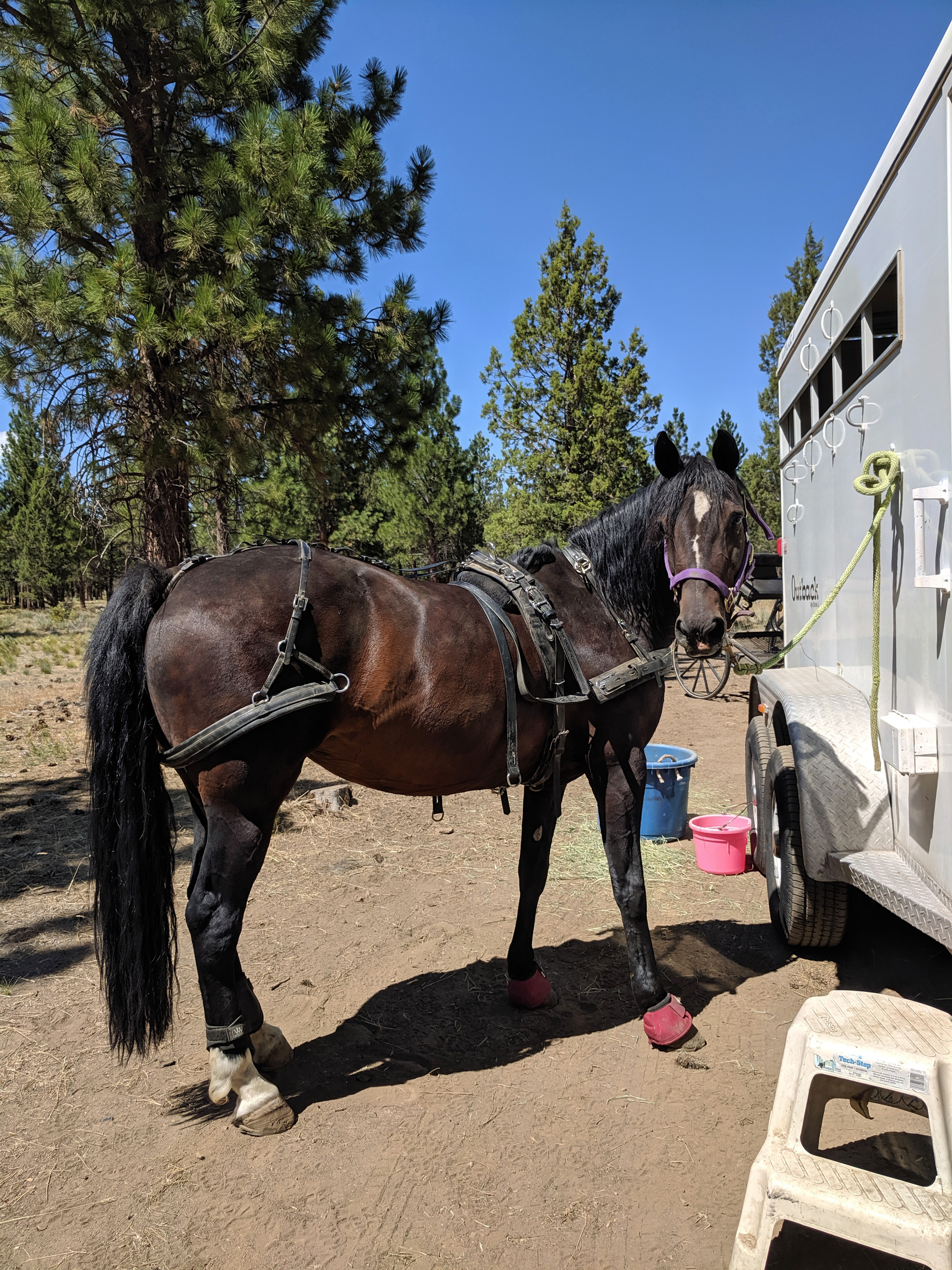
Yesterday, I fulfilled a dream. After learning to drive a horse slightly over a year ago, and having practiced driving my pony, Sunni, regularly through our neighborhood, I loaded her and her cart into a horse trailer. We were off on a new adventure. I wanted to drive her in a natural setting with a network of well-trodden horse trails. These trails needed to accommodate our cart, be relatively rock and obstacle free, and hopefully, near-enough to emergency assistance, if needed.

My head was full of unlikely things that meant disaster–from the sudden frightening appearance of a cougar, to having a wheel pop off and upturning our rapidly-rolling carriage. The best way to combat those shpilkes was focus on my rock-solid and steady pony. Unless something really nuts occurred, she’d perform as expected. This year, Sunni is 16, has been with me since she was seven. She’s a foundation Morgan (her bloodline from 19th Century Calvary Morgans), with the sturdy and unbeatable work ethic that Morgans share.

My fears, encouraging me to remain near home, pulled me toward Tumalo Reservoir, an area of familiar horse trails. But I gathered courage and instead headed toward Peterson Ridge, east of Sisters. I’d not been there for years–not a great distance from home, but far enough to fulfill my dream, of trusting a horse and testing my driving skills. (My confidence also arises from regular driving lessons, with Sunni, from our skilled and capable trainer.)

I unloaded the cart, got Sunni harnessed and hitched, and we trotted away on a gravel road that made my ride bumpy and washboardy. We turned off onto the first dirt trail we came across which was smoother but quickly became forested and lonely. I hoped it would circle toward our trailhead. The ride itself was lovely. Sunni trotted in a regular cadence, unfazed by the surroundings and easy to drive, while our cart rolled smoothly. We eventually found ourselves moving toward the trailhead, and so again took off, in a new direction. As is customary in our home neighborhood, car drivers slowed or stopped to give us safety and room, and always, with smiles and thumbs-up.

I couldn’t have asked a drop more from Sunni. She was perfect.

When we finally rolled into our trailhead, a couple of young women unsaddling their horses hailed us. They wanted to know how we had managed to haul a carriage. And they were riding Morgans, had more at home and love the breed. One woman is from AZ, hauled three Morgans here to visit her friend, who it happens lives on Bend’s east side and not far from me. (She knew my place, from having passed and and seeing my donkey, Pimmy, who’s always an eye-catcher.) These ladies helped to reload and secure my cart, and we exchanged phone numbers. Something that makes having horses really special is a shared affection for them that encourages and nourishes friendships.

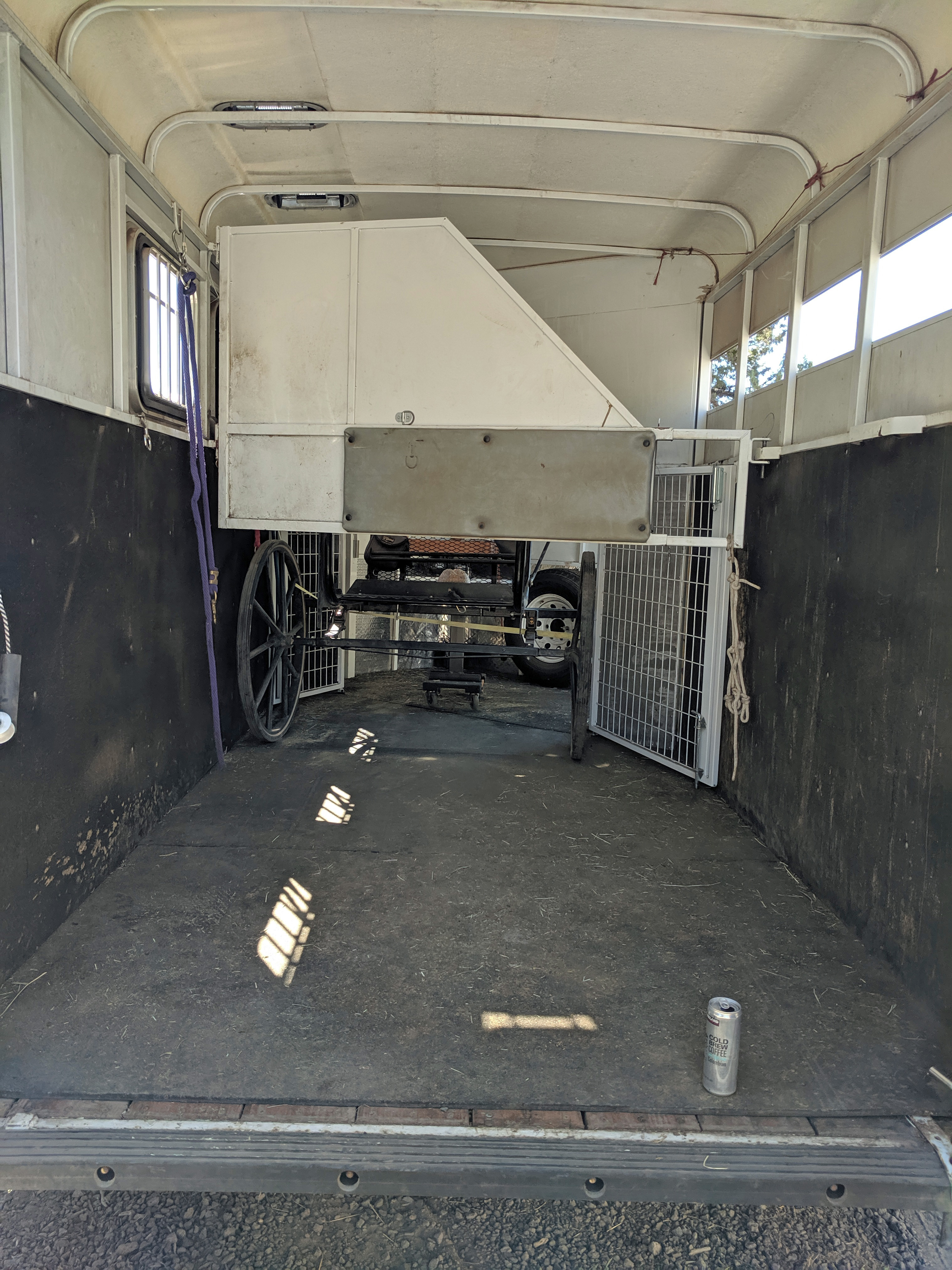
Loaded cart, with space for Sunni

Back home and then unloaded, Sunni had to run awhile in circles to escape her big sister, jealous Rosie. Meanwhile, Pimmy, looking on, brayed happily that the family was together again.

Dear Friends: It’s the grand side of having, loving, and enjoying horses. Diana

Driving Sunni

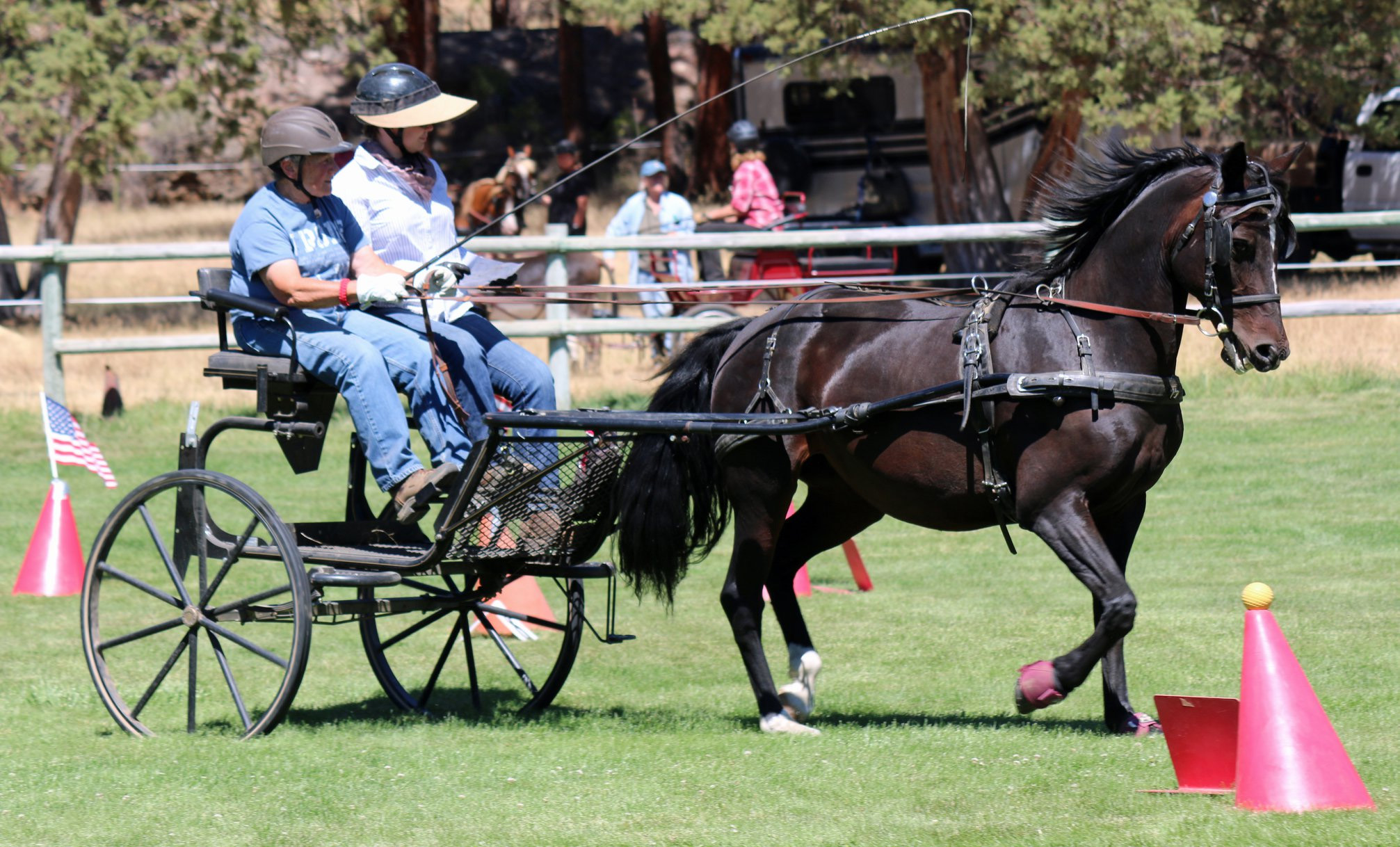
Driving Sunni in a fun competition

Friday, July 19, 2019

Most of yesterday, I was at my horse trailer, practicing how to load and unload a horse cart–not an easy, smooth process, but one that serves the purpose. Today, I’ve a goal of taking the cart, and my dependable Sunni, to a trail system with wide understandable paths, and driving her on them.

This has been building up, for our routine drives through neighborhood streets have become boring now that I’m conditioning two horses. Rosie is a little hyper and not ready for public trails, but Sunni is solid and dependable. The local streets are quiet and relatively safe, but if we were to attempt to move off in search of new territory, we’d have to mingle with and somehow work ourselves through heavy, fast vehicle traffic.

In my years of horseback riding, Sunni and I became familiar with many of Central Oregon’s trail systems. Some local riding areas have good flat roads, often shared with bicyclists (Sunni shows little interest in bicycles). There also are lovely trail systems too narrow to attempt navigating in a horse cart, but maybe that’ll feel less daunting once we’ve gained experience on various trail configurations.

So, we’re at a new forward step. It involves getting the cart in and out, loading a horse, and heading for public trails. I’ll continue driving Rosie on local streets until she’s ready for more diversity. My ultimate hoped-for goal: to drive these lovely horses as a pair.

Dear Friends, Each bit of acceptable progress begins a push toward newer goals. Diana

A Perfect Gift

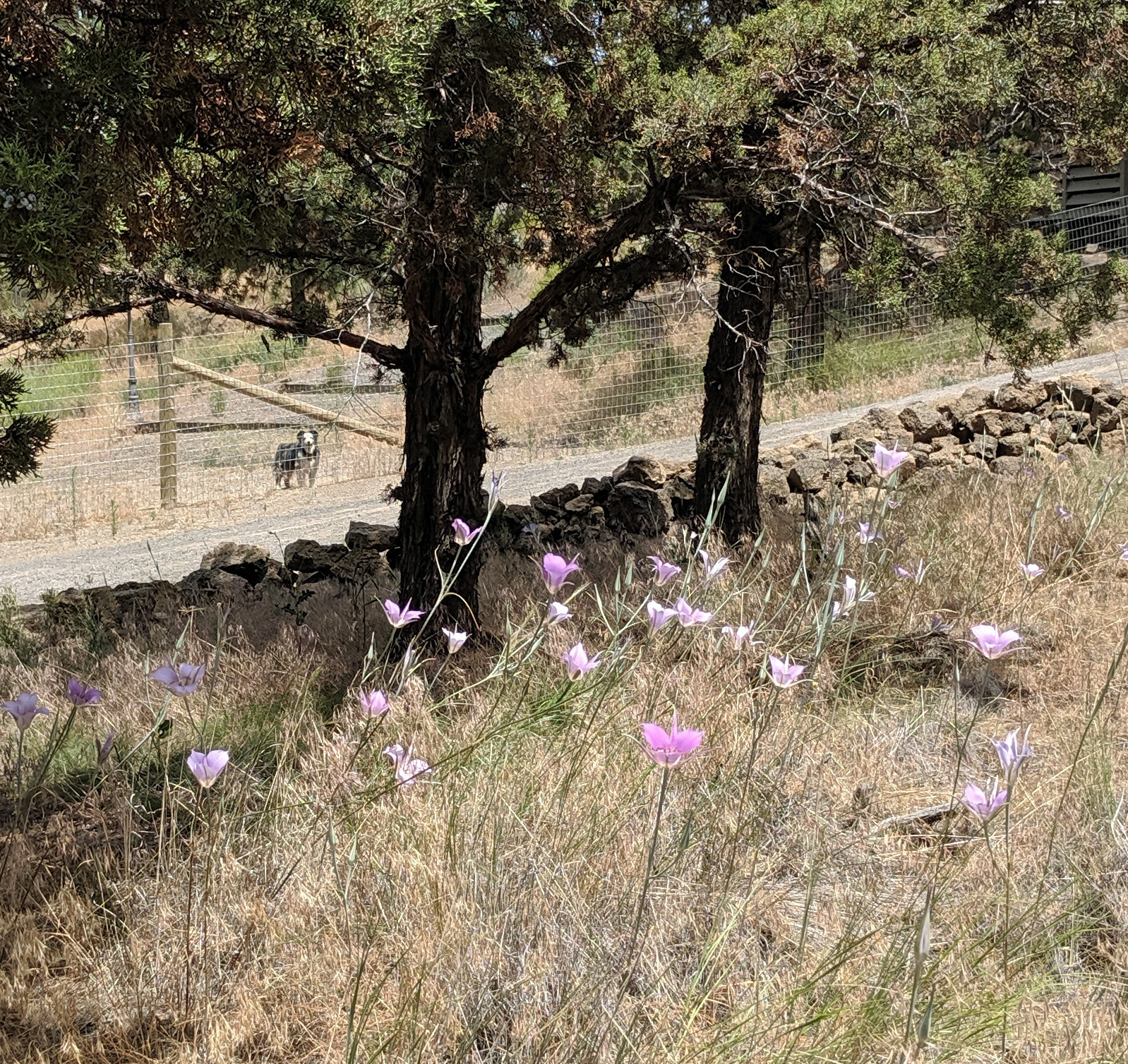
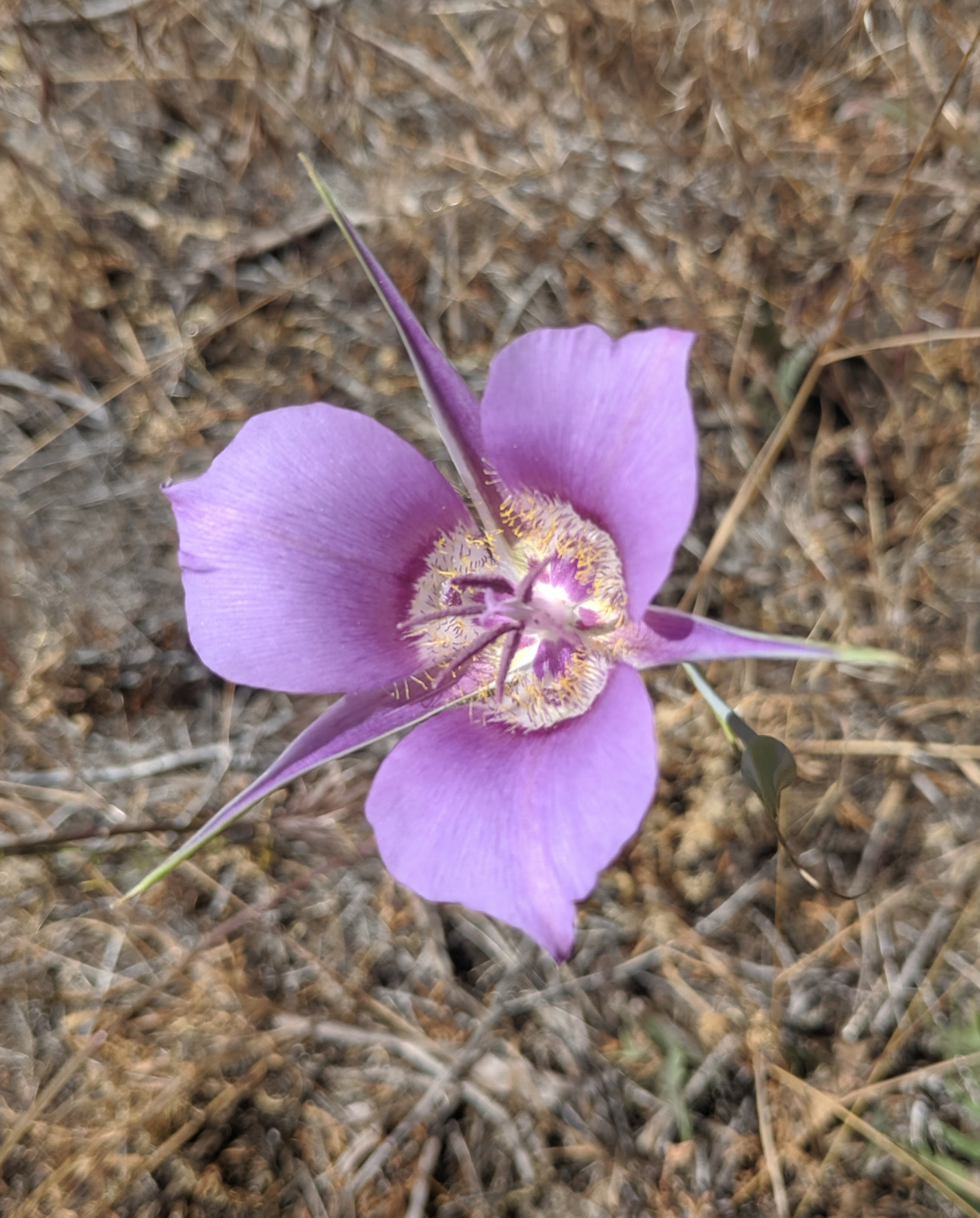
Mariposa (Sego) Lillies with Louie

Thursday, July 18, 2019

This is a blockbuster summer for the often elusive Mariposa (or Sego) Lily. Every summer I look for the plant which sometimes doesn’t appear. This year, our unusual weather–lots of rain patches alternating with dry spells–has altered the usual. Right now, my property has stands of these perinneals and the sight of them makes me happy.

Most summers, I hope to find growing here or there on my small acreage one or a scattered few of these lilies. My fascination with this flower began a dozen years ago when I often rode horseback in nearby desert areas. I’d occasionally spot a lovely flower, on a long stem standing alone, in an intriguing shade of purple. After asking around, I learned that they’re known as Sego lilies. Later, I came to understand that they’re also called Mariposa lilies.

Historically, Native Americans used this lily’s roots and seeds as a food source and called the flowers “Sego”, which is how the name evolved. The Indians native to Utah taught Morman pioneers how to use this plant for food. Its importance eventually turned the gentle Sego Lily into Utah’s State Flower. This lily thrives in the dry, sandy soils of open sagebrush areas and grows among Ponderosa pines at moderate elevations.

Here in Central Oregon, on the east side of the Cascade Mountains, our soil is dry, sandy, and loosely surrounded by Ponderosas. The Sego lily has a tendency to reappear briefly in July and August, to wish us a happy summer. This year, the weather and soil conditions have these purple lilies blooming.

Dear Friends: They’re perfect and just one among Nature’s recurring gifts! Diana

Gentle Glimpses

Wednesday, July 17, 2019

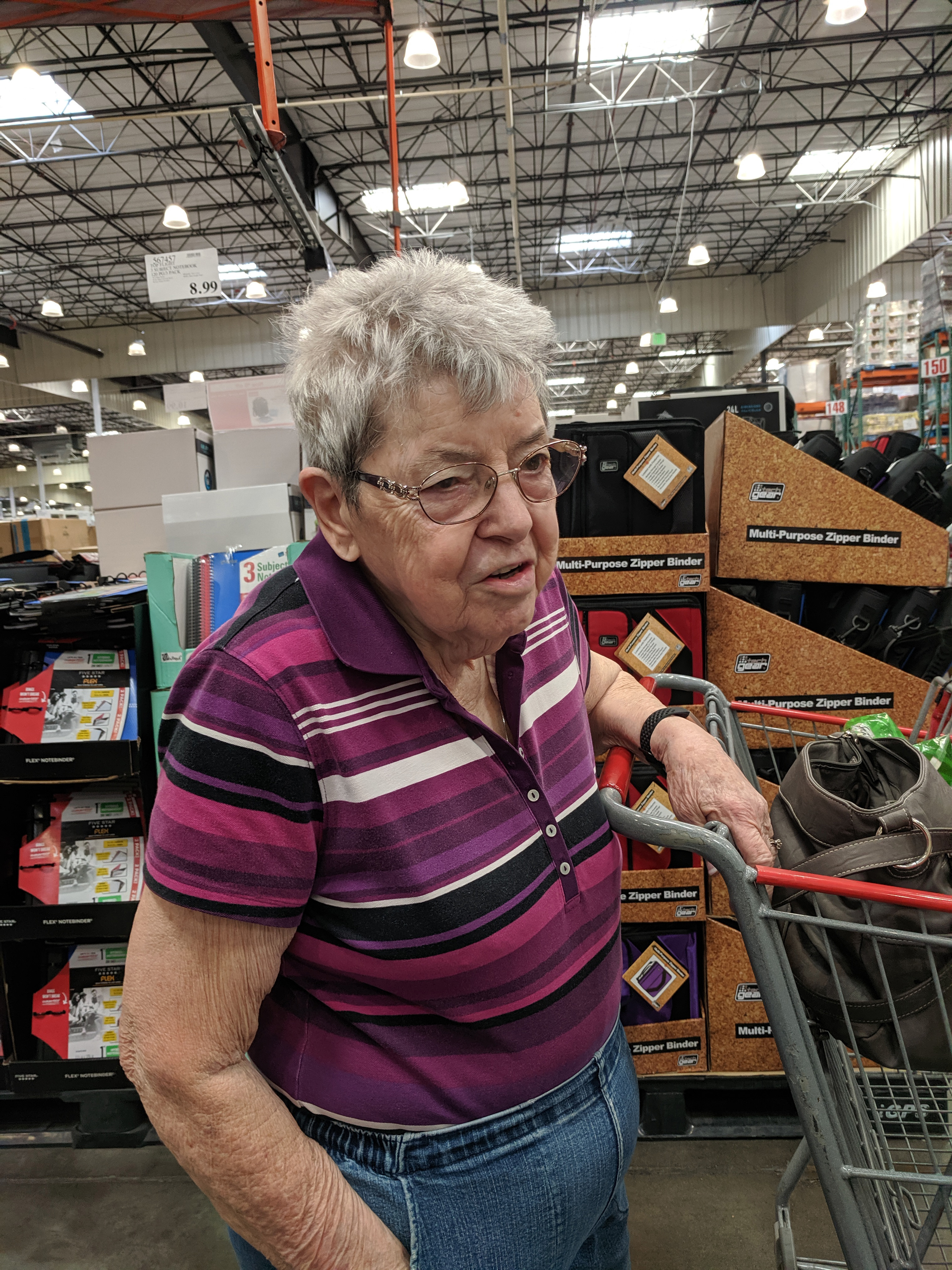
I work part-time at our local Costco as a sample server, and throughout my shifts interact with lots of customers. It’s always fun when a fellow (current or past) sample server comes into the store to shop or take care of some sort of business.

On the job, while working, we’re not allowed to use a cell phone. When the risk factors seem low, I’ll sneak out my phone for a quick picture. If there’s a kernel of truth in the capture, I post it on Facebook. That way, fellow sample servers may give a co-worker thumbs-ups and teases.

Today, I’m reflecting on this friendly, simple way of using the internet to connect people and stimulate conversation. Early today, I watched an old television show on YouTube. It was from the 1950s, and entitled, “What’s My Line?”. The show’s mystery guest was Eleanor Roosevelt. A panel of famous writers and actors (wearing masks so as not to identify the guest easily by sight) had to question and establish her identify. It didn’t take long for them to figure out who the guest might be.

At that time, Roosevelt was in New York to initiate a celebration of United Nations week, to culminate in seven days as United Nations Day. She spoke about this and the importance of the United Nations, an organization that she had a hand in forming and supporting. Listening to her, I was reminded of a simpler time, when Americans were more in sync about the world of nations and their relationships.

Today, we sigh over differing perspectives and opinions as nations struggle to achieve appropriate stabilities in populations and politics. That early work, from the late 1930s, toward having a United Nations, and clear up to the week that Eleanor Roosevelt was declaring as support for the established organization, seemed logical and appropriate.

But of course, those were days in years prior to populations having an internet, high-tech manufacturing, incredibly powerful weapons of war, and zip-fast, world-wide communications.

I’ll keep my camera handy, and continue celebrating friends and the simpler stuff that surrounds us. Even in our complicated modern era, anything that harks back to easier times lends a note of gentle optimism.

Dear Friends: Eleanor Roosevelt’s evolvement deserves re-studying. Diana

A Late July Afternoon

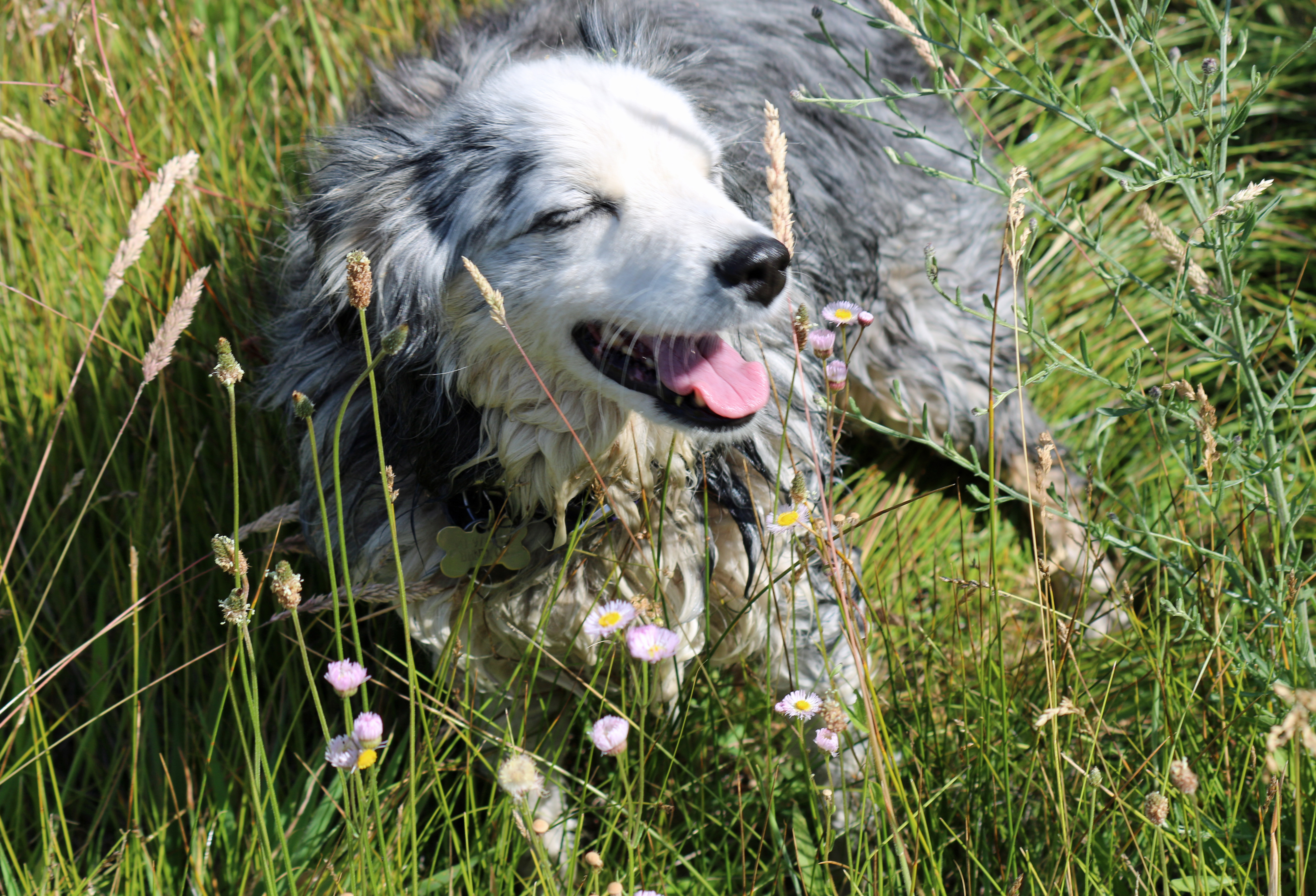
Louie

Tuesday, July 16, 2019

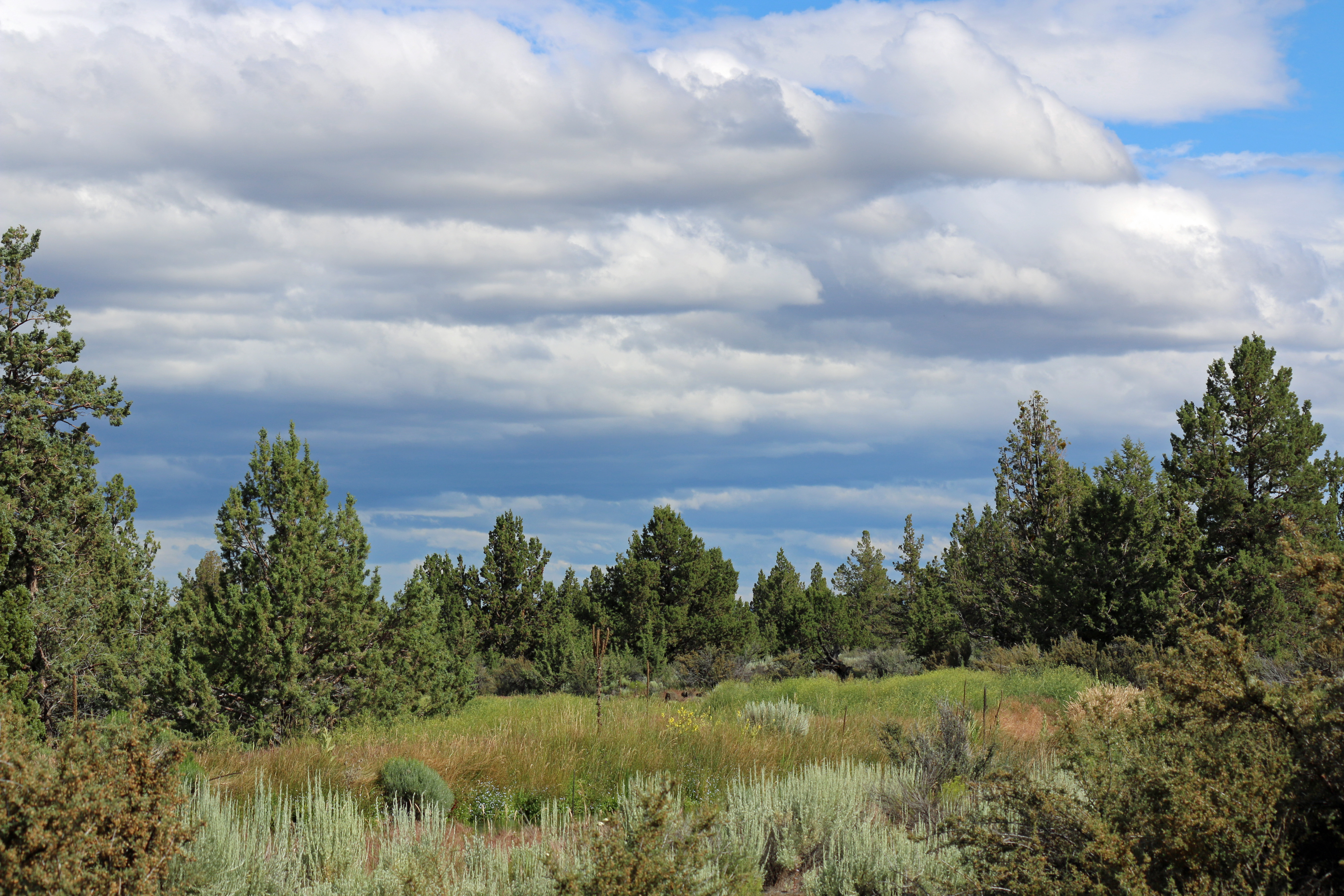
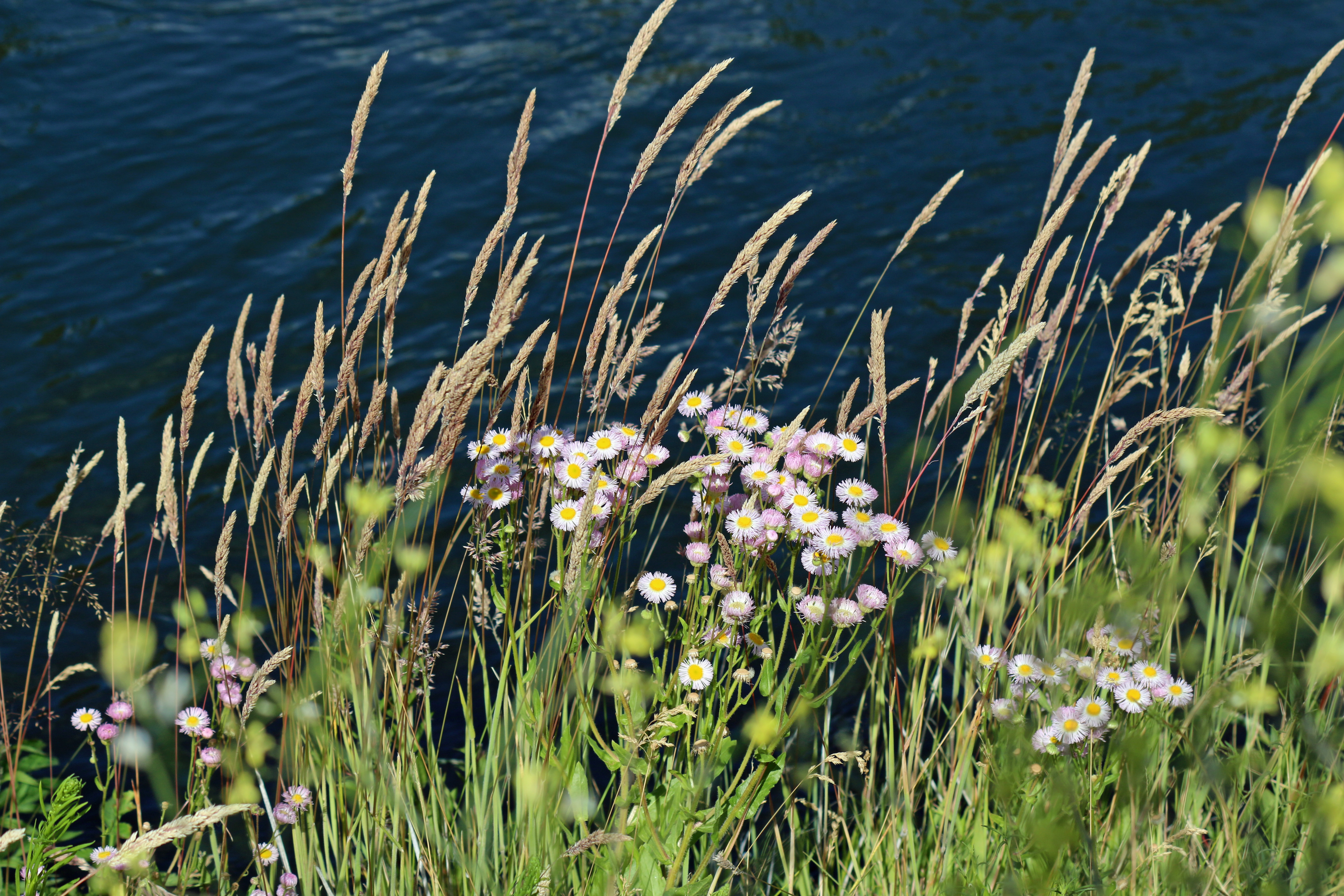
Oh, the joy of it all, an outing on a magnificent afternoon. The dogs reveling in the pleasure of unexpected freedom and me carrying a camera. Throughout, ours was a nearly perfect world soaked in drifting clouds, sunshine, and flowers.

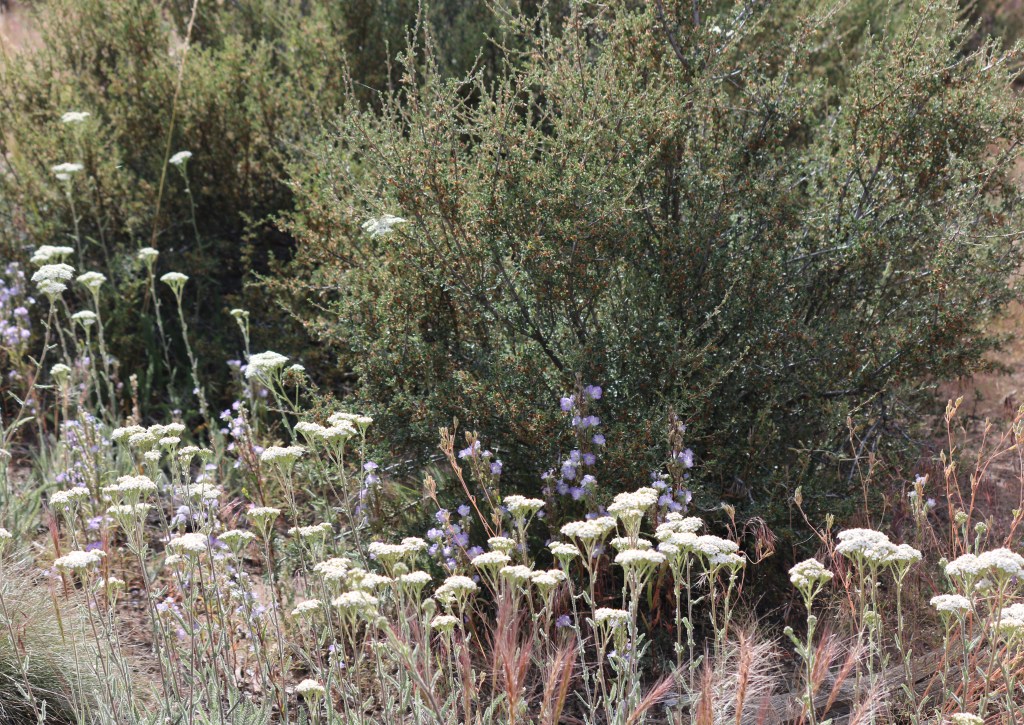
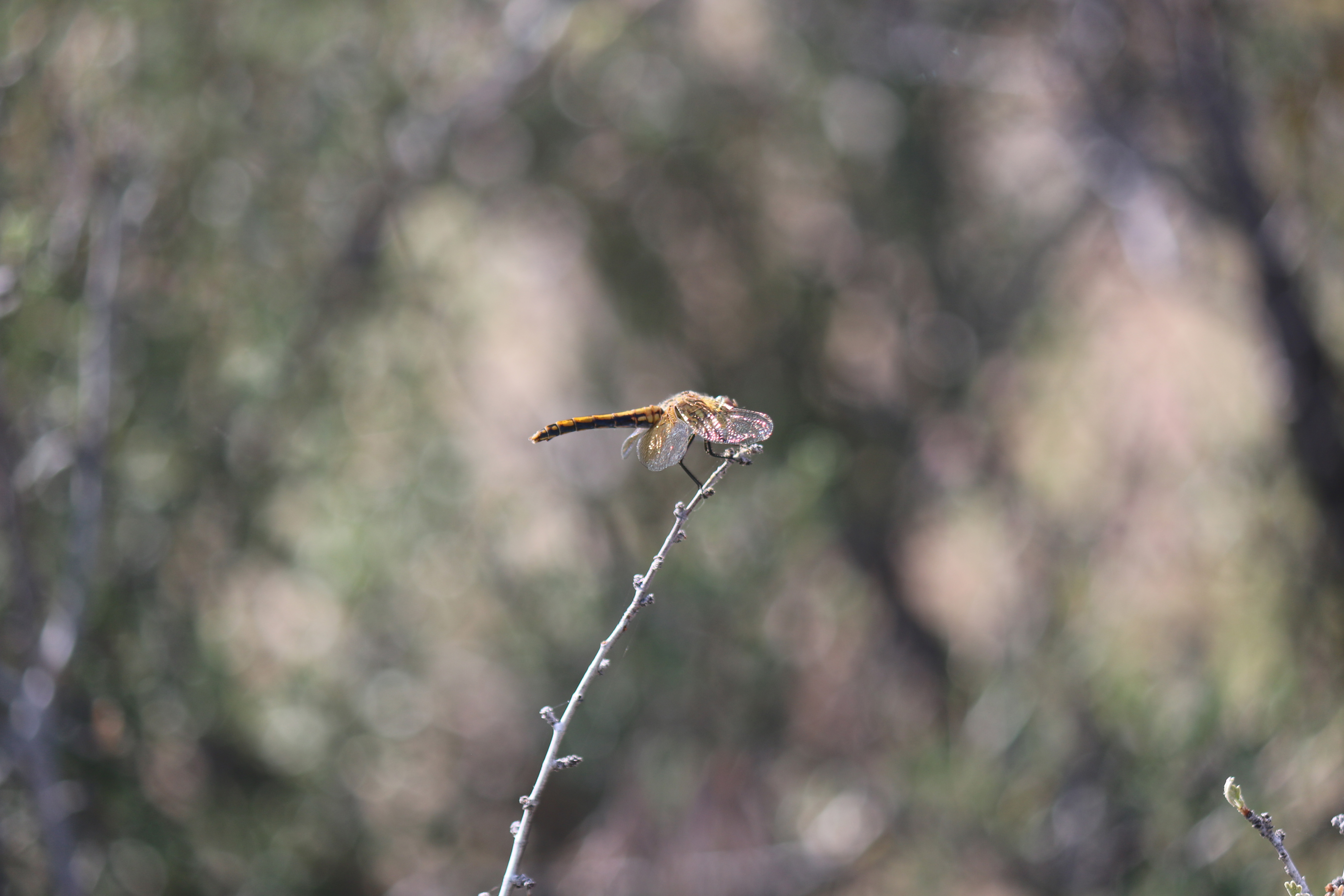
My primary goal was to capture changes in the summer landscape, its emerging wildflowers and seasonal critters. It was easy to find plentiful stands of Queen Anne’s Lace, which I love, and dragonflies busy doing their work.

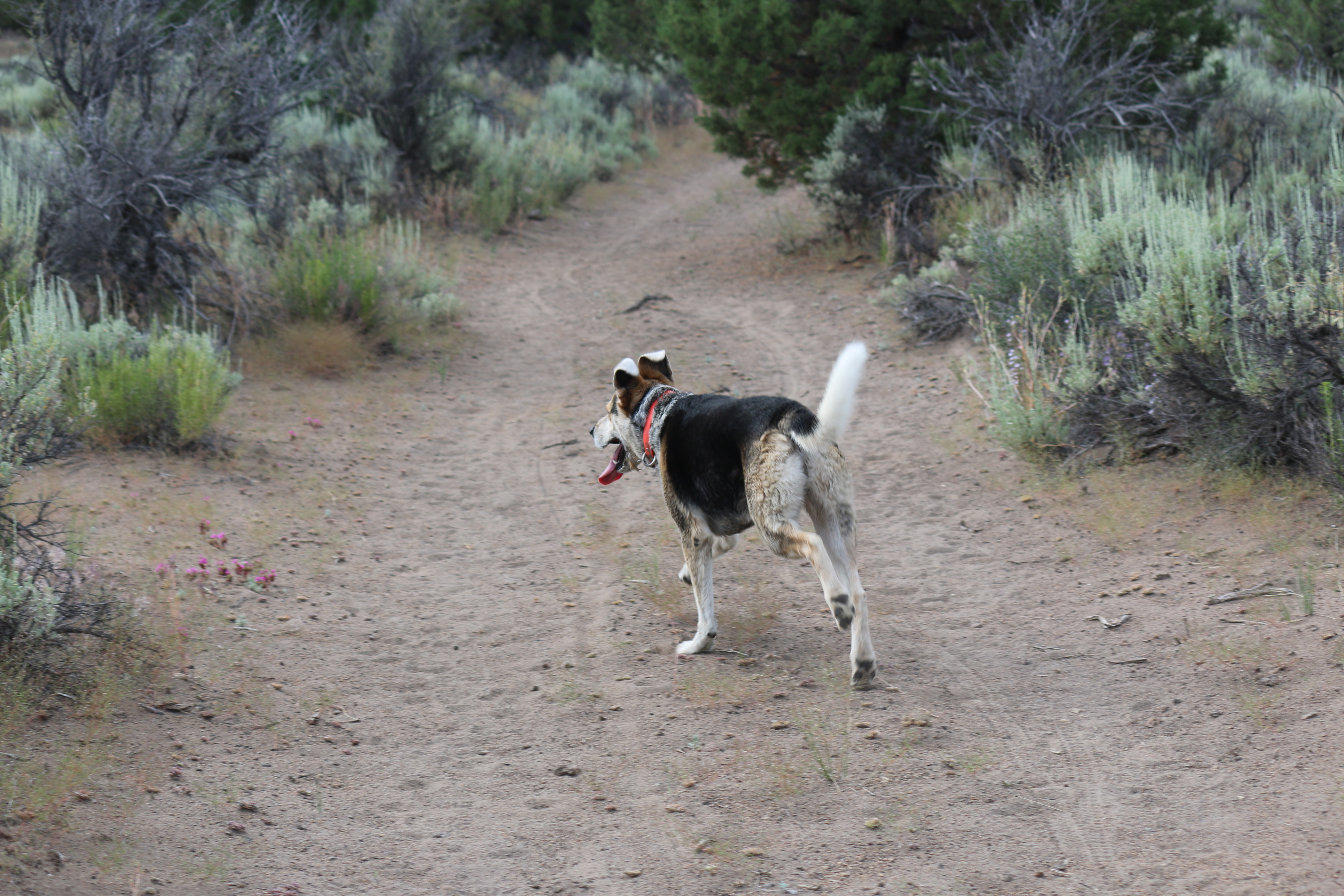
On outings, the dogs are joyous, funny, and rarely under my feet. I never tire of seeing my hound dog, Ranger, racing in search of rabbits with the forces of energy pushing against his floppy ears.

Ranger

Sometimes, it’s possible to capture beautiful Miles. He’s very fast, always busy, enjoys tracking along by running, full-out and away on the outskirts of our travel path. He disappears behind plentiful rabbit brushes and bitterbrushes too quickly for this camera-handler.

Miles

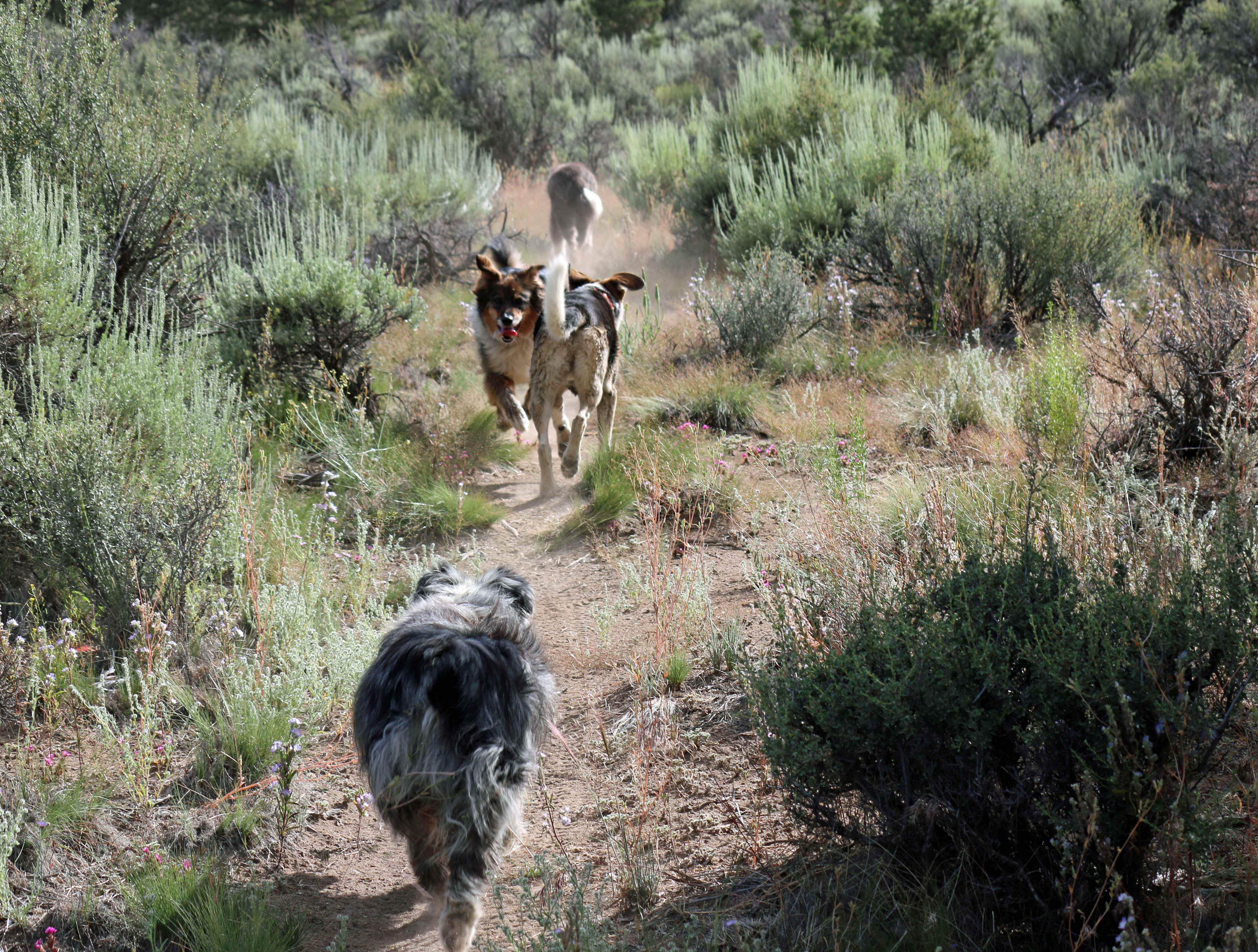
And there’s the always photogenic Osix. She won’t let herself get too far ahead of me; but on the other hand, completely disappears upon deciding arbitrarily to return to and hang out in our vehicle (Miles shares that tendency and I leave the hatch door open for them). This photo shows all the dogs (together, not easy to capture), in typical formation with Miles leading, followed by Ranger and Louie. Osix, has broken ranks and hurries back to make sure I’m still following.

A lovely spontaneous hour or so. In a natural environment with a handful of dogs and lots of sheer pleasure.

Dear Friends: This unusually-cool late July is perfect summer weather. Diana

Possession & Progression

Lifting tool

Monday, July 15, 2019

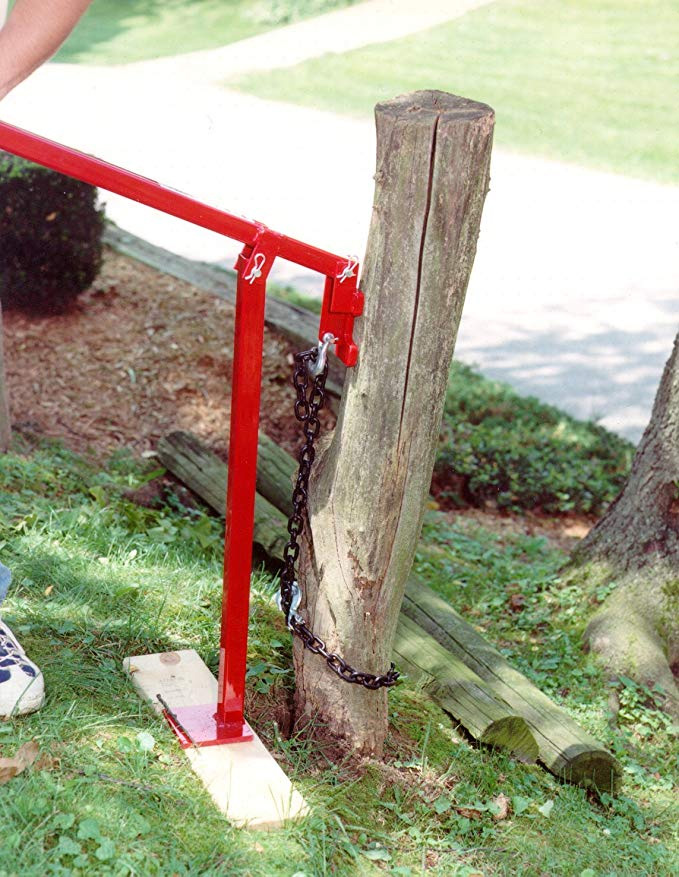
It’s frustrating to find myself facing a dangling problem–like now, trying to pull from the ground a fence stump that catches and damages mower blades. I’ve a resource for lifting and removing this stump, but it’s a tool, long-not-seen. I’ve looked around and it’s disappeared. One summer, the tool helped me remove several post stumps that were the worst, and now finally, between terrain changes and equipment usages, other stumps have turned into problems.

I’m stymied by a locked-in-the-ground stump. This distressful situation forces me toward unplanned property care. A job I prefer to avoid is cleaning the tack room. Now, I must clear its contents and reorganize a jumble that could be hiding my stump-lifting tool. Tack room cleaning, a whole day job, means shifting through zillions of bits and pieces, to weigh the value of, categorize, and re-shelf. Worst, maybe the anti-stump tool ages-ago got moved elsewhere!

This opens up a chain of time-consuming efforts. Some tack room items should be stored in other, more logical places, which of course will lack space for them. This will force expanded cleaning out to reorganize and move things. It’ll also lead to a major, entire house-cleaning. To be clear, I’m for cleaning! There’s little more satisfying than having a clean tack room, clean storage sheds, and above all, a clean house interior. But with much routine maintenance to accomplish (weather permitting), there’s little time for the luxury of finding or creating proper spaces for everything.

It makes sense to leave the bastard post stump in place, and instead, put my time into resolving other more easily dispatched problems.

Dear Friends: Yet, it won’t quit bugging me–that stump lifter, where is it! Diana

Hope and the American Dream

Shelvin-Hixon Mill at full blast (internet photo)

Sunday, July 14, 2019

My friend, Linda, who for many years lived in Central Oregon, moved away last summer. She’s still going through boxes of stuff, over time collected, and recently sent me a book, Desert Sage Memories, published in 2002. It’s filled with the memories of many Central Oregon oldtimers.

In the early 1900s, this region, located in the heart of a virgin Ponderosa forest, became a dream site for the logging industry’s promoters. They worked hard to encourage the building of a railroad from Hood River to Bend, and after 1910, that rail line now completed enabled major sawmills to build production sites in Central Oregon. They thrived, producing and shipping worldwide.

Central Oregon became a destination for folks seeking adventures and opportunities. Many of the area’s long-time household names arrived here in the 19-teens, twenties, and thirties. Many associated to the mills became affluent, while others farmed, ranched, or hard-scrabbled to make ends meet.

In a story entitled, “The Rancher and The Nurse”, its key characters, Catherine and Priday Holmes, married in 1936. She was a city girl from Portland with a nursing degree. He owned ranch land in Black Butte and described their early life together as an adjustment for her. He explains that the “big house had no electricity, no running water, and no central heating. They used kerosene lamps and a hand pump cistern from a sink, or carried pails of water from the water ditch at the water supply. There were four wood-burning heating stoves and a huge kitchen range complete with water warming reservoir on the side. On the cool side of the kitchen was a 12×14-foot pantry with one-foot thick walls filled with sawdust for insulation. Foodstuffs were stored from floor to ceiling. Laundry was done with a Maytag gas-operated washing machine that had to be run on the open back porch because of the fumes.” He adds that they “raised [their] family on the ranch and stayed in that big house until [they] moved to Redmond in 1963.”

An adjustment for her, indeed. In those days, having the patience to deal with hardships and to keep learning fostered hopefulness, or goals of getting ahead and realizing the American Dream. Many stories in the book are from folks with names today adorning Central Oregon buildings, streets, and public lands. Maybe the history of Bend and its surroundings fascinate because there truly existed a national belief in the American Dream. Today, fewer Americans are certain it’s holding true.

Dear Friends: The magnificent Industrial Age fostered social progress and hope. Diana

Bears, Lions, Tigers, Oh My!

Internet photo

Saturday, July 13, 2019

So, I decided to have some extra fun with Sunni and drive her in a BLM-like area under local power lines. The area’s rocky entrance bounces my cart and almost unseats me, so I look down focusing on the wheels and path. When Sunni hesitated, I looked up. A small herd of cows at a nearby fence stock-still staring at us. Sunni’s reins communicated near-explosive tension. If she took off, wheels on those rocks would toss me from the cart.

I spoke softly, “just walk” and thank heavens, she did, while closely eyeing those cattle, which didn’t move. I thought about riding Sunni in years past and felt grateful for occasionally having had her near grazing cattle in herds. Simultaneously, I felt most thankful that the pulling horse was my solid Sunni. Her sister, Rosie, might have leaped into action, as if having spotted Cerce’s aggressive sister, Paisphae, six-headed and with mouthfuls of teeth long as a man’s leg.

Driving a horse is more dangerous than riding. The driver is sitting in a vehicle, about a dozen feet behind the horse, and applying control with long reins. Success rests on a horse’s experience and temperament, a vehicle’s overall stability, and how expertly one handles 12-foot reins.

Only once has Sunni been a challenge, and then, not much of one. Our path went past a couple of penned spotted goats. Upon our appearance, the goats were stationary, but suddenly moved surprising the horse. Sunni turned our cart around, and then, immediately stopped and stood still.

Internet photo

Many times, Sunni and I have driven under the local power lines. We’ve entered and passed that large fenced area without seeing another living being. A lesson for me is to keep one eye up while focusing the other on our pathway. Another is to explore, in my Gater, a new area, for anything potentially frightening, before driving Rosie there.

Dear Friends: Success is a mixed bag, and one must keep trying. Diana