Learning From The Learners

Wednesday, November 12, 2025

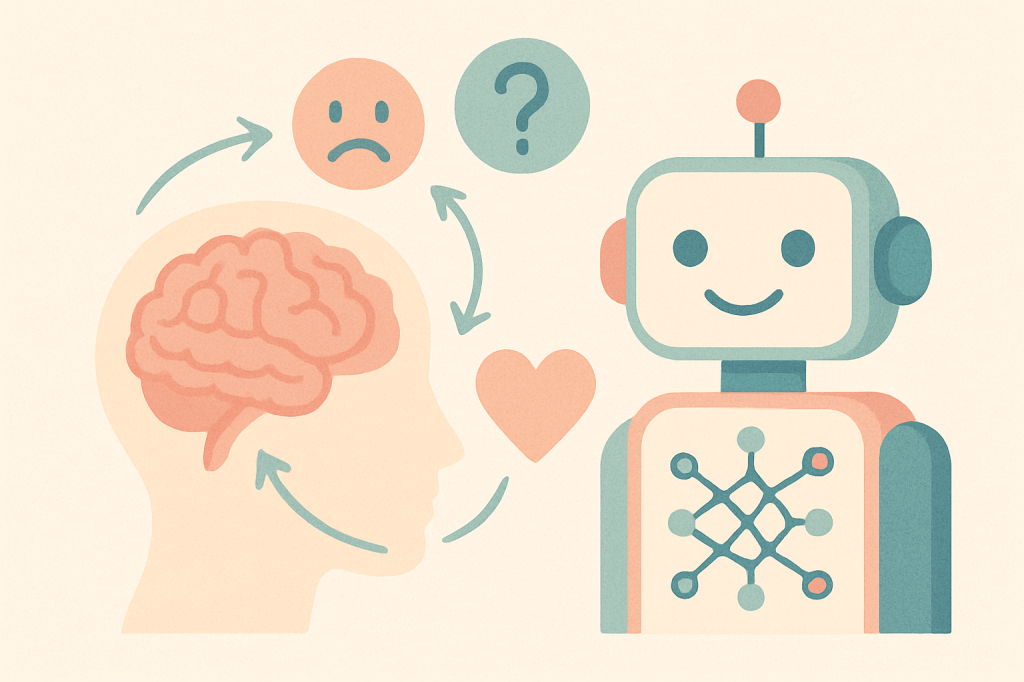
I’m one of billions of AI users curious about why artificial intelligence can seem so humanlike. While working to understand how AI learns, I find myself drawn to a closely related mystery — human emotion. I wonder how—and whether—machine learning and human feelings intersect. So far, here’s what I’ve come to understand.

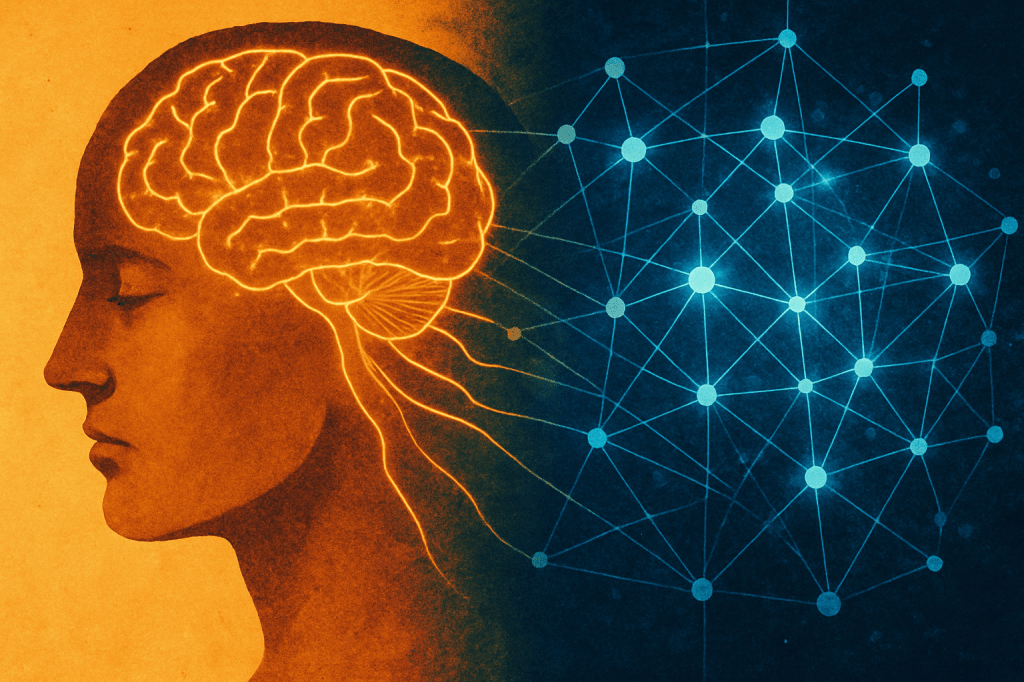
We humans are becoming more knowledgeable about ourselves by observing the technical processes of teaching AI to “think.” Researchers training the machines are learning from them, too, gaining fresh insights into what being human means.

This deep training of machines to think is reflecting us back to ourselves. The deeper we train, the more feedback we receive. Glimpses into how AI learns offer a new understanding of how we’ve been doing it all along—quietly, efficiently, and with a touch of mystery. That mystery still separates us from the supercomputers we want to emulate us.

It’s an intriguing reversal: AI training is becoming a kind of mirror for human psychology. Modeling AI on the human brain is beginning to decode some of our brain’s most elusive workings. We’re learning, for instance, about a looping relationship between neurons and algorithms—how they both generate profound ideas—and thus reveal more of what it means to learn, imagine, and grow.

AI is showing us that memory isn’t a vault but a living process. Essentially, memory reconstructs. When recalled, memory fragments are rediscovered and then reassembled into something new. Humans recall and reassemble instinctively. For example, we may soften the edges of pain by misremembering certain details, to paint a gentler version of the truth—like artists returning to the same canvas, we repaint our pasts again and again—comforted not by precision but by memory evolution.

AI language models do like us; they build new meaning from old information. They predict the “next possible” word or image, and then create knowledge through probability rather than imagination—and without fear. Humans, too, are prediction-makers, but with one difference: curiosity. We project futures, blend ideas, and dare to believe in “what ifs.” The daring keeps our minds alive.

In teaching machines empathy, we’re discovering something psychologists have long known—that emotion is intelligence. Feelings are not the opposites of logic but are extensions of it. Each emotion is a data point, which helps us interpret what we perceive. Understanding emotional depth reveals, in a kind of wisdom, a refined ability to predict, but with heart.

Even as we age, our brains are capable of change. They reshape themselves through new habits, perspectives, and stories. The AI world calls this continual learning. In human life, we call it resilience. It’s what allows us to adapt, to grow, and to keep the essence of who we are.

AI, for all its precision, still misses something essential—the human advantage of having a heart. Our heart is a living pulse that connects knowledge with caring. Human intelligence, unlike AI, is embodied. It sweats, grieves, laughs, and ages.

The mind’s true elegance lies in its fragility—its humor, its willingness to evolve. Machines can help us visualize the shape of our thoughts, but only humans possess the heartbeat behind them.

Perhaps the most poignant lesson in teaching machines to learn is what they’re teaching us to remember:
the preciousness of awareness, of feeling, and of knowing that we can keep growing.

— Diana

A Taste of Memory

Friday, October 31, 2025

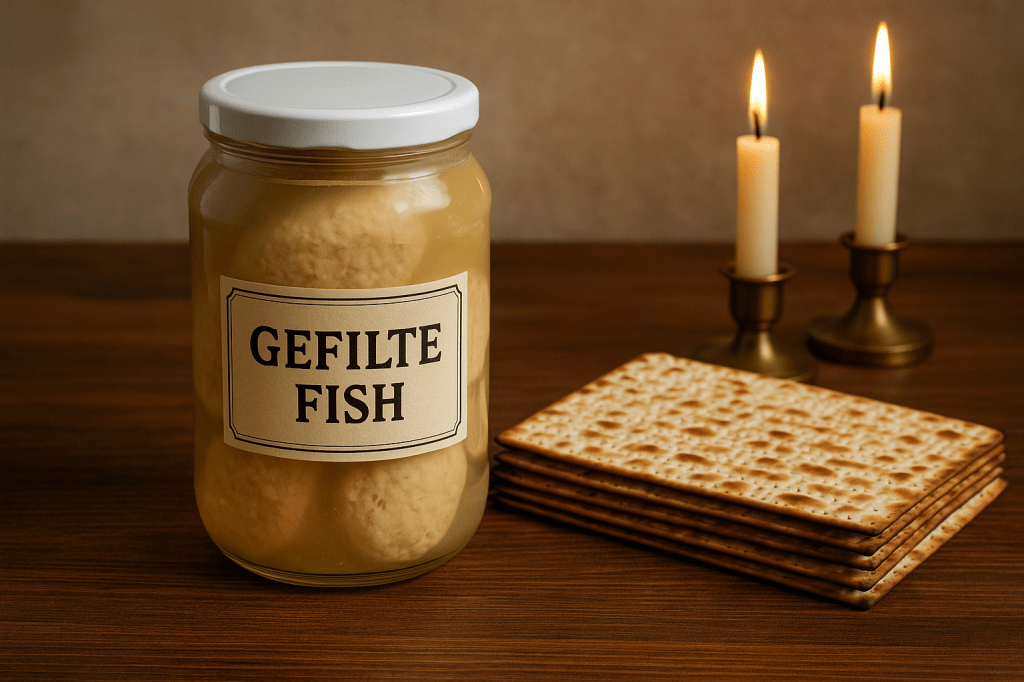
I was grocery shopping the other day when a small glass jar caught my eye — gefilte fish. Just seeing it pulled me straight back into another time.

Years ago, when I lived in Kansas City, my eldest sister and her extended family hosted the big Jewish holiday meals. I joined them for Passover and Rosh Hashanah, learning about each celebration through its foods — matzos, sweet wine, and always, gefilte fish.

Those old gatherings were full of rhythm and ritual — the kinds that linger long after dessert. Although I hadn’t consciously thought about them in years, standing in that grocery aisle, staring at that jar, I felt old warmth suddenly stirring.

When I got home, I couldn’t wait. I opened the jar, spooned out a piece, bit into gelfilte fish — and in an instant, its taste carried me back to those Kansas City meals: tables set for family gatherings, the scents of brisket and simmering broth, the sounds of ritual stories retold.

This tasting struck me as extra-funny because I started wondering if I could make gefilte fish fit into my current diet, which doesn’t exactly follow that model. These days, I lean heavily toward Asian-inspired foods — ramen noodles, stir-fried vegetables, kimchee, tofu, and special sauces like miso and chili oils.

This isn’t the first time I’ve realized how deeply food memories root themselves. Experience has taught me that particular tastes may simply rest — until much later, when a single flavor recalls them and invites their return. Now again, one bite brings the past forward, rekindling memories of gatherings and essential connections that helped shape my life.

A little taste of something so humble — a small piece of fish — reunites my present self with the young person I was, and rekindles fondness for those who helped me grow into who I’ve become.

Diana

Breeched Coop

Tuesday, October 28, 2025

Over the past two nights, six of my chickens were slaughtered. I’m still in disbelief as I write this. After fifteen years of keeping a small flock of hens in the same sheltered space, I’d come to trust their little world completely — as if it, fenced and familiar, was as safe as my own. Until now, I’d never lost a single bird to a predator.

Yesterday morning, searching harder for a predator entry, I finally noticed a small patch of ground dug out beneath the coop fencing — no clear tracks, just a telltale hollow. Later, my neighbor, Frank, shared an image caught on his critter-cam: a fox, intent, caught in mid-stride. That photo made my heart sink. The timing fit.

My hens were only about three years old — healthy, lively, full of character, and good layers. Finding them brutally torn apart was gut-wrenching. There’s something especially terrible about losing animals you’ve raised from chicks — who greet you each morning with their expectations, chattering, wide-winged, and bright-eyed. You grow accustomed to their presence — their daily routines, their quiet sense of community.

Yesterday afternoon, after those second tragic slaughters, I worked hard to reinforce the coop-area fencing. I laid wire mesh and weighed it down with heavy stones along the bottom — especially where the digging had occurred, and as far beyond as I could manage. But when darkness fell, I gave up, still uneasy about the coop, not yet secure enough.

Last night, I hardly slept. Even small sounds outside felt amplified — the wind, the shifting leaves — all seeming to echo what had already happened.

I wasn’t prepared for this. You can live somewhere for years, believing you’ve built a safe space for the creatures who depend on you, only to find that nature has a way of reminding you it’s still in charge. Foxes, coyotes, raccoons — survivors too, hungry and driven by their own needs. But knowing and respecting that doesn’t make the losses any easier.

Today, as usual, I’ll feed my critters — but it’ll feel different. The barnyard will be quieter, emptier. I’ll keep working to strengthen the coop, to guard what remains. But there’s no undoing the shock of sudden, cruel losses — proof of yet another lesson in semi-rural life: that the peace we find in nature always exists alongside its rawness.

Still, I’ll step outside as always — hoping to see some still-live birds. I’ll feed them, recheck yesterday’s hasty security measures, and I’ll keep reminding myself that healing — like rebuilding — begins with small, steady acts of care.

Diana

A New Rhythm

Sunday, October 26, 2025

I’m planning to step away from my full-time position in Fine Jewelry by transitioning to part-time and working across various departments in the same store. By working fewer hours and fewer days, I’ll have more time — for home, animals, and an ever-growing list of “small things” that rarely feel optional.

After months of the steady, clock-driven pace of full-time work, this change feels a bit jolting. My brain and body are still tuned to the structured, predictable rhythm of getting up, getting ready, and heading out the door. But now, I’m starting to anticipate having new rhythms filling my mornings — and that feels expansive, less about tight schedules and more about open, unhurried time. More daylight to enjoy will have me more attentive to the familiar sounds of paws, hooves, and feathers wanting my attention.

I’ll add quotes around “free” time, because much of it will actually be spent working. The days ahead will be filled with fences to check, water troughs to keep from freezing, and growing concerns about winter — it’s not just whispering anymore; it’s been shouting its imminent arrival for the last couple of days and insisting that I handle some essential tasks. These tasks might seem a bit daunting, but I’m also looking forward to cozy winter days ahead.

The goodness of adjusting my schedule isn’t just about managing responsibilities. It’s also a tip of the hat to something more personal: the crucial value of having time to simply think, breathe, and rebalance. It will give my mind and body space to find new opportunities for experience and growth.

I’m curious as to how my days may reshape themselves — where the hours will go once they’re no longer so tightly claimed by a time clock. Maybe into the barn. Maybe into the quiet. Maybe back into reading and blogging regularly.

This season, as days grow shorter, reminds me that every shift in weather or in work offers something new. Right now, I’m being invited to slow down and listen more closely to the small rhythms that keep my life steady: soft nickers from the barn, the hush before dawn, the impulse to lift my camera again and capture what feels special about the world around me.

Mostly, I’m grateful for the comfort of having more time to simply be—and to notice.

— Diana

Different Realities

Friday, October 17, 2025

I grew up in a small Oklahoma town during a time when social norms encouraged people to reconcile their differing versions of the world by searching for and settling on common viewpoints. The best solution for conflicting opinions was usually to satisfy the “commonly held” middle ground. Such viewpoints tended to reflect the widely accepted and “popular truths” that most people—before the internet and modern technology—generally agreed upon.

As a young person, I found the differing versions of reality unsettling. I struggled to make sense of them before eventually realizing that many forces shape people’s perceptions—one’s upbringing, information sources, fears, hopes, and fatigue. Other influences too—culture, personal experience, and cognitive biases—play powerful roles in shaping how we each perceive truth and reality.

Even now, I’m sometimes taken aback when long-time or new friends express opinions or wishes that seem to belong to an alternate reality. Some might find such moments reassuring, as evidence of progress, while others might see them as signs of decline. I’ve come to sense that some people find comfort in tradition while others draw inspiration from innovation. Recognizing that helps me accept our differing realities.

I often imagine us all standing in the same landscape, each looking up at the same vast sky but through different filters—some perhaps tinting it with unusual colors. Each of us navigates life through a private, learned lens, one that has either been refined over time or obscured by it.

In my more mature years, I try to respond gently to others’ realities. I no longer attempt to reconcile their perspectives with mine—or mine with theirs. As others speak from their own worlds, sometimes so different from my own, I try to listen for the heartbeat beneath their words—for the universal emotions of worry, pride, love, or loss. It’s there, in those shared emotional spaces, that our realities overlap and understanding becomes possible.

These days, I keep my focus on what’s directly before me—my own, very real world. That includes my dogs at dawn, the fall season’s newly chilled air, and the always-marvelous scent of early morning coffee. These rhythms mark the beginning of my days; they are among my certain truths.

We often hear that our shared world is fracturing. That notion is open to many interpretations. Yet despite our differences, many of us still believe in shared ground—the small, tangible things we can all see and touch.

We may never fully align others’ realities with our own, but we can remain faithful to the core values that most people strive to live by and nurture in their daily lives.

After all, we are remarkable beings—capable of rising to the challenges of caring for one another.

Diana

Falling Back With The Pack

Wednesday, October 15, 2025

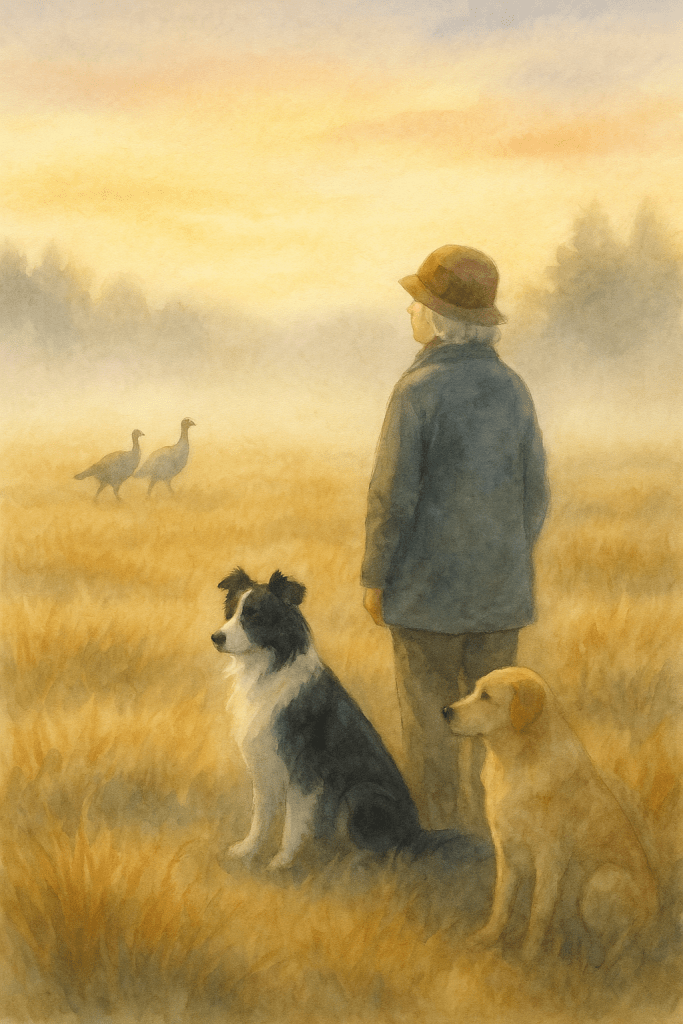
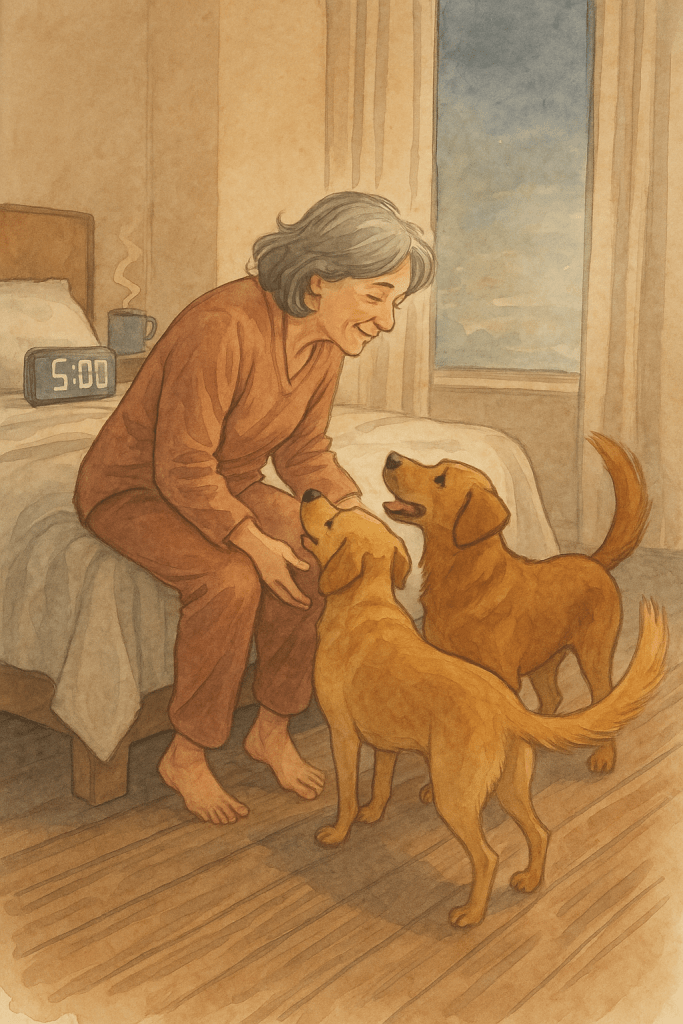
Every fall, when the clocks are about to “fall back,” I find myself thinking about the ways this time change will ripple through the rhythm of my household. For one thing, there are my early mornings—I’m an early riser, usually awake by five. Very often, I’m reminded it’s “getting-up time” by the gentle tapping of paws on the hardwood floor, heading my way.

After saying hello to my dogs and getting on my feet, I love being awake in that early hour. The world is still quiet, the coffee is strong, and for a few quality moments, I have no obligations.

It amazes me how precisely my dogs seem to know when it’s five o’clock. I hear their toes tapping down the hallway, sense their hesitation, and then find them beside my bed—tails wagging, eyes bright. My projection clock says it’s five o’clock, and I wonder how they tune into some invisible clock that runs on instinct instead of batteries.

In a few short weeks, their invisible clock will clash with the one on my wall. When daylight saving time ends, will they still wake me at what their bodies think is five a.m.—while my clock insists it’s four? How long will it take them to adjust to the new rhythm? I suspect they’ll manage faster than I do.

I’ve gone through this annual shift many times and know what’s ahead. Yet every autumn’s time change feels like a new game. I can already anticipate my confusion, mild grumpiness, and the faint irritation that comes with every mandatory reset of the clock.

The dogs, like me, will need some time to sort things out. Meanwhile, it’ll be on me alone to get up around five—while they sleep in, waiting for what feels right to them. Soon enough, they’ll catch on. Dogs are practical; they read a household’s energy for meaning beyond the numbers on a clock.

My notions of falling back with the pack make the upcoming change feel less mechanical and more communal—as if we’ll all be adjusting together through the darker mornings, each in our own way.

Our human world may be run by clocks and calendars, but the dogs might have it right: when the rhythm changes, don’t fight it. Just stretch, yawn, and greet every new wrinkle with a wag.

Essentially, time itself has its moods.

Diana

In The Story

Saturday, October 04, 2025

I grew up in the 1950s and ’60s, when life expectancies were shorter than they are today. Back then, reaching eighty-five seemed almost mythical — something that happened to “very old people,” but not to all of them.

Yet here I am, at eighty-five, still alive, active, and managing the daily demands of home life while also working a full-time job outside my home. Over the past few years, as I’ve learned how to work in retail environments, I’ve encountered ageism — sometimes subtle, sometimes not. People have told me outright: “You shouldn’t be working, you should be enjoying your twilight years!” or “You’ve earned your rest — why are you here working?”

My life lessons and learning are that staying engaged, helpful, and connected is my way of enjoying and making the most of them.

After experiencing uninvited confrontations related to aging, I have elected not to answer when people ask about my age. Let them look. Let them guess. I’ll let my energy and presence speak for me. Age is only a number; contribution is a choice.

I’m now rethinking somewhat, for Jane Fonda has begun resurfacing in the public eye again. And, I find myself noticing her with renewed interest. She has always been bold — both in her career and in her willingness to age openly, in plain view of the world. Now, while approaching eighty-eight, she is again speaking out, supporting free speech and democracy — still active, still fearless, still herself.

Her appearance has changed, naturally, but not in ways that erase her. She’s slender, stylish, and poised. If she’s had work done, it’s subtle. She lets her neck, however, tell the truth of her years — and to me, that’s oddly comforting. I see her as not hiding from the passage of time.

To me, Jane Fonda has become more than just an actress or an activist. She is a symbol of endurance. Her journey, which we have witnessed growing up alongside her, is a testament to her resilience and strength. She symbolizes the permission to remain visible, to express opinions, to care deeply, and to stay part of the ongoing conversation. She shows that relevance is not confined to youth.

At eighty-five, my private reality is a testament to the meaningfulness that comes with caring for animals and responsibilities. I never expected to live this long, feel this alive, or be this responsible. The unexpectedness of my current situation keeps life interesting. Yet, I still work full-time, on my feet, solving problems and engaging with people. And when the day is done, I return home to care for my animals and keep my world running. It’s not easy, but it brings a profound sense of purpose.

To people who suggest I should slow down, relax, and “enjoy life,” it’s my work and routines that bring me joy — they give shape and purpose to my days. I’ve never had cosmetic surgery and don’t want it. Instead, I take pride in how I present myself: in my clothing, my interests, my energy. My mind is clear, my curiosity intact.

Without family nearby, my workplace provides me a sense of belonging — through friendly interactions, shared goals, and the simple recognition that I am still making a contribution. Those exchanges keep me grounded.

And now, to my surprise, Jane Fonda is becoming a role model, not for her fame or glamour, but for her persistence and grace. She reminds me that aging isn’t about looking young — it’s about staying in the story.

Maybe that’s what aging is teaching us: not how to fade away, but how to keep showing up. Jane Fonda illustrates that we can grow into our later selves with intention, not apology. She is still visible, still learning, still engaged — and so am I, in my own way.

Inside, I don’t feel old. I think seasoned — aware, shaped, and, in many ways, more certain than ever. My work keeps me connected; my mind keeps me company. And if I find a mirror in Jane Fonda, it isn’t in her polish or fame — it’s in her refusal to disappear.

At eighty-five, I’m not winding down. I’m still becoming — quieter, perhaps, but clearer. Still part of the conversation. Still in the story.

Diana

Thirty Years On

Friday, October 03, 2025

Thirty years ago, I was deeply invested in the O.J. Simpson trial, as were so many others. It was more than a courtroom drama—it felt like a seismic event that tested our hopes, our doubts, and our fragile trust in the justice system. When the verdict was announced on October 3rd, the nation wasn’t just divided by opinion; it was stirred by waves of strong emotion. Some felt relief, while others were left heartbroken.

Today, I sense a similar atmosphere in our national life. Once again, many of us feel shaken, uncertain, or disbelieving when we see decisions made in courts, in government, or in the public square. We may not all agree on which choices are right or wrong, but we share the unease that comes when trust feels uncertain.

I’ve also felt how these larger events ripple close to home. Friendships I valued—built on horses, shared rides, and laughter—were tested when politics grew louder than the bonds between us. It saddened me then, and it still does, when division outweighs connection.

Yet, from both then and now, I’ve learned reminders worth holding onto. History is filled with moments that leave people at odds, when decisions shake our sense of stability. But history also shows that communities, friendships, and even nations can find renewal when we make space to listen—especially across disagreement.

The O.J. Simpson trial anniversary may recall a wound, but it also reminds us that we’re not alone in feeling disbelief, and not alone in hoping for better.

—Diana

Lessons In Jewelry

Friday, September 26, 2025

I grew up with the saying, “Diamonds are a girl’s best friend.” In mid-20th-century culture, that line carried enormous weight. A diamond was more than a glittering accessory—it symbolized status, romance, and permanence. It was also, and very often, a woman’s only financial safety net. When women had little access to income or property, a diamond ring could be converted into cash if someone suddenly found herself left and on her own.

Working in jewelry today tells me how much has changed. Modern women build careers, manage investments, and create their own security. Diamonds remain desirable, but less as a lifeline. Talking with customers has taught me that diamonds are just one option among many ways to celebrate love, beauty, or success.

I see today’s women often choosing pieces that tell their own stories. A birthstone ring, an heirloom reset into a modern design, or a pendant from a local artisan can mean more than a flawless solitaire. Essentially, jewelry is becoming autobiographical—and saying, this is who I am, rather than this is what a woman should have.

I also see the shift favoring ethics and individuality. Many women prefer lab-grown gems, recycled metals, or fair-trade stones. Others embrace color—emeralds, sapphires, and tourmaline—or opt for raw crystals and asymmetrical cuts. Jewelry is often collected in layers and stacks, shifting with mood and season.

So what replaces that old “best friends” phrase? Maybe nothing—and everything. Younger women, especially, are unbothered by distinctions between mined and manufactured diamonds. They want bold sparkle and personality, not conformity. Meanwhile, women from traditional cultures often still value mined diamonds as both symbol and security.

What I see every day is that the “best friend,” rather than being a single stone, is having choice itself—the freedom for a woman to define what sparkles brightest for her.

Diana

Scattering Seeds, Rebalancing

Thursday, September 25, 2025

This fall, I can’t seem to get flowers, bees, and butterflies out of my mind. These days are shortening, and there’s more chill creeping in, yet my mind keeps circling around things like nectar-rich blooms and winged visitors returning to them one day.

It’s probably due to the pressures in my outside retail job. The store is busier this time of year — new displays, seasonal merchandise, constantly shifting schedules, and the steady press of customer interactions. Additionally, leadership weighs on me. I cringe at being micromanaged and pushed toward difficult-to-achieve sales goals. These leave me off-balance, make me want to establish my own pace and direction. At home, my mind keeps wandering toward slower, more sustaining rhythms.

Now, here in Central Oregon, fall is sharpening the air. Mornings begin with thin frost, afternoons flash with sudden sun, and evenings drift early toward darkness. The horses’ and my donkey’s coats are thickening; my dogs race across grasses that crunch under their paws; and a more expansive sky above the Cascades creates dramatic clarity.

In these everyday seasonal scenes, I find myself searching for emotional balance. My thoughts aren’t just passing, but they’re pulls–to scatter wildflower seeds, to trust the earth to hold and protect them through winter, and then, see blooms rising with bees and butterflies dancing among them again in spring.

It’s a way of offsetting the grind — those hours measured in transactions, sales goals, and schedules. I yearn, instead, for another continuity — the hum of bees, the shimmer of butterfly wings, the quiet return of flowers after their winter’s sleep.

And besides, there’s a larger picture. Planting seeds for pollinators is also planting seeds for myself — a reminder of beauty’s return after seasons of dormancy. Renewal doesn’t require much — just clearing a patch of ground, scattering seeds, and trusting in nature’s quiet magic.

Maybe my fall thoughts aren’t only about flowers and creatures. They might also be pointing me toward deeper needs, like toward balancing the seasons of my own life. What I’m sure of right now is that scattering seeds feels like an excellent step forward.

These small actions will matter — for bees, for butterflies, and, in many quiet ways, for me too.

— Diana