What’s Smarts?

Wednesday, May 08, 2024

Today is World Donkey Day, celebrating that most worthwhile companion animal and hard worker if you know how to train one. Over the years, I’ve attempted, and always in vain, to train my donkey, Pimmy. Instead, she’s taught me. I finally understood that a donkey is very different from a horse.

They’re closely related. Donkeys and horses share many distinct physical and behavioral characteristics but are very different to train. Unfortunately, donkeys are stereotyped as stubborn but are very intelligent and typically more cautious than horses.

Donkeys don’t particularly trust new things, which makes training them difficult. Horses basically are willing to do what’s asked, but not a donkey. A donkey needs to comprehend why it’s doing something. Otherwise, it participates unwillingly and escapes training situations as soon as possible.

I learned all that by wanting Pimmy to learn to pull a cart. Cart training began with me using a long lead rope and guiding haltered Pimmy to walk in circles. She refused to walk in useless circles; she never “got it.” Finally, I gave up.

To be truthful, “our problem” more was mine. I lacked the patience to keep Pimmy going until she became more accepting. That taught me that “if you can” when training a donkey is highly related to a trainer’s patience.

Pimmy is bonded to her horses, is loyal, and follows them everywhere. She’s also very alert and protective. Our donkey is a wonderful pet.

Dear Friends: Voting on World Donkey Day for lots more years with sweet Pimmy. Diana
Wildlife

Sunday, May 05, 2024

Today, it’s Cinco de Mayo, enjoy!

It’s another rainy and chilly morning here in Central Oregon. Yesterday, my neighbors told me they had discovered a brown fox, apparently living in our neighborhood, at their pond. They caught it in the act of killing some of their chickens, including the brave rooster, and frightened the critter away. This morning, I have a closer eye on my flock. It has two big roosters, but a fat chance they’d willlingly work together, and they don’t reassure.

Luckily, over the years, predators haven’t terrorized my chickens. Maybe because tree limbs partially sheltering their area deter skydiving, scooping, and escaping. Oddly, neither does an occasional raccoon, evidenced by its footprints, cause damage.

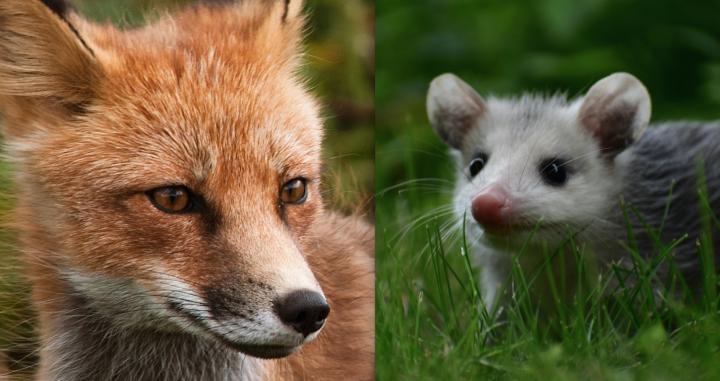
I wondered why a fox would be in a densely populated neighborhood. They’re omnivores and hunt very small animals, like mice and rats. Thinking more about why, I suppose that scavenging in human communities, with freely available pet food and garbage, makes it easier to live. My neighbors are familiar with wild foxes and suggest that this one is likely feeding babies and nesting within a mile of us.

I need our chickens to be safe, and I am curious. I would like to spot a fox with its gorgeous tail. Long ago, while living in LA, I occasionally saw wild possums, and they frightened me. That was before I learned about possums—wonderful creatures—and could appreciate them.

My curiosity invited a real learning experience. My small animal veterinarian said she had rescued a baby possum and that she’d bring it to meet me. That did happen, and the half-grown infant clung to me. She roamed a little, with her toes tightly holding onto my jacket, finally nesting in my hoodie. I fell in love with that little one and have forever remembered the whole episode.

Of course, meeting a fox would be very different, especially if it’s in the act of threatening small domestic animals. Aside from that, I’ve wished to see a wild fox in real life; a whim that somehow might happen.

Dear Friends: Today, remembering that possum, we together, and me learning. Diana

Remembering “Mable”

Wednesday, April 03, 2024

For me, this is a new one: World Rat Day (happening tomorrow).

Recently, I began following on FB some fancy-rat owners who have trained their pets to “do agility.” They capably photograph and video the cute and appealing creatures, maybe carrying a toy, navigating an agility course, or as a still life.

Why am I interested in following people who keep rats as pets?

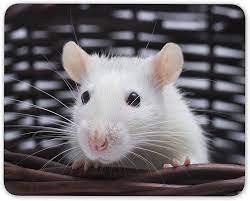
In my high school years, I brought home a white rat from the biology classroom to care for over two weeks of Christmas Holidays. I called that fun and affectionate creature “Mable” and quickly grew fond of her, often letting her run freely in my bedroom. She loved finding her way into my chest of drawers and chewed holes in clothing. I don’t remember feeling either relief or sadness on returning Mable to school, but over many years do remember her as a charmer.

Upon retiring to Central Oregon and living beyond the city limits on a small property, I learned about the local wild rats, known as “pack rats.” Named for collecting, or “packing around,” for their nests, various objects, and bits of material. Here’s my thing: pack rats are nuisances like all wild rat varieties, but they look cute and are appealing, with big whiskers, bright eyes, and busy trails. After trapping a pack rat, I take the caged critter to a BLM and release it.

Sometimes, I think about adopting a couple of neutered/spayed fancy rats. The upside is that they’re social, intelligent, low-maintenance, and fun. Also appealing is that rats have a shorter lifespan. On the downside, free time is required for providing companionship and training for pet rats; moreover, they’re primarily nocturnal and, for certain, are great chewers.

Dear Friends: Ahead of World Rat Day, sweet memories and some thoughts. Diana