Breeched Coop

Tuesday, October 28, 2025

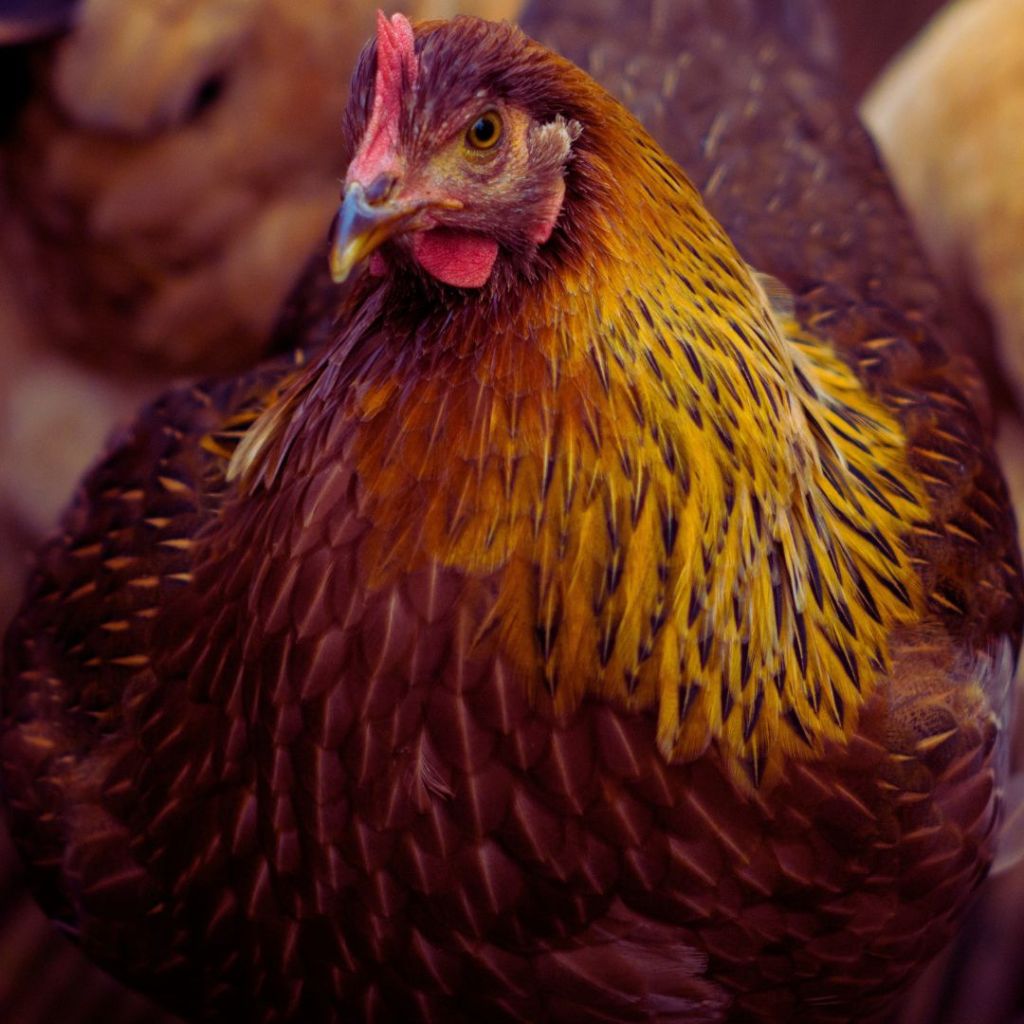
Over the past two nights, six of my chickens were slaughtered. I’m still in disbelief as I write this. After fifteen years of keeping a small flock of hens in the same sheltered space, I’d come to trust their little world completely — as if it, fenced and familiar, was as safe as my own. Until now, I’d never lost a single bird to a predator.

Yesterday morning, searching harder for a predator entry, I finally noticed a small patch of ground dug out beneath the coop fencing — no clear tracks, just a telltale hollow. Later, my neighbor, Frank, shared an image caught on his critter-cam: a fox, intent, caught in mid-stride. That photo made my heart sink. The timing fit.

My hens were only about three years old — healthy, lively, full of character, and good layers. Finding them brutally torn apart was gut-wrenching. There’s something especially terrible about losing animals you’ve raised from chicks — who greet you each morning with their expectations, chattering, wide-winged, and bright-eyed. You grow accustomed to their presence — their daily routines, their quiet sense of community.

Yesterday afternoon, after those second tragic slaughters, I worked hard to reinforce the coop-area fencing. I laid wire mesh and weighed it down with heavy stones along the bottom — especially where the digging had occurred, and as far beyond as I could manage. But when darkness fell, I gave up, still uneasy about the coop, not yet secure enough.

Last night, I hardly slept. Even small sounds outside felt amplified — the wind, the shifting leaves — all seeming to echo what had already happened.

I wasn’t prepared for this. You can live somewhere for years, believing you’ve built a safe space for the creatures who depend on you, only to find that nature has a way of reminding you it’s still in charge. Foxes, coyotes, raccoons — survivors too, hungry and driven by their own needs. But knowing and respecting that doesn’t make the losses any easier.

Today, as usual, I’ll feed my critters — but it’ll feel different. The barnyard will be quieter, emptier. I’ll keep working to strengthen the coop, to guard what remains. But there’s no undoing the shock of sudden, cruel losses — proof of yet another lesson in semi-rural life: that the peace we find in nature always exists alongside its rawness.

Still, I’ll step outside as always — hoping to see some still-live birds. I’ll feed them, recheck yesterday’s hasty security measures, and I’ll keep reminding myself that healing — like rebuilding — begins with small, steady acts of care.

Diana

Givers

Sunni’s inquisitive nose

Sunday, February 02, 2025

Some folks consider me a little nuts for keeping many animals, and I get it. I have three equines, nearly twenty chickens, a couple of turkeys, four dogs, a few “inside birds,” and Max the cat. Feeding and cleaning up after that bunch keeps me busy.

The animals also give back. My equines are sweet and rideable, the dogs let me know anything unusual happening on or near this small acreage, my racing pigeon’s sounds are soothing, and my Cockatoo’s ear-grating (this otherwise delightful buddy sings and rides on my shoulder), Max is Max. My chickens and turkeys are the best.

Chickens and turkeys give their all to some willing to slaughter. Less than “that all” to me who won’t slaughter. Otherwise, I love gathering and eating fresh eggs from chickens and turkeys. Typically, my little flock provides enough eggs for my needs with extras to give away.

This season’s commercial eggs aren’t as available. Bird flu has destroyed millions of chickens and other kinds of animals living with or near domestic birds. Fortunately, my flock is healthy.

The other day, while loading chicken feed into my vehicle, a fellow mentioned seeing a dozen eggs priced at $12/dozen in a local market. That’s a purse-shocking price.

Eggs are essential food ingredients. A person with eggs, flour, and some small staples can cook eggs alone, bake bread, and create casseroles–among other things not yet in my mind. (I’ll learn what more is possible while shopping very carefully ahead.)

Soon, events beyond animal health will also increase product costs. For example, the new importing tariffs will force importing suppliers to pay them, which those suppliers will pass on to consumers. We will be facing ever-rising prices for ordinary groceries and household supplies.

Dear Friends, Fortunately, my chickens and turkeys will provide those essential eggs. Diana

Profound Connections

Wednesday, June 18, 2024

Happy Juneteenth!

In today’s header photo, my fifteen-year-old hen, Welsummer, is attentive to something. There’s no telling what because her eyesight is seriously failing. She’s no longer able to judge distance, is having trouble finding her food, and more than ever she settles into a “resting state.”

When I started noticing all that, my impulse was to begin feeding her by hand. After crushing the yellow of a boiled egg and diluting it with warm water, I filled a chicken syringe. I had to hold Welsummer while trying to open her beak to insert nourishment. She wasn’t cooperative but did enjoy the few drops I got into her beak. I often tried that way of feeding, hoping she’d learn, but the process never enough improved.

The feeding failures became frustrating, and I began questioning all the worrying and struggling against losing a very old hen. One reality is my fondness for her; another is that she’s seriously failing from natural causes.

Years ago, I worked hard to keep a failing hen alive. That bird was much younger than Welsummer is now. A veterinarian had said her condition couldn’t be improved. However, she was receptive to syringe-feeding, and for weeks it seemed she was improving. However, that wasn’t so; she quit accepting nutrition, the inevitable happened.

Losing that hen saddened me and illustrated that when a “chicken’s time” arrives, there’s likely little chance of successfully reversing the reality. These days, with Welsummer, I am thinking about my earlier experience and learning.

Here’s the upshot: Welsummer is healthy but old and failing from natural causes introduced to me by her eyesight loss. Syringe feeding wouldn’t help enough. She might learn to accept a syringe but will pass in her own time. I must work at rearranging my thinking and be willing for reality simply to happen.

Dear Friends: The deeper the bonds with pets, the deeper the grief of losing them. Diana

Always

Saturday, April 06, 2024

My “house hen” is just turning fifteen years old. Yes, my Wellsummer (her call name, and also her breed) still lives; not inside my house but in the adjacent garage. Her special pen has an overhead heat lamp, and this is her third year as my most special hen.

She’s very old for a domestic chicken. She began her life as a sickly two-day-old chick. I saw her in a “sick tank” at what then was the Big R Store. In that tank also were a couple of sickly infant Bantams. I paid fifty cents for each and bought home the tiny and weak trio.

I set a ten-gallon aquarium on a table in my living room and filled the container bottom with a little chick litter. After rigging a heat lamp overhead, I set the chicks into the aquarium. Wellsummer was tiny, and the Bantams teenier. Immediately, each Bantam sought and snuggled under a Wellsummer wing, and she didn’t mind. All slept, the Bantams under Wellsummer’s spread-out wings. Her kindness touched my heart.

Eventually, those youngsters joined my flock, which was my first flock and had ten chickens. Over time, I learned to expect hens to remain healthy and lay best before turning five to eight years old. That first flock was mostly gone before I brought home new baby chicks; they needed housing in my garage under a heat lamp for weeks before becoming strong enough for a coop. During those weeks, my coop lost every mature hen, except for Wellsummer.

Wellsummer, then ten years old, disliked and threatened the chicks. When the babies became bigger and stronger, they retaliated. Wellsummer was their common target and not strong enough to withstand the young pack. It was time to transfer her.

Over the next months, she occasionally laid an egg, but none with a strong shell, and before long, stopped laying altogether. For these three years, she’s been healthy, strong, and satisfied in my garage. She has spent winter nights under a couple of heat lamps and sunny summer days in an outside pen. Sometimes, she’s temporarily had garage mates, some coop hens that seemed weak and needed special attention.

This spring, Wellsummer seems slightly different. She is still alert but noticeably has less appetite and eats only bits of her favorite foods. Maybe her system is signaling failure—and that possibility is impacting me beyond anticipation.

I am highly fond of this hen. She’s now very old and still special. I can’t forget that once-tiny and sleeping infant, with wings widespread, protecting, and nurturing.

Dear Friends: Who’a’thought, that even chickens may become very special pets. Diana