Good Energy

Monday, May 27, 2024

Memorial Day has arrived this year on the heels of my birthday. My special day improved more last evening, by the pièce de résistance of having dinner with my friends Susie and Julie. Today’s header is Susie’s capture of us, in the excellent Latin-style restaurant–Mexican martinis, fine food, and a joint farewell to this Birthday, my best of all.

Today is for getting back into gear and keeping my mood high. So far, so good.

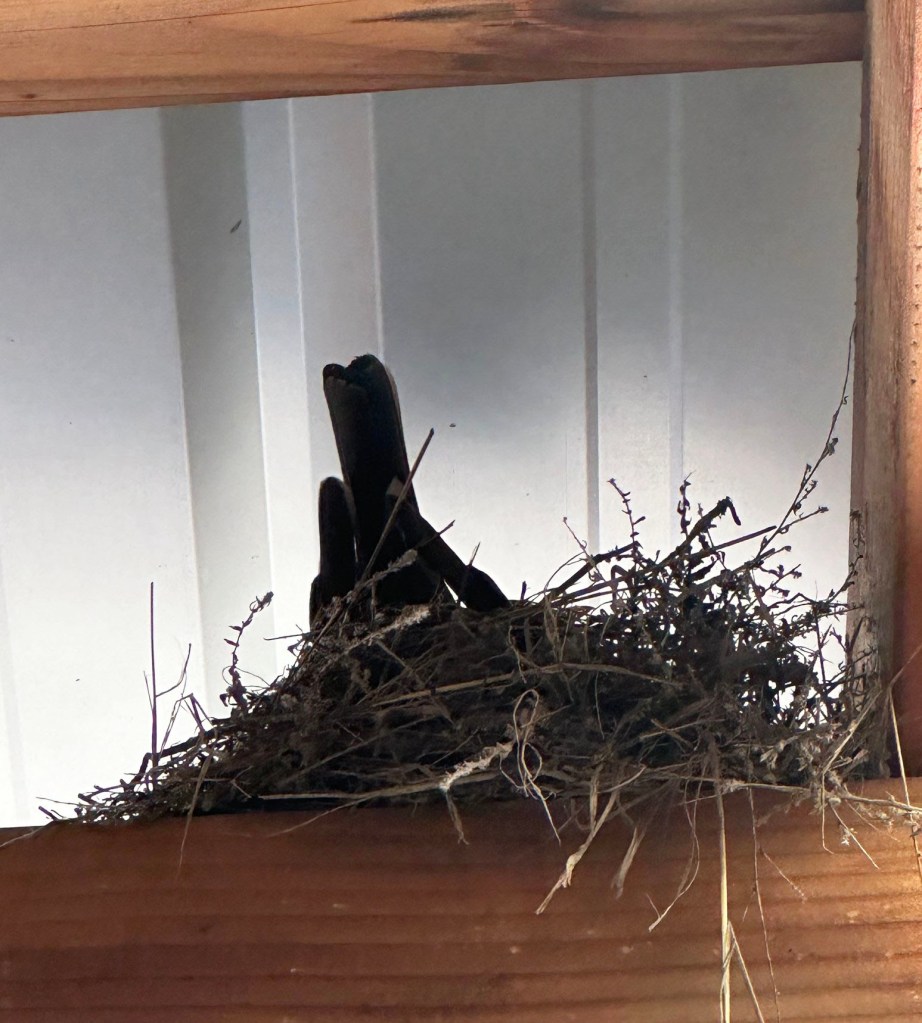
I’ll add a little about those Robins nesting among my barn rafters. I think the larger bird is a female and that she’s “My Robin.” She is back in her birth area and about to hatch her first babies. A little research suggests all that makes sense.

When my baby Robin fledged enough to fly away, it seemed a very involving saga had ended too suddenly. I kept wondering if the bird might return, and read that wild birds may mature and return to their birth areas to nest and raise their young. I gathered that full maturity takes a couple of years and that the lead returning bird likely would be female.

Here’s a fact: my baby Robin flew away two years ago! Without questioning the accuracy of my memory or my recalled learning, I believe my little Robin was a female. And as another birthday gift, she’s returned to her birth area and sits on eggs in my barn.
Thank you, Susie, Julie, Robin Bird, distant good friends, and colleagues at work, for making this newest year start off special.

Dear Friends: Positive and negative energies are generated by the eye of the beholder. Diana

Birding

Wednesday, May 22, 2024

My camera captured this watching bird from a great distance. The image is good but surprising because I couldn’t recognize the bird type. Its coloring suggests a woodpecker, but it has a seed-eater’s beak. This probably is of a common variety, and wanting to know has encouraged me to download an app that identifies birds from photos. I will learn the answer after uploading this photo from my computer to the phone app.

I love photographing birds, and they can be challenging. They’re fast movers and can test a photographer’s skills. There are thousands of species, each with a unique appearance and behavior. Some are incredibly beautiful, and it’s thrilling to capture their assets.

Photographing wild birds, even on or around my property, connects me with nature. Spending time observing and appreciating brings peace, relaxation, and inspiration. Plus, I’m learning, about different bird species, their behaviors and habits.

Bird photography is educational and enriching; there’s always something new to discover and capture. Bird photography and bird-watching teach lots and inspire sharing because almost everybody loves birds. And in the world of birds, there’s much to love.

Dear Friends: A bundle of challenge, diversity, beauty, learning, and sharing. Diana

My Robin(s)

Monday, May 20, 2024

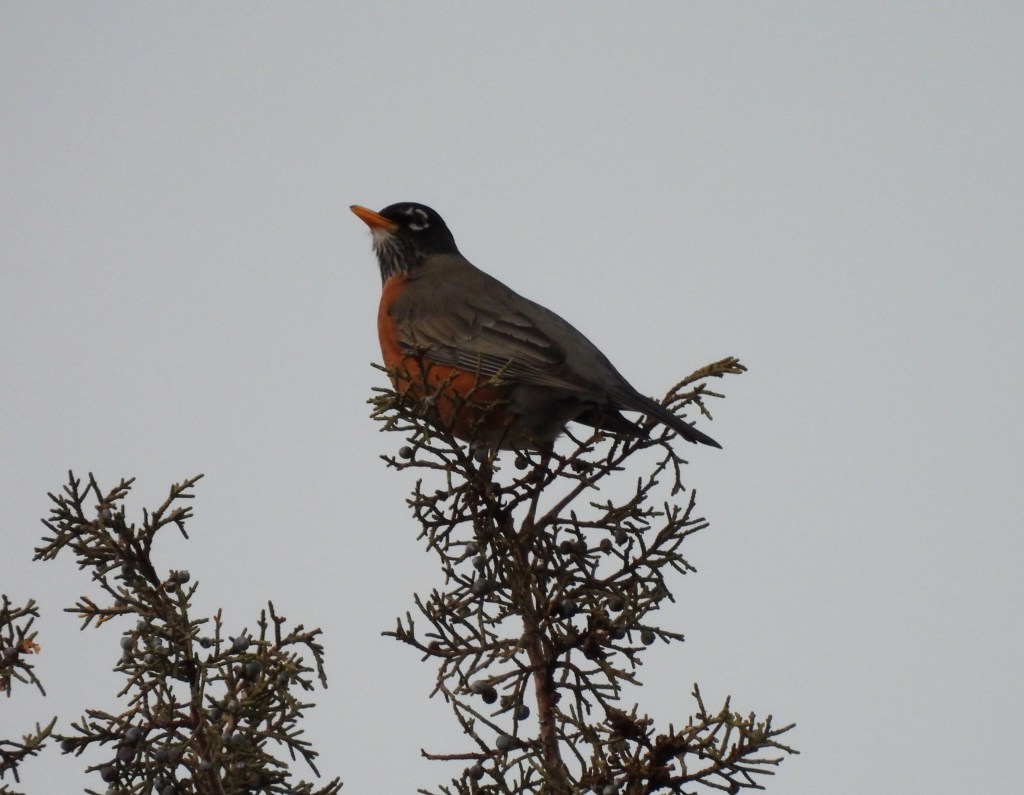
From on high, this Robin (or its mate) always watches my every move.

Here’s why:

It’s safely tucked into a rafter. I searched for a while before seeing it. I’d noticed a mature Robin flying in and out of that hay shed often enough to make me wonder if it had built a nest there. Various bird types have nested in previous springtimes, sometimes in loosely structured and precariously situated nests located in worrying spots. This Robins’ nest is impressively safe. It is securely beyond my reach, my dog’s, and most other predatory types.

For several reasons, I love hosting and seeing that healthy nest. Robins build their nests in areas offering good shelter, adequate food, and water. This nest’s location suggests that my property is a good local ecosystem that offers essential resources.

I’ll be observing closely this intricately constructed Robin’s nest and maybe seeing some of the birds’ nurturing behaviors. I’m having a pipe dream: If I’m really lucky, maybe I’ll see eggs hatching and the chicks growing.

More is drawing me toward connecting with this Robin family. Several years ago, I rescued a fledgling Robin; it had fallen from a nest and was too young to survive independently. I raised that baby successfully until it could fly well and care for itself. I enjoyed every moment with that cool bird. My little fantasy is that it might be one of the parents caring for this nest.

Besides, I like to associate Robins with springtime and new beginnings. That nest in my shed reminds me of the renewal and growth that occurs in nature and inspires similar feelings in me.

Dear Friends: Now to work again, to create a special photo and “birthday surprise.” Diana

Bitties Insisting

Tuesday, April 16, 2024

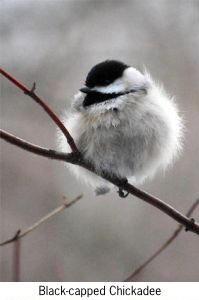
My house is under siege by two tiny birds, apparently mates, taking turns tapping unendingly into a lower corner of a high window. They’re working too high for wingless me to reach them without a 20-foot ladder. Little by little a hole grows. The birds are tiny—chickadees or nuthatches—but determined. I watch and yell to no advantage.

Their chosen window is precisely where a Northern Flicker drilled a large hole years ago. Apparently, birds are attracted to high spots protected by an eve. I love birds but would drive away these littles. I yell and threaten, but they ignore me. The long-ago Flicker left an unsightly hole that, finally, a house painter made to disappear.

Now, here we go again. This time, it’s a bird tiny enough to leave space in my palm.

They’re so high up it’s hard to tell, but I think a Chickadee bird pair is tapping into my house. My first impression was that the birds were Juncos, but a Junco doesn’t drill unendingly.

It’s a wonder seeing these tiny birds pecking into my house siding, determined to create a nesting space. A little research says that they can and won’t give up until they do.

Dear Friends: I’m becoming an unwilling nest host to bitty birds. Diana

What’s That!

Saturday, March 16, 2024

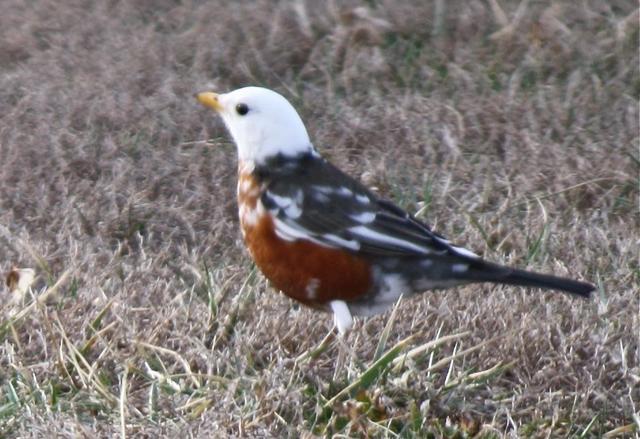
The other day, I spotted a partially albino Robin standing quietly on the ground near a fat Robin I’d seen the previous day and had paused, wondering why that Robin was so fat. When Fat Robin spotted me on this day, it didn’t fly but started hopping away. To my surprise and curiosity, the albino immediately followed the bigger bird, tenaciously. The two hopped away in ever-larger curves into the distance. Maybe that albino was a fledgling, still somewhat dependent on its mom or pop.

I love birds and enjoy watching Robins, which I consider the “Border Collies of birds,” stalking and rounding up worms. Thousands of Robins thrive here annually, with more in the summertime and fewer in the wintertime. I’ve never seen an albino Robin before.

This year, to my surprise, area bird photographers had mentioned albino Robins in my FB feed and even posted a photo or two. So, fortunately, I was slightly informed, but nonetheless, a bit shocked to see the albino Robin.

Since then, I have waited, hopefully, for a reappearance of the fat bird and/or its companion, but so far, no dice. That instant in time confirmed my recent learning, that it’s true. Albino Robins do exist, and are active in this area, at least for now.

Some research informs me that an albino’s unusual coloration is due to a lack of pigments. Ornithologists call the albino condition “leucistic” and say the key, most lacking pigment is melanin.

Dear Friends: We might think we know it all until we learn (again!) that we don’t. Diana

Special Robin

Sunday, January 27, 2024

A few years ago, I rescued an infant Robin after it fell from a nest and landed inside a fenced area where my dogs run freely. I heard its screaming parents, picked up the wide-mouthed baby, carried it where the dogs couldn’t go, and set it down.

I intended to let the parents take care of their infant but worried about its ongoing safety in an open area that hawks may fly over. After struggling about having left the baby, I decided to return for it. The bird became the resident of an unused small birdcage in my garage. I had to find live food, which is what Robins eat, and the ticket was night crawlers, from supplies for fisherfolks. Those juicy eats grew my bird strong.

For weeks, it spent nights in my garage and days perched on a tree limb and waiting for me. I didn’t intend to keep that Robin as a pet, although it was tempting. Finally, one day, I discovered that my bird had flown away–completely.

For days afterward, I walked around in this area and called for my bird. My calls had always brought it flying in and landing on my shoulder, but not now. I could only hope to find someday that it had returned, maybe even nesting here, but there’s no evidence that’s happened.

Since then, on spotting a mature Robin, I whisper, “Are you my bird?”

Dear Friends: It’s much of why I so appreciate and photograph them. Diana