Sampling The World

Tuesday, December 03, 2024

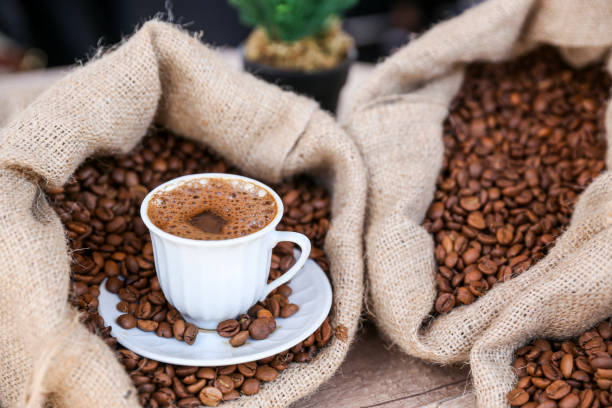
I began this day by grinding coffee beans for a French Press. The Yeimini Coffee I ordered arrived as whole beans. I didn’t expect that, but I did grind to accommodate a French Press, which wants rough grinds. To me, the rougher grounds seemed easier to press.

The output was a surprise, weaker than I expected. I’m accustomed to strong-tasting coffee and like that, but regardless, this regional coffee is smooth and drinkable. To its credit, and as its bag suggests, I found that a cup without cream offers distinctive flavors and hints of flowers. I will learn to adjust bean strengths to my preference.

I discovered this coffee by searching online for a consensus of “best coffee” and found an answer—that from Yeimini (coffee’s historical birthplace). Today, while sipping and assessing this coffee, I couldn’t help but reflect on the internet and the potential of AI.

I’d never even dreamed of having a pound of coffee beans from the Middle East. Ordering one suggested my widening perspective. It’s because of continual access to online information in general and pointed learning from AI. Those available flows are similarly affecting many individuals. More widely, they are revolutionizing communications, connecting people across geographical boundaries, and fostering global communities.

Dear Friends: This thread began while sipping coffee and fiddling with the internet. Diana
Beany

Monday, December 02, 2024

I’ve searched for equipment to make coffee each morning, hoping for faster, hotter, and possibly tastier javas. That’s guided me to acquire an electrical, quick pour-over coffeemaker that works well and several nonelectrical pour-over varieties. I’ve used them all, and each produces an adequately satisfying cup of coffee. The pour-overs commonly instruct users to make coffee from rough-ground grains.

I’m busy, so I avoid grinding by using preground coffee. I prefer beans that have been single-sourced from mountainous South America. I’ve learned that coffee beans have many varieties of complex flavors, from factors like growing terrains and processing methods. To me, South American beans are high quality and consistently satisfying.

Learning can be a game-changer; I began exploring the world of coffee beans for a commonly acknowledged “best” bean. The consensus is that the best beans are grown in Africa, and at the top are Ethiopian beans. I have gathered that Ethiopia is considered “the birthplace of coffee” and that its beans offer many flavors, described as bright and floral or rich and complex with “fruity acidity and delicate sweetness.”

I’m in, and finally, a pound of Ethiopian coffee has arrived. Its packaging recommends using a French Press, which works for me. Tomorrow morning, I will discover if African beans produce a comparable or better cup of coffee than South American beans.

Dear Friends: I love how a “little learning” opens avenues to more learning. Diana

Beaning Up

Sunday, November 24, 2024

Every morning, I drink coffee, preferring to make a speedy cup. I love good coffee’s smells, flavors, and warmth and use Arabica beans. I’m disappointed that modern Keurigs don’t produce coffee hot enough, and I dislike tepid coffee.

Years ago, I owned an original Keurig, an excellent machine, my long-time go-to for hot, tasty coffee. Unfortunately, it died, and subsequent Keurigs have been disappointing. None reproduce the original’s hot, high-quality output.

I’ve been researching coffee-making methods for gaining heat and taste quality. I’m leaning toward pour-overs and French pressing, both fast methods that push boiling water directly through coarsely ground beans.

I’m learning that controlled extracting is high among brewing methods. Steeping hot water directly through beans extracts oils and produces bolder cups with “heavier mouthfeels.” I want to enjoy coffee’s nuanced aromas and flavors. I will be experimenting with pouring-over and French pressing. Maybe one or the other, or both, will satisfy my coffee needs.

Dear Friends: Fast, inexpensive, effective brewing, enhancing finer beans. Diana

Tea Leaves

Friday, July 12, 2024

I am eschewing my typical morning coffees and instead sipping ice-cold sun tea. Several days ago, I was in a supermarket and reaching for a bottle of brewed tea when I stopped short and thought instead of sun tea. Making sun tea means placing tea bags (typically black tea) in a large glass jar filled with water and setting it outside in direct sunlight for several hours. The heat from the sun slowly brews the tea. It’s inexpensive and delicious, hot or cold.

Sun tea is a very natural and simple process. I’ve assumed it’s been popular throughout human development, but my research says that’s wrong. More correctly, Sun Tea probably originated in the Southern United States during the 1960s and 1970s and became popular for making iced tea without first boiling water.

Eventually, concerns about the safety of sun tea rose, involving the risk of bacterial contamination. Temperatures achieved by sun-brewing aren’t often high enough to kill potential bacteria. The solution would be cold brew tea, similar in concept to sun tea. Cold brew tea involves steeping tea bags in cold water in the refrigerator over a longer period (usually 6-12 hours). That method eliminates the risk of bacterial contamination.

Now I am aware that my long-time method of brewing sun tea has been wrong. Understanding there’s a better way, I will today start a new sun tea batch; one that evolves in the fridge by brewing without interruption until tomorrow.

Dear Friends: A nostalgic and charming way of making iced tea. Diana