Pimmy’s New Beginning

Sunday, November 30, 2025

My middle-aged donkey, Pimmy, may soon be living in a new home. It’s bittersweet to even write that, because the past year with her has been so intense, so emotional, and so full of learning.

Pimmy’s health crisis last year took me completely by surprise. I was unfamiliar with Cushing’s disease in equines, let alone equine Type II diabetes. By the time I understood how sick she truly was, she needed to be hospitalized in an equine ICU—days of specialized care, IVs, monitoring, and the kind of worry that settles in your bones.

When she finally came home, it was with lifelong medical needs: daily medication, careful feeding, and the responsibility of helping her lose nearly 100 pounds. At first her treatment routine was twice a day, and eventually it shifted to once daily, but the vigilance and devotion never lessened.

Through it all, Pimmy remained sweet and willing—devoted to “her horses,” Rosie and Sunny, even when I had to separate her from them so she wouldn’t overeat. They stayed close, calling to each other over the fence, a small reminder of their bond. I became unexpectedly proficient at mixing medications and administering them to a donkey who had her own opinions about anything that didn’t involve hay. And each time I walked toward the barn, she greeted me with hopeful, hungry brays—touching, funny, and a bit heartbreaking.

But she adapted, and so did I. Over the year, Pimmy lost the weight she needed to lose. She looks wonderful—bright-eyed, balanced, and healthy. Somewhere along the way, this stubborn little donkey transformed into “my big puppy,” easy to handle, affectionate, and smart as all get-out.

Through her recovery, my biggest worry remained her future. Donkeys, when well cared for, can live forty years or more. At my age, I know I won’t be here for the whole arc of her life. Rehoming her has weighed heavily on me. Anyone responsible for Pimmy would need to understand the realities of a “special-needs” donkey—the monitoring, the daily medication, the vigilance around weight. Not everyone can take that on. But for the right person, the reward would be immense. Pimmy, in my fully biased opinion, is one of the sweetest donkeys on the planet.

And then, early in Thanksgiving week, something unexpected happened.

A nearby neighbor, Alison—someone I only vaguely knew, though I knew she was a horseperson—texted me out of the blue asking if she and her husband could come talk. After so many years living near each other, I had no idea what she might want.

They arrived and told me their old horse had recently died, leaving their remaining elderly gelding lonely and unsettled. Softly, and very respectfully, they asked whether they might “borrow” my donkey for a few weeks as a companion until they found another horse.

Because they’re experienced with horses, they already understood the essentials of Pimmy’s care. They played with her, scratched her in all her favorite places, and fell for her immediately. And without much hesitation, we made an agreement: Pimmy would go to their place as a companion. If they loved her—and if they could manage her medical needs—she could stay permanently.

A remarkable part of this is that Alison, besides being a lifelong horsewoman, is a recently retired nurse. She understands chronic conditions; she’s comfortable with medications and observant about details. She asked the right questions, noticed everything, and handled Pimmy with a calm confidence that reassured me instantly.

Yesterday, Alison returned with several friends who were excited to meet Pimmy.

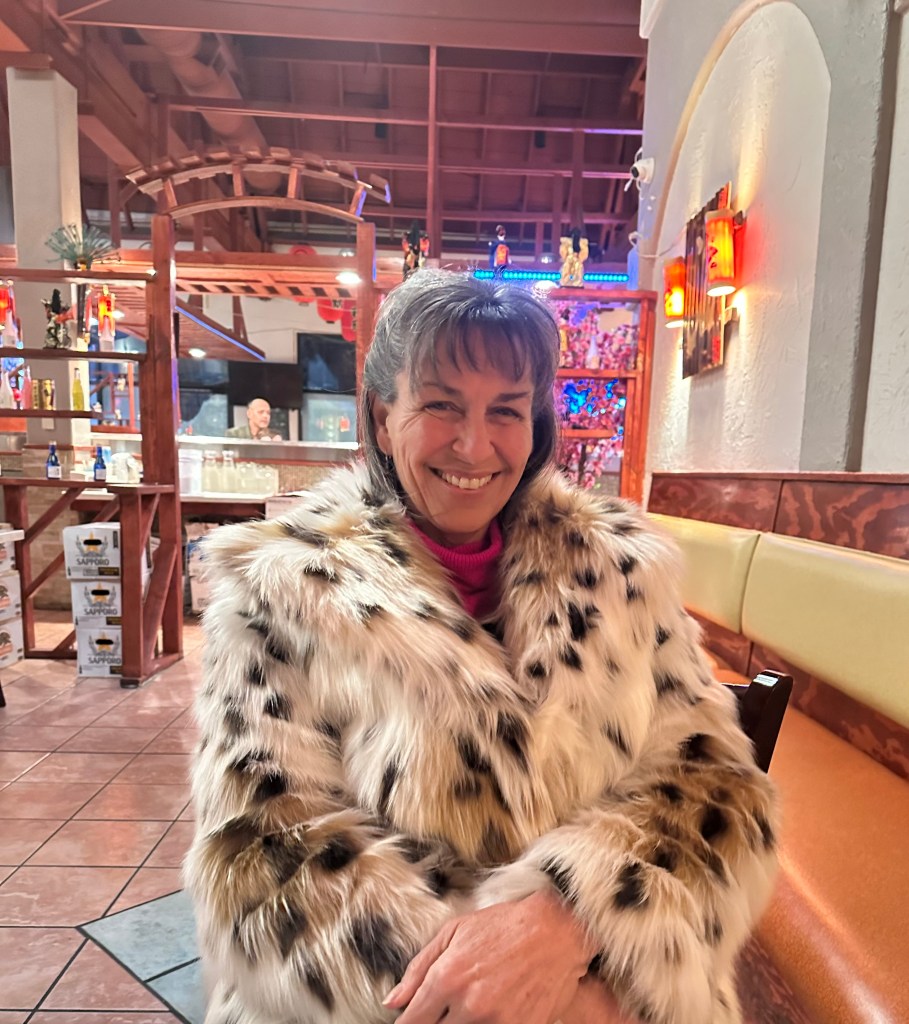
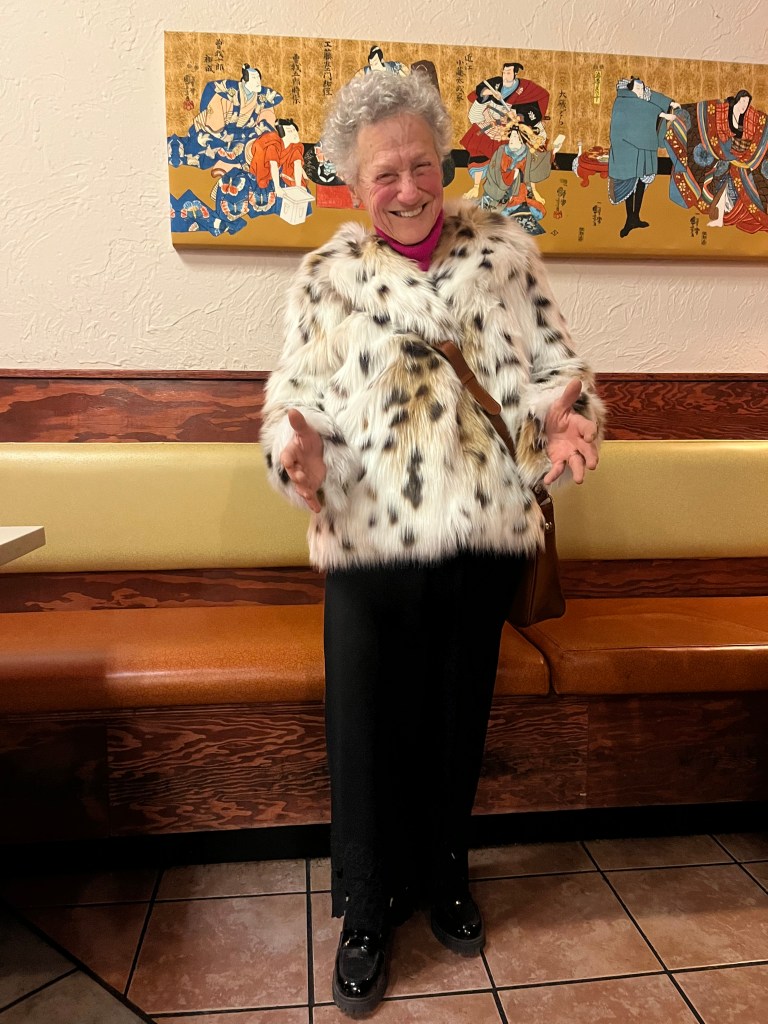
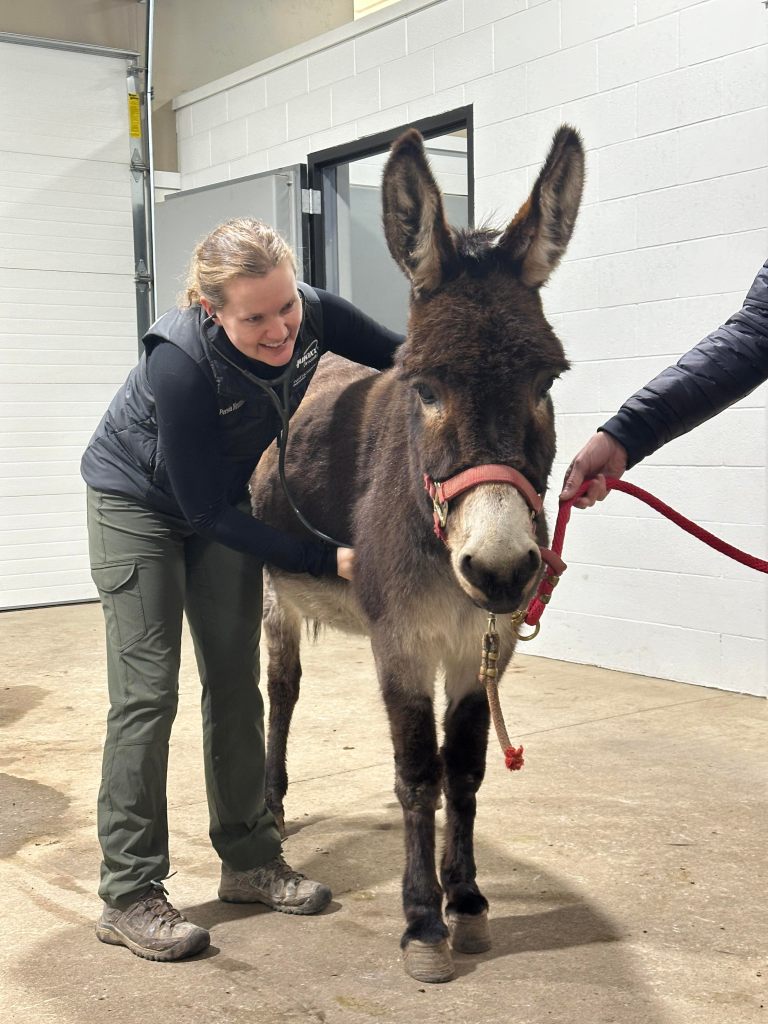
We all escorted Pimmy, who wore a grazing muzzle, as we had to walk across a pasture, to meet the elderly gelding. Those two hit it off right away. And, everyone adored Pimmy—her sweetness, her curiosity, her gentleness. I watched her step into this new circle of people and animals and felt the full bittersweetness of those moments.

Letting go of a beloved companion is never easy. She has been part of my daily rhythm, part of my barnyard family. But alongside the ache, I could feel something else—relief, gratitude, and a genuine joy. I could see clearly that Pimmy was stepping into a home where she would be appreciated, understood, and deeply cared for.

It felt like the universe whispering, Here. This is the right place. This is the right time.

That it’s Thanksgiving season, too, has me feeling a special mixture of gratitude and humility. Gratitude that Pimmy is healthy and happy, that the right people appeared at precisely the right moment, and that she will be cherished in her new home. And, humility in realizing that letting go—when it’s done with love—is also an act of giving care.

Pimmy will always be an essential part of my story. But now she belongs to a new one, and that’s bringing me a quiet, hopeful peace.

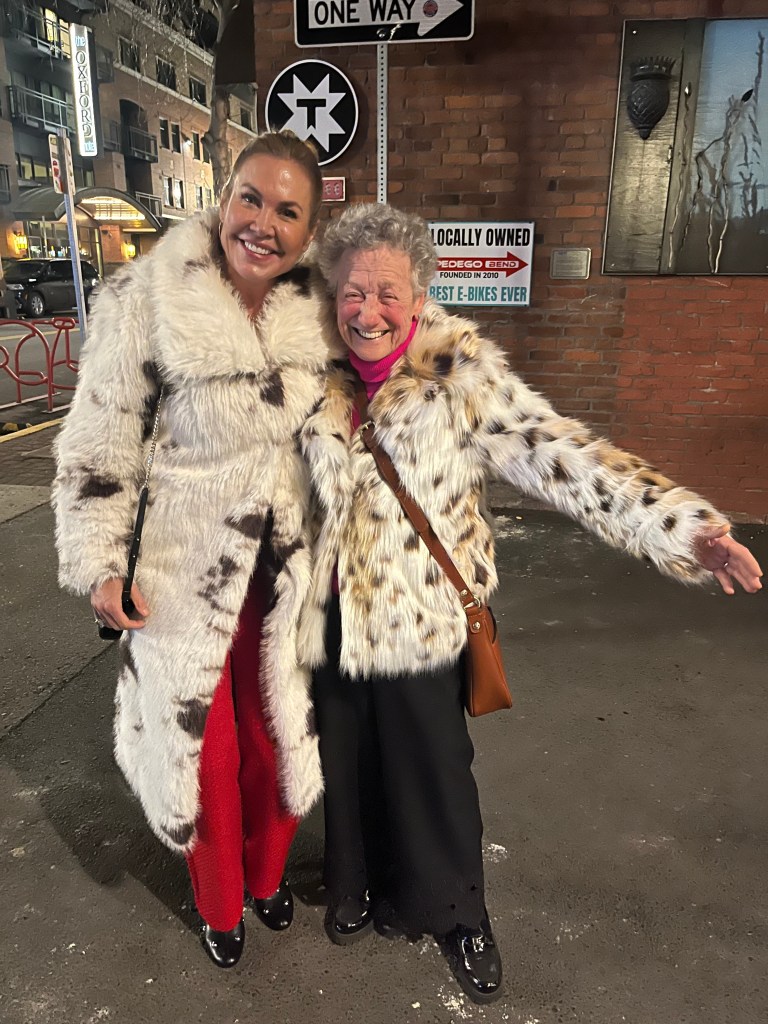
(Note: The photos, “moments of transition,” were captured by our friend, Susie.)

— Diana

A Taste of Memory

Friday, October 31, 2025

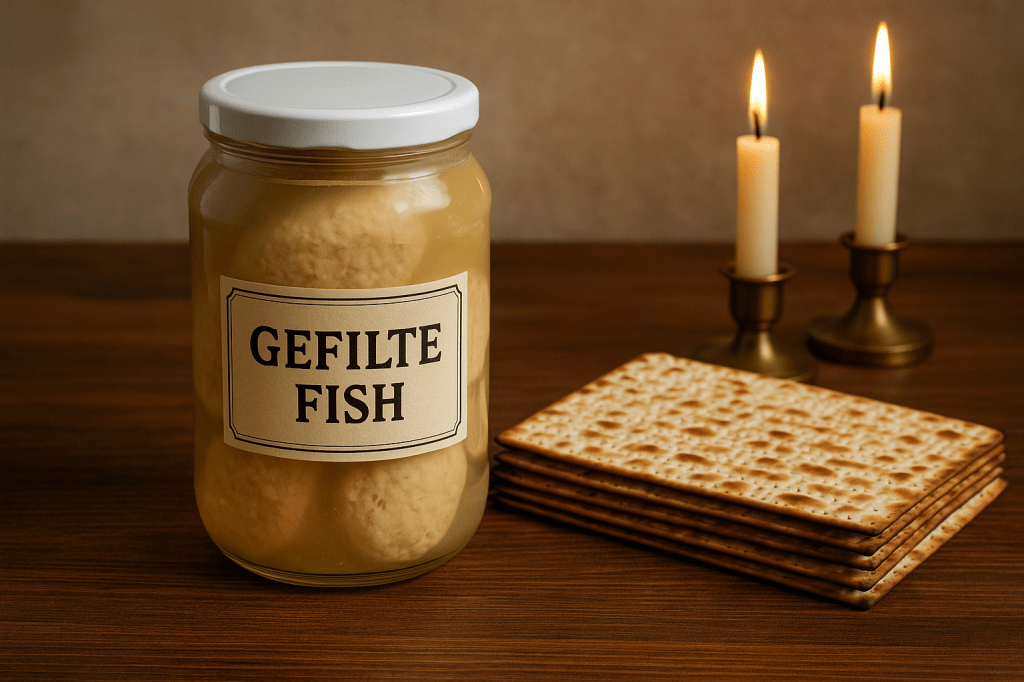
I was grocery shopping the other day when a small glass jar caught my eye — gefilte fish. Just seeing it pulled me straight back into another time.

Years ago, when I lived in Kansas City, my eldest sister and her extended family hosted the big Jewish holiday meals. I joined them for Passover and Rosh Hashanah, learning about each celebration through its foods — matzos, sweet wine, and always, gefilte fish.

Those old gatherings were full of rhythm and ritual — the kinds that linger long after dessert. Although I hadn’t consciously thought about them in years, standing in that grocery aisle, staring at that jar, I felt old warmth suddenly stirring.

When I got home, I couldn’t wait. I opened the jar, spooned out a piece, bit into gelfilte fish — and in an instant, its taste carried me back to those Kansas City meals: tables set for family gatherings, the scents of brisket and simmering broth, the sounds of ritual stories retold.

This tasting struck me as extra-funny because I started wondering if I could make gefilte fish fit into my current diet, which doesn’t exactly follow that model. These days, I lean heavily toward Asian-inspired foods — ramen noodles, stir-fried vegetables, kimchee, tofu, and special sauces like miso and chili oils.

This isn’t the first time I’ve realized how deeply food memories root themselves. Experience has taught me that particular tastes may simply rest — until much later, when a single flavor recalls them and invites their return. Now again, one bite brings the past forward, rekindling memories of gatherings and essential connections that helped shape my life.

A little taste of something so humble — a small piece of fish — reunites my present self with the young person I was, and rekindles fondness for those who helped me grow into who I’ve become.

Diana

Hearing the Calling

Wednesday, September 24, 2025

For several days, and again this morning over coffee, I’ve had my mind on an old movie that I’ve chosen to watch more than once: Bagdad Café (1987). Like Sounder, which I recently wrote about, it’s stayed with me longer than most films. Maybe because of the quiet desert roads, which feel oddly familiar against my own Central Oregon landscape—wide spaces, moments of isolation, and the surprising ways “connection can arrive.”

Each time I’ve watched, I’ve sensed there’s more going on beneath the story’s surface. At first glance, it appears to be a lighthearted, eccentric comedy with superb acting. However, upon reflecting on its story and characters, I’m convinced that it’s an allegory—and one worth sharing.

On its surface, Bagdad Café is quirky and offbeat, full of small mishaps and comic misunderstandings. Yet behind the humor lies something larger. The setting is a dusty, broken-down café in the Mojave Desert, the sort of place most would drive past without stopping. Into this place come two women: Jasmin, a German tourist, after suddenly being abandoned by her husband, and Brenda, the café’s owner, after being left behind by her husband. Both women are prickly, suspicious, and in their own ways exiled and alone.

At first, the café is a mess—disordered, tired, going nowhere. But slowly, almost imperceptibly, Jasmin’s presence begins to change it. She cleans, she listens, she performs small acts of magic. Brenda resists at first, then softens. Before long, the café is transformed from a tired outpost into a place of beauty, music, and connection.

One image that lingers with me is of Brenda’s husband, who, after leaving, keeps watching the café through binoculars. He has walked away, yet can’t resist observing from a distance. To me, this is part of the allegory. He represents those who see but never engage—hovering on the edge of transformation but unwilling to step into it. His gaze is controlling, even possessive, yet powerless. In contrast, Jasmin—the German, or true outsider—enters fully and brings renewal. The binoculars make the husband an emblem of distance, without connection, reminding us that healing comes only when we dare to join in, not when we stand back and watch.

The cast itself reinforces this sense of something larger: a German tourist, a Black American café owner (played by a British actress), an American painter (played by a once-famous film star), and an assortment of desert drifters. This gathering suggests more than coincidence—it’s also a picture of cultures meeting, colliding, and creating something new together. In that sense, the movie’s haunting refrain “I am calling you” can also be heard as a call across borders, an invitation to connection that transcends nationality, language, and race.

Other details I can’t shake involve Brenda’s children. One is a young father determinedly practicing classical piano in that unlikely setting. His grand piano in that battered desert café feels almost surreal, yet it deepens the allegory: aspiration in unlikely soil. His music insists that beauty and culture belong everywhere—not just in gilded concert halls, but even in a dusty roadside outpost, if someone dares to press the keys.

Then there’s Brenda’s teenage daughter, restless and intent on leaving. She represents another answer to the calling: not to stay and transform, but to escape in search of something better. Her choice is human and understandable, yet it contrasts with Jasmine’s quiet decision to remain and renew. Together, the piano player and the daughter remind us that when the call comes, each of us must answer in our own way—by staying and creating, or by moving on. Either way, the call cannot be ignored. Both children become transformed by the café’s changed atmosphere and remain connected to it.

The more I think about it, the more Bagdad Café feels like a parable of renewal. The café isn’t just a diner—it stands for the barren places we all sometimes inhabit, whether in spirit or in life. Jasmin, the German stranger, becomes an unexpected redeemer, bringing grace without asking for much in return. Brenda, toughened and skeptical, is the everywoman—ready for renewal if she dares to trust.

Threading through it all is the film’s haunting song, Calling You. The lyrics drift in like a voice from beyond:

A desert road from Vegas to nowhere … I am calling you.

For me, that refrain is the heart of the film—maybe hope itself speaking, maybe spirit, or simply the mysterious force that draws us toward one another when we feel lost. Whatever its source, the call is unmistakable. It reminds us that life doesn’t end in the wasteland. Something new can bloom, even in the dust.

These days, I am struggling to find my footing in a competitive environment among strong coworkers. I’m recalling this movie and its message, likely because it’s calling me to stay open to the possibility of renewal, even though I sometimes feel inclined to shut down.

Maybe the movie’s refrain—I am calling you—and its use of magic, aren’t just for the characters in a quirky old film. Perhaps those are calling all of us, tugging gently, if only we allow ourselves quiet moments to hear.

—Diana

Underground Railroad, Canine Edition

Saturday, September 20, 2025

Yesterday I was late to work. I had just opened the front door to leave when little Mitzvah appeared, panting and wagging, eager to come inside. I let her in, gave her a cookie, and tucked her into her crate before heading out to discover how she’d escaped. It didn’t take long—bigger, stronger, and endlessly determined Chase had dug yet another hole under the fence. The gap was just wide enough for Mitzvah to slip through, but not big enough for him.

So, once again, I was running late thanks to my nonstop digger. On days when he doesn’t manage to tunnel under, he digs straight down, anywhere and everywhere. The dogs have nearly half an acre to run in, surrounded by a six-foot fence that I’ve even raised to seven feet to keep Chase from climbing or leaping over. Yes, he’s proved capable of both. And in the middle of all that dog space? Holes—deep, straight-down craters that I discover and fill in while treading carefully so I don’t step into one.

As for his under-fence escape holes, I’ve got a new problem. Over the years, I’ve blocked Chase’s tunnels with lava rocks, but I’ve run out of any I can carry. What’s left are boulders too big for me to budge. My substitute solution has been filling empty plastic containers—kitty litter tubs, half-gallon milk jugs, anything I can find—with water to make them heavy enough to block the digs. I’m running out of those, too, and I’m considering buying several jugs of distilled water just for this purpose.

What really gets me is that Chase has now taught Mitzvah his tricks. She’d never have tried escaping on her own, but now she knows to wait while he digs and then slip through the opening he makes.

I wouldn’t care as much if my property didn’t back onto a road that’s grown dangerously busy with fast-moving cars. This used to be a quieter stretch of countryside, but Central Oregon has exploded with growth. The through-roads are jammed with frustrated drivers, and I come home every day wanting only one thing: the dogs safe inside, far from that traffic.

— Diana

A Talk With Linda

Monday, September 08, 2025

Later this week, I’ll be catching up by phone with my nearly lifelong friend, Linda. Many years ago, she was the one who nudged me toward college, setting me on a long road to the career I eventually achieved.

Early on, she encouraged me to leave the Midwest for Southern California, where evening classes and other opportunities made it possible to pursue college while working full-time. Years later, she pointed me toward a small, welcoming town in Central Oregon where she lived, and again, I followed her advice. Some years ago, she returned to her roots in California, but across the miles, our friendship has stayed steady and strong.

Linda has always been politically savvy and endlessly curious. With her, small talk never lasts long. Our conversations move quickly into larger territory: what we’re learning, what we’re noticing in the world around us, and how maturity continues to reshape our daily lives.

This week, I’m holding three threads in mind that we’ll likely explore:

  • AI, and what it means for lifelong learners like us.
  • Politics, in a time that feels turbulent and uncertain.
  • Aging, and how it keeps redefining identity and purpose.

We rarely see eye to eye on everything — and that’s part of the gift. Linda challenges me to think harder, and I hope I do the same for her.

In times when the future feels uncertain, steady friendships matter more than ever. They make the best conversations possible — weaving together the personal and the political, the present and the future.

— Diana

Lunch with Judy and Candy

Computer-generated Image–surprisingly close to reality

Monday, June 02, 2025

I had lunch yesterday with long-time friends I hadn’t seen in years. We first met during a pivotal chapter in my life, when I was a breast cancer patient participating in a support group. They were the group’s unofficial leaders—steady and compassionate, offering wise listening and unwavering kindness. The connections forged in that group felt deep and enduring. Despite years and distance, our shared strengths and vulnerabilities still feel familiar.

It had been a long time since we’d laid eyes on one another, but recently, they wandered separately into the department store where I work. We recognized each other immediately—like “old friends,” which we are—and promised to meet for lunch soon.

Judy and Candy are continuing to nurture the cancer support group–welcoming women facing breast cancer and other illnesses. Their dedication says much about their character, and just as much about our deep human need for community when we’re navigating illness. Sitting with them again felt comforting as they shared how the group continues to evolve.

Conversation came easily. We didn’t need to fill in every gap—we simply slipped into the familiarities of our old connection: talking about our lives now, the realities of aging, fond memories, and the ever-present question: What may come next? There was laughter, warmth, and a few comfortable silences. Our lunch felt less like a reunion and more like a quiet rekindling—an affirmation of ties built during significant uncertainties and shared strengths.

They spoke of their early lives—how, as young women, they each bravely moved to Alaska during its formative days, just as it prepared for Statehood. They met there, in a time when its cities were small and its spirit was wide open. Those were the early days of loosening social constraints for women, and they embraced the freedom and opportunity. Eventually, each moved—independently but around the same time—to Central Oregon, where they reconnected.

They asked after my donkey, Pimmy, who is doing well—her illnesses are stable and under control. They asked about my other critters: sweet turkey Lacey, noisy Cockatoo Peaches, and Chase (yes, that Puppy-from-Hell, Chase, who still lives with me).

The best part of our lunch was simply knowing—knowing one another well and knowing where we’ve been. We didn’t just share memories; we shared something more enduring–a kind of bond formed while at our most human, our most open. That’s what has made the cancer group so special, and it’s what made our lunch such a gift.

Dear Friends: Like Alaska in its frontier days, Central Oregon is an “honest place.”—Diana

Pimmy’s Check-Up

Saturday, March 08, 2025

Yesterday, to my surprise, Pimmy loaded herself into the horse trailer. She’s teaching me more about donkeys now than when she was constantly among the horses. These days, separated from the horses (for dietary needs), Pimmy seems more like my big dog than an equine.

This time, while encouraging her to load into the trailer, I allowed her to resist loading. I gave her plenty of time to think things over, and suddenly, she voluntarily popped into the trailer.

That’s the thing about a donkey. It doesn’t just follow orders and isn’t just stubborn; it needs to evaluate the possibilities before deciding on an action. It’s taken me over a dozen years with Pimmy to learn this, and yesterday, I felt proud of myself for finally being a bit smarter.

The header photo shows Pimmy getting a physical yesterday. The doc says Pimmy’s vital signs are fine, and her weight is lower. Those are good. The most quickly assessable bloodwork was excellent. We must wait for more bloodwork results to learn if her Cushing’s Disease remains under control and if her glucose level is corrected.

Yesterday, too, she received routine inoculations, and the veterinarian floated Pimmy’s teeth. Then, the slightly drunk donkey needed time to recover from the floating anesthetic, so I left to fill my rig’s tank at a gas station. By the time I returned, Pimmy was awake enough to hear me calling and came to me. She loaded into the trailer relatively quickly, and we left for home.

If her glucose has reached a normal range, I will reduce her meds from twice daily to once daily–a welcome relief. Pimmy’s doctor has ordered an additional ingredient, Vitamin E, for the regimen.

Pimmy is a sweet, smart, and delightful being. Through these months, I’ve not enjoyed treating her illness or separating her from her beloved horses. By now, however, knowing this donkey more personally, I much better appreciate her.

Dear Friends: The horses will get floats and inoculations in two weeks. Diana

Jittery Edge

Thursday, March 06, 2025

I’m feeling pretty down this morning—the stock market is crashing again.

Those who pushed for a “strong” right-wing leader are now facing the fallout. Under this new administration, layoffs are rising, prices are climbing (or about to), climate progress has been abandoned, and personal freedoms are teetering on the edge.

Businesses are uneasy, investors are on edge, and uncertainty is dragging the market down.

In an attempt to counterbalance personal stress, I am evaluating a couple of recently-ordered mood enhancers: KSM-66 Ashwagandha and L-Theanine. Given this morning’s chaos, maybe this is a good time to put them to the test. I gather that both are known for their ability to support stress relief and mood balance. They are supposed to work in different ways.

Ashwagandha is supposed to help regulate cortisol, the body’s primary stress hormone. It’s said to build resilience against anxiety and sharpen focus—exactly what I need while dealing with market swings.

L-theanine is an amino acid found in green tea. It’s supposed to promote relaxation without causing drowsiness and increase the alpha brain waves associated with a calm yet alert state. People often use it to ease caffeine jitters or stay sharp under pressure.

I don’t recall exactly what led me to order them, but here they are. Given the emotional rollercoaster of this current market, I’m going for it.

And now, a lighter moment from yesterday: As I placed a bottle of wine in my shopping cart, a fellow shopper pointed to it and said, “My grandma used to say, ‘With that in the cupboard, it’s going to be a wonderful evening.’”

We laughed, knowing Grandma was absolutely right!

Dear Friends: I’ll be experimenting with mood enhancers for the next four years. Diana

On Her Birthday

“Magical Mommy”

Wednesday, March 05, 2025

If genetic advancements had been available during my mother’s lifetime—capable of extending health and longevity—I might be celebrating her birthday with her today. I’ve long wished for at least one more conversation, a chance to ask the many questions that could fill the blank spaces of her early life.

Reflecting on why I never asked more about her life brings back memories of my own trials and tribulations growing up. Each day was a lesson in adaptation, filled with new challenges and shifting realities. I naturally focused on myself—learning, adjusting, and figuring out how to navigate life one step at a time.

Back then, I felt an urgent need to escape a past that seemed confining; I needed to step into a future that was broader, more inviting, and yet daunting. All that forgotten past included both my parents and grandparents. I might never have seriously reconsidered all of them if not for the rise of DNA and its profound ability to connect one’s history with one’s future.

I give deep nods to technology and genetics and to an equally powerful force—the unbreakable connection between parent and child. Its hold isn’t always smooth but shapes and defines us in enduring ways.

Today, on my mom’s birthday, I’ll hold her in my thoughts. A sudden memory might surface, filling in a blank or two about her life. I like to imagine that she can somehow “hear” my thoughts—so I’ll share a few, letting her know how I’ve grown and changed, shaped in no small part by her insight and encouragement.

Dear Friends: Science fundamentally reshapes how we perceive and evaluate ourselves. Diana

Dining Event

Friday, February 21, 2025

Yesterday was my friend Susie’s birthday. She, her husband Dale, and I joined their son Ian and his new bride Christie at Bend Brewery. We celebrated both the birthday and the wedding over beers and burgers.

Ian and Christie are physically fit, very passionate rock climbers. Ian explained that he turned to rock climbing after realizing he felt somewhat distant from the team sports he had participated in. After enrolling in a rock climbing course, he found that activity better suited him.

Rock climbing led Ian to a social event in Mexico, where he met Christie. She began rock climbing at 9 years old, soon transferring her gymnastics skills to rock climbing. She developed high skills and climbed competitively. At the Mexican social event Ian attended, he and Christie “found” one another. Neither ever looked back.

They’re now active in HeliLadder–Dale and Susie’s thriving central Oregon business. When the two aren’t working at Heliladder, they rock climb at the local (huge!) Smith Rock. Over our burgers, they explained that Smith Rock is a world-class, famous climbing destination.

Speaking of HeliLadder, as we were en route to the Brewery, Dale and Susie described issues facing their business after the Trump Administration suddenly laid off government personnel. Current personnel shortages, without backup planning, are making it difficult for HeliLadder personnel to locate individuals who can answer business questions and follow up within business processes.

Susie’s birthday was a unique event. Earlier, I had presented her with a bright coral sweater. It matches one of mine, which I love. We quickly decided to go out for dinner one evening wearing our colorful sweaters and finest bling. Loving that idea, Dale said he’d buy the dinner!

In the interim, “their kids” got married. Our burger-sweater dinner idea quickly evolved into a multi-celebratory event–lovely and fun.

Dear Friends, An event with discussions, creativity, and camaraderie is the best. Diana