Thanksgiving 2025

Thursday, November 27, 2025

In the very early hours on this Thanksgiving Day—and somewhere between drifting out of sleep and deciding to get out of bed—I found myself thinking a great deal about my mother. Not about her holiday meals or the rituals of past Thanksgivings, but about something quieter and far more enduring: her creativity, especially as she expressed it, in her clothing choices.

She had a way of dressing that was a little unusual for “those days.” People might have called her overdressed or a touch too polished for everyday life. Yet if she were strolling into a department store today, she’d simply be called stylish—bold, intentional, and entirely herself.

My own style has wandered a long road. During my working years in the corporate world, I wore the expected uniform: suits—navy, brown, black—paired with conservative tops and sensible pumps. Nothing daring, nothing loud, nothing to draw a second glance. I wore a kind of professional armor—respectable, reliable, and utterly unremarkable.

When retirement arrived, I traded corporate life for horses—beautiful, messy, mud-slinging horses. My “style,” if one could call it that, became functional layers, dusty denim, barn jackets, and shirts no longer resembling their original colors. Horse life doesn’t care about fashion; it cares about surviving the elements and getting hay out of your clothing and hair. I spent years happily dressed in what was only describable as rags-with-purpose.

It wasn’t until much later, when I found a job in retail, that I realized how far I’d drifted from any real sense of style. Surrounded suddenly by fabrics, mannequins, new arrivals, and customers asking for advice, I felt nudged to re-engage—to look again, learn again, and find my footing in a world I had set aside.

And that’s when my long-past style influencers quietly began resurfacing.

I found myself drawn to earlier icons—especially the simplicity of Chanel, her confident elegance, and her refusal to apologize for beauty or individuality. I re-discovered that Chanel’s originality speaks to me, still, even after all my years of practicality and barn dust.

One of the more “interesting” designers who followed in Coco’s House of Chanel was Karl Lagerfeld. I discovered his bold creations after starting to work in retail. At first, I disliked them wholeheartedly. Karl loved to scrawl his name with messages from Paris all over his designs. I swore—loudly to myself—that I would never wear a garment plastered with an egotist’s name and scribbles.

Until, on a whim and unable to resist, I brought a pair of Karl’s Jeans—they had large and rhinestone-encrusted cuffs. I finally got up the courage to wear them in public—and found my jeans becoming noticed up and down the street—greeted not with laughter, but with appreciation. Real appreciation. For their sparkles, their boldness, and mostly, the humor of it all.

After that, I softened—began studying “the Karls.” I’d try on a piece or two and, after that, buy one and wear it in public. I discovered that being noticed could feel…fun. Beneath it all, though, my clothing choices always drifted back to clean and timeless Chanel lines—ones my mother would have admired.

So early today, my mind wandered to fashion—my mother appeared as my guide. At first, her presence confused my drowsy self, until I realized that she had been my guide—the style influencer that I never fully recognized, until now.

Here, in my later years. While reflecting sleepily on my recent journey in retail and hearing my customers ask, “What is my style?” (and asking myself, what’s mine?), I could see myself gradually viewing “something called style” differently. Most importantly, this morning, I understood how I’ve learned to appreciate what my mother quietly handed down to me.

Today, I’m thankful for all these—for the subtle inheritance of taste, for the courage to express myself, and for a mother whose sense of style found its way back to me—long after I thought I had left it behind.

Happy Thanksgiving!

— Diana

Lessons In Jewelry

Friday, September 26, 2025

I grew up with the saying, “Diamonds are a girl’s best friend.” In mid-20th-century culture, that line carried enormous weight. A diamond was more than a glittering accessory—it symbolized status, romance, and permanence. It was also, and very often, a woman’s only financial safety net. When women had little access to income or property, a diamond ring could be converted into cash if someone suddenly found herself left and on her own.

Working in jewelry today tells me how much has changed. Modern women build careers, manage investments, and create their own security. Diamonds remain desirable, but less as a lifeline. Talking with customers has taught me that diamonds are just one option among many ways to celebrate love, beauty, or success.

I see today’s women often choosing pieces that tell their own stories. A birthstone ring, an heirloom reset into a modern design, or a pendant from a local artisan can mean more than a flawless solitaire. Essentially, jewelry is becoming autobiographical—and saying, this is who I am, rather than this is what a woman should have.

I also see the shift favoring ethics and individuality. Many women prefer lab-grown gems, recycled metals, or fair-trade stones. Others embrace color—emeralds, sapphires, and tourmaline—or opt for raw crystals and asymmetrical cuts. Jewelry is often collected in layers and stacks, shifting with mood and season.

So what replaces that old “best friends” phrase? Maybe nothing—and everything. Younger women, especially, are unbothered by distinctions between mined and manufactured diamonds. They want bold sparkle and personality, not conformity. Meanwhile, women from traditional cultures often still value mined diamonds as both symbol and security.

What I see every day is that the “best friend,” rather than being a single stone, is having choice itself—the freedom for a woman to define what sparkles brightest for her.

Diana

Yielding

Tuesday, February 04, 2025

Weeks ago, ChatGPT, an artificial intelligence, appeared on my iPhone. It would let me converse with AI using its male or female voice. I played with that and enjoyed the interactions. I appreciated the site’s potential but soon drifted away.

The other day, at my outside job, a young co-worker described using ChatGPT for “almost everything” and willingly paying $20/month for its stepped-up version. She described sending a photo to that AI and asking for an enhancement or a detailed explanation of what the photo suggests or represents, or sending drafted paragraphs and requesting improved rewrites, or sending complex questions and asking for detailed answers.

I know many uses of AI and have occasionally used it for writing help. AI has aided me in writing an idea or a paragraph more pointedly for improved clarity. I’ve never submitted a photo or video while asking for a description or detailed information, but my coworker does often.

She did some interesting demonstrating for me, and I decided to test the paid version with a real-time example.

I was working in the Jewelry Department. I had been showing a recent customer a set of Tahitian pearl earrings. She understood the pearl type’s beauty and value and loved how she looked wearing the earrings. She struggled over purchasing them and finally didn’t.

My coworker photographed those Tahitian earrings and sent the image to her ChatGPT version, requesting the pearls’ history and attributes. AI identified the price value of those earrings and sent paragraphs explaining the pearl type.

I recognized that by employing some of AI’s responses, I might have spoken confidentially and more thoroughly about the earrings. While my customer debated over buying, I could have encouraged the potential sale by demonstrating more knowledge about the pearl type, its history, and why its value stays high.

As my colleague and I played more with her version of ChatGPT, I saw the potential added value of using the paid version and will upgrade to it.

Dear Friends: AI is increasingly available, accessible, and impactfully useful. Diana

Flash Pash

Monday, October 14, 2024

I have off from my part-time job today and tomorrow. Goody! Today, my goal is to winterize critical elements on my property. An electrician is coming to help. My part-time job is tiring because the store hasn’t enough employees. After working extra hours, I crave fun. Completing the most demanding work today will free me for horseback riding tomorrow.

Yesterday, my friend Bill surprised me with some pairs of campaign socks. Before writing this morning, I grabbed today’s header from Amazon’s site (quicker and easier than photographing my socks). Bill already had provided me with yard-style campaign signs; the fun socks are pièce de résistance.

I haven’t staked out those yard signs, fearing they might be stolen, and I won’t wear the campaign socks to avoid being categorized and challenged. However, I will add all these campaign pieces to my growing collection of “social and political change” souvenirs. Those include magazines’ and newspapers’ original announcements of Obama’s first Presidential win, socks carrying the image of RGB, and now, my Harris/Walz campaign signs and the image socks.

Thank you, Bill!

This campaign season will end in a couple of weeks. Regardless of who becomes this nation’s president, we’ve witnessed evidence that its mass population actively wants social and political changes. We’re all woke, for better or worse, and undoubtedly will experience changes. For reasonable reasons, everybody’s on edge.

Dear Friends: I might carry a sock pair in my pocket for flashing when appropriate. Diana

Rambling

Tuesday, September 24, 2024

The days go flying past! Is it possible, this day is a Tuesday already!

That summarizes my weekly mantra: “What happened to Monday?” Usually, this day initiates adjustment so that Wednesday’s appearance isn’t as jolting. Essentially, time flies.

I went to work yesterday, and as suspected, the store was short on employees. Instead of selling jewelry, I was assigned to cover the Intimates Department. The first half of my shift was spent straightening and rehanging bras, and I listened to women complaining about their breasts and having to search for bras. In an Initimates Department, breasts and bras are never-ending issues.

Some sort of variation occurs in every department. I’ve listened as customers talked unendingly about bed sheets and being willing to sleep only on certain types. Jewelry searching, of course, brings up lots of focus on oneself. A good seller does what’s needed in every product situation and listens.

Monday barely is history, and I rattle on. Maybe I’m slightly rattled after those few hours of listening to unresolvable complaints. Right now, I am considering the extent to which advances have transitioned the human condition.

Technology has given us almost endless choices. Once upon a time, a person who slept nights on a substantial straw mat was lucky. Back then, too, women typically used rag-type materials to bind their breasts and control menstruation. Nowadays, with many sophisticated choices, it seems they’re not enough, and people are restless.

In the late 1960’s, there was an enormous public movement to “Burn the bras!” Women’s bodies were becoming less idealized than those ballyhooed by the popular movies. That refocusing has continued and is an issue today.

And today, a woman is campaigning, she’s popular and might be America’s next President.

Dear Friends: I will be at work today listening to whatever anybody wants to say. Diana

Realigning

Wednesday, July 24, 2024

Online marketing has become incredibly aggressive, likely thanks to AI technology.

I have begun routinely wearing a multi-colored gemstone ring; it’s not expensive but charming. I began thinking of finding a daily-wear bracelet to go with it. I went to two online jewelry sites, didn’t enter any personal contact information, and looked at some multi-gemstone bracelets. Immediately afterward, my usual internet sites became bombarded with advertisements for bracelets of that type and from marketers I’d not contacted.

It isn’t as if I’d not noticed this before because I’ve seen clothing and shoe ads pop up. This time, however, is different because the bracelets are colorful, very specific, and in my face. As I scroll through the major online daily newspapers, multi-gem bracelets are popping up with easily accessible links to commercial sites. As I’m googling for information, those bracelets are popping up. I’ve been found.

My purpose for looking online wasn’t as much to buy as to explore. What’s happening feels invasive.

The Amazon phenomenon has changed everything, from how we shop to how items are marketed. Such an aggressive style of commerce is facilitated by AI technology, which Amazon was among the first to exploit. Today, sales aggression comes first and foremost.

Selling is always aggressive. As a former sales trainer, I can attest to encouraging aggressiveness while being cautious about stepping up the heat. The internet depersonalizes that process and is in-your-face aggressive. Becoming more immune to such aggression will encourage in-person salespeople to take more aggressive approaches.

In my part-time role of selling fine jewelry, I consider how to apply what I have learned from the internet. Customers becoming more tolerant might respond to more encouragement if it isn’t also overwhelming. I will consider this more and actively retest and adjust my sales skills as time passes.

Dear Friends: We spend lots of energy on many daily living nonessentials. Diana

Deep Breathing

Chanel #5, first marketed in 1921, updated and modernized with Nicole Kidman

Wednesday, July 10, 2024

I’ve been chatting about fragrances with a young coworker, Sally, an expert in the Makeup Department. She also knows much about the co-evolution of fragrances and social changes. She made me aware of how the history of perfumery is intertwined with cultural shifts, technological advancements, and changing perceptions of gender, identity, and lifestyle.

We started with how, after many years away from Chanel #5, I still prefer its scent. Sally, who also likes it, explained that Chanel’s popularity dates from the early and mid-20th Century. That fragrance was pleasant and also reflected women’s wishes at the time to be associated with a pleasant and lasting scent, but subtle and lasting, and not overpowering. Chanel fit the bill.

She spoke of newer trending fragrances, like Christian Dior Poison, Yves Saint Laurent Opium, and Calvin Klein Obsession, explaining their evolution and popularity. She said that during the 1980s and 1990s, women gravitated towards stronger, bolder scents. The trend reflected that era’s evolving social landscape—pointedly, women’s growing financial independence and empowerment.

According to Sally, today’s young women’s fragrance preferences reflect their individuality and this generation’s varied lifestyles. Sally has observed that modern young women prefer stronger scents, and very often floral ones. They also prefer unique and unexpected combinations, like those trending toward unisex wearables.

That brief tour with Sally opened my eyes to social elements I’ve not considered much. Perfumes never were big elements in my personal world. However, after months of working in a large department store and having recently joined its Jewelry Department, I need to understand better why people generally tend to wish for, seek, and purchase “noncritical and impulse” items.

Dear Friends: I’m exploring a newfound fascination with the world of fragrance. Diana

On Display

Saturday, June 22, 2024

I recently began selling jewelry in the department store where I work part-time. Yesterday, I discovered that coworkers had placed bets on how long it would be before I purchased a piece of jewelry. They were laughing while I was settling a deal for my shiny new ring.

I gain new intentions upon learning, and to me, quality becomes irresistible. Although I needed a ring like a hole in my head, I felt that my finger, flashing quality, could enhance my jewelry sales role (or some such rationale).

All logical rationale aside, jewelry simply attracts attention and admiration, especially pieces that host superior craftsmanship, intricate designs, precious metals, and gemstones. Attraction to high-quality jewelry varies among individuals. Some people become attracted by aesthetic appeal, others by investment potential, and for most, by fine jewelry’s emotional triggerings.

My jewelry choices reflect elements of personal style, taste, and creativity. For example, my new ring is conservative, high-quality, has good gemstones, and its design reflects my preferences. Eventually, I might wish for a more prominent ring. That could happen after I understand more about gemstones—their sparkle, shine, precious metals, and “sensing qualities” of feel and aesthetic appeal.

Dear Friends: The allure of high-quality jewelry extends beyond mere aesthetics. Diana

Bejeweled

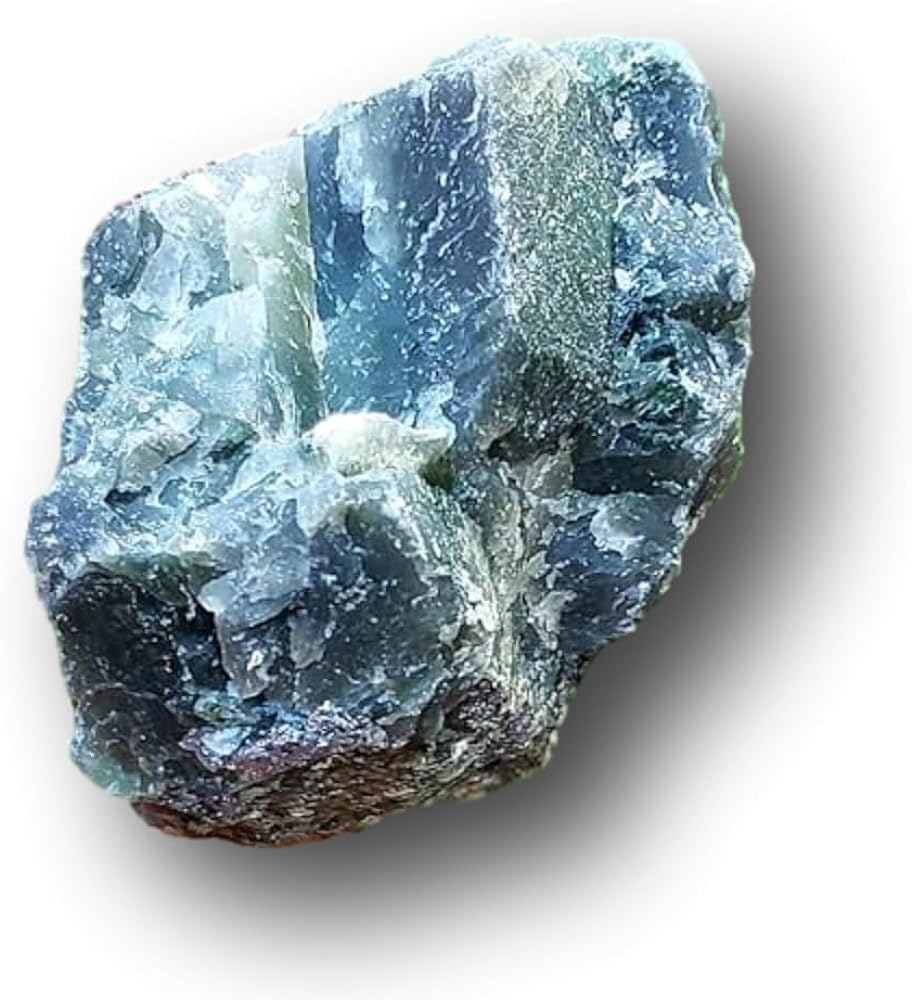
Raw Green Emerald

Monday, June 17, 2024

After my first day in Jewelry, Wow! There were, and still are, many elements to learn about working in a fine jewelry department. A primary responsibility is keeping an ongoing accurate count of items for sale and unarguable accounting for everything on record. One carries keys and opens display cases holding jewelry, one at a time, and relocks a case immediately after showing an object. Then, there are safes with absolute procedures for what goes in and out and when.

That’s not all. There are iPads and internet searches, training materials, record-keeping, lists of customers for each salesperson, and, at the end of each day, protecting jewelry by hefting a series of awkward Kevlar coverings onto display cases.

With much more ahead to learn and remember, oy vey.

In retrospect, while not as romantic as becoming surrounded by jewelry, my former role of rehanging dresses and putting away bras was way less stressful.

During a pause, Marie (my trainer in Jewelry) spoke of her history as a jewel creator, adding that she used to operate her own shop in town. Listening as she explained her background and stone sourcing, it struck me suddenly that Marie and I had met many years ago.

I was a newcomer to town; I spotted a sign for her shop and stopped in. My curiosity turned into interest as she described her stones, their sources, and those she chose to design and craft into jewelry. Captured by her story and sensing its reality, I purchased a ring of her design and creation.

The ring highlights an emerald (my birthstone). Marie explained finding that stone in Brazil and considering it special. She had lived in Brazil as a fully Certified Gemologist and there had discovered unique gemstones. She could visualize a raw stone as being cut, could do the cutting herself, and craft cut pieces into fine jewels. She sold her creations worldwide.

I’ve not been much of “a jewelry person” and rarely have worn the lovely emerald. Today I’ll take “Marie’s ring” to work for her to see and recall.

Dear Friends: It’s said, “What goes around comes around,” and often that’s so. Diana

Stripings

Wednesday, June 05, 2024

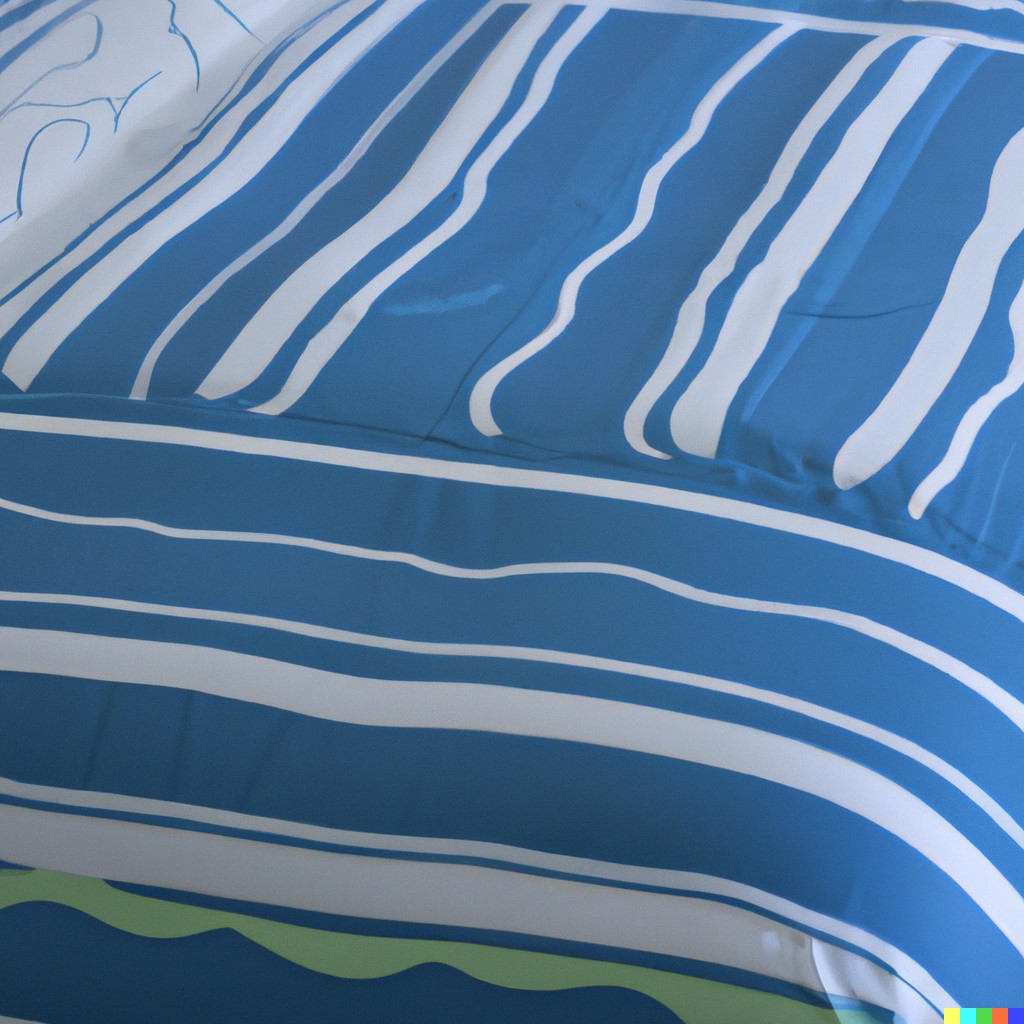
As a department store salesperson, I often learn helpful things. Here’s a valuable tip: Choose striped bed linens because they clearly identify the long side.

By keeping that in mind, I’ve been encouraged to think more about “stripe.” It’s a word with a real-world meaning (aside from being a pattern, as on linens). In the real world, military and police forces have stripes on a uniform that “identify clearly” rank and power.

I’m interested in how “stripe” is used as a metaphor for earned experience or rank. Describing someone as having a “stripe” suggests a distinctive quality or trait. That way, “stripe” suggests a distinction, individuality, or uniqueness that sets someone apart.

We often hear the term “stripe” used in business, sports, and academia. We understand it as referring to “earned respect and recognition” and applied to someone who’s done good work and accomplished achievements.

I’m an informal writer who writes often. I’m always word-focused because English word usage and meanings are complex. Words often suggest much more than their basic descriptions, forcing me to consider sociology in general, historically, and in the present.

Dear Friends: It does make sense to appreciate the value of using striped linens. Diana