A Team Of Two

Friday, June 12, 2026

A month has passed since my mare, Rosie, died.

Rosie was Sunny’s big sister. They shared the same parents and also enjoyed a long partnership with me. Rosie was the boss mare, the decision-maker, the horse who always seemed to know where we were going and, quite clearly, had opinions about what we were doing. Sunny was content to follow Rosie’s lead. For years, that arrangement worked well for all of us.

Then suddenly, it didn’t.

After Rosie was gone, I found myself facing a practical question about horses as herd animals. Should I find another equine companion for Sunny? At my advanced age, is it sensible to take on another animal? Or, better yet, could I find ways to keep Sunny active, engaged, and interested in life as a solitary horse?

I chose the latter, at least for now.

Sunny is twenty-two years old. She is healthy and appears sound. She and I have established a routine. Each day, I lunge her at a trot, changing directions every ten minutes, for a total of about forty minutes. Afterwards, she receives her reward: time on grass or other small freedoms that she clearly enjoys. I’ve also been riding her, though only at a walk. Because I’m focused on maintaining my own balance, she carries me patiently and without complaint.

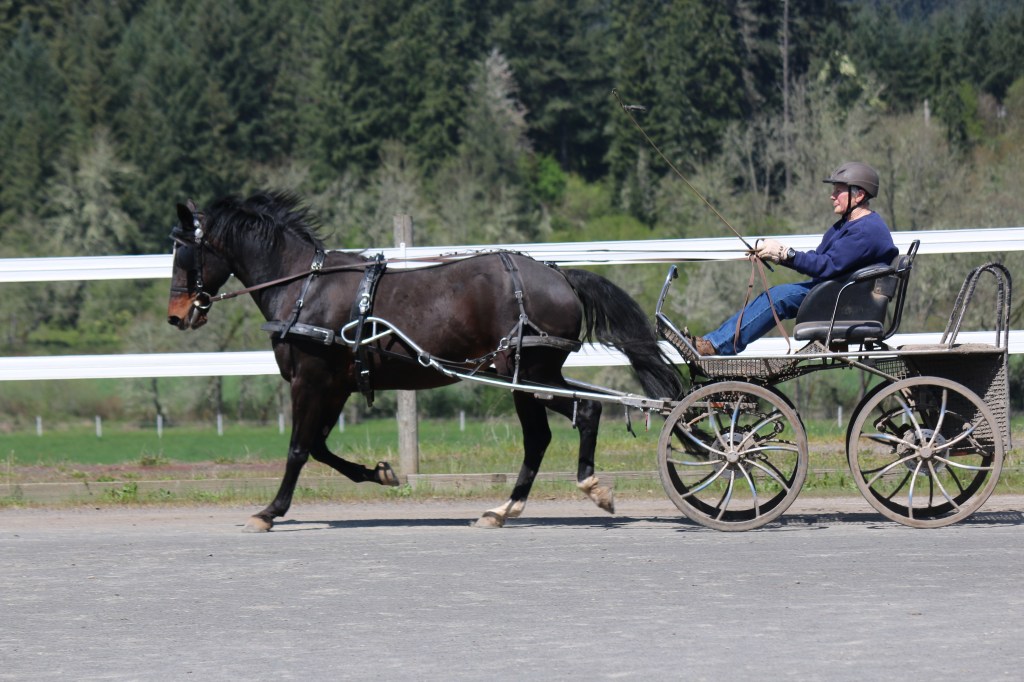
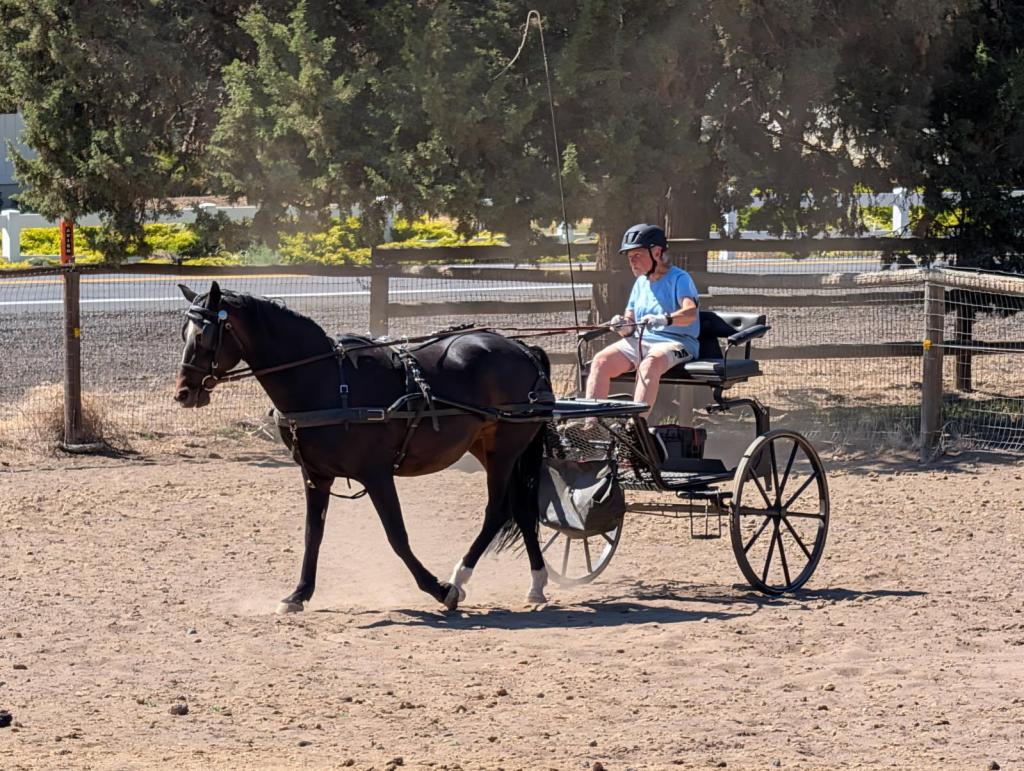
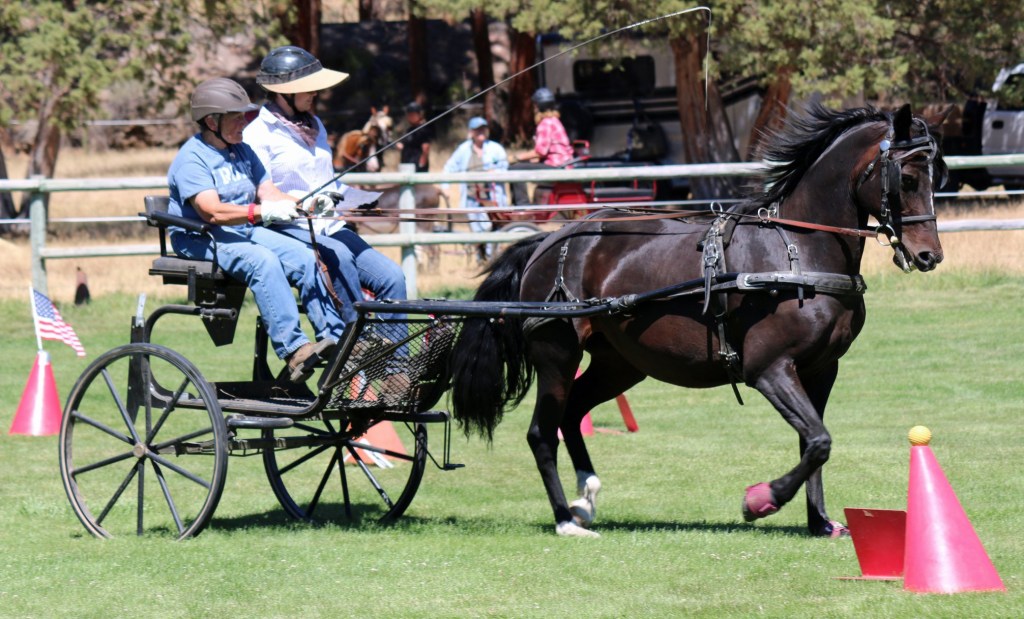
I’ve hoped we could start driving again. But Sunny hasn’t pulled a carriage in about four years. Before considering a return to driving, I asked my veterinarian to evaluate her. He watched her trot on a lead line and then observed her on the lunge. He also knew Sunny from years ago, which added value to his assessment. His conclusion was encouraging. He found her doing well and started her on Adequan, a medication intended to support joint health.

Something unexpected has happened during this month of working closely together.

Sunny is paying more attention to me.

Perhaps that’s because Rosie is no longer here to command her attention. For years, Sunny’s world revolved around the older mare. Now, she looks to me more often. She seems more responsive, more connected, and more interested in what we’re doing together.

Our next step will be returning to driving.

Before that can happen, Sunny will be shod. Then we’ll begin slowly in the dry lot. Fortunately, my lot is large enough that we can make repeated circuits amounting to several miles if we wish. There, we can regain our confidence without worrying about traffic or other distractions.

And confidence is something we both need.

The truth is that Sunny may remember driving better than I do. I’m finding that I remember the broad outlines, but some of the details have become hazy. Harnessing. Hitching. The order of straps and buckles. Those little habits once seemed automatic after years of repetition. Time has a way of quietly letting such things slip away.

The dry lot will allow me to relearn my side of the partnership while Sunny relearns hers.

Eventually, if all goes well, we’ll venture through some of my neighbor’s property and out onto the neighborhood roads. We’ll drive a familiar three-mile loop that we traveled many times in years past. It’s a relatively quiet route, though today’s drivers don’t always expect to encounter a horse and carriage on the road. We’ll proceed thoughtfully, and fortunately, we needn’t be in a rush.

Over the last month, I’ve come to realize that these efforts are about more than exercise. Certainly, driving will strengthen Sunny’s muscles. It will strengthen mine as well. Yet something deeper is taking place.

Over the past year, my donkey’s adoption by a neighbor and Rosie’s death have emptied spaces in my little herd, leaving Sunny alone. Horses are herd animals. The obvious solution was to fill that empty space immediately with another equine—or perhaps some other animal that could serve as a companion.

Instead, Sunny and I are discovering what life looks like as a team of two.

At twenty-two, Sunny doesn’t need a demanding career. Neither do I. What we both need is purpose, routine, and the satisfaction that comes from doing things together.

So we’re beginning again, one careful step at a time. What’s most reassuring is knowing that neither of us is starting from scratch. From somewhere beneath the years, Sunny remembers her job. And with a little practice, I’ll remember mine better, too.

– Diana

What Fits Now

Saturday, June 07, 2026

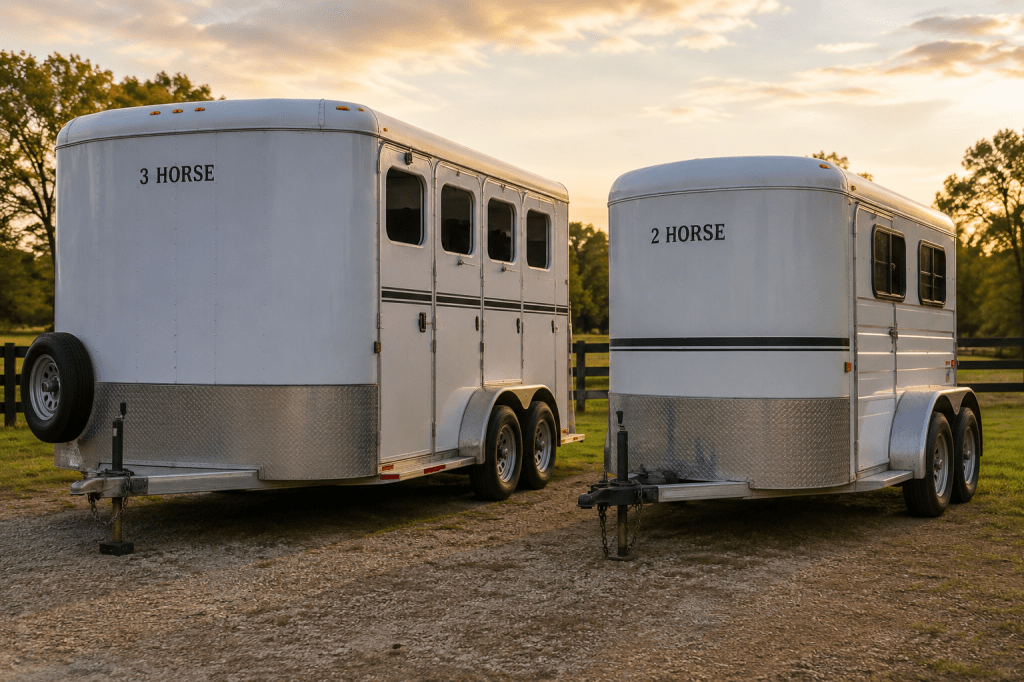
My large three-horse trailer has long been perfectly sized for my needs. That’s because my horses, Rosie and Sunny, and our donkey, Pimmy, often traveled together. For many years, I’d ride one horse and pony the other, while Pimmy, who adored her horses, followed along untethered. We were a small trio heading down trails and country roads. I don’t remember thinking those perfect days could end.

But they did—as all seasons eventually do. Things for me have changed, and quickly.

Rosie crossed the Rainbow Bridge this spring. Pimmy, now elderly herself and needing daily medication, has gone to live with a younger neighbor. A donkey can live to be forty years old, and her new person can promise care for as long as Pimmy may need it. Sunny remains here with me. She’s a sweet 22-year-old, small and technically a pony. As a side note, Sunny is also Rosie’s full sister.

During our many years “of three,” I had little reason to use my other trailer, a smaller two-horse Logan. Why switch trailers? Why train the horses to a smaller trailer when the larger one comfortably carried the entire crew? So I let the Logan sit and time slipped away. Its weatherstripping gradually loosened. Tires aged. Dust accumulated.

This week, with only one horse remaining, I started seeing the big three-horse trailer differently. Now, it’s much larger than Sunny needs. I decided it was time to inspect the Logan and assess what’ll be required to put it back into service.

At first, refurbishing the Logan seemed simply a practical matter—replacing seals, checking tires, and making a few minor repairs. But as I stood and looked at my old trailer, something within me began to shift, and it occurred that maybe I was seeing something more.

I felt more aware of changes affecting my small property, and that seemed to influence how I saw. My smaller trailer stopped representing less. Instead, it began representing what fits now.

I almost physically felt changes in my daily life. For the first time in twenty years, I had only one large animal to care for. That meant more time for me to slow down, more opportunities to tackle small waiting tasks, and more room for quiet moments with a book.

All new realities require appropriate attention and time. Sunny has needs—deserves adventures. We’ll always need a horse trailer, but now the smaller Logan is right for carrying Sunny. Besides trail rides and visiting friends, if she ever needs veterinary care, the Logan has a loading ramp, making it easier to transport her. I now see that old trailer as having many useful years left.

I also understood that the Logan trailer isn’t the only thing around here calling for refurbishing. Sure, Logan needs weatherstripping, tires, and an overall inspection. But I’m here, too, and, oops—I need something similar—another version of refurbishing. I must keep in my sight an ongoing need to adjust my perspective on the world. Right now, it’s about my changing world—containing one equine instead of three.

My broadening awareness feels quietly reassuring—reminding me that life does continue. And that we’re capable of adapting and finding ways forward—although our daily lives may be reshaping in ways we’re not ready for.

— Diana

The Way Back To The Jeep

Rachelle’s past much-loved pal, her Nova Scotia Duck Tolling Retriever (named Bon Jovie).

Saturday, June 06, 2026

My dogs and I love a nearby BLM area for many reasons. For one thing, it has a long irrigation canal with rushing water, lined with colorful wild water lilies. We were there recently to meet up with our longtime friend, Rachelle, who brought Ryder, her beautiful Aussie. He and my Chase are vigorous play buddies.

Rachelle and I hadn’t walked with our dogs for many months. We’ve been busy, so we had lots of catching up to do. And we did, while walking along the path beside the busy canal as our dogs played, chasing one another into and out of the water.

Rachelle is a lovely companion—bright, well-informed, and creative. Years ago, during one of our walks, she encouraged me to explore podcasts. I did, and found myself enjoying the timely perspectives of favorite writers and newscasters. Recently, I graduated from podcasts by subscribing to YouTube Premium, which is now my go-to source for news and commentary. Rachelle said she, too, pays close attention to that platform.

We were in sync, walking, talking, and sharing thoughts about our strengths, weaknesses, and changing physical and mental energies.

I am aging and thus paying more attention to matters of aging, with mixed delights and worries. So, walking and talking with Rachelle is special because she’s open, honest, and insightful. While she’s younger than me, Rachelle understands many of my concerns about what may lie ahead in the unstoppable process of aging.

She told me that she had recently been deeply involved in one of the most sensitive issues associated with aging. Her mother, Fay, who was more than 100 years old, recently passed away—by Fay’s own choice and with medical assistance. Rachelle said the actual event was a peaceful ending. (Note: Rachelle has given me permission to write about her mother.)

Fay’s early history dates back to the 1920s, and I asked about it. Rachelle said that her mom had found her way into college, earning two degrees, a Bachelor’s and a Master’s, during years when women typically did not do so. After finishing college, Fay began teaching in the New York public school system. She continued there until retiring at age 59.

From a genetic standpoint, Fay’s genes were remarkable. Rachelle probably has inherited some of those advantages. Perhaps I have them, too, as my own mother lived to around 100. We were never entirely sure of Mom’s age because she was born into an immigrant family in America and had no recorded birth date. She estimated her birth year, but whether she was accurate or not, she was certainly long-lived.

Rachelle explained that Fay actively participated in choosing her method of death. That decision was made several years earlier, while Fay was more cognizant of the realities of aging. Rachelle and her brothers supported Fay’s choice. Rachelle filled a prescription and stored it for use when the time eventually came.

Next year, Rachelle’s brothers, who live in other cities, will join her to spread Fay’s ashes.

Meanwhile, our dogs were having a wonderful time, but an underlying worry nagged us. I had brought along Osix, my 15-year-old Border Collie mix. Physically, Osix remains active and strong, but she has lost 80 to 90 percent of her hearing and has developed cataracts, which have impaired her vision. These days, I take Osix only to trails she knows well, thinking that if she gets confused about where she is, she will still remember where my vehicle is parked.

Just in case, I had brought the dogs in my old, familiar Jeep, and at the BLM, after releasing them to run, I left the cargo door open. Somewhere along our walk, upon realizing that Osix had disappeared, Rachelle and I were concerned. But we remained cautiously confident that Osix could find her way back to the vehicle.

Upon finally returning to the parking area, we saw Osix waiting patiently in the Jeep’s cargo area. Yet, I sensed a bittersweet note in the moment; for that may have been my old dog’s last opportunity to roam freely in such wide-open spaces. Although I hadn’t spoken much about this, a worry in the back of my mind was what I’d do if it were necessary to search for a lost Osix in that vast BLM landscape. It was a tremendous relief that she remembered her way back to the Jeep.

Rachelle and I are planning another dog-walking outing in a couple of weeks. With more pleasure, good conversation, and mutual appreciation ahead for ourselves and our dogs.

— Diana

What Friends Are

Friday, May 29, 2026

I had another birthday this week. I’d prefer to forget that this is my 86th year, but so it is. Longtime friends reminded me all week with cards and phone calls. On the actual day, Eva and I met for lunch and discussed activities and issues in our lives.

And then, there were Susie and Dale. Just when I’m not caring much about celebrating another year, Susie steps in.

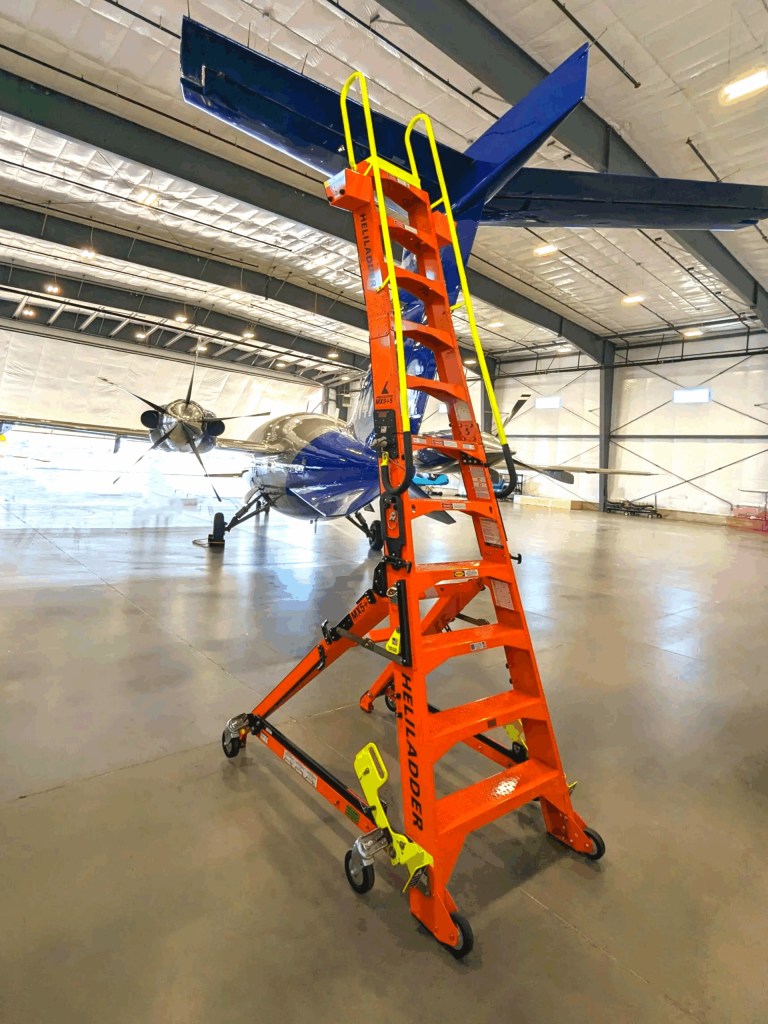
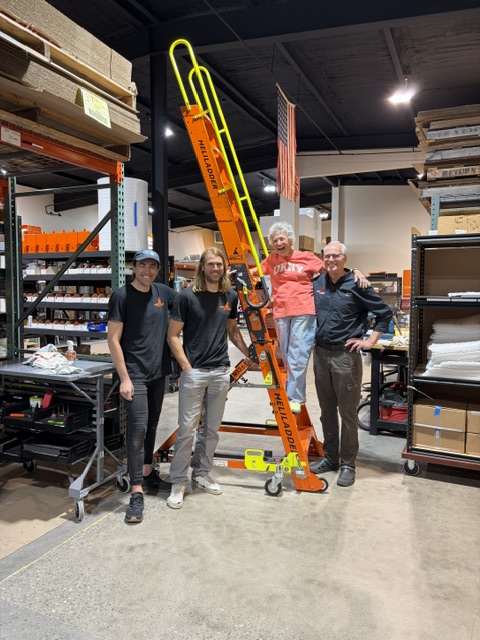
She’s big on relationships, big on caring, and big on birthdays. So is Dale, who stays busy managing his business — his brainchild and creation — HeliLadder. Which, by the way, now occupies a building of its own in this city’s key industrial district. (More about HeliLadder later, in an upcoming blog, as I’ll soon visit to see its new digs for myself.) But, for now, I digress.

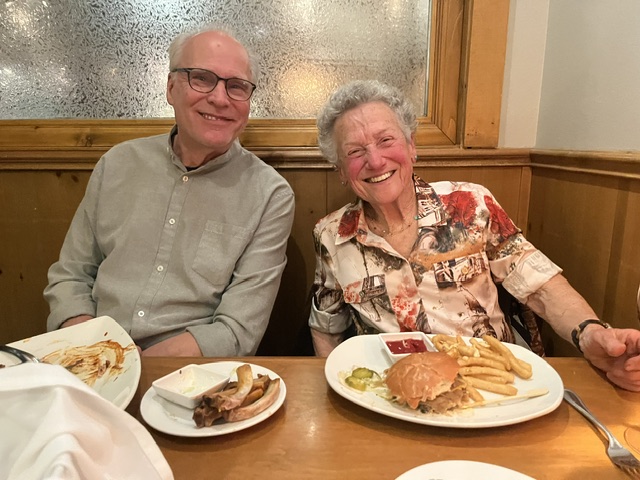
Yesterday evening, on a very rainy day, Dale and Susie hosted a birthday dinner for me. We went to the Pine Tavern, this city’s oldest restaurant — a delightful place — where Dale had ribs while Susie and I dove into gigantic hamburgers, a rare treat for this “casual vegan.” Afterward, we took our desserts back to Dale and Susie’s, where we lingered and talked late into the evening.

I’ve reached a time in life when relationships matter more and more. I’ve never been especially skilled at handling meaningful relationships, for complex reasons, though I’ve forgiven myself for that. I filled many years of my life with beloved pets and, later, horses, which always kept me busy and physically strong. While I’m generally content with the life I’ve chosen, it feels like a mitzvah to have met Susie and Dale — people with whom, over time, I’ve become comfortable and can freely “be me.”

So Susie made certain they shared my birthday. And, in a rare experience for me, they asked for details about my background and listened — without judgment — to my complicated story.

Their kindness has helped me better understand what it means to be a friend. Friends “are there,” unafraid of getting involved, supportive of others’ choices, yet willing to push back, ask questions, and perhaps influence a decision-making process. But whatever decision ultimately prevails, they remain — listening, encouraging, and supporting.

For someone who has always been careful about relationships, they are among “the best” for where I am in life now. They help keep me anchored to occasions, events, and sometimes delights. Speaking of which, Susie and I plan to head east next Sunday night “to chase” the rising Blue Moon.

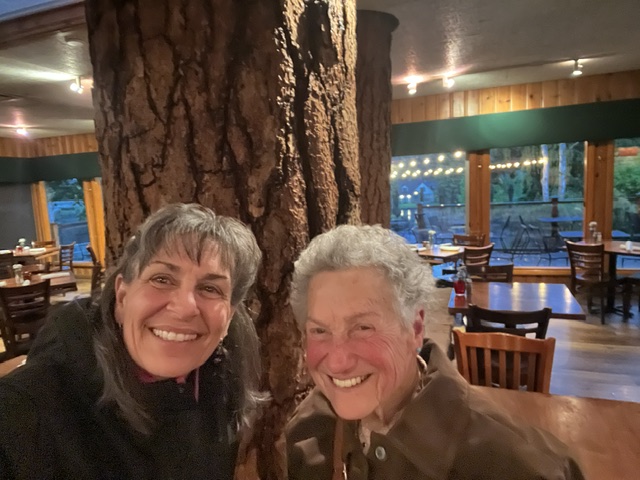
Punctuating a mature Ponderosa inside Pine Tavern’s Main Dining Room

The best part of my special day was simply this: people who genuinely care “were/are there,” even while busy with lives of their own.

— Diana

My Return to The Physical World

Saturday. February 21, 2026

Surprised & Delighted—By Rediscovering Geography

Studying geography is deepening my understanding of world politics by revealing the physical realities that sit beneath international relations. I’ve found that while historical events and charismatic leaders capture our attention, it is the unchanging—or very slowly changing—physical conditions of the Earth that constantly factor into major decisions.

I’m enjoying relearning what I first encountered in grade school. Re-experiencing why a mountain range or a deep-water port clarifies a news story makes my understanding of the world feel more grounded and, importantly, more real.

My most impactful readings so far are Zbigniew Brzeziński’s The Grand Chessboard (1997) and Hal Brands’ The Eurasian Century (2025). Brzeziński sets the geopolitical stage of the 90s, while Brands carries that vision into today’s world. My long-ignored world globe, now dusted off, constantly clarifies texts.

A stack of similarly intelligent books awaits me, and the more I learn, the more I want to share this widened lens.

Why Geography Disappeared

If you are rediscovering geography and are surprised by its relevance, it isn’t because the world changed—it’s our way of seeing it.

Many of us left geography behind in the fifth grade, filed away with pull-down maps and memorized capitals. As curricula shifted toward civics, ideology, and economics, geography faded. Later, the rise of 24-hour streaming news further sidelined our loss by favoring vivid, emotional storytelling over the slow-moving realities of terrain and distance.

Maps vs. Movements

Modern news often favors people over places—focusing on leadership personalities, voter blocs, and moral claims. These stories are intended to capture attention quickly, but they often lack depth.

I have found a few political storytellers who work differently. They explain events by first studying an area’s strategic position, climate, and access. Because geographical conditions move slowly, understanding them requires a level of patience that modern news rhythms rarely allow. We’ve been trained to think of politics through the lens of belief—who is “right” or “wrong”—while the physical world is treated as mere background scenery.

But geography is more than scenery; it’s an active, ongoing force.

The Comfort of Narrative

Geography introduces stubborn realities that can be uncomfortable. Conflicts are often simpler to frame as “bad leaders vs. good values.” That provides senses of clarity and emotional satisfaction.

By contrast, geography focuses on chokepoints, climate, and resource scarcity—complex factors that don’t yield to elections or diplomacy. This reality can feel unsettling because it challenges the comforting notion that history will naturally bend toward a peaceful resolution. It reminds us that persistent conflicts often stem from the Earth’s physical constraints and human struggles to sustain growing populations.

Geography is Returning

Globalization once promised a world where ideas and goods would move seamlessly across borders. But recent years have taught us otherwise. We’ve seen supply chains fracture and energy sources remain unevenly distributed. Technology can compress time, but so far, it cannot eliminate distance.

We are relearning under pressure what earlier generations understood almost intuitively: that ports, islands, and frozen corridors matter. The Earth has unarguable physical conditions, and we are simply the humans debating within them.

Reading the World Again

Returning to geography doesn’t replace my moral concerns; it adds depth to them. I’m slowing down, examining world maps, and asking:

  • Where exactly is this happening?
  • What physical constraints are shaping these choices?
  • Does this mapped position produce courage—or fear?

These questions offset the frustration caused by incomplete news stories. Geography doesn’t belong solely in a child’s classroom; it is a vital lens for refining our understanding of power, conflict, and human behavior. It isn’t a nostalgic return to the past—it is a way to finally see the world we actually live in.

Diana

Allowing Journalism To Think

Sunday, January 25, 2026

I’m regularly reading a non-newspaper publication. I follow very few magazines, but these days I always check what’s current in The Atlantic. And I don’t skim its headlines or dip into a single article—I actually read its essays.

The magazine has a tone that feels educated—a better word might be oriented. Its editor in chief, Jeffrey Goldberg, strikes me as intelligent and impressive. He hosts the television roundtable Washington Week in Review, which thoughtfully models observation and discussion without performative outrage. I now try to catch every episode.

I follow a couple of other favorite magazines: The Economist and Foreign Affairs. Both publish serious essays by informed observers and skilled writers.

But The Atlantic, for months, has puzzled me. The magazine has been around for generations. In fact, I read it long ago, then stopped at some point and forgot about it entirely. Several months ago, I picked up an issue someone had left on a table, and was struck by how good it was. Since then, it’s become a favorite again—making me wonder what has changed.

Why did The Atlantic reappear for me? What made me suddenly recognize—again—its excellent writing, capable thinkers, and fine essayists? I might credit taste, talent, and luck. But no dice, because that familiar trio doesn’t explain the continuous, high-quality output I’m seeing.

My questioning has pushed me into social history. It teaches that good writing has always required more than taste, talent, and luck. It has needed patrons. History tells that serious journalism has required both a point of view and money—the two forces that make steadiness, thoughtfulness, and complexity possible.

In earlier eras, aristocrats, universities, and churches underwrote serious thinkers and artists. Today, there are fewer patrons of independence and seriousness. My research—and my renewed relationship with The Atlantic—suggest that point-of-view and money still matter. And today, perhaps, they matter more than ever.

Most contemporary media organizations seem to be running on fumes. They’re dependent on algorithms, advertisers, and relentless speed. Adding political expediency to the mix—consider The Washington Post’s recent loss of subscribers—makes media independence look increasingly fragile.

The Atlantic doesn’t shout or pretend. It’s a magazine that thinks—and thinking costs money. So, I looked for a story behind its resurgence. And, I found it.

In 2017, Laurene Powell Jobs became The Atlantic’s majority owner and fundamentally changed the magazine’s prospects. Jobs did not impose an ideology. Instead, she provided patience and capital. She didn’t demand instant returns, viral hits, or ideological obedience. Her money began funding quality rather than control.

That kind of backing allows writers and editors time—to follow ideas into uncertain or uncomfortable places—and also trusts readers to stay with the writers. Trusting works both ways. Trusting the magazine’s writers has drawn me into The Atlantic’s podcasts and videos as well.

It’s been many years since I felt attached to magazines. Once, there were several that spoke with original voices, and I loved them. Some that still exist feel to me like shadowy reflections of their former selves.

Those of us who love good journalism want to believe it can survive on virtue alone. But that’s unrealistic. Serious work that endures means someone, somewhere, has made a bold, fearless decision that it’s worth protecting.

The Atlantic didn’t become compelling again simply because “it got good.” What keeps its articles relevant, thoughtful, well written, well edited—and alive—is that someone is allowing fine journalism to happen.

For readers who prefer receiving these morning pieces by email, I’m also publishing them on Substack.

Diana

What The Morning Asks

Thursday, January 22, 2026

This morning feels like a quiet weight. Central Oregon still is hushed beneath a thick inversion layer—and my small world seems held in suspension—deeply still. I almost hear the air breathing as it freezes. I know that heavy fog will erase the Cascade Mountains from the horizon and leave my few acres monochromatic. I know that now the junipers are shadowy sentinels, half-seen and half-imagined. 

I’m standing at a window and holding a cup of steaming coffee—and, almost seeing the stubbornly cold air. Frost coats juniper branches and grass blades, and soon, the sun will struggle to rise—pale and ghost-like—trying to burn through the low mist. 

Despite this chill, there’s a necessary routine of feeding my horses. In this still darkness, layered in snow pants, a thick sweater, and my heaviest coat, I step outside—into a muffled world. The usual neighborhood sounds are absent; there is only the sharp, rhythmic crunch of frozen earth beneath my boots. I move slowly through this morning’s blurred edges. 

The horses are waiting, their whiskers white with ice and their patience thinned by hunger. I hurry through the usual labor—cleaning stalls, filling water buckets, and hauling fresh, sweet hay into the barn. It is work, but offers a few brief, pleasant moments of focus, too. Free of other concerns for the moment, I’m considering this weather inversion, hoping the fog will lift soon and normal clouds return.

Once I have settled the horses, I pause awhile. I listen. Few sounds are as satisfying as the steady, rhythmic grinding of horses chewing—watching them, wholly relishing their meal, is fun, too.

It’s time to turn back toward the house. I crunch across the frozen ground. My dogs, cat, and birds are waiting for their breakfast. Only after caring for them will I prepare for my part-time job.

This is how most of my days begin—as dependably as our January freezes—and regardless of any other weather conditions.

Diana

Seeing Isn’t Always Seeing

Tuesday, January 20, 2025

At first glance, I was certain I knew what I was seeing.

Two pale strands hung straight down from the branches of a juniper, each coated in frost. They were white, linear, and unmistakably rope-like. Our minds are quick that way. They reach for the nearest familiar explanation and settle in. We just go with it.

Like me, then—not questioning whether the frosty objects were rope, only wondering how they had gotten there. I reached up to pull one strand free from its branch, and in that instant, the scale shifted.

In my fingers, what had looked sturdy immediately shrank into something improbably delicate. I expected resistance. Instead, frost slipped away, and I found myself trying to grip emptiness. I paused and looked more closely.

You’ll never guess what I discovered. The “rope” I was trying to hold was a single hair from one of my horses’ tails. Looking up again, I noticed several similar strands—long, pale, impossibly fine—each thickened by frost and hanging, rope-like, from the branches.

The experience startled me. These fine hairs had likely been carried aloft by nest-building birds, caught by chance in the tree, and layered again and again with ice. The moment felt slightly dramatic and, at the same time, utterly ordinary. I had misread the evidence—and it had been astonishingly easy to do so.

I’ve been thinking about deciding and misassuming. These happen more often than we realize. We believe we’re seeing what’s there, when instead we’re seeing what our experience tells us ought to be there. Our brains—efficient and decisive—are always working to help us make sense of things quickly.

But efficiency may also be a kind of blindness. When we label something too fast and move on—without lingering long enough to reconsider—we miss the chance to see it differently.

The object I mistook for rope wasn’t merely a variation of what I expected; it belonged to an entirely different category of reality. It was something once living—shed, carried, and repurposed by chance.

Only later did my mind begin to imagine a quiet collaboration among animals, weather, and time—a whole story I had nearly missed before I paused, looked again, and wondered.

This experience reinforces something I’ve been learning: that deciding well often requires more than one look. Not because first looks are careless, but because they are incomplete. The longer I live, the more I understand wisdom as less about sharp eyesight and more about patience. Wisdom is staying a little longer with what we think we understand, allowing ourselves to be surprised by what else might be there.

Here’s today’s small example. A single strand of horse tail hair is usually barely visible. Yet here were several, transformed—fluffed with frost and suspended in front of me. I mistook them for rope. I tried to pull one down. Instead, I learned again that what appears solid may, upon re-examination, be lighter, finer, and less obvious than we first believed.

Seeing—really seeing—asks us to pause, reconsider, and sometimes admit that our first understanding was wrong. That lesson, offered by a few horse hairs, humbled me. And because of what it taught, it was also comforting.

If something as slight as a single horse tail hair can—against all odds—hold its place in the world, suspended and briefly transformed, then perhaps our own uncertainties deserve a little more time in the light as well.

Taking more time means looking again. Reflecting longer. It’s a practice that can help move our perceptions closer to what actually may be there.

Diana

Feathers & Footsteps

Friday, January 16, 2026

The other afternoon, Peaches and I went for a walk. The day was lovely and warm; I didn’t even need a jacket. He perched on my shoulder—a heavenly lookout post—greeting anyone nearby with “Hello, hello!” or “Goodbye, goodbye!” Or he simply screamed, unrestrained and joyous, resisting every attempt I made to quiet him. (If your ears had ever been on the receiving end of his screams, you’d understand.)

Peaches, my Cockatoo, loves going on walks, and on this one he was especially delighted. I’d been promising him an outing for a long time. But I’ve been busy—winterizing the house and barn, and, rather suddenly, starting a new part-time job. Short winter days haven’t helped either, with daylight disappearing before it ought to.

But now, no more promises. We’re finally out and about.

Peaches is quite an attention-getter. People, seeing him for the first time, doubt their eyes: a large, white, very alive bird on someone’s shoulder (or arm, or head—if the wind isn’t too strong—or essentially anywhere he decides to perch). Walkers stop to ask about him. Drivers roll down their windows. Everyone wants to hear him talk. And does he, when they ask? Of course not—he waits until they’re out of earshot, and then he suddenly won’t shut up.

This year, Peaches turns twenty. All wonderful, except for the fact that a healthy parrot can live to be seventy. I’ve always known that someday he’ll need another home. Finding the right one for him weighs on me. Deciding to keep a parrot means making a long-term commitment to a bird who is no shrinking violet.

What makes it easier is that parrots are fun, companionable creatures. My Peaches sings, dances, and talks. He loves music—the louder and more rockabilly, the better. He makes me laugh. What surprises me most is how easily I fall into lively conversations with him. I’m often caught off guard by his inquisitive, animated, and lovable qualities. He’s not “just a bird.” Peaches is a person-bird. And yes, we have discussions.

An earlier sweet Cockatoo in my life, named Crackers, and now Peaches, too, have convinced me of the high intelligence of birds. All birds—wild and domestic—are smart, but some species are famously so: members of the Corvid family (Crows, Ravens, Jays, Magpies) and the so-called “intelligent parrots,” like African Greys.

Corvids and parrots demonstrate their intelligence through tool-use, problem-solving, and complex communication. Cockatoos are among these bright ones—so smart, these birds. (And because I can’t help myself, here’s my extra two cents: over the years, my chickens—and especially my turkeys—have proved themselves far smarter than people typically give them credit for.)

Today’s header photo shows the road ahead on our walk. To complete the loop, here’s another look at that same road—the section we’ve just left behind.

— Diana

Enduring Lights & Shadows

Tuesday, January 12, 2025

The ancient volcano in today’s header photo is Broken Top—my favorite among the Cascade Mountain profiles—and easily visible from my house. I love the whole range, but Broken Top feels extra special. I think that’s well deserved. Its peaks practically explode with personality. And many times, I’ve ridden horseback there. Broken Top is an old friend, even if it’s a mountain.

It’s also a teacher.

Broken Top is an ancient, spent volcano—its fire was gone long before any of us arrived. And yet, on a clear winter day like this, it feels alive to me, especially for the precision of its contrasts.

I’m fascinated by how the mountain holds light and dark at once. Snow burns bright along its slopes, while shattered rock catches shadows in every crevice and angle. The contrasts don’t compete—they belong to each other. One reveals the other. Without shadows, Broken Top’s lights would flatten; without lights, its darks would disappear.

Seeing Broken Top—whether in person or in my photographs—always pulls at something in me.

Maybe because I’m noticing similar interplays inside my own days. Aging has brightnesses—clarity, spaciousness. I’m surprised to find myself more patient, more observant, more willing to look twice. But aging also brings shadows—losses, changes, old urgencies cooling, and quiet reckonings with time.

Like Broken Top, I’m a terrain. And like that mountain, I’m shaped by experience.

It feels natural to accept vivid contrasts on a mountain. Yet I’m struck by how reluctant I am to accept unexpected contrasts within myself. Maybe because early in life, we’re taught to sort our experiences into clean categories: “good years” and “hard years,” “growing seasons” and “declining seasons.”

In contrast, Broken Top does no such sorting. On the mountain, erosion lives beside endurance. Sharp ridges beside soft snow. Light beside dark. Everything adds up to the shape of the thing.

From where I stand, Broken Top’s contrasts feel honest—less dramatic than simply true. They reflect what happens when something stops trying to be anything other than what time has made of it.

Staring at the mountain, I can catch meaning. It adds up to a life that, viewed from far enough away, doesn’t need smoothing. Its irregularities—fallen rocks, jagged silhouettes, deep cuts—are precisely what’s letting the light in.

Looking longer increasingly matters to me. My first look gathers an outline—giving certainty. My second, longer look gathers depth. It shows me light gathering on one slope while darkness settles on another. Staying with the view lets its “true story” come through. And I’m touched by a mountain long past its fire and entirely at peace with that.

Broken Top never tries to impress. It simply stands there—weathered and luminous—letting the day draw its shadows where it will.

And in its very quiet way, Broken Top reassures that: we don’t lose our shape as we age; we reveal it.

Diana