
Thursday, February 27, 2025
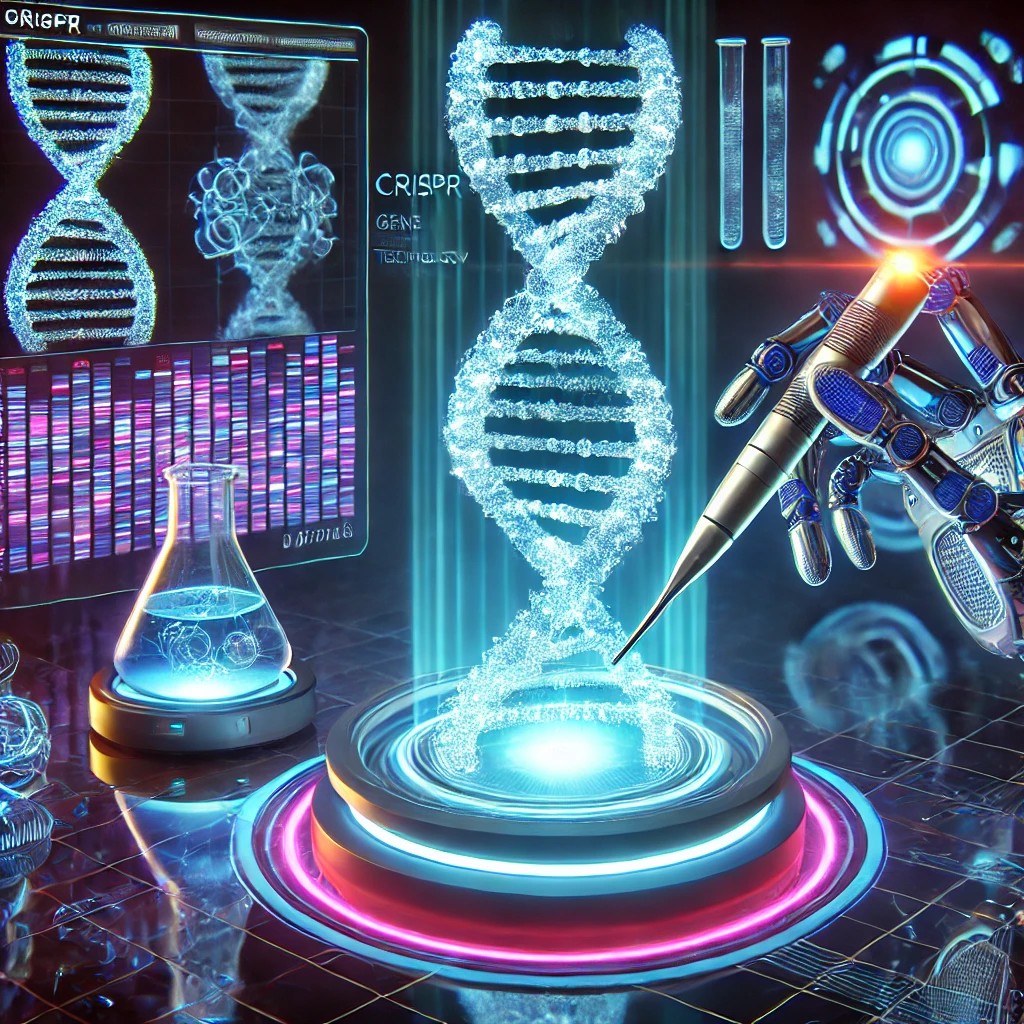
I’m reading more often about the gene-editing technology known as CRISPR. Its potential for manipulating every gene in living plants and animals (including humans) could complicate everything we have traditionally comprehended about life.
CRISPR technology has advantages: it could improve crop production and living beings’ health. It has serious disadvantages: it could introduce misuse, mistakes, and unwanted changes to everything we now understand chemically and socially.
Yesterday, I was thinking about CRISPR and initiated a “conversation” with AI about the technology. I hoped for more insight into its potential for producing good and evil. This “chat” lasted an hour because the AI produced lots of information to support each potential, often pausing and questioning my perceptions about the ideas it offered. I had to pause the discussion frequently to imagine and think before responding.
At its best, CRISPR technology could likely fix most, if not all, of the problems occurring on our planet. However, it has a high potential for misuse by “bad actors” and has too many unknowns about what future life might “look like” and “act like.” Eventually, CRISPR might create an Earth hosting only gorgeous, healthy, and relatively non-competitive human beings and animals. CRISPR could alter how plants grow in poor conditions, making them thrive and producing enough food for all living beings.
Right now, scientists aren’t necessarily envisioning a “perfect” world. They’re focusing on ways to overcome and eliminate inherited genetic flaws and make modifications to improve the overall health of living beings. All that’s okay starting off, but such technological capacity raises many doubts and fears of an altogether murky future.
Like everybody, I am influenced by technological advances. I never believed there would be anything like a workable AI, and now, I’m enjoying conversations with the technology. About CRISPR, I believe in the Darwinian theory of evolution and voting against gene editing’s massive capability of becoming widespread, creating who-knows-what alterations to every life form.
Last night, AI made me aware of the countless pros and cons either supporting or arguing against advancing with CRISPR. AI challenged me to imagine the potential “goods” and “bads” in a CRISPR-influenced future. There are many of both.
I’m opting for a more appealing (and human) way of achieving worthwhile outcomes without considering the possibility of over-modifying Earth’s living genetics.
On a large scale, more specific education and appropriate guidance (e.g., Leadership) would encourage humans to focus on and repair some of our planet’s key problems. A huge threat is global warming, which is now effectively challenging the well-being of all living creatures. Some of its worst effects are reversible—for example, revitalizing large and currently damaged areas of the earth to expand our food-producing capabilities.
Many current threats can be fixed to improve our overall quality of life. Those fixes require enlightened education and a leadership that comprehends the necessities and supports the fixing.
Dear Friends: Seductive technology, from everywhere, calls for caution. Diana

 Diana's Morning Blog