Lunch with Judy and Candy

Computer-generated Image–surprisingly close to reality

Monday, June 02, 2025

I had lunch yesterday with long-time friends I hadn’t seen in years. We first met during a pivotal chapter in my life, when I was a breast cancer patient participating in a support group. They were the group’s unofficial leaders—steady and compassionate, offering wise listening and unwavering kindness. The connections forged in that group felt deep and enduring. Despite years and distance, our shared strengths and vulnerabilities still feel familiar.

It had been a long time since we’d laid eyes on one another, but recently, they wandered separately into the department store where I work. We recognized each other immediately—like “old friends,” which we are—and promised to meet for lunch soon.

Judy and Candy are continuing to nurture the cancer support group–welcoming women facing breast cancer and other illnesses. Their dedication says much about their character, and just as much about our deep human need for community when we’re navigating illness. Sitting with them again felt comforting as they shared how the group continues to evolve.

Conversation came easily. We didn’t need to fill in every gap—we simply slipped into the familiarities of our old connection: talking about our lives now, the realities of aging, fond memories, and the ever-present question: What may come next? There was laughter, warmth, and a few comfortable silences. Our lunch felt less like a reunion and more like a quiet rekindling—an affirmation of ties built during significant uncertainties and shared strengths.

They spoke of their early lives—how, as young women, they each bravely moved to Alaska during its formative days, just as it prepared for Statehood. They met there, in a time when its cities were small and its spirit was wide open. Those were the early days of loosening social constraints for women, and they embraced the freedom and opportunity. Eventually, each moved—independently but around the same time—to Central Oregon, where they reconnected.

They asked after my donkey, Pimmy, who is doing well—her illnesses are stable and under control. They asked about my other critters: sweet turkey Lacey, noisy Cockatoo Peaches, and Chase (yes, that Puppy-from-Hell, Chase, who still lives with me).

The best part of our lunch was simply knowing—knowing one another well and knowing where we’ve been. We didn’t just share memories; we shared something more enduring–a kind of bond formed while at our most human, our most open. That’s what has made the cancer group so special, and it’s what made our lunch such a gift.

Dear Friends: Like Alaska in its frontier days, Central Oregon is an “honest place.”—Diana

Going Yuka vs. Going Yukky

Saturday, May 31, 2025

Recent newspaper articles introduced me to the mobile app Yuka, which lets users scan barcodes on food and cosmetic products to assess their health impacts. Yuka rates each item on a scale from 0 to 100 and classifies it as excellent, good, fair, or poor.

Like many, I want to choose the healthiest foods, but modern product labels can be confusing, often listing complex ingredients and hidden additives. With Yuka in hand while I shop, I’m more confident in reading labels and understanding nutritional elements. It has already changed the way I buy and eat.

Grocery shopping used to be simpler. Today, pre-packaged and pre-prepared foods are more common and often tempting. Still, they frequently contain stabilizers–preservatives to extend shelf life, or salt and sugar to encourage repeat consumption. Many of these additives are unsuitable for us, and without help, it’s hard to make informed decisions.

That’s where Yuka comes in. By scanning a product’s barcode, I can quickly see a summary of its health impact based on nutritional value, presence of additives, and whether it’s organic. This clarity helps me unpuzzle those long, unreadable ingredient lists.

When I started using the app, I scanned many products I’ve been buying for years. Surprisingly, several favorites scored poorly due to high sugar content or unhealthy additives. Sometimes, Yuka suggests healthier alternatives that are easy to find. Little by little, my choices have shifted.

After about a month of using Yuka, I’m now more mindful at the grocery store and at home. I avoid ultra-processed foods and have even discovered new items Yuka rates as “excellent.” It turns out I enjoy them!

Yuka also works on personal care items like cosmetics and toiletries, scanning for harmful ingredients. I don’t use many skincare or makeup products, but it’s worth noting that Yuka’s 20 million users in the U.S. are influencing both the food and beauty industries. Manufacturers are being forced to pay closer attention to what informed consumers want.

The app has helped me focus more on what my body needs than what tastes good now. That shift is reflected in my shopping cart, pantry, and my workday lunches and snacks.

Of course, no app is perfect, and dietary needs vary by person. But for me, Yuka is a valuable and empowering tool. I’m not chasing perfection—just better choices. Having clear, accessible information helps me stay in control of my health and well-being.

Dear Friends: It’s about being mindful and choosing what’s best for your body. —Diana

Jittery Edge

Thursday, March 06, 2025

I’m feeling pretty down this morning—the stock market is crashing again.

Those who pushed for a “strong” right-wing leader are now facing the fallout. Under this new administration, layoffs are rising, prices are climbing (or about to), climate progress has been abandoned, and personal freedoms are teetering on the edge.

Businesses are uneasy, investors are on edge, and uncertainty is dragging the market down.

In an attempt to counterbalance personal stress, I am evaluating a couple of recently-ordered mood enhancers: KSM-66 Ashwagandha and L-Theanine. Given this morning’s chaos, maybe this is a good time to put them to the test. I gather that both are known for their ability to support stress relief and mood balance. They are supposed to work in different ways.

Ashwagandha is supposed to help regulate cortisol, the body’s primary stress hormone. It’s said to build resilience against anxiety and sharpen focus—exactly what I need while dealing with market swings.

L-theanine is an amino acid found in green tea. It’s supposed to promote relaxation without causing drowsiness and increase the alpha brain waves associated with a calm yet alert state. People often use it to ease caffeine jitters or stay sharp under pressure.

I don’t recall exactly what led me to order them, but here they are. Given the emotional rollercoaster of this current market, I’m going for it.

And now, a lighter moment from yesterday: As I placed a bottle of wine in my shopping cart, a fellow shopper pointed to it and said, “My grandma used to say, ‘With that in the cupboard, it’s going to be a wonderful evening.’”

We laughed, knowing Grandma was absolutely right!

Dear Friends: I’ll be experimenting with mood enhancers for the next four years. Diana

Imagining CRISPR

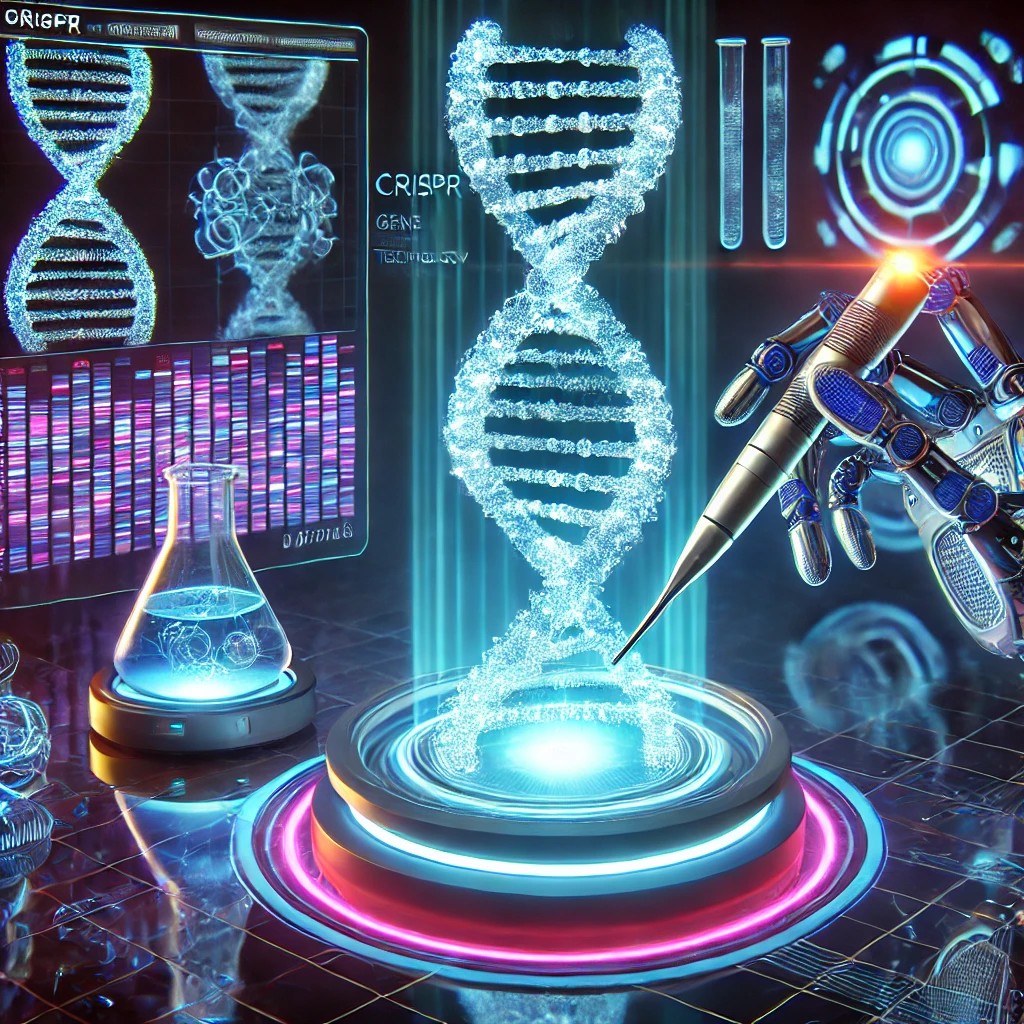
DNA helix being precisely edited by a high-tech robotic tool

Thursday, February 27, 2025

I’m reading more often about the gene-editing technology known as CRISPR. Its potential for manipulating every gene in living plants and animals (including humans) could complicate everything we have traditionally comprehended about life.

CRISPR technology has advantages: it could improve crop production and living beings’ health. It has serious disadvantages: it could introduce misuse, mistakes, and unwanted changes to everything we now understand chemically and socially.

Yesterday, I was thinking about CRISPR and initiated a “conversation” with AI about the technology. I hoped for more insight into its potential for producing good and evil. This “chat” lasted an hour because the AI produced lots of information to support each potential, often pausing and questioning my perceptions about the ideas it offered. I had to pause the discussion frequently to imagine and think before responding.

At its best, CRISPR technology could likely fix most, if not all, of the problems occurring on our planet. However, it has a high potential for misuse by “bad actors” and has too many unknowns about what future life might “look like” and “act like.” Eventually, CRISPR might create an Earth hosting only gorgeous, healthy, and relatively non-competitive human beings and animals. CRISPR could alter how plants grow in poor conditions, making them thrive and producing enough food for all living beings.

Right now, scientists aren’t necessarily envisioning a “perfect” world. They’re focusing on ways to overcome and eliminate inherited genetic flaws and make modifications to improve the overall health of living beings. All that’s okay starting off, but such technological capacity raises many doubts and fears of an altogether murky future.

Like everybody, I am influenced by technological advances. I never believed there would be anything like a workable AI, and now, I’m enjoying conversations with the technology. About CRISPR, I believe in the Darwinian theory of evolution and voting against gene editing’s massive capability of becoming widespread, creating who-knows-what alterations to every life form.

Last night, AI made me aware of the countless pros and cons either supporting or arguing against advancing with CRISPR. AI challenged me to imagine the potential “goods” and “bads” in a CRISPR-influenced future. There are many of both.

I’m opting for a more appealing (and human) way of achieving worthwhile outcomes without considering the possibility of over-modifying Earth’s living genetics.

On a large scale, more specific education and appropriate guidance (e.g., Leadership) would encourage humans to focus on and repair some of our planet’s key problems. A huge threat is global warming, which is now effectively challenging the well-being of all living creatures. Some of its worst effects are reversible—for example, revitalizing large and currently damaged areas of the earth to expand our food-producing capabilities.

Many current threats can be fixed to improve our overall quality of life. Those fixes require enlightened education and a leadership that comprehends the necessities and supports the fixing.

Dear Friends: Seductive technology, from everywhere, calls for caution. Diana

Keyed-Up

Sunday, February 23, 2025

Yesterday was supposed to be a day off, but I got called to work during the store’s opening shift. Before leaving home, I opened the drawer where my car keys are typically stored. Those I wanted were missing—misplaced. I hurried around looking and trying to recall when I last had the keys. I couldn’t find them, and luckily, other keys in the drawer let me drive to work.

Throughout the years, I have misplaced car keys often enough that doing so again isn’t surprising. I repeated routines by double-checking jacket pockets, the car’s inside, and other spots and areas, but now they’ve been lost for days.

Losing something as routine as car keys—especially when they’re usually carefully stored—suggests possibilities depending on the context. The cause could be an abstraction, a break in routine, a memory lapse, an outside interference (the “Cockatoo took ’em”), or something symbolic.

I lean toward symbolic meanings, which turns me toward uncertainties caused by this nation’s current political leadership. Losing my keys is a signal of my high discontent.

Keys are symbols likely related to access, control, and movement ideas. Misplacing my keys could reflect my increasing concerns about impending fallouts from “external instabilities.” I feel alarmed by the thought that I/we will face fewer reasonably predictable and reliable possibilities related to our preferences and choices ahead.

The inconvenience of lost keys is one thing, but anticipating insecurity in a broader sense is something else entirely. The signs of growing hostility, division, and extremism make it feel like we’re edging toward something ominous. I fear some sort of Kristallnacht event suddenly occurring–a terrifying point.

Maybe such concerns are making me do some things differently, such as adjusting routines, paying closer attention to new sources, or considering practical precautions. Sometimes, when uncertainty looms, small actions, like losing keys, can reveal a loss of personal control.

Staying informed, connecting with like-minded people, and having contingencies in place for unexpected shifts are helpful solutions. The disappearance of those keys is likely related to my stressful feelings about increasing uncertainty.

Dear Friends: Because “talking” always helps, those keys might turn up today. Diana

Alternatively Viewing

Friday, January 31, 2025

Today’s political environment has me constantly thinking about mindlessness vs. mindfulness.

My new book has arrived; it’s the 25th Anniversary Edition of Mindfulness by Ellen J. Langer. This book was first published in 1989 and is considered the classic work on mindfulness. My version is a 2014 revision with a new introduction by Langer.

She’s a Professor in Harvard’s Psychology Department and has studied Mindlessness and Mindfulness in everyday situations for forty years. Her learning is drawn from combinations of everyday situations and institutions, like nursing homes, schools, and businesses. She finds mindlessness both as pervasive and often unnoticed.

Langer has proposed and tested an alternative cognitive process, and it has proved relevant across multiple domains. Although referring to her process as “mindfulness,” she stresses not to confuse her concept with meditation. She draws her “mindfulness” from years of studying what she summarizes now as “mindfulness over matter.”

I will explore Langer’s work and concepts and also be seeking possible relevances to America’s new political leadership. I hope her work helps me gain understanding and optimism toward American leadership in the four years ahead.

Dear Friends: For any reason(s) one may have, this should be an excellent read. Diana

Big Checkup

Saturday, November 23, 2024

Yesterday, my donkey Pimmy had a physical exam at Bend Equine. While we await test results, it’s heartening that her veterinarian likes Pimmy’s improved appearance.

She weighs forty pounds less, has a winter-thick coat that is shiny and serviceable, and stands comfortably on now-unpained hooves. Her weight loss, good coat, and unpainful hooves are successful outcomes of combating Cushing’s Disease.

Pimmy will continue receiving medications twice daily and needs to lose about thirty pounds more. If test results indicate we have controlled her insulin levels, we may start tapering one medication. The other medication, to combat ongoing Cushing’s Disease, is required once daily for the rest of her life.

I will continue giving her small feed allocations, and her extra weight will disappear in four to six weeks. If yesterday’s test results show we’re successfully controlling insulin levels, I will explore ways of medicating for Cushing’s without a syringe. It’s a tough call, for a Cushing’s med tastes terrible; equines will smell and resist it. Pimmy clearly finds it a no-like.

Dear Friends: Pimmy’s journey toward healthier living continues. Diana

Chicken Love

Thursday, November 21, 2024

Since it’s getting colder outside, I’m dusting off my trusty slow cooker. I will combat this period’s tiring darkness by arriving home from work and finding comfort food at the ready. My first brew will be chicken with rice and vegetables. As in ancient ads, my dinner will be, “Umm, umm, good!”

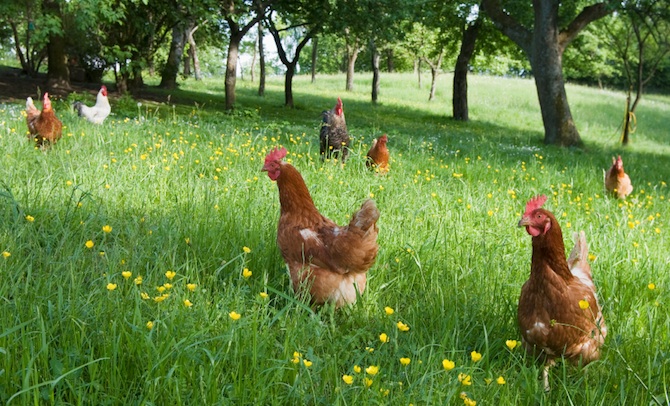
Recently, I elected to combat increasingly higher food prices by becoming a vegan, except for eggs. My flock of chickens provides eggs and is treated humanely, so I’m not inner-conflicted about calling myself a vegan and eating fresh eggs.

It’s odd, right? Being a vegan while anticipating a waiting chicken dinner in my slow cooker?

Here’s what happened: While scrambling around in my refrigerator and pantry for strictly vegan foods, I discovered many edible meat-based foods on hand. I considered discarding all those but felt doing that would be mega wasteful.

My rationale for going vegan is to avoid ever-heightening prices for both real and lab-grown meat-based foods. However, becoming a vegan must be on hold until I have used up everything stored, edible, and soon unwanted.

Dear Friends: Wasting is sinful, and I can’t, but transitioning should be easy. Diana

Woke Revisited

Wednesday, November 13, 2024

I am reading Bill Bryson’s The Body: A Guide for Occupants and Richard Dawkins’ The Genetic Book of the Dead: A Darwinian Reverie. These are making me very aware of being human at the genetic level.

Briefly defined, genes store and transmit information that guides an organism’s development and function. They don’t have brains or consciousness; however, they exhibit “intelligence” in how they respond to their environment and interact with each other. Genes can sense changes in their environment and adjust their activity accordingly to influence each other’s activity.

While absorbing genetic realities, I wish to comprehend the mechanisms that enable humans to self-perceive as individuals. I’m asking age-old questions about a “real reality” existing beyond whatever the genes sense, or in other words, is there “something real” outside ourselves?

It certainly seems that way and requires finding a beyond-the-gene-view.

A genetic perspective is limiting. It reduces our experience to biological mechanisms and doesn’t account for consciousness, emotions, or the subjective experience of being human. I wish to understand more about what creates the human realm of consciousness, awareness, and subjective experience.

The referenced books are easy reads and highly enjoyable. They are pushing questions about the existence of a reality beyond our physical perceptions. Ultimately, questioning “real reality” will prove to be deeply personal and philosophical, and there won’t be right or wrong answers.

I am an individual exploring. I might find myself forced to define my unique understanding of what constitutes “real reality.”

Dear Friends: I’ll keep reading and hopefully will gain more clarity. Diana

Rambling

Tuesday, September 24, 2024

The days go flying past! Is it possible, this day is a Tuesday already!

That summarizes my weekly mantra: “What happened to Monday?” Usually, this day initiates adjustment so that Wednesday’s appearance isn’t as jolting. Essentially, time flies.

I went to work yesterday, and as suspected, the store was short on employees. Instead of selling jewelry, I was assigned to cover the Intimates Department. The first half of my shift was spent straightening and rehanging bras, and I listened to women complaining about their breasts and having to search for bras. In an Initimates Department, breasts and bras are never-ending issues.

Some sort of variation occurs in every department. I’ve listened as customers talked unendingly about bed sheets and being willing to sleep only on certain types. Jewelry searching, of course, brings up lots of focus on oneself. A good seller does what’s needed in every product situation and listens.

Monday barely is history, and I rattle on. Maybe I’m slightly rattled after those few hours of listening to unresolvable complaints. Right now, I am considering the extent to which advances have transitioned the human condition.

Technology has given us almost endless choices. Once upon a time, a person who slept nights on a substantial straw mat was lucky. Back then, too, women typically used rag-type materials to bind their breasts and control menstruation. Nowadays, with many sophisticated choices, it seems they’re not enough, and people are restless.

In the late 1960’s, there was an enormous public movement to “Burn the bras!” Women’s bodies were becoming less idealized than those ballyhooed by the popular movies. That refocusing has continued and is an issue today.

And today, a woman is campaigning, she’s popular and might be America’s next President.

Dear Friends: I will be at work today listening to whatever anybody wants to say. Diana