On Thanksgiving: How Native Societies Shaped Early America

Sunday, November 21, 2025

I was enjoying an enlightening conversation with Ben—an American-history buff—about the earliest years of this country when I found myself rethinking those first decades after the Mayflower and the later ships that touched the Eastern shores.

I pictured the newcomers still carrying their former world with them: royal traditions, rigid hierarchies, fixed identities, and a deep sense of what “proper society” ought to look like. These were people who had spent their entire lives under unquestioned structures—kings, church authorities, strict class systems, inherited roles. And suddenly, they came face-to-face with communities that had survived for thousands of years under entirely different rules.

The longer story of those times is complex and brutal. The Pilgrims walked into a continent already alive with civilizations—America’s Indigenous peoples. For Native nations, the arrival of Europeans proved catastrophic. Colonists enslaved Native people, sometimes entire tribes, and brought diseases such as typhus, chickenpox, and cholera to populations with no natural immunity. Those diseases killed an estimated 95% of Indigenous Americans, a tragedy later called “the Great Dying.”

Violence, displacement, and disease devastated local tribes. Ultimately, to preserve what remained, the Wampanoag people signed the 1621 Peace Treaty—the first treaty of its kind between Native people and European settlers.

The Wampanoags, severely weakened, were in danger of being overtaken by the neighboring Narragansett. For them, the treaty offered a fragile but necessary exchange: survival skills and local knowledge shared with the settlers in return for protection by the settlers’ firearms. It invites serious reflection—America’s Native societies didn’t simply encounter the Europeans; they changed them.

Talking with Ben made me realize how little I once understood about early American history, especially about the profound influence Native peoples had on those first settlers. A stirring realization this week, as another Thanksgiving approaches.

Consider leadership: settlers discovered people who chose leaders based on ability, not lineage. Some Native women held property and political authority, even clan leadership. Many tribes made decisions through persuasion and consensus rather than decree.

The impact on the newcomers must have been enormous. Europeans accustomed to hierarchy and obedience no doubt felt confusion, maybe fear—but also, perhaps, a quiet stirring of possibility.

Some early colonists wrote about what they were encountering: families living with autonomy and mutual respect; individuals moving with confidence rather than deference; communities unburdened by fear of displeasing a nobleman or landlord.

For the settlers, the very idea of societies organized around cooperation instead of obedience must have been profoundly disorienting. For Native people, though, freedom wasn’t an abstract ideal—it was simply how life worked.

Humans have learned, since time immemorial, that whatever we live around every day becomes quietly contagious. America’s famous “independent spirit” did not arise solely from Enlightenment philosophy. Many settlers learned that spirit from the people already here—self-governing, communal, adaptive, and deeply connected to the land beneath them.

Imagine those early Europeans beginning to sense that life could be less stratified, less deferential, more grounded in personal choice. More humane. They might not have dared articulate such ideas openly—colonial life was far too rigid for that—but the influence of Native societies undoubtedly shaped their thinking.

There is a line—sometimes thin, but always real—between exposure and transformation. Across generations, “different ways of being” have quietly rearranged human assumptions. The settlers didn’t just transform this continent; the continent—and its original inhabitants—transformed them.

This history reveals one of America’s oldest and most overlooked truths:

From the very beginning, newcomers were influenced by the people already living here—learning new ways of governing, of owning and sharing land, of shaping community life, and discovering the many forms human freedom can take.

Sometimes, the deepest influences are the ones we inherit without ever realizing it.

—Diana

History Reminds

Tuesday, September 16, 2025

I am reading The Berlin Wall by Frederick Taylor, published in 2006. I picked it up after someone described it as a history that “…reads like a novel, and I couldn’t put it down!” I can’t say I agree with the “novel read” part—at least not yet—but for me it has opened a window onto Germany’s tangled past, and some of it feels uncomfortably familiar today.

Before Hitler ever arrived on the scene, Germany had spent 400 years as a patchwork of kingdoms, dukes, and city-states loosely tied together under the Holy Roman Empire. From 1400 on, there was endless infighting, power struggles, and even catastrophes like the Thirty Years’ War. When the country finally unified in the late 1800s, it still swung wildly between strongmen and shaky experiments with democracy.

That long, messy history makes me think of how easily fractured nations—then and now—can be pulled toward extremes. The old German pattern of division, promises of “restored greatness,” and sudden hard turns in politics has its modern echoes.

Americans today are asking fresh questions about the Constitution: what’s in it, what’s not, and whether it’s strong enough to steer the nation toward a future most of its citizens can embrace. Contemporary glimpses of social and national histories–and of course, not only Germany’s–remind us that human struggle is almost constant. And yet, the 20th and 21st centuries opened doors to hopeful new possibilities—spurred by human inventiveness, expanding wealth, and a broader reach of education and enlightenment.

Now we are witnessing history in motion once again—but this time in a broader stage, and unfolding not over centuries but at breakneck speed. Our real-time view of evolving nations is filled with warning signs: dehumanization, threats, and, too often, bloody conflict.

Events may feel distant from our own daily lives. But are they?

—Diana

“Leading Wing”

Monday, June 30, 2025

Years ago, long before I imagined a life in Central Oregon or the daily ritual of writing blogs, I worked in a world so classified I couldn’t even discuss my job with friends. Lately, I’ve found myself reflecting on those details—my small but precise role during the early development of the B-2 bomber.

I served as the lead negotiator for a section of the B-2, responsible for negotiating costs and understanding the construction intricacies of my assigned area. That work pushed me deep into technical territory, whether I felt ready for it or not. My focus was on a particular part of the wing. Only later did I fully appreciate how closely my work was tied to the company’s and the nation’s ambitious vision.

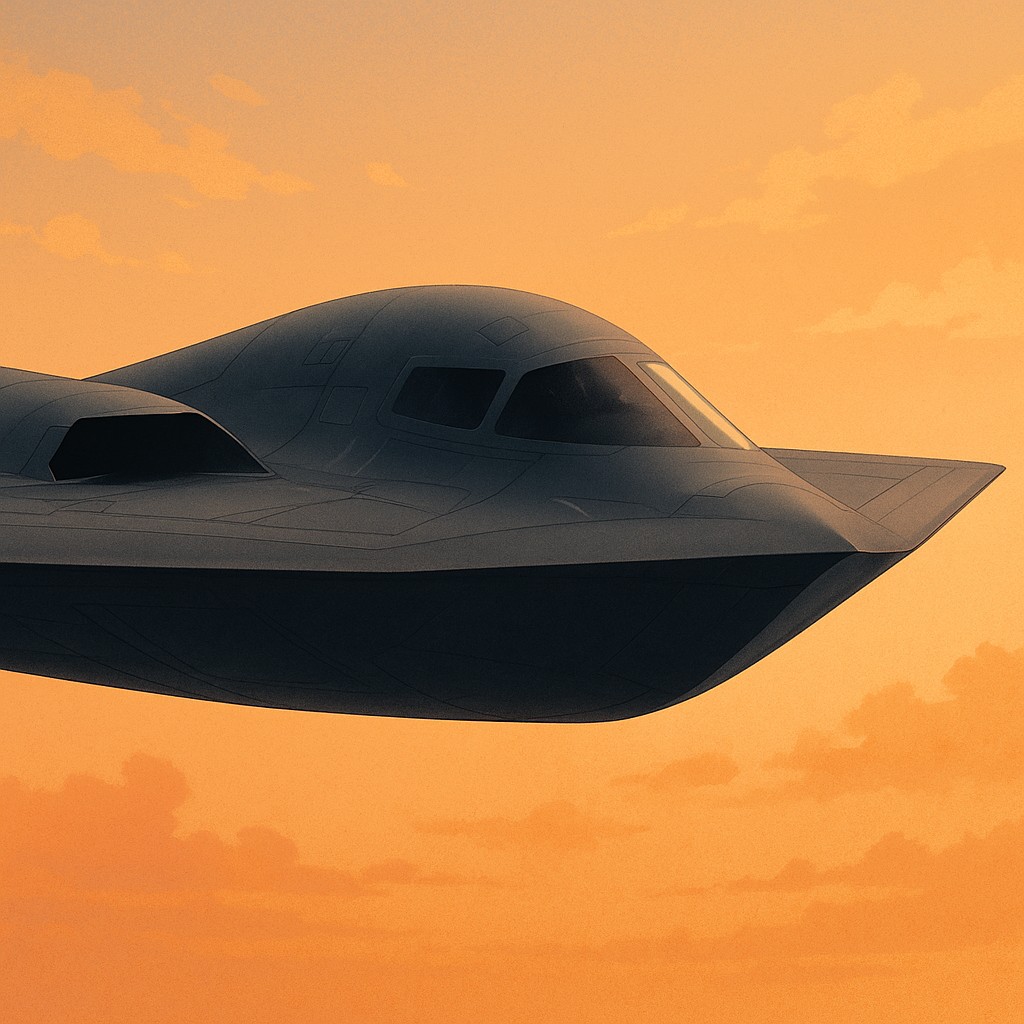
Unlike conventional aircraft with a fuselage and protruding wings, the B-2 was designed as a “flying wing.” That changed everything, including how we talked about it. I recall that we often referred to my section as a “leading wing,” which, in hindsight, is a bit of a misnomer. In a flying wing, every part is forward-facing, structurally critical, aerodynamically sensitive, layered with radar-absorbing materials, fuel compartments, and stealth design features. There is no separate wing area that sticks out; the entire aircraft is the wing.

And there I was—a non-technical civilian—tasked with negotiating costs for a vital section. I sat across from contractors, flanked by my team of engineers, as we discussed pricing that had to align with strict budgets while justifying the necessity and feasibility of every element. These were intense conversations, involving components stamped with a national security imprint. Every dollar needed a clear, defensible rationale. More than once, we joked that maybe this whole thing we were helping to build existed only on paper—a purely theoretical concept.

Much later, we were all invited to witness the first rollout of a completed B-2. I stood in a crowd of employees buzzing with anticipation. We each knew our own “assigned parts,” but only the designers and top officials knew the entire aircraft design. Someone near me quipped that when the hangar doors opened, there might be nothing at all—that the bomber was just a myth. Given the secrecy and fragmented way we’d each touched the project, it almost seemed possible.

Then the hangar doors began to part.

Out of deep shadow, something black, angular, and breathtaking slowly rolled. The aircraft emerged bit by bit—majestic yet alien-looking, unlike anything we’d ever seen. It moved forward with a kind of eerie grace into the light, and the crowd fell completely silent. Then, quietly, tears welled up. Years of effort, meetings, debates, and pages of paperwork had culminated in this astonishing reality. A wing that could fly.

I often forget to include that experience among the formative chapters of my life. But seeing recent images of B-2s soaring through the sky, flanked by fighter jets, brought it all back. That made me want to recapture it here.

Dear friends: Sometimes the small fragments we handle—negotiations, line items, a section of structure—turn out to be part of something far bigger. Sometimes, even airborne.—Diana

Ah, Mary!

Tuesday, February 18, 2025

I recently ordered the complete series Mary Hartman, Mary Hartman—partly for nostalgia and fun. The show aired years ago, and it had faded from my memory for a long time. But things about today’s social or political climate triggered a recollection, and suddenly, I found myself remembering how much I had once looked forward to each episode. That spark of recognition led me to seek it out again. Ordering the series is just the first step—I want to revisit what made it so compelling back then and see if it still holds up today.

“Mary Hartman, Mary Hartman” was a groundbreaking television series. It redefined the boundaries of satire and soap opera storytelling. It aired from 1976 to 1977. Created by Norman Lear, the show was a darkly comedic, deeply unsettling reflection of American life. It tackled topics that traditional sitcoms and soap operas avoided, like mental illness, consumerism, violence, media sensationalism, and the quiet desperation of suburban existence.

The series resides in a fictional town, Fernwood, OH, where suburban housewife Mary Hartman seeks the kind of domestic perfection promised by Reader’s Digest and TV commercials. Instead, Mary finds herself suffering the slings and arrows of outrageous fortune. There are mass murders, low-flying airplanes, and waxy yellow buildup on her kitchen floor.

That show was too controversial for any network at the time. Before long, however, it sparked Lear’s next series, the winning All in the Family. Archie’s and Edith’s dilemmas (similar to Mary’s) led viewers to recognize and appreciate many disconnects between people’s long-held beliefs and the demanding modern “adult” world.

These shows exposed cracks in the American Dream. Mary Hartman had that perfect blend of humor, strangeness, and originality that set it apart. While All in the Family tackled social issues head-on with a more traditional sitcom format, Mary Hartman took a subtler, almost surrealist approach, revealing the absurdity of American life through its deadpan satire.

I hope to find the same layered meanings in it now and if it may feel fresh and bold enough to hold up today.

Dear Friends: Lear was a genius; I expect to find “Mary…” holding up still. Diana

Disaster

Tuesday, December 28, 2025

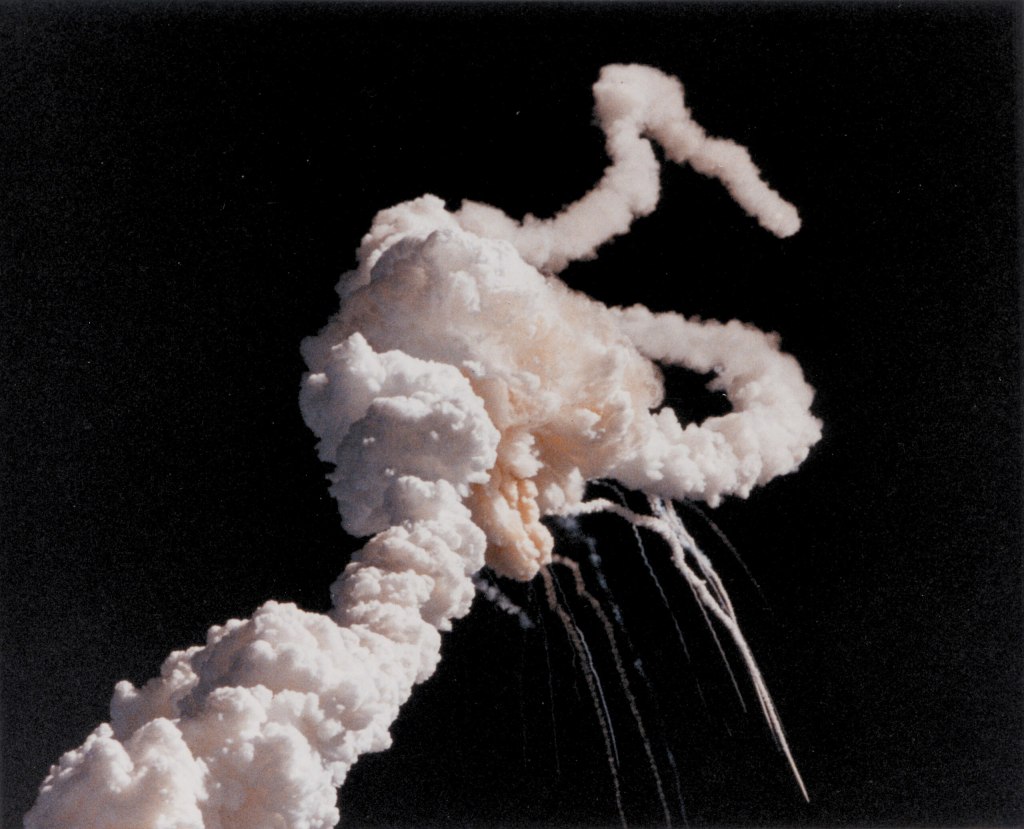
Today is a somber anniversary. On this day in 1986, America’s Space Shuttle Challenger broke apart 73 seconds into its flight and disintegrated 46,000 feet over the Atlantic Ocean, killing every crew member aboard. One crew, a non-NASA employee, was a schoolteacher going into space under a Teacher in Space Project.

Because the mission included a civilian, it drew high media interest and live streaming. Adults, as well as many children in schools, watched as video captured the launch and explosion.

Dialogues followed that unveiled “The O-ring Disaster.” In essence, key spaceship suppliers rushing to meet the liftoff date ignored their engineers who were questioning anticipated O-Ring performance.

(Spin forward to Boing’s troubles today because of gross mismanagement and frantic rushing to produce aircraft.)

The spaceship tragedy was caused by failures of the primary and secondary O-ring seals in a joint in one space booster. Record-low temperatures at launch time stiffened the rubber O-rings, reducing their ability to seal joints. Shortly after liftoff, the seals were breached; hot pressurized gas leaked through the joint and burned into an external propellant tank.

The explosion collapsed internal structures, causing rotations to throw the orbiter into aerodynamic forces that tore it apart. The now-destroyed craft flew uncontrollably until a range safety officer destroyed it.

That disaster today is imprinted in memory as firmly as the horrific assassinations of the Kennedy brothers, MLK, and John Lennon.

Dear Friends, Reliving my memories of the Challenger disaster and its aftermath. Diana

Front ‘n Center

Sunday, June 07, 2024

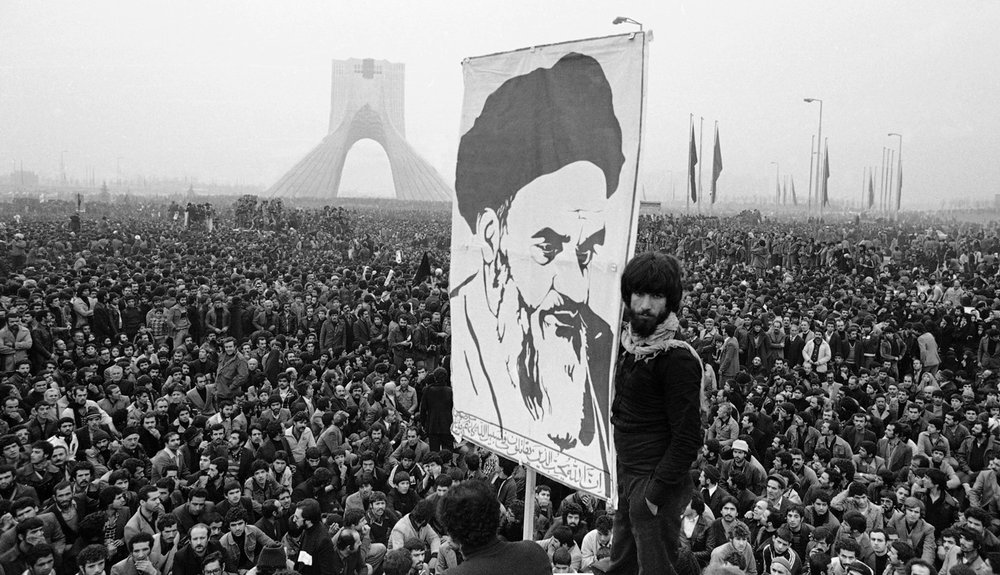
Yesterday, a PBS “Frontline” series captured my attention for hours. The excellent miniseries reminded me of and taught me much more about the many events surrounding the 1979 Iran hostage crisis. Back then, and with the whole world, I watched for 444 days as the United States received barrages of humiliation, vitriol, and hatred from Iran. Previously, that nation had been among America’s closest allies.

Those events happened prior to widely accessible cable and 24-hour news. I followed the available politics and remember the pressures on Jimmy Carter’s administration to turn matters around, resolve them, and bring every hostage home. I never fully grasped the whys and whats behind the Iranian population revolts and that horrifying hostage crisis.

This “Frontline” series filled in the gaps. It explained Iran’s change from a religiously led nation into a democracy having strong leadership by its Shaw. He was educated, had a progressive outlook, and managed Iran’s oil wealth in ways that enabled much of Iran’s population to access education and affluence. He allowed a loosening up among the citizenry that gave women rights to freedom, allowing women to stop wearing burkas, pursue formal education, and seek meaningful work. Iran’s population included a large portion of opposing conservative religious forces; they despised changes toward modernity and especially were against women’s freedom.

The details of Iran’s history of rapid change shed light on that massive portion of its population that remained mired in religiosity and relied on the wisdom of Mullas. A nation-wide change from repression to wealth won’t ensure the best benefits for all its citizens. That portion of Iranian citizens not gaining wealth believed the Shaw’s vision and leadership didn’t represent them. They instead continued to rely on religious leadership and eventually circled around Khomeini.

“Frontline” details the rise of Khomeini, and what made him influential enough to cause Iran’s Shaw ultimately to fail. It effectively explains why Iranian students took American hostages. “Frontline” also takes us into the White House and details the Carter Administration’s challenges, efforts, and failures to achieve the hostages’ release.

This gripping series sheds light on Iran’s crises and explains much about its current political and social status. Watching forces us to think about America, too. Our citizens have differing perceptions and opposing views about how to correct this nation’s key ills. Many Americans worry about the implications for ongoing progressiveness.

Dear Friends: Social transitions happening rapidly are scarily unpredictable. Diana

Social Lesson

Tuesday, April 23, 2024

Shakespeare was born in 1564, almost 500 years ago. His mature writings have endured, and to this day, they teach and influence powerfully. His story elements have created an enduring legacy. His words are quoted, his characters analyzed, and his stories retold. Shakespeare is a permanent fixture in the worlds of literature and theater.

I have wondered if Shakespeare’s influence is equal to that of the Ten Commandments. After some research, I understand that the two works operate in different spheres. They hold differing kinds of weight among humanity.

Shakespeare’s influence focuses more on artistic expression and cultural understanding, while The Ten Commandments have a broader social impact.

Shakespeare’s influence is primarily in literature, theater, and language. His influence is inspirational, offering insights into the human condition and sparking creativity. His works transcend religion and culture, appealing to anyone who appreciates storytelling and language.

The Ten Commandments are religious and moral guidelines; they are prescriptive, dictating right from wrong. Primarily aimed at religious followers, the Commandments have vastly influenced the shape of Western societies for millennia by impacting legal systems and social codes and influencing individual behavior.

Understanding the differences, I now see that The Ten Commandments are the backbone of Shakespeare’s plots. Similar to how The Commandments greatly influence Western society, they make Shakespeare’s plots very powerful and lasting. Shakespeare’s genius is his creativity, an artistry for structuring complicated plots that beckon highly emotional responses.

Today, Shakespeare’s birthday encouraged me to work through my long-held, knotty question. I understand better now what makes his works continually impact humanity. He was an artist at creating plot structures that intertwined closely to, and often fell against, acceptable social orders and norms.

Dear Friends: Shakespeare makes us think about us! Nobody’s done it better. Diana