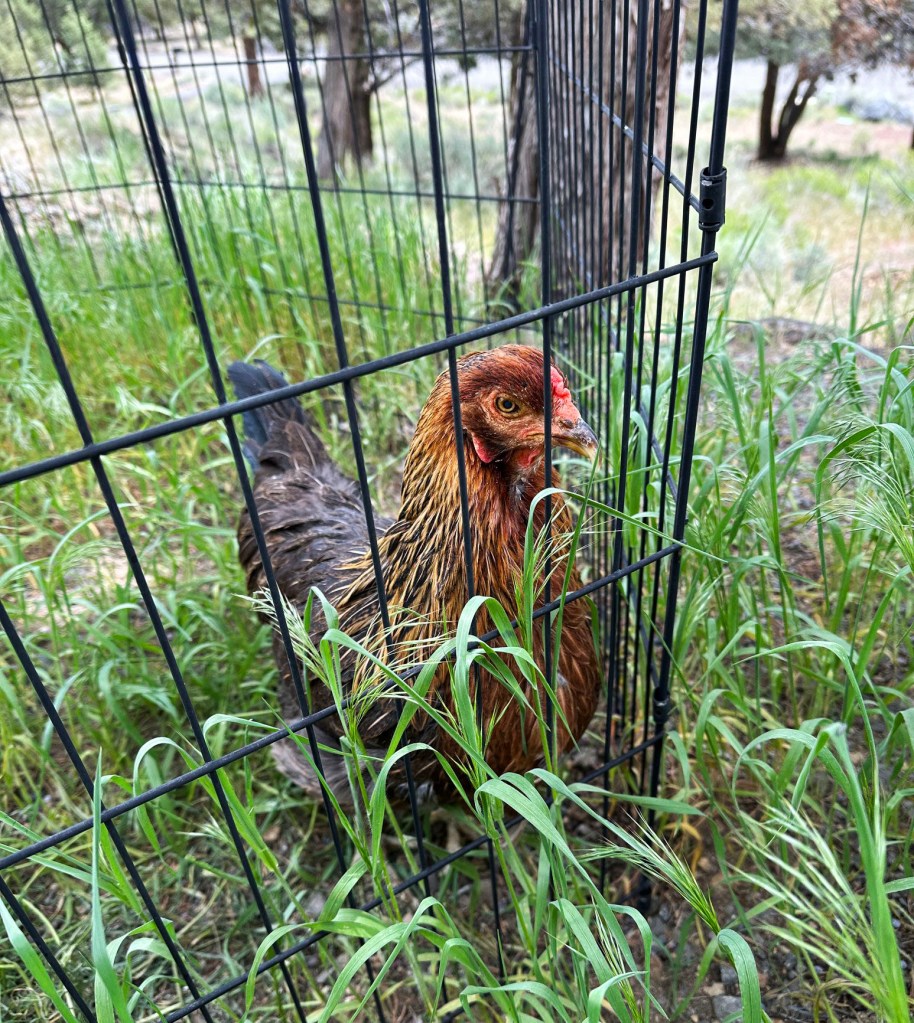
Under Her Wings

Saturday, May 30, 2026

Domestic chickens are arguably the underdogs of the pet world. Tiny chicks need coddling until they’re fully feathered and able to keep themselves warm. After that, they’re turned loose in an enclosure—or allowed to free-range. The point of keeping chickens, of course, is getting eggs. There’s little as pleasing as farm-fresh eggs—standing up in a skillet, smiling, and, by most accounts, tasting better.

I could babble on about fresh eggs, but my real purpose here is to talk chickens—or rather, one chicken. Specifically, a single hen.

A Welsummer was her breed, and “Welsummer” became the name I casually gave the little chick who joined my first flock back in 2010. I purchased her, along with two bantam chicks, when they were about two days old. They had been placed in a “sick tank” at the feed store and needed special care. I paid 50 cents apiece for them.

I remember wondering, “What’s a Welsummer?” I later learned it is a Dutch breed of mixed ancestry, developed in farmyards during the early twentieth century.

At home, I found an unused terrarium, added bedding, rigged an overhead heat lamp, and settled the tiny chicks inside. As small as Welsummer was, the bantams were even smaller. What I witnessed was lovely. Each bantam hopped over to Welsummer and tucked itself beneath one of her wings. There she stood—patient, accepting, and hardly bigger than the chicks she sheltered.

I was looking at a chicken, and yet, was mightily impressed. I never forgot such kindness. That trio’s behavior continued until the babies grew stronger and more confident. Eventually, all three joined the larger flock.

Fast forward about ten years. By then, every member of my original flock was gone except Welsummer, who still wandered the enclosure. I brought home a new batch of chicks, raised them until they were feathered, and then turned them loose with the old hen. That was before I understood the importance of properly introducing unfamiliar chickens.

The youngsters and Welsummer were not going to get along.

Welsummer had outlived a great many chickens, and I wanted her safe. So I moved her into a special pen with a heat lamp inside my attached garage. There she would remain protected for as long as she lived.

That was nearly six years ago.

Sadly, yesterday, Welsummer—once the kindest little chick I had ever known, and later my beloved special pet—crossed the Rainbow Bridge.
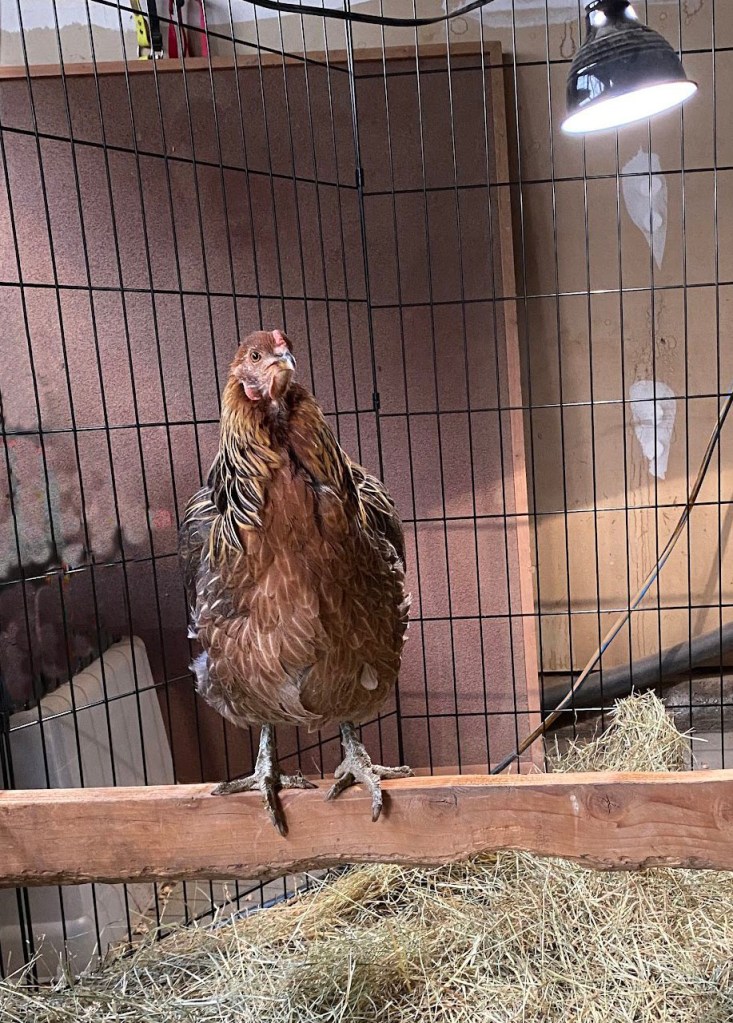
She was turning sixteen years old. A remarkably long life for a chicken.

— Diana

Breeched Coop

Tuesday, October 28, 2025

Over the past two nights, six of my chickens were slaughtered. I’m still in disbelief as I write this. After fifteen years of keeping a small flock of hens in the same sheltered space, I’d come to trust their little world completely — as if it, fenced and familiar, was as safe as my own. Until now, I’d never lost a single bird to a predator.

Yesterday morning, searching harder for a predator entry, I finally noticed a small patch of ground dug out beneath the coop fencing — no clear tracks, just a telltale hollow. Later, my neighbor, Frank, shared an image caught on his critter-cam: a fox, intent, caught in mid-stride. That photo made my heart sink. The timing fit.

My hens were only about three years old — healthy, lively, full of character, and good layers. Finding them brutally torn apart was gut-wrenching. There’s something especially terrible about losing animals you’ve raised from chicks — who greet you each morning with their expectations, chattering, wide-winged, and bright-eyed. You grow accustomed to their presence — their daily routines, their quiet sense of community.

Yesterday afternoon, after those second tragic slaughters, I worked hard to reinforce the coop-area fencing. I laid wire mesh and weighed it down with heavy stones along the bottom — especially where the digging had occurred, and as far beyond as I could manage. But when darkness fell, I gave up, still uneasy about the coop, not yet secure enough.

Last night, I hardly slept. Even small sounds outside felt amplified — the wind, the shifting leaves — all seeming to echo what had already happened.

I wasn’t prepared for this. You can live somewhere for years, believing you’ve built a safe space for the creatures who depend on you, only to find that nature has a way of reminding you it’s still in charge. Foxes, coyotes, raccoons — survivors too, hungry and driven by their own needs. But knowing and respecting that doesn’t make the losses any easier.

Today, as usual, I’ll feed my critters — but it’ll feel different. The barnyard will be quieter, emptier. I’ll keep working to strengthen the coop, to guard what remains. But there’s no undoing the shock of sudden, cruel losses — proof of yet another lesson in semi-rural life: that the peace we find in nature always exists alongside its rawness.

Still, I’ll step outside as always — hoping to see some still-live birds. I’ll feed them, recheck yesterday’s hasty security measures, and I’ll keep reminding myself that healing — like rebuilding — begins with small, steady acts of care.

Diana