What Friends Are

Friday, May 29, 2026

I had another birthday this week. I’d prefer to forget that this is my 86th year, but so it is. Longtime friends reminded me all week with cards and phone calls. On the actual day, Eva and I met for lunch and discussed activities and issues in our lives.

And then, there were Susie and Dale. Just when I’m not caring much about celebrating another year, Susie steps in.

She’s big on relationships, big on caring, and big on birthdays. So is Dale, who stays busy managing his business — his brainchild and creation — HeliLadder. Which, by the way, now occupies a building of its own in this city’s key industrial district. (More about HeliLadder later, in an upcoming blog, as I’ll soon visit to see its new digs for myself.) But, for now, I digress.

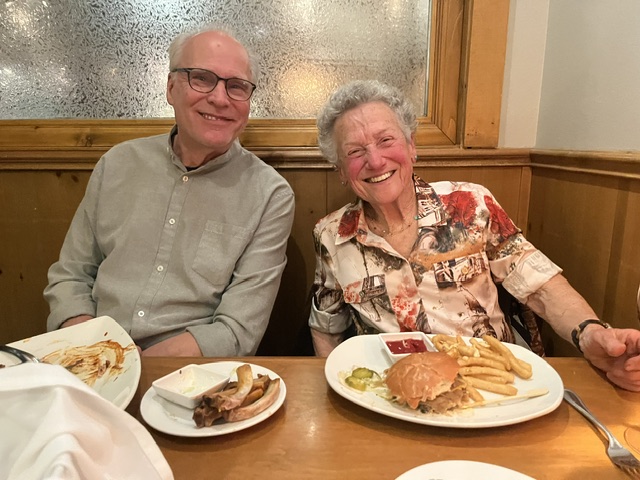
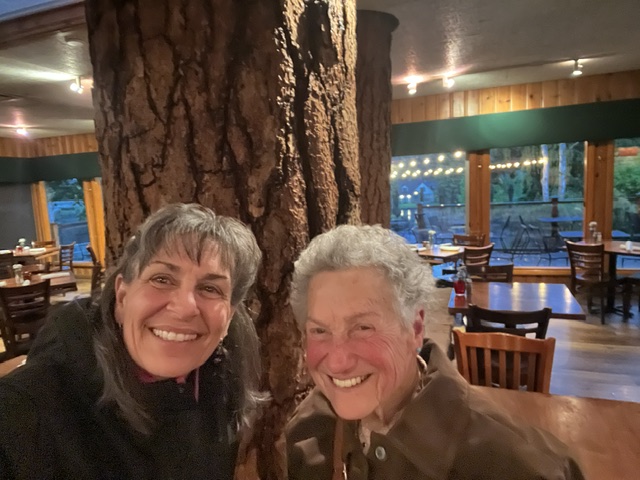
Yesterday evening, on a very rainy day, Dale and Susie hosted a birthday dinner for me. We went to the Pine Tavern, this city’s oldest restaurant — a delightful place — where Dale had ribs while Susie and I dove into gigantic hamburgers, a rare treat for this “casual vegan.” Afterward, we took our desserts back to Dale and Susie’s, where we lingered and talked late into the evening.

I’ve reached a time in life when relationships matter more and more. I’ve never been especially skilled at handling meaningful relationships, for complex reasons, though I’ve forgiven myself for that. I filled many years of my life with beloved pets and, later, horses, which always kept me busy and physically strong. While I’m generally content with the life I’ve chosen, it feels like a mitzvah to have met Susie and Dale — people with whom, over time, I’ve become comfortable and can freely “be me.”

So Susie made certain they shared my birthday. And, in a rare experience for me, they asked for details about my background and listened — without judgment — to my complicated story.

Their kindness has helped me better understand what it means to be a friend. Friends “are there,” unafraid of getting involved, supportive of others’ choices, yet willing to push back, ask questions, and perhaps influence a decision-making process. But whatever decision ultimately prevails, they remain — listening, encouraging, and supporting.

For someone who has always been careful about relationships, they are among “the best” for where I am in life now. They help keep me anchored to occasions, events, and sometimes delights. Speaking of which, Susie and I plan to head east next Sunday night “to chase” the rising Blue Moon.

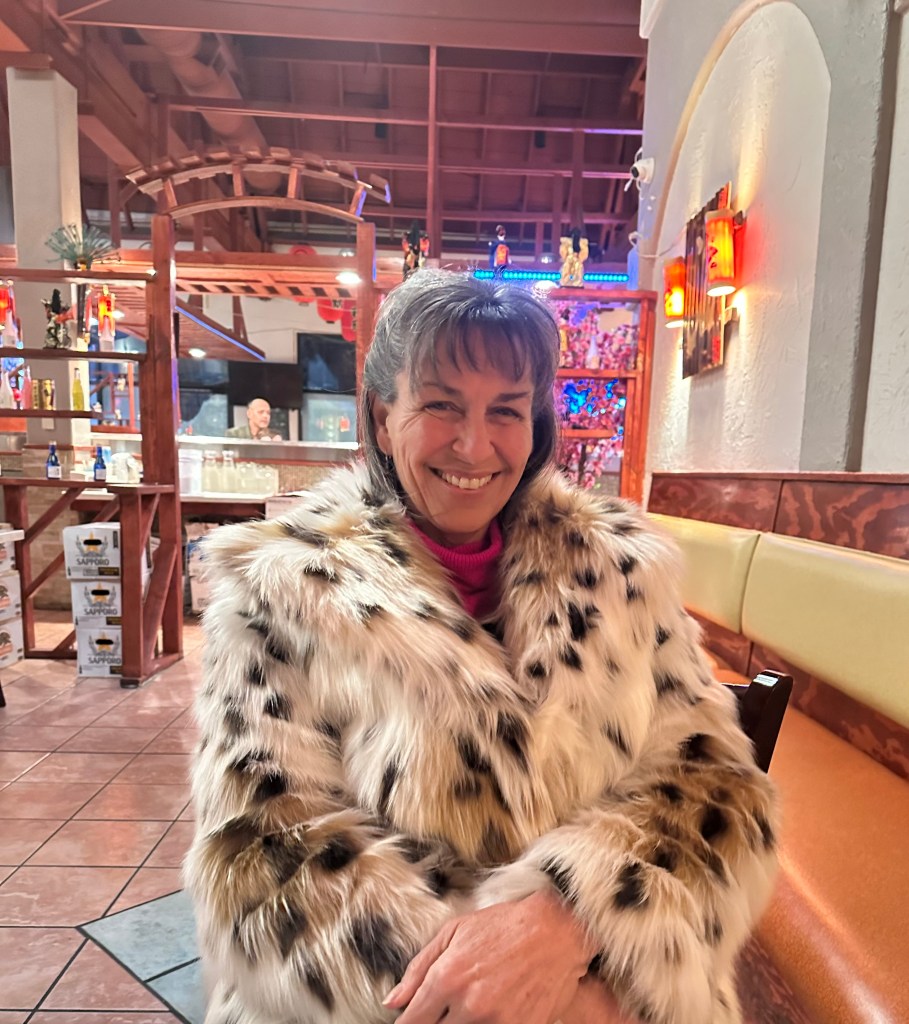
Punctuating a mature Ponderosa inside Pine Tavern’s Main Dining Room

The best part of my special day was simply this: people who genuinely care “were/are there,” even while busy with lives of their own.

— Diana

Bend’s New Library

Saturday, May 16, 2026

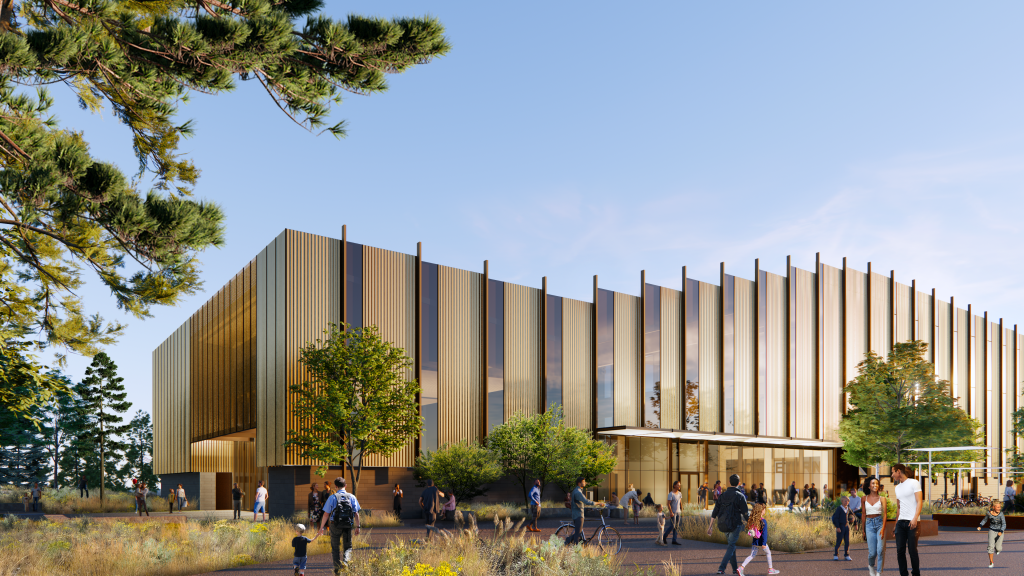
Yesterday, I sat in a “creative cubbyhole” beside a large window with my laptop in our new main library. It opened earlier this week, and inside it is beautiful—spacious, light-filled, modern, and carefully designed. Yet, surprisingly, as I looked around, I found myself missing this city’s old, now-closed main library. That crowded old place felt less curated and more discoverable.

Almost as soon as I entered the building, I began comparing what I saw to the old library’s stacks, which had always seemed endless. I recalled the faint dust-and-paper smell of well-used books and remembered running my index finger along crowded spines—often stumbling upon a surprise: a long-forgotten title, a long-unread author, or an unusual and compelling subject.

Central Oregon is full of readers. We’ve all been curious about this ambitious building, watching it rise and eagerly awaiting its opening. All week, visitors have filled the library, circulating among its attractively displayed shelves. But to me, the shelves feel too tidy, almost merchandised. Shiny book covers face outward in displays that seem heavily edited—perhaps too intentionally curated. Titles are visible, but authors’ names are partly obscured by catalog stickers.

Those displays push the curating system itself into the foreground, suggesting that organization matters more than browsing. I was surrounded by clear, clean order that somehow didn’t feel intimate. I assumed any book I wanted would be available and easily accessible, yet something essential felt absent.

While sitting there yesterday near the large window, I noticed the blinds lowering automatically in response to the changing light outside. I would call the library beautiful in the way airports and modern museums are beautiful: open, bright, efficient, and almost impossible to criticize directly.

The building even includes a first-floor coffee bar. One can order a designer coffee, settle beside a window to work or study, or simply linger over a latte. The interior design encourages community and socialization—a kind of environment I usually enjoy—but it is not quite my idea of a real library.

I found myself reflecting on the libraries of my childhood, my young adulthood, and my more recent past, remembering their narrow aisles and accidental discoveries. What returned most strongly was the feeling of books aging together in those old spaces. There, books were encountered almost physically: by touch, by proximity, by scent. In this modern setting, the books feel staged. There is more emphasis on display than discovery.

Old libraries invited wandering, browsing, and sampling. This new facility is designed for ease of navigation. Perhaps this very modern library optimizes access to materials. But a better building does not necessarily feel like a better library.

Essentially, it functions as a hub. Someone seeking a book, movie, or other item from the library’s non-visible holdings goes online, searches the catalog, and reserves the desired materials. The items are then picked up and returned at the building.

And yet, it is undeniably seductive. Imagine a Starbucks on steroids. Someone—maybe me—can walk in with a laptop, order a latte with an extra shot of espresso, settle beside a large window, think, create, and perhaps even meet new friends.

Diana

Diversity or “The Places We Carry”

Thursday, April 02, 2026

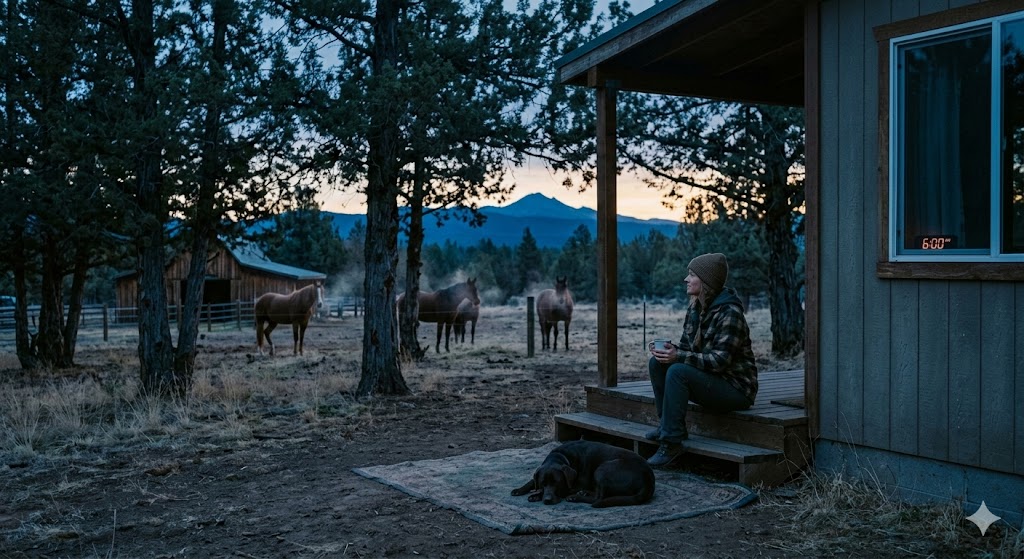
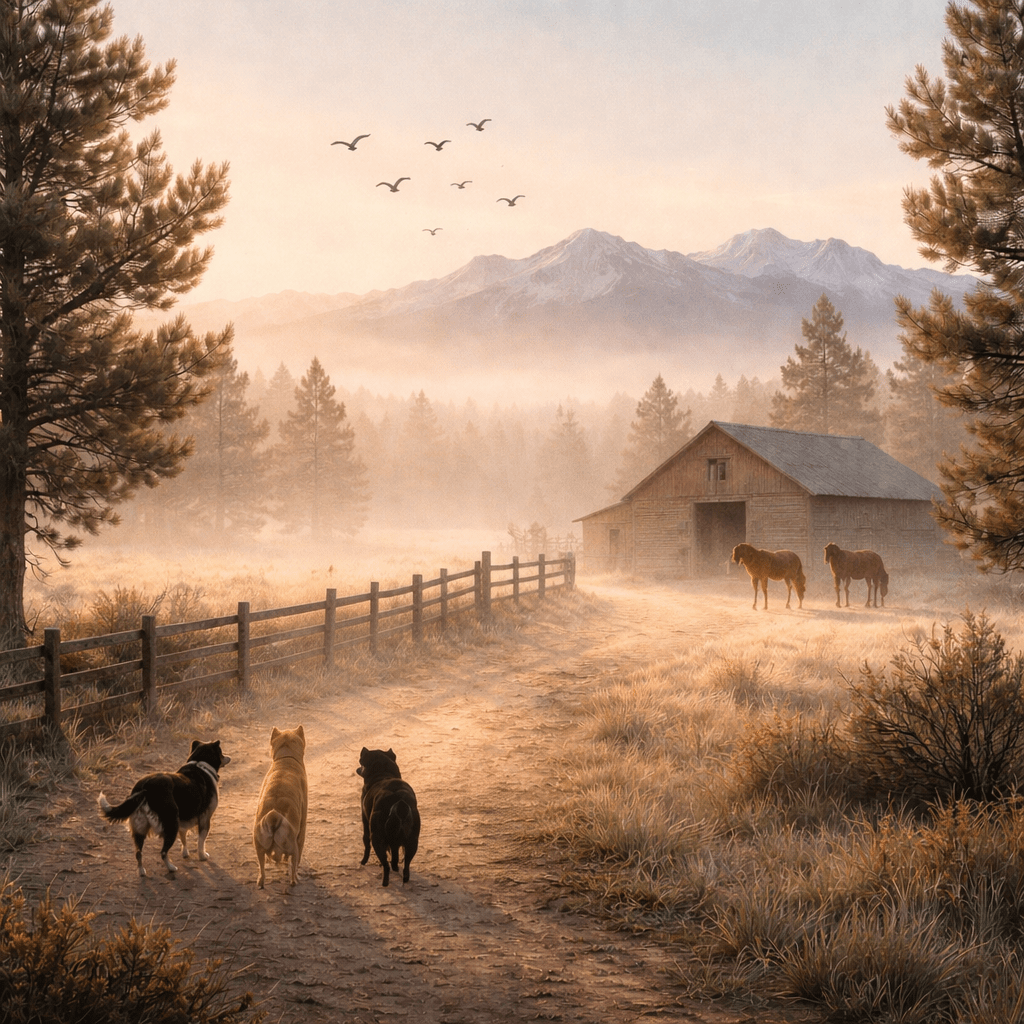
This morning arrives as my mornings mostly do—quietly, though never silently. A thin light works its way over the junipers, and my animals begin their routines. Horses waiting, dogs shifting, birds announcing themselves from places just beyond my windows.

Nothing unusual. Nothing unsettled. And yet, as usual, I find myself thinking about life in a nation that feels unsettled.

I keep asking, as many of us do, why Americans choose the leaders they vote for—especially when those choices seem, from other points of view, difficult to understand.

It’s tempting to explain those choices in terms of temperament or values, or to assume that something has gone wrong in people. But I doubt that’s quite it. I’m considering something quieter, but more persistent—something tied to the places we carry.

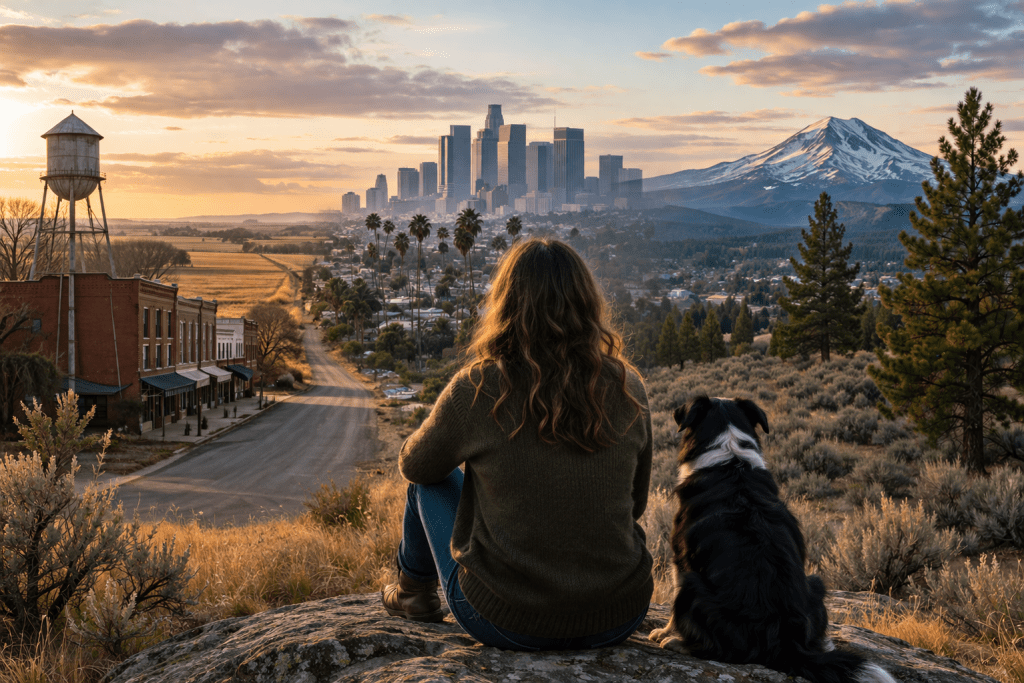
I was first shaped in a small town in Oklahoma, where my young life had visible edges. People knew one another. Expectations were understood without being spoken. There was a rhythm to things—one that didn’t demand questioning. Things simply were.

Years later, I lived and worked in Los Angeles, a world that moved very differently. It was expansive, layered, and constantly in motion. You could become someone new there. You could step away from what had once defined you. The geography itself—ocean, mountains, forests—seemed to encourage that sense of possibility. The pace alone invited change.

Now, I live on a small acreage in Central Oregon. Mornings like today feel grounded again—with animals, weather, and light. There is a steadiness here that encourages attention over haste.

Still, I remain aware of the larger world. Current global conflicts have led me to study geography more closely, and I’m beginning to see the quiet power it holds over nations and leaders. Lately, I’ve started to wonder if that same influence applies to us as individuals.

Using myself as an example, I can see that who I am has been shaped by three very different places. Each has left its imprint.

Those changes didn’t come quickly. For a long time, I felt closely tied to my early attitudes—relying on them as fixed, reliable, even permanent. But living in different environments has a way of loosening certainty. Experience stretches perspective. Time and place invite reconsideration of what once felt settled.

Change, welcome or not, keeps arriving. The question isn’t whether change happens—it’s whether we can live with it. Whether we can move with it. Whether we can leave certain attitudes behind when they no longer fit the world we’re living in.

Not everyone experiences that in the same way. Some people live in environments where change is constant—where difference is expected, where adaptation is part of daily life. In those places, adjusting feels natural, even necessary. Others live where continuity matters more—where stability is not just comforting, but essential. In those places, too much change can feel like something important is slipping away.

Neither response is unreasonable. But they do lead to very different instincts—and often, to political divides.

I find myself returning to this idea: not that people are so different in character, but that they are standing in different places—shaped by different surroundings, carrying different versions of what “normal” looks like.

Geography doesn’t just shape nations. It shapes us—what we expect from life, what we notice, what we overlook. It shapes what feels secure, and what feels at risk. And perhaps most of all, it shapes what we believe ought to stay the same.

I can still feel traces of Oklahoma in me. I still recognize the pull of Los Angeles—its openness, its movement. And here in Oregon, I feel something else entirely: a steadiness that allows me to consider both.

These reflections don’t resolve the differences. But they do give me a wider place to stand.

And from there, the question shifts—from Why would someone choose this? To what feels like a better question: What has shaped the place from which they are choosing?

The ground beneath us may differ—but we are all standing somewhere.

Diana

The Earth Talks Back

Sunday, March 08, 2025

Yesterday, the morning behaved itself. The sun arrived on clock-cue, light crept over the junipers, and the birds carried on as usual. My routine was a simple, four-part harmony: coffee, listening, looking, and assessing the weather.

But today, the “human committee” has intervened. It’s Daylight Saving Time again.

My clocks—the ones I forgot to change—insist nothing has happened. But it’s still dark, and I know better. I suspect the horses do, too. Creatures of the natural world are famously unimpressed by national policy.

When I step outside at the hour my watch will be claiming this day begins, the sky will argue. This country air will whisper, “You’re too early.”

The result? My house is divided.

The Clocks: Claim I’m on time.

The Dogs: Complain that their breakfast is an hour “late.”

Max the Cat: Ignores this adjustment entirely, views the whole thing as unnecessary human drama.

The Birds: Are still hit-snoozing in the trees.

We play this peculiar ritual twice a year, pretending politely that time itself has shifted. But out in the country here, the real clock is the faint glow behind the Cascades. And it’s the stirrings of animals without alarms. Because the rhythm of the land is stubborn—and frankly, far more sensible than attempts to “move the sun.”

I’m forced to compromise. I’ll pretend as much as possible to follow the government’s clock. But I’ll keep my internal gears set to the horizon, embracing these truths: coffee first, listening second, looking third.

I’ll let the bureaucrats move the numbers. And meanwhile, I’ll keep listening for the wild birds to reveal the true beginnings of our days.

Diana

Listening in Country Silence

Saturday, March 07, 2026

Mostly, my mornings begin quietly, but here in Oregon’s high desert, no early hours are ever completely silent.

First, I hear not-too-distant highway sounds from early traffic. Sometimes, too, a hospital helicopter thunders overhead. They’re normal sounds, reminding me that a larger world is already awake. Most of my mornings begin that way—with everyday noises easily tucking themselves into the back of my mind.

But early on, and also this morning, something finer arrives—a feeling—a sort of country silence. Oddly so, since there’s never any real silence. I’ve tuned out distant and overhead noise, but from somewhere in the nearby trees I hear birds calling—already busy—their calls breaking the air from various heights and directions. I love seeing birds and always look for them, but they’re mostly invisible.

Depending on the hour, even the most common birds are nearly impossible for me to spot. The mature junipers all around may help deflect their sounds just enough to make locating them difficult. Many mornings with my camera at the ready have proved that the noisiest birds can remain completely hidden from me.

It’s very early as I walk downhill toward the barn. I’m distracted from the usual silence breakers by my dogs—fenced, though that hardly makes a difference—now racing along the fence line beside me, all three determinedly escorting my morning travel.

The horses notice me and greet me with the quiet acknowledgment horses show to those who feed them. I pause and say hello, enjoying their eagerness for apple pieces from my pocket. Before long, I hear turkey greetings—Lacey’s special whistle-like, unique sounds. They delight me.

After these first moments, I pause and pay attention to this morning’s weather by looking west toward the Cascade Mountains. They announce what’s happening now and hint at the weather ahead. This Central Oregon winter has been strange—too warm and too dry. This morning, clouds obscure all but the mountain tops, making me think that sprinkles might fall soon.

Weather watching matters for anyone who keeps large animals. Weather isn’t just background—it’s everything. It determines what work must be done and how to do it, all for the comfort of the animals. Years here have taught me to look as far ahead as possible, thinking about seasonal impacts. For me, that includes wondering about hay prices when harvesting time arrives. Drought conditions can make hay scarce—hard to find and expensive when it does appear.

After years of experience, I expect most mornings to begin the same way. First I listen. Then I look. Finally, I assess what today—and tomorrow—might offer, searching for hints of what lies ahead.

Until tomorrow’s change—when Daylight Saving Time returns—one hour’s difference, blowing holes in early perceptions.

Diana

Birthday, “On The Town”

Sunday, February 22, 2026

Yesterday was my friend Susie’s birthday! We celebrated by going out on the town—Central Oregon style—for dinner and a movie. Dinner was Japanese—sushi and a California roll. Then we headed to the Tin Pan Theater, tucked away in an alley and showcasing art films. Last night’s feature was a selection of Oscar-nominated short films.

Our favorite short, Perfectly a Strangeness, followed three donkeys meandering through the Atacama Desert, eventually making their way to an observatory. The donkeys wandered through a barren, futuristic landscape, but they seemed familiar with their surroundings, even when encountering a wild, beautiful coyote. What stood out most was the film’s poetic and visually stunning style.

The movie conveyed a theme (at least, if I “got it” right) that’s a bit unsettling. The donkeys—perhaps representing an ancient life form—seemed out of place in the industrial, mechanized world of the observatory. Watching this lovely yet thought-provoking film, I couldn’t help but think of Charlie Chaplin’s Modern Times. Both films deliver strong, poignant messages about the clash between nature and the modern world.

Susie’s birthday gave us the perfect excuse to hang out together. It had been a while since we’d caught up, mainly because she’s always so busy with her family’s business. Our “date” was special, though, since she’s leaving soon to travel east for a family wedding and to handle some business matters.

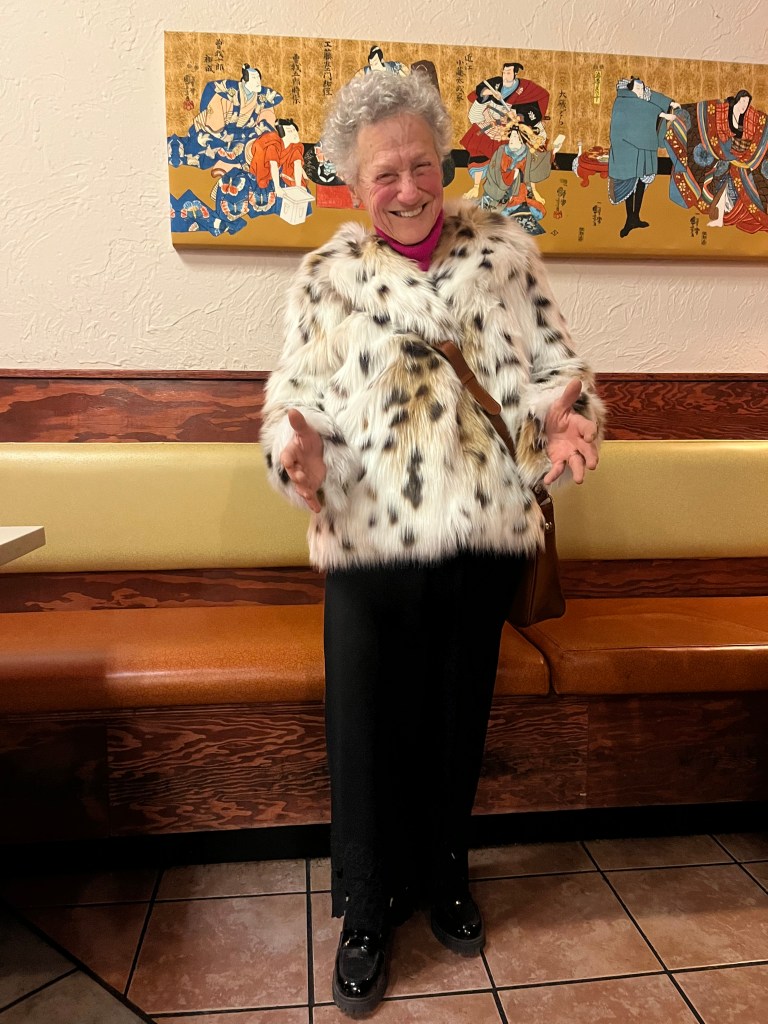
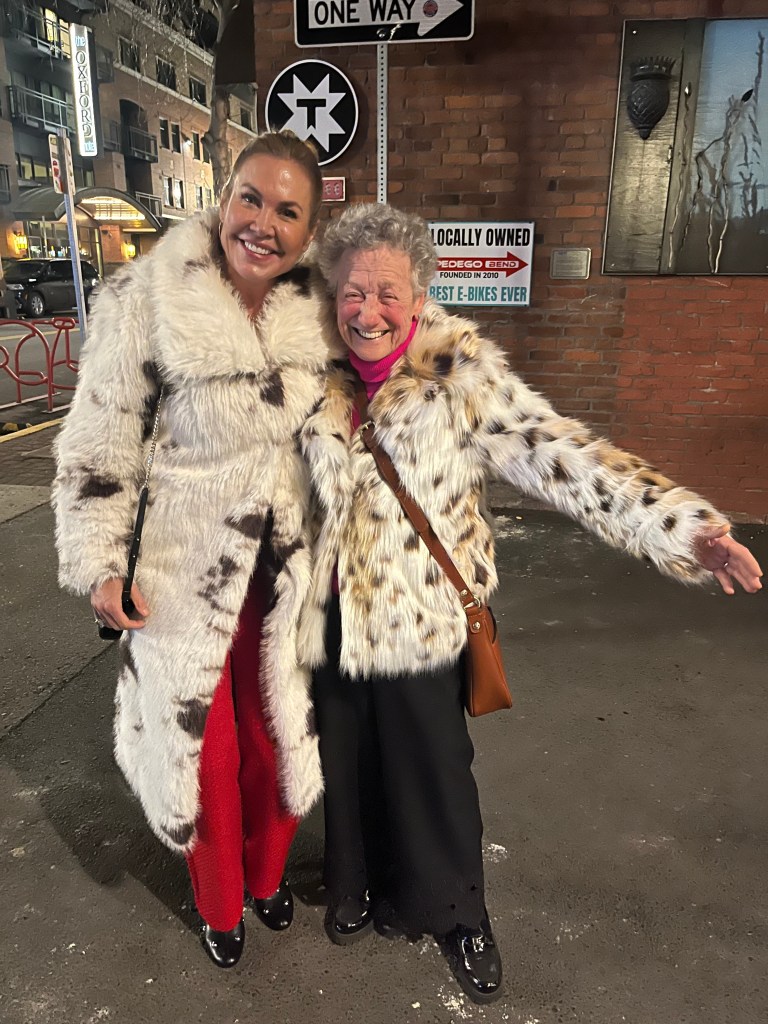
As always, we spent part of the evening capturing memories with photos. My fun, busy jacket was a hit!

After the theater, while heading to our car, nobody ever could have guessed what we’d be bumping into!

Thanks to Karl Lagerfeld for creating such iconic, always fun designs.

Thanks for sharing your birthday with me, Susie, my dear friend. And for the lovely evening—full of learning and surprises.

Diana

Beyond The American Frame

Friday, January 30, 2026

The other morning, in my habit of reviewing this nation’s headlines, I felt drawn to look beyond American-focused news. I began exploring the politics of a wider world—not chasing headlines, but searching for common ground beneath obvious differences. I wanted to understand how nations connect.

It didn’t take long to realize how limited my usual perspective is. That surprised me. I consider myself reasonably informed. Yet I mostly read American—and occasionally British—reporting. Stepping outside that frame was clarifying. And unsettling.

Several thoughts arrived quickly. First, what we call liberalism began to feel more local than global. Second, the technologies we’re learning to live with—communication systems, weapons, and influence itself—are advancing far faster than human moral development. And third, an uncomfortable question surfaced: how does more information become more wisdom?

Around the same time, a longtime friend emailed me about something she’d done recently. She and a group of like-minded people had stood on a busy corner, holding signs protesting two recent, unjustified killings in Minneapolis by ICE representatives. She felt good about participating in the group. Passing drivers responded—some with honks and gestures of support, others with opposing signals.

She was describing real action—sincere, hopeful, and embodied: information paired with conviction. That energy brought people out of warm homes and into freezing cold, to stand visibly in a public space. Their intent was clear. Their message landed. It informed, captured attention, and felt meaningful.

That was action. Various generations are relearning the value of immediacy—gathering, using creative signage, and collective voices to inform and encourage.

But wisdom feels like a different animal.

Wisdom seems to grow more slowly. It comes from questioning rather than signaling; from context rather than reaction. It asks us to consider the present alongside history, to tolerate complexity, and to be patient with uncertainty—long enough to evaluate what we’re seeing.

I’m for both—action and wisdom.

I value immediate, creative actions that inform quickly and speak to deeply held beliefs. I also value the slower work of seeking wisdom—going beyond volume and urgency to deepen understanding. So I’ll keep looking for information that enlarges perspective rather than simply adding noise.

My path forward means paying closer attention to places I’ve barely followed: Venezuela, where events continue to unfold; parts of Africa, whose political and economic transitions have long been fascinating—especially now, as gold mines close and international gold prices surge.

I don’t know exactly where my curiosity might lead. But I feel convinced that understanding the politics and social conditions of the wider world deserves my closer attention—and that emerging wisdom will help illuminate, for me, more of American leadership’s content, choices, and possible consequences of its decisions.

For readers who prefer receiving these morning pieces by email, I’m also publishing them on Substack.

Diana

Under The Inversion

Friday, January 23, 2026

Central Oregon has been captive to a depressing layer of weather inversion for at least a week. A constant fog, intermittent light snows, and freezing temperatures have coated everything—trees, fences, properties—with thin, icy-white films. A few days ago, while driving to work, I unexpectedly passed through an independent microclimate—an actual snowfall was covering a small, contained area. This snowy stretch began and ended abruptly, blanketing only about a half-mile of roads and homes. As if the weather had briefly lost its sense of scale.

Each morning this past week, and today, I’ve stood at a large living-room window, sipping my first cup of coffee and surveying the scene. I want to know the present and the approaching weather alike. That’s easy enough, because its signals are almost entirely visual—and because what I see reliably fills me with dread about the inevitable need to go outside to care for my few farm-type animals.

The animals feel it, too. The chickens huddle tightly together on their roost, nearly merged into a single feathery mass. The horses trot toward me, snorting, impatient to begin eating. Before leaving the house, I force the dogs to go outside for a few minutes, and they’re eager to rush back in as soon as possible. I’m entirely with the dogs on this—after being outside, I can’t wait to return indoors and warm up again.

I work part-time as a cashier in a busy, price-cutting retail goods store. Lately, my most common topic of conversation with customers is our local weather. They’re putting their money where their mouths are—buying sweaters, heavy outerwear, and warm pajamas. They’re also buying household organizing and cleaning supplies, preparing, like so many others, to stay mostly inside until the weather breaks.

For days now, I’ve felt urges to slow down more, to look again at possibilities, before settling on decisions. Now, I’m considering ways to use this gloomy stretch for something more than simple griping. This morning, standing at the window, I’m evaluating the possibilities of making a small shift once the animals are cared for. And, instead of spending more time fixating on the uncomfortable inversion layer, I’ll point myself toward a more utilitarian direction, firmly.

To start this shift, I’ll create a list of tasks needed, doable inside, away from windows—like ordering animal feeds, contacting a professional for advice about my questionable roof, finishing a terrific book (Raising Hare by Chloe Dalton), and staying busy with the kinds of organizing and cleaning that customers have demonstrated belong to weather like this.

The inversion will lift when it lifts. Until then, there’s work that fits these indoors.

For readers who prefer receiving these morning pieces by email, I’m also publishing them on Substack.

Diana

Still Running

Saturday, January 17, 2026

Yesterday, two of my dogs and I went for an outing in my favorite BLM. It’s local and small—only about a thousand acres—with an irrigation canal running alongside a well-trodden footpath. The canal is empty now, except for bottom ice in places.

The afternoon was overcast, with temperatures in the mid-thirties—cold enough to freeze the fingers of my ungloved hand as I worked the camera. The camera itself felt cold-bodied, too, its mechanisms slightly sluggish.

The dogs, unbothered by any of this, were on fire.

Chase popped out of the SUV and never stopped running. Mitzvah started off more slowly and cautiously, but soon fell into the serious business of being a dog. I’ve long felt the absence of recent photos of these two, and this seemed the right chance to repair that.

It was also an opportunity to learn more about my fairly new camera. It has amazing zoom capabilities, but it doesn’t enable new shots quite quickly enough for me. It recalibrates in only an instant, yet that pause still frustrates me. That hour or so of practicing didn’t magically make the camera operate better—but it did make me more comfortable with how it handles.

And I like the images.

Both dogs are difficult to capture. Chase is fast, rarely pausing long enough for a clean shot. Little Mitzvah, equally busy, easily disappears into tall brush and weeds.

This BLM is a special place. It’s unknown to tourists and doesn’t allow overnight camping. Mostly, it’s known to locals—people with dogs—who look for semi-private spaces where dogs can run freely. We love this BLM.

Every year brings some new, quiet creativity along the path. This season, it’s foot crossings over the canal.

This post isn’t merely about an outing in a beloved spot. It’s an update, with current photos of my younger dogs—and a reassurance that Chase still lives with me. That escape artist may be slowing down, working a little less at defeating confinement. He’s a happy camper.

Still, Chase requires a close eye—because that’s simply who he is.

Diana

Record-Breaking Warmth

Wednesday, January 14, 2025

Monday, January 12th, broke a remarkable record. It was the warmest January day in Central Oregon since 1920. Yes—more than a century ago was the last time a mid-winter temperature matched Monday’s. That 100-plus-year-old record quietly fell, without much ceremony—no fanfare, just a few weather-related announcements. And there I was, feeling the mildness and sunlight, noticing the odd sensation of stepping outside without first bracing myself.

Probably like everyone else, I looked around and wondered what this warmth was doing to the season. Snow should still be lingering, but there was none. Ice should be stubborn over my chickens’ water bowls, but ditto. I scanned the nearby treetops—bird-watching is one of my everyday pleasures—and wondered about the birds. Were they even slightly confused? Were their internal calendars, like mine, a little out of sync? Even the air felt different—less like January, more like some invasive in-between month.

Part of me celebrated the comfort of that warm day. After all, comfort is comfort. But there was also a strange dissonance—another reminder that nature keeps its own counsel, and that the seasons might be shifting beneath our feet. The warmth was pleasant and unsettling all at once—belonging to January while feeling nothing like January.

Whenever something captures my attention, I tend to look for meaning tucked inside it. Yesterday’s record-breaking warmth nudged me to pay closer attention to the weather itself. One of my mantras is that pausing and looking twice often reminds me that whatever I thought I knew isn’t entirely the truth.

This photo—taken years ago, on a typical January 12—shows what our weather used to look like.

My “second look” on this new warmest January day offered a quiet insight: we are all changing, and constantly are adjusting to change, even when it arrives disguised as good weather.

Real weather records remind us of time. Monday’s warmth happened to us in real time, and on a real January day. And I found myself standing right on the margin—between time and reality—grateful to feel informed, and awed anew by nature’s power.

Diana