Hearing Is Knowing

Friday, December 26, 2025

I had planned to wind down this listening series—focused on long-appreciated vocal artists—by stepping back and making observations about sound and musical genres. But something unexpected has happened along the way. By focusing closely on artistic styles, writing about musicians’ unique deliveries, and staying deeply attentive to how musical communication actually works, I’ve found that I can’t quit listening.

I’m no longer paying much attention to genres, backgrounds, or music as accompaniment to productivity or outcomes. Instead, I’m listening, paying attention itself—and seeking presence. I want to stay with sounds longer—to hear them doing their work.

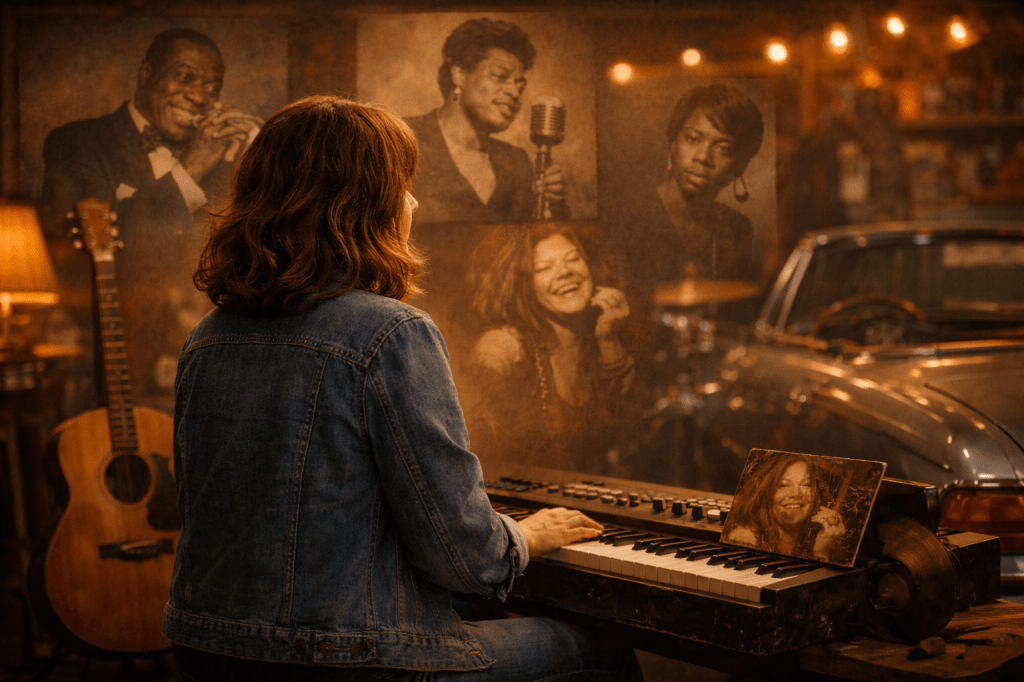
Many of my earlier thoughts about “hearing music” resurfaced recently when I was visiting a neighbor’s garage. On most Friday nights, a group of long-time friends gathers there simply to play music together. No audience. No metrics. No urgencies beyond the shared pleasure of making sound and keeping time.

My “hearing memories” revived and renewed something essential. I have known—personally experienced careful listening and how it compels. Such listening feels vital. Yet, today, we mostly listen differently. Because we’re immersed in musical worlds that too often demand performance, circulation, and justification.

I’m not into re-circling nostalgia. I’m not into longing for vanished eras or arguing that music was once “better.” I’m into something more elemental that’s happening. By listening carefully, again, to humans singing, vocally or instrumentally—I am hearing them—as fully inside their voices.

This listening slows one down. Asks for patience. Asks not to scan ahead for what might be coming. Instead, it asks for staying with what’s here, now. Close listening alters the sense of time: it makes songs stretch, silences matter, and imperfections more meaningful than distracting. A sincere listener is less interested in quantity—or heavy listening—and far more in depth.

Something within me softens while listening to a singular voice, human or instrumental. There are sounds that don’t carry a brand or a narrative. They carry a “life”—shaped by contradiction, limitation, courage, and persistence.

Listening closely and hearing an artist’s lived history is a form of genuine respect.

I don’t expect others to hear exactly as I do, or to be drawn to the same voices. I’m simply inviting participation and noticing. Consider what sounds make you stop and lean in? Consider what sounds refuse to fade, even after a song ends, and a voice winds down?

Close listening helps us know where originality truly lives—and, equally important, in the encounters between the sounds and listening. It’s renewing my feelings of curiosity and wonder, pairing them with the acceptance that not everything needs sorting, explaining, or resolving.

Some things ask only to be heard.

I plan to keep listening—slowly, attentively, and without rushing to name what I find.

If you’ve been listening along with me, we’ve shared those quiet spaces between notes. We feel quietly grateful—and very much in the know.

Diana

Unique Voices

Wednesday (Christmas Eve), December 14, 1015

I’m delighted to find myself right around Christmas—perhaps the most musical time of the year—thinking about music again and wanting to write about it.

My recent music-related posts have been about listening, particularly to performers with unmistakable presence and unique delivery styles. Their voices cannot be replicated, which leads to questions worth considering.

Why do some voices resist imitation completely? Why do certain singers and musicians remain instantly recognizable, even though there have been generations of covers, tributes, and technical study?

We often say a voice is “one of a kind.” That’s rather vague—almost sentimental. Actually, it’s because listening itself is remarkably precise. We hear a single note and recognize the artist immediately—before melody, before lyric, before context. We know who it is almost at once.

That recognition doesn’t come just from technique. We know that vocal ranges can be matched. Timbres approximated. Phrasing analyzed and rehearsed. And yet, we hear some artists as possessing something essential that never transfers.

There have been countless tributes to Ella Fitzgerald, Nina Simone, Janis Joplin, and Amy Winehouse. Many are impressive; some are genuinely beautiful. But they don’t feel complete. The outer shape may be there, but the interior weight is missing.

It seems logical, then, that a singular voice isn’t built from sound alone. It’s built from a life—and a particular life is audible, in timing, pressure, and its collision with the world.

Louis Armstrong could not have sounded as he did had he been born into comfort. Nina Simone’s music cannot be separated from her intelligence, her anger, her discipline, or her refusal to soften herself. Janis Joplin’s voice—carrying both defiance and hunger—is inseparable from the era that shaped her and constrained her. Amy Winehouse sang with an emotional directness that felt almost too exposed in a culture that practices concealment. Peggy Lee, writing deeply emotional songs, sang in a soft voice, creating impact not through force but through rhythmic shifts and carefully placed pauses.

Imitating artists cannot replicate another’s suffering—or the precise way an individual metabolizes experience prior to releasing it as sound.

And releases aren’t always tidy. Singular voices may include strain, cracks, or unevenness. They often ignore rules of prettiness or balance. In fact, polish can become the enemy of recognizability. Too much smoothing erases the friction that makes a voice distinct.

Many technically perfect performances leave us untouched because they arrive fully resolved—closed, complete, leaving no space for a listener to enter. I’m always wanting to feel a connection, sensing a presence that’s still unfolding.

Unrepeatable voices leave room and feel porous. They allow us to sense the human being “inside the sound”—the one thinking, remembering, insisting, sometimes even breaking.

Social timing matters, too, because certain voices emerge when the world is ready—or perhaps not ready—for them. They arrive as tensions that matter to listeners. A voice shaped in opposition, one that defies erasure, carries an urgency that cannot be rehearsed into existence later.

Voices that last are reminders that originality does not belong only to the past. They show us that originality is fragile, and dependent on conditions—social, cultural, personal—that cannot be mass-produced.

And so I return, again and again, to certain artists. Not drawn by nostalgia, but by recognition. They keep reminding me that music is one of the rare places where individuality can survive intact—and unflattened.

Another post will focus on genre, and why it can fail us when we try to describe what moves us most. Meanwhile, I’ll keep listening for what refuses to be copied—and wondering what it costs, and what it requires, to sound like no one else.

Diana

Hearing A Presence

Friday, December 19, 2025

Tomorrow is the winter solstice of 2025—the day our planet offers its fewest hours of light and quietly turns back toward longer days. The semi-annual solstices are about timing. And that has this one reawakening me to a listening experience I’ve somehow overlooked.

While I’ve reflected on—and written about—voices that enter a room and change its atmosphere, I’ve left one essential vocal artist standing quietly at the doorway:

Peggy Lee.

Not because she demands attention—but because she never does. With Peggy Lee, less is always more.

Listening to her becomes an exercise in recalibration. Lee doesn’t lean forward into the listener; she lets the listener come to her. In doing so, she alters the very terms of engagement. You don’t consume a Peggy Lee song. You lean in. You adjust your breathing. You become careful.

Where Louis Armstrong carries weight—joy braided with sorrow—and Ella Fitzgerald moves with brilliance and lift, Peggy Lee works in a narrower register. A deliberate narrowness. A choice. And within it, something quietly commands—and happens.

Peggy Lee’s timing is everything.

She doesn’t rush toward a lyric; she places it. Sometimes she arrives a fraction late. Sometimes she lets a word trail off, as if deciding—mid-phrase—how much truth to reveal. Silence, for her, isn’t an absence but a tool: a held breath, a raised eyebrow—one you can hear.

In songs like “Fever,” the drama isn’t in volume or flourish; it’s in restraint. Lee barely raises her voice. She doesn’t sell the song; she assumes it. Her confidence isn’t showy. It’s settled. Adult. World-aware.

Listening to her, I’m struck by how much authority can live inside softness.

Peggy Lee’s presence feels personal without being confessional. She doesn’t invite us into her interior life so much as let us sit nearby. She doesn’t ask us to identify with her pain or her triumphs; she asks simply that we notice—and pay attention.

Perhaps that is why Peggy Lee’s singing still feels so modern.

In an era when performance often leans toward maximal expression, she reminds us that meaning can reside in what is withheld—that intimacy can be created less by exposure than by precision. She teaches us that timing—true timing—isn’t just musical, but emotional.

Listening to Peggy Lee, I don’t feel dazzled. I feel addressed. She seems to change the room not by rearranging the furniture, but by lowering the lights.

Today, finding her again, I’m not merely listening to the music. I’m listening for something within it—a presence that doesn’t announce itself, but waits. Patiently and unmistakably, for anyone who slows down enough to hear it.

Diana

Listening for Presence

Thursday, December 18, 2025

Yesterday, I wrote my first of several planned posts about listening to music, and I paused. Soon, something different and subtle struck me. I was highly focused on writing about music, but wasn’t rushing off to research or make lists. Nor was I working on organizing sections, say about eras, or trying to build arguments toward a point of view. Instead, I found myself involved in actively listening itself.

I wasn’t listening constantly, nor methodically—but differently, very thoughtfully. More slowly. More attentively. I found myself listening for something, and not simply to something. That “something” has always been hard to name, but it’s something I constantly search for–and I always recognize it instantly when it appears.

To me, certain voices don’t merely enter a room—they change the space. The air feels altered, and as a listener, I feel myself being addressed—and personally. This doesn’t depend on volume or virtuosity. It’s likely to arrive in a whisper, a pause, a cracked note, a breath held just a beat longer than expected.

Here are examples: While listening to Louis Armstrong, I realized I’m not just hearing sound; I’m hearing weight—as if he’s carrying joy alongside sorrow, humor braided with endurance. When Ella Fitzgerald sings, I hear something like generosity in her phrasing—as though she’s opening space rather than filling it. Nina Simone’s voice creates a world where feeling becomes thought itself—urgent, unyielding, refusing comfort. Janis Joplin sang as if nothing were protected. Amy Winehouse sang as if she already knew the cost.

Here’s what strikes me: these are voices that don’t ask permission. They don’t soften themselves for acceptability. They don’t sound engineered to land well—they sound natural and necessary.

When I hear them, the idea of “performance” feels inadequate. Performance suggests polish, presentation, and a certain distance. Instead, I hear presence. I sense the singer fully inside the moment, and bringing me along without barriers between experience and expression.

Presence can’t be trained into someone, and presence can’t be copied. One can imitate another’s phrasing, tone, and even style. But “real presence” isn’t a technique; it’s a condition. And listeners know it when they hear it.

I often think about how rare this feels today—not because artists lack talent, but because so much contemporary music is filtered through expectations of marketability, branding, perfection, and constant visibility. Today’s technologies create pressure to be seamless, consistent, and endlessly repeatable. Earlier music, by contrast, often allowed unevenness. Performances included roughness, surprise, and even discomfort.

That may be why I return so often to voices from earlier decades—or search for modern artists who feel somehow outside the machine. I seek those whose sounds are as though something real is happening to them as they sing, not just through them.

I’m not suggesting that suffering creates great art, or that pain is a requirement for authenticity. But lived experience—fully inhabited—leaves traces. Great artists allow those traces to remain audible.

Listening in this way makes me consider my own habits. How often do I listen while doing something else? How quickly do I move on when a song doesn’t immediately reward me? How conditioned have I become to smoothness—to ease?

This is my second post about listening to music. Not to make a conclusion, but to create something more like a tuning fork. A small way of noticing what resonates—and what doesn’t.

In another post on this topic, I hope to stay close to this question: What makes a voice unrepeatable? Not better. Not more famous. But singular—so that no matter how many imitators try to cover an original, something essential refuses to transfer.

For now, I’ll keep listening for presence. And I’ll gamble that once you hear it, you can’t un-hear it either.

Diana

Hearing The Originals

Wednesday, December 17, 2025

My neighbor—professionally an engineering type—recently introduced me to his garage-based music studio. He and several long-time friends meet there every Friday night to play together. They don’t bother with advance planning; they simply gather and do.

The garage, a crowded but tidy man cave, half houses a skateboard collection, several motorcycles, and a pristine classic BMW convertible. The other half is filled with musical gear—guitars, a professional drum set, a keyboard, seating, and a large TV tuned to YouTube, making music videos instantly accessible. My neighbor says he’s felt intimately connected to music of all genres since he was a little boy.

I sat at the keyboard as he softly strummed a guitar, and we talked about music. I confessed—somewhat sadly—that I’ve fallen out of touch with much of today’s popular music. He queued up a few videos, introducing me to some of it. I was honest and explained that I’m a fan of what I call “the originals.” He understood immediately and shifted the screen to Louis Armstrong, singing alternately through his famous horn and his unmistakable voice. Then came Ella Fitzgerald, gently and passionately interpreting Summertime. We discovered that we share a love for a very modern original as well—Alison Krauss—and listened to her duet with Brad Paisley. Our wandering also touched briefly on cool jazz.

I keep myself too busy to pause and listen as often as I might wish. But after that evening, I revisited my old CD stacks from years of collecting and turned again to YouTube to hear artists I’ve loved for a long time. All of it stirred a familiar question: what is it that makes particular voices call to me so strongly—over equally talented and wildly popular newer artists?

I don’t consciously resist what’s new. Still, I find myself drawn back—almost involuntarily—to certain singers and musicians. Their work feels different, not just in style, but in kind. Especially the voices now gone: Louis Armstrong, Ella Fitzgerald, Nina Simone. Peggy Lee. Édith Piaf. Janis Joplin. Mama Cass. Amy Winehouse. And then there are current figures who still carry that same sense of singularity—Lady Gaga, Robert Plant, Alison Krauss, and a few others.

The word genre doesn’t help much. Jazz, blues, folk, pop, rock—the labels slide off what I’m trying to name. These artists don’t feel as though they belong to categories; instead, the categories seem to bend around them.

The same holds true for certain operatic voices that live vividly in my memory.

Perhaps what my favorite artists share isn’t an era, or even a particular sound. Maybe they share something closer to presence. When they sing—vocally or through an instrument—it feels as though something real is at stake. They aren’t merely performing a song; they seem to carry history, experience, contradiction, and truth all at once.

It’s striking, too, how many of these carrying voices are women’s. Not exclusively, of course—men like Sinatra and Nat King Cole clearly belong in this conversation. But with women, attention so often slides away from the work itself and toward their personal lives, their struggles, their supposed instabilities. Even celebrated women artists have rarely been allowed to remain simply artists. Their inner lives became public property, open to speculation, and too often eclipsed their undeniable musical intelligence.

I’m not going to look for neat answers to complex social realities here, and I’ll leave formal sociology aside. This is a more personal inquiry—an attempt to understand why certain musical patterns never release their hold on me.

Once I begin listening in this way, a much larger story presses in. Many of the voices that move me were shaped by what we now call American music—especially the blues and everything that grew from it—emerging from histories of profound suffering, endurance, and enforced silence. Acknowledging that responsibly requires slowing down, and resisting the urge to compress slavery, survival, and cultural inheritance into a paragraph or a slogan.

I’m not qualified to explain that essential history fully. Instead, I plan to begin here, at the edge of listening.

In future posts, I hope to explore this territory more carefully:
– what originality really sounds like
– why some voices can’t be replicated
– why genre so often fails to describe what moves us most
– and how social history—race, gender, power, visibility—shapes music and how we talk about it

This first post is simply a doorway—an acknowledgment that something important lives here, much like what keeps my neighbor’s Friday-night studio jams alive. And my growing wish to explore it deserves attention rather than speed.

For now, I’ll start listening again.

And I’m inviting you to listen with me.

Diana

Trailblazer

Saturday, February 22, 2025

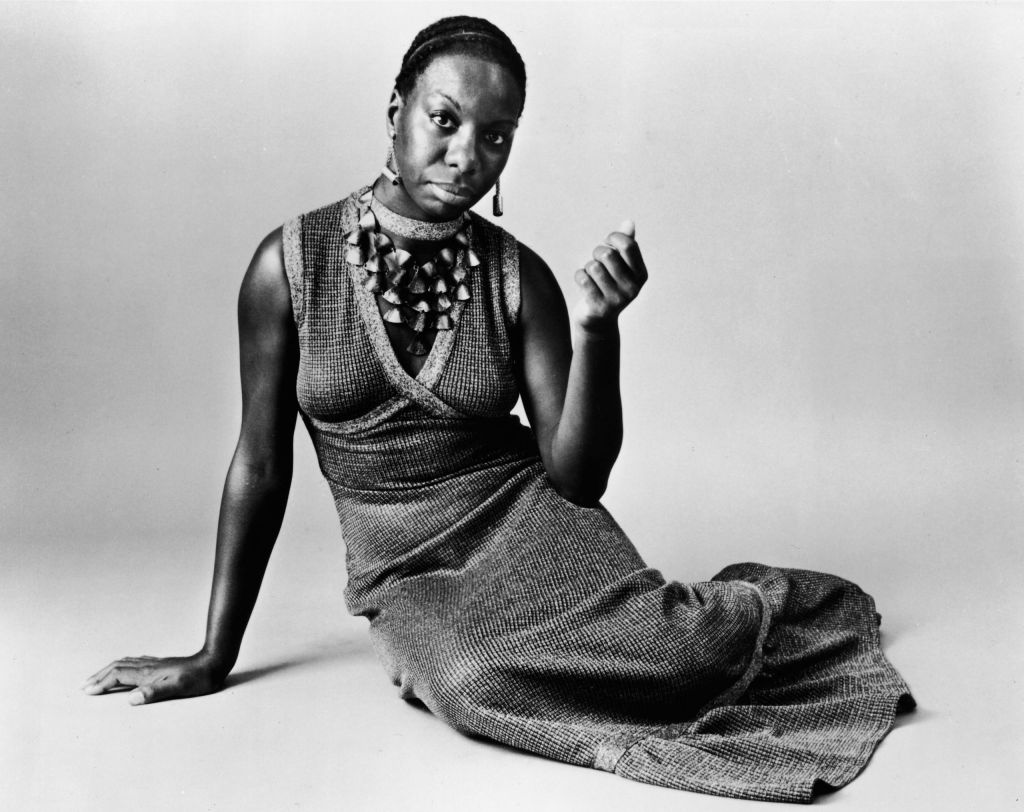
I will write about Nina Simone, who just had a birthday.

I still love hearing her voice; there’s never been anyone like her, a force in music and activism. Simone was a trained classical pianist who blended jazz, blues, classical, and soul. Her singing voice communicated raw emotions and solid convictions.

You’d never a’thought she’d evolve into a fantastic artist. She was born into an impoverished household in 1933–her mom was a preacher, her dad a laborer, and both loved music. Simone’s mother took the baby regularly to church. As the story goes, Simone was about three years old when she managed to climb onto the organ seat and toy with the keys. Soon, she actually taught herself to play a church song. Soon, parishioners recognized her prodigious talent; and later, affluent individuals in the community recognized and paid for her outside music lessons.

Simone became classically trained and an outstanding student. Although she wanted a career in classical music, the racial barriers of her time pushed her toward jazz and blues. She worked in that arena to support herself while making an indelible musical mark.

Her piano style wasn’t just melody and rhythm; it was her powerful expression of personal and political views. Her song compositions, like Mississippi Goddam, To Be Young, Gifted and Black, and Four Women, were unapologetic about racism and injustice in the Civil Rights era. She captured its pain and resilience.

I used to listen to Simone’s singing voice channeling her deep emotions—distinctively communicating, delicately or thunderously. Her adoring fans made her a revered figure—”High Priestess of Soul.” Her music isn’t easily categorized because it isn’t simply about love, loss, and revolution.

She had a complex personal life–mental health challenges, financial difficulties, and brutal husbands. Her volatile temper alienated some and endeared her to others. Eventually, Simone became a world citizen who lived in various countries: Liberia, Switzerland, and France. She always was an enigmatic figure.

Simone died in 2003. Her musical influence continually grows as young generations discover (and cheer) her fearless artistry, outstanding musicianship, and commitment to justice. Her legacy is a “voice of truth.”

Dear Friends: Simone, a musical genius, is still “an original.” Diana

Double Holiday

Sandra Boynton’s art, from her PB posting

Thursday, December 26, 2024

I don’t know why my brain failed to salute Hanukkah yesterday. Its first day this year was on Christmas Day. I was aware of and tuned into that, but only now offering, “Happy Hanukkah!” I’m letting Sandra Boynton’s art speak more for me.

Sandra speaks through multi-talent channels. Here’s a link to her boogie-woogie style video, with Zooey Deschanel, backed by terrific instrumentalists, singing Boynton’s retro toe-tapper, “I Just Want to Dance With Santa Claus.” https://www.facebook.com/sandraboynton/videos/1327490604947470

As I should have yesterday, today I salute two important holidays. (Thanks to my friend Rachelle for catching my oversight.)

A welcome thing happened yesterday. The ex-manager of the department store where I work part-time, and whom I appreciate and admire, sent me greetings from Colorado, where she manages another of the chain’s stores. She’s talented, kind, and fun, and ahead has a great career. Her message is a Christmas gift that puts us in touch again.

Yesterday was a quiet one at my house. I boinged-out on homemade whole wheat bread while watching sewing videos, to learn how to shorten a jacket’s lined sleeves. That’s a new reach for me–one I had never imagined tackling. This is happening because I fell in love with a corduroy jacket–in the Men’s Department! The jacket is a youth cut but too big, especially the sleeves. I’m gonna fix them!

That evening, I lit a candle for Hanukkah and reflected on my loved ones, distant or deceased.

Dear Friends: However you celebrated, I hope your yesterday was lovely. Diana

Realigning

Wednesday, July 24, 2024

Online marketing has become incredibly aggressive, likely thanks to AI technology.

I have begun routinely wearing a multi-colored gemstone ring; it’s not expensive but charming. I began thinking of finding a daily-wear bracelet to go with it. I went to two online jewelry sites, didn’t enter any personal contact information, and looked at some multi-gemstone bracelets. Immediately afterward, my usual internet sites became bombarded with advertisements for bracelets of that type and from marketers I’d not contacted.

It isn’t as if I’d not noticed this before because I’ve seen clothing and shoe ads pop up. This time, however, is different because the bracelets are colorful, very specific, and in my face. As I scroll through the major online daily newspapers, multi-gem bracelets are popping up with easily accessible links to commercial sites. As I’m googling for information, those bracelets are popping up. I’ve been found.

My purpose for looking online wasn’t as much to buy as to explore. What’s happening feels invasive.

The Amazon phenomenon has changed everything, from how we shop to how items are marketed. Such an aggressive style of commerce is facilitated by AI technology, which Amazon was among the first to exploit. Today, sales aggression comes first and foremost.

Selling is always aggressive. As a former sales trainer, I can attest to encouraging aggressiveness while being cautious about stepping up the heat. The internet depersonalizes that process and is in-your-face aggressive. Becoming more immune to such aggression will encourage in-person salespeople to take more aggressive approaches.

In my part-time role of selling fine jewelry, I consider how to apply what I have learned from the internet. Customers becoming more tolerant might respond to more encouragement if it isn’t also overwhelming. I will consider this more and actively retest and adjust my sales skills as time passes.

Dear Friends: We spend lots of energy on many daily living nonessentials. Diana

Still Standing

(Photo by Kevin Mazur/Getty Images for The Recording Academy)

Monday, April 29, 2024

Last night, I streamed the 2024 George and Ira Gershwin Awards Show from the Library of Congress, honoring the musicianship of Elton John and Bernie Taupin. That was unusual for me, as recently I’d watched the televised version. That excellent production featured great artists performing key numbers from the duo’s catalog.

What made me want to stream was a clip from the show which turned up on Facebook, featuring Joni Mitchell singing “I’m Still Standing,” Accompanying her, Annie Lennox, Brandi Carlile, and the Sista Strings. As a standalone, the number struck me more deeply than back when it seemed one among many satisfactory performances. That superb performance clip encouraged me to see the whole show again.

Again, this time, I found the event excellent. Many elements of John’s and Taupin’s music make it lasting. The Awards Show highlighted some of their best, with world-class musicians performing. I’m not much of a modern music fan, but their music has slowed me down, and I’m thinking more deeply about their collaboration.

John’s catchy melodies reflect excellent musicianship; his memorable melodies stay with listeners. Taupin’s lyrics have depth and storytelling; his themes are poetic and insightful: about love, loss, hope, and self-discovery. Everything’s personal and relatable.

John’s musical style is genre-bending. He’s an artist at blending pop, rock, and gospel, key sounds that appeal to wide audiences. His musicianship connects deeply by evoking a wide range of emotions. Essentially, John’s and Taupin’s key themes are timeless and enduring.

Their music resonates with all ages because listeners connect to it on personal levels. That all landed home to me while I was re-seeing and re-hearing Joni and her collaborators, “…Still Standing.”

Dear Friends: The super-to-watch, streaming awards show is available on PBS. Diana

…To Our Ears

Wednesday, April 09, 2024

Recently, I began learning more about our brains, including the phenomenon of “brain noise.” For example, a surgical procedure called “focused ultrasound” converges sound waves into a tiny area deep within the brain (e.g., the thalamus) and creates heat. This heat disrupts abnormal brain activities causing recurring tumors. Similarly, in another human problem, focused ultrasound can pinpoint and address the area in a human brain that consistently demands drugs.

Now, I’ve begun learning more about music and the human mind. Renowned soprano Renee Flemming is behind a book entitled Music and the Mind, designed for a general audience. Its chapters explore music’s power relative to human health and the brain and discuss such topics as childhood development, cognitive neuroscience, evolution, and music therapy.

It stresses music’s impact on healthcare, musical education, music and social cohesion, and the future of music in medicine.

Reading this book was easy and also jolting. I could feel my brain spontaneously and often recalling musical phrases and life episodes, long forgotten or seemingly so. I’ve been surprised to rediscover long-ago music and associated learning, still lasting and inspiring, in my brain’s regions.

Dear Friends: All amazing, the incredible capabilities of our magnificent brains. Diana