Breeze, et al

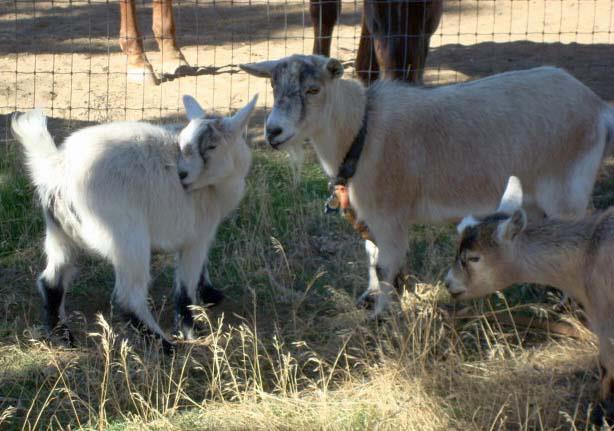
With Breeze (white) and Poppy (caramel)

Sunday, January 12, 2025

I acquired an adorable trio of African Dwarf Goats in 2010: the mama (Sego Lily) and her twins (Breeze and Poppy). Sego Lily had originally been adopted from a herd environment, and by 2010, her real age was only an estimate; her babies were months old.

The trio was sweetly bonded and inseparable. They participated in official parades and often strolled with me on neighborhood streets, leashed, alertly cautious, and keenly aware.

Mama passed away about five years ago when I was guessing her age at fifteen. Little Poppy passed away a year ago at age fourteen. And yesterday, I lost Breeze; she was fifteen.

That morning, while outside and feeding my animals before leaving for work, I discovered Breeze lying down and apparently unable to rise onto her feet. I tried lifting her but hadn’t enough strength. Breeze’s legs were stiff and unmanageable, and she might have suffered a stroke sometime in the night or earlier that morning.

Breeze passed away before the emergency veterinarian could arrive at my place. My workplace is painfully short of workers; I felt needed and went to work, where I arranged to meet an emergency veterinarian later at my place. Meanwhile, my kind neighbors watched over Breeze and hours later let me know she had passed. Later, a concerned co-worker followed me home and helped with her remains.

RIP, my Breezey.

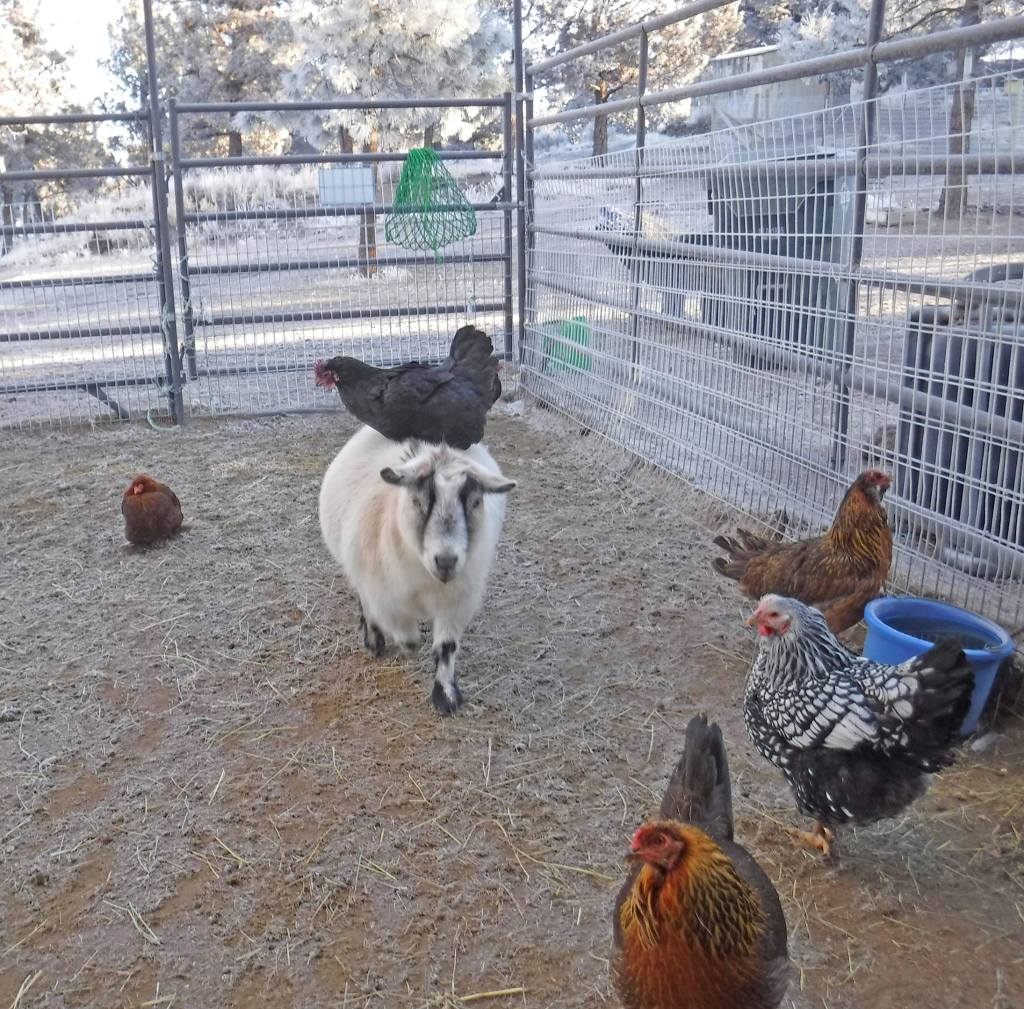
Breeze and hitchhiker

Remembering those three sweeties this morning, I’m sad with an empty feeling.

Dear Friends: Cute, fun, and stubbornly determined when wanting something. Diana

Birding Artist

Friday, January 10, 2024

Some time ago, I casually listened as an interviewer questioned the popular and successful writer Amy Tan. I’d not read anything by Tan; I became more attentive as she explained some experiences and interests that turned into creative inspirations. She said bird-watching was a high note in her daily life, and the activity gradually had changed–from being very casual to becoming highly attentive. Best of all, focusing on birds made another of her artistic sides evolve.

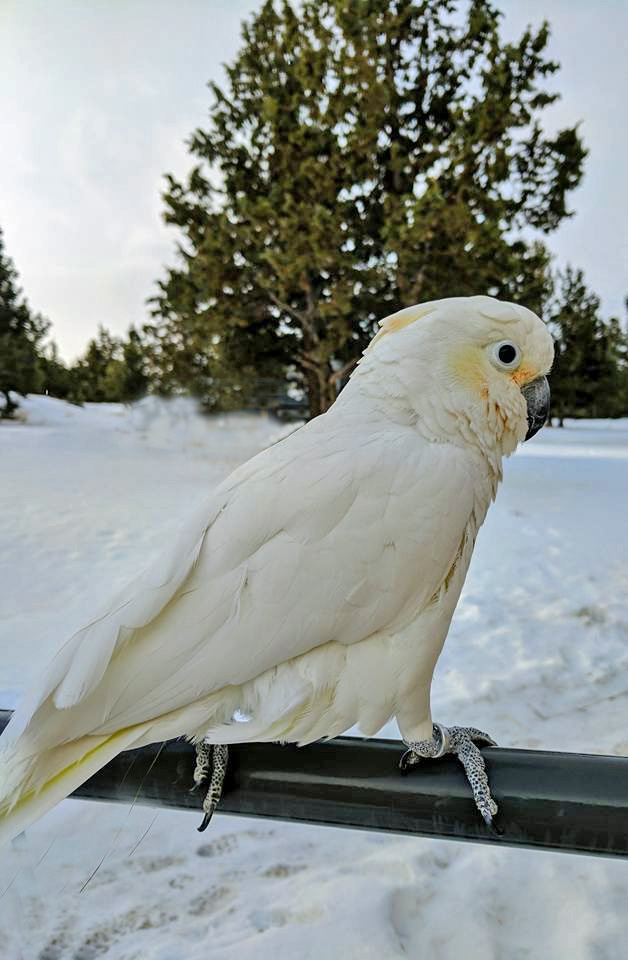
I am a great appreciator, a casual watcher, and sometimes a photographer of wild birds. I have two domestic birds in my home, each very different–a retired racing pigeon and a busy Cockatoo. Each is interesting and intelligent (most overtly, the Cocktoo) in its own way.

I long remembered elements of that interview with Tan and wished to learn more about her affection for birds. I finally ordered her book and haven’t been disappointed. In fact, it’s more delightful than I anticipated because her “other artistic side” is pen-on-paper artwork–and her own!

Tan’s bird art is a fine art. Today’s header photo is of the book cover, with birds by Tan, hinting at more art on its inside pages.

She’s an excellent writer, too. Her words share Tan’s observations and delight, bringing readers near the writer’s first-hand experiences.

Dear Friends: It’s an original, a beaut that evolved from wishing to learn. Diana

Winter’s Puzzle

Saturday, January 04, 2025

Yesterday was the first anniversary of a major ice storm here in Central Oregon. That storm kicked off months of freezing weather. I remember cold, cold, continuously, until almost the Summer Solstice.

It’s hard to believe this area can skip spring, but it does, and often enough that old timers have jokes (e.g., “Central Oregon has two seasons, Winter and the Fourth of July.”).

This winter’s Central Oregon weather seems almost like last year’s. Our weather remained relatively mild through the fall and winter’s dark months. Since I remember last year’s surprising freeze vividly, I worry about that in this early January.

Every morning, I anticipate being greeted by a hammering freeze, with that kind of weather continuing nearly unendingly. Today, the sun has begun rising beautifully in the east, and I’m reassured, at least somewhat, of relatively mild weather today.

I’ve lived in Central Oregon for twenty years and cared for horses. I’ve had real-time wintery experiences outside that are memorable–and proof of the old-timers’ observations being right-on.

Winter and the Fourth of July. So far this season, not enough winter. The coin has another equally worrisome side. Not enough winter means insufficient snow and inadequate water in the spring. Central Oregon needs big winters, especially now, with a growing population and increasing amenities.

Dear Friends: We need snow and ice and thus willingly cope through deep winters. Diana

Word Images

Monday, December 23, 2024

This morning, I will answer a question I left open in yesterday’s blog. I wondered if the first day after the winter solstice is ‘the pluperfect shortest day’ of the year.

Saturday was this year’s winter solstice, a year’s shortest day. However, Sunday was the first day after the solstice, an equally unique and equal turning point. Although technically still dark, Sunday significantly marked the return to longer days.

Sunday, as a “pluperfect shortest day,” acknowledges its key position on the threshold between shorter and longer daylights. It marks, as clearly as Saturday (winter solstice), the shortest day of the year.

The pluperfect tense refers to something that “has happened;” or an action that has occurred before another action occurs, equal to, or nearly equal to, the first. In this example, the first day after the solstice is the first day after the shortest day has passed.

In a traditional sense, this might not be grammatically precise. The idea rose playfully as I recognized that a “pluperfect shortest day” equals its preceding day by significantly marking daylights from decreasing to increasing. Shifts in the cycle of light and darkness remind us that gradual changes will bring subtle but noticeable transformations.

Sunday following the winter solstice was technically as dark as the preceding day, lengthening daylight by two minutes, making Sunday pluperfect–an equal and next marker of longer days about to return.

Although Sunday’s daylight was virtually indistinguishable from Saturday’s, Sunday boasted a different energy. The day seemed more hopeful, our reminder of light slowly returning and boosting us from winter’s depths.

Dear Friends: Increasing light minutes will become visible in a few weeks. Diana

A Lovely Cold

By the artist Sandra Boynton (from her FB post)

Sunday, December 15, 2024

The department store where I am a part-time worker was busy yesterday; all good for the business and inspiring for its employees. After hours on my feet, checking out customers, and returning tried-on clothing to wherever the pieces came from, I leave to go home. I’m tired but happier if we’ve been super-busy with customers.

I’m off from work today and (speaking of super) anticipating tonight’s sky with December’s “Cold Moon” appearing. While driving home last evening, I couldn’t stop looking at that moon, bright and clear. From all indications, sightings of it tonight should be even better.

It’ll be spectacular, and here’s why.

The Cold Moon is the “longest” full moon illumination of the year. The moon’s proximity to the winter solstice (December 21st) gives it a longer path through the sky and gives us more viewing time.

This year’s Cold Moon happens to coincide with a rare “major lunar standstill,” which occurs roughly every 18.6 years. The standstill is caused by a wobble in its orbit that makes the moon reach its highest and lowest points in the sky.

I will enjoy tonight’s longer moon-viewing opportunity with unusually striking visual effects.

Dear Friends: Last night’s moon greatly hinted toward what’s to come. Diana

Season’s Musing

Thursday, December 12, 2024

I’m nursing sore muscles after my first trip in years to the gym. My poor legs, hips, and shoulders were pushed to work a little harder for a couple of hours. I’ll feel them more today as the muscles move me around, generally nonstop, in my part-time department store job.

This morning’s thin blanket of snow is pretty. All that white has me imagining a Poinsettia on my picture window shelf in the foreground. Now, wishing for seasonal inspiration from a bright Poinsettia, I will bring one home after work.

I wanted to know more about the plant’s significance. I understand now that poinsettias are native to Mexico and have been cultivated there since Aztec times. Aztecs used the plant to decorate and to produce dyes and medicines.

In the 19th century, Joel Roberts Poinsett, the first U.S. ambassador to Mexico, introduced poinsettias to the United States. He cultivated the plant in his South Carolina greenhouse and shared it with friends and colleagues.

Eventually, creative American growers saw innovative marketing possibilities. By employing the relatively new medium of television, they marketed poinsettias for background-coloring TV’s giant Christmas specials. Eventually, Americans saw the plant’s inherent beauty and associated poinsettias with Christmas, and now as beloved holiday decorations.

Dear Friends: “Random thoughts” don’t rise from nowhere. Diana

Hi, Mary!

Saturday, December 07, 2024

The other day, my mail brought a Christmas card with a So Cal return address but not the sender’s name. I chuckled over a handwritten note on the envelope: “Love that dog, Chase!”

I can’t guess how many people read my blogs because Google owns the writing platform and downloads blogs in response to internet queries about related topics. However, I know some readers in Southern California, where I’m from. I mentally played with possible note jotters and landed correctly on Mary Martini!

Mary and I used to work together at Kaiser Permanente. She’s one of the two best-organized people I’ve been lucky to work with, and she loves Chase!-my young dog; he’s strong, stubborn, exasperating, exhausting, and way too intelligent.

Okay, Mary, at the risk of repeating old stories, I’ll update everybody.

Since I last wrote about Chase, he’s escaped, and often again. Working almost constantly, I try to offset his diggings and keep him and his little companion, Mitzvah, from escaping. I continually drag large and heavy lava rocks uphill to my house, where they are lining the dog fence’s bottom, inside and outside. Strong and determined, Chase still sometimes finds vulnerable spots to dig out.

My standalone kennel has six-foot-high fencing and stands on a concrete base. Chase is a fantastic climber, so kenneling him doesn’t ensure his containment. I’ve (again!) worked on the fencing to prevent him from gaining footholds and to heighten his challenge. Now, escapes are on pause, but Chase keeps trying to defeat obstacles.

He wants to be with me, and I love him—he’s maybe the most intelligent dog I’ve known. But I worry about his safety, from vehicles and from becoming lost. I also worry about his responses if he’s loose and a stranger enters my property, for example, to deliver a package.

Taking him to a no-kill shelter and hoping he’ll find a better home is out of the question. First, because he’s so high-maintenance, and the shelters are overcrowded and begging for foster homes.

Mary, this beat goes on, and thanks for appreciating Chase. He will turn three years old in several months, the age that suggests a dog is mature. Regardless, this guy simply is who he is, and in somewhat of a miracle, he’s still here!

Dear Friends: My rounds of “Adventures with Chase” are continuous. Diana

Toward Fall

Saturday, November 09, 2024

I have the closing shift today at my part-time job. I will feed my horses a final time this day in darkness. Nighttimes, I don’t feed them inside the barn, and I wear a headlamp while out among them. My horses are easy to get along with–infrequently spooky and running around; but dark-time feeding calls for cautious navigating among the large, hungry, and anticipating animals.

All that will become more so closer to Christmas, as the store will stay open until eleven in the evenings, and I’ll have to work on some late closing shifts. I’ll still be challenged to feed horses in darkness, but later, around midnight. And with my dogs barking.

I let my dogs be outside in their fenced area while I work with horses in darkness. I recognize routine barking, and if the barks become intense, I’m alerted of something non-routine. The barks often tell me a deer is crossing the property.

I dislike nighttime noises that might disturb my neighbors. However, my dogs help me feel safer.

I am starting to plan for transitioning to feeding my large animals on a schedule later, colder, and darker.

Dear Friends: Living on a property with large (and small) animals isn’t dull. Diana

Changing Times

Saturday, November 02, 2024

Turning back our clocks tonight will make us more vigorously anticipate the upcoming “dark days of winter.” Time changes are mechanical acts that complicate our lives for days ahead. They challenge us, and we mis-assess our routines for a while, confused by changing daylight periods, odd to-bed and getting-up times, and our standard getting-things-done patterns. Remembering how much the time change will affect my daily life is discomforting.

I live on a small acreage and have a few outside animals, equines, chickens, turkeys, and a goat. Their feeding times trigger my understanding of daylight length. In summer, feeding the outside animals can stretch over long hours; in fall, feeding times become condensed; and in dark winter, most feedings occur in a nighttime atmosphere.

Turning back the clocks tonight has me anticipating the different relationship between clock time and natural daylight tomorrow. A key concern is scheduling feedings for my outside animals. Feedings in natural light are the easiest and most safely handled. Starting tomorrow, I must feed them earlier and manage to repeat that, at least once in natural light, and prepare to provide their latest feedings during the dark and cold nighttimes.

Other discomforting thoughts are about a personal transition. From experience, I anticipate that nightly bedtimes will become compelling by 7 p.m. because of the earlier darkness outside. On the opposite side of bedtime, I will worry about having overslept by seeing more light through the bedroom windows.

I’ll be adjusted to this time change by next week. Next spring, I will write about the agonies brought on by anticipating yet another artificial time change.

Dear Friends: I want “To change or not change clock times” on the ballot. Diana

Golden Harvest

Wednesday, September 18, 2024

Yesterday evening, today’s header photo was my most clear capture of September’s (always) fabulous Harvest Moon. Ever since childhood, the full September moon has been my favorite. Its brightness lights the path and powerfully signals a transition to significantly different weather. In darkening fall evenings, the Harvest Moon’s brightness encourages us to imagine late harvests, the old way with horse-drawn equipment.

After working late at my part-time job and driving home, I planned to photograph the moon but became discouraged. The large globe was barely visible and busy, dodging massive dark clouds.

I’ve played with moon photography for years but am still a novice at turning sky images into art. Yesterday evening, with art on my mind, I wished to capture the globe and earth objects, with the moon as top layer.

That top layer sometimes disappeared and an inviting empty space became an inspiring image.

This year’s Harvest Moon is also a Supermoon. That’s because it’s closer to Earth and appears slightly larger and brighter than usual.

These photos aren’t my mind’s perfect imaginings, but they satisfy. They capture splendid visual elements of the active moon and sky and earthly items. Another lovely aspect is that they touch on the moon’s emotional significance.  

Dear Friends: Transition, reflection, and celebration as summer turns into autumn. Diana