Seeing

Tuesday, May 21, 2024

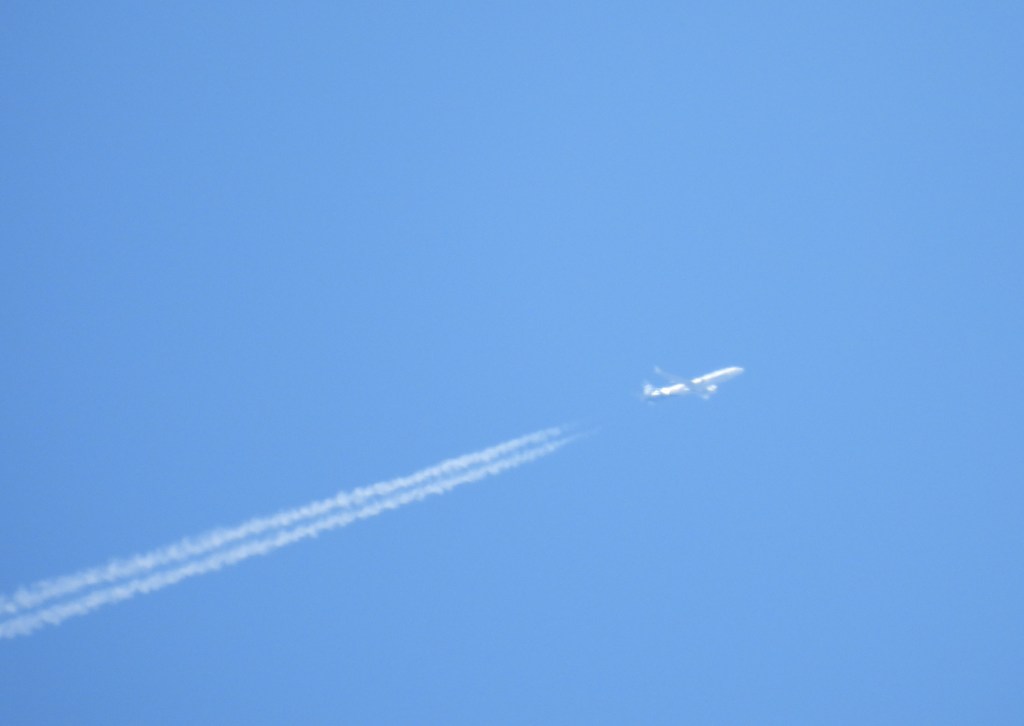
After discovering an automatic focus for distance shooting among my camera’s settings, I turned it on and pointed toward the most distant available object. High in the sky and nearly invisible to my naked eye except for its smoke trail, a commercial jet moving very fast seemed headed to Portland. The jet’s high speed and near-invisibility made me aim my camera at the smoke trail’s front end. I wondered if the distance lens would find the subject. I learned it could discover and neatly stop the action. A grand surprise.

The camera also has a dedicated mid-range automatic focus and yet another for very close-up captures. I never bothered to look for anything except an overall automatic focus, which on this camera has proved capable and satisfying.

I decided to try out the mid-range automatic focus. It produced images that encouraged me to adopt new perspectives on some trees on my property. I call this one, “My Dancing Trees.”

That mid-range automatic focus also neatly captured the late sunlight on the twisted trunk of a maturing Juniper.

Finally, I tested the camera’s automatic close-up (macro) lens. A tiny feather was lodged against the grill of my heat pump and fluttering rapidly in the wind. A challenge was the feather’s rapid shifting; only briefly did it flutter to an open position and reveal its spines. I brought it near the macro lens and waited, snapping in a perfect instant.

The camera captures excellent images. By using it as a manual focus tool, I’ll be pushed to create images that are as good as or better than these.

Dear Friends: Moving into manual shooting could create all-new visuals. Diana

My Robin(s)

Monday, May 20, 2024

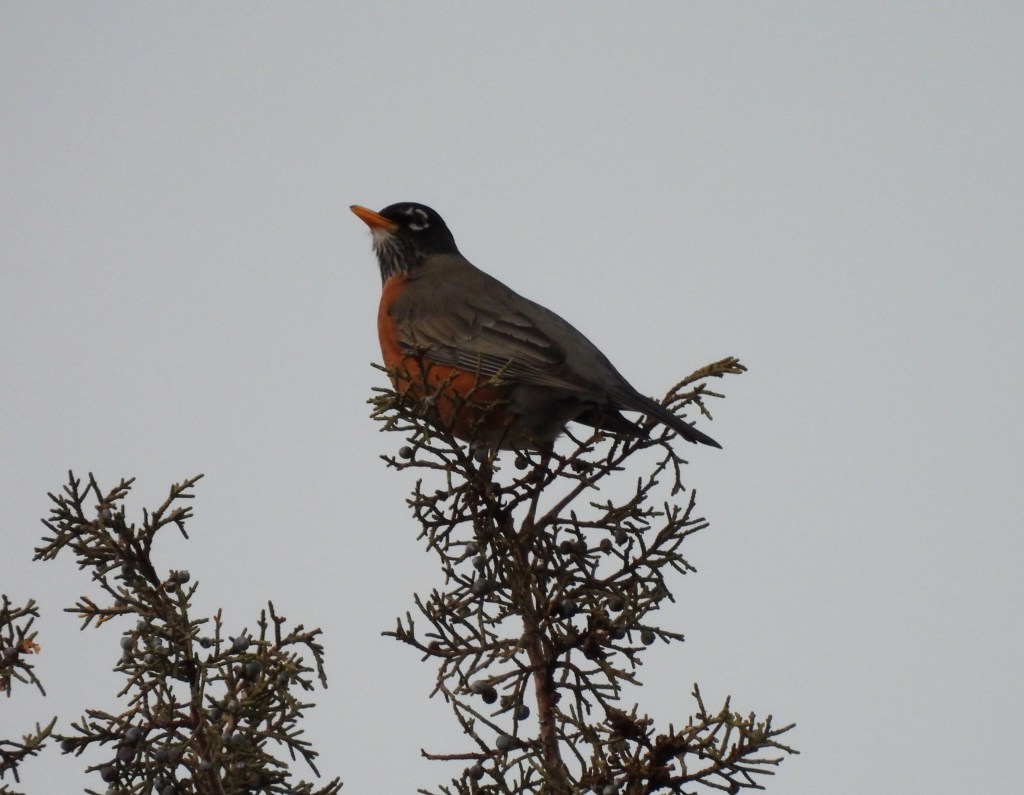
From on high, this Robin (or its mate) always watches my every move.

Here’s why:

It’s safely tucked into a rafter. I searched for a while before seeing it. I’d noticed a mature Robin flying in and out of that hay shed often enough to make me wonder if it had built a nest there. Various bird types have nested in previous springtimes, sometimes in loosely structured and precariously situated nests located in worrying spots. This Robins’ nest is impressively safe. It is securely beyond my reach, my dog’s, and most other predatory types.

For several reasons, I love hosting and seeing that healthy nest. Robins build their nests in areas offering good shelter, adequate food, and water. This nest’s location suggests that my property is a good local ecosystem that offers essential resources.

I’ll be observing closely this intricately constructed Robin’s nest and maybe seeing some of the birds’ nurturing behaviors. I’m having a pipe dream: If I’m really lucky, maybe I’ll see eggs hatching and the chicks growing.

More is drawing me toward connecting with this Robin family. Several years ago, I rescued a fledgling Robin; it had fallen from a nest and was too young to survive independently. I raised that baby successfully until it could fly well and care for itself. I enjoyed every moment with that cool bird. My little fantasy is that it might be one of the parents caring for this nest.

Besides, I like to associate Robins with springtime and new beginnings. That nest in my shed reminds me of the renewal and growth that occurs in nature and inspires similar feelings in me.

Dear Friends: Now to work again, to create a special photo and “birthday surprise.” Diana

Bitties Insisting

Tuesday, April 16, 2024

My house is under siege by two tiny birds, apparently mates, taking turns tapping unendingly into a lower corner of a high window. They’re working too high for wingless me to reach them without a 20-foot ladder. Little by little a hole grows. The birds are tiny—chickadees or nuthatches—but determined. I watch and yell to no advantage.

Their chosen window is precisely where a Northern Flicker drilled a large hole years ago. Apparently, birds are attracted to high spots protected by an eve. I love birds but would drive away these littles. I yell and threaten, but they ignore me. The long-ago Flicker left an unsightly hole that, finally, a house painter made to disappear.

Now, here we go again. This time, it’s a bird tiny enough to leave space in my palm.

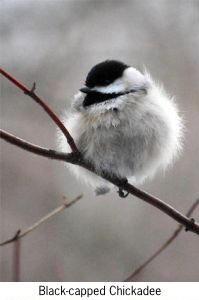
They’re so high up it’s hard to tell, but I think a Chickadee bird pair is tapping into my house. My first impression was that the birds were Juncos, but a Junco doesn’t drill unendingly.

It’s a wonder seeing these tiny birds pecking into my house siding, determined to create a nesting space. A little research says that they can and won’t give up until they do.

Dear Friends: I’m becoming an unwilling nest host to bitty birds. Diana

Split Screen

A jet flies northbound as the nearly full moon rises over Washington. (Jonathan Newton/The Washington Post)

Saturday, March 23, 2024

The Worm Moon will be at its fullest while rising in a couple of days. Early today, its waxing fullness setting in the west and brightly through my bedroom window awakened me.

I enjoy photographing full moons and plan to try capturing this month’s. Additionally, the upcoming rising full moon will be exceptional. That event includes a solar eclipse.

While doing some pre-full-worm Moon-rising research, I discovered the photo that’s today’s header. I can’t stop wondering how it was possible to capture that jet crossing against the full moon so clearly. Maybe it came from using special equipment or from an instant of sheer luck.

One of my assumptions is that the photographer was near an airport, had previously seen similar crossings, and this time had special equipment and captured the image. Another assumption is that it’s simply from a good camera–a lucky shot, and likely software-enhanced. Whatever, it’s gobsmacking.

Assuming the image is from a professional photographer lengthens the distance between that person and me. It makes the outcome less about using special equipment and/or about general good luck. It’s more a result of having the wisdom of experience and the skill of anticipating accurately.

Dear Friends: Undaunted by the near-perfection, I will be out again trying my hand. Diana

A Moon Mood

Wednesday, March 13, 2024

Yesterday evening, after driving up my driveway and reaching its top, I saw the moon, a mere sliver of its fullest self and crystal clear among many dark clouds. I felt instantly attracted to that sliver, sensed it as free-floating, and wanted a photo. I hurried into the house to become organized, get equipped with a camera, and hurry outside again. By then, the sky was full of dark clouds obscuring the light sliver.

I walked around while looking skyward to glimpse even a tiny bit of light. It was a no-dice situation that denied any possible hint of a moon presence. I couldn’t just give up, and so wondered why I’d been compellingly drawn to that sliver.

As a personal baseline, I love full moons. From earliest human history, they have affected all beings’ senses of emotion, intuition, and growth. Humans have latched onto the times of full moons to conduct rituals, release energies, and renew beginnings. The sliver moons might influence humans more subtly. Last night’s sliver seemed to encourage me toward introspection, internal growth, and maybe seed-planting for future endeavors.

There’s evidence that the moon’s phases influence all living beings. In humans, full moon periods align with our physical activities and emotions—external and internal. We are also influenced by slivers, constantly changing by waxing and waning.

Waxing crescent moons (sliver growing) encourage beings into modes of excitement and anticipation; waning crescent moons (sliver shrinking) encourage beings into modes of internalization and reflection.

I’ll add that any perceived powers of moon phases aren’t scientific. There are common perceptions (including mine) that draw from long-time observations of cultures and traditions.

Dear Friends: Today’s header photo is from the internet. Diana

Visions

Wednesday, March 06, 2024

I’ve never seen anything more beautiful than giant snowflakes falling and fluffing on the ground. However, there usually is a point of “too much,” and now, enough is Enough. Seeing through a window the many tree branches piled heavily with white is lovely. All’s peachy unless one needs to head outside to work in the snow and cold. That outside work could be as little as removing snow from a vehicle and driving someplace. However, my outside work includes feeding horses and chickens, all hungrily waiting and spotting for me, kicking downhill to the barn.

This rough spring has lasted too long, and happily, it’ll soon be Daylight Savings Time. The lengthening natural light will ease my early morning and late evening animal feedings. I can’t wait to dump my headlamp and walk without kicking through snow or wading in deep mud.

One of my “inside activities” has been looking through old, forgotten photos. I stumbled across today’s header of Kinny, a capture that surprised me. I quickly ordered a print for framing.

I inherited Kinny from my elder sister when she couldn’t continue caring adequately for him. He was seven years old and had always been kenneled inside a run. Kinny had never had a dog buddy; he became aggressive on seeing another dog. It took weeks to introduce and integrate him with my other dogs.

Kinny especially feared my horses, and at first, behaved very aggressively toward them. The horses, in turn, aimed to kick his daylights out. Eventually, Kinny “got it” and joined my other dogs. He learned to run with them on trails and alongside the horses. Kinny turned into a loveable pet, and I still miss him.

The header is a worthy capture of the dog and his shadow. He’s playing and having fun; it’s pure Kinny!

Dear Friends: Sun is shining to melt the snow, ahead of coming bitterly cold days. Diana

Special Robin

Sunday, January 27, 2024

A few years ago, I rescued an infant Robin after it fell from a nest and landed inside a fenced area where my dogs run freely. I heard its screaming parents, picked up the wide-mouthed baby, carried it where the dogs couldn’t go, and set it down.

I intended to let the parents take care of their infant but worried about its ongoing safety in an open area that hawks may fly over. After struggling about having left the baby, I decided to return for it. The bird became the resident of an unused small birdcage in my garage. I had to find live food, which is what Robins eat, and the ticket was night crawlers, from supplies for fisherfolks. Those juicy eats grew my bird strong.

For weeks, it spent nights in my garage and days perched on a tree limb and waiting for me. I didn’t intend to keep that Robin as a pet, although it was tempting. Finally, one day, I discovered that my bird had flown away–completely.

For days afterward, I walked around in this area and called for my bird. My calls had always brought it flying in and landing on my shoulder, but not now. I could only hope to find someday that it had returned, maybe even nesting here, but there’s no evidence that’s happened.

Since then, on spotting a mature Robin, I whisper, “Are you my bird?”

Dear Friends: It’s much of why I so appreciate and photograph them. Diana