Mental Mysteries

Friday, March 14, 2025

Yesterday, while clerking at my part-time job, I met a woman who had published a book of poetry. She was confident, articulate, and proud of having created something meaningful. Our conversation made me think about the persistence of creativity; it finds us wherever in life we may be.

That event stirred my memory of another recent poet—a woman who was nearly 100 years old and living in a nursing home, who took a poetry class on a whim. A year later, she published a remarkable book of poetry. I read it more than once; her words distilled wisdom and reflected an elegant mastery of structure. I was impressed by her book and even sent copies to friends. And yet, today, I can’t locate a copy of her book, can’t recall its title, and am coming up empty on remembering her name.

It’s frustrating that my mind sometimes works well and sometimes barely. I remember much about her: she had once been a landscape designer, later a sculptor, and after her husband’s death, she retired to a Florida nursing home, where she discovered poetry. The details of her life are vivid and intact in my head, but her name eludes me.

This morning, I’ve been combing through online articles, literary sites, and book lists, trying different combinations of words in search engines, looking for the correct phrase to trigger a good clue. So far, nothing.

However, searching emphasises how greatly we rely on memory to anchor our experiences. Still, we sometimes “lose things”—not just names and details but moments, ideas, and sometimes even parts of ourselves.

I am feeling a sort of loss–a “misplaced connection” to something important I once held with certainty. My active searching, however, is reaffirming its importance, and I will keep looking.

Although I have not rediscovered her name, I remember clearly what she stood for. Her personal story and her book were triple-striking. They emphasize the resilience of creativity, the refusal to fade quietly, and the courage to begin something new at an age when society often stops paying attention.

Dear Friends: Some names and stories deserve to be remembered. Diana

Breeze, et al

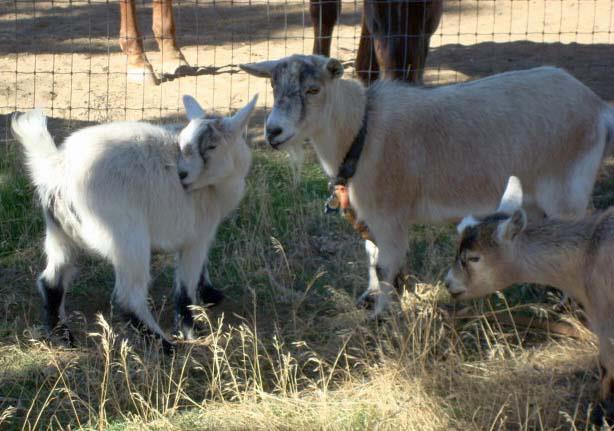
With Breeze (white) and Poppy (caramel)

Sunday, January 12, 2025

I acquired an adorable trio of African Dwarf Goats in 2010: the mama (Sego Lily) and her twins (Breeze and Poppy). Sego Lily had originally been adopted from a herd environment, and by 2010, her real age was only an estimate; her babies were months old.

The trio was sweetly bonded and inseparable. They participated in official parades and often strolled with me on neighborhood streets, leashed, alertly cautious, and keenly aware.

Mama passed away about five years ago when I was guessing her age at fifteen. Little Poppy passed away a year ago at age fourteen. And yesterday, I lost Breeze; she was fifteen.

That morning, while outside and feeding my animals before leaving for work, I discovered Breeze lying down and apparently unable to rise onto her feet. I tried lifting her but hadn’t enough strength. Breeze’s legs were stiff and unmanageable, and she might have suffered a stroke sometime in the night or earlier that morning.

Breeze passed away before the emergency veterinarian could arrive at my place. My workplace is painfully short of workers; I felt needed and went to work, where I arranged to meet an emergency veterinarian later at my place. Meanwhile, my kind neighbors watched over Breeze and hours later let me know she had passed. Later, a concerned co-worker followed me home and helped with her remains.

RIP, my Breezey.

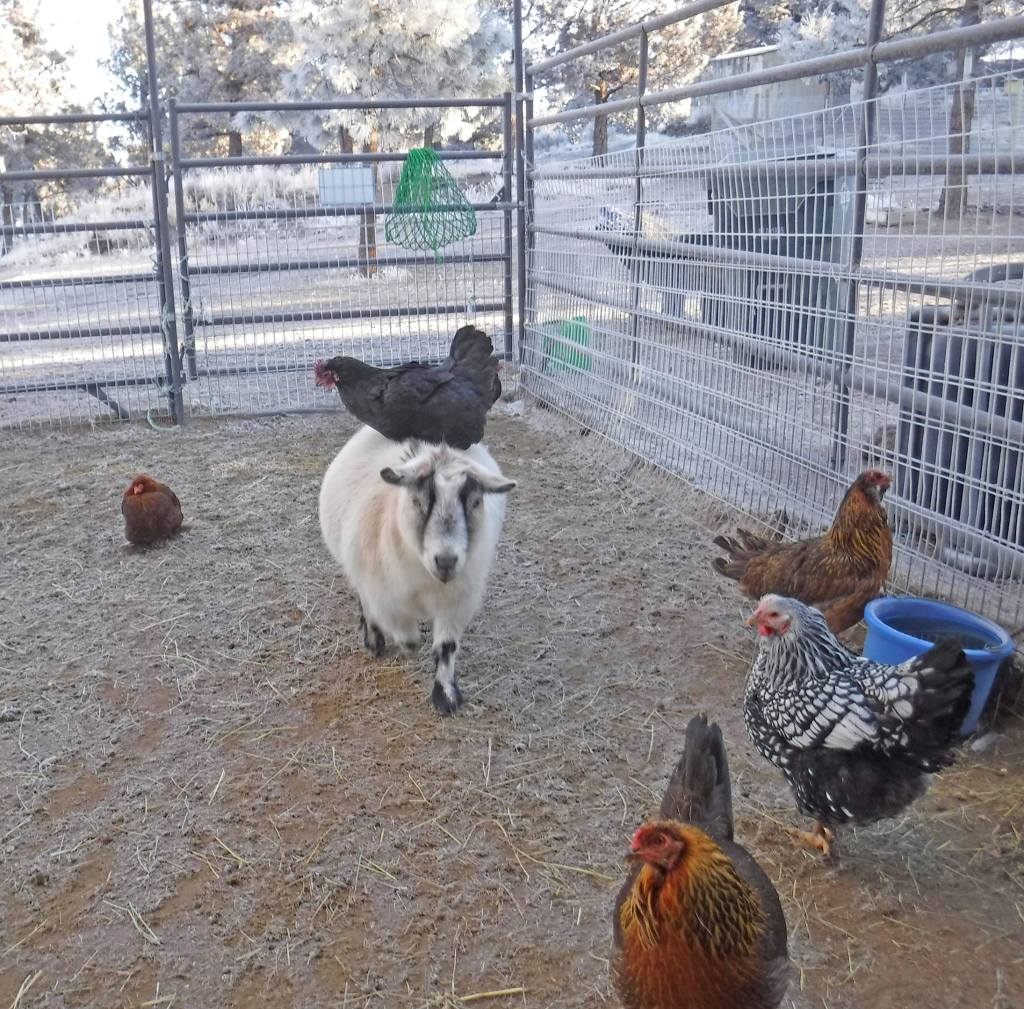
Breeze and hitchhiker

Remembering those three sweeties this morning, I’m sad with an empty feeling.

Dear Friends: Cute, fun, and stubbornly determined when wanting something. Diana

Finding Currents

Thursday, May 30, 2024

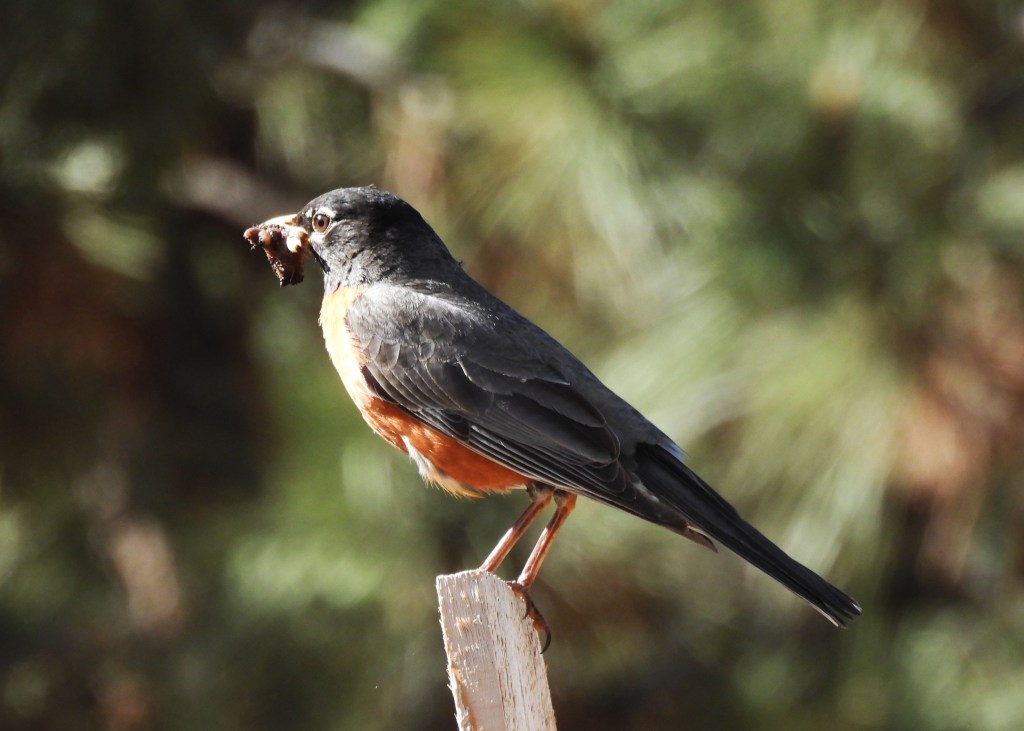
Daddy Robin perched on a post and watching me. The handsome fellow already had me following several careful, watchful “stops.” He was obscuring the destination for that tasty morsel in his beak. I had already been in the barn and seen Mama Bird sitting on unhatched eggs. The nest is solid and will keep their babies safe. I hope to be unobtrusive and also observe their family and activities. Both parents know my presence, and their staying put is a tickle.

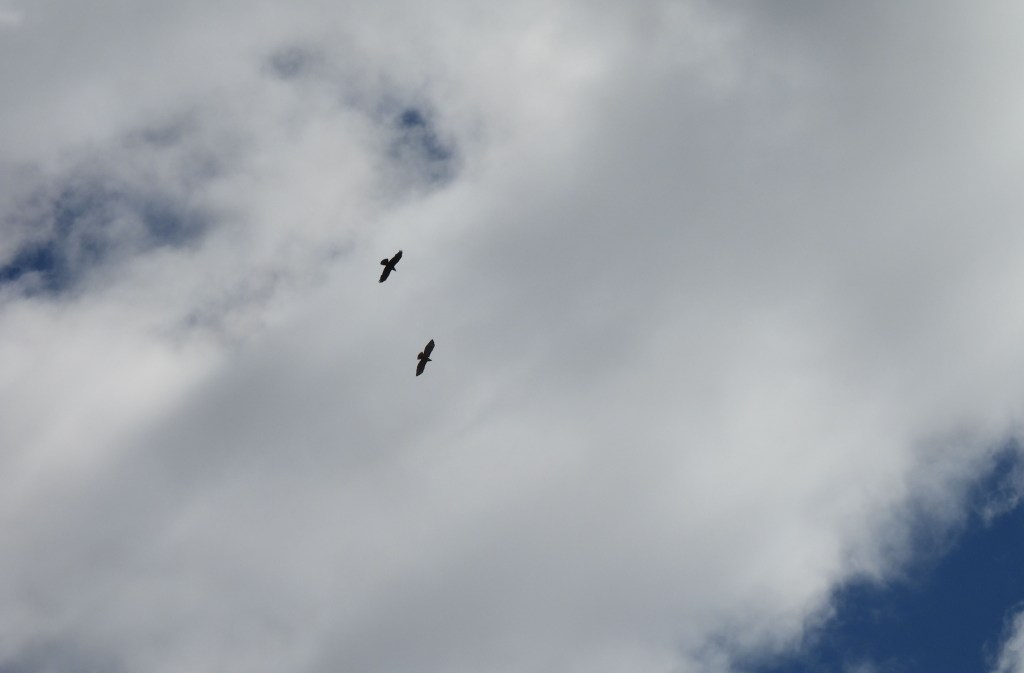
Soon after snapping the header photo, I glanced upward, spotting another gift: a pair of Ravens utilizing air currents to soar and were highly visible under a white cloud. Capturing Ravens in their soaring activities has been one of my dreams. Here’s my earliest sighting.

I watched the pair using currents to gain altitude and then glide downward until they found another updraft. Occasionally, they came low before rising again. Finally, they were low enough and also beneath bright clouds, and my camera could capture more details.

Ravens use various air currents to conserve energy and stay aloft for long periods, scanning for food or traveling long distances during migration. I’ve observed Raven adults in the sky and training juveniles to use air currents. This seems too early in the season for a parent to be training a juvenile, plus that training usually is a group outing. This pair could have been young adults courting in the sky or playing and having fun.

Ravens don’t actually float on air currents but utilize them to soar. That means they use air currents to rise and gain altitude before gliding downward and finding another updraft. This energy-efficient flight method lets large birds cover vast distances with minimal effort. A group of Ravens in training is a spectacular sighting.

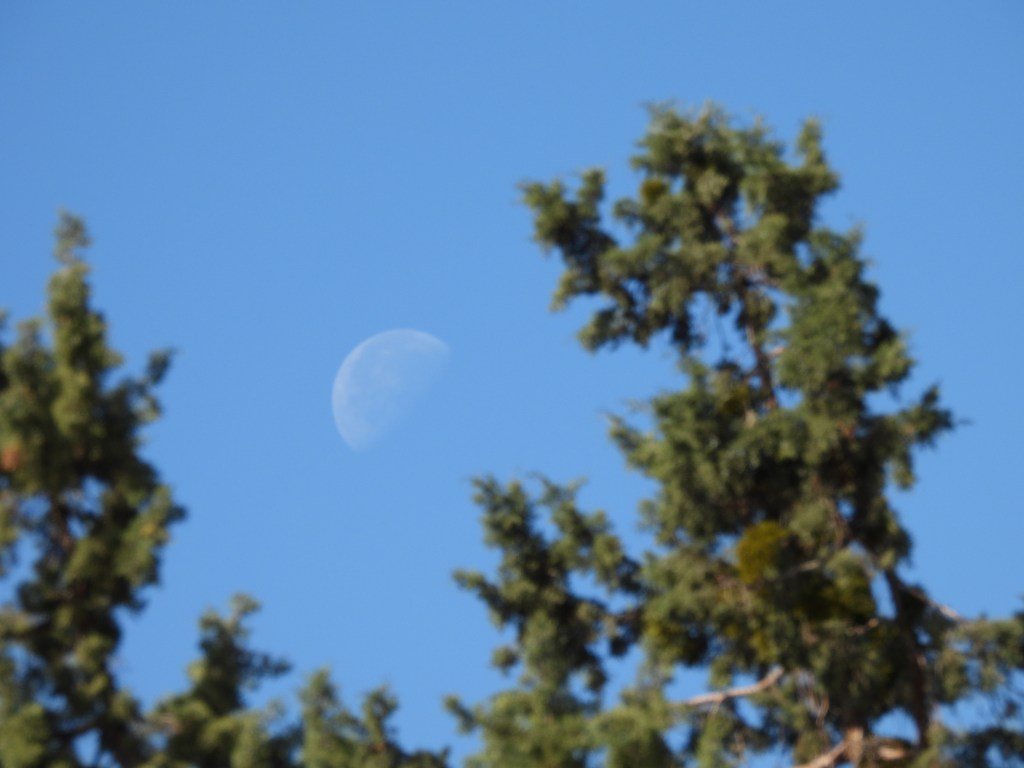
During my sky-spotting, I saw this very dim mid-afternoon moon. Capturing that moon with enough visibility forced me to manually focus my camera. I made the foreground trees a bit fuzzy in order to make the moon as clear as possible. This image encourages me to focus manually more often.

Dear Friends: These are thrilling spring signs; I’m anticipating more. Diana

Out & About

Thursday, April 11, 2024

Yesterday, after work, I hurried to an adjoining city to pick up my prepared income tax forms. Then, I rushed home to pick up my Rottie-X, Chase. He had spent the day waiting for me in a standalone, escape-proof kennel. I intended to take him to Costco, have him stay in the Jeep until I returned from shopping, and learn not to leap from an open cargo that’s being loaded. That was asking quite a bit from this young dog; he rarely goes anywhere with me.

Chase has turned two years old. He has spent his life mostly on my property and sometimes runs freely in a BLM with my other dogs. That’s all good, but he needs more outer-world experience teaching him to be comfortable while out, especially with other humans.

I left him in the Jeep and entered Costco with a quick list, and unsurprisingly, my rapid shopping plan failed. I spent an hour in the store before pushing my loaded cart to the Jeep. There, I didn’t see Chase waiting, and looking inside, still not seeing him, I panicked. How could he have escaped!

Suddenly, a woman beside me smiled and said, “Hello.” Assuming she was a Costco employee, I said, “My dog somehow got out of this car!” Suddenly, turning and seeing Chase in the Jeep, I understood he’d been on the front seat’s floor.

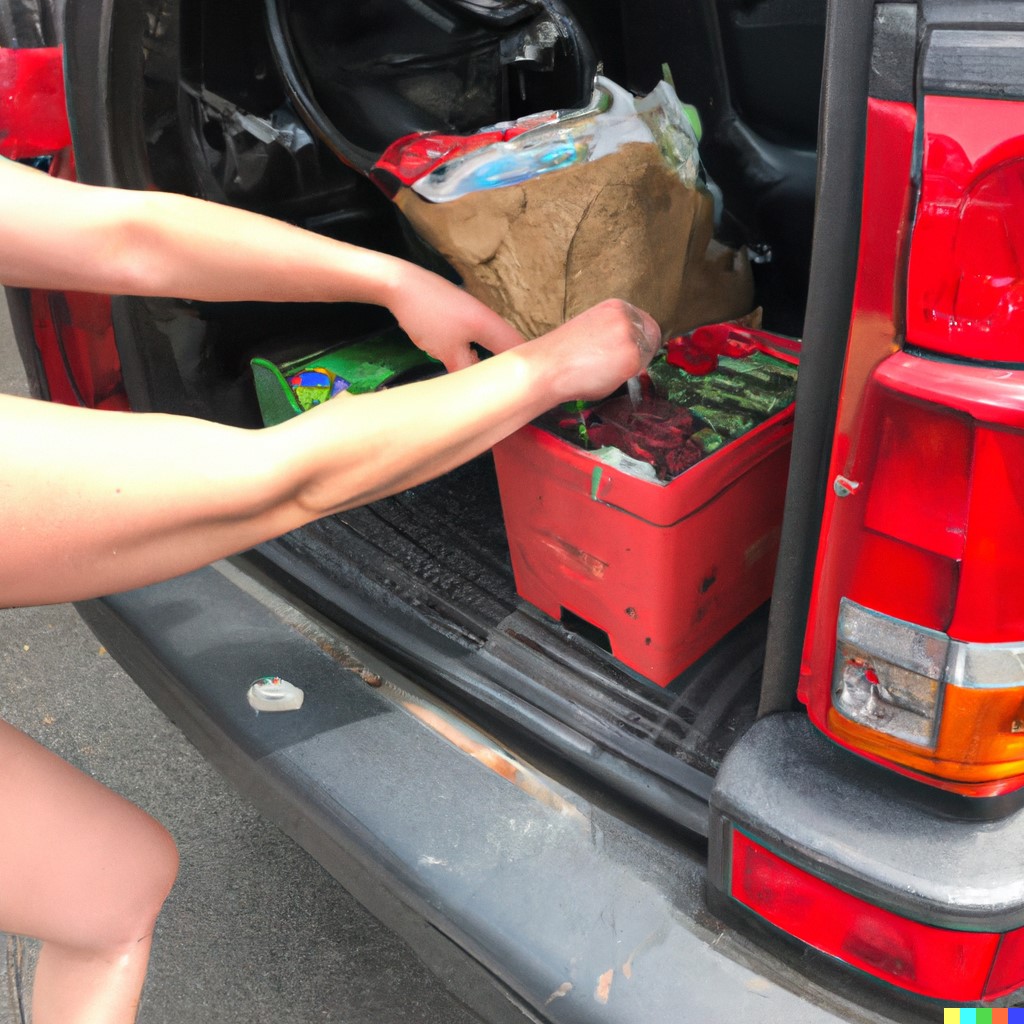
The woman said, “I came to help with unloading your cart,” and gestured, “all those look heavy.” I shook my head, “Thanks, but I can do it.” She ignored me, reached for the heaviest box, and said, “Open the cargo.” I did that and she continued, lifting and loading faster than I could help.

Meanwhile, Chase stayed in the cargo, not threatening her but trembling mightily in the unusual situation. All did go well, and to his credit, he didn’t attempt to escape. Finally, on finishing, the woman turned to me, “Will you have help with unloading?” and watched doubtfully as I said, “I’ll be okay doing that.”

Then, she said, “My mom is ninety-three years old and still insists on doing things herself. I saw you with that loaded cart and just wanted to help.” I nodded, really having welcomed her act of kindness, and now thanked her.

At home, I unloaded and thought about her and also about a young man who had been shopping inside Costco. He saw me starting to wrestle with a bag of dog kibble, came to my rescue, lifted the bag easily, and placed it perfectly on my cart.

Two good samaritans. I felt appreciated and old; one forgets one is old. That’s another topic, for someday.

And my Chase, too. That good boy waited, tolerated a stranger’s pushy presence, and didn’t try to jump from an open cargo. Having him with me is making this pup more special. If only–if only, he’d outgrow his high leaping and quit doing his deep digging.

Dear Friends: A planned day with pleasant surprises and good outcomes. Diana

A Moon Mood

Wednesday, March 13, 2024

Yesterday evening, after driving up my driveway and reaching its top, I saw the moon, a mere sliver of its fullest self and crystal clear among many dark clouds. I felt instantly attracted to that sliver, sensed it as free-floating, and wanted a photo. I hurried into the house to become organized, get equipped with a camera, and hurry outside again. By then, the sky was full of dark clouds obscuring the light sliver.

I walked around while looking skyward to glimpse even a tiny bit of light. It was a no-dice situation that denied any possible hint of a moon presence. I couldn’t just give up, and so wondered why I’d been compellingly drawn to that sliver.

As a personal baseline, I love full moons. From earliest human history, they have affected all beings’ senses of emotion, intuition, and growth. Humans have latched onto the times of full moons to conduct rituals, release energies, and renew beginnings. The sliver moons might influence humans more subtly. Last night’s sliver seemed to encourage me toward introspection, internal growth, and maybe seed-planting for future endeavors.

There’s evidence that the moon’s phases influence all living beings. In humans, full moon periods align with our physical activities and emotions—external and internal. We are also influenced by slivers, constantly changing by waxing and waning.

Waxing crescent moons (sliver growing) encourage beings into modes of excitement and anticipation; waning crescent moons (sliver shrinking) encourage beings into modes of internalization and reflection.

I’ll add that any perceived powers of moon phases aren’t scientific. There are common perceptions (including mine) that draw from long-time observations of cultures and traditions.

Dear Friends: Today’s header photo is from the internet. Diana