Doggone Dog!

Monday, October 21, 2024

I’ll finally have these couple of days off from work. The department store where I work part-time is short on employees, so I’ve worked alone in the Jewelry Department. The department has been busy with increasing Christmas shoppers, and I’ve worked long hours.

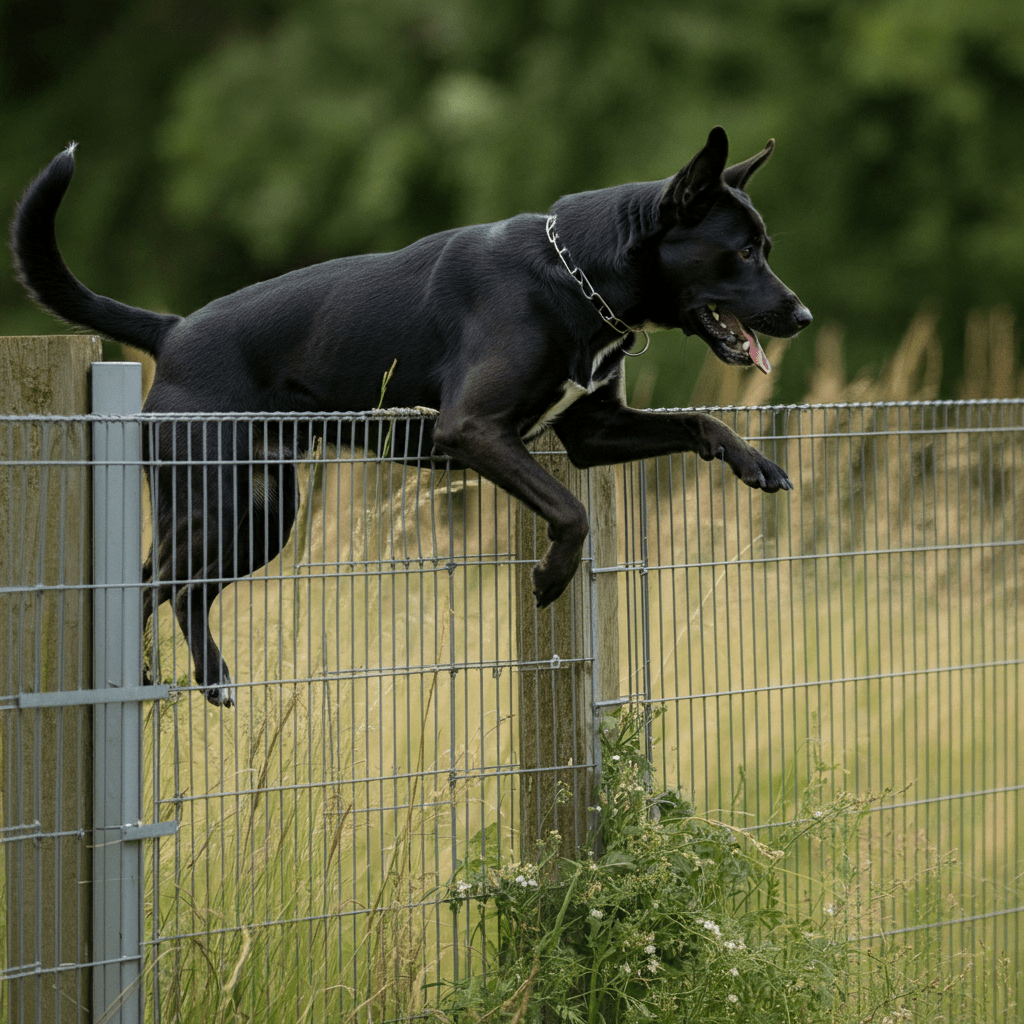
Last evening, after coming home dog-tired, I was out feeding horses when my dog Chase appeared unexpectedly. He had escaped the yard but not by digging because little Mitzvah would have slid out, too. Chase must have discovered a vulnerable spot in my mostly eight-foot-high fence.

I returned him to the fenced dog area and watched him dash toward the dark side before reappearing beside me, free. Although the evening was early, darkness prevented locating and repairing the weak spot.

Later, I let the dogs out briefly in the middle of night. When Chase didn’t re-enter the house with the others, I opened the garage door and found him waiting to enter. Early this morning, I let the dogs out again. Soon, Chase was missing–this time, not waiting at the garage door nor responding to my calls, and it was raining.

Chase showed up at the garage about a half-hour later. Right now, he’s sleeping; he won’t go outside again until I have located and addressed his escape spot.

Chase is two and one-half years old and started living with me when he was eight weeks old. My property includes a half-acre that’s fenced for my dogs. My others are happy, but Chase is another story. He’s always digging, jumping, and seeking ways to achieve freedom, not because he’s unhappy or wants to leave, but simply because it is “who he is.”

I constantly worry about keeping him safe.

Over the years, I’ve lived with many dogs, some bigger than Chase’s fifty pounds. None ever behaved in manners as strong, smart, focused, and determined as Chase. He wants to be my constant companion, 24/7, which is impossible. Luckily, he’s still safe, and I hope he will age out of escaping behaviors.

Dear Friends: Just another “Chase Story” and unlikely the last one. Diana

Eventing

Saturday, September 28, 2024

In today’s header photo, my dinner partner Adrain captures me and my dinner at the restaurant, Spork. This is a mirror image of the one I took that evening of him and his meal. I used my photo (a little blurry and fun) as yesterday’s blog header.

Adrain’s photos are good. He loves photographing with his phone and sharing images. Today, I’m using his photos as reminders of our enjoyable event.

The restaurant was fun. Our event is one I’ll remember more after having become lost on the westside while trying to find Spork; Adrain came to my rescue.

I’m a carb counter and didn’t recognize anything related to my preferences on Spork’s Asian-style menu, so I ordered what Adrain loves: crispy chicken on rice and salad. He’s right, a tasty dish.

Today’s header photo beer!

Writing about my dinner with Adrain has reminded me of “My Dinner With Andre,” a popular 1981 movie directed by Louis Malle. After the experience of “Spork,” I could write more about atmosphere and conversation while dining out with a friend. Now, I discover myself wishing to recall that old movie better and will try to find and watch it again.

Dear Friends: Each experience is an event. Diana

Musca domestica

Sunday, July 14, 2024

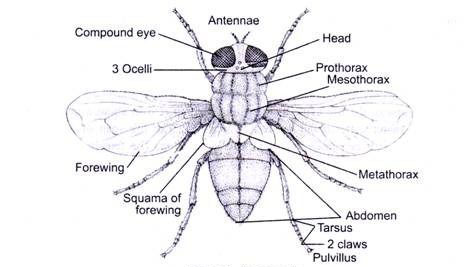
I am off from work today and tomorrow. This scorching weather will keep me battling newly popping hoards of houseflies. Yesterday, I killed many, for the flies were sluggish. My foot landed mightily on those standing motionless on the floor.

I wondered why this area’s searing heat activates unusually high numbers of these insects. A little research teaches that flies are cold-blooded, meaning they rely on external temperatures to regulate their body temperature. The hot weather increases their metabolic rate, making them more active and stimulated to find food and reproduce.

I’ll be racing around to stay ahead of the flies. That means cleaning carefully and ditching any food waste quickly. I must also make a few trips to the Dump, which I’ve avoided for weeks. That’s likely a clue as to why numerous flies are inside my house.

So, what’s a housefly? Their exact genesis (Musca domestic) isn’t definitively known. A common view is that they originated in the early Cenozoic Era, roughly 66 million years ago, and likely evolved in the Middle East.

Houseflies and humans have developed a close commensal relationship, meaning they benefit from our presence without generally harming us. Flies probably co-migrated with humans, and that spread them across the globe. Flys have adapted to diverse environments, becoming some of Earth’s most widespread insects.

Dear Friends: They’re ubiquitous in our lives, for better or worse. Diana

A “Strawberry” Team

In waiting with the alpenglow

Friday, June 21, 2024

Yesterday was the Summer Solstice, the year’s longest day when twenty-four hours split to share equally the daylight and darkness. It marks the end of slowly increasing daylight and starts us anticipating a dark season’s gradual arrival.

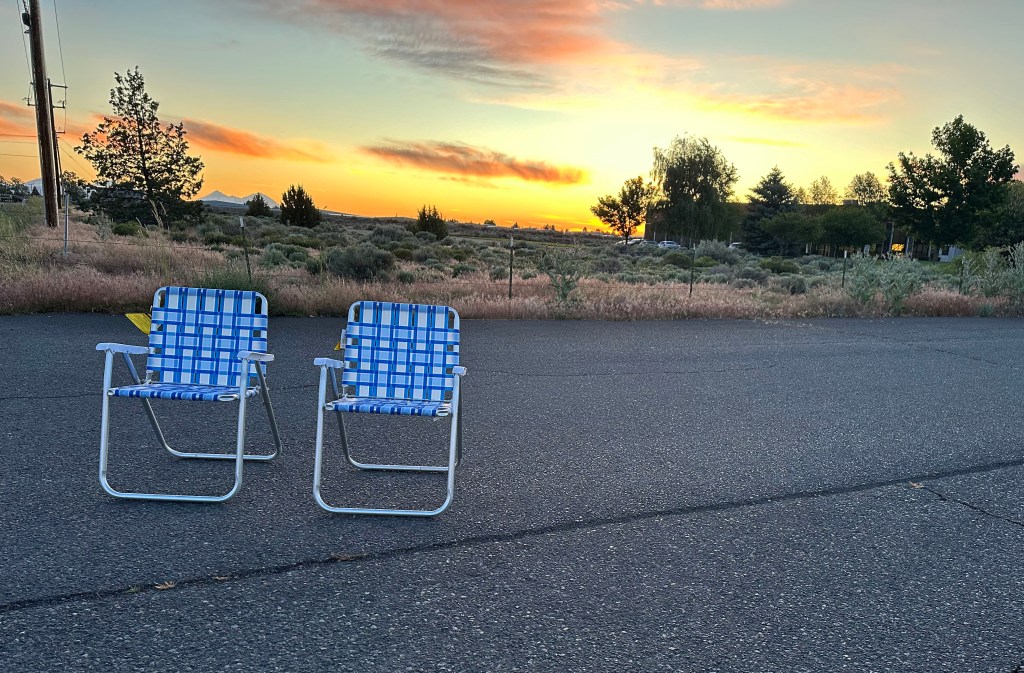
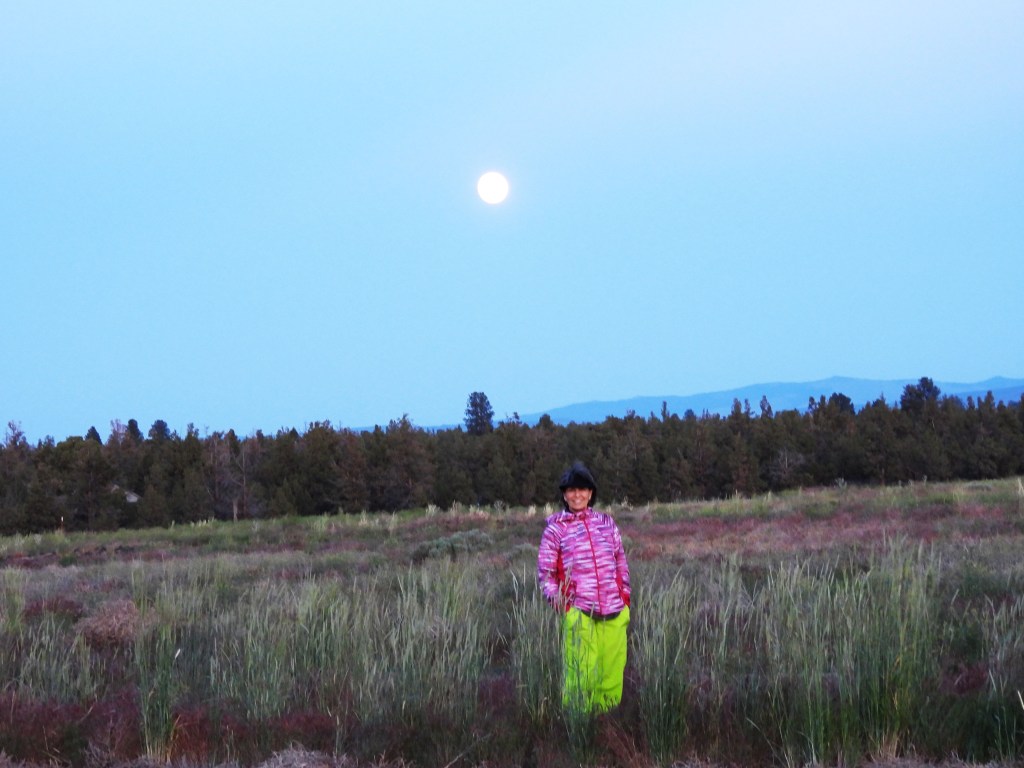
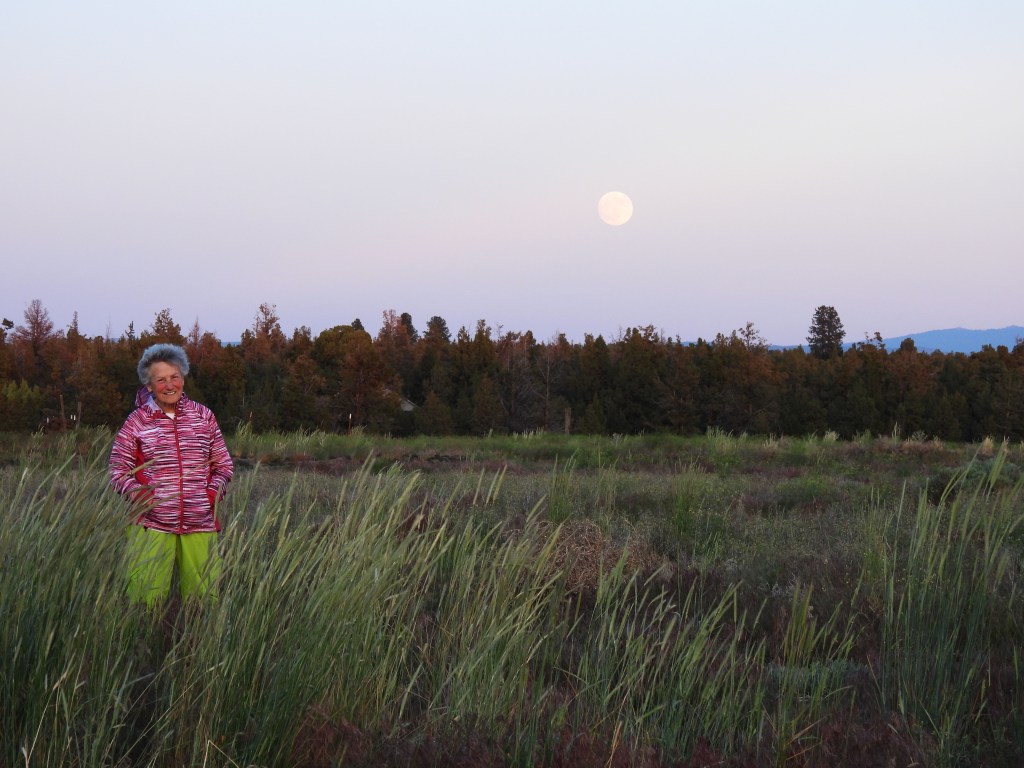
The evening light lingered and illuminated us Moon-Chasers. We donned our uniforms, took a camera, and headed to an appropriate place near the airport on the city’s east side. We intended to capture this month’s almost full “Strawberry” Moon. We were going for that “nearly full” moon because commitments prevented us from chasing June’s fullest moon, happening tonight.

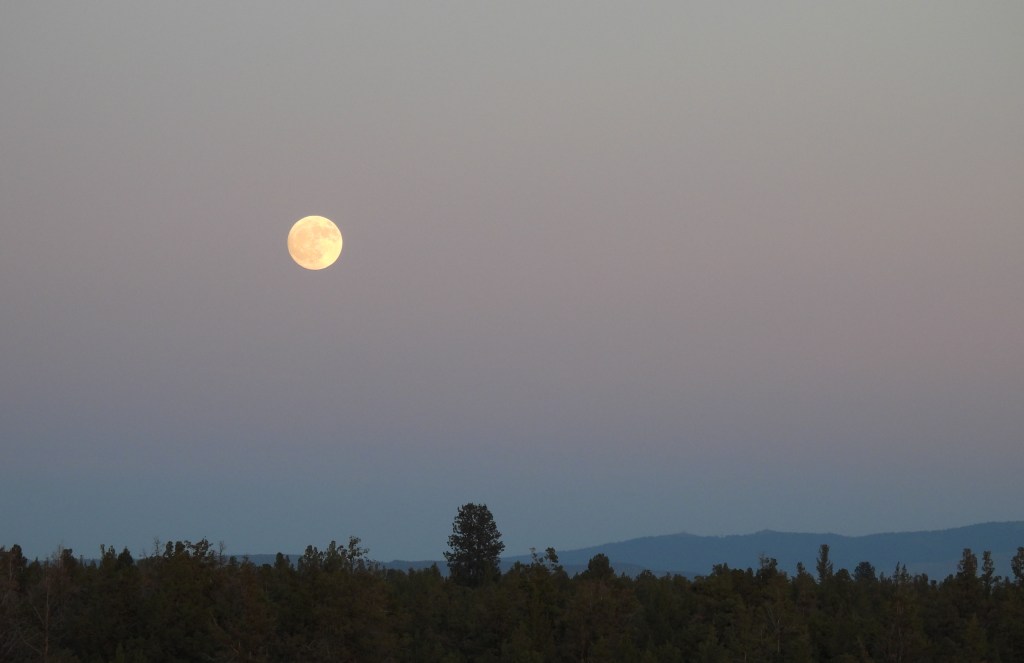
In lots of lingering daylight, we watched the rising moon. At first, it appeared very dimly, hovering almost invisibly over the tall trees and ridge of peaks that were our horizon. The barely visible Strawberry made us unsure we could capture it adequately, but in elevating the moon became clearer and eventually very beautiful.

Photos of that moon capture the eastern countryside’s dark sky. The darkness was a significant contrast to a lighter sky west and toward the city.

Susie and I did lots of moon and airspace shooting. We quickly recognized that we were in an area that invited playing, and we did that, too.

We love our Team Uniform!

Dear Friends: Ode to an interlude of beauty, fun, and friendship. Diana

Finding Currents

Thursday, May 30, 2024

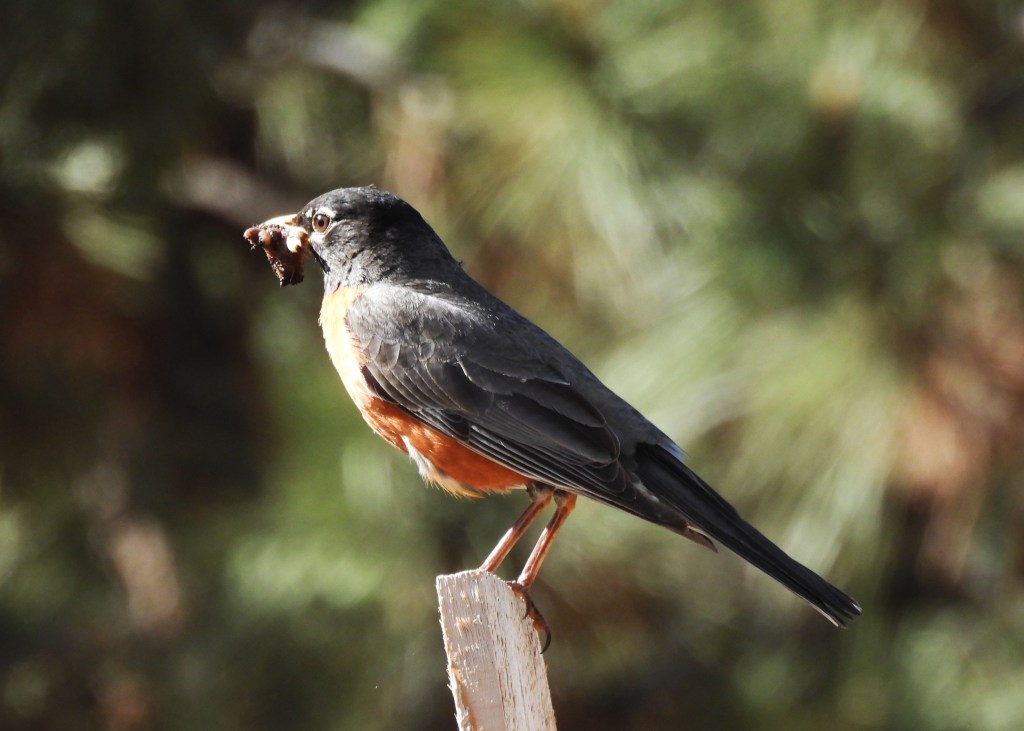
Daddy Robin perched on a post and watching me. The handsome fellow already had me following several careful, watchful “stops.” He was obscuring the destination for that tasty morsel in his beak. I had already been in the barn and seen Mama Bird sitting on unhatched eggs. The nest is solid and will keep their babies safe. I hope to be unobtrusive and also observe their family and activities. Both parents know my presence, and their staying put is a tickle.

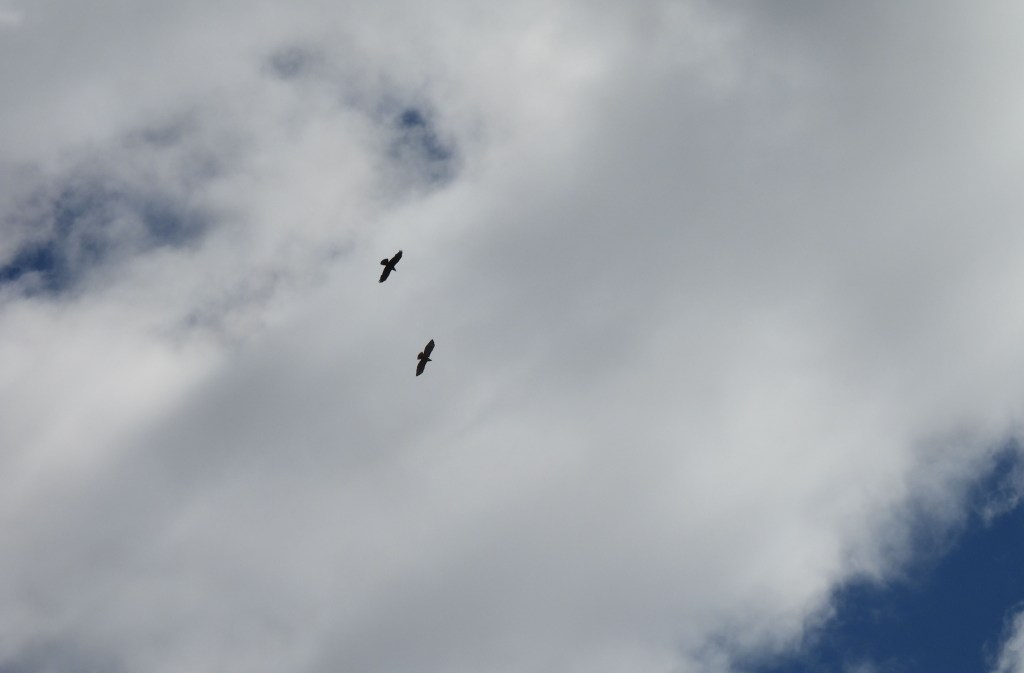
Soon after snapping the header photo, I glanced upward, spotting another gift: a pair of Ravens utilizing air currents to soar and were highly visible under a white cloud. Capturing Ravens in their soaring activities has been one of my dreams. Here’s my earliest sighting.

I watched the pair using currents to gain altitude and then glide downward until they found another updraft. Occasionally, they came low before rising again. Finally, they were low enough and also beneath bright clouds, and my camera could capture more details.

Ravens use various air currents to conserve energy and stay aloft for long periods, scanning for food or traveling long distances during migration. I’ve observed Raven adults in the sky and training juveniles to use air currents. This seems too early in the season for a parent to be training a juvenile, plus that training usually is a group outing. This pair could have been young adults courting in the sky or playing and having fun.

Ravens don’t actually float on air currents but utilize them to soar. That means they use air currents to rise and gain altitude before gliding downward and finding another updraft. This energy-efficient flight method lets large birds cover vast distances with minimal effort. A group of Ravens in training is a spectacular sighting.

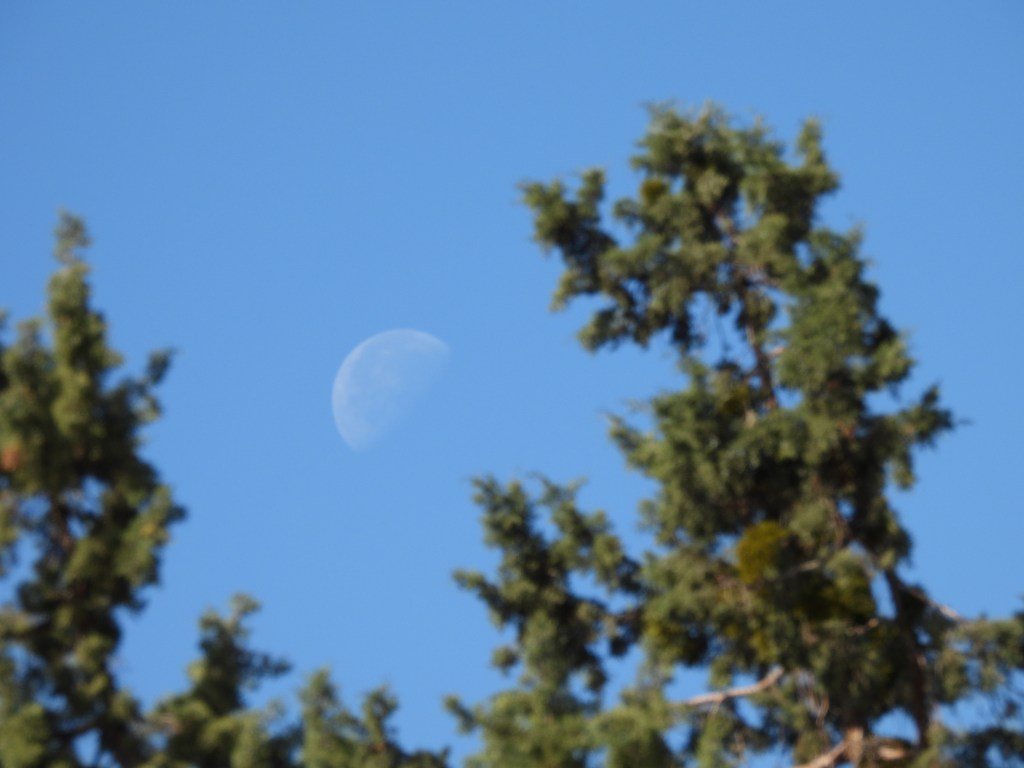
During my sky-spotting, I saw this very dim mid-afternoon moon. Capturing that moon with enough visibility forced me to manually focus my camera. I made the foreground trees a bit fuzzy in order to make the moon as clear as possible. This image encourages me to focus manually more often.

Dear Friends: These are thrilling spring signs; I’m anticipating more. Diana

Cover Ups

Friday, March 29, 2024

I love my duvet!

So, what’s a duvet? What’s a duvet cover? I started wondering while working part-time as a clerk in the store’s home department. Many customers asked if our shelves carried duvets and duvet covers. To learn, I went around examining packages, and found many labeled “Duvet,” but none “Duvet Cover.” Over time when customers asked about duvet covers, I’d say, “We have duvets but no duvet covers.” A typical response was, “I’m not surprised because I keep looking for duvet covers, and can’t find them.”

I knew little about duvets and duvet covers other than the package labels. I was barely interested in their relationship to what I know as a “comforter.” But early one morning, a questioner asked about the difference between a duvet and a duvet cover. I guessed at an answer, got away with it, and decided to become educated.

I went online with questions, and the answers aligned somewhat with my guessing but better described the differences. A duvet is a large blanket with sewn inserts for padding and can have interchangeable covers; a comforter, however, is a single unit. Soon after I learned this, an arriving customer asked the difference between a duvet and a comforter. I waxed eloquently!

I started thinking of getting a duvet for myself. My old feather-filled comforter never gets used because its feathers squirrel around and bunch in various corners, leaving me covered by an empty double sheet. A duvet with sewn inserts could be a satisfying alternative.

I ordered a duvet, used it a time or two, and then ordered a duvet cover. Now, after weeks of sleeping under my duvet, I fully admit to loving it. During the nightly “brief awake moments,” I feel very protected, and in a little tunnel, safe and warm.

Dear Friends: Now, I’m a super explainer and seller of duvets and covers. Diana

Gerald Re-Do

Monday, March 18, 2024

My puppy, Chase, is turning two years old and is still a handful. I adopted the then adorable eight-week-old in a whimsical moment that, on reflection, was more like craziness. After a few first weeks of purely cute ‘n cuddly, Chase began to evolve into what became a nearly unending handful.

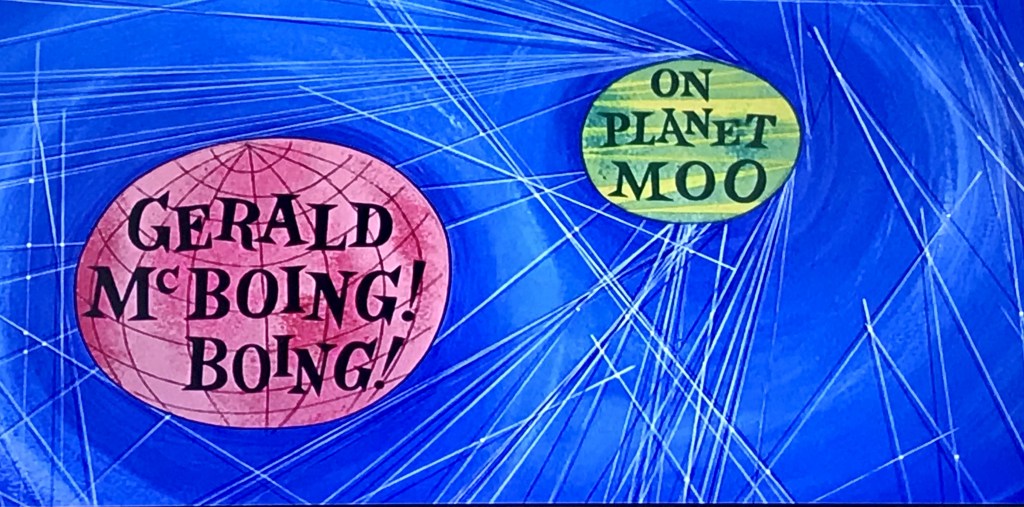
He soon started to Boing (remember Gerald?), easily making high leaps that hoisted him upward and onto any fencing. There, his toes found grips, and Chase simply climbed and escaped. I spent many weeks adjusting my six-foot fence into anti-escape corralling.

The ever-growing Chase (Rottweiler/Shephard mix) became heavier, remained very muscular, and continued his boinging. So far, my corralling has reduced his successes. Once foiled, Chase turned to digging. With the high energy and determination letting him leap, Chase up-earths spots throughout a fenced half-acre. I cautiously tread there to avoid holes.

These days, Chase escapes through holes under the fencing. In sudden freedoms, the one place Chase knows to go is to our neighbor’s. There, so far, and luckily, Frank leashes and brings Chase home. After each escape, I haul as many rocks and heavy junk as possible to set alongside the fence, anti-escaping material.

In the past couple of months, Chase has had to cope with frozen earth, slowing his digging. Now warmer days make me start looking again for what he’ll do next.

As he approached turning a year old, I seriously planned to rehome Chase. He seemed very adoptable–was lovely in temperament, super-smart, and a devoted buddy. Interrupting my intention was knowing the great efforts needed to contain him. I doubted others would have enough patience and resources to ensure his safety.

So, he’s still here, and I’m more hopeful. FB postings and my readings in general teach that there’s a “magic time.” It’s when a dog turns three years old and settles, finally, into maturity. I keep reminding myself that Chase’s maturity is only one year away. If I remain patient, all signs point to him being a perfect companion by then.

Dear Friends: He’s an anomaly; otherwise, none of us would do any puppy-raising. Diana

What’s That!

Saturday, March 16, 2024

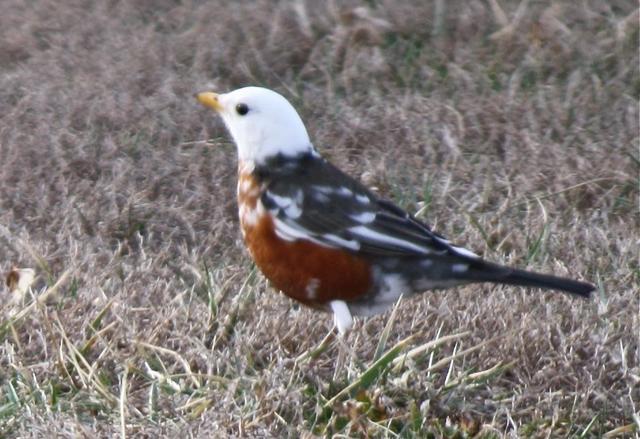
The other day, I spotted a partially albino Robin standing quietly on the ground near a fat Robin I’d seen the previous day and had paused, wondering why that Robin was so fat. When Fat Robin spotted me on this day, it didn’t fly but started hopping away. To my surprise and curiosity, the albino immediately followed the bigger bird, tenaciously. The two hopped away in ever-larger curves into the distance. Maybe that albino was a fledgling, still somewhat dependent on its mom or pop.

I love birds and enjoy watching Robins, which I consider the “Border Collies of birds,” stalking and rounding up worms. Thousands of Robins thrive here annually, with more in the summertime and fewer in the wintertime. I’ve never seen an albino Robin before.

This year, to my surprise, area bird photographers had mentioned albino Robins in my FB feed and even posted a photo or two. So, fortunately, I was slightly informed, but nonetheless, a bit shocked to see the albino Robin.

Since then, I have waited, hopefully, for a reappearance of the fat bird and/or its companion, but so far, no dice. That instant in time confirmed my recent learning, that it’s true. Albino Robins do exist, and are active in this area, at least for now.

Some research informs me that an albino’s unusual coloration is due to a lack of pigments. Ornithologists call the albino condition “leucistic” and say the key, most lacking pigment is melanin.

Dear Friends: We might think we know it all until we learn (again!) that we don’t. Diana

A Moon Mood

Wednesday, March 13, 2024

Yesterday evening, after driving up my driveway and reaching its top, I saw the moon, a mere sliver of its fullest self and crystal clear among many dark clouds. I felt instantly attracted to that sliver, sensed it as free-floating, and wanted a photo. I hurried into the house to become organized, get equipped with a camera, and hurry outside again. By then, the sky was full of dark clouds obscuring the light sliver.

I walked around while looking skyward to glimpse even a tiny bit of light. It was a no-dice situation that denied any possible hint of a moon presence. I couldn’t just give up, and so wondered why I’d been compellingly drawn to that sliver.

As a personal baseline, I love full moons. From earliest human history, they have affected all beings’ senses of emotion, intuition, and growth. Humans have latched onto the times of full moons to conduct rituals, release energies, and renew beginnings. The sliver moons might influence humans more subtly. Last night’s sliver seemed to encourage me toward introspection, internal growth, and maybe seed-planting for future endeavors.

There’s evidence that the moon’s phases influence all living beings. In humans, full moon periods align with our physical activities and emotions—external and internal. We are also influenced by slivers, constantly changing by waxing and waning.

Waxing crescent moons (sliver growing) encourage beings into modes of excitement and anticipation; waning crescent moons (sliver shrinking) encourage beings into modes of internalization and reflection.

I’ll add that any perceived powers of moon phases aren’t scientific. There are common perceptions (including mine) that draw from long-time observations of cultures and traditions.

Dear Friends: Today’s header photo is from the internet. Diana

Peachy Pie

Thursday, March 07, 2024

This morning, while I brewed coffee, an old song entered my mind and got me singing aloud. Now, hours later, I can’t recall that song, but I remember delight upon hearing my cockatoo, Peaches, join in and sing along. I love it when Peaches sings and makes sweet sounds.

It’s very different from Peaches’ typical screams, which sometimes continue for what feels like forever. He’s an excellent watchbird and warns when anything different appears beyond the windows he’s parked beside. He becomes alerted to happenings not in his vision by noticing differences in my dogs’ sounds. If the dogs are barking in alarm (it’s always evident), Peaches joins and barks along with them. Yep, Mr. Peaches is a fine watchbird.

After years of living with this boy, I’m more or less accustomed to his noisiness. I’m used to his noisy gusto greetings to the changing lights in dawnings and evenings. I usually ignore his screamings, but not when trying to concentrate on something totally non-Peaches. If his screams get to me, there’s no use telling him, “Quit.” Peaches is his own being; he does his thing.

His singing is something else—almost lyrical and always smooth; his sounds could accompany some lyrics. I can’t recognize the songs, but clearly, Peaches is copying “his humans” that preceded me. Cockatoos are natural copiers.

This makes me wonder what he’s learned and copied during our years together. Maybe barking like a dog is new, and maybe he has new sounds from our singing duets. I ought to mention that Peaches has great rhythm; he dances to music like a bird on fire. Mr. Firebird!

Dear Friends: Bird intelligence encourages our admiration of the entire species. Diana