On Thanksgiving: How Native Societies Shaped Early America

Sunday, November 21, 2025

I was enjoying an enlightening conversation with Ben—an American-history buff—about the earliest years of this country when I found myself rethinking those first decades after the Mayflower and the later ships that touched the Eastern shores.

I pictured the newcomers still carrying their former world with them: royal traditions, rigid hierarchies, fixed identities, and a deep sense of what “proper society” ought to look like. These were people who had spent their entire lives under unquestioned structures—kings, church authorities, strict class systems, inherited roles. And suddenly, they came face-to-face with communities that had survived for thousands of years under entirely different rules.

The longer story of those times is complex and brutal. The Pilgrims walked into a continent already alive with civilizations—America’s Indigenous peoples. For Native nations, the arrival of Europeans proved catastrophic. Colonists enslaved Native people, sometimes entire tribes, and brought diseases such as typhus, chickenpox, and cholera to populations with no natural immunity. Those diseases killed an estimated 95% of Indigenous Americans, a tragedy later called “the Great Dying.”

Violence, displacement, and disease devastated local tribes. Ultimately, to preserve what remained, the Wampanoag people signed the 1621 Peace Treaty—the first treaty of its kind between Native people and European settlers.

The Wampanoags, severely weakened, were in danger of being overtaken by the neighboring Narragansett. For them, the treaty offered a fragile but necessary exchange: survival skills and local knowledge shared with the settlers in return for protection by the settlers’ firearms. It invites serious reflection—America’s Native societies didn’t simply encounter the Europeans; they changed them.

Talking with Ben made me realize how little I once understood about early American history, especially about the profound influence Native peoples had on those first settlers. A stirring realization this week, as another Thanksgiving approaches.

Consider leadership: settlers discovered people who chose leaders based on ability, not lineage. Some Native women held property and political authority, even clan leadership. Many tribes made decisions through persuasion and consensus rather than decree.

The impact on the newcomers must have been enormous. Europeans accustomed to hierarchy and obedience no doubt felt confusion, maybe fear—but also, perhaps, a quiet stirring of possibility.

Some early colonists wrote about what they were encountering: families living with autonomy and mutual respect; individuals moving with confidence rather than deference; communities unburdened by fear of displeasing a nobleman or landlord.

For the settlers, the very idea of societies organized around cooperation instead of obedience must have been profoundly disorienting. For Native people, though, freedom wasn’t an abstract ideal—it was simply how life worked.

Humans have learned, since time immemorial, that whatever we live around every day becomes quietly contagious. America’s famous “independent spirit” did not arise solely from Enlightenment philosophy. Many settlers learned that spirit from the people already here—self-governing, communal, adaptive, and deeply connected to the land beneath them.

Imagine those early Europeans beginning to sense that life could be less stratified, less deferential, more grounded in personal choice. More humane. They might not have dared articulate such ideas openly—colonial life was far too rigid for that—but the influence of Native societies undoubtedly shaped their thinking.

There is a line—sometimes thin, but always real—between exposure and transformation. Across generations, “different ways of being” have quietly rearranged human assumptions. The settlers didn’t just transform this continent; the continent—and its original inhabitants—transformed them.

This history reveals one of America’s oldest and most overlooked truths:

From the very beginning, newcomers were influenced by the people already living here—learning new ways of governing, of owning and sharing land, of shaping community life, and discovering the many forms human freedom can take.

Sometimes, the deepest influences are the ones we inherit without ever realizing it.

—Diana

Zelenskyy

Sunday, March 02, 2025

Volodymyr Zelenskyy’s rise from actor-comedian to wartime president has been an incredible journey that testifies to his extraordinary adaptability, resilience, and moral clarity. Few modern leaders have been tested as brutally as he has, and even fewer have risen “to the occasion” with equally unwavering resolve.

Russia launched its full-scale invasion of Ukraine in February 2022. Many assumed the Kyiv Government would collapse under the weight of that major military aggression. But, Zelenskkyy didn’t. Standing firm and refusing opportunities to flee, he insisted, “I need ammunition, not a ride.”

Immediately, Zelenskyy transformed himself from a political newcomer into a global symbol of courage. He has proved daily that True Leadership isn’t only about experience. It’s also about conviction, integrity, and an unshakable sense of mission to one’s people.

Zelenskyy is more than brave: he has demonstrated exceptional intelligence and strategic acumen. Leading Ukraine’s war effort has revealed him capable of rallying international support, a requirement he clearly understands. He has shown the world that the battle in modern warfare is fought as much in the information sphere as on the battlefield.

When Zelenskyy addresses world leaders, from the U.S. Congress to the European Parliament, it’s like a masterclass in persuasion that strengthens alliances by invoking shared history and democratic ideals. He communicates not with bureaucratic platitudes but with raw emotion and clarity.

Those skills have proved him one of this era’s most effective wartime leaders. We have watched Zelenskyy skillfully navigate the complexities of global politics, secure military and economic aid, and (incredibly) maintain Ukraine’s sovereignty in the face of existential threats.

Last Friday, Zelensky visited the Oval Office and the President. While there, he demonstrated his deep understanding of the media’s influence. He employed precision and confidence to bait the President and the President’s ever-watchful team into revealing more than they intended and, equally, that group’s sheer brutality.

Negotiations to end the war in Ukraine are taking place; however, Zelenskyy hasn’t been allowed to participate in the discussions to end the war in his country. While seated in the Oval Office, Zelenskyy subtly and successfully nudged “key hidden negotiation and decision elements” into the public eye.

Diplomacy isn’t just about closed-door discussions—it’s about shaping the narrative. Zelenskyy’s shaping skills have made it impossible for the world to ignore Ukraine’s plight. He has leveraged the press as a tool and managed to keep the war and Ukraine in our global consciousness.

His communication skills and focus keep forcing nation leaders to reckon with the consequences of inaction. Last Friday’s televised event in the Oval Office emphasized clearly that Ukraine might not match Russia’s military strength, but Ukraine can outmaneuver opponents in the court of public opinion.

Zelenskyy is extra-deeply admirable because he never sought to be a wartime president, yet he embraced that role with an unwavering sense of responsibility. We’ve seen him staying in Kyiv through bombings and blackouts, walking the same streets as his citizens, showing the world that he’s not just the leader of Ukraine—he is “of Ukraine.”

He is a modern hero who represents more than defiance. He represents a hope that democracy and national identity can withstand even the most ruthless adversaries. Zelenskyy’s story is one of remarkable transformation—from an entertainer to a statesman, from an underdog to an historical figure.

Dear Friends: His legacy will endure long after the war has ended. Diana

Partnership

Thursday, January 09, 2024

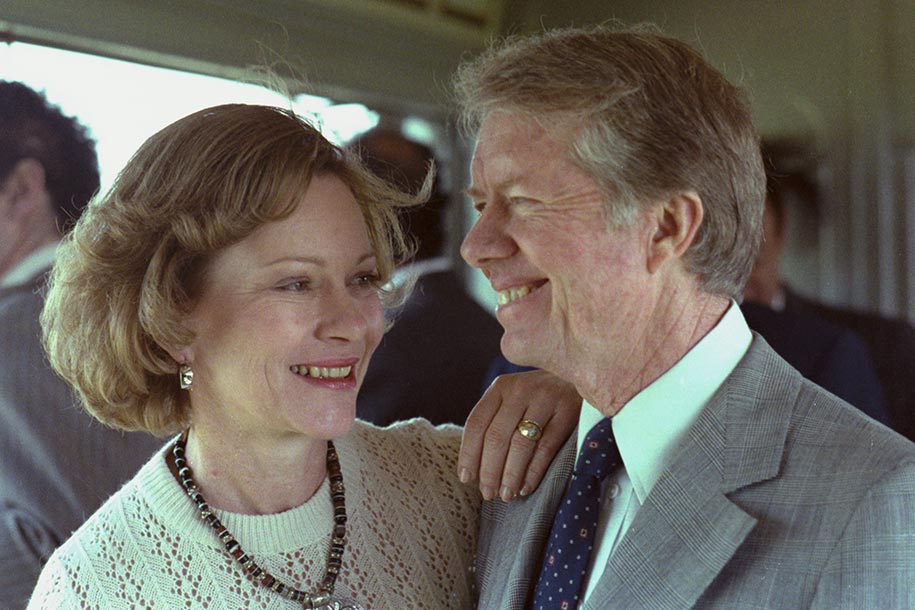
I’ll spend much of this morning watching PBS cover Jimmy Carter’s funeral procession. I’ve always believed Carter and Rosalyn to be outstanding individuals, a consistently highly functioning team. They remained actively involved and productive during and beyond his presidency years.

On PBS, some historians describe their personal relationships with the Carters and offer educated Carter-related historical perspectives. I’ve not heard anything new or surprising about the Carters, but gaining more understanding of their relationship, perspectives, dedication, partnership, and pre- and post-Presidency activities.

Pomp and circumstance events always make me tear up a little. Wondering why, my best guess is that I sense surety relative to all the elements–clothing, steps, sounds, and colors–all representing perfect planning in our imperfect world. These moments in time do touch me deeply.

He outlived Rosalyn by months before turning 100 years old. Carter was determined to stay alive, at least, until he could cast his vote for our next President.

Dear Friends: I intend to learn more about both the Carters and their legacy. Diana

A Nice Man

Monday, December 30, 2024

Today, I am thinking about Jimmy Carter, who became an American President out of the blue. He died yesterday at 100, less than a year after the death of Rosalyn, his spouse, business partner, and advisor for nearly 80 years. Unlike other Presidents, Carter (and Rosalyn) remained in the headlines throughout their long ex-presidency as socially conscious humanitarians and givers to communities.

Carter was a man for all seasons, an artist who wrote books, composed poetry, and created paintings. He also could work with his hands and helped to construct homes for Habitat for Humanity. Rosalyn worked alongside him, and their partnership was trusting.

One historical incident I’d change in a heartbeat (among many others!) would have been for Carter to have full credit for freeing the Iranian hostages. Reagan’s team scooped their release unfairly, and that stained Carter’s significance in freeing the Americans.

Carter’s humanitarianism taught us how greatly and actively he believed in the value of human life. He and Rosalyn worked to emphasize improving the lives of others and reducing suffering. They were driven by their sense of compassion, morality, and the wish to promote justice and equality.  

The years following Carter’s presidency introduced significant changes to the world’s political and social institutions. Through all the changing elements, both Carters remained true to their core beliefs and traditions

Dear Friends: Another RIP to Jimmy and Rosalyn Carter. Diana

Weathering

Thursday, July 11, 2024

Central Oregon is cooling off a little, and these days, a little seems a lot. Over the last day or two, temperatures have fallen, but they are barely under 100 degrees. Nonetheless, they’re bringing noticeably good differences. For example, while outside feeding horses and chickens, I do not have to battle the frequent misery of eye-stinging sweat.

Yesterday, I worked all day at the jewelry counter. A customer said that her family has been wintering in Arizona and summering here in Central Oregon for many years. She’s sure their summer spot next year will change because our weather too much resembles Arizona’s. She’s right, too. The intense heat had been forcing me to rush from my air-conditioned car into the nearest air-conditioned building, exactly as in my visits to Arizona.

When I moved here twenty years ago, Central Oregon’s weather was very different. I felt astonished by the area’s continuous coolness. Not until early September did the weather warm enough to wear summer dresses, and that usually lasted around a month. In mid-October, I began noticing a coming winter.

Now, besides the newly intense heat, this little city feels overly crowded with continually arriving new residents. Its already inadequate streets are packed with vehicles, and new buildings are being constructed in every direction.

While this morning is still cool, I will wear a straw hat and sunglasses and head outside to care for the horses and chickens. Hopefully, I will not have stinging eyes.

Dear Friends: At least it’s not Texas-like, scorching with oppressive storms. Diana

Front ‘n Center

Sunday, June 07, 2024

Yesterday, a PBS “Frontline” series captured my attention for hours. The excellent miniseries reminded me of and taught me much more about the many events surrounding the 1979 Iran hostage crisis. Back then, and with the whole world, I watched for 444 days as the United States received barrages of humiliation, vitriol, and hatred from Iran. Previously, that nation had been among America’s closest allies.

Those events happened prior to widely accessible cable and 24-hour news. I followed the available politics and remember the pressures on Jimmy Carter’s administration to turn matters around, resolve them, and bring every hostage home. I never fully grasped the whys and whats behind the Iranian population revolts and that horrifying hostage crisis.

This “Frontline” series filled in the gaps. It explained Iran’s change from a religiously led nation into a democracy having strong leadership by its Shaw. He was educated, had a progressive outlook, and managed Iran’s oil wealth in ways that enabled much of Iran’s population to access education and affluence. He allowed a loosening up among the citizenry that gave women rights to freedom, allowing women to stop wearing burkas, pursue formal education, and seek meaningful work. Iran’s population included a large portion of opposing conservative religious forces; they despised changes toward modernity and especially were against women’s freedom.

The details of Iran’s history of rapid change shed light on that massive portion of its population that remained mired in religiosity and relied on the wisdom of Mullas. A nation-wide change from repression to wealth won’t ensure the best benefits for all its citizens. That portion of Iranian citizens not gaining wealth believed the Shaw’s vision and leadership didn’t represent them. They instead continued to rely on religious leadership and eventually circled around Khomeini.

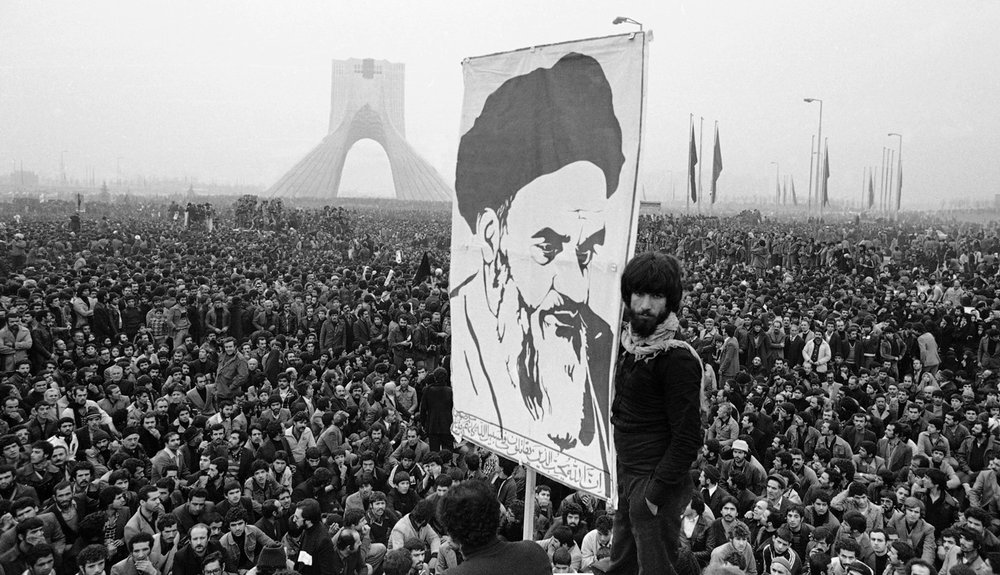
“Frontline” details the rise of Khomeini, and what made him influential enough to cause Iran’s Shaw ultimately to fail. It effectively explains why Iranian students took American hostages. “Frontline” also takes us into the White House and details the Carter Administration’s challenges, efforts, and failures to achieve the hostages’ release.

This gripping series sheds light on Iran’s crises and explains much about its current political and social status. Watching forces us to think about America, too. Our citizens have differing perceptions and opposing views about how to correct this nation’s key ills. Many Americans worry about the implications for ongoing progressiveness.

Dear Friends: Social transitions happening rapidly are scarily unpredictable. Diana