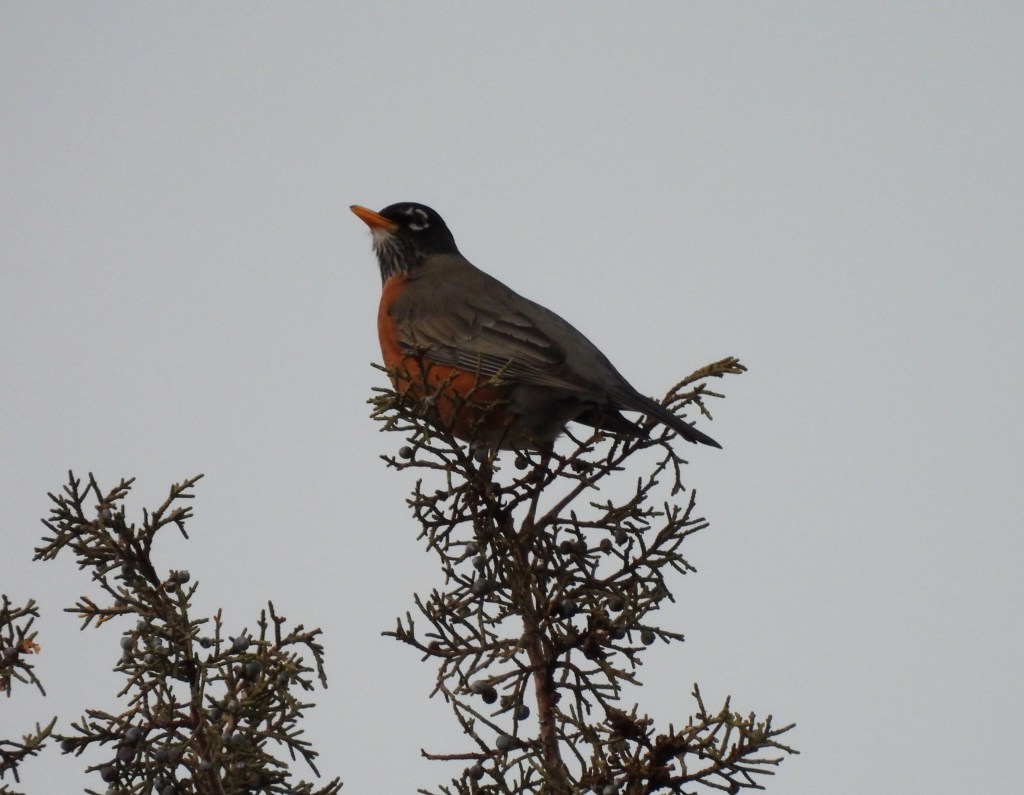
My Robin(s)

Monday, May 20, 2024

From on high, this Robin (or its mate) always watches my every move.

Here’s why:

It’s safely tucked into a rafter. I searched for a while before seeing it. I’d noticed a mature Robin flying in and out of that hay shed often enough to make me wonder if it had built a nest there. Various bird types have nested in previous springtimes, sometimes in loosely structured and precariously situated nests located in worrying spots. This Robins’ nest is impressively safe. It is securely beyond my reach, my dog’s, and most other predatory types.

For several reasons, I love hosting and seeing that healthy nest. Robins build their nests in areas offering good shelter, adequate food, and water. This nest’s location suggests that my property is a good local ecosystem that offers essential resources.

I’ll be observing closely this intricately constructed Robin’s nest and maybe seeing some of the birds’ nurturing behaviors. I’m having a pipe dream: If I’m really lucky, maybe I’ll see eggs hatching and the chicks growing.

More is drawing me toward connecting with this Robin family. Several years ago, I rescued a fledgling Robin; it had fallen from a nest and was too young to survive independently. I raised that baby successfully until it could fly well and care for itself. I enjoyed every moment with that cool bird. My little fantasy is that it might be one of the parents caring for this nest.

Besides, I like to associate Robins with springtime and new beginnings. That nest in my shed reminds me of the renewal and growth that occurs in nature and inspires similar feelings in me.

Dear Friends: Now to work again, to create a special photo and “birthday surprise.” Diana
What’s That!

Saturday, March 16, 2024

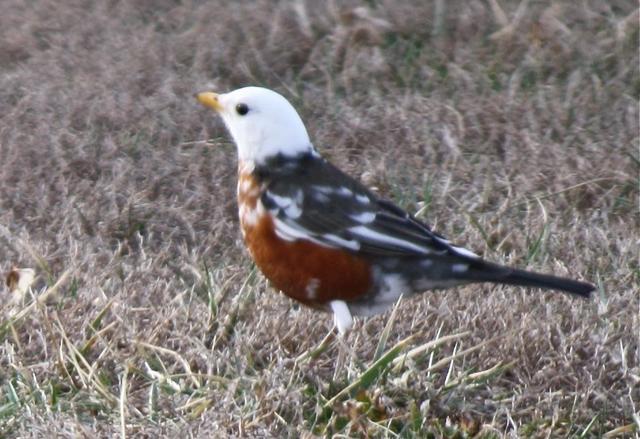
The other day, I spotted a partially albino Robin standing quietly on the ground near a fat Robin I’d seen the previous day and had paused, wondering why that Robin was so fat. When Fat Robin spotted me on this day, it didn’t fly but started hopping away. To my surprise and curiosity, the albino immediately followed the bigger bird, tenaciously. The two hopped away in ever-larger curves into the distance. Maybe that albino was a fledgling, still somewhat dependent on its mom or pop.

I love birds and enjoy watching Robins, which I consider the “Border Collies of birds,” stalking and rounding up worms. Thousands of Robins thrive here annually, with more in the summertime and fewer in the wintertime. I’ve never seen an albino Robin before.

This year, to my surprise, area bird photographers had mentioned albino Robins in my FB feed and even posted a photo or two. So, fortunately, I was slightly informed, but nonetheless, a bit shocked to see the albino Robin.

Since then, I have waited, hopefully, for a reappearance of the fat bird and/or its companion, but so far, no dice. That instant in time confirmed my recent learning, that it’s true. Albino Robins do exist, and are active in this area, at least for now.

Some research informs me that an albino’s unusual coloration is due to a lack of pigments. Ornithologists call the albino condition “leucistic” and say the key, most lacking pigment is melanin.

Dear Friends: We might think we know it all until we learn (again!) that we don’t. Diana

Special Robin

Sunday, January 27, 2024

A few years ago, I rescued an infant Robin after it fell from a nest and landed inside a fenced area where my dogs run freely. I heard its screaming parents, picked up the wide-mouthed baby, carried it where the dogs couldn’t go, and set it down.

I intended to let the parents take care of their infant but worried about its ongoing safety in an open area that hawks may fly over. After struggling about having left the baby, I decided to return for it. The bird became the resident of an unused small birdcage in my garage. I had to find live food, which is what Robins eat, and the ticket was night crawlers, from supplies for fisherfolks. Those juicy eats grew my bird strong.

For weeks, it spent nights in my garage and days perched on a tree limb and waiting for me. I didn’t intend to keep that Robin as a pet, although it was tempting. Finally, one day, I discovered that my bird had flown away–completely.

For days afterward, I walked around in this area and called for my bird. My calls had always brought it flying in and landing on my shoulder, but not now. I could only hope to find someday that it had returned, maybe even nesting here, but there’s no evidence that’s happened.

Since then, on spotting a mature Robin, I whisper, “Are you my bird?”

Dear Friends: It’s much of why I so appreciate and photograph them. Diana