
Sunday, February 08, 2026
My last post explained my decision to begin relearning Earth’s geography. Many of you got it and sent thoughtful feedback. I’m continuing now, because I’ve become convinced that once you begin seeing geography, it’s impossible to unsee.
A strong argument for revisiting geography—and for why it feels newly relevant—is that we’ve been trained to read politics primarily as performances: speeches, alliances, ideologies, moral declarations. Geography is quieter. It doesn’t argue. It simply sits there—unchanging—shaping critical spaces that national leaders fear, covet, and seek to control.
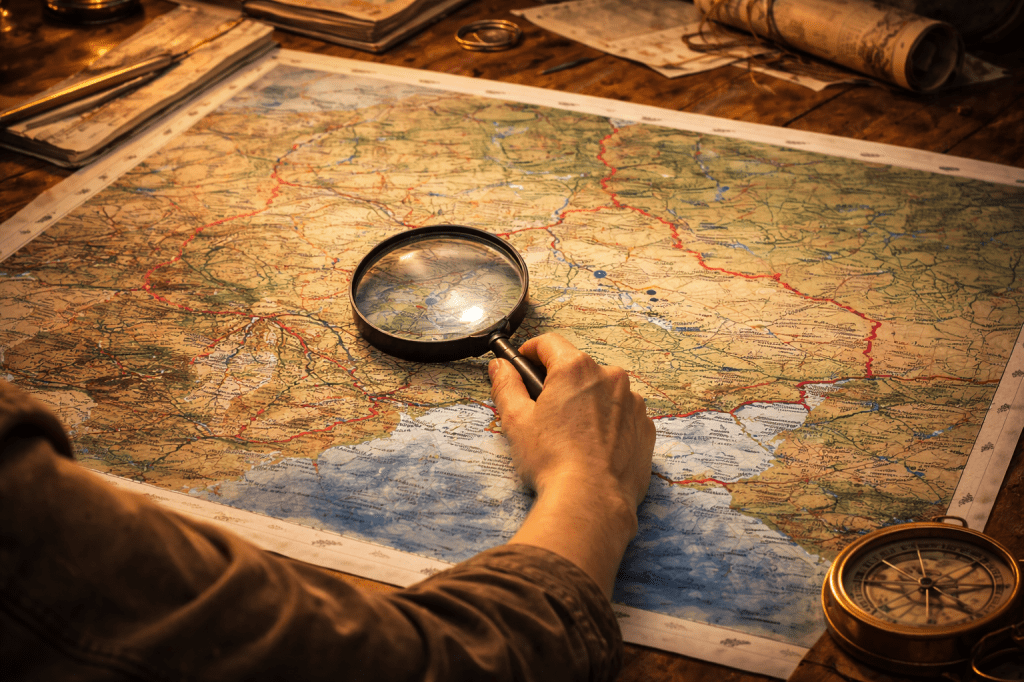
Today’s major conflicts become more legible once we’ve looked at maps.
Russia and Urkraine: Flat Lands—A “Needed Door”
Russia’s war against Ukraine is often explained through nationalism, nostalgia, or authoritarian ambition. Those factors matter—but geography offers a deeper, more durable explanation.
Historically, Russia’s western border has been dangerously exposed. Unlike nations protected by oceans or mountains, Russia faces a vast, flat European plain. Over centuries, invasions have rolled across it—like Napoleon’s France and Nazi Germany’s. These experiences revive Russia’s eternal strategic obsession with buffer zones. It has survived brutal invasions, but not because of diplomacy. Its survival has been caused by distance and weather factors.
Ukraine sits squarely in Russia’s vulnerable corridor.
Geographically, Ukraine offers Russia both exposure and opportunity. Its open terrain provides little natural defense, but control of Ukrainian land would extend Russia’s defensive depth westward—something Russian leaders have long considered essential. Added to this are Ukraine’s Black Sea ports, critical for trade, naval access, and energy routes.
Geography sharpens the picture. It helps explain why Vladimir Putin will not accept Ukraine as a sovereign nation free to choose its alliances. To him, a Western-aligned Ukraine represents an unlocked door—one that history warns must be closed.
Geography doesn’t excuse this brutal, seemingly endless war. But it helps explain why Russia’s leadership experiences winning it as urgent, even inevitable.
Israel—A Nation Without “Area Depth”
Israel faces different—and equally relentless—geographic pressures.
It is a very small country, narrow, and at some points only miles wide. Israel lacks strategic depth: little space to retreat, regroup, or absorb sustained attacks. Population centers, military bases, and infrastructure sit uncomfortably close to hostile borders.
The surrounding high terrain—such as the Golan Heights—provides long sightlines and early-warning advantages. Borders here are not abstract lines; they’re launching points, chokeholds, and buffers.
This geography shapes Israeli military behavior. Actions often framed as ideological or retaliatory also reflect spatial urgency. Israel calculates threats in minutes, not in miles. Deterrence isn’t merely political—it’s firmly geographic.
Israel’s military doctrine emphasizes speed, preemption, and overwhelming responsiveness. In Israel’s compressed landscape, waiting can feel like inviting catastrophe.
Explanations aren’t endorsements. Geographical assistance helps in comprehending why restraint, however morally desirable, is also geographically difficult.
Inevitabilities—Always Unsettling
History shows that strong, aggressive leaders often equate geography with destiny. Mountains, plains, ports, and borders become stories of vulnerability and control. Over time, these geographic narratives harden into strategic myths—and can be used to justify violence.
We, as observers, debate beliefs, identities, and movements. Leaders, after long arguments with maps, may decide to order wars.
Geography doesn’t make war acceptable—but it does make it intelligible. We hope for intelligence that allows nations to anticipate conflict before it explodes, rather than react afterward in disbelief.
“Old geography” still teaches us—not how the world ought to be, but how it still behaves.
Dear friends: more on this topic will appear here soon.
[For readers who prefer receiving these morning pieces by email, I’m also publishing them on Substack.]
— Diana

 Diana's Morning Blog