Thanksgiving 2025

Thursday, November 27, 2025

In the very early hours on this Thanksgiving Day—and somewhere between drifting out of sleep and deciding to get out of bed—I found myself thinking a great deal about my mother. Not about her holiday meals or the rituals of past Thanksgivings, but about something quieter and far more enduring: her creativity, especially as she expressed it, in her clothing choices.

She had a way of dressing that was a little unusual for “those days.” People might have called her overdressed or a touch too polished for everyday life. Yet if she were strolling into a department store today, she’d simply be called stylish—bold, intentional, and entirely herself.

My own style has wandered a long road. During my working years in the corporate world, I wore the expected uniform: suits—navy, brown, black—paired with conservative tops and sensible pumps. Nothing daring, nothing loud, nothing to draw a second glance. I wore a kind of professional armor—respectable, reliable, and utterly unremarkable.

When retirement arrived, I traded corporate life for horses—beautiful, messy, mud-slinging horses. My “style,” if one could call it that, became functional layers, dusty denim, barn jackets, and shirts no longer resembling their original colors. Horse life doesn’t care about fashion; it cares about surviving the elements and getting hay out of your clothing and hair. I spent years happily dressed in what was only describable as rags-with-purpose.

It wasn’t until much later, when I found a job in retail, that I realized how far I’d drifted from any real sense of style. Surrounded suddenly by fabrics, mannequins, new arrivals, and customers asking for advice, I felt nudged to re-engage—to look again, learn again, and find my footing in a world I had set aside.

And that’s when my long-past style influencers quietly began resurfacing.

I found myself drawn to earlier icons—especially the simplicity of Chanel, her confident elegance, and her refusal to apologize for beauty or individuality. I re-discovered that Chanel’s originality speaks to me, still, even after all my years of practicality and barn dust.

One of the more “interesting” designers who followed in Coco’s House of Chanel was Karl Lagerfeld. I discovered his bold creations after starting to work in retail. At first, I disliked them wholeheartedly. Karl loved to scrawl his name with messages from Paris all over his designs. I swore—loudly to myself—that I would never wear a garment plastered with an egotist’s name and scribbles.

Until, on a whim and unable to resist, I brought a pair of Karl’s Jeans—they had large and rhinestone-encrusted cuffs. I finally got up the courage to wear them in public—and found my jeans becoming noticed up and down the street—greeted not with laughter, but with appreciation. Real appreciation. For their sparkles, their boldness, and mostly, the humor of it all.

After that, I softened—began studying “the Karls.” I’d try on a piece or two and, after that, buy one and wear it in public. I discovered that being noticed could feel…fun. Beneath it all, though, my clothing choices always drifted back to clean and timeless Chanel lines—ones my mother would have admired.

So early today, my mind wandered to fashion—my mother appeared as my guide. At first, her presence confused my drowsy self, until I realized that she had been my guide—the style influencer that I never fully recognized, until now.

Here, in my later years. While reflecting sleepily on my recent journey in retail and hearing my customers ask, “What is my style?” (and asking myself, what’s mine?), I could see myself gradually viewing “something called style” differently. Most importantly, this morning, I understood how I’ve learned to appreciate what my mother quietly handed down to me.

Today, I’m thankful for all these—for the subtle inheritance of taste, for the courage to express myself, and for a mother whose sense of style found its way back to me—long after I thought I had left it behind.

Happy Thanksgiving!

— Diana

Lessons In Jewelry

Friday, September 26, 2025

I grew up with the saying, “Diamonds are a girl’s best friend.” In mid-20th-century culture, that line carried enormous weight. A diamond was more than a glittering accessory—it symbolized status, romance, and permanence. It was also, and very often, a woman’s only financial safety net. When women had little access to income or property, a diamond ring could be converted into cash if someone suddenly found herself left and on her own.

Working in jewelry today tells me how much has changed. Modern women build careers, manage investments, and create their own security. Diamonds remain desirable, but less as a lifeline. Talking with customers has taught me that diamonds are just one option among many ways to celebrate love, beauty, or success.

I see today’s women often choosing pieces that tell their own stories. A birthstone ring, an heirloom reset into a modern design, or a pendant from a local artisan can mean more than a flawless solitaire. Essentially, jewelry is becoming autobiographical—and saying, this is who I am, rather than this is what a woman should have.

I also see the shift favoring ethics and individuality. Many women prefer lab-grown gems, recycled metals, or fair-trade stones. Others embrace color—emeralds, sapphires, and tourmaline—or opt for raw crystals and asymmetrical cuts. Jewelry is often collected in layers and stacks, shifting with mood and season.

So what replaces that old “best friends” phrase? Maybe nothing—and everything. Younger women, especially, are unbothered by distinctions between mined and manufactured diamonds. They want bold sparkle and personality, not conformity. Meanwhile, women from traditional cultures often still value mined diamonds as both symbol and security.

What I see every day is that the “best friend,” rather than being a single stone, is having choice itself—the freedom for a woman to define what sparkles brightest for her.

Diana

Yielding

Tuesday, February 04, 2025

Weeks ago, ChatGPT, an artificial intelligence, appeared on my iPhone. It would let me converse with AI using its male or female voice. I played with that and enjoyed the interactions. I appreciated the site’s potential but soon drifted away.

The other day, at my outside job, a young co-worker described using ChatGPT for “almost everything” and willingly paying $20/month for its stepped-up version. She described sending a photo to that AI and asking for an enhancement or a detailed explanation of what the photo suggests or represents, or sending drafted paragraphs and requesting improved rewrites, or sending complex questions and asking for detailed answers.

I know many uses of AI and have occasionally used it for writing help. AI has aided me in writing an idea or a paragraph more pointedly for improved clarity. I’ve never submitted a photo or video while asking for a description or detailed information, but my coworker does often.

She did some interesting demonstrating for me, and I decided to test the paid version with a real-time example.

I was working in the Jewelry Department. I had been showing a recent customer a set of Tahitian pearl earrings. She understood the pearl type’s beauty and value and loved how she looked wearing the earrings. She struggled over purchasing them and finally didn’t.

My coworker photographed those Tahitian earrings and sent the image to her ChatGPT version, requesting the pearls’ history and attributes. AI identified the price value of those earrings and sent paragraphs explaining the pearl type.

I recognized that by employing some of AI’s responses, I might have spoken confidentially and more thoroughly about the earrings. While my customer debated over buying, I could have encouraged the potential sale by demonstrating more knowledge about the pearl type, its history, and why its value stays high.

As my colleague and I played more with her version of ChatGPT, I saw the potential added value of using the paid version and will upgrade to it.

Dear Friends: AI is increasingly available, accessible, and impactfully useful. Diana

Stripings

Wednesday, June 05, 2024

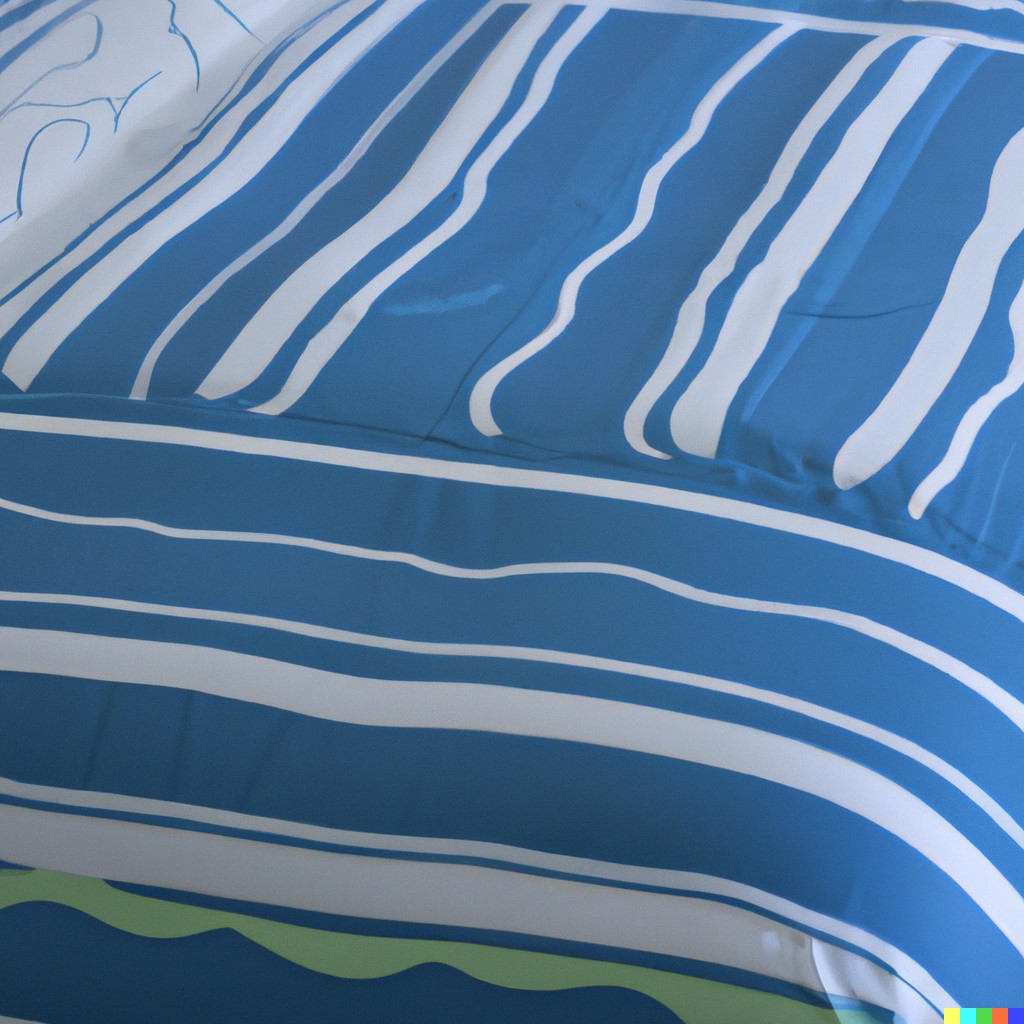
As a department store salesperson, I often learn helpful things. Here’s a valuable tip: Choose striped bed linens because they clearly identify the long side.

By keeping that in mind, I’ve been encouraged to think more about “stripe.” It’s a word with a real-world meaning (aside from being a pattern, as on linens). In the real world, military and police forces have stripes on a uniform that “identify clearly” rank and power.

I’m interested in how “stripe” is used as a metaphor for earned experience or rank. Describing someone as having a “stripe” suggests a distinctive quality or trait. That way, “stripe” suggests a distinction, individuality, or uniqueness that sets someone apart.

We often hear the term “stripe” used in business, sports, and academia. We understand it as referring to “earned respect and recognition” and applied to someone who’s done good work and accomplished achievements.

I’m an informal writer who writes often. I’m always word-focused because English word usage and meanings are complex. Words often suggest much more than their basic descriptions, forcing me to consider sociology in general, historically, and in the present.

Dear Friends: It does make sense to appreciate the value of using striped linens. Diana

Changes

Sunday, March 10, 2024

Finally, I understand why I’m writing this blog later than the unofficial, typical timeline. You’ll be guessing right: I forgot to change my clocks. Not really, because only two don’t change themselves, and so I think little about time changes. Today, however, I emerged from beneath my comfy comforter wondering why it was so late. I wandered through the house, befuddled by the too-bright early daylight. Finally, cranking up my computer reminded me of DST.

That means I’ll be late for work unless I start moving quickly. I’ll pause to share a bit of fun. On Friday, the department store where I work hosted its annual employee recognition event. I couldn’t attend because I had to stay home with a crew fixing a serious furnace issue.

Throughout last week, the department store’s employees cast private votes identifying employees they considered the best in various categories. Yesterday, I showed up to work and learned I’d been very narrowly beaten for “best dressed” by a long-time employee who’s won year after year. To be fair, she always dresses fashionably and she deserved to win. Everyone, including her, enjoyed that she had serious competition for the first time.

I especially feel this way because working in retail clothing has returned me to fashion. That’s what I hoped for after years of riding horseback and wearing rags. Last summer, I attended an event where I didn’t have the “right clothing.” I was unsure about how to improve my wardrobe, felt out of touch, and didn’t know what looks are in fashion or where to find help.

I decided to search for work in retail clothing, to learn. It happened I chose the right place. The company’s motto, Own Your Style, inspires and invigorates me. I examined women’s clothing racks, decided what I liked, and before long, bought pieces of clothing. In that workplace, I started practicing wearing them.

It’s important to feel comfortable in one’s clothing, and practicing has helped me get used to being in my choices. I’m not trying to be a fashion plate; I simply wish to learn how to mix and match contemporary pieces. The playing has brought encouraging feedback from coworkers and customers, and to my surprise, earned those fun votes.

I’m glad that my coworker won again; I’m also pleased to be voted a nearly as good dresser at work. The upside of this story is that I have appropriate wearables for most occasions. Unfortunately, it also has a downside; after months of working, I’ve brought home little money.

Dear Friends: I’m still recognizable for continuing to wear beloved rags otherwise. Diana

Tying Up

Sunday, March 03,, 2024

Yesterday, my job in a large department store had me working in the Men’s Department. I met a couple examining suit jackets, and the man was trying on some. They were preparing to leave in April on a cruise ship that’s headed to exotic places. He’s not bought new clothes in quite a while, and although not particularly happy or comfortable, dutifully tried on shirts and jackets.

I’m very slightly aware of trends in men’s clothing, but did assisyt the couple by searching for sizes and colors they wanted. They proceeded slowly, we became acquainted, and I enjoyed helping them. At some point, they had selected jackets, shirts, and pants and asked me to select some neckties.

I know too little about neckties and approached several large tables. Each was covered in a seemingly endless bunch of neckties, an astonishing array of colors and patterns. Here’s the thing, I like neckties, but have clear preferences and opinions about them as fashion. I enjoy looking at ties and imagining clothing they’d go well with.

However, working in Men’s has taught me that someone might sound casual, as in, “Find me a tie,” but he actually has opinions and preferences. So staring at ties, I’m pushing aside my preferences as too confident for my customer’s comfort. Finally, I picked out a few ties with subtle patterns that color-wise blended with his clothing selections. In the end, that couple themselves selected his ties.

I needed some training on necktie selling and asked a savvy coworker to help me. We went to the tie tables. He chose several he liked and explained why, saying red is a power color, and certain blues go well on the blue shirts he loves, and to him a very subtle paisley is playful. I realized that he plans carefully for wearables at meetings and casual gatherings (typically, he doesn’t wear neckties).

I pointed to my favorite tie, covered in a “tiny flowers” design, and no surprise, he wasn’t interested in it. Earlier, I had sensed that my customer would avoid a flower pattern. My friend and I stared at the tie; it’s not particlarly feminine but has tiny flowers.

This is Women’s History Month. Back when social changes began evolving, socially awakened men wore neckties sporting complex designs and patterns. Back then, tiny flowers would have fitted into modern wardrobes.

At that moment, I decided to start on a learning journey–by buying that tie and wearing it to work. My friend gave me a lesson on necktie tying. Then, the tie’s price made me gasp; Who knew! Maybe expense is one reason men very carefully and specifically select ties.

I brought the flowered tie. Today, I will practice tying and arranging it on a boy-style shirt.

Dear Friends: Working offers learning and fun challenges, so make things happen. Diana