Under The Inversion

Friday, January 23, 2026

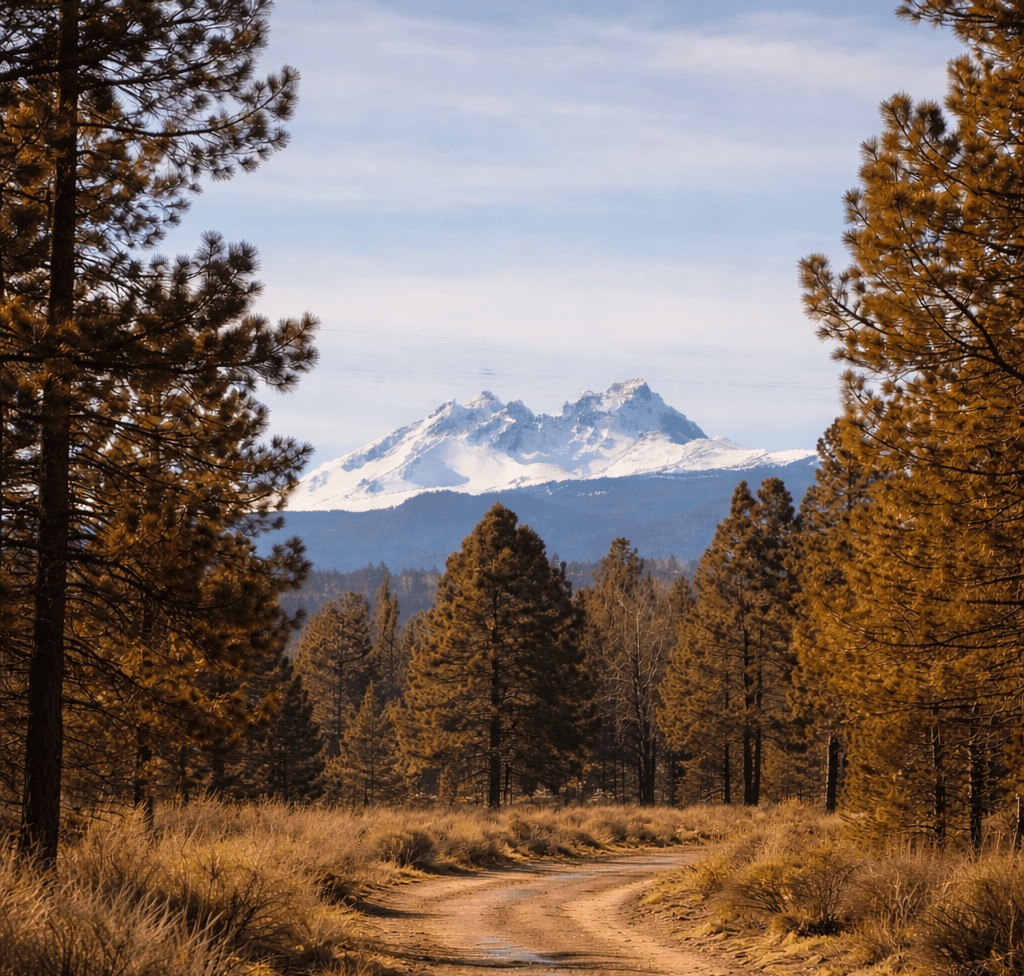
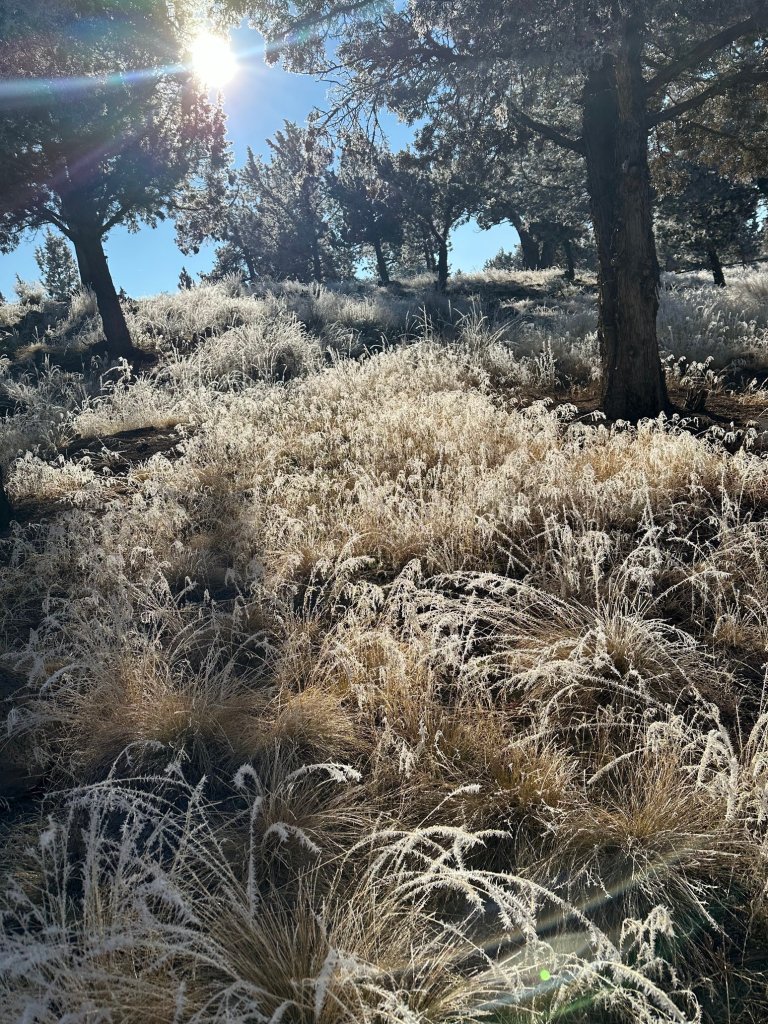
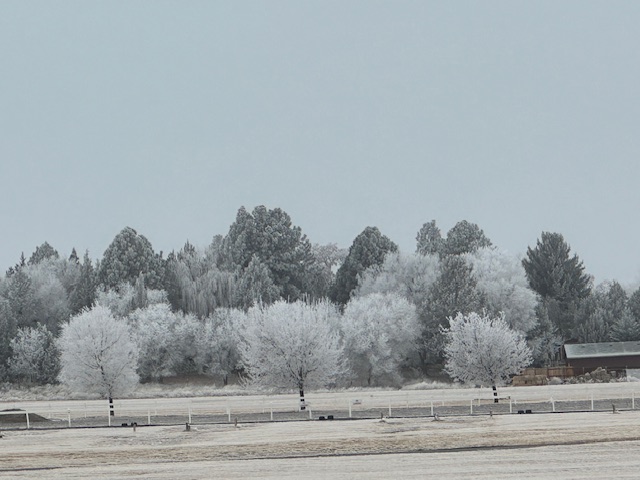
Central Oregon has been captive to a depressing layer of weather inversion for at least a week. A constant fog, intermittent light snows, and freezing temperatures have coated everything—trees, fences, properties—with thin, icy-white films. A few days ago, while driving to work, I unexpectedly passed through an independent microclimate—an actual snowfall was covering a small, contained area. This snowy stretch began and ended abruptly, blanketing only about a half-mile of roads and homes. As if the weather had briefly lost its sense of scale.

Each morning this past week, and today, I’ve stood at a large living-room window, sipping my first cup of coffee and surveying the scene. I want to know the present and the approaching weather alike. That’s easy enough, because its signals are almost entirely visual—and because what I see reliably fills me with dread about the inevitable need to go outside to care for my few farm-type animals.

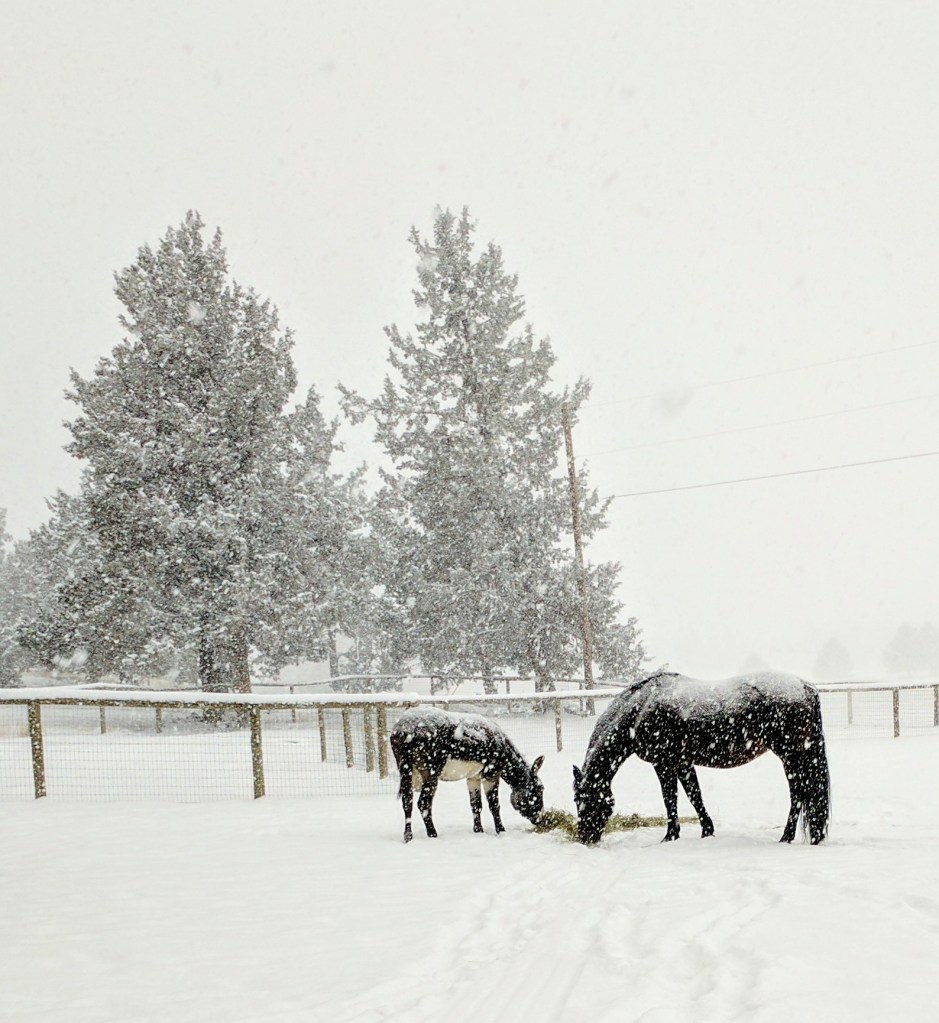
The animals feel it, too. The chickens huddle tightly together on their roost, nearly merged into a single feathery mass. The horses trot toward me, snorting, impatient to begin eating. Before leaving the house, I force the dogs to go outside for a few minutes, and they’re eager to rush back in as soon as possible. I’m entirely with the dogs on this—after being outside, I can’t wait to return indoors and warm up again.

I work part-time as a cashier in a busy, price-cutting retail goods store. Lately, my most common topic of conversation with customers is our local weather. They’re putting their money where their mouths are—buying sweaters, heavy outerwear, and warm pajamas. They’re also buying household organizing and cleaning supplies, preparing, like so many others, to stay mostly inside until the weather breaks.

For days now, I’ve felt urges to slow down more, to look again at possibilities, before settling on decisions. Now, I’m considering ways to use this gloomy stretch for something more than simple griping. This morning, standing at the window, I’m evaluating the possibilities of making a small shift once the animals are cared for. And, instead of spending more time fixating on the uncomfortable inversion layer, I’ll point myself toward a more utilitarian direction, firmly.

To start this shift, I’ll create a list of tasks needed, doable inside, away from windows—like ordering animal feeds, contacting a professional for advice about my questionable roof, finishing a terrific book (Raising Hare by Chloe Dalton), and staying busy with the kinds of organizing and cleaning that customers have demonstrated belong to weather like this.

The inversion will lift when it lifts. Until then, there’s work that fits these indoors.

For readers who prefer receiving these morning pieces by email, I’m also publishing them on Substack.

Diana

Record-Breaking Warmth

Wednesday, January 14, 2025

Monday, January 12th, broke a remarkable record. It was the warmest January day in Central Oregon since 1920. Yes—more than a century ago was the last time a mid-winter temperature matched Monday’s. That 100-plus-year-old record quietly fell, without much ceremony—no fanfare, just a few weather-related announcements. And there I was, feeling the mildness and sunlight, noticing the odd sensation of stepping outside without first bracing myself.

Probably like everyone else, I looked around and wondered what this warmth was doing to the season. Snow should still be lingering, but there was none. Ice should be stubborn over my chickens’ water bowls, but ditto. I scanned the nearby treetops—bird-watching is one of my everyday pleasures—and wondered about the birds. Were they even slightly confused? Were their internal calendars, like mine, a little out of sync? Even the air felt different—less like January, more like some invasive in-between month.

Part of me celebrated the comfort of that warm day. After all, comfort is comfort. But there was also a strange dissonance—another reminder that nature keeps its own counsel, and that the seasons might be shifting beneath our feet. The warmth was pleasant and unsettling all at once—belonging to January while feeling nothing like January.

Whenever something captures my attention, I tend to look for meaning tucked inside it. Yesterday’s record-breaking warmth nudged me to pay closer attention to the weather itself. One of my mantras is that pausing and looking twice often reminds me that whatever I thought I knew isn’t entirely the truth.

This photo—taken years ago, on a typical January 12—shows what our weather used to look like.

My “second look” on this new warmest January day offered a quiet insight: we are all changing, and constantly are adjusting to change, even when it arrives disguised as good weather.

Real weather records remind us of time. Monday’s warmth happened to us in real time, and on a real January day. And I found myself standing right on the margin—between time and reality—grateful to feel informed, and awed anew by nature’s power.

Diana

Thaw!

Thursday, February 20, 2025

This day is a gift. I’m off my part-time job without a rigid schedule or pressing commitments. I can move at my own pace. With a coffee cup warming my fingers, I see sunshine through the windows instead of gloom. Some snow remains, however, and this morning’s light stretches across it. It’s easy to sense a weather change because the slow melt is lasting.

There’s also the reality that a day off never truly means a rest. I have chores pending, some long overdue. The horse area needs care against thawing, which has caused sheer mud. The chicken shelter needs unexpected reinforcement against bitter cold winds. My dogs are restless after a stretch of huddling in the fierce cold.

While working outside, I’ll watch for icy patches. My property is like a battlefield of seasons because it only partly receives adequate sunshine. I’ll carefully navigate pockets of slush and unforgiving patches of ice from water that trickles from overfull gutters.

I’ll probably find my turkey Lacy watching me, tilting her interesting head and assessing what I’m doing. She will also feel this different weather; it’s subtle yet unmistakable.

I’m familiar with chores today because they’re annual. This typical weather shift will have me, Lacy, and the other critters breathing sharp and clean air. It’s milder, but winter isn’t finished, not by a long shot. Its hold is weakening, even though only temporarily, making us all feel renewed.

On the horizon, March often introduces weather much worse than February’s. I’ll avoid that by focusing on being in the here and now. I will appreciate today–being in melting snow, sensing the shifting earth, and hearing the soft sounds of animals stirring.

Dear Friends: It’s really happening: a slow, steady arrival of friendlier weather. Diana

Cold Winter

Wednesday, February 05, 2025

This high desert is finally snow-covered. Deep winter grips us. I’ve anticipated this cold, which will stretch through February and March—weatherwise, the most demanding months.

We have cycled through the winter holiday festivities and now face the stark realities of freezing winds, deep snowdrifts, and short days. I tell myself to endure patiently these slow-moving weeks before signs of spring occur.

I also remind myself that practicing patience through deep winter isn’t passive but an active practice.

These days of biting cold, iced-over roads, and gray skies make us seek comfort in small routines. I might enjoy a warm drink, appreciate and care for my animals, and sit in a comfortable chair to read a book. Those are anchors, slowing anxieties and getting through what can’t be rushed.

I have learned not to fight winter but to embrace it as a time for reflecting, resting, and waiting for different weather energy. That’s active practicing; another is active appreciating–recognizing winter’s beauty, the silence of snowy mornings, and the moon’s brightness on freezing nights.

Winter brings gifts, if we take moments to see them. I often find myself kicking pathways into fresh snow on my property and looking up at the deep contrast of black branches highlighted with snow against a barely bluish sky.

Writing this morning makes me thoughtful about patience—less about enduring and more about appreciating. And so, we wait on days that are already a bit longer but still seem too short.

I am eager for hints of warmth to return. Meanwhile, I will heed my observations and take the rest of winter one day at a time, seeking the positives it offers until the freezing cold eventually loosens.

Dear Friends, Patience isn’t “just waiting” but trusting that change is coming. Diana

Winter’s Puzzle

Saturday, January 04, 2025

Yesterday was the first anniversary of a major ice storm here in Central Oregon. That storm kicked off months of freezing weather. I remember cold, cold, continuously, until almost the Summer Solstice.

It’s hard to believe this area can skip spring, but it does, and often enough that old timers have jokes (e.g., “Central Oregon has two seasons, Winter and the Fourth of July.”).

This winter’s Central Oregon weather seems almost like last year’s. Our weather remained relatively mild through the fall and winter’s dark months. Since I remember last year’s surprising freeze vividly, I worry about that in this early January.

Every morning, I anticipate being greeted by a hammering freeze, with that kind of weather continuing nearly unendingly. Today, the sun has begun rising beautifully in the east, and I’m reassured, at least somewhat, of relatively mild weather today.

I’ve lived in Central Oregon for twenty years and cared for horses. I’ve had real-time wintery experiences outside that are memorable–and proof of the old-timers’ observations being right-on.

Winter and the Fourth of July. So far this season, not enough winter. The coin has another equally worrisome side. Not enough winter means insufficient snow and inadequate water in the spring. Central Oregon needs big winters, especially now, with a growing population and increasing amenities.

Dear Friends: We need snow and ice and thus willingly cope through deep winters. Diana

Grumbles

Friday, December 06, 2024

In our hemisphere, the annual day of least daylight is the winter solstice, which occurs every December 21 or 22. This year, the 21st will bring our shortest daylight. I am already feeding my horses in darkness, around 4:30 p.m., and soon will in earlier darkness, around 4:00 p.m. We who must care for large animals feel stressed in these darkest days of the year.

Aside from having to work in too little light, December’s freezing cold also affects my fingers. Although gloved, my fingers can start feeling frozen and too painful to cooperate. There’s an infrared heater in my barn for thawing fingers, but rapid thawing pains, too.

I’m accustomed to wintertime discomforts, which helps me cope. I am wrapping my head around being in darkness with frozen fingers until the 21st. Then, darkness and freezing will continue, but daylight will increase gradually and noticeably.

January brings lighter days but might introduce very stressful weather. Last year, Central Oregon enjoyed relatively mild weather until the New Year, when everything changed dramatically and brought great cold, blasting winds, snow, and freezing temperatures. None of those eased until just before the Summer Solstice arrived.

Dear Friends: Today’s header image is the hoar frost at my barn. Diana

Wintery

Wednesday, November 20, 2024

Our day with snow is history, and now the strong winds are visiting. And rainy days, too.

These are also shopping days. The department store where I work part-time has many customers inside, enjoying the beginning of Black Friday season. BF season will extend in our store to the day after Thanksgiving—the real Black Friday day. Theoretically, by then, merchandise would be well picked over, but since Christmas follows on BF’s heels, shelves will remain well-stocked.

I’m having fun at work among the season’s early shoppers, most of whom are in a good mood. They feel “ahead of the game” and are discovering preferable merchandise at discounted prices. Cold, wet, and windy weather helps businesses boom. People opting to be inside enhance the welfare of retailers by shopping.

In Central Oregon’s sharper weather, a comparatively large population opts instead to be outside. Many are skiers passionate about tackling the snow-packed Cascades. Others love treading deeply in the freezing landscapes to construct igloos and camp inside them.

Years ago, I opted to be outside more than inside during winter months. Almost daily (if temperatures weren’t under 30 degrees [so my fingers wouldn’t wholly freeze]), I rode on horseback. (Unshod horses find excellent footing in fresh snow and aren’t fazed by unexpected rain.) My dogs usually ran alongside and could stay with the action.

In inclement weather, horses and dogs are tolerant and hearty; they’re fabulous companions.

I have digressed again, this time from retail and Black Friday topics. Thinking about winter weather and enjoying pleasant memories made me do it.

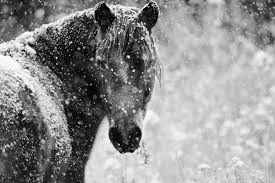
Here’s one of my favorite images from past winters. My calm Sunni is in a snowstorm.

Dear Friends: Have a beautiful day. Diana

Hurry, Late….

Thursday, April 04, 2024

Overnight, snow fell, and this morning, we’re in a snow globe. Nature’s artistry boosts all surroundings. Six or eight fluffy inches weighing on juniper branches are fairy tale illustrations. It was different two days ago; then, our temperature rose to the seventies. We were wearing T-shirts and basking in spring weather—hiking, gardening, water-sporting, and welcoming wonderful warmth—for one day.

That’s typical, for this high desert’s transitions to spring or later to winter keep us on our toes. My winter wear remains handy (having learned from experience). This morning, I’ll bundle up, go outside, and kick a downhill path to the barn to feed my equines, chickens, and goats. Aside from essential outings today, I’ll stay inside with my dogs.

Thinking back, I remember my first spring here. Around April, I attended a friend’s “clothing party.” She was allowing someone representing a clothing company to show its newest line. I had come from California with light clothing and needed warmer items. In astonishment, I found myself looking at very summery apparel. I asked, “When could we wear these summery clothes?” and then laughed at the answer, “In September.”

To me, that was joking, but I learned differently. Back then, our high desert summer weather was cool and didn’t warm much until August. I found the September and October weather perfect for summer wear. That’s different now because weather transitions are more complicated, and our summers are hotter.

I am reminded to be treasuring episodes of rain and snow. This area needs lots of water to adequately support the continuing city growth and established agricultural community. Water shortage is a political issue that pressures this area’s ancient water distribution methods and how much becomes allowed to receivers.

“Oh dear, oh dear,” said the White Rabbit…

Dear Friends: We have learned the world is small, and everything affects us all. Diana