What The Distance Gave Me

Sunday, January 18, 2026

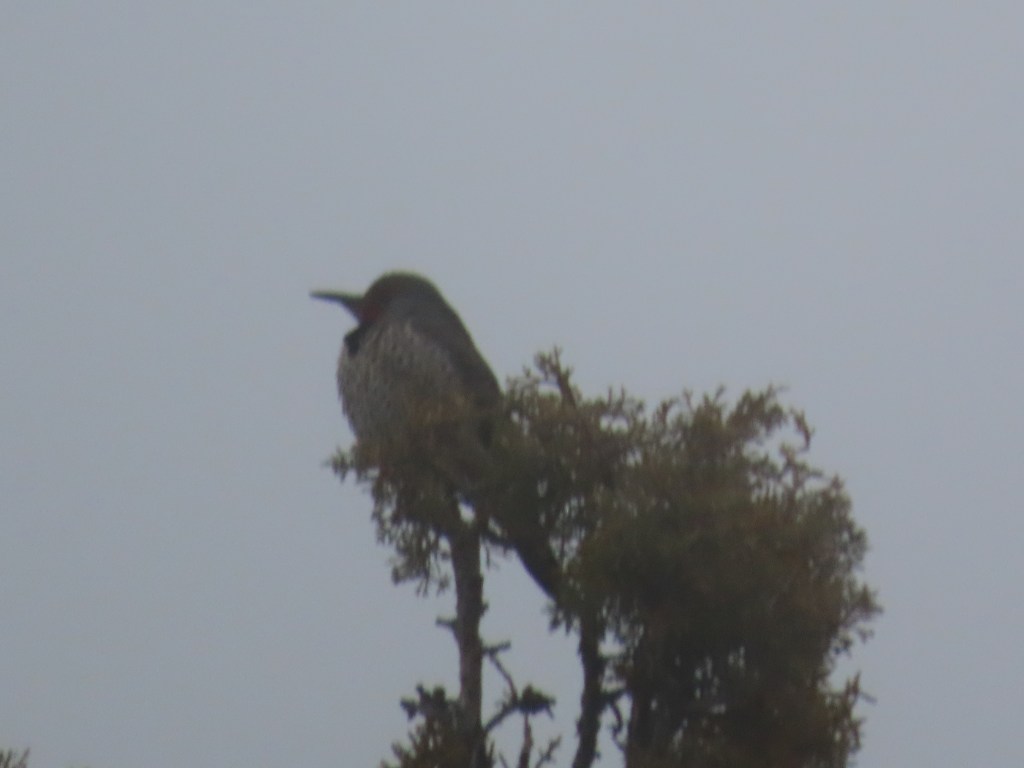
While walking with my camera in a familiar place—a small, local BLM parcel I’ve known for years—I noticed that a bird was perched high in a distant tree. The bird was far away, and my photograph turned out to be, at best, a suggestion—an image lacking crisp markings. Instead of offering a pleasing certainty, it yielded only a shape, a posture, and a presence.

At first glance, the image seemed to reveal the kind of bird it might be. But after trying to identify the type without much luck, I was doubting the possibilities.

This Central Oregon area hosts the wintering birds known as Townsend’s Solitaires—or anyway it used to. In my early years here, I often heard their clear, fluting calls, metallic-sounding, and carrying far across the cold air. In these later years, the Solitaires have seemed fewer—quieter.

Or maybe I’m simply recognizing that it’s easy to miss what doesn’t announce itself.

My first impulse was to identify the bird as a Townsend’s Solitaire—lots of evidence pointed there: its high perch, its stillness, its general outline. But looking again—more closely—didn’t stop my doubts. For instance, a little color spot on the bird’s chest, and a bill that looks long and slightly curved. Those really aren’t Solitaire-like.

Maybe it’s a Hermit Thrush. Thrushes sometimes stay throughout winter—quietly and almost invisibly. A Thrust might be a little rare, but not impossible. Or perhaps it’s a flicker—located far enough away that it appears only slightly so.

The longer I looked, the less certain I felt—and the more interesting I began finding this whole experience.

I often pause to consider something most of us learn early on—it’s a constant desire to name things quickly and be done with it. We’re taught to associate the speed of identification with success. Modern life encourages that habit.

That was my first objective here, too. But taking time to consider the distance of that tree and bird—and later reviewing my imperfect capture—let me start to accept that neither the image nor my memory of that moment offered enough certainty.

That’s when something different occurred to me: this is a photograph that doesn’t need certainty.

Instead, my moments of reflection—and that image itself—seemed to be asking for patience. They were asking for attention—for an observer’s willingness to stay without knowing answers.

I refocused and found that I could view the image differently. I began to sense there wasn’t a need for accurate identification. Already, instead, this image could feel complete. Now, I could see a bird, perched, watching—and entirely undisturbed by my internal debate. Any ambiguities belonged to me alone.

I am posting that photo simply because I like it, and can allow the bird to remain unnamed. Yes, it could have been identified as one type or another. But looking closely and letting myself become involved transformed the experience of seeing. I found another way to understand the whole point of that image’s existence.

This episode was another small learning event. I had seen something at a distance that reminded me of what once felt common; I’d recognized some elements that in general have grown quieter. I decided to allow my thinking-and-feeling processes to be enough—and to legitimize the image.

My work with the camera reminds me constantly of the value in pausing and “looking again.” That practice doesn’t always sharpen answers; sometimes, it serves as a companion, by encouraging a softening of the questions themselves.

Diana

Jay Birds

Monday, January 12, 2026

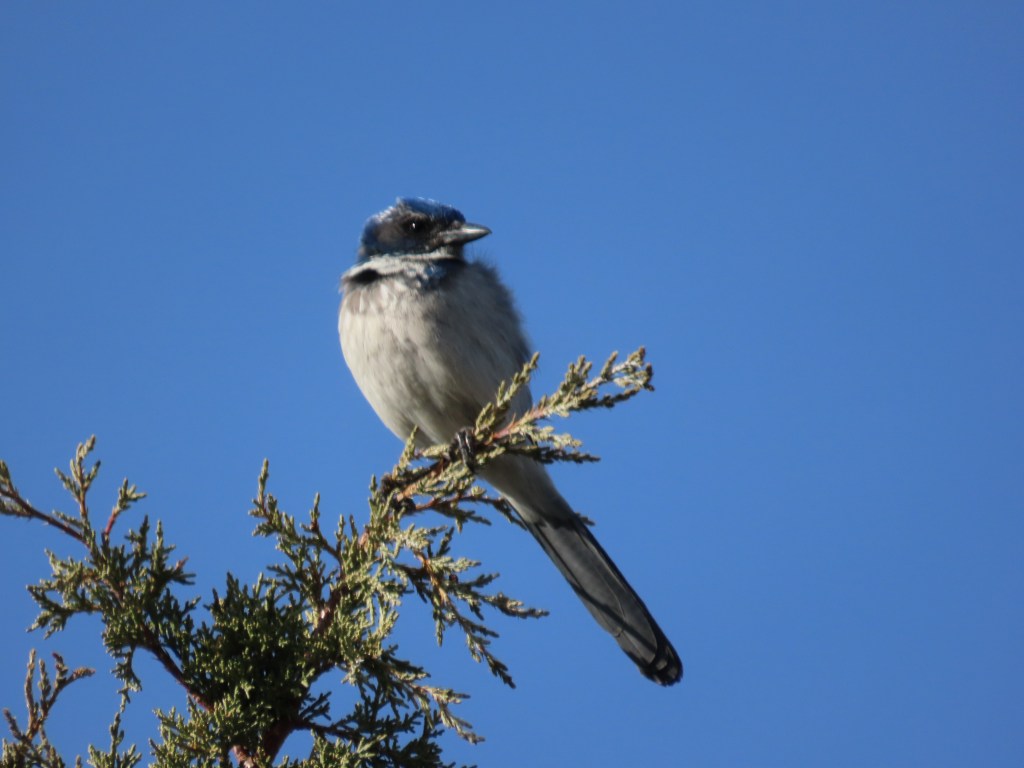
Yesterday’s weather was mild and beautiful here in Central Oregon. That gifted me with two versions of the same bird (and two versions of my attention span). The gifts were a couple of Woodhouse’s Scrub-Jays (known also as “California Jay”) making themselves known.

My first sighting (the header photo) was almost theatrical. The jay, perched high in a juniper, was lit cleanly by winter sun. Its soft blues and pale throat were fully visible. That bird seemed to be allowing me a proper look. It sat still for a surprisingly long time (for that very active type), and was well composed against the light wind that rocked its branch.

In the clear light, the bird’s shape was unmistakable. A quick glance said I might be seeing a scrub-jay—if so, familiar, and nothing unusual. It teetered on that waving branch long enough for me to wait. I took a second, longer look before snapping my camera lens. I could see more of the bird emerging: its muted blues, the gentle edging of its throat feathers, and an intelligence in its posture and focus.

By letting my eye stay a little longer, I saw more than what I had first assumed. The details helped me recognize, in my lens, for sure, a jay. I snapped the header photo just before it flew.

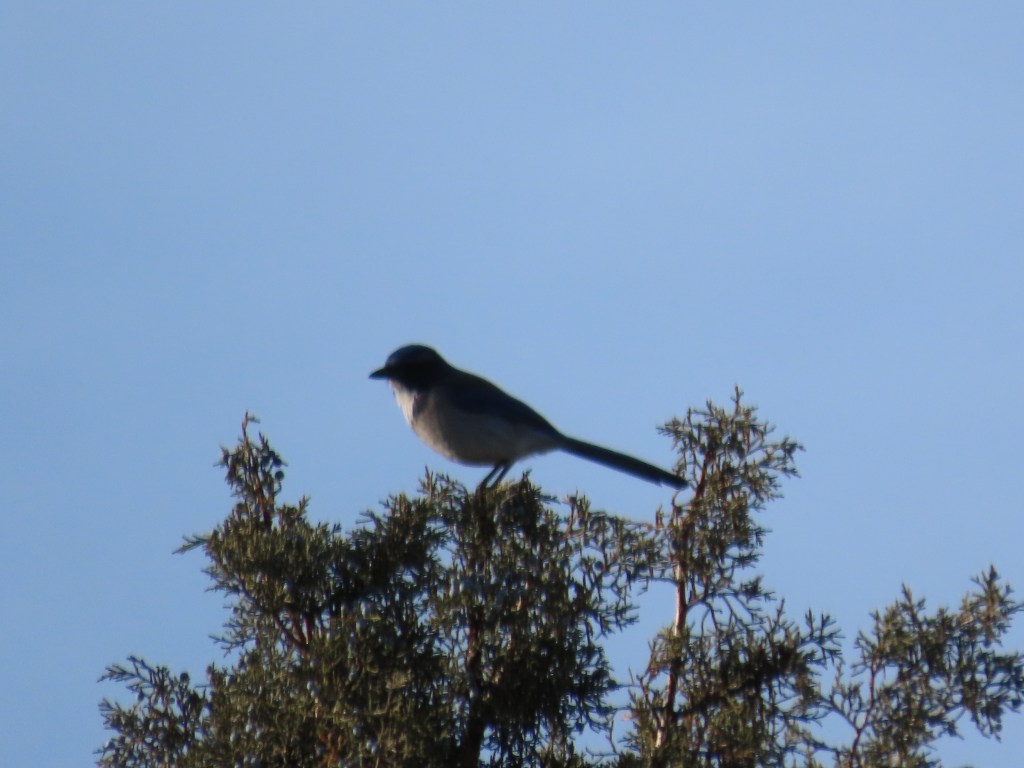
A little later, I spotted what might be the same bird species, perhaps even the same jay—but this time it appeared in silhouette, completely backlit. It appeared almost as a sketch, with a long tail, a dark head, a pale underside catching only the faintest wash of sun.

No color, no detail, just an outline against the sky. Yet something about this stripped-down version was compelling. Even without color, the bird’s identity was clear–another jay.

I studied the two images and their contrasts. One offered detail; the other offered reduction. One was about color; the other, about shape. The bird type doesn’t change—but the angle and the light do.

These two captures show that it’s easy to “assume what we’re seeing.” Usually, however, that assumption makes us aware of perhaps only one of many possible perspectives.

These images of two scrub-jays, separated by just minutes and a slight shift in light, are reminders that spending more time to “see the familiar” adds to our information. Comparing these images made me feel that, if I chose to, it would be fun to study individuals of this species and learn to recognize more of their subtleties, silhouettes, and ways of carrying themselves.

Often, there are times when “we know,” and quickly, because the world has handed us details. At other times, we’re given only outlines. Either way, “getting to know” comes from studying — by being willing to pause and look again.

These images are proof of the value in taking a pause. By looking again, we give each sighting enough time to reveal itself, and on its own terms. Essentially, noticing—and especially something essential, like maybe a shift in the lighting—pulls us closer.

Time and attention create a story.

— Diana

My Second Look

Friday, December 02, 2026

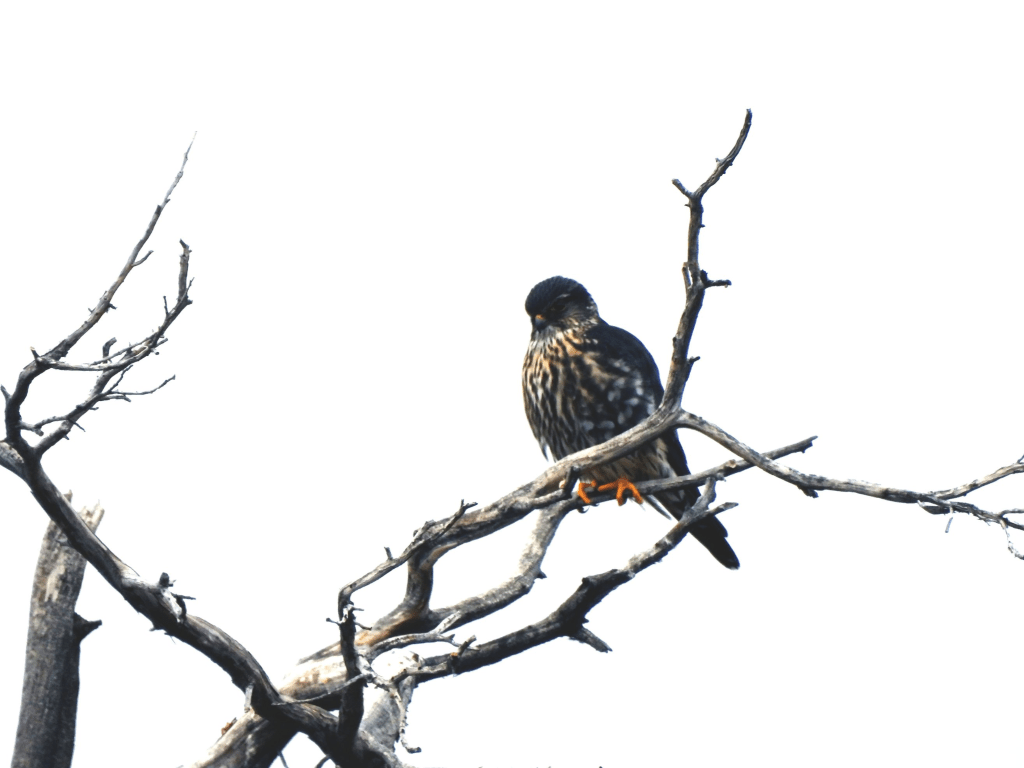
At first, I thought I was photographing a hawk.

That was my quick naming reflex—efficient, tidy, and not particularly curious. Hawk was close enough. But after looking at the image longer, my certainty loosened. I saw the bird’s compact weight. The way it was holding itself—contained, almost coiled. There was the bright grip of its feet against the bare branch. Those visuals weren’t exactly matching a hawk.

I started looking again. This time, not asking what category might this creature of flight belong to? Instead, what did it actually feel like to encounter this bird? The shift mattered, changed my perspective. Simply staying longer with the image made me reevaluate.

I recalled a moment of surprise upon spotting the bird, to see it staring straight down–directly back at me–alert and strong-looking. Remembering that stare and looking more closely at my image made me unsure about a hawk. Searching on my phone revealed something else: a Merlin–a small falcon, perched securely, holding very still, and wintering quietly under Central Oregon’s pale sky.

This correction was about paying attention and resisting the rush to name and move on. Looking again, more closely, did more than refine identification—it deepened the encounter. It made that bird less a specimen and more a presence–a compact, deliberate, Merlin, utterly sufficient to itself.

A small act of correction—caused by the bird’s stare made me realize I wasn’t seeing a hawk at all. That stays with me as another moment of learning. I had misidentified the bird because my first impression was nearly satisfactory. By pausing and correcting, I thought of how often we simply accept our initial impressions, because they arrive quickly and let us move on.

I’m discovering that maturing, or aging, can alter our learned, habitual grabbing for answers.

The urgency to name things immediately loosens over time. Needing to arrive quickly at conclusions—to decide what something is, and what it means, and what it’s for—softens. Something quieter replaces it: patience. Unlike an impatience for resolution—it’s another kind toally, that lets uncertainty linger without causing discomfort.

To me, “looking again” has become a shifting away from haste.

When I was younger and usually employed in complex organizations, decision speed often passed for competence. Quick recognition, quick decisions, quick judgments—all felt necessary. Now, as a retiree, I’m willing to let first impressions revise themselves. I stay with first impressions long enough to let subtleties emerge. Truly, first assumptions can be incomplete.

This Merlin didn’t change. I changed. On looking again and remembering the circumstances, I felt willing to linger with the vision, to give the experience time to clarify itself. As I age, this pausing to look again becomes increasingly familiar. Less “rushings toward certainty” invite better quiet unfoldings.

One of aging’s gifts isn’t sharper vision — it’s longer looking. Less loud insight and more steady attention. Patience is less a virtue of quick performance and more a natural outcome of learning. As we evolved, didn’t we already do enough rushing?

More patience gives time to “the ordinary” (e.g., a cool-looking bird on a wintery branch)—to reveal its particularities. My subjects might not actively be demanding special attention, but increasingly I’m willing to slow down and offer it.

— Diana

Re-Beginning — Paying Attention

Tuesday, December 29, 2025

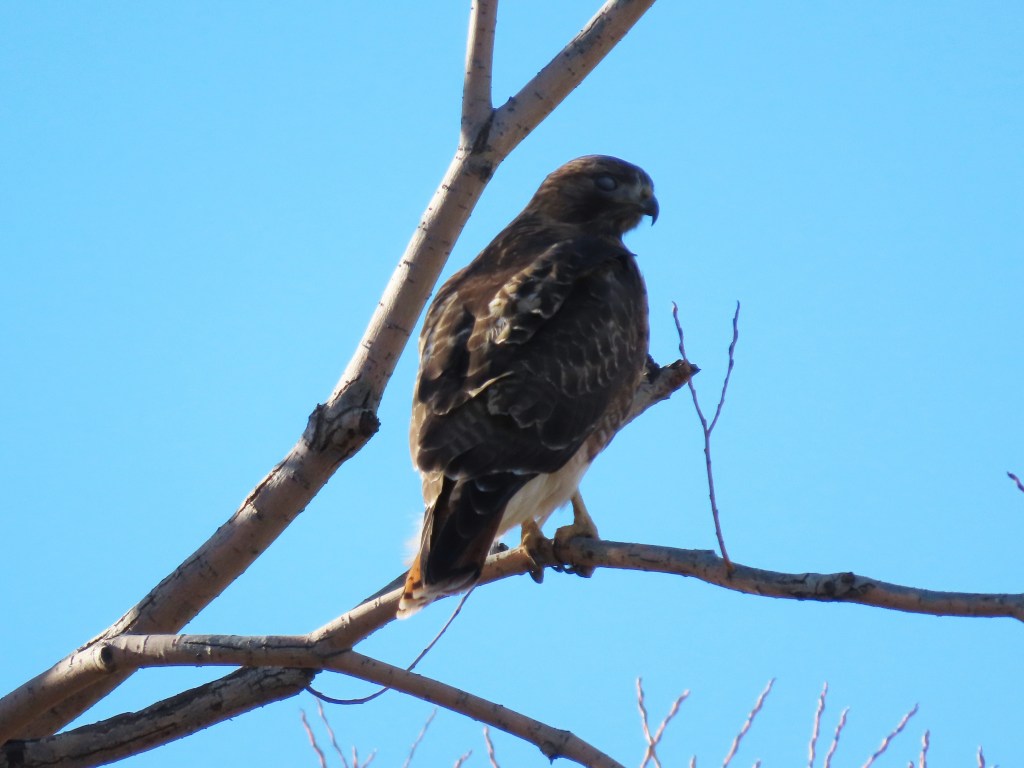
This header image features a Red-tailed Hawk—my first bird capture in a long while—and it’s clear enough to count. I seized this opportunity to capture on December’s coldest day, working quickly and efficiently as my camera resisted doing its job. Its body felt cold, uncooperative, and proved that by refusing to take more than a single shot.

Back home, I reviewed the image, thought it initially disappointing—soft, unclear, not what I’d hoped for. But closer, more patient attention began turning the capture into something else: more engaging, even compelling. On seeing the watchful predator perched among bare branches beneath an icy blue sky, I suddenly understood this image as a beginning.

This capture symbolizes the start of engaging with one of my key resolutions for the New Year: I will make time to have fun with photography.

That thought naturally turns my attention toward the almost-here New Year itself. I want to wish everyone a Happy New Year, although recognizing that 2026 will likely continue many of the same uncomfortable dynamics and struggles we recognized throughout 2025. Because of that, the responsibility falls to each of us—individually—to locate and protect moments offering personal enjoyment.

Finding those moments requires looking inward first: to know what genuinely engages us, what rewards us, what leaves us feeling satisfied when effort meets intention. Daily stresses that keep us moving can also flatten us, unless we deliberately choose the activities that restore motivation and curiosity.

I’m beginning very simply. A new planning book, a clean 2026 calendar, and a large notebook, all sitting ready. They’ll capture my goals, notes, impressions, and—hopefully—evidence of progress. Like that hawk on its winter perch, I’m starting the year alert, attentive, and willing to stay so, and long enough to gain what’s possible.

Here’s to beginnings—including the quiet ones.

— Diana

Are You “My” Robin?

Tuesday, May 27, 2025

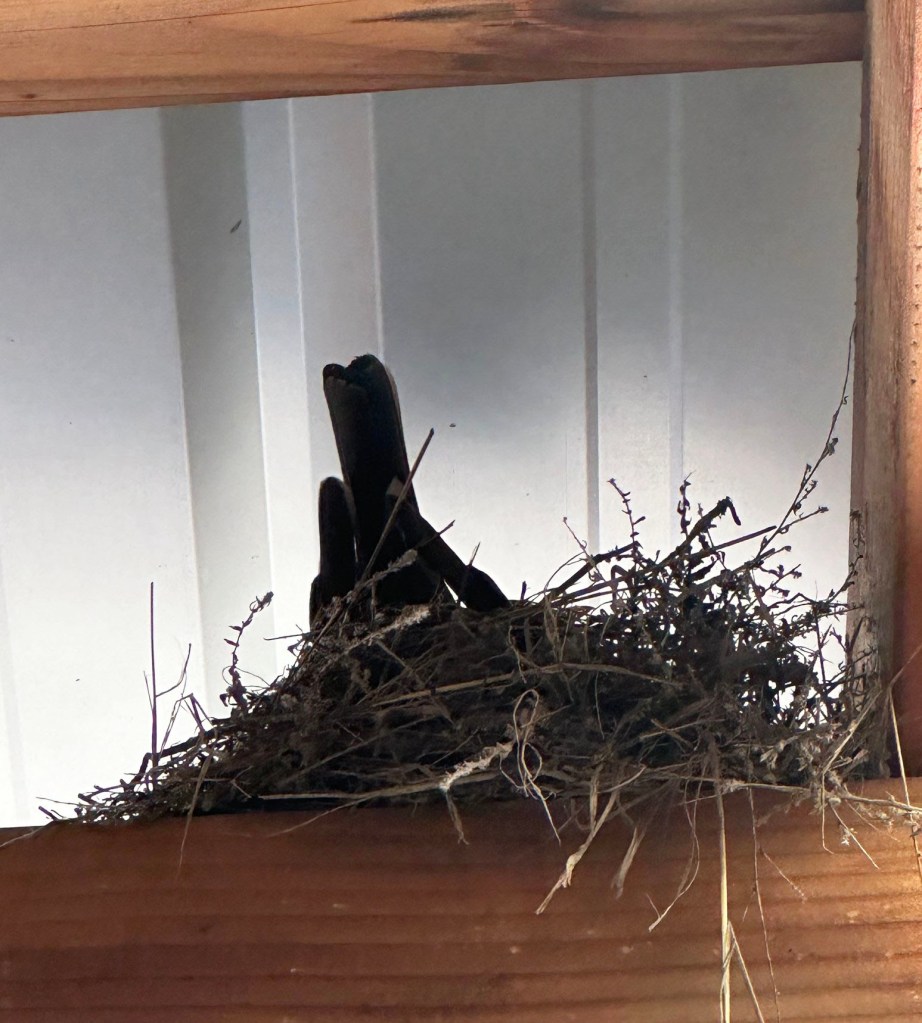
A pair of robins recently began nesting on a beam in my barn’s hay storage area. Their nest sits about twice my height above the ground. I pass near it several times daily to gather hay and fill feeding nets for my equines. I’m always aware now of a robin watching me intently from above. I try to avoid disturbing them too much—I want them to stay. In my heart, I secretly hope that one of these birds is my robin. It’s wishful thinking, I know—but it speaks to a very human need to reconnect with something we’ve loved.

My robin was real. A fledgling that had fallen from a tree in my dogs’ area. Its parents were nearby, agitated and noisy—enough to draw my attention. Fearing for its safety, I scooped up the little bird and moved it to a safer, dog-free part of the property. Its parents would continue to feed it for a while, but that baby was still vulnerable to hawks and other predators. I relocated it again to protect it more, but this time, the parents gave up. And so, I became its guardian.

That was during the waning days of the COVID pandemic, when supply chain issues made it nearly impossible to find live mealworms—essential for a young robin’s diet. Determined, I finally tracked down living night crawlers from a fishing supplier. I’d snip the crawlers into pieces, dunk them in water for hydration, and feed them to my little one, who lived in the garage and began to thrive.

As the fledgling grew, I started setting it between feedings on the lower branches of a mature pine tree. Upon my return, it would flutter onto my shoulder, ready for another meal. Before long, it began flying to me from higher and farther branches. The bird was maturing—and I knew it might leave me.

Still, I hoped. I dreamed that it would return someday with a mate and nest nearby.

Then one day, it was gone. I called and searched, heart heavy. The loss was immense. I still hold on to the hope that it survived—that it found its place in the world.

Every summer since, I’ve watched the robins around me more closely, wondering if any of them might be the one. None have been. But now, this new nesting pair shows no fear of me. One watches quietly as I pass, not alarmed enough to flee. Could it be my bird? I’ll never know—but I can hope.

Dear friends: The emotional connections we form—especially with those we’ve nurtured—run deep. And they last. Diana

End-To-End

Friday, May 31, 2024

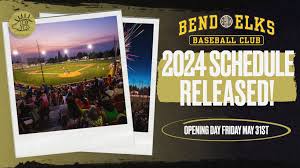
I’ve looked forward to today, the opening day of baseball locally. Our Bend Elks will play against the Walla Walla (Wash.) Sweets. My friend Julie and I will be in the bleachers, stomping and yelling for the Elks.

Last season, after hesitating for years to go to an Elks game, I attended one. I had expected little of a second or third-string training team. To my surprise, that game was a big family event. I was challenged to find a parking spot and an empty bleacher seat. The game, a slam dunk for the Elks, didn’t hold my interest throughout; however, the sociology did. Throughout, family groups cheered and stomped for the Elks and children had a grand time.

I picked up on a local club’s larger appeal, which extends beyond the game itself, by creating a sense of community and offering an affordable, accessible form of entertainment. I got hooked on attending and planned to buy a season ticket, but my working schedule interferes, so when possible I’ll attend games.

Today is important, too, unique in a different way. This is the last day our store manager, Lisa, will be working with us; she’s moving to Colorado to start managing a larger store. I’m not on today’s working schedule, but going to the store and will bid Lisa a fond goodbye. She’s one of the best managers I’ve been fortunate to know. All of us who work in this store will miss her.

This Saturday will be my next working day. It’s also the start day for our store’s new manager. I’m certain to be saying more later about the change.

Dear Friends: A day that’s starting emotionally and later winding up energetically. Diana

Good Energy

Monday, May 27, 2024

Memorial Day has arrived this year on the heels of my birthday. My special day improved more last evening, by the pièce de résistance of having dinner with my friends Susie and Julie. Today’s header is Susie’s capture of us, in the excellent Latin-style restaurant–Mexican martinis, fine food, and a joint farewell to this Birthday, my best of all.

Today is for getting back into gear and keeping my mood high. So far, so good.

I’ll add a little about those Robins nesting among my barn rafters. I think the larger bird is a female and that she’s “My Robin.” She is back in her birth area and about to hatch her first babies. A little research suggests all that makes sense.

When my baby Robin fledged enough to fly away, it seemed a very involving saga had ended too suddenly. I kept wondering if the bird might return, and read that wild birds may mature and return to their birth areas to nest and raise their young. I gathered that full maturity takes a couple of years and that the lead returning bird likely would be female.

Here’s a fact: my baby Robin flew away two years ago! Without questioning the accuracy of my memory or my recalled learning, I believe my little Robin was a female. And as another birthday gift, she’s returned to her birth area and sits on eggs in my barn.

Thank you, Susie, Julie, Robin Bird, distant good friends, and colleagues at work, for making this newest year start off special.

Dear Friends: Positive and negative energies are generated by the eye of the beholder. Diana

Birding

Wednesday, May 22, 2024

My camera captured this watching bird from a great distance. The image is good but surprising because I couldn’t recognize the bird type. Its coloring suggests a woodpecker, but it has a seed-eater’s beak. This probably is of a common variety, and wanting to know has encouraged me to download an app that identifies birds from photos. I will learn the answer after uploading this photo from my computer to the phone app.

I love photographing birds, and they can be challenging. They’re fast movers and can test a photographer’s skills. There are thousands of species, each with a unique appearance and behavior. Some are incredibly beautiful, and it’s thrilling to capture their assets.

Photographing wild birds, even on or around my property, connects me with nature. Spending time observing and appreciating brings peace, relaxation, and inspiration. Plus, I’m learning, about different bird species, their behaviors and habits.

Bird photography is educational and enriching; there’s always something new to discover and capture. Bird photography and bird-watching teach lots and inspire sharing because almost everybody loves birds. And in the world of birds, there’s much to love.

Dear Friends: A bundle of challenge, diversity, beauty, learning, and sharing. Diana

Bitties Insisting

Tuesday, April 16, 2024

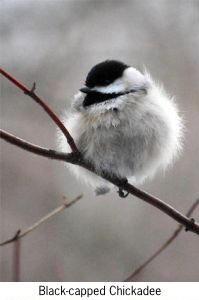
My house is under siege by two tiny birds, apparently mates, taking turns tapping unendingly into a lower corner of a high window. They’re working too high for wingless me to reach them without a 20-foot ladder. Little by little a hole grows. The birds are tiny—chickadees or nuthatches—but determined. I watch and yell to no advantage.

Their chosen window is precisely where a Northern Flicker drilled a large hole years ago. Apparently, birds are attracted to high spots protected by an eve. I love birds but would drive away these littles. I yell and threaten, but they ignore me. The long-ago Flicker left an unsightly hole that, finally, a house painter made to disappear.

Now, here we go again. This time, it’s a bird tiny enough to leave space in my palm.

They’re so high up it’s hard to tell, but I think a Chickadee bird pair is tapping into my house. My first impression was that the birds were Juncos, but a Junco doesn’t drill unendingly.

It’s a wonder seeing these tiny birds pecking into my house siding, determined to create a nesting space. A little research says that they can and won’t give up until they do.

Dear Friends: I’m becoming an unwilling nest host to bitty birds. Diana

Special Robin

Sunday, January 27, 2024

A few years ago, I rescued an infant Robin after it fell from a nest and landed inside a fenced area where my dogs run freely. I heard its screaming parents, picked up the wide-mouthed baby, carried it where the dogs couldn’t go, and set it down.

I intended to let the parents take care of their infant but worried about its ongoing safety in an open area that hawks may fly over. After struggling about having left the baby, I decided to return for it. The bird became the resident of an unused small birdcage in my garage. I had to find live food, which is what Robins eat, and the ticket was night crawlers, from supplies for fisherfolks. Those juicy eats grew my bird strong.

For weeks, it spent nights in my garage and days perched on a tree limb and waiting for me. I didn’t intend to keep that Robin as a pet, although it was tempting. Finally, one day, I discovered that my bird had flown away–completely.

For days afterward, I walked around in this area and called for my bird. My calls had always brought it flying in and landing on my shoulder, but not now. I could only hope to find someday that it had returned, maybe even nesting here, but there’s no evidence that’s happened.

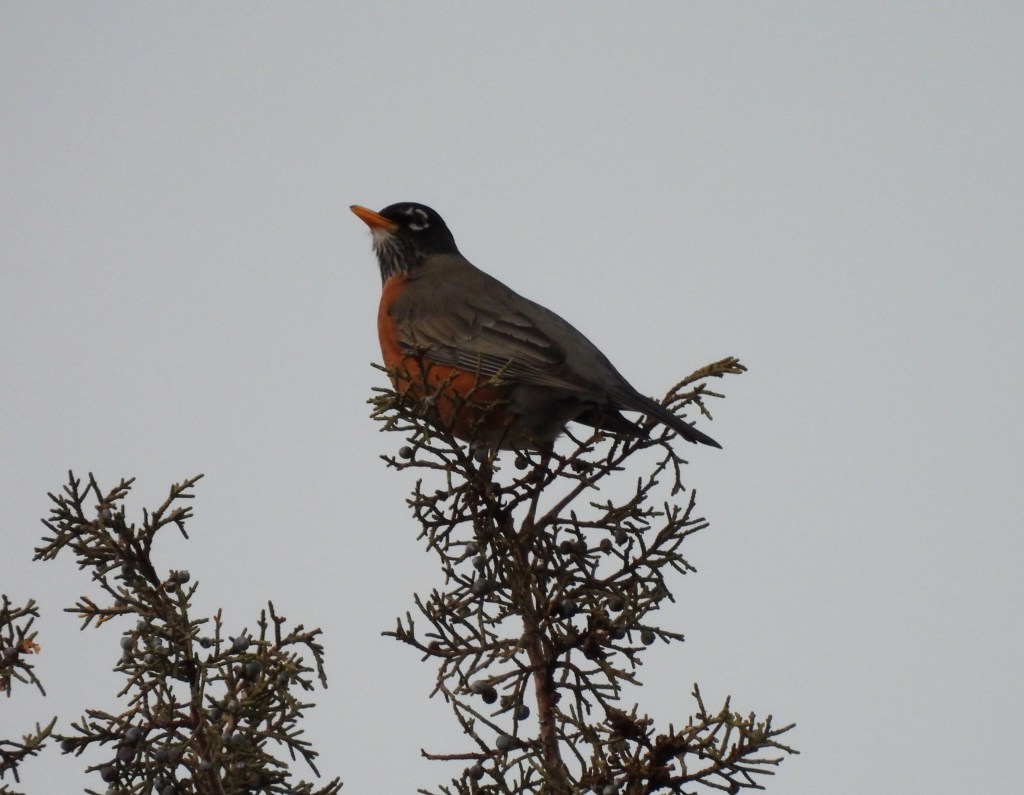
Since then, on spotting a mature Robin, I whisper, “Are you my bird?”

Dear Friends: It’s much of why I so appreciate and photograph them. Diana