
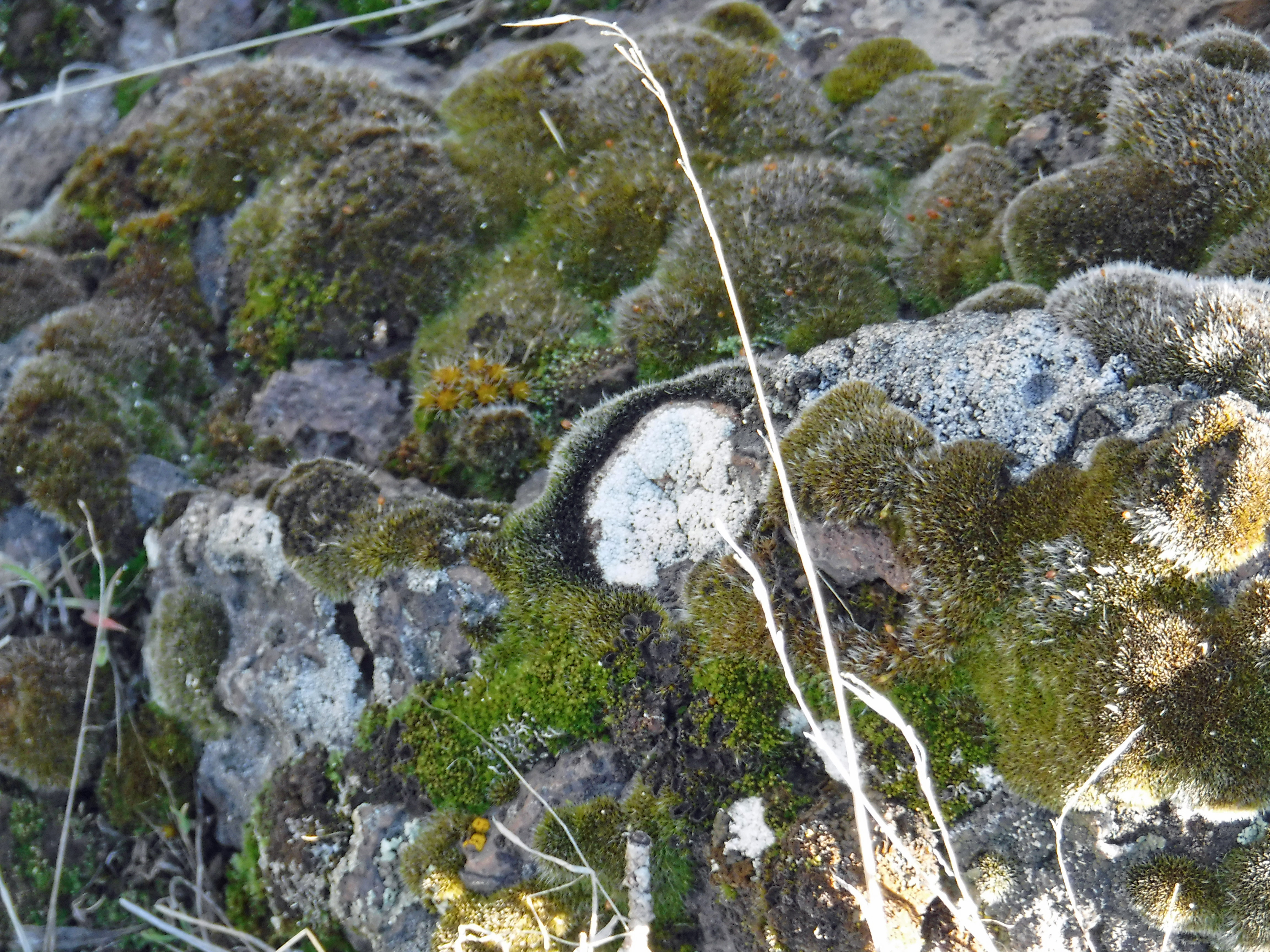
Saturday, April 06, 2019
Of unending interest to me are lichens and mosses, alive and thriving without human help or intervention, on ancient volcanic lava rocks covering much of my small acreage. The photo above shows two common fungi. The white patch is crustose–a crust on rock or other surface. Of course, the green spread is moss. Lichens are a combination of algae and fungus. The algae make energy through a process of photosynthesis and fungi provide protection from the elements.
Mosses are small flowerless plants that grow seedless and with very shallow roots. They attach themselves to rock surfaces or tree bark. The roots are too shallow to absorb water so mosses collect rain and water that runs over their tops. Since moss mostly thrives in shady areas, I’m not certain those inhabiting my desert rocks are true mosses and not another form of lichen.
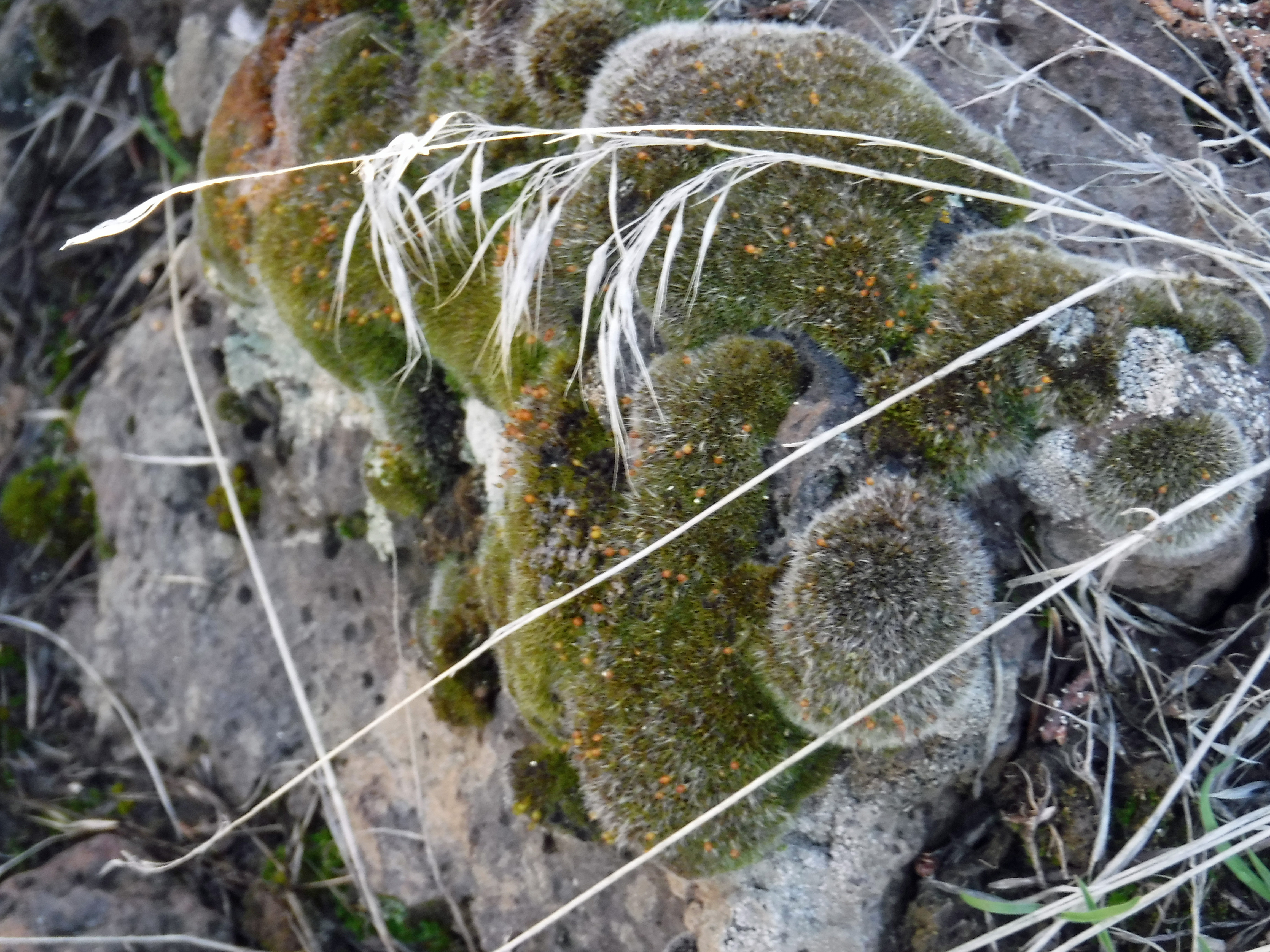
Lava rocks are full of holes that originally were formed by hot gasses that burst out during the ancient volcanic explosions that created this Pacific Northwest high desert and flooded it with rocks. Rock holes provide “footholds” for the tiny, sometimes microscopic, plants thriving on them. My general geographic area has over 1,000 species of lichen. On a single rock, several species may be living together, forming a tiny ecosystem, with various species performing different functions.
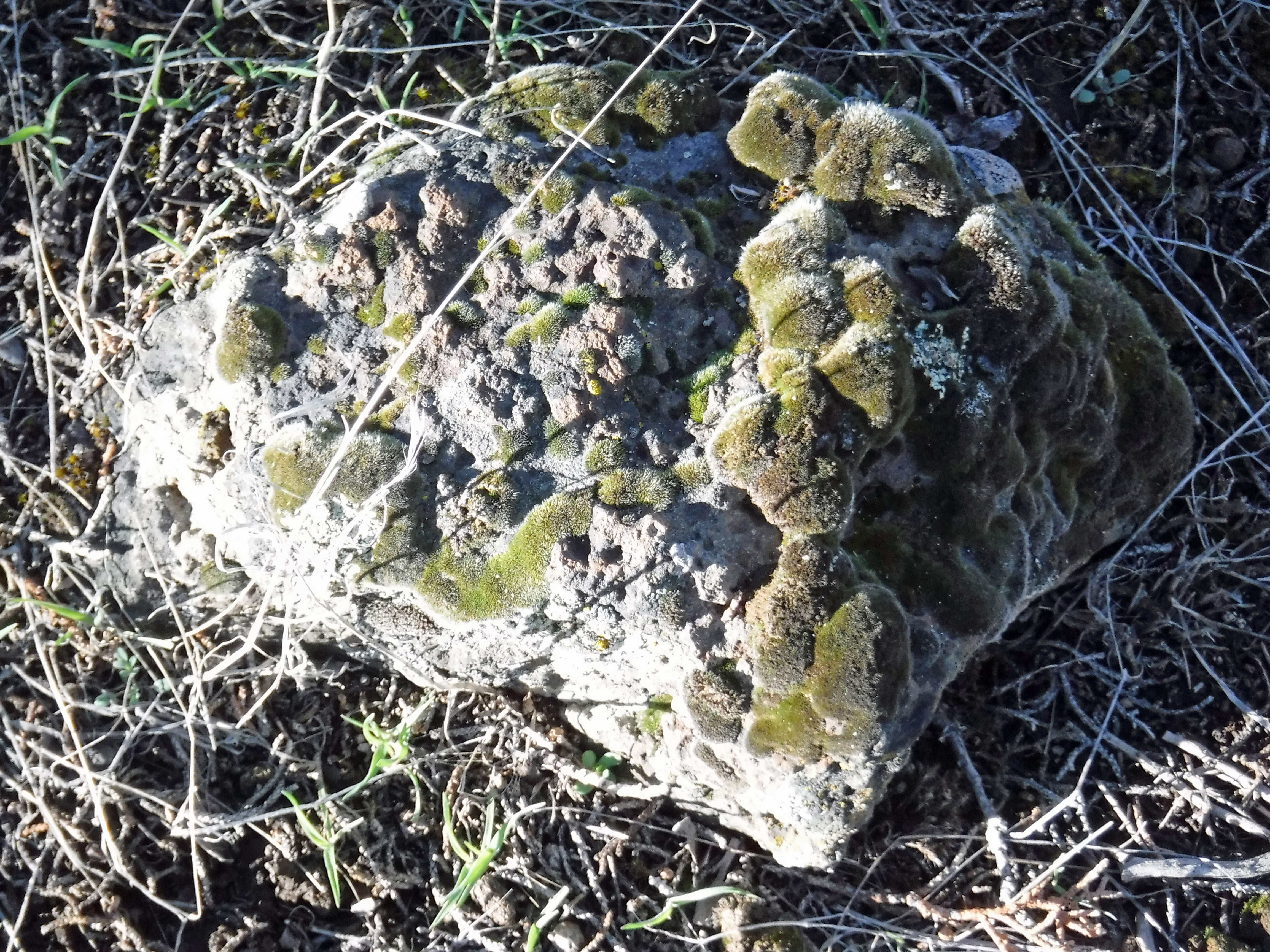
It’s daunting for a novice like me to identify various species and comprehend specific architectures and functions. I’m learning to grasp the strength, beauty, and importance of these tiny under-the-foot plants. To me, these rocky pallets increasingly look like art.
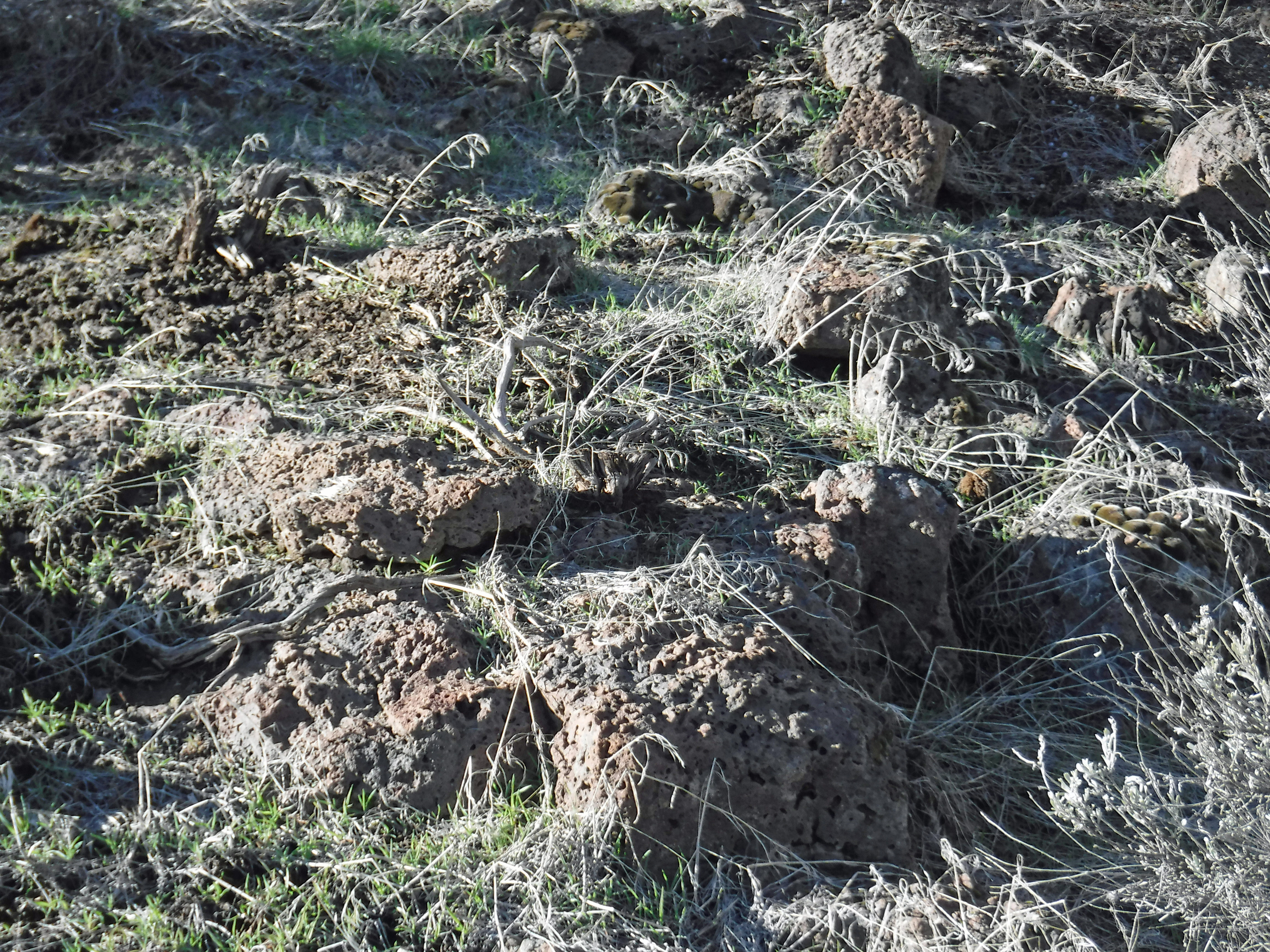
There’s an amazing variety of life on this planet. These tiny plants thrive from nutrients in air and moisture, and signal the general environmental health of their locations.
Dear Friends, It pays to be sensitive to all that’s below, above, and around us. Diana
 Diana's Morning Blog