
Friday, April 12, 201e
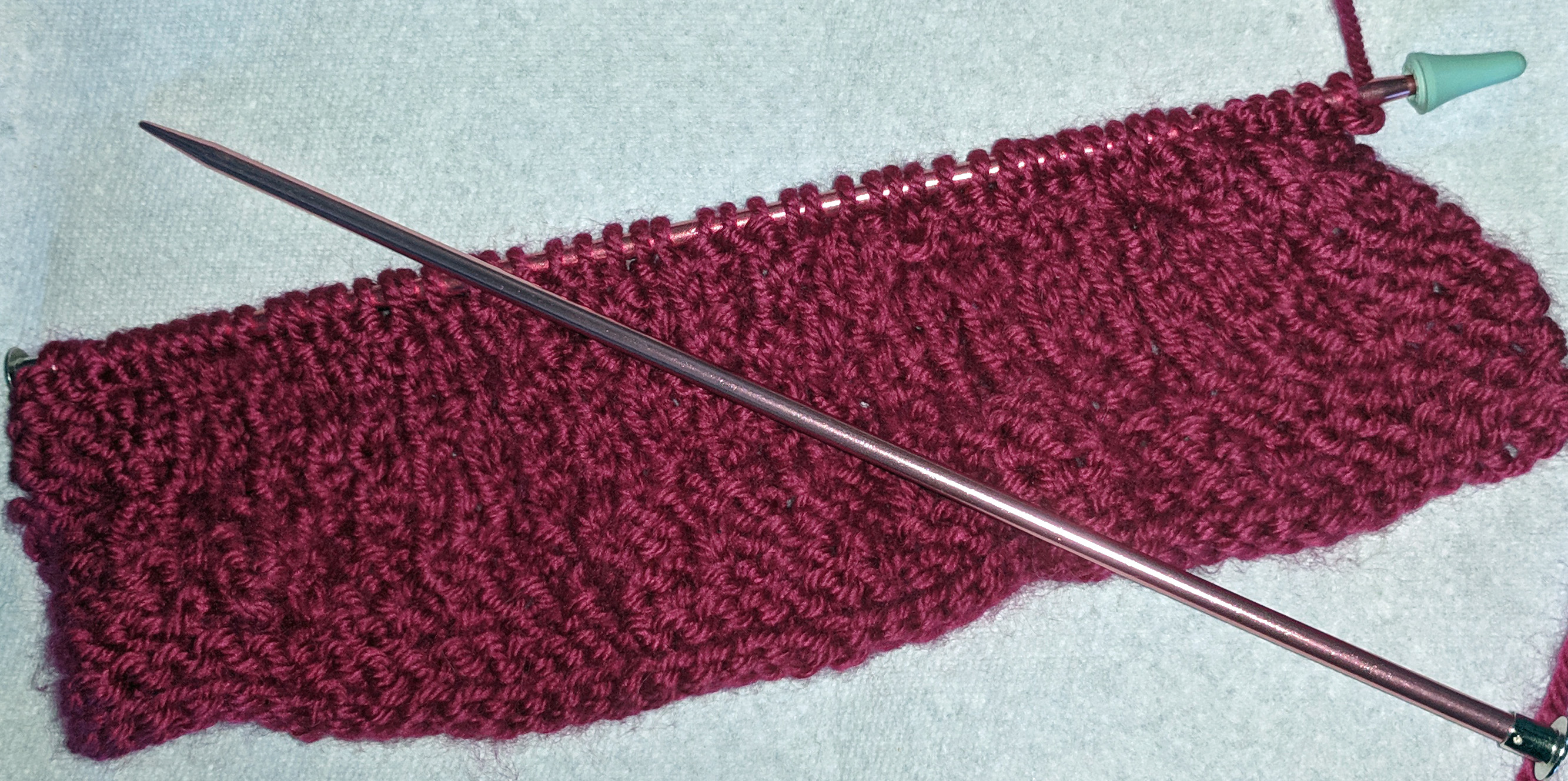
I’m pleased after many years of not knitting to find it easy to regain the basics, or almost to where earlier self-teaching efforts had advanced my skills. This week of practicing to create a dishrag has my needles casting on, knitting, purling, and casting off. So far, only a portion of the rag is knitted, and to be honest what’s done doesn’t much represent the instructions and pattern. To my chagrin, it’s easy to lose track of counts, to slip stitches, and to create odd workarounds, but this dishrag eventually will be an item that’s useful. It’s very good and freeing that I alone might ever see the finished product.
This act of knitting makes watching television easier while trying to follow the political mishegoss, wanting both to know what’s going on and blocking some details. This knitting forces me to remember differing row patterns, so I half-hear and half-miss the talking-heads’ perspectives. Besides, my mind, busy in the directions of yarns and weaves, has dredged up an old college course led by a couple, with doctorates, who specialized in the history of clothing and had primary expertise in women’s wear.
I think about the broader history of yarns and cloth. We know that ancient Romans wore togas, so in those days cloth and various connecting materials existed, but when in times prior did people first create body coverings? Apparently, cold weather had much to do with this. The earliest “yarns” might have been leather cords connecting animal skins to adequately cover humans. The making of fiber has been dated to before 10,000 BC, and the weaving into cloth of threads from animal fur, plants, and silkworms began about 35,000 years ago.
The complex history of fabrics and clothing goes hand in glove with changing social norms in developing populations. The story of clothing itself weaves a broad tapestry, and its possibilities consume, helping me lose track of row and stitch counts in a dishrag-to-be, while watching television and reflecting on ages-old sociology and geography issues.
Dear Friends, it’s an incredibly complex mix, social norms and human nature. Diana
 Diana's Morning Blog