Different Realities

Friday, October 17, 2025

I grew up in a small Oklahoma town during a time when social norms encouraged people to reconcile their differing versions of the world by searching for and settling on common viewpoints. The best solution for conflicting opinions was usually to satisfy the “commonly held” middle ground. Such viewpoints tended to reflect the widely accepted and “popular truths” that most people—before the internet and modern technology—generally agreed upon.

As a young person, I found the differing versions of reality unsettling. I struggled to make sense of them before eventually realizing that many forces shape people’s perceptions—one’s upbringing, information sources, fears, hopes, and fatigue. Other influences too—culture, personal experience, and cognitive biases—play powerful roles in shaping how we each perceive truth and reality.

Even now, I’m sometimes taken aback when long-time or new friends express opinions or wishes that seem to belong to an alternate reality. Some might find such moments reassuring, as evidence of progress, while others might see them as signs of decline. I’ve come to sense that some people find comfort in tradition while others draw inspiration from innovation. Recognizing that helps me accept our differing realities.

I often imagine us all standing in the same landscape, each looking up at the same vast sky but through different filters—some perhaps tinting it with unusual colors. Each of us navigates life through a private, learned lens, one that has either been refined over time or obscured by it.

In my more mature years, I try to respond gently to others’ realities. I no longer attempt to reconcile their perspectives with mine—or mine with theirs. As others speak from their own worlds, sometimes so different from my own, I try to listen for the heartbeat beneath their words—for the universal emotions of worry, pride, love, or loss. It’s there, in those shared emotional spaces, that our realities overlap and understanding becomes possible.

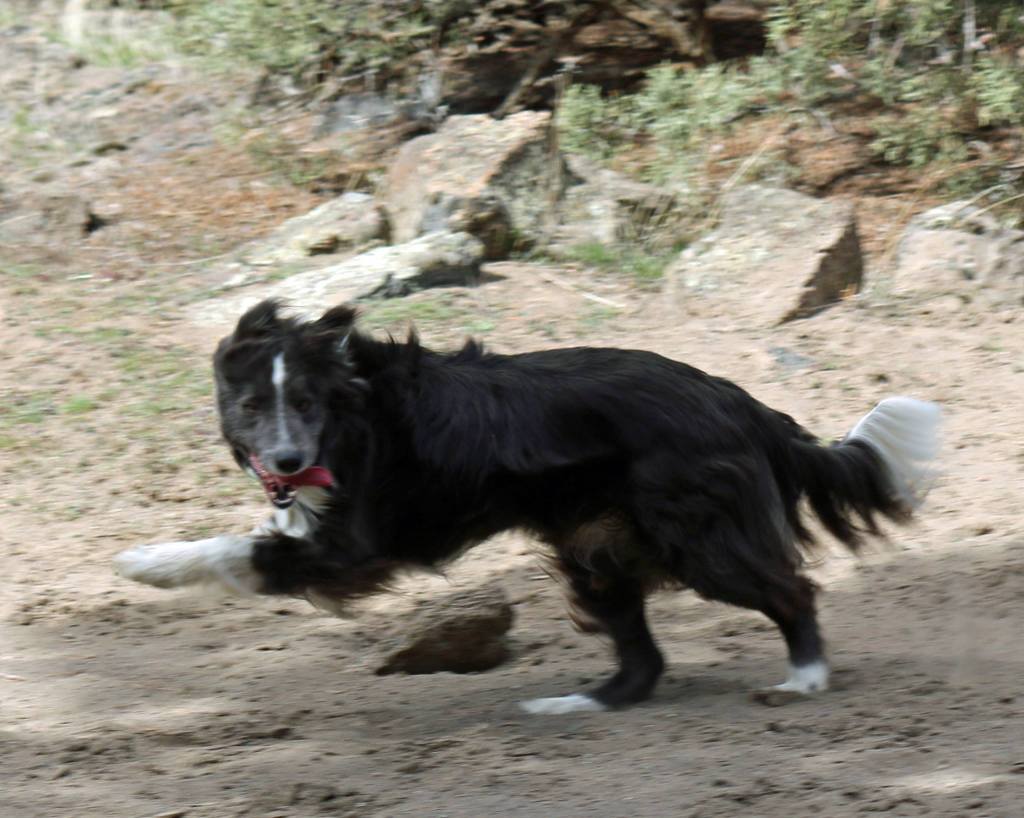
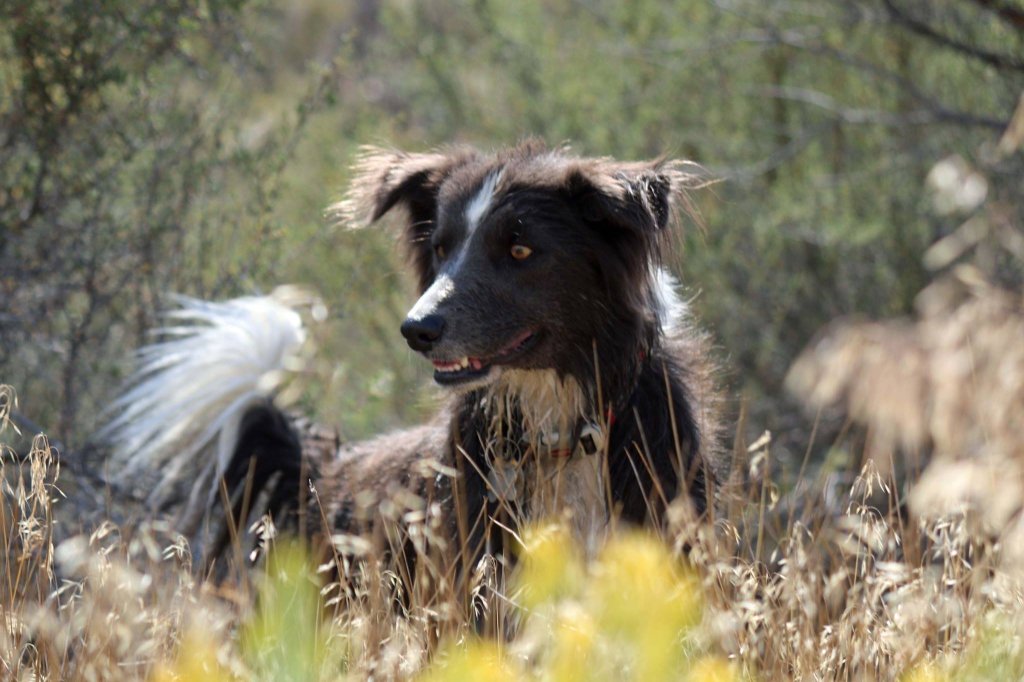
These days, I keep my focus on what’s directly before me—my own, very real world. That includes my dogs at dawn, the fall season’s newly chilled air, and the always-marvelous scent of early morning coffee. These rhythms mark the beginning of my days; they are among my certain truths.

We often hear that our shared world is fracturing. That notion is open to many interpretations. Yet despite our differences, many of us still believe in shared ground—the small, tangible things we can all see and touch.

We may never fully align others’ realities with our own, but we can remain faithful to the core values that most people strive to live by and nurture in their daily lives.

After all, we are remarkable beings—capable of rising to the challenges of caring for one another.

Diana

Falling Back With The Pack

Wednesday, October 15, 2025

Every fall, when the clocks are about to “fall back,” I find myself thinking about the ways this time change will ripple through the rhythm of my household. For one thing, there are my early mornings—I’m an early riser, usually awake by five. Very often, I’m reminded it’s “getting-up time” by the gentle tapping of paws on the hardwood floor, heading my way.

After saying hello to my dogs and getting on my feet, I love being awake in that early hour. The world is still quiet, the coffee is strong, and for a few quality moments, I have no obligations.

It amazes me how precisely my dogs seem to know when it’s five o’clock. I hear their toes tapping down the hallway, sense their hesitation, and then find them beside my bed—tails wagging, eyes bright. My projection clock says it’s five o’clock, and I wonder how they tune into some invisible clock that runs on instinct instead of batteries.

In a few short weeks, their invisible clock will clash with the one on my wall. When daylight saving time ends, will they still wake me at what their bodies think is five a.m.—while my clock insists it’s four? How long will it take them to adjust to the new rhythm? I suspect they’ll manage faster than I do.

I’ve gone through this annual shift many times and know what’s ahead. Yet every autumn’s time change feels like a new game. I can already anticipate my confusion, mild grumpiness, and the faint irritation that comes with every mandatory reset of the clock.

The dogs, like me, will need some time to sort things out. Meanwhile, it’ll be on me alone to get up around five—while they sleep in, waiting for what feels right to them. Soon enough, they’ll catch on. Dogs are practical; they read a household’s energy for meaning beyond the numbers on a clock.

My notions of falling back with the pack make the upcoming change feel less mechanical and more communal—as if we’ll all be adjusting together through the darker mornings, each in our own way.

Our human world may be run by clocks and calendars, but the dogs might have it right: when the rhythm changes, don’t fight it. Just stretch, yawn, and greet every new wrinkle with a wag.

Essentially, time itself has its moods.

Diana

In The Story

Saturday, October 04, 2025

I grew up in the 1950s and ’60s, when life expectancies were shorter than they are today. Back then, reaching eighty-five seemed almost mythical — something that happened to “very old people,” but not to all of them.

Yet here I am, at eighty-five, still alive, active, and managing the daily demands of home life while also working a full-time job outside my home. Over the past few years, as I’ve learned how to work in retail environments, I’ve encountered ageism — sometimes subtle, sometimes not. People have told me outright: “You shouldn’t be working, you should be enjoying your twilight years!” or “You’ve earned your rest — why are you here working?”

My life lessons and learning are that staying engaged, helpful, and connected is my way of enjoying and making the most of them.

After experiencing uninvited confrontations related to aging, I have elected not to answer when people ask about my age. Let them look. Let them guess. I’ll let my energy and presence speak for me. Age is only a number; contribution is a choice.

I’m now rethinking somewhat, for Jane Fonda has begun resurfacing in the public eye again. And, I find myself noticing her with renewed interest. She has always been bold — both in her career and in her willingness to age openly, in plain view of the world. Now, while approaching eighty-eight, she is again speaking out, supporting free speech and democracy — still active, still fearless, still herself.

Her appearance has changed, naturally, but not in ways that erase her. She’s slender, stylish, and poised. If she’s had work done, it’s subtle. She lets her neck, however, tell the truth of her years — and to me, that’s oddly comforting. I see her as not hiding from the passage of time.

To me, Jane Fonda has become more than just an actress or an activist. She is a symbol of endurance. Her journey, which we have witnessed growing up alongside her, is a testament to her resilience and strength. She symbolizes the permission to remain visible, to express opinions, to care deeply, and to stay part of the ongoing conversation. She shows that relevance is not confined to youth.

At eighty-five, my private reality is a testament to the meaningfulness that comes with caring for animals and responsibilities. I never expected to live this long, feel this alive, or be this responsible. The unexpectedness of my current situation keeps life interesting. Yet, I still work full-time, on my feet, solving problems and engaging with people. And when the day is done, I return home to care for my animals and keep my world running. It’s not easy, but it brings a profound sense of purpose.

To people who suggest I should slow down, relax, and “enjoy life,” it’s my work and routines that bring me joy — they give shape and purpose to my days. I’ve never had cosmetic surgery and don’t want it. Instead, I take pride in how I present myself: in my clothing, my interests, my energy. My mind is clear, my curiosity intact.

Without family nearby, my workplace provides me a sense of belonging — through friendly interactions, shared goals, and the simple recognition that I am still making a contribution. Those exchanges keep me grounded.

And now, to my surprise, Jane Fonda is becoming a role model, not for her fame or glamour, but for her persistence and grace. She reminds me that aging isn’t about looking young — it’s about staying in the story.

Maybe that’s what aging is teaching us: not how to fade away, but how to keep showing up. Jane Fonda illustrates that we can grow into our later selves with intention, not apology. She is still visible, still learning, still engaged — and so am I, in my own way.

Inside, I don’t feel old. I think seasoned — aware, shaped, and, in many ways, more certain than ever. My work keeps me connected; my mind keeps me company. And if I find a mirror in Jane Fonda, it isn’t in her polish or fame — it’s in her refusal to disappear.

At eighty-five, I’m not winding down. I’m still becoming — quieter, perhaps, but clearer. Still part of the conversation. Still in the story.

Diana

Thirty Years On

Friday, October 03, 2025

Thirty years ago, I was deeply invested in the O.J. Simpson trial, as were so many others. It was more than a courtroom drama—it felt like a seismic event that tested our hopes, our doubts, and our fragile trust in the justice system. When the verdict was announced on October 3rd, the nation wasn’t just divided by opinion; it was stirred by waves of strong emotion. Some felt relief, while others were left heartbroken.

Today, I sense a similar atmosphere in our national life. Once again, many of us feel shaken, uncertain, or disbelieving when we see decisions made in courts, in government, or in the public square. We may not all agree on which choices are right or wrong, but we share the unease that comes when trust feels uncertain.

I’ve also felt how these larger events ripple close to home. Friendships I valued—built on horses, shared rides, and laughter—were tested when politics grew louder than the bonds between us. It saddened me then, and it still does, when division outweighs connection.

Yet, from both then and now, I’ve learned reminders worth holding onto. History is filled with moments that leave people at odds, when decisions shake our sense of stability. But history also shows that communities, friendships, and even nations can find renewal when we make space to listen—especially across disagreement.

The O.J. Simpson trial anniversary may recall a wound, but it also reminds us that we’re not alone in feeling disbelief, and not alone in hoping for better.

—Diana

Lessons In Jewelry

Friday, September 26, 2025

I grew up with the saying, “Diamonds are a girl’s best friend.” In mid-20th-century culture, that line carried enormous weight. A diamond was more than a glittering accessory—it symbolized status, romance, and permanence. It was also, and very often, a woman’s only financial safety net. When women had little access to income or property, a diamond ring could be converted into cash if someone suddenly found herself left and on her own.

Working in jewelry today tells me how much has changed. Modern women build careers, manage investments, and create their own security. Diamonds remain desirable, but less as a lifeline. Talking with customers has taught me that diamonds are just one option among many ways to celebrate love, beauty, or success.

I see today’s women often choosing pieces that tell their own stories. A birthstone ring, an heirloom reset into a modern design, or a pendant from a local artisan can mean more than a flawless solitaire. Essentially, jewelry is becoming autobiographical—and saying, this is who I am, rather than this is what a woman should have.

I also see the shift favoring ethics and individuality. Many women prefer lab-grown gems, recycled metals, or fair-trade stones. Others embrace color—emeralds, sapphires, and tourmaline—or opt for raw crystals and asymmetrical cuts. Jewelry is often collected in layers and stacks, shifting with mood and season.

So what replaces that old “best friends” phrase? Maybe nothing—and everything. Younger women, especially, are unbothered by distinctions between mined and manufactured diamonds. They want bold sparkle and personality, not conformity. Meanwhile, women from traditional cultures often still value mined diamonds as both symbol and security.

What I see every day is that the “best friend,” rather than being a single stone, is having choice itself—the freedom for a woman to define what sparkles brightest for her.

Diana

Scattering Seeds, Rebalancing

Thursday, September 25, 2025

This fall, I can’t seem to get flowers, bees, and butterflies out of my mind. These days are shortening, and there’s more chill creeping in, yet my mind keeps circling around things like nectar-rich blooms and winged visitors returning to them one day.

It’s probably due to the pressures in my outside retail job. The store is busier this time of year — new displays, seasonal merchandise, constantly shifting schedules, and the steady press of customer interactions. Additionally, leadership weighs on me. I cringe at being micromanaged and pushed toward difficult-to-achieve sales goals. These leave me off-balance, make me want to establish my own pace and direction. At home, my mind keeps wandering toward slower, more sustaining rhythms.

Now, here in Central Oregon, fall is sharpening the air. Mornings begin with thin frost, afternoons flash with sudden sun, and evenings drift early toward darkness. The horses’ and my donkey’s coats are thickening; my dogs race across grasses that crunch under their paws; and a more expansive sky above the Cascades creates dramatic clarity.

In these everyday seasonal scenes, I find myself searching for emotional balance. My thoughts aren’t just passing, but they’re pulls–to scatter wildflower seeds, to trust the earth to hold and protect them through winter, and then, see blooms rising with bees and butterflies dancing among them again in spring.

It’s a way of offsetting the grind — those hours measured in transactions, sales goals, and schedules. I yearn, instead, for another continuity — the hum of bees, the shimmer of butterfly wings, the quiet return of flowers after their winter’s sleep.

And besides, there’s a larger picture. Planting seeds for pollinators is also planting seeds for myself — a reminder of beauty’s return after seasons of dormancy. Renewal doesn’t require much — just clearing a patch of ground, scattering seeds, and trusting in nature’s quiet magic.

Maybe my fall thoughts aren’t only about flowers and creatures. They might also be pointing me toward deeper needs, like toward balancing the seasons of my own life. What I’m sure of right now is that scattering seeds feels like an excellent step forward.

These small actions will matter — for bees, for butterflies, and, in many quiet ways, for me too.

— Diana

Hearing the Calling

Wednesday, September 24, 2025

For several days, and again this morning over coffee, I’ve had my mind on an old movie that I’ve chosen to watch more than once: Bagdad Café (1987). Like Sounder, which I recently wrote about, it’s stayed with me longer than most films. Maybe because of the quiet desert roads, which feel oddly familiar against my own Central Oregon landscape—wide spaces, moments of isolation, and the surprising ways “connection can arrive.”

Each time I’ve watched, I’ve sensed there’s more going on beneath the story’s surface. At first glance, it appears to be a lighthearted, eccentric comedy with superb acting. However, upon reflecting on its story and characters, I’m convinced that it’s an allegory—and one worth sharing.

On its surface, Bagdad Café is quirky and offbeat, full of small mishaps and comic misunderstandings. Yet behind the humor lies something larger. The setting is a dusty, broken-down café in the Mojave Desert, the sort of place most would drive past without stopping. Into this place come two women: Jasmin, a German tourist, after suddenly being abandoned by her husband, and Brenda, the café’s owner, after being left behind by her husband. Both women are prickly, suspicious, and in their own ways exiled and alone.

At first, the café is a mess—disordered, tired, going nowhere. But slowly, almost imperceptibly, Jasmin’s presence begins to change it. She cleans, she listens, she performs small acts of magic. Brenda resists at first, then softens. Before long, the café is transformed from a tired outpost into a place of beauty, music, and connection.

One image that lingers with me is of Brenda’s husband, who, after leaving, keeps watching the café through binoculars. He has walked away, yet can’t resist observing from a distance. To me, this is part of the allegory. He represents those who see but never engage—hovering on the edge of transformation but unwilling to step into it. His gaze is controlling, even possessive, yet powerless. In contrast, Jasmin—the German, or true outsider—enters fully and brings renewal. The binoculars make the husband an emblem of distance, without connection, reminding us that healing comes only when we dare to join in, not when we stand back and watch.

The cast itself reinforces this sense of something larger: a German tourist, a Black American café owner (played by a British actress), an American painter (played by a once-famous film star), and an assortment of desert drifters. This gathering suggests more than coincidence—it’s also a picture of cultures meeting, colliding, and creating something new together. In that sense, the movie’s haunting refrain “I am calling you” can also be heard as a call across borders, an invitation to connection that transcends nationality, language, and race.

Other details I can’t shake involve Brenda’s children. One is a young father determinedly practicing classical piano in that unlikely setting. His grand piano in that battered desert café feels almost surreal, yet it deepens the allegory: aspiration in unlikely soil. His music insists that beauty and culture belong everywhere—not just in gilded concert halls, but even in a dusty roadside outpost, if someone dares to press the keys.

Then there’s Brenda’s teenage daughter, restless and intent on leaving. She represents another answer to the calling: not to stay and transform, but to escape in search of something better. Her choice is human and understandable, yet it contrasts with Jasmine’s quiet decision to remain and renew. Together, the piano player and the daughter remind us that when the call comes, each of us must answer in our own way—by staying and creating, or by moving on. Either way, the call cannot be ignored. Both children become transformed by the café’s changed atmosphere and remain connected to it.

The more I think about it, the more Bagdad Café feels like a parable of renewal. The café isn’t just a diner—it stands for the barren places we all sometimes inhabit, whether in spirit or in life. Jasmin, the German stranger, becomes an unexpected redeemer, bringing grace without asking for much in return. Brenda, toughened and skeptical, is the everywoman—ready for renewal if she dares to trust.

Threading through it all is the film’s haunting song, Calling You. The lyrics drift in like a voice from beyond:

A desert road from Vegas to nowhere … I am calling you.

For me, that refrain is the heart of the film—maybe hope itself speaking, maybe spirit, or simply the mysterious force that draws us toward one another when we feel lost. Whatever its source, the call is unmistakable. It reminds us that life doesn’t end in the wasteland. Something new can bloom, even in the dust.

These days, I am struggling to find my footing in a competitive environment among strong coworkers. I’m recalling this movie and its message, likely because it’s calling me to stay open to the possibility of renewal, even though I sometimes feel inclined to shut down.

Maybe the movie’s refrain—I am calling you—and its use of magic, aren’t just for the characters in a quirky old film. Perhaps those are calling all of us, tugging gently, if only we allow ourselves quiet moments to hear.

—Diana

Remembering “Sounder” (1972)

Sunday, September 21, 2025

Over coffee yesterday morning, I started thinking about a long-ago movie that featured a dog and a family. It’s one of my all-time favorites and has stayed with me more than most. Today’s header photo, a still from that movie, shows Sounder the dog, the father (played by Paul Winfield), and the eldest child (played by Kevin Hooks).

It came to mind after I’d just finished reading a New York Times piece about “all-time best movies,” in which the writer asked readers to email him with their own favorites. As a former heavy-duty movie buff, I started thinking. The article listed some great films, but it left out the one that immediately came to me: Sounder. That 1972 film has never left my personal best list. I felt so strongly about its absence that I did something I’ve never done before—I emailed the writer, explained briefly why Sounder belongs there.

Reflecting further, I recalled the film’s extraordinary cast: Cicely Tyson, Paul Winfield, and other fine actors. Their performances earned Oscar nominations, and the film itself did something Hollywood had rarely attempted—showing a Black family’s dignity and endurance in a powerful, touching way.

The story follows a sharecropping family in Depression-era Louisiana. Daily life is already difficult before the father is jailed for stealing food to feed his children, leaving his wife and son to carry on. What struck me then—and still does now—is the quiet strength of that family, the boy’s coming of age, and the resilience that carries them through.

And of course—Sounder, the family’s hound dog. His loyalty and presence underscore the family’s strength and make the story unforgettable. Remembering him today, I half-wish I had a hound dog of my own.

Sounder is central to the film—both literally and symbolically. Loyal and loving, he represents resilience and hope, even when he’s gravely injured early on. The story’s emotional core is tied to the boy’s bond with Sounder, and how that love helps him endure his father’s absence.

The film received four Academy Award nominations: Best Picture, Best Actor, Best Actress, and Best Adapted Screenplay. Before then, no movie featuring an all-Black principal cast and story had ever received such high recognition. Its excellent director was Martin Ritt.

To me, Sounder belongs on every “best movies” list—as a film about survival, love, and hope. Remembering it reminds me that sometimes the quietest stories stay with us the longest.

— Diana

Underground Railroad, Canine Edition

Saturday, September 20, 2025

Yesterday I was late to work. I had just opened the front door to leave when little Mitzvah appeared, panting and wagging, eager to come inside. I let her in, gave her a cookie, and tucked her into her crate before heading out to discover how she’d escaped. It didn’t take long—bigger, stronger, and endlessly determined Chase had dug yet another hole under the fence. The gap was just wide enough for Mitzvah to slip through, but not big enough for him.

So, once again, I was running late thanks to my nonstop digger. On days when he doesn’t manage to tunnel under, he digs straight down, anywhere and everywhere. The dogs have nearly half an acre to run in, surrounded by a six-foot fence that I’ve even raised to seven feet to keep Chase from climbing or leaping over. Yes, he’s proved capable of both. And in the middle of all that dog space? Holes—deep, straight-down craters that I discover and fill in while treading carefully so I don’t step into one.

As for his under-fence escape holes, I’ve got a new problem. Over the years, I’ve blocked Chase’s tunnels with lava rocks, but I’ve run out of any I can carry. What’s left are boulders too big for me to budge. My substitute solution has been filling empty plastic containers—kitty litter tubs, half-gallon milk jugs, anything I can find—with water to make them heavy enough to block the digs. I’m running out of those, too, and I’m considering buying several jugs of distilled water just for this purpose.

What really gets me is that Chase has now taught Mitzvah his tricks. She’d never have tried escaping on her own, but now she knows to wait while he digs and then slip through the opening he makes.

I wouldn’t care as much if my property didn’t back onto a road that’s grown dangerously busy with fast-moving cars. This used to be a quieter stretch of countryside, but Central Oregon has exploded with growth. The through-roads are jammed with frustrated drivers, and I come home every day wanting only one thing: the dogs safe inside, far from that traffic.

— Diana

Discovering Wristwatches Anew

Friday, September 19, 2025

In my outside job, I work in a department where I frequently sell high-end watches. At first, I was fascinated to discover how many customers still enjoy studying and wearing traditional wristwatches. I wondered why they bothered with conventional styles when smart watches can do so much more—letting us know when a phone call or text arrives, reminding us to pause, breathe, and reflect, and so on. I’d been almost satisfied with my smart watch.

Almost—because I’ll admit, those sudden prompts to “pause and breathe” or “note your feelings” often left me annoyed. Meanwhile, through the process of presenting and selling traditionally styled watches, I became intrigued by their strong points: accuracy, battery technology, sturdiness, dependability, and, not least, their wearable beauty.

On impulse, I ordered two wristwatches online. One is a refurbished brand I’ve been selling—a high-end, good-looking piece that is fashionable, accurate, and reliable. The other is a $9 rugged-style timepiece that has unexpectedly become my favorite. Sporty and lightweight, it offers day, date, time, alarm, seconds, and stopwatch functions. My only concern is whether its “crystal” (likely hardened plastic) will scratch easily. But at $9, if it does—who cares?

So, I’ve retired my smart watch. No more charging, no more unwanted nudges. I’ll miss alerts to incoming calls, but my phone is usually in my pocket with a ringtone I can hear. I might miss step counting, but I know my daily steps already run into the thousands.

Reflecting on this change, I’m reminded again how learning shifts perspective. For years, I never once considered wanting a traditional wristwatch. Now, understanding their dependability, durability, and sheer beauty has made them alluring—and even a “heapy-cheepy” rugged model proves that simple technology can be capable and cool.

Perhaps best of all, my own experiment gives me more insight—and more articulate ways to share the appeal of high-end wristwatches with customers.

— Diana