Revisiting

Thursday, October 15, 2020

It’s striking the impact of places where for chunks of our lives we lived. Over time a location that becomes very familiar leaves lasting impressions. Regardless of whether we engaged in relatively quiet country areas or in very complex city environments, places very familiar become sort-of family-like ties to our pasts.

I began thinking about this while reading a biography of Eleanor Roosevelt. She spent most of her life, before reaching her mid-thirties, in NYC. When Franklin’s political ambitions moved his family to D.C., Eleanor went to work there and helping him had to learn the new city. She wrote in her diary and to friends how greatly she missed New York and the variety it affords to those living there.

Recently, music by Bach flashed me back to a long ago Kansas City life. Annually between Thanksgiving and Christmas, a major insurance company dedicated a large windowless side of its building to evenings celebrating the holidays. A camera hidden in brush operating from dusk to dawn flashed onto the building a slideshow. It consisted of religiously-oriented paintings accompanied by Bach’s music, a lovely gift to the community. I remember evenings when my young self paused my car, to see, listen, and for the first time fall under the spell of classic arts.

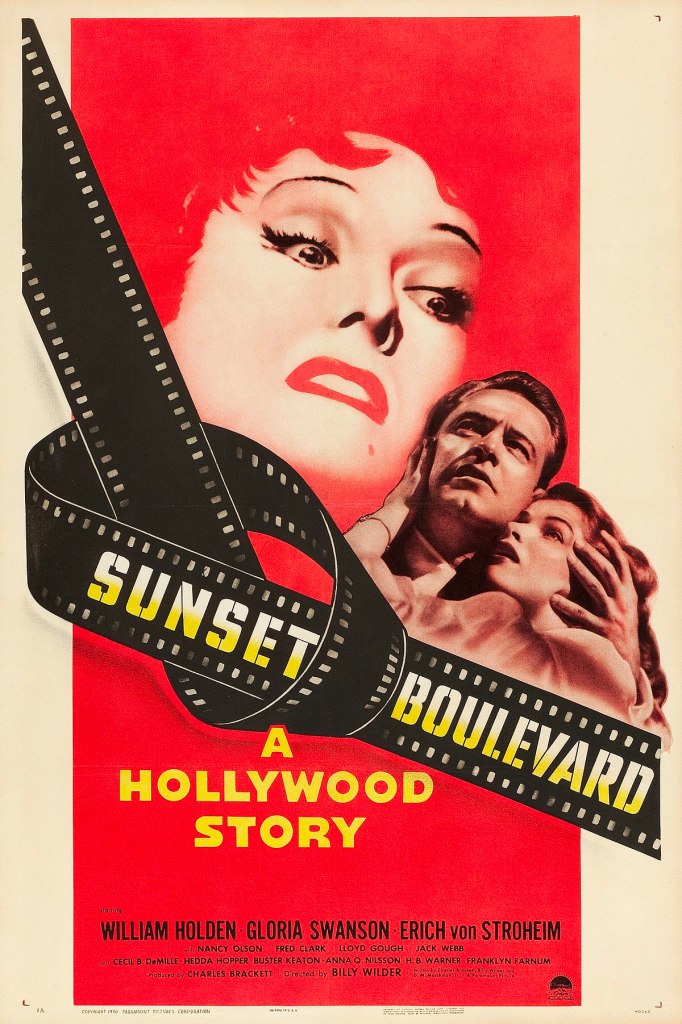
My casual musings about Eleanor’s NYC and old Kansas City opened my mind to an article from the Getty Museum’s blog, about Los Angeles’s Sunset Boulevard, that long-lived iconic major street. The article describes the boulevard’s beginnings and how over time the street has been altered by changing populations and cultures. The article is made more cool with captures from a photographer who long focused on the street.

I lived many years in Los Angeles, the article hits a homer. That city and boulevard were big in my life. We living in L.A. during the 60’s remember Sunset Boulevard’s wild “Music City corner”, and our disgust as Sunset Blvd. transformed from elegant to seedy, and then to something in between. This article makes me wish to drive right now entirely along Sunset Boulevard, from beach to beyond downtown, to relive the spell of that area’s cultural changes on my young adulthood.

Here’s a link (it’s a 6-minute read): http://blogs.getty.edu/iris/timeline-explore-a-changing-sunset-boulevard/

Dear Friends: Places as almost-family, there’s lots to remember and reconsider. Diana

On Fire

Hilma af Klint’s Dove, No. 02 (1915)

Wednesday, October 14, 2020

I’ve been majorly impressed by the fine 2019 French film, Portrait of a Lady on Fire, written and directed by Céline Sciamma. Her excellent script (nominated for an Oscar) set the film’s action in the year 1775 and detailed the creation of a work of fine art by a talented woman artist. In preparing to write, Sciamma searched for works, dating from before modern times, by women artists. She discovered that many women had produced fine art, been known and recognized by their peers and contemporary art critics. She came to realized that women artists working in past centuries have been overlooked or ignored. In contrast, male artists working in past centuries have been celebrated.

Sciamma’s film teaches much by illustrating many factors that support good writing and informed directing. Its scenes boast superb close-ups and wide-screen cinematography, illustrate creative lighting techniques, intrigue viewers using unique sound technology, and focus on carefully-timed actors’ physical activities and expression changes.

Its brave and independent woman artist is a model for unrecognized women who produced in years (roughly) between the 1600s and early Twentieth Century. Sciamma’s work influences more by alerting interested viewers to news popping-up here and there about early women artists. For example, a recent article in “The Guardian” about Hilma af Klint (b. 1862) suggests that she might have invented abstract art.

Like Sciamma’s film artist, af Klint came from a wealthy family and thus could choose to learn art and find ways to self-support as she wished. Af Klint is interesting to learn about, and moreover, her long-ignored art works are exquisite. She’s gradually being recognized as a fine artist. Included in this article is a film trailer previewing an upcoming lovely documentary about her work.

True art is a multi-layered canvas, it’s visual, idealistic, passionate and speaks to a broad audience. Wonderful art keeps speaking, and both Sciamma and af Klint offer fascinating insights that increase awareness.

Here’s a link to “The Guardian” article: https://www.theguardian.com/artanddesign/2020/oct/06/hilma-af-klint-abstract-art-beyond-the-visible-film-documentary

Dear Readers: It’s expensive but there is a hardcover book with the art of af Klint. Diana

Straight-At

Tuesday, October 13, 2020

My trusty old Jeep is in the shop. Lately, anytime its motor was in the process of cranking up, it reversed quickly and died. Jeep’s repair person didn’t provide pleasant feedback. I’m advised that “my little friends” had nested under the hood, chewed wires, invaded parts, etc. The shop is waiting for the arrival of these-and-those replacement parts. Hint: the fixing will be expensive.

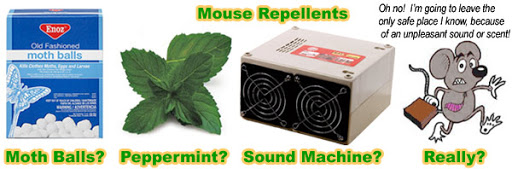
Yesterday armed with a new awareness, I lifted the hoods of all my other vehicles (SUV, truck, tractor, Gater, lawn mower) and peered inside. Yep, each contained signs that my little friends had been visitors. I’d been advised to avoid future invasions by purchasing mothballs because rodents can’t stand the odor. I had acted quickly, shopped for mothballs and crew socks. After combining them, I stashed under each hood a smelly package.

Especially when in a hurry, I easily forget things. Maybe I’d overlook that something’s out of place beneath a vehicle hood. My mind rolled around on whether a running motor could flame-up a mothball-filled sock. To be cautious I devised a work-around, by placing on each driver’s seat a big sign: “Mothballs Aboard!” Overlooking that seat-sign before turning a key will signal I’m “too far gone” to be driving anyway.

Not my favorite things, peering under hoods and fiddling with objects that smell badly. For future reference, I’m seeking viable alternatives to mothballs.

Fortunately, my friend Anna texted suggesting we go horseback riding. For me her idea turned the tide.

She arrived while the horses still were eating, so we re-installed the center divider of my two-horse trailer. It’s a small, easy to tow trailer, but is a “straight-in”. My horses accustomed to a large slant-in trailer refuse to enter a straight-in. Well, they’re about to face training.

Finally, we gathered and saddled the horses, traveled on neighborhood streets to the local outback with overhead big power-lines. Beneath the lines is unkempt territory with a country-like road that runs through. Anna and I had enough time and daylight for a pleasant outing out there, in the middle of seemingly nowhere and close to home. The ride balanced my day.

Dear Friends: Country life introduces city folks to new realities and coping ways. Diana

Reconnecting

Monday, October 12, 2020

These days I’m partly, and rather unwillingly, finding myself adapting to a modern concept known as positive psychology. Wikipedia defines positive psychology as “the scientific study of the “good life”, or the positive aspects of the human experience that make life worth living.” It adds that this concept applies in like manner to individuals and social groups.

I’m a traditionalist who subscribes more to old-style psychology. That’s the practice of studying problems in depth, determining their root(s), and thus, reducing their occurrences. My appreciation is from years of discussing my fears with a therapist. Afterwards, I felt happier. This gain hasn’t all been lost through these pandemic months. But it’s flattened by gloomy days and hours of isolation and bad news.

There’s a constant hammering from what I call The Big Lots. Those current elements in our social order make many unhappy. Examples are, our no-middle-class economy, diversively destructive social issues, disgustingly offsetting political maneuverings, and unimpressively lying leaders. There’s little that seems to decrease helplessness during isolation and social unrest. People are seeking lifts, I’m rethinking some past attitudes.

“Positive psychology,” I muse while clicking on Amazon and studying what’s available. Toward feeling happier, I’ve ordered several books. They differ from my usual reads and might tap into my better (i.e., happier) imagination. Similarly, on rediscovering the iTunes Store, I ordered some new remasters of old recordings. Maybe they’ll renew some positivity. After all, it can’t be nuttin’ but happiness to rehear, and in their prime, Ella Fitzgerald, Leontyne Price, and George Zell’s Cleveland Orchestra.

Dear Friends: Maybe the “good life” we once experienced is outdated. Let’s hope not. Diana

Searching For Eleanor

Sunday, October 11, 2020

This date in 1884 was Eleanor Roosevelt’s birthday. I’m reading a recently published biography of ER but have finished too little, don’t have many new insights into her evolvement. She went from an unhappy childhood to the role of married (and suppressed) house fra, and finally found success as a respected international icon.

We know that from her birth, she was estranged from an emotionally distant mother but was very close to a charming alcoholic father. By the time Eleanor turned nine, her mother had died from illness and her father was about to commit suicide. She grew up an “almost orphan” but among plentiful and wealthy Roosevelt relatives. Some took the role of overseeing ER’s care and education. Her life story is complicated by the family’s great affluence, and among them very strained relationships, and for ER herself high feelings of personal insecurity.

Throughout their Roosevelt childhoods, ER and her cousin Franklin had an Uncle Ted who was president of the United States. Their familiarity with presidential power and associated activities influenced Franklin’s political direction, and facilitated Eleanor’s assistance in his career path. As Franklin moved into major politics he also contracted polio. This forced ER from the primary role of mother to their five children and began her transition into public figure. She took the campaign role of Franklin’s surrogate.

That’s as far as now it’s possible for me to share an “inside Eleanor”. Like many others, I wish better to understand her inner self, her life path, and how she mustered enough courage against many odds to evolve from frightened youngster to world leader.

Beside the book I’m referencing, Eleanor, by David Michaelis, there’s an earlier three-volume, highly acclaimed biography by Blanche Wiesen Cook. Maybe the version I’m now reading will give me enough courage to tackle a whopping three volumes about ER. If so, I’ll be up for it.

Dear Friends: This isn’t enough, but I so wished to write about ER on her birthday. Diana

Shifting Reality

Saturday, October 10, 2020

The weather is changing, it’s cooler and with fewer daylight hours. These are annual changes, and anticipated but always seem sudden, sort of like awakening one morning and realizing that much is different. Now in my house, transitional jackets long forgotten are turning up and hanging on a banister, easy to grab on my dashes outside.

After stashing the summer fans in my garage, I’ve dredged up my collection of snow pants and jackets, heated gloves, merino wool hats, strap-on headlights and anti-slip shoe spikes. It’s because having to feed large animals makes a very big deal of the winters. These thoughts are reminding me to crank-up snow blowers and check if they’re in running condition.

Our experience in recent years with snowy weather has been relatively easy. We’ve had periods of snow and ice but nothing like the worst years we’ve occasionally experienced. Like several years ago, when almost daily snow fell and stayed on the ground for weeks on end. We had to wade through sitting snow stacked several feet high and try to avoid slippery areas.

Now we’re more experienced with a changing climate and recognize that the winter ahead may deliver periods of unusual and complex weather that though expected might surprise, frighten, and confuse. Anyway, I’ll anticipate a tough winter ahead and prepare, but will keep on hoping that this one becomes another that’s relatively gentle.

Dear Friends: Let’s get our seat belts ready, the “ride ahead” might be real bumpy. Diana

Appearances Reveal

California Sen. Kamala D. Harris (D) and Vice President Pence during the vice-presidential debate in Salt Lake City. Robyn Beck and Eric Baradat/AFP/Getty Images)

Friday, October 09, 2020

Harris “has it all”, a presence that’s capable, effective, and powerful. She’s intelligent and logical, vocally kind and very determined, and her nonverbal skills are consistent and effective. She’s proved herself a presence, is capable, effective, and powerful.

Those images from the VP debate revealing moments throughout offer viewers a sense of the discussion’s progression. Above all they reveal much about the individuals themselves. Kamala’s expressions are attractive and open while Mike appears tense and closed-off.

The experience was easier for viewers of Harris and Pence than while watching the earlier presidential debate. America’s physically large president desires to dominate and emphasizes this often with facial expressions. In the debate he mostly looked brutally-ugly. In sharp contrast his opponent maintained a face more steady and sometimes humored.

Dear Friends: Science and experience show that communicating mostly is nonverbal. Diana

On Yr’ Toes

Thursday, October 08, 2020

This morning it’s a quick feed-feed-feed before a get-ready-go. And about my part-time job, for today the “big boss” will be a “surprise” show up. We’ve a heads-up with warnings about her.

She’ll make certain the food demo employees are talking, talking, talking, and wearing the right clothes, colors, and no jewelry (could contaminate food). She’ll “drop in” but when exactly isn’t known. She might sneak up behind individuals to listen for acceptable words, or appear before our tables as a pretend customer. You see she’s new, and none of us know what she looks like.

We gather she’s tough and will write up anyone not talking unendingly to fulfill the demo role. We continually must communicate five points: (1) invite to sample the product, (2) explain why it’s good, (3) say its price, (4) state where it is, on our table or the shelves, and (5) sell! by saying, “Take some home today!”

We have the visitor’s description. She’s young, blonde, and slender. That narrows candidates to several thousand among our average daily shoppers.

This will be our first “big boss” visit since demos resumed (following layoffs) a couple months ago. Meanwhile, we’ve enjoyed an easier environment than any previous times in my memory. If we preferred, we’ve worn earrings, necklaces, watches, with cell phones tucked into back pockets. This can’t happen today, such accoutrements must be invisible.

My job will be to fill-in at various demo tables for those on breaks and lunches. Today, with many demos scheduled I’ll move from table to table. Since the big-boss might repeatedly come across me, I must know the products being shown, act energetically (noisy and inviting), and, sell, sell, sell.

Our relatively small store has oft-repeating customers who learn the products. Many become acquainted with demo folks and interactions eventually become social. The demo work is fun for getting to know customers, families, vacations, food preferences, and so on. Natural conversations create spaces for sales, and ours tend to be high. Requests for demos are increasing.

Nonetheless line management’s bottom line is to produce profitable results. Jobs of subordinates must be clearly defined with measurable work outputs (Have I mentioned our sales goals?). Anyway, while anticipating today’s visit is stressful, our team will meet expectations.

Dear Friends: It’s a big departure from past career days, but paychecks still please. Diana

Fightin’ Times

Wednesday, October 07, 2020

Last week on entering Costco where I work part-time, it surprised me to see an armed police-type standing at the entrance and apparently on the job. This is a first, I thought, and wondered why, but in a moment and once inside, the store’s activity consumed me. The next day and spotting another guard, I again wondered before quickly becoming sidetracked.

Yesterday a Costco employee explained that recently a protest group showed up and intent on entering Costco. Those protesters were denying the reality of coronavirus, refusing to wear masks and resisting attempts to prevent them marching in the store. Before they got very far inside, however, the Costco team managed to turn around and force the group outside. After identifying the protesters and cancelling their individual memberships, Costco hired armed guards to watch the store’s entrance.

It feels strange that protesters are attracted to this relatively quiet Central Oregon community nestled in the Cascades, but passions are exploding and so are protests. Recently, at the base of Pilot Butte, a local landmark, a confrontation occurred. It consisted mainly of shouting and fist-fighting, but a police investigation found at least one loaded weapon.

Hints of that larger picture are played-out in Costco. People entering must wear a mask, but immediately afterwards many pull down their masks and walk around. They breathe on clothing and other product displays, and move closely in to question or comment to employees. I mentally turn my favorite t-shirt read (“I tell unfunny jokes because I’m an asshole”), into “I don’t wear a mask because I’m an asshole”. This may quash a tiny bit of anger and helplessness but doesn’t begin to tap my fervent wishes for a trap door and lever. I’d pop and drop those who annoyingly insist that “the pandemic is a hoax”.

Another of my favorite t-shirt reads: “Please, let 2020 end!”

Dear Friends: Don’t forget tonight’s debate between V-P competitors. Go, Kamala! Diana

Mishegosh

Dictionary illustration of the meaning of mishegoss – (Yiddish) craziness; senseless behavior or activity. The original source of the image is http://thefreedictionary.com/mishegoss

Tuesday, October 06, 2020

This morning I’m uncertain about what to write, because so much happening makes our heads spin. There’s Trump’s ultra-masculine show at the White House of ripping-off his covid-avoiding mask; tomorrow’s Harris-Pence plexiglass-shielded debate; and articles sent to me describing research on a “human fear-of-death” and how it impacts decision-making (especially in this election); and oh dear, what else? Well, Much too Much.

This morning, a standout is rumbling from the Supreme Court. Justices Thomas and Alito want to revisit the decision that legalized gay marriage. Of course, it’s more goodbyes to Ruth Bader Ginsburg and more Thumps-Up to The Court. A large population of guy-guys want to retake the position of Dominant Gender. Their agenda includes a little-hidden wish to “return women to the kitchen”, as in the good old days. “Their ladies”, again, would be barefoot, pregnant, and little-heard from in matters of social, political, economic conditions. Yep, when the boys rule America will be strong again.

Of course, it’s not just fellows who pine for the good old days, many women do as well. There’s some forty percent of Americans, comprised of both genders, wanting to “make America great again”. Not long ago, and prior to WWII, Viet Nam, and Ruth Bader Ginsburg, the social order did evolve, but little and over long stretches of time. There wasn’t much change in the dominant order, which mostly was white, male, and though women finally could vote, they lacked a big voice. Among women, a rare exception was Eleanor Roosevelt.

By the way, I’m reading a recently published biography of ER. Her life and evolvement are the author’s primary focus, and thankfully for a change less about FDR. I want to understand how Eleanor evolved into a highly visible trail-blazer. I want to comprehend how her role impacted Americans. More about ER is on my writing agenda.

Dear Friends: Politically, ahead is another complicated week. Think carefully and Vote! Diana