Birthday Girl

Sporting my new bag

Sunday, May 26, 2024

I wasn’t expecting anything special on my birthday which was yesterday, so I didn’t mind having to work, although my scheduled hours were kind of crummy, from 5-9 p.m. Here’s what’s about my birthdays: I keep them quiet and don’t let them become big deals. This year, some sort of weirdness altered my attitude and perspective. I became involved in planning for my birthday. I wished for myself the gifts of thinking positively and playing creatively.

A couple of days ago, my friend Susie invited me to dinner on my birthday and also understood my reluctance to ditch work in these days of scarce workers. We agreed to wait for a time when I’m not working (and it’s this evening).

Susie is totally a “people person.” She texted me to have fun at work and be sure to tell everybody there that “It’s my birthday.” A sweet note, but I would ignore her suggestion and keep my birthday a private affair.

Somehow, this year is unlike other years. Before I was long in the store and to my surprise, I told nearby coworkers about my birthday. Before long, suddenly and surprisingly, over our radios came a message from Lisa, our store’s manager. She announced to everybody that it was my birthday and wished me a happy one. What a tickle! By golly, and yet again, Susie was on target (she’s usually right).

Now about me and working, I can be a pest. I do my job and enjoy it, but am an old-school employee who sometimes complains to the managers. Our store has a great management team (not something said lightly because I understand good management skills). Our store’s managers are experienced, know retail inside and out, openly encourage and care for everybody, and, most importantly, they are trustworthy.

I understand training and development and contribute to the store’s efforts by giving feedback to our managers. They usually nod and maybe also ignore my comments. I work hard at keeping potential comments to myself. Sometimes I do feel that I’ve been heard.

That’s a preamble to last evening’s biggest surprise. Lisa came to my station to share a piece she’d published days before on the company website:

See what I’m saying? Reading that blew me away. Finally, I am working in a dream environment. Here, it’s okay to speak up with opinions and ideas; here, the managers are viable members of their whole team; and here, long after finishing my professional career and for the first time, I am reporting to dream managers.

Change keeps happening and that’s so here and now. Lisa is moving on soon to start managing a larger Colorado store. We in the Bend store are unhappy that she’s leaving and also wishing her well. We will buckle down and adjust to whoever shows up to try filling Lisa’s big shoes.

Here’s what’s most important: Whether the store’s leadership change proves smooth or rocky, our managers who have reported to Lisa will still be present and make the “right things” happen. We in the ranks have confidence in their judgment and technical capabilities.

Dear Friends: Why is it that only now am I learning that birthdays can be great? Diana

Social Lesson

Tuesday, April 23, 2024

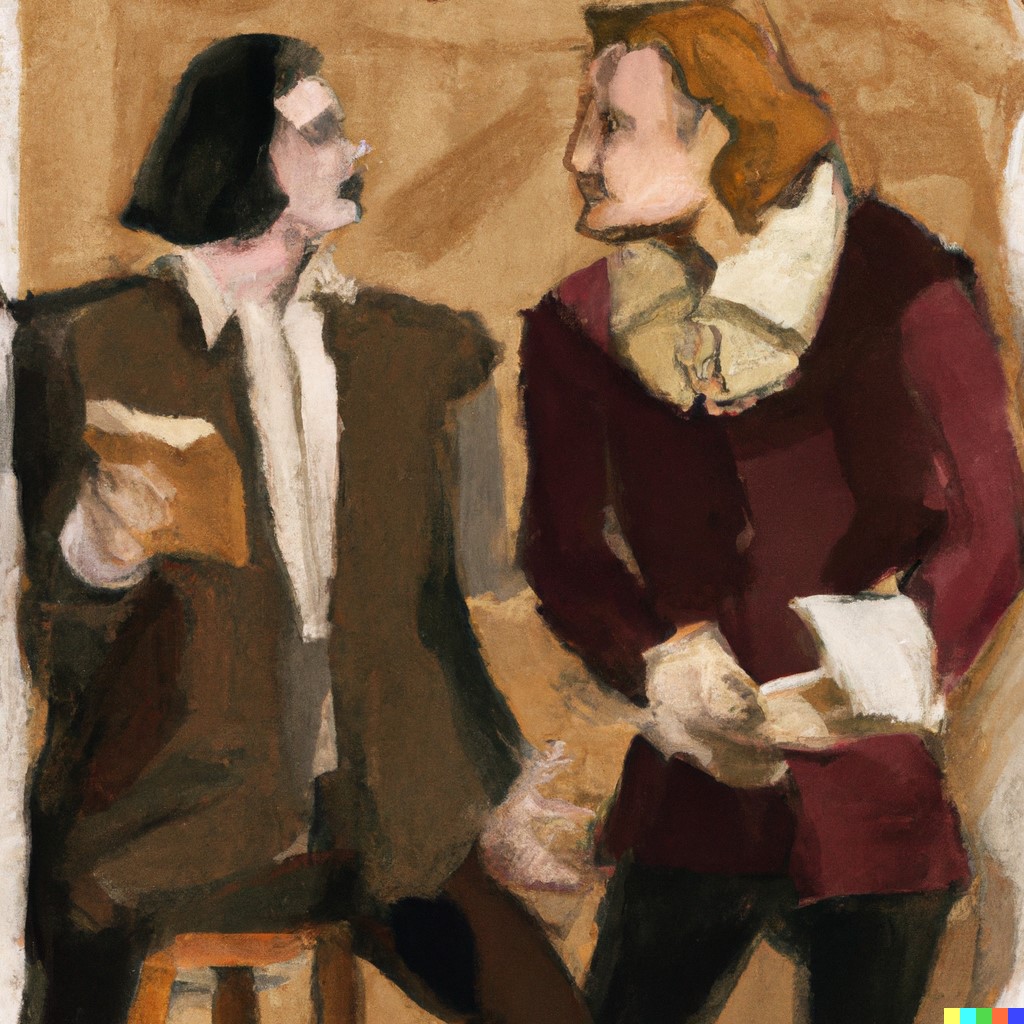
Shakespeare was born in 1564, almost 500 years ago. His mature writings have endured, and to this day, they teach and influence powerfully. His story elements have created an enduring legacy. His words are quoted, his characters analyzed, and his stories retold. Shakespeare is a permanent fixture in the worlds of literature and theater.

I have wondered if Shakespeare’s influence is equal to that of the Ten Commandments. After some research, I understand that the two works operate in different spheres. They hold differing kinds of weight among humanity.

Shakespeare’s influence focuses more on artistic expression and cultural understanding, while The Ten Commandments have a broader social impact.

Shakespeare’s influence is primarily in literature, theater, and language. His influence is inspirational, offering insights into the human condition and sparking creativity. His works transcend religion and culture, appealing to anyone who appreciates storytelling and language.

The Ten Commandments are religious and moral guidelines; they are prescriptive, dictating right from wrong. Primarily aimed at religious followers, the Commandments have vastly influenced the shape of Western societies for millennia by impacting legal systems and social codes and influencing individual behavior.

Understanding the differences, I now see that The Ten Commandments are the backbone of Shakespeare’s plots. Similar to how The Commandments greatly influence Western society, they make Shakespeare’s plots very powerful and lasting. Shakespeare’s genius is his creativity, an artistry for structuring complicated plots that beckon highly emotional responses.

Today, Shakespeare’s birthday encouraged me to work through my long-held, knotty question. I understand better now what makes his works continually impact humanity. He was an artist at creating plot structures that intertwined closely to, and often fell against, acceptable social orders and norms.

Dear Friends: Shakespeare makes us think about us! Nobody’s done it better. Diana

Film Art

Saturday, April 20, 2024

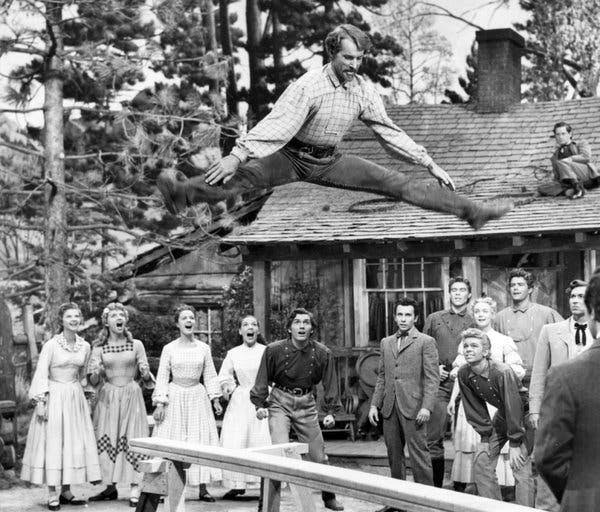
Last night, I was thumbing through some streaming offerings and stumbled across “Seven Brides for Seven Brothers.” The highlight of that 1954 musical was one of the greatest dance sequences ever filmed. In their real lives, six of the seven “brothers” were classically trained dancers; so were the townspeople, the men and women dancing partners. I was eager to see that movie again.

The underside of its wonderfulness is a dark story. It’s deep winter and the brothers are eager to find wives. They kidnap girls from the town and forget to kidnap a preacher. A sudden avalanche closes the pass to their remote property, preventing the townsmen from rescuing their girls.

The eldest brother is married, and his wife keeps his younger brothers and the girls separated throughout the winter. By spring, love is in the air and everybody is happy. A rescue group led by the town’s Chaplin arrives at the ranch, and finally, the Chaplin officiates over six marriages.

In its time of making, the film’s story was fun. In modern times, however, its fable is much less innocent. It’s hard to ignore the 2014 kidnapping of Nigerian schoolgirls by Boko Haram, an Islamic terrorist group. Finally, some of the girls managed to escape or became rescued, and only now some are telling their stories of years in captivity. Their stories aren’t pretty and don’t end well enough. Even today rescues again living in their village of origin are shunned, considered “Boko Haram women,” and with their children, are treated as outcasts.

Curious, I looked up Stephen Vincent Benét’s short story “The Sobbin’ Women,” published in 1937, on which “Seven Brides for Seven Brothers” was based. Benét’s story is beautifully written and readable. It’s also much leaner and tougher than the movie version.

Fortunately, artistry can overcome much. In “Seven Brides….” the dance sequences are outstanding, and sheer art that lives on film. Someday, I will watch that movie again.

Dear Friends: It’s all about having the capability of leading a good life. Diana

We Care!

Wednesday, March 27, 2024

Yesterday, a local televised newscast reported that the store where I work part-time was robbed the night before. Apparently, thieves broke the lock on an entry/exit door to enter and managed to open and empty all the registers. My estimate of the available cash is near the amount reported stolen. Nightly, while closing the store we leave minimal cash in the registers.

There’s no telling how thieves managed to break into the store and into the closed and locked cash registers. To open a register drawer anytime, an employee must have a private and employee-specific numerical code.

Oddly, I didn’t see any reporting on that theft in this morning’s local newspaper. At work today, I probably won’t learn more as the incident might still be an open investigation. And oddly, the theft feels like something personal, as if I care about the store.

These days, thievery is rampant throughout business establishments. Thieves walk in and take merchandise out openly. Stores instruct employees not to stop or follow a thief. Recently, I was scolded (and again several times!) for following a carrying person to see his license plate. So, I’ll not do any more sleuthing.

The idea of caring about the store surprises me, as it’s simply where I work part-time. Wondering how the managers might be feeling, and doing more thinking about caring, it might mean having positive feelings about working with others. We’re a team and the store is our base.

Dear Friends: Goodbye, “Good old days,” and hello, ever-more Complicated Days. Diana

Unequal

Saturday, March 02, 2024

This is Women’s History Month, and that’s cool. Last night, a PBS piece reopened my memories by covering early and evolving passenger aircraft technology, and the airline passenger business. Particularly, the then new role of Airline Stewardess. Some of my friends became early stewardesses and were envied. They routinely flew to exotic places, met and dated handsome pilots, and often married and moved into new life phases. Those were ladies who accomplished what little girls were programmed to do.

That PBS piece reveals a nasty back story to the enviable stewardess role, in a time when most airline passengers were men. The ladies’ work was to ensure men’s comfort. A stewardess’s training for her role was demanding, and it was abusive. She had to perform her stewardess work perfectly, and also, had always to appear beautiful. She had to be slender and physically fit, well-coiffed and perfectly dressed, always wearing specific makeup, and also well-mannered. Oh yes, she couldn’t be married; a stewardess had to be single.

There was more stress because upon turning 32 years old, a stewardess was considered too old for the role. Airlines pushed every birthday girl out of her job. Some of the early stewardesses were college graduates and felt abused. And some stewardesses were secretly married. The formally educated ladies, and those married to attorneys, began learning about unions. They openly started to question the airlines’ goals and personnel management. The work of those bold stewardesses initiated critical changes in the industry.

I’d go on, but you get it, and the story is easy to stream on PBS. What makes it more fascinating, is that the Stewardess history parallels more changes, beginning in the sixties, that altered women’s roles. Not enough, however, because America still lacks an Equal Rights Amendment.

Dear Friends: March’s videos will remind us of more history and revive our memories. Diana

From Time Immemorial

Thursday, February 29, 2024

Happy Leap Day!

I was having “the dickens of a time” recalling what Leap Years are all about. Soon, I began wondering what “dickens” may mean. I assumed it refers to Chas. whose stories contain worlds of woe and wonder. After some research, I learned that the origin isn’t that Dickens, because way prior Shakespeare had used the phrase.

It turns out the general assumption is that “dickens” originally was a euphemism for the word “Devil.” Back in the history of time, ‘What the Devil” or “the Devil take you” were very serious curses, however, in those very old days, “the dickens” could be freely used.

My mom often muttered, “What the dickens!” The phrase became woven into my learning DNA, and I have loved it. The words perfectly highlight my confusion and struggle to comprehend something complicated or make difficult choices.

Yesterday, somebody at work pointed out to me, that I “overthink things.” Well, maybe so, and maybe that prevents me from quickly processing some kinds of information. From one perspective, it’s a disability, and from another, an asset.

I overthink, indeed! Now, an equally famous phrase, “Face the music,” comes to mind. I am okay with processing thoughts slowly. That lets me separate the thought elements, turn each upside down and around, and examine it from various perspectives. Upon reweaving the elements, I wind up with a decent handle for taking them forward or dropping them.

Dear Friends: What the dickens–it’s snowing again! Enjoy this leap day. Diana