In The Story

Saturday, October 04, 2025

I grew up in the 1950s and ’60s, when life expectancies were shorter than they are today. Back then, reaching eighty-five seemed almost mythical — something that happened to “very old people,” but not to all of them.

Yet here I am, at eighty-five, still alive, active, and managing the daily demands of home life while also working a full-time job outside my home. Over the past few years, as I’ve learned how to work in retail environments, I’ve encountered ageism — sometimes subtle, sometimes not. People have told me outright: “You shouldn’t be working, you should be enjoying your twilight years!” or “You’ve earned your rest — why are you here working?”

My life lessons and learning are that staying engaged, helpful, and connected is my way of enjoying and making the most of them.

After experiencing uninvited confrontations related to aging, I have elected not to answer when people ask about my age. Let them look. Let them guess. I’ll let my energy and presence speak for me. Age is only a number; contribution is a choice.

I’m now rethinking somewhat, for Jane Fonda has begun resurfacing in the public eye again. And, I find myself noticing her with renewed interest. She has always been bold — both in her career and in her willingness to age openly, in plain view of the world. Now, while approaching eighty-eight, she is again speaking out, supporting free speech and democracy — still active, still fearless, still herself.

Her appearance has changed, naturally, but not in ways that erase her. She’s slender, stylish, and poised. If she’s had work done, it’s subtle. She lets her neck, however, tell the truth of her years — and to me, that’s oddly comforting. I see her as not hiding from the passage of time.

To me, Jane Fonda has become more than just an actress or an activist. She is a symbol of endurance. Her journey, which we have witnessed growing up alongside her, is a testament to her resilience and strength. She symbolizes the permission to remain visible, to express opinions, to care deeply, and to stay part of the ongoing conversation. She shows that relevance is not confined to youth.

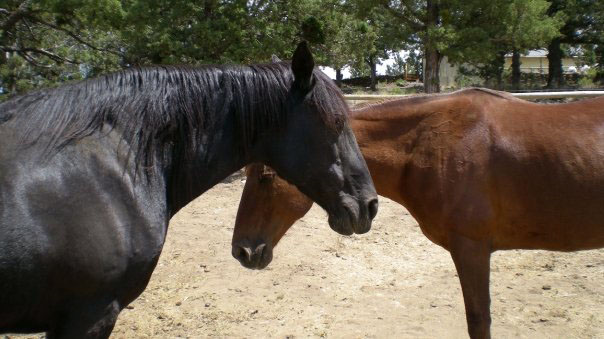
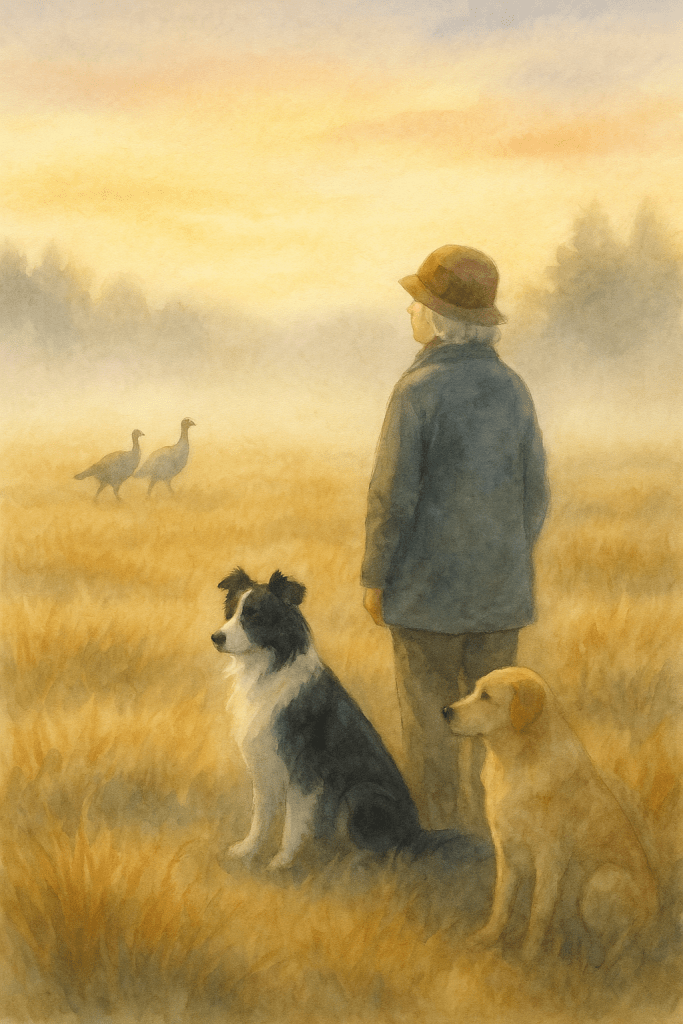
At eighty-five, my private reality is a testament to the meaningfulness that comes with caring for animals and responsibilities. I never expected to live this long, feel this alive, or be this responsible. The unexpectedness of my current situation keeps life interesting. Yet, I still work full-time, on my feet, solving problems and engaging with people. And when the day is done, I return home to care for my animals and keep my world running. It’s not easy, but it brings a profound sense of purpose.

To people who suggest I should slow down, relax, and “enjoy life,” it’s my work and routines that bring me joy — they give shape and purpose to my days. I’ve never had cosmetic surgery and don’t want it. Instead, I take pride in how I present myself: in my clothing, my interests, my energy. My mind is clear, my curiosity intact.

Without family nearby, my workplace provides me a sense of belonging — through friendly interactions, shared goals, and the simple recognition that I am still making a contribution. Those exchanges keep me grounded.

And now, to my surprise, Jane Fonda is becoming a role model, not for her fame or glamour, but for her persistence and grace. She reminds me that aging isn’t about looking young — it’s about staying in the story.

Maybe that’s what aging is teaching us: not how to fade away, but how to keep showing up. Jane Fonda illustrates that we can grow into our later selves with intention, not apology. She is still visible, still learning, still engaged — and so am I, in my own way.

Inside, I don’t feel old. I think seasoned — aware, shaped, and, in many ways, more certain than ever. My work keeps me connected; my mind keeps me company. And if I find a mirror in Jane Fonda, it isn’t in her polish or fame — it’s in her refusal to disappear.

At eighty-five, I’m not winding down. I’m still becoming — quieter, perhaps, but clearer. Still part of the conversation. Still in the story.

Diana

Hearing the Calling

Wednesday, September 24, 2025

For several days, and again this morning over coffee, I’ve had my mind on an old movie that I’ve chosen to watch more than once: Bagdad Café (1987). Like Sounder, which I recently wrote about, it’s stayed with me longer than most films. Maybe because of the quiet desert roads, which feel oddly familiar against my own Central Oregon landscape—wide spaces, moments of isolation, and the surprising ways “connection can arrive.”

Each time I’ve watched, I’ve sensed there’s more going on beneath the story’s surface. At first glance, it appears to be a lighthearted, eccentric comedy with superb acting. However, upon reflecting on its story and characters, I’m convinced that it’s an allegory—and one worth sharing.

On its surface, Bagdad Café is quirky and offbeat, full of small mishaps and comic misunderstandings. Yet behind the humor lies something larger. The setting is a dusty, broken-down café in the Mojave Desert, the sort of place most would drive past without stopping. Into this place come two women: Jasmin, a German tourist, after suddenly being abandoned by her husband, and Brenda, the café’s owner, after being left behind by her husband. Both women are prickly, suspicious, and in their own ways exiled and alone.

At first, the café is a mess—disordered, tired, going nowhere. But slowly, almost imperceptibly, Jasmin’s presence begins to change it. She cleans, she listens, she performs small acts of magic. Brenda resists at first, then softens. Before long, the café is transformed from a tired outpost into a place of beauty, music, and connection.

One image that lingers with me is of Brenda’s husband, who, after leaving, keeps watching the café through binoculars. He has walked away, yet can’t resist observing from a distance. To me, this is part of the allegory. He represents those who see but never engage—hovering on the edge of transformation but unwilling to step into it. His gaze is controlling, even possessive, yet powerless. In contrast, Jasmin—the German, or true outsider—enters fully and brings renewal. The binoculars make the husband an emblem of distance, without connection, reminding us that healing comes only when we dare to join in, not when we stand back and watch.

The cast itself reinforces this sense of something larger: a German tourist, a Black American café owner (played by a British actress), an American painter (played by a once-famous film star), and an assortment of desert drifters. This gathering suggests more than coincidence—it’s also a picture of cultures meeting, colliding, and creating something new together. In that sense, the movie’s haunting refrain “I am calling you” can also be heard as a call across borders, an invitation to connection that transcends nationality, language, and race.

Other details I can’t shake involve Brenda’s children. One is a young father determinedly practicing classical piano in that unlikely setting. His grand piano in that battered desert café feels almost surreal, yet it deepens the allegory: aspiration in unlikely soil. His music insists that beauty and culture belong everywhere—not just in gilded concert halls, but even in a dusty roadside outpost, if someone dares to press the keys.

Then there’s Brenda’s teenage daughter, restless and intent on leaving. She represents another answer to the calling: not to stay and transform, but to escape in search of something better. Her choice is human and understandable, yet it contrasts with Jasmine’s quiet decision to remain and renew. Together, the piano player and the daughter remind us that when the call comes, each of us must answer in our own way—by staying and creating, or by moving on. Either way, the call cannot be ignored. Both children become transformed by the café’s changed atmosphere and remain connected to it.

The more I think about it, the more Bagdad Café feels like a parable of renewal. The café isn’t just a diner—it stands for the barren places we all sometimes inhabit, whether in spirit or in life. Jasmin, the German stranger, becomes an unexpected redeemer, bringing grace without asking for much in return. Brenda, toughened and skeptical, is the everywoman—ready for renewal if she dares to trust.

Threading through it all is the film’s haunting song, Calling You. The lyrics drift in like a voice from beyond:

A desert road from Vegas to nowhere … I am calling you.

For me, that refrain is the heart of the film—maybe hope itself speaking, maybe spirit, or simply the mysterious force that draws us toward one another when we feel lost. Whatever its source, the call is unmistakable. It reminds us that life doesn’t end in the wasteland. Something new can bloom, even in the dust.

These days, I am struggling to find my footing in a competitive environment among strong coworkers. I’m recalling this movie and its message, likely because it’s calling me to stay open to the possibility of renewal, even though I sometimes feel inclined to shut down.

Maybe the movie’s refrain—I am calling you—and its use of magic, aren’t just for the characters in a quirky old film. Perhaps those are calling all of us, tugging gently, if only we allow ourselves quiet moments to hear.

—Diana

Underground Railroad, Canine Edition

Saturday, September 20, 2025

Yesterday I was late to work. I had just opened the front door to leave when little Mitzvah appeared, panting and wagging, eager to come inside. I let her in, gave her a cookie, and tucked her into her crate before heading out to discover how she’d escaped. It didn’t take long—bigger, stronger, and endlessly determined Chase had dug yet another hole under the fence. The gap was just wide enough for Mitzvah to slip through, but not big enough for him.

So, once again, I was running late thanks to my nonstop digger. On days when he doesn’t manage to tunnel under, he digs straight down, anywhere and everywhere. The dogs have nearly half an acre to run in, surrounded by a six-foot fence that I’ve even raised to seven feet to keep Chase from climbing or leaping over. Yes, he’s proved capable of both. And in the middle of all that dog space? Holes—deep, straight-down craters that I discover and fill in while treading carefully so I don’t step into one.

As for his under-fence escape holes, I’ve got a new problem. Over the years, I’ve blocked Chase’s tunnels with lava rocks, but I’ve run out of any I can carry. What’s left are boulders too big for me to budge. My substitute solution has been filling empty plastic containers—kitty litter tubs, half-gallon milk jugs, anything I can find—with water to make them heavy enough to block the digs. I’m running out of those, too, and I’m considering buying several jugs of distilled water just for this purpose.

What really gets me is that Chase has now taught Mitzvah his tricks. She’d never have tried escaping on her own, but now she knows to wait while he digs and then slip through the opening he makes.

I wouldn’t care as much if my property didn’t back onto a road that’s grown dangerously busy with fast-moving cars. This used to be a quieter stretch of countryside, but Central Oregon has exploded with growth. The through-roads are jammed with frustrated drivers, and I come home every day wanting only one thing: the dogs safe inside, far from that traffic.

— Diana

Discovering Wristwatches Anew

Friday, September 19, 2025

In my outside job, I work in a department where I frequently sell high-end watches. At first, I was fascinated to discover how many customers still enjoy studying and wearing traditional wristwatches. I wondered why they bothered with conventional styles when smart watches can do so much more—letting us know when a phone call or text arrives, reminding us to pause, breathe, and reflect, and so on. I’d been almost satisfied with my smart watch.

Almost—because I’ll admit, those sudden prompts to “pause and breathe” or “note your feelings” often left me annoyed. Meanwhile, through the process of presenting and selling traditionally styled watches, I became intrigued by their strong points: accuracy, battery technology, sturdiness, dependability, and, not least, their wearable beauty.

On impulse, I ordered two wristwatches online. One is a refurbished brand I’ve been selling—a high-end, good-looking piece that is fashionable, accurate, and reliable. The other is a $9 rugged-style timepiece that has unexpectedly become my favorite. Sporty and lightweight, it offers day, date, time, alarm, seconds, and stopwatch functions. My only concern is whether its “crystal” (likely hardened plastic) will scratch easily. But at $9, if it does—who cares?

So, I’ve retired my smart watch. No more charging, no more unwanted nudges. I’ll miss alerts to incoming calls, but my phone is usually in my pocket with a ringtone I can hear. I might miss step counting, but I know my daily steps already run into the thousands.

Reflecting on this change, I’m reminded again how learning shifts perspective. For years, I never once considered wanting a traditional wristwatch. Now, understanding their dependability, durability, and sheer beauty has made them alluring—and even a “heapy-cheepy” rugged model proves that simple technology can be capable and cool.

Perhaps best of all, my own experiment gives me more insight—and more articulate ways to share the appeal of high-end wristwatches with customers.

— Diana

Finding Balance in a Competitive Workplace

Thursday, September 18, 2025

Sometimes my outside job feels overwhelming. This past week included incidents that upset me enough to wonder if I should quit. In a different retail department store, I might have started the process, but my current workplace is so family-like most of the time that I genuinely enjoy being there.

I work in one of the store’s few departments where sales earn commissions. That naturally creates a competitive environment, and my struggles stem from a long-time employee—my co-worker—who, in my view, crossed a line. That left me feeling discouraged and out of balance.

I’m not easily intimidated, but I do prefer to avoid conflict. My goal is simple: show up, do my job as well as I can, and feel supported by management. Most days, that’s exactly what happens.

This time, however, upper managers recognized what had occurred. They spoke with both my co-worker and me, and I felt they truly understood my concerns. They reminded me that competition in sales is never easily solved, but they also reassured me of their support. Their advice was that I learn to defend myself—something easier said than done by one who’s new to a competitive workplace.

Still, knowing management stands behind me eased the anger enough for me to stay and focus on how I can adapt. For me, it isn’t about commissions. It’s about fairness. What makes staying and working on the problem worthwhile is the fairness of being listened to, heard, supported, and encouraged.

At the end of the day, my workplace feels like a genuine family, and I find myself wanting to stay more than I want to leave.

— Diana

Watch Stories

Saturday, September 13, 2025

Recently, with the help of ChatGPT, I sold a high-end wristwatch to a Spanish-speaking customer. The person understood some English, but I don’t speak Spanish, so I couldn’t fully understand them. They examined a few of the available watches while also mentioning the word “crystal.” I wasn’t sure about the question and how to respond. As their overall interest in the watches appeared to be waning, I said, “Wait just a minute.”

I quickly found my cellphone, returned to the watch counter, and opened Chat in voice mode. I said, “Chat, I have a customer looking at watches who is interested in their crystals. Can you look at one of the watches and explain its strong points and benefits?”

When Chat responded, “Yes,” I hovered my phone over the watch that my customer had appeared to be most interested in. Immediately, Chat confirmed that it was an excellent timepiece with a crystal of synthetic sapphire, rated for hardness just below diamonds. My customer relaxed, nodded, and showed renewed interest. Chat wasn’t finished and continued by describing other highlights: its excellent water resistance, battery-free accuracy, and the brand’s fine reputation. That assistance sealed the sale.

I’m relatively new to selling high-end wristwatches, and this was actually the second time I had used Chat to help explain to a customer the benefits of a high-end watch. That earlier customer had wondered if a particular watch was shatterproof. I knew it was, but couldn’t explain why with confidence. So, on an impulse, I turned to Chat. It “looked” at the watch, confirmed its durability, explained its highly-rated shatter-resistance characteristics, and then went on to describe, overall, what made it an excellent timepiece. Sold!

The more I experiment with AI and find new ways to use it, the more impressed I become.

— Diana

His Escape-Hatches

Introducing an adorable puppy (3 years ago)

Tuesday, September 09, 2025

Lately, we’ve had steady rains—not downpours, but enough to soften the soil. Chase, my strong and stubborn young dog, has seized the opportunity to resume his favorite pastime: escaping. Almost daily. His little buddy, Mitzvah, ever watchful, waits until Chase digs wide enough for her to slip through—and she’s the first one out.

So far, neither has strayed far enough for a search party. More often, I open the door and there they are—wagging, panting, crowding each other to greet me. I swallow my distress, invite them in, hand out cookies, and then return them to their outdoor space. After that, I’ll walk the fence line, hunting for their escape hatch and blocking it as best I can.

Two problems. First, this almost always happens on a workday, just when I’m about to leave. Chase makes me late (again). Second, after three years of patching holes, I’m out of easy, right-sized rocks. What’s left are the too-big ones, and moving those requires sweat and ingenuity.

Yesterday, muttering to myself, I declared for the hundredth time, “This dog must go!” The counter-argument came just as quickly: “But no one else would put up with his escapes. A really good dog like Chase might end up treated poorly—or frequently running loose and in danger.” And so, after countless escapes, Chase still lives here. Along with little Mitzvah, his sometimes partner in crime.

This morning’s drizzle and my work schedule make for perfect digging conditions. After feeding the horses, donkey, and chickens, I’ll haul out the garden wagon to help wrestle a few heavy stones (if needed) into place. Meanwhile, I’m crossing my fingers that today (please!)—Chase, don’t dig!

— Diana

A Talk With Linda

Monday, September 08, 2025

Later this week, I’ll be catching up by phone with my nearly lifelong friend, Linda. Many years ago, she was the one who nudged me toward college, setting me on a long road to the career I eventually achieved.

Early on, she encouraged me to leave the Midwest for Southern California, where evening classes and other opportunities made it possible to pursue college while working full-time. Years later, she pointed me toward a small, welcoming town in Central Oregon where she lived, and again, I followed her advice. Some years ago, she returned to her roots in California, but across the miles, our friendship has stayed steady and strong.

Linda has always been politically savvy and endlessly curious. With her, small talk never lasts long. Our conversations move quickly into larger territory: what we’re learning, what we’re noticing in the world around us, and how maturity continues to reshape our daily lives.

This week, I’m holding three threads in mind that we’ll likely explore:

  • AI, and what it means for lifelong learners like us.
  • Politics, in a time that feels turbulent and uncertain.
  • Aging, and how it keeps redefining identity and purpose.

We rarely see eye to eye on everything — and that’s part of the gift. Linda challenges me to think harder, and I hope I do the same for her.

In times when the future feels uncertain, steady friendships matter more than ever. They make the best conversations possible — weaving together the personal and the political, the present and the future.

— Diana

Finding My Voice!

Saturday, September 06, 2025

I recently listened to an interview with Robert Reich about his newest book, Coming Up Short: A Memoir of My America. One of the themes he spoke about was “social bullying,” which he described as a “social constant.” He suggested it may have been more visible in his own youth, but he emphasized that bullying in any form can quietly suppress people’s ability to get ahead.

His words stirred up memories for me. Growing up, I often felt “bullied”—not by fists or shouts, but by a steady stream of signals that I was “less than.” Less, for being a woman. Less, for being single. Less, for carrying just enough extra weight to feel unattractive. I absorbed it all without knowing how to push back.

My turning point came from a college-educated co-worker and friend, who refused to let me give in to those doubts. She ignored my protests that I wasn’t smart enough or didn’t have time. She kept insisting that I enroll in a college-level evening course until I finally did—and to my own surprise, earned an A. That single step propelled me into nearly twenty years of night classes, where I eventually earned three accredited diplomas, including a Ph.D. That education became both an instant negotiating tool and a foundation for new opportunities in work and in life.

When the coursework ended, I faced the deeper battles within myself. Therapy became the next step, giving me space to untangle old knots, discover new perspectives, and slowly reshape how I lived. Nothing changed overnight, but with time and persistence, I learned to recognize joy, create opportunities, and trade old doubts for steadier confidence.

Looking back, I see that each step—education, therapy, and my own dogged persistence—wasn’t just about survival. It was about rebuilding a life that finally fit me, and still does.

That long-ago friend and I remain close. I think of her insistence as “good bullying”—a relentless encourager who pushed me in precisely the way I needed. Listening to Reich reminded me that harmful bullying is not always loud; often it’s woven into the silences and unspoken judgments of daily life. But with persistence, coaching, and healing, those silences can be overcome.

Dear friends, persistence and healing helped me trade old battles for a steadier self.

—Diana

My Steadfast Timekeepers

Thursday, September 04, 2025

Pimmy, my donkey, doesn’t need a clock. Her inner alarm is astonishingly precise at mealtimes—and she makes sure I don’t forget. She’s been getting only weight-loss rations for months, and her appetite feels supercharged.

Morning or evening, I hear her braying because I’m moving too slowly. She sidles up to the gate, ears tilted forward, her whole body spelling out one word: Now. My horses might prance or pace when impatient, but Pimmy? She gives me a look that suggests authority.

She’s not my only steadfast timekeeper. Maxwell, my cat, knows exactly when his food should appear. Max is even pushier than Pimmy; he winds around my ankles, practically tangling me in fur and whiskers. I’ve learned to step carefully, always on alert not to trip.

There’s comfort in the constancy of these two critters. My larger world is always shifting—whether it’s a fence that needs repair, the weather’s unpredictability, or the endless churn of local and global politics. Yet Pimmy and Max bring me back to a simple rhythm of existence: “feed me, water me, keep me safe.”

In return, I relish their companionship and the simple lessons they bring: no excuses and no delays. Their routines remind me that being on time and doing what’s expected really matters.

Dear friends, Pimmy and Max remind me that routines offer a special kind of comfort.
—Diana