On Thanksgiving: How Native Societies Shaped Early America

Sunday, November 21, 2025

I was enjoying an enlightening conversation with Ben—an American-history buff—about the earliest years of this country when I found myself rethinking those first decades after the Mayflower and the later ships that touched the Eastern shores.

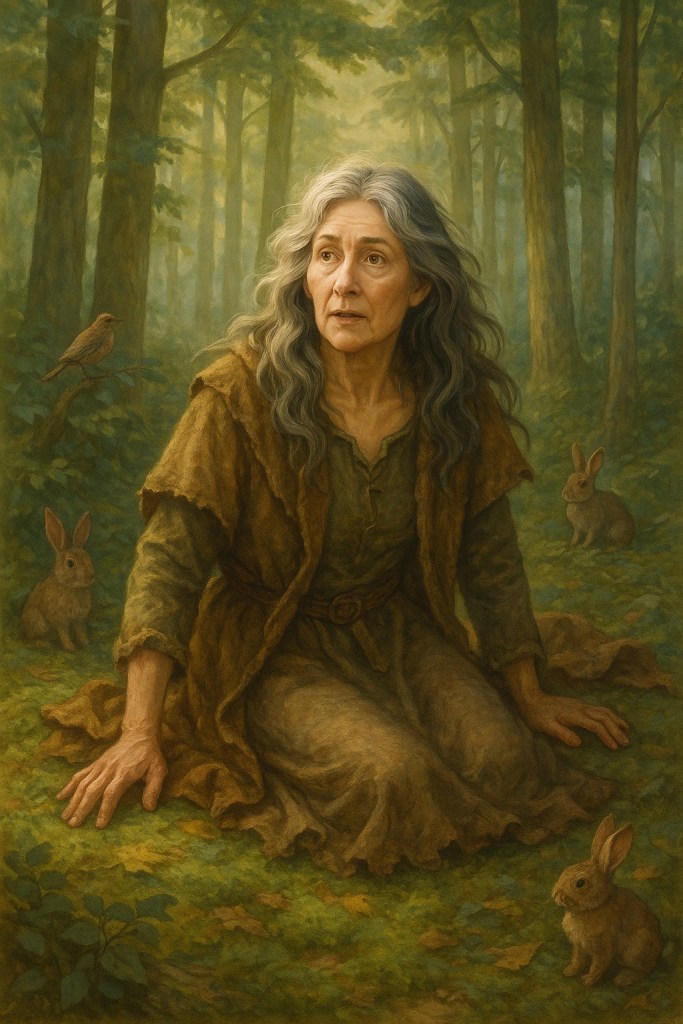
I pictured the newcomers still carrying their former world with them: royal traditions, rigid hierarchies, fixed identities, and a deep sense of what “proper society” ought to look like. These were people who had spent their entire lives under unquestioned structures—kings, church authorities, strict class systems, inherited roles. And suddenly, they came face-to-face with communities that had survived for thousands of years under entirely different rules.

The longer story of those times is complex and brutal. The Pilgrims walked into a continent already alive with civilizations—America’s Indigenous peoples. For Native nations, the arrival of Europeans proved catastrophic. Colonists enslaved Native people, sometimes entire tribes, and brought diseases such as typhus, chickenpox, and cholera to populations with no natural immunity. Those diseases killed an estimated 95% of Indigenous Americans, a tragedy later called “the Great Dying.”

Violence, displacement, and disease devastated local tribes. Ultimately, to preserve what remained, the Wampanoag people signed the 1621 Peace Treaty—the first treaty of its kind between Native people and European settlers.

The Wampanoags, severely weakened, were in danger of being overtaken by the neighboring Narragansett. For them, the treaty offered a fragile but necessary exchange: survival skills and local knowledge shared with the settlers in return for protection by the settlers’ firearms. It invites serious reflection—America’s Native societies didn’t simply encounter the Europeans; they changed them.

Talking with Ben made me realize how little I once understood about early American history, especially about the profound influence Native peoples had on those first settlers. A stirring realization this week, as another Thanksgiving approaches.

Consider leadership: settlers discovered people who chose leaders based on ability, not lineage. Some Native women held property and political authority, even clan leadership. Many tribes made decisions through persuasion and consensus rather than decree.

The impact on the newcomers must have been enormous. Europeans accustomed to hierarchy and obedience no doubt felt confusion, maybe fear—but also, perhaps, a quiet stirring of possibility.

Some early colonists wrote about what they were encountering: families living with autonomy and mutual respect; individuals moving with confidence rather than deference; communities unburdened by fear of displeasing a nobleman or landlord.

For the settlers, the very idea of societies organized around cooperation instead of obedience must have been profoundly disorienting. For Native people, though, freedom wasn’t an abstract ideal—it was simply how life worked.

Humans have learned, since time immemorial, that whatever we live around every day becomes quietly contagious. America’s famous “independent spirit” did not arise solely from Enlightenment philosophy. Many settlers learned that spirit from the people already here—self-governing, communal, adaptive, and deeply connected to the land beneath them.

Imagine those early Europeans beginning to sense that life could be less stratified, less deferential, more grounded in personal choice. More humane. They might not have dared articulate such ideas openly—colonial life was far too rigid for that—but the influence of Native societies undoubtedly shaped their thinking.

There is a line—sometimes thin, but always real—between exposure and transformation. Across generations, “different ways of being” have quietly rearranged human assumptions. The settlers didn’t just transform this continent; the continent—and its original inhabitants—transformed them.

This history reveals one of America’s oldest and most overlooked truths:

From the very beginning, newcomers were influenced by the people already living here—learning new ways of governing, of owning and sharing land, of shaping community life, and discovering the many forms human freedom can take.

Sometimes, the deepest influences are the ones we inherit without ever realizing it.

—Diana

Hearing the Calling

Wednesday, September 24, 2025

For several days, and again this morning over coffee, I’ve had my mind on an old movie that I’ve chosen to watch more than once: Bagdad Café (1987). Like Sounder, which I recently wrote about, it’s stayed with me longer than most films. Maybe because of the quiet desert roads, which feel oddly familiar against my own Central Oregon landscape—wide spaces, moments of isolation, and the surprising ways “connection can arrive.”

Each time I’ve watched, I’ve sensed there’s more going on beneath the story’s surface. At first glance, it appears to be a lighthearted, eccentric comedy with superb acting. However, upon reflecting on its story and characters, I’m convinced that it’s an allegory—and one worth sharing.

On its surface, Bagdad Café is quirky and offbeat, full of small mishaps and comic misunderstandings. Yet behind the humor lies something larger. The setting is a dusty, broken-down café in the Mojave Desert, the sort of place most would drive past without stopping. Into this place come two women: Jasmin, a German tourist, after suddenly being abandoned by her husband, and Brenda, the café’s owner, after being left behind by her husband. Both women are prickly, suspicious, and in their own ways exiled and alone.

At first, the café is a mess—disordered, tired, going nowhere. But slowly, almost imperceptibly, Jasmin’s presence begins to change it. She cleans, she listens, she performs small acts of magic. Brenda resists at first, then softens. Before long, the café is transformed from a tired outpost into a place of beauty, music, and connection.

One image that lingers with me is of Brenda’s husband, who, after leaving, keeps watching the café through binoculars. He has walked away, yet can’t resist observing from a distance. To me, this is part of the allegory. He represents those who see but never engage—hovering on the edge of transformation but unwilling to step into it. His gaze is controlling, even possessive, yet powerless. In contrast, Jasmin—the German, or true outsider—enters fully and brings renewal. The binoculars make the husband an emblem of distance, without connection, reminding us that healing comes only when we dare to join in, not when we stand back and watch.

The cast itself reinforces this sense of something larger: a German tourist, a Black American café owner (played by a British actress), an American painter (played by a once-famous film star), and an assortment of desert drifters. This gathering suggests more than coincidence—it’s also a picture of cultures meeting, colliding, and creating something new together. In that sense, the movie’s haunting refrain “I am calling you” can also be heard as a call across borders, an invitation to connection that transcends nationality, language, and race.

Other details I can’t shake involve Brenda’s children. One is a young father determinedly practicing classical piano in that unlikely setting. His grand piano in that battered desert café feels almost surreal, yet it deepens the allegory: aspiration in unlikely soil. His music insists that beauty and culture belong everywhere—not just in gilded concert halls, but even in a dusty roadside outpost, if someone dares to press the keys.

Then there’s Brenda’s teenage daughter, restless and intent on leaving. She represents another answer to the calling: not to stay and transform, but to escape in search of something better. Her choice is human and understandable, yet it contrasts with Jasmine’s quiet decision to remain and renew. Together, the piano player and the daughter remind us that when the call comes, each of us must answer in our own way—by staying and creating, or by moving on. Either way, the call cannot be ignored. Both children become transformed by the café’s changed atmosphere and remain connected to it.

The more I think about it, the more Bagdad Café feels like a parable of renewal. The café isn’t just a diner—it stands for the barren places we all sometimes inhabit, whether in spirit or in life. Jasmin, the German stranger, becomes an unexpected redeemer, bringing grace without asking for much in return. Brenda, toughened and skeptical, is the everywoman—ready for renewal if she dares to trust.

Threading through it all is the film’s haunting song, Calling You. The lyrics drift in like a voice from beyond:

A desert road from Vegas to nowhere … I am calling you.

For me, that refrain is the heart of the film—maybe hope itself speaking, maybe spirit, or simply the mysterious force that draws us toward one another when we feel lost. Whatever its source, the call is unmistakable. It reminds us that life doesn’t end in the wasteland. Something new can bloom, even in the dust.

These days, I am struggling to find my footing in a competitive environment among strong coworkers. I’m recalling this movie and its message, likely because it’s calling me to stay open to the possibility of renewal, even though I sometimes feel inclined to shut down.

Maybe the movie’s refrain—I am calling you—and its use of magic, aren’t just for the characters in a quirky old film. Perhaps those are calling all of us, tugging gently, if only we allow ourselves quiet moments to hear.

—Diana

Watch Stories

Saturday, September 13, 2025

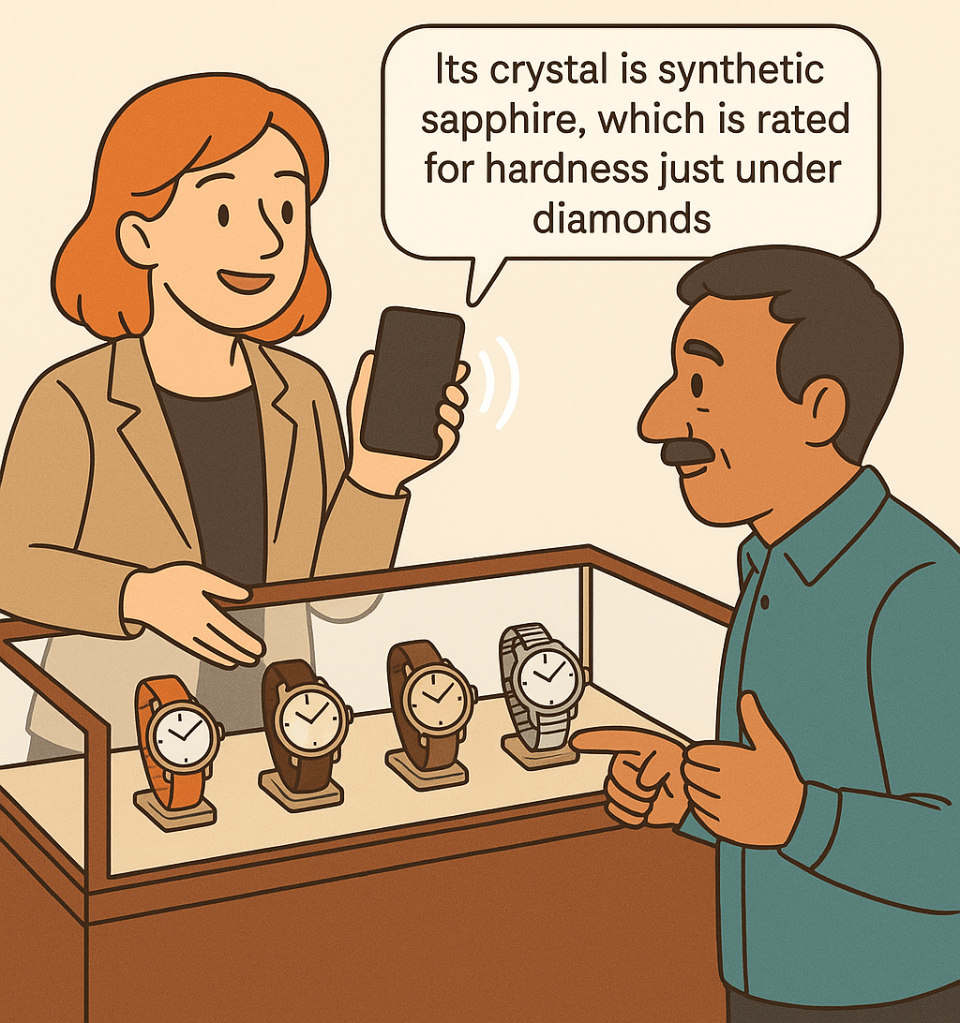
Recently, with the help of ChatGPT, I sold a high-end wristwatch to a Spanish-speaking customer. The person understood some English, but I don’t speak Spanish, so I couldn’t fully understand them. They examined a few of the available watches while also mentioning the word “crystal.” I wasn’t sure about the question and how to respond. As their overall interest in the watches appeared to be waning, I said, “Wait just a minute.”

I quickly found my cellphone, returned to the watch counter, and opened Chat in voice mode. I said, “Chat, I have a customer looking at watches who is interested in their crystals. Can you look at one of the watches and explain its strong points and benefits?”

When Chat responded, “Yes,” I hovered my phone over the watch that my customer had appeared to be most interested in. Immediately, Chat confirmed that it was an excellent timepiece with a crystal of synthetic sapphire, rated for hardness just below diamonds. My customer relaxed, nodded, and showed renewed interest. Chat wasn’t finished and continued by describing other highlights: its excellent water resistance, battery-free accuracy, and the brand’s fine reputation. That assistance sealed the sale.

I’m relatively new to selling high-end wristwatches, and this was actually the second time I had used Chat to help explain to a customer the benefits of a high-end watch. That earlier customer had wondered if a particular watch was shatterproof. I knew it was, but couldn’t explain why with confidence. So, on an impulse, I turned to Chat. It “looked” at the watch, confirmed its durability, explained its highly-rated shatter-resistance characteristics, and then went on to describe, overall, what made it an excellent timepiece. Sold!

The more I experiment with AI and find new ways to use it, the more impressed I become.

— Diana

The Ham Sandwich Heist

Monday, September 01, 2025

Happy Labor Day!

The other afternoon, I took a small break from the big challenge of improving the fencing in my dry lot. I perched myself on a small ladder, and with a protein bar in my hand, watched my Morgan pony, Sunny, working her way with gusto through an allotment of hay. She always eats energetically, and I smile at being reminded of how joyfully a horse approachs even the simplest meal. Also, seeing her, that moment brought back one of my favorite memories of riding the trails with her.

It happened years ago. Sunny had been taking me over a moderately challenging mountain trail and we’d gone a long way. It was time to pause our trip for a lunch break. I slid off Sunny, tied her to a tree branch, and gave her a carrot. She was standing near the log I was sitting on while pulling my lunch from a paper bag: a plain ham sandwich — nothing glamorous, just fuel for our miles ahead. Before I could take a bite, or even realize what was happening, I sensed a whiskered nuzzle near my shoulder, and in one swift move, my entire sandwich was gone — clamped between my horse’s delighted teeth.

She chewed, and I swear, with the satisfaction of a thief who knows she’s won. I watched her eager chewing, and in amazement, for horses are herbivores by design. Ha! Try explaining that to one smack in the middle of discovering the joys of bread and lunch meat. Sunny was enthusiastic, licking her lips as if to say, “Why haven’t you been sharing this all along?”

Of course, that sandwich had to be a one-time treat. Horse folks are well aware that moderation and common sense always comes first in feeding. But that moment sticks with me to this day. It’s one of those horse-unique surprises that makes me laugh anytime I remember it. That sandwich may be long gone, but recalling how it disappeared feeds a fun moment to this day.

Besides, that little incident taught me more about horses. About their endlessly curious nature. From that moment on, while out on the trails, I knew the importance of staying very aware of my eats versus theirs.

Dear Friends, Sunny also loves whole oranges — peel and all — and consumes them with the same sheer delight she once gave to that ham sandwich.

— Diana

“Leading Wing”

Monday, June 30, 2025

Years ago, long before I imagined a life in Central Oregon or the daily ritual of writing blogs, I worked in a world so classified I couldn’t even discuss my job with friends. Lately, I’ve found myself reflecting on those details—my small but precise role during the early development of the B-2 bomber.

I served as the lead negotiator for a section of the B-2, responsible for negotiating costs and understanding the construction intricacies of my assigned area. That work pushed me deep into technical territory, whether I felt ready for it or not. My focus was on a particular part of the wing. Only later did I fully appreciate how closely my work was tied to the company’s and the nation’s ambitious vision.

Unlike conventional aircraft with a fuselage and protruding wings, the B-2 was designed as a “flying wing.” That changed everything, including how we talked about it. I recall that we often referred to my section as a “leading wing,” which, in hindsight, is a bit of a misnomer. In a flying wing, every part is forward-facing, structurally critical, aerodynamically sensitive, layered with radar-absorbing materials, fuel compartments, and stealth design features. There is no separate wing area that sticks out; the entire aircraft is the wing.

And there I was—a non-technical civilian—tasked with negotiating costs for a vital section. I sat across from contractors, flanked by my team of engineers, as we discussed pricing that had to align with strict budgets while justifying the necessity and feasibility of every element. These were intense conversations, involving components stamped with a national security imprint. Every dollar needed a clear, defensible rationale. More than once, we joked that maybe this whole thing we were helping to build existed only on paper—a purely theoretical concept.

Much later, we were all invited to witness the first rollout of a completed B-2. I stood in a crowd of employees buzzing with anticipation. We each knew our own “assigned parts,” but only the designers and top officials knew the entire aircraft design. Someone near me quipped that when the hangar doors opened, there might be nothing at all—that the bomber was just a myth. Given the secrecy and fragmented way we’d each touched the project, it almost seemed possible.

Then the hangar doors began to part.

Out of deep shadow, something black, angular, and breathtaking slowly rolled. The aircraft emerged bit by bit—majestic yet alien-looking, unlike anything we’d ever seen. It moved forward with a kind of eerie grace into the light, and the crowd fell completely silent. Then, quietly, tears welled up. Years of effort, meetings, debates, and pages of paperwork had culminated in this astonishing reality. A wing that could fly.

I often forget to include that experience among the formative chapters of my life. But seeing recent images of B-2s soaring through the sky, flanked by fighter jets, brought it all back. That made me want to recapture it here.

Dear friends: Sometimes the small fragments we handle—negotiations, line items, a section of structure—turn out to be part of something far bigger. Sometimes, even airborne.—Diana

Emerging

Sunday, June 29, 2025

Yesterday, I shared my shock on learning it could cost me up to $10,000 to repaint my small car. I’m a product of living in Southern California and remember a very different time. Back then, several successful auto body repair businesses offered remarkably low prices. Earl Scheib’s, for instance, promised to repaint an entire car for anywhere between $99 and $299 — a deal that drew in countless customers.

So why could repainting my modest vehicle today run as high as $10,000? That question might shed light on why the auto repair company that’ll repair my dented fender specializes in doing only insurance repairs. It estimated my fender repair job at $1,400, which, frankly, felt to me like reverse sticker shock. Back in my old California days, it was common to feel taken advantage of by auto repair shops. Today’s quote, which to me seemed cheap, likely reflects pricing which represents prenegotiated figures acceptable to insurance companies.

Curious, I decided to dig deeper into the modern automotive paint industry. What I found didn’t just give me logical explanations — it also made me realize how out of touch I’d become with current standards, not just in auto painting, but across many trades.

I’m learning that today’s auto repair materials are worlds apart from what was common during my California years — and they’re also vastly more expensive. Similarly, labor costs have increased because of today’s higher performance standards. There are stricter environmental regulations and added compliance expenses, along with inflation and overhead charges. All of those factors contribute to modern repainting quotes.

Consumer expectations also have changed. The old Earl Scheib approach was all about speed and budget, providing quick, cheap, purely cosmetic “spray over and go” jobs. In contrast, a modern $10,000+ paint job typically involves a complete surface restoration, performed to rigorous standards and utilizing advanced materials, handled by skilled technicians who meticulously adhere to environmental laws.

Years ago, low-cost repaints in any color were easy to find, although minimal prep work meant those jobs rarely lasted for long. Today’s high-end shops strive for results that meet or exceed factory standards. That requires painstaking labor, high-quality paints, and strict adherence to environmental compliance. All those drive costs up dramatically.

Dear Friends: Like Rip Van Winkle–awaking to a world more changed than I realized.— Diana

Pimmy’s Check-Up

Saturday, March 08, 2025

Yesterday, to my surprise, Pimmy loaded herself into the horse trailer. She’s teaching me more about donkeys now than when she was constantly among the horses. These days, separated from the horses (for dietary needs), Pimmy seems more like my big dog than an equine.

This time, while encouraging her to load into the trailer, I allowed her to resist loading. I gave her plenty of time to think things over, and suddenly, she voluntarily popped into the trailer.

That’s the thing about a donkey. It doesn’t just follow orders and isn’t just stubborn; it needs to evaluate the possibilities before deciding on an action. It’s taken me over a dozen years with Pimmy to learn this, and yesterday, I felt proud of myself for finally being a bit smarter.

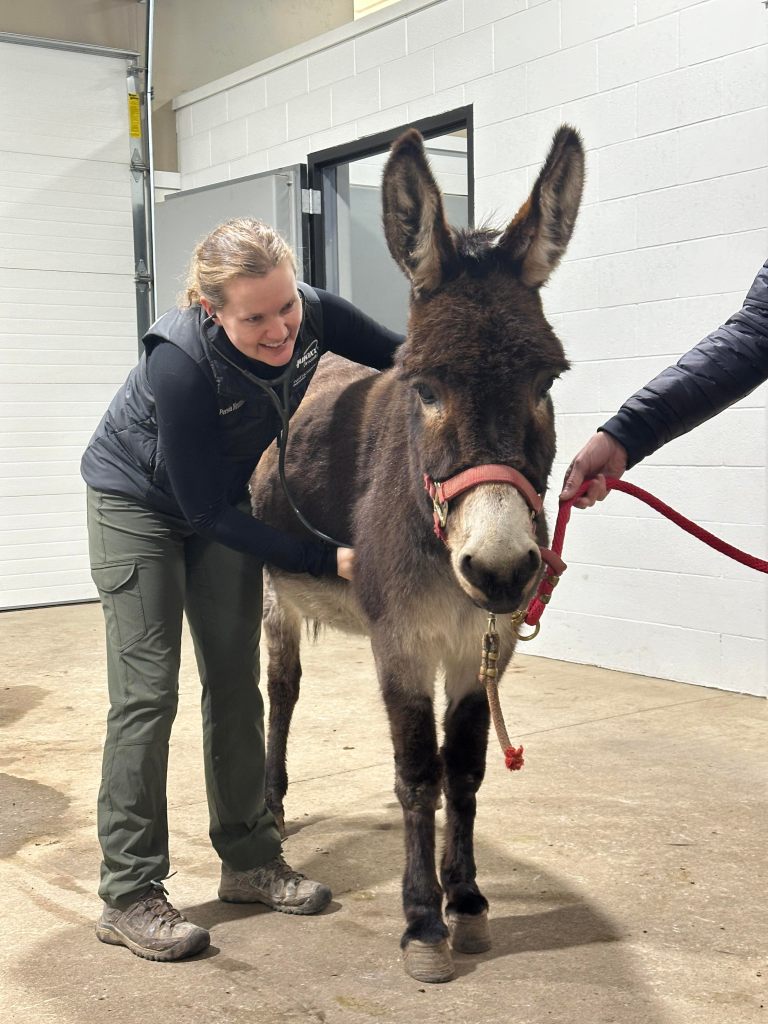
The header photo shows Pimmy getting a physical yesterday. The doc says Pimmy’s vital signs are fine, and her weight is lower. Those are good. The most quickly assessable bloodwork was excellent. We must wait for more bloodwork results to learn if her Cushing’s Disease remains under control and if her glucose level is corrected.

Yesterday, too, she received routine inoculations, and the veterinarian floated Pimmy’s teeth. Then, the slightly drunk donkey needed time to recover from the floating anesthetic, so I left to fill my rig’s tank at a gas station. By the time I returned, Pimmy was awake enough to hear me calling and came to me. She loaded into the trailer relatively quickly, and we left for home.

If her glucose has reached a normal range, I will reduce her meds from twice daily to once daily–a welcome relief. Pimmy’s doctor has ordered an additional ingredient, Vitamin E, for the regimen.

Pimmy is a sweet, smart, and delightful being. Through these months, I’ve not enjoyed treating her illness or separating her from her beloved horses. By now, however, knowing this donkey more personally, I much better appreciate her.

Dear Friends: The horses will get floats and inoculations in two weeks. Diana

Dining Event

Friday, February 21, 2025

Yesterday was my friend Susie’s birthday. She, her husband Dale, and I joined their son Ian and his new bride Christie at Bend Brewery. We celebrated both the birthday and the wedding over beers and burgers.

Ian and Christie are physically fit, very passionate rock climbers. Ian explained that he turned to rock climbing after realizing he felt somewhat distant from the team sports he had participated in. After enrolling in a rock climbing course, he found that activity better suited him.

Rock climbing led Ian to a social event in Mexico, where he met Christie. She began rock climbing at 9 years old, soon transferring her gymnastics skills to rock climbing. She developed high skills and climbed competitively. At the Mexican social event Ian attended, he and Christie “found” one another. Neither ever looked back.

They’re now active in HeliLadder–Dale and Susie’s thriving central Oregon business. When the two aren’t working at Heliladder, they rock climb at the local (huge!) Smith Rock. Over our burgers, they explained that Smith Rock is a world-class, famous climbing destination.

Speaking of HeliLadder, as we were en route to the Brewery, Dale and Susie described issues facing their business after the Trump Administration suddenly laid off government personnel. Current personnel shortages, without backup planning, are making it difficult for HeliLadder personnel to locate individuals who can answer business questions and follow up within business processes.

Susie’s birthday was a unique event. Earlier, I had presented her with a bright coral sweater. It matches one of mine, which I love. We quickly decided to go out for dinner one evening wearing our colorful sweaters and finest bling. Loving that idea, Dale said he’d buy the dinner!

In the interim, “their kids” got married. Our burger-sweater dinner idea quickly evolved into a multi-celebratory event–lovely and fun.

Dear Friends, An event with discussions, creativity, and camaraderie is the best. Diana

Cold Winter

Wednesday, February 05, 2025

This high desert is finally snow-covered. Deep winter grips us. I’ve anticipated this cold, which will stretch through February and March—weatherwise, the most demanding months.

We have cycled through the winter holiday festivities and now face the stark realities of freezing winds, deep snowdrifts, and short days. I tell myself to endure patiently these slow-moving weeks before signs of spring occur.

I also remind myself that practicing patience through deep winter isn’t passive but an active practice.

These days of biting cold, iced-over roads, and gray skies make us seek comfort in small routines. I might enjoy a warm drink, appreciate and care for my animals, and sit in a comfortable chair to read a book. Those are anchors, slowing anxieties and getting through what can’t be rushed.

I have learned not to fight winter but to embrace it as a time for reflecting, resting, and waiting for different weather energy. That’s active practicing; another is active appreciating–recognizing winter’s beauty, the silence of snowy mornings, and the moon’s brightness on freezing nights.

Winter brings gifts, if we take moments to see them. I often find myself kicking pathways into fresh snow on my property and looking up at the deep contrast of black branches highlighted with snow against a barely bluish sky.

Writing this morning makes me thoughtful about patience—less about enduring and more about appreciating. And so, we wait on days that are already a bit longer but still seem too short.

I am eager for hints of warmth to return. Meanwhile, I will heed my observations and take the rest of winter one day at a time, seeking the positives it offers until the freezing cold eventually loosens.

Dear Friends, Patience isn’t “just waiting” but trusting that change is coming. Diana

Leg Up

Sunday, January 26, 2025

I am experimenting with my learning ability by signing up online for a beginning Spanish course.

Here’s why Spanish: My few years of employment in local retail businesses show Central Oregon’s sizable Spanish population. Many local Spanish are articulate in English, and many others are barely articulate or don’t speak any English.

Retail workers who understand Spanish have a leg up on communicating and selling. I hope to at least gain listening skills. That would give me insight into what customers may discuss among themselves when deciding whether to purchase.

I will again be challenging myself, and mightily. Often, I’ve attempted to learn left-brain skills like math and languages, but unsuccessfully. Taking math and language courses has challenged me, usually unsuccessfully, to comprehend specifics well enough to retain them. I can more capably understand right-brain skills like psychology and communications.

It is daunting to try again to learn a foreign language. However, this time’s different because I am clear about what I want to achieve. Having specific goals might overcome what previously were abstract wishes to learn.

I am tiptoeing into this by committing only to one month of immersion. If I am active, feel involved in the course, and discover that I am learning to any noticeable extent, I’ll re-sign up and take the entire course.

Dear Friends: So, “Hasta la vista, baby!” Diana