“Leading Wing”

Monday, June 30, 2025

Years ago, long before I imagined a life in Central Oregon or the daily ritual of writing blogs, I worked in a world so classified I couldn’t even discuss my job with friends. Lately, I’ve found myself reflecting on those details—my small but precise role during the early development of the B-2 bomber.

I served as the lead negotiator for a section of the B-2, responsible for negotiating costs and understanding the construction intricacies of my assigned area. That work pushed me deep into technical territory, whether I felt ready for it or not. My focus was on a particular part of the wing. Only later did I fully appreciate how closely my work was tied to the company’s and the nation’s ambitious vision.

Unlike conventional aircraft with a fuselage and protruding wings, the B-2 was designed as a “flying wing.” That changed everything, including how we talked about it. I recall that we often referred to my section as a “leading wing,” which, in hindsight, is a bit of a misnomer. In a flying wing, every part is forward-facing, structurally critical, aerodynamically sensitive, layered with radar-absorbing materials, fuel compartments, and stealth design features. There is no separate wing area that sticks out; the entire aircraft is the wing.

And there I was—a non-technical civilian—tasked with negotiating costs for a vital section. I sat across from contractors, flanked by my team of engineers, as we discussed pricing that had to align with strict budgets while justifying the necessity and feasibility of every element. These were intense conversations, involving components stamped with a national security imprint. Every dollar needed a clear, defensible rationale. More than once, we joked that maybe this whole thing we were helping to build existed only on paper—a purely theoretical concept.

Much later, we were all invited to witness the first rollout of a completed B-2. I stood in a crowd of employees buzzing with anticipation. We each knew our own “assigned parts,” but only the designers and top officials knew the entire aircraft design. Someone near me quipped that when the hangar doors opened, there might be nothing at all—that the bomber was just a myth. Given the secrecy and fragmented way we’d each touched the project, it almost seemed possible.

Then the hangar doors began to part.

Out of deep shadow, something black, angular, and breathtaking slowly rolled. The aircraft emerged bit by bit—majestic yet alien-looking, unlike anything we’d ever seen. It moved forward with a kind of eerie grace into the light, and the crowd fell completely silent. Then, quietly, tears welled up. Years of effort, meetings, debates, and pages of paperwork had culminated in this astonishing reality. A wing that could fly.

I often forget to include that experience among the formative chapters of my life. But seeing recent images of B-2s soaring through the sky, flanked by fighter jets, brought it all back. That made me want to recapture it here.

Dear friends: Sometimes the small fragments we handle—negotiations, line items, a section of structure—turn out to be part of something far bigger. Sometimes, even airborne.—Diana

Emerging

Sunday, June 29, 2025

Yesterday, I shared my shock on learning it could cost me up to $10,000 to repaint my small car. I’m a product of living in Southern California and remember a very different time. Back then, several successful auto body repair businesses offered remarkably low prices. Earl Scheib’s, for instance, promised to repaint an entire car for anywhere between $99 and $299 — a deal that drew in countless customers.

So why could repainting my modest vehicle today run as high as $10,000? That question might shed light on why the auto repair company that’ll repair my dented fender specializes in doing only insurance repairs. It estimated my fender repair job at $1,400, which, frankly, felt to me like reverse sticker shock. Back in my old California days, it was common to feel taken advantage of by auto repair shops. Today’s quote, which to me seemed cheap, likely reflects pricing which represents prenegotiated figures acceptable to insurance companies.

Curious, I decided to dig deeper into the modern automotive paint industry. What I found didn’t just give me logical explanations — it also made me realize how out of touch I’d become with current standards, not just in auto painting, but across many trades.

I’m learning that today’s auto repair materials are worlds apart from what was common during my California years — and they’re also vastly more expensive. Similarly, labor costs have increased because of today’s higher performance standards. There are stricter environmental regulations and added compliance expenses, along with inflation and overhead charges. All of those factors contribute to modern repainting quotes.

Consumer expectations also have changed. The old Earl Scheib approach was all about speed and budget, providing quick, cheap, purely cosmetic “spray over and go” jobs. In contrast, a modern $10,000+ paint job typically involves a complete surface restoration, performed to rigorous standards and utilizing advanced materials, handled by skilled technicians who meticulously adhere to environmental laws.

Years ago, low-cost repaints in any color were easy to find, although minimal prep work meant those jobs rarely lasted for long. Today’s high-end shops strive for results that meet or exceed factory standards. That requires painstaking labor, high-quality paints, and strict adherence to environmental compliance. All those drive costs up dramatically.

Dear Friends: Like Rip Van Winkle–awaking to a world more changed than I realized.— Diana

Pimmy’s Check-Up

Saturday, March 08, 2025

Yesterday, to my surprise, Pimmy loaded herself into the horse trailer. She’s teaching me more about donkeys now than when she was constantly among the horses. These days, separated from the horses (for dietary needs), Pimmy seems more like my big dog than an equine.

This time, while encouraging her to load into the trailer, I allowed her to resist loading. I gave her plenty of time to think things over, and suddenly, she voluntarily popped into the trailer.

That’s the thing about a donkey. It doesn’t just follow orders and isn’t just stubborn; it needs to evaluate the possibilities before deciding on an action. It’s taken me over a dozen years with Pimmy to learn this, and yesterday, I felt proud of myself for finally being a bit smarter.

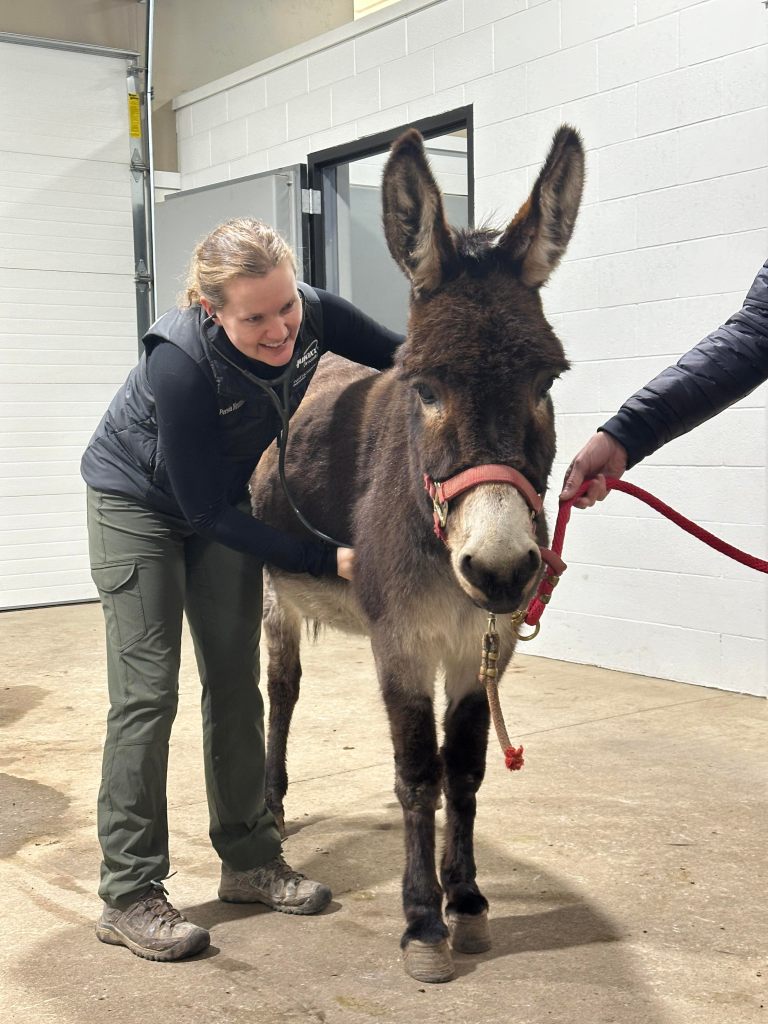
The header photo shows Pimmy getting a physical yesterday. The doc says Pimmy’s vital signs are fine, and her weight is lower. Those are good. The most quickly assessable bloodwork was excellent. We must wait for more bloodwork results to learn if her Cushing’s Disease remains under control and if her glucose level is corrected.

Yesterday, too, she received routine inoculations, and the veterinarian floated Pimmy’s teeth. Then, the slightly drunk donkey needed time to recover from the floating anesthetic, so I left to fill my rig’s tank at a gas station. By the time I returned, Pimmy was awake enough to hear me calling and came to me. She loaded into the trailer relatively quickly, and we left for home.

If her glucose has reached a normal range, I will reduce her meds from twice daily to once daily–a welcome relief. Pimmy’s doctor has ordered an additional ingredient, Vitamin E, for the regimen.

Pimmy is a sweet, smart, and delightful being. Through these months, I’ve not enjoyed treating her illness or separating her from her beloved horses. By now, however, knowing this donkey more personally, I much better appreciate her.

Dear Friends: The horses will get floats and inoculations in two weeks. Diana

Dining Event

Friday, February 21, 2025

Yesterday was my friend Susie’s birthday. She, her husband Dale, and I joined their son Ian and his new bride Christie at Bend Brewery. We celebrated both the birthday and the wedding over beers and burgers.

Ian and Christie are physically fit, very passionate rock climbers. Ian explained that he turned to rock climbing after realizing he felt somewhat distant from the team sports he had participated in. After enrolling in a rock climbing course, he found that activity better suited him.

Rock climbing led Ian to a social event in Mexico, where he met Christie. She began rock climbing at 9 years old, soon transferring her gymnastics skills to rock climbing. She developed high skills and climbed competitively. At the Mexican social event Ian attended, he and Christie “found” one another. Neither ever looked back.

They’re now active in HeliLadder–Dale and Susie’s thriving central Oregon business. When the two aren’t working at Heliladder, they rock climb at the local (huge!) Smith Rock. Over our burgers, they explained that Smith Rock is a world-class, famous climbing destination.

Speaking of HeliLadder, as we were en route to the Brewery, Dale and Susie described issues facing their business after the Trump Administration suddenly laid off government personnel. Current personnel shortages, without backup planning, are making it difficult for HeliLadder personnel to locate individuals who can answer business questions and follow up within business processes.

Susie’s birthday was a unique event. Earlier, I had presented her with a bright coral sweater. It matches one of mine, which I love. We quickly decided to go out for dinner one evening wearing our colorful sweaters and finest bling. Loving that idea, Dale said he’d buy the dinner!

In the interim, “their kids” got married. Our burger-sweater dinner idea quickly evolved into a multi-celebratory event–lovely and fun.

Dear Friends, An event with discussions, creativity, and camaraderie is the best. Diana

Cold Winter

Wednesday, February 05, 2025

This high desert is finally snow-covered. Deep winter grips us. I’ve anticipated this cold, which will stretch through February and March—weatherwise, the most demanding months.

We have cycled through the winter holiday festivities and now face the stark realities of freezing winds, deep snowdrifts, and short days. I tell myself to endure patiently these slow-moving weeks before signs of spring occur.

I also remind myself that practicing patience through deep winter isn’t passive but an active practice.

These days of biting cold, iced-over roads, and gray skies make us seek comfort in small routines. I might enjoy a warm drink, appreciate and care for my animals, and sit in a comfortable chair to read a book. Those are anchors, slowing anxieties and getting through what can’t be rushed.

I have learned not to fight winter but to embrace it as a time for reflecting, resting, and waiting for different weather energy. That’s active practicing; another is active appreciating–recognizing winter’s beauty, the silence of snowy mornings, and the moon’s brightness on freezing nights.

Winter brings gifts, if we take moments to see them. I often find myself kicking pathways into fresh snow on my property and looking up at the deep contrast of black branches highlighted with snow against a barely bluish sky.

Writing this morning makes me thoughtful about patience—less about enduring and more about appreciating. And so, we wait on days that are already a bit longer but still seem too short.

I am eager for hints of warmth to return. Meanwhile, I will heed my observations and take the rest of winter one day at a time, seeking the positives it offers until the freezing cold eventually loosens.

Dear Friends, Patience isn’t “just waiting” but trusting that change is coming. Diana

Leg Up

Sunday, January 26, 2025

I am experimenting with my learning ability by signing up online for a beginning Spanish course.

Here’s why Spanish: My few years of employment in local retail businesses show Central Oregon’s sizable Spanish population. Many local Spanish are articulate in English, and many others are barely articulate or don’t speak any English.

Retail workers who understand Spanish have a leg up on communicating and selling. I hope to at least gain listening skills. That would give me insight into what customers may discuss among themselves when deciding whether to purchase.

I will again be challenging myself, and mightily. Often, I’ve attempted to learn left-brain skills like math and languages, but unsuccessfully. Taking math and language courses has challenged me, usually unsuccessfully, to comprehend specifics well enough to retain them. I can more capably understand right-brain skills like psychology and communications.

It is daunting to try again to learn a foreign language. However, this time’s different because I am clear about what I want to achieve. Having specific goals might overcome what previously were abstract wishes to learn.

I am tiptoeing into this by committing only to one month of immersion. If I am active, feel involved in the course, and discover that I am learning to any noticeable extent, I’ll re-sign up and take the entire course.

Dear Friends: So, “Hasta la vista, baby!” Diana

Breeze, et al

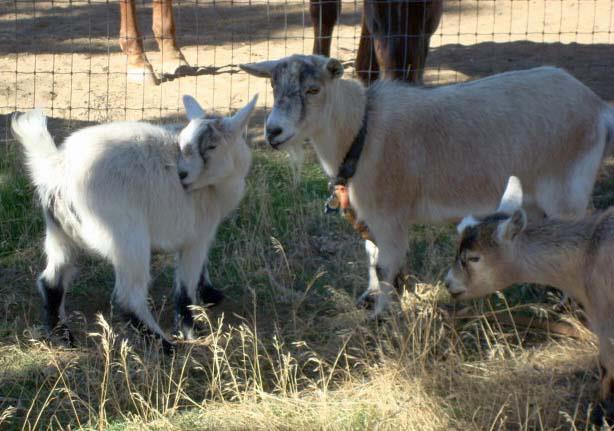
With Breeze (white) and Poppy (caramel)

Sunday, January 12, 2025

I acquired an adorable trio of African Dwarf Goats in 2010: the mama (Sego Lily) and her twins (Breeze and Poppy). Sego Lily had originally been adopted from a herd environment, and by 2010, her real age was only an estimate; her babies were months old.

The trio was sweetly bonded and inseparable. They participated in official parades and often strolled with me on neighborhood streets, leashed, alertly cautious, and keenly aware.

Mama passed away about five years ago when I was guessing her age at fifteen. Little Poppy passed away a year ago at age fourteen. And yesterday, I lost Breeze; she was fifteen.

That morning, while outside and feeding my animals before leaving for work, I discovered Breeze lying down and apparently unable to rise onto her feet. I tried lifting her but hadn’t enough strength. Breeze’s legs were stiff and unmanageable, and she might have suffered a stroke sometime in the night or earlier that morning.

Breeze passed away before the emergency veterinarian could arrive at my place. My workplace is painfully short of workers; I felt needed and went to work, where I arranged to meet an emergency veterinarian later at my place. Meanwhile, my kind neighbors watched over Breeze and hours later let me know she had passed. Later, a concerned co-worker followed me home and helped with her remains.

RIP, my Breezey.

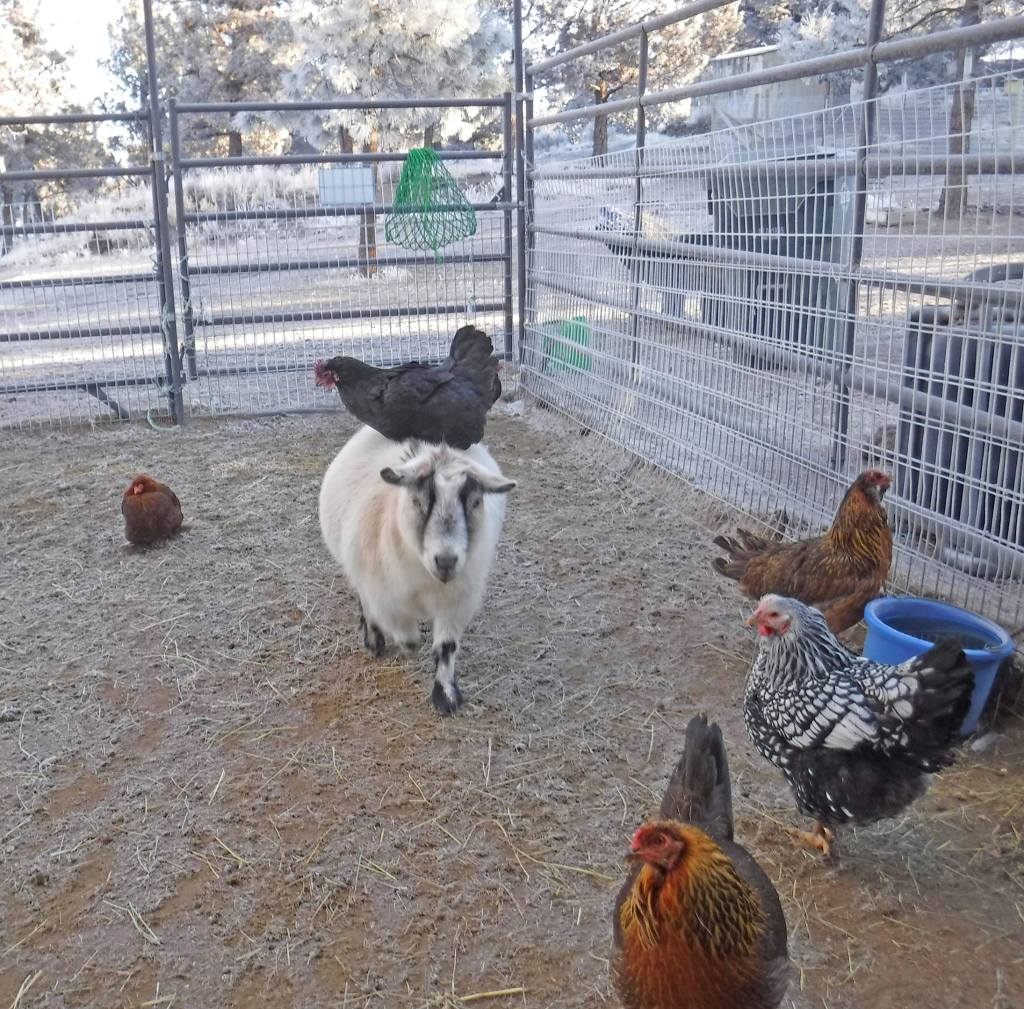
Breeze and hitchhiker

Remembering those three sweeties this morning, I’m sad with an empty feeling.

Dear Friends: Cute, fun, and stubbornly determined when wanting something. Diana

Beany

Monday, December 02, 2024

I’ve searched for equipment to make coffee each morning, hoping for faster, hotter, and possibly tastier javas. That’s guided me to acquire an electrical, quick pour-over coffeemaker that works well and several nonelectrical pour-over varieties. I’ve used them all, and each produces an adequately satisfying cup of coffee. The pour-overs commonly instruct users to make coffee from rough-ground grains.

I’m busy, so I avoid grinding by using preground coffee. I prefer beans that have been single-sourced from mountainous South America. I’ve learned that coffee beans have many varieties of complex flavors, from factors like growing terrains and processing methods. To me, South American beans are high quality and consistently satisfying.

Learning can be a game-changer; I began exploring the world of coffee beans for a commonly acknowledged “best” bean. The consensus is that the best beans are grown in Africa, and at the top are Ethiopian beans. I have gathered that Ethiopia is considered “the birthplace of coffee” and that its beans offer many flavors, described as bright and floral or rich and complex with “fruity acidity and delicate sweetness.”

I’m in, and finally, a pound of Ethiopian coffee has arrived. Its packaging recommends using a French Press, which works for me. Tomorrow morning, I will discover if African beans produce a comparable or better cup of coffee than South American beans.

Dear Friends: I love how a “little learning” opens avenues to more learning. Diana

Moving On

Friday, November 29, 2024

Today is post-Thanksgiving and Black Friday, the annual hottest sales day. The department store where I work part-time opened today at 6:00 a.m., four hours earlier than usual. Luckily, I wasn’t assigned to work mega-early, but I will work this afternoon in my old stomping grounds, the Jewelry Department.

My Thanksgiving Day was pleasant. Free from my outside job, I handled some property needs before joining friends. In my transition toward becoming a vegan, I opted for salad and soup. Those were plenty satisfying and supported my program.

I have chosen against making a sudden complete shift to veganism. My freezer has stored foods that aren’t vegan and that I don’t want to trash. I’m totally ready to go vegan, but with groceries nowadays so expensive, wasteful tossing feels sinful.

Dear Friends: Enjoy shopping today, and soon again, the Christmas sales. Diana

Adornments

Wednesday, October 30, 2024

Yesterday, the department store where I work part-time hosted a traveling jewelry show. The jewels, primarily of gold and diamonds, were beautiful and expensive. Those luxuries in these economically stressful times drew individuals who wished to self-identify uniquely from others; however, it appeared (to me) that actual sales might be falling short of the goals.

I remember reading somewhere that, “First man made tools, and then he made jewelry.” The earliest jewels worn that identified individuals uniquely probably were real seashells and artist-created resemblances.

Watching customers yesterday, I was struck by how long they (mostly women) studied the array and carefully selected pieces, one by one, to try on. Most arrived wearing their favorite jewelry pieces, hoping to match or complement those items. Many found choices they loved and looked fine, tried on, but decided against making a sizable investment.

Sure, “It’s the economy, stupid.” Nonetheless, potential buyers did show up and spent much time looking and playing with offerings. It resembled a sort of practice event, like entering a department store’s dressing room and trying on clothing, self-assessing, and then deciding against purchasing.

If the store’s goals did fall short, it’s likely for not advertising or promoting adequately an upcoming, unique opportunity to discover fine jewelry locally.

I’m often struck by yet another recognition of today’s businesses inadequately providing training and learning opportunities. Maybe I could have helped more with yesterday’s selling effort and improved the bottom line. However, I wasn’t adequately trained before the event.

About inadequate training: Experience has taught me that regardless of how many computer-generated training videos an organization provides, time spent “learning via videos” quickly becomes a brain-deadening sentence. Simply put, teams need regular meetings to gain a common understanding and be on the same page.

Dear Friends: At least I glimpsed “a little inside” of key jewelry showing. Diana