A Perfect Pony

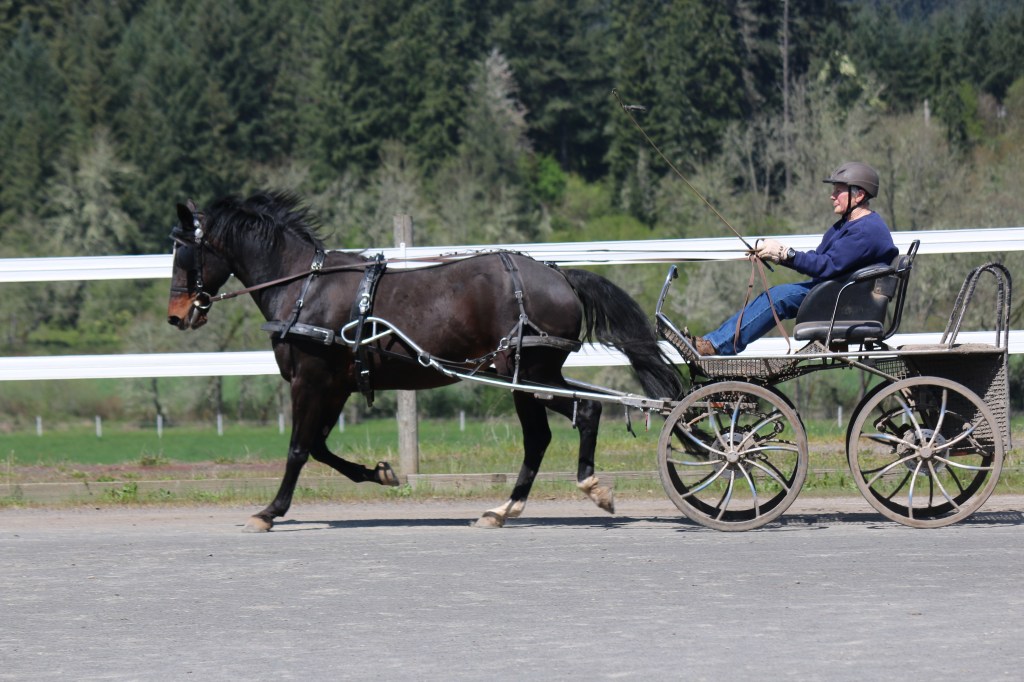
Driving Sunny (in her prime)

Thursday, July 09, 2026

This summer tossed me into a kind of vulnerability that may accompany awkward attempts to revive old passions. My current passions are carriage driving, particularly driving my (now) middle-aged pony, Sunny.

A couple of months ago, Sunny and I had to say a final goodbye to Rosie, her older sister and long-time companion. Now, Sunny, the lone horse in my barn, needs a job. A horse mustn’t be left just standing around.

That seemed easy enough for Sunny. She’s a trained driving horse who used to have that job, and I loved driving her. Somehow, I got busy with other pursuits back around the start of the COVID-19 pandemic, and gradually stopped driving. Now, years later, our circumstances have changed, and I hope we can start teaming up with our cart again.

First, I made sure that Sunny was physically up to the very physical task of driving. A capable equine veterinarian assessed Sunny and gave her a thumbs-up for performance capability and soundness. I began lunging Sunny daily, trotting her in 20-foot circles that turned excess weight (hers, not mine!) into muscle.

Simultaneously and surprisingly, I found myself weighed down by unanticipated clouds of self-doubt and insecurity. They began hanging heavily over my head. For example, I often found myself staring at Sunny’s harness gear and trying desperately to remember all the pieces and how exactly they used to fit together. My driving training, which occurred years ago, now seemed out of reach.

I tried to re-learn by watching YouTube videos. They didn’t help much. I found myself fearing that crucial parts of the harness might be missing. Equally sad, I couldn’t recall exactly how to secure certain harness pieces to the carriage.

I’ll confess that, behind this, were also worries about no longer being young. I found myself coping with frightening thoughts: Is failing to recall once-familiar details signaling old-age memory loss? Or might I safely consider it as “normal forgetting?” Those mental blocks felt as heavy as the iron carriage itself.

Then came another reality, of safely hitching a pony and carriage together. The equine must stand perfectly still while its person hitches the cart. I was out of practice and now without a helper to hold Sunny. She would once dependably stand perfectly, flawlessly still. But now, many years later, I’d have to trust Sunny’s memory.

Thoughts of hitching her for the first time in years, and completely by myself, were daunting and suggested potential danger. Unfortunately, nobody else in my area drives horses and could help me.

Nonetheless, yesterday morning, I awoke early, feeling resolute. In the first place, Sunny needs a job, and in the second, I had to make us a driving team again. I clenched my jaw en route to the barn, uncovered the cart, positioned it, attached its shafts, and rechecked all of Sunny’s harnessing.

Standing there, but still insecure, I frankly froze. I understood that I’d reached my limit. Hitching now absolutely required a second pair of hands. The folks I thought to call for, hopefully right now and on-the-spot assistance, were my neighbors, Frank and Annette. I reached out, and thankfully, Annette answered the call.

She came right over, an absolute trooper—and unhesitatingly stepped into an unfamiliar world. Together, we tackled harnessing Sunny, positioning her correctly at the cart, and then managing the heavy lifting. We got the horse, harness, and cart all situated. (BTW, Sunny didn’t move a muscle through all this.)

Once the pony and cart were hitched up, we faced The True Test: Would Sunny remember her training?

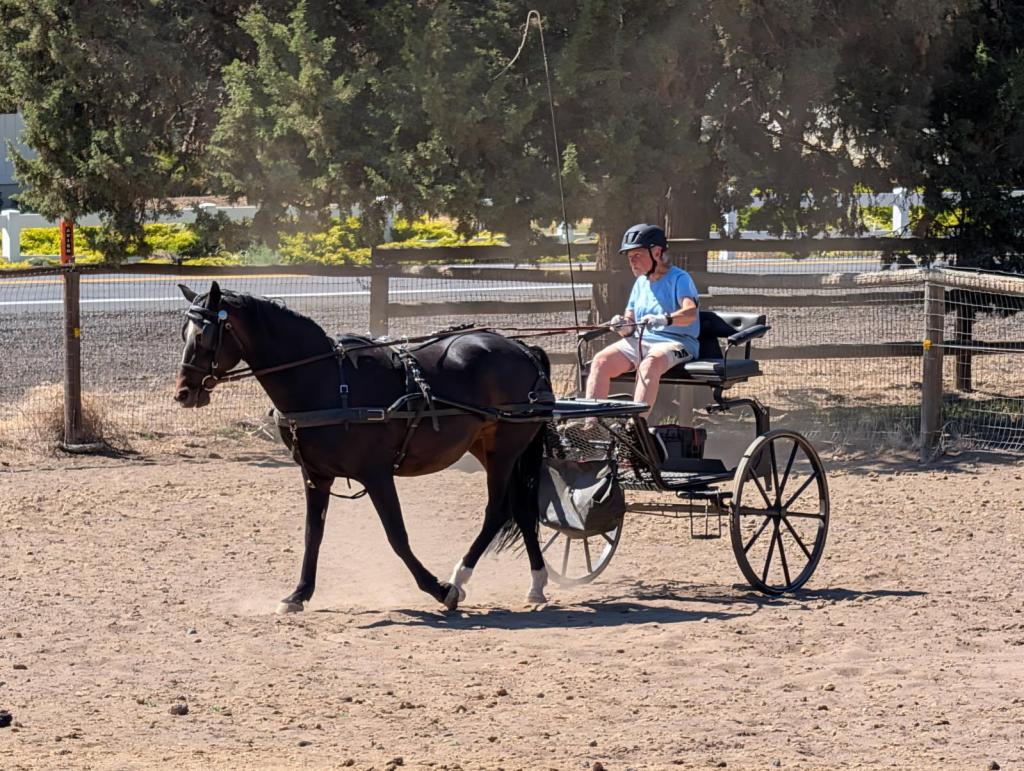
Upon being asked to walk, Sunny pulled the cart perfectly, first around the barn and then toward the dry lot. Once there, my worries melted. Sunny more than “just remembered.” She was a perfect pony, took turns around the area, did figure eights, and transitioned smoothly from walks into trots. As if no time at all had passed.

Here’s one of Annette’s quick captures.
All this brought me closer to two major truths:

  1. Sunny is a gem.
  2. Community is everything.

Many kudos to wonderful Annette. For standing at Sunny’s head and helping to manage the heavy cart. That initial hitching job felt too big for me to tackle alone. My lesson, again, was to recognize that sometimes overcoming fears takes more than sheer determination—like asking a kind neighbor to help lift the weight.

Sweet Sunny and I will yet again become a smooth driving team. Stay tuned for our adventures!

— Diana
Finding My Stride

Saturday, June 27, 2026

I am learning—and in real time—about the profound difference between “doing exercises” and “moving with purpose.”

I’ve tended to be a cerebral type—happiest sitting with a book, dreaming of someday writing one. But as I age, things are changing rapidly. Much of what I experience today surprises me. Like, if anyone had told me earlier in life that I would someday be averaging something like 18,000 steps a day, I’d have laughed. Yet over the past several weeks, to my great shock, I have been stepping up to that entirely new rhythm—on my few acres and beyond.

Essentially, it’s about discovering a fitness routine that actually works for me. This one wasn’t designed by a gym trainer, but instead, by entirely different forces. It’s driven by a deep affection for animals, a strong sense of duty, and a love of the great outdoors.

This odd journey started with my longtime wish to correct some habitual “slumping” while standing and walking. Traditional methods led me to a competent personal trainer who guided me through structured, scientifically sound exercises. I struggled to keep up, but frankly, staring at a wall and doing isolated repetitions felt like a hollow routine. It offered no motivation.

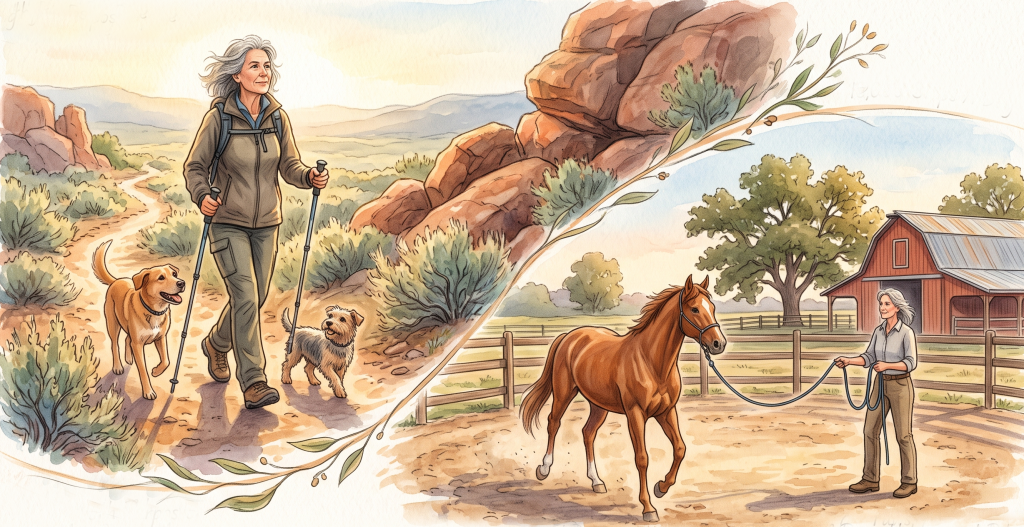
This summer finally arrived, and I began taking my dogs on outings at a nearby BLM. In this same beautiful weather, I also started working with my horse, Sunny, to recondition her for pulling a carriage. Quite by accident, the BLM trails and my own barn area have become daily highlights in my fitness evolution.

In the cool, early mornings, the dogs and I head out to a nearby Bureau of Land Management trail. Initially, we only walked half of the trail’s entire to-and-from distance, with my eyes glued to the dirt to dodge rocky protrusions. As my confidence grew, we started completing the trail’s full three-mile round trip. I was proud of us, and before long, I wished to push myself a bit further by adding a pair of lightweight hiking poles to our outings. Those poles caused an immediate shift.

Without the poles, walking had seemed too passive for my upper body—not offering enough to correct my old slumping habit. But adding poles changed the physics of my stride and gave me new hope. I could physically feel the planting of a pole and the pushing off. Those pulled my shoulder blades back, naturally opening my chest. The physical feedback encouraged me to work harder, with more hope of eventually standing taller without constantly having to force myself to “straighten up.” Those poles also give me the balance and confidence to work on lengthening my stride. Maybe they’re also helping to realign my spine.

The morning hikes are only part of the equation. Most afternoons, I’m out by the barn, lunging Sunny—asking her to trot steadily in circles for forty minutes. That’s not passive exercise; we’re a dynamic physical partnership. Managing twenty feet of lunging line requires a firm grip and forearm strength, and staying centered as Sunny circles me demands a stable, rotating core.

My horse doesn’t give a hoot about performance standards—she reads my body language perfectly. My “standing tall” in the center of our ring is a constant act of communication. If my attention wavers, Sunny senses it immediately, breaks her stride, and drops into a walk, forcing me to resume active participation.

Between those morning hikes with the dogs and the focused afternoon workouts with my horse, my daily step counts have skyrocketed. By the time the sun sets, my phone typically clocks me at 16,000 to 18,000 steps.

This is an incredible evolution. It’s teaching that my mind and body work best when they’re engaged together. Not long ago, the gym-style exercise routine felt like a chore, but now, there are early-morning hikes and focused afternoons with my animals that feel like life. These high-count steps will help me maintain health, manage weight, and focus on better posture. All these are vital gains—and best of all—achieved entirely on my own terms.

Instead of struggling to keep up with a rigid, repetitive exercise routine, it makes sense to consider trading the gym for what you really love. Step outside, find your purpose, and let the natural environment do the heavy lifting.

— Diana

What Fits Now

Saturday, June 07, 2026

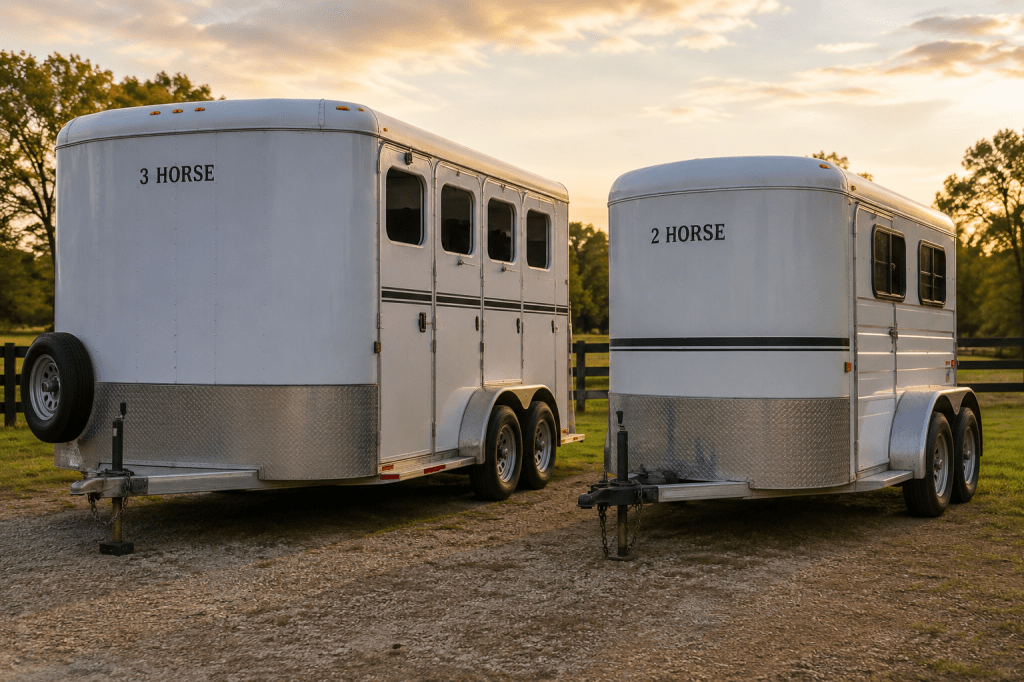
My large three-horse trailer has long been perfectly sized for my needs. That’s because my horses, Rosie and Sunny, and our donkey, Pimmy, often traveled together. For many years, I’d ride one horse and pony the other, while Pimmy, who adored her horses, followed along untethered. We were a small trio heading down trails and country roads. I don’t remember thinking those perfect days could end.

But they did—as all seasons eventually do. Things for me have changed, and quickly.

Rosie crossed the Rainbow Bridge this spring. Pimmy, now elderly herself and needing daily medication, has gone to live with a younger neighbor. A donkey can live to be forty years old, and her new person can promise care for as long as Pimmy may need it. Sunny remains here with me. She’s a sweet 22-year-old, small and technically a pony. As a side note, Sunny is also Rosie’s full sister.

During our many years “of three,” I had little reason to use my other trailer, a smaller two-horse Logan. Why switch trailers? Why train the horses to a smaller trailer when the larger one comfortably carried the entire crew? So I let the Logan sit and time slipped away. Its weatherstripping gradually loosened. Tires aged. Dust accumulated.

This week, with only one horse remaining, I started seeing the big three-horse trailer differently. Now, it’s much larger than Sunny needs. I decided it was time to inspect the Logan and assess what’ll be required to put it back into service.

At first, refurbishing the Logan seemed simply a practical matter—replacing seals, checking tires, and making a few minor repairs. But as I stood and looked at my old trailer, something within me began to shift, and it occurred that maybe I was seeing something more.

I felt more aware of changes affecting my small property, and that seemed to influence how I saw. My smaller trailer stopped representing less. Instead, it began representing what fits now.

I almost physically felt changes in my daily life. For the first time in twenty years, I had only one large animal to care for. That meant more time for me to slow down, more opportunities to tackle small waiting tasks, and more room for quiet moments with a book.

All new realities require appropriate attention and time. Sunny has needs—deserves adventures. We’ll always need a horse trailer, but now the smaller Logan is right for carrying Sunny. Besides trail rides and visiting friends, if she ever needs veterinary care, the Logan has a loading ramp, making it easier to transport her. I now see that old trailer as having many useful years left.

I also understood that the Logan trailer isn’t the only thing around here calling for refurbishing. Sure, Logan needs weatherstripping, tires, and an overall inspection. But I’m here, too, and, oops—I need something similar—another version of refurbishing. I must keep in my sight an ongoing need to adjust my perspective on the world. Right now, it’s about my changing world—containing one equine instead of three.

My broadening awareness feels quietly reassuring—reminding me that life does continue. And that we’re capable of adapting and finding ways forward—although our daily lives may be reshaping in ways we’re not ready for.

— Diana

Bend’s New Library

Saturday, May 16, 2026

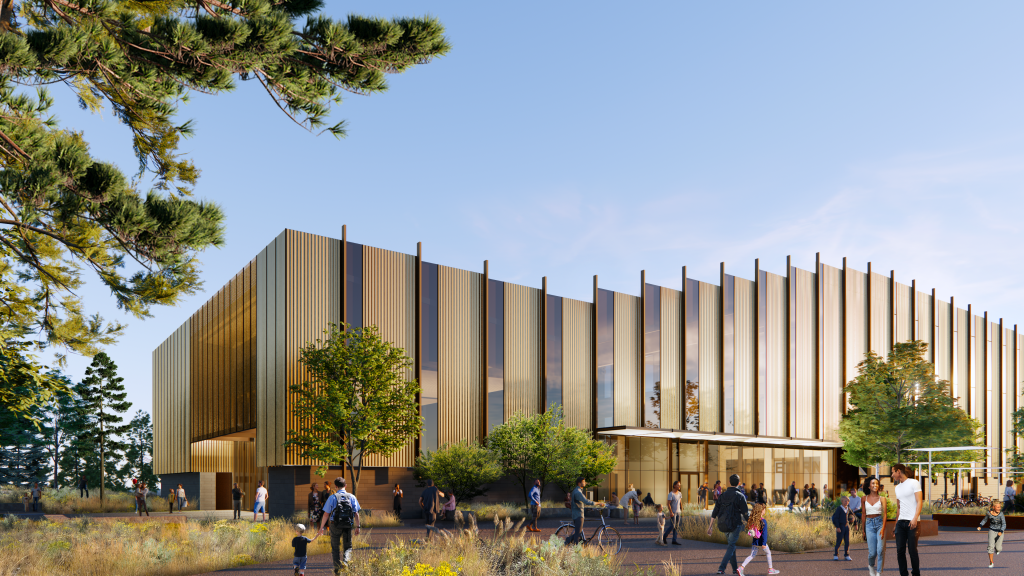
Yesterday, I sat in a “creative cubbyhole” beside a large window with my laptop in our new main library. It opened earlier this week, and inside it is beautiful—spacious, light-filled, modern, and carefully designed. Yet, surprisingly, as I looked around, I found myself missing this city’s old, now-closed main library. That crowded old place felt less curated and more discoverable.

Almost as soon as I entered the building, I began comparing what I saw to the old library’s stacks, which had always seemed endless. I recalled the faint dust-and-paper smell of well-used books and remembered running my index finger along crowded spines—often stumbling upon a surprise: a long-forgotten title, a long-unread author, or an unusual and compelling subject.

Central Oregon is full of readers. We’ve all been curious about this ambitious building, watching it rise and eagerly awaiting its opening. All week, visitors have filled the library, circulating among its attractively displayed shelves. But to me, the shelves feel too tidy, almost merchandised. Shiny book covers face outward in displays that seem heavily edited—perhaps too intentionally curated. Titles are visible, but authors’ names are partly obscured by catalog stickers.

Those displays push the curating system itself into the foreground, suggesting that organization matters more than browsing. I was surrounded by clear, clean order that somehow didn’t feel intimate. I assumed any book I wanted would be available and easily accessible, yet something essential felt absent.

While sitting there yesterday near the large window, I noticed the blinds lowering automatically in response to the changing light outside. I would call the library beautiful in the way airports and modern museums are beautiful: open, bright, efficient, and almost impossible to criticize directly.

The building even includes a first-floor coffee bar. One can order a designer coffee, settle beside a window to work or study, or simply linger over a latte. The interior design encourages community and socialization—a kind of environment I usually enjoy—but it is not quite my idea of a real library.

I found myself reflecting on the libraries of my childhood, my young adulthood, and my more recent past, remembering their narrow aisles and accidental discoveries. What returned most strongly was the feeling of books aging together in those old spaces. There, books were encountered almost physically: by touch, by proximity, by scent. In this modern setting, the books feel staged. There is more emphasis on display than discovery.

Old libraries invited wandering, browsing, and sampling. This new facility is designed for ease of navigation. Perhaps this very modern library optimizes access to materials. But a better building does not necessarily feel like a better library.

Essentially, it functions as a hub. Someone seeking a book, movie, or other item from the library’s non-visible holdings goes online, searches the catalog, and reserves the desired materials. The items are then picked up and returned at the building.

And yet, it is undeniably seductive. Imagine a Starbucks on steroids. Someone—maybe me—can walk in with a laptop, order a latte with an extra shot of espresso, settle beside a large window, think, create, and perhaps even meet new friends.

Diana

Birthday, “On The Town”

Sunday, February 22, 2026

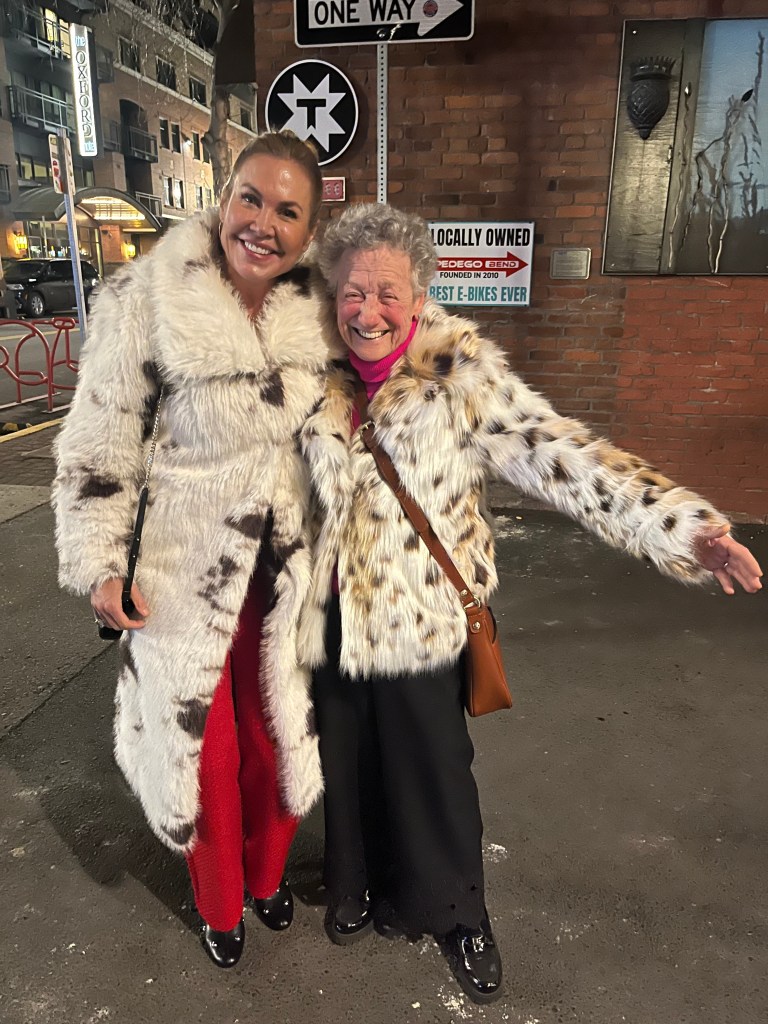
Yesterday was my friend Susie’s birthday! We celebrated by going out on the town—Central Oregon style—for dinner and a movie. Dinner was Japanese—sushi and a California roll. Then we headed to the Tin Pan Theater, tucked away in an alley and showcasing art films. Last night’s feature was a selection of Oscar-nominated short films.

Our favorite short, Perfectly a Strangeness, followed three donkeys meandering through the Atacama Desert, eventually making their way to an observatory. The donkeys wandered through a barren, futuristic landscape, but they seemed familiar with their surroundings, even when encountering a wild, beautiful coyote. What stood out most was the film’s poetic and visually stunning style.

The movie conveyed a theme (at least, if I “got it” right) that’s a bit unsettling. The donkeys—perhaps representing an ancient life form—seemed out of place in the industrial, mechanized world of the observatory. Watching this lovely yet thought-provoking film, I couldn’t help but think of Charlie Chaplin’s Modern Times. Both films deliver strong, poignant messages about the clash between nature and the modern world.

Susie’s birthday gave us the perfect excuse to hang out together. It had been a while since we’d caught up, mainly because she’s always so busy with her family’s business. Our “date” was special, though, since she’s leaving soon to travel east for a family wedding and to handle some business matters.

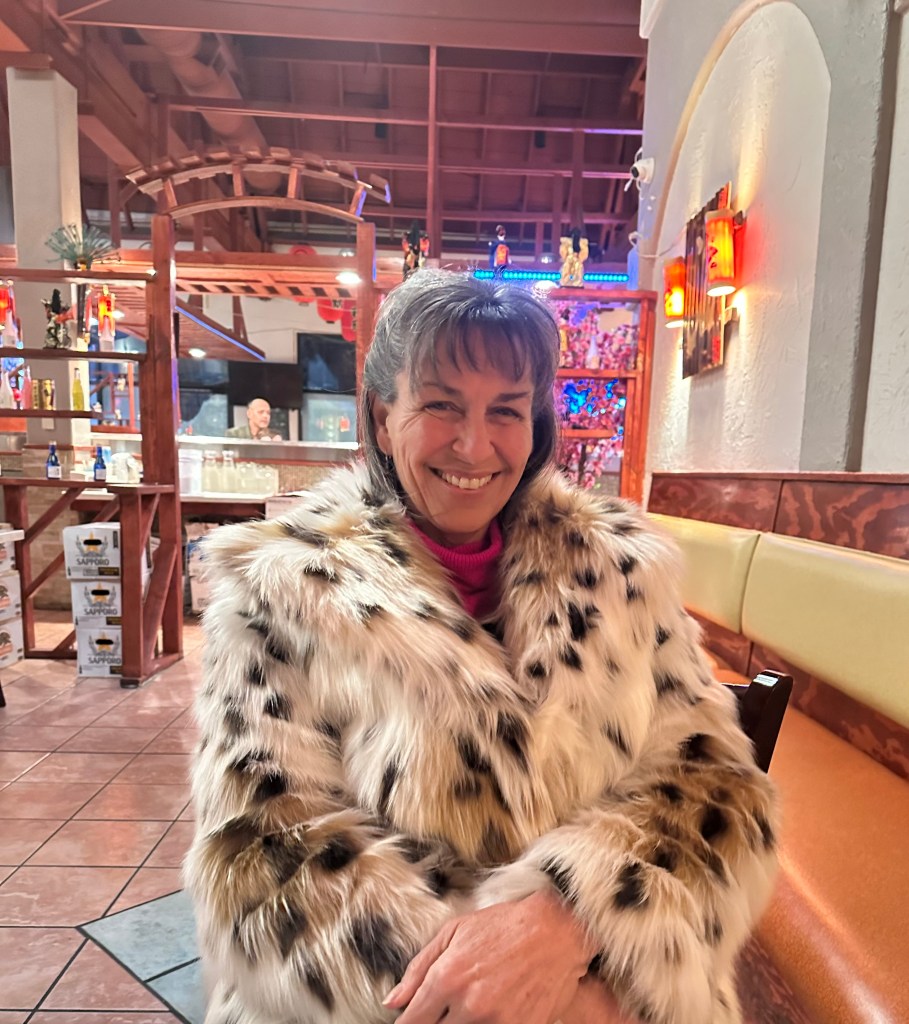
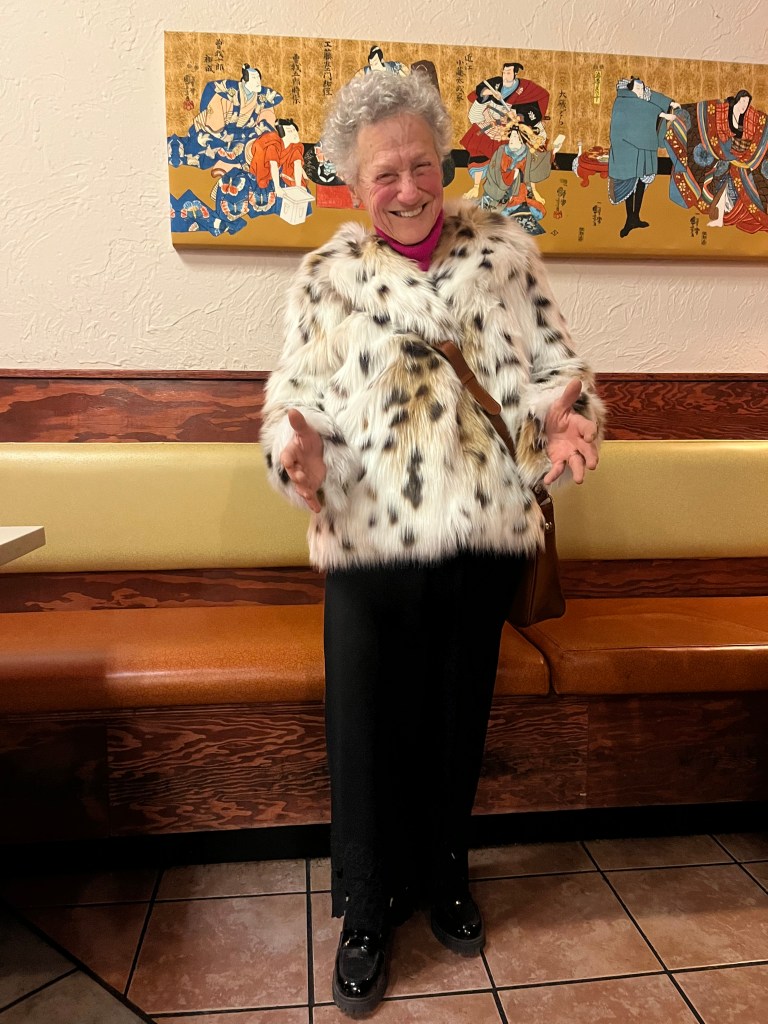
As always, we spent part of the evening capturing memories with photos. My fun, busy jacket was a hit!

After the theater, while heading to our car, nobody ever could have guessed what we’d be bumping into!

Thanks to Karl Lagerfeld for creating such iconic, always fun designs.

Thanks for sharing your birthday with me, Susie, my dear friend. And for the lovely evening—full of learning and surprises.

Diana

Enduring Lights & Shadows

Tuesday, January 12, 2025

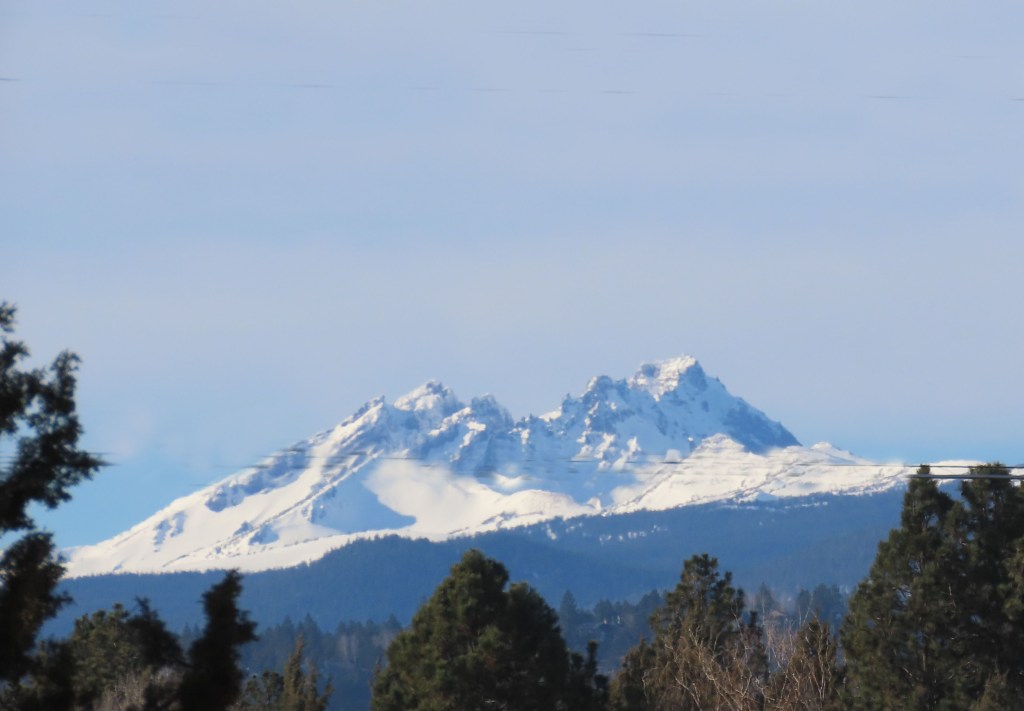
The ancient volcano in today’s header photo is Broken Top—my favorite among the Cascade Mountain profiles—and easily visible from my house. I love the whole range, but Broken Top feels extra special. I think that’s well deserved. Its peaks practically explode with personality. And many times, I’ve ridden horseback there. Broken Top is an old friend, even if it’s a mountain.

It’s also a teacher.

Broken Top is an ancient, spent volcano—its fire was gone long before any of us arrived. And yet, on a clear winter day like this, it feels alive to me, especially for the precision of its contrasts.

I’m fascinated by how the mountain holds light and dark at once. Snow burns bright along its slopes, while shattered rock catches shadows in every crevice and angle. The contrasts don’t compete—they belong to each other. One reveals the other. Without shadows, Broken Top’s lights would flatten; without lights, its darks would disappear.

Seeing Broken Top—whether in person or in my photographs—always pulls at something in me.

Maybe because I’m noticing similar interplays inside my own days. Aging has brightnesses—clarity, spaciousness. I’m surprised to find myself more patient, more observant, more willing to look twice. But aging also brings shadows—losses, changes, old urgencies cooling, and quiet reckonings with time.

Like Broken Top, I’m a terrain. And like that mountain, I’m shaped by experience.

It feels natural to accept vivid contrasts on a mountain. Yet I’m struck by how reluctant I am to accept unexpected contrasts within myself. Maybe because early in life, we’re taught to sort our experiences into clean categories: “good years” and “hard years,” “growing seasons” and “declining seasons.”

In contrast, Broken Top does no such sorting. On the mountain, erosion lives beside endurance. Sharp ridges beside soft snow. Light beside dark. Everything adds up to the shape of the thing.

From where I stand, Broken Top’s contrasts feel honest—less dramatic than simply true. They reflect what happens when something stops trying to be anything other than what time has made of it.

Staring at the mountain, I can catch meaning. It adds up to a life that, viewed from far enough away, doesn’t need smoothing. Its irregularities—fallen rocks, jagged silhouettes, deep cuts—are precisely what’s letting the light in.

Looking longer increasingly matters to me. My first look gathers an outline—giving certainty. My second, longer look gathers depth. It shows me light gathering on one slope while darkness settles on another. Staying with the view lets its “true story” come through. And I’m touched by a mountain long past its fire and entirely at peace with that.

Broken Top never tries to impress. It simply stands there—weathered and luminous—letting the day draw its shadows where it will.

And in its very quiet way, Broken Top reassures that: we don’t lose our shape as we age; we reveal it.

Diana

On Thanksgiving: How Native Societies Shaped Early America

Sunday, November 21, 2025

I was enjoying an enlightening conversation with Ben—an American-history buff—about the earliest years of this country when I found myself rethinking those first decades after the Mayflower and the later ships that touched the Eastern shores.

I pictured the newcomers still carrying their former world with them: royal traditions, rigid hierarchies, fixed identities, and a deep sense of what “proper society” ought to look like. These were people who had spent their entire lives under unquestioned structures—kings, church authorities, strict class systems, inherited roles. And suddenly, they came face-to-face with communities that had survived for thousands of years under entirely different rules.

The longer story of those times is complex and brutal. The Pilgrims walked into a continent already alive with civilizations—America’s Indigenous peoples. For Native nations, the arrival of Europeans proved catastrophic. Colonists enslaved Native people, sometimes entire tribes, and brought diseases such as typhus, chickenpox, and cholera to populations with no natural immunity. Those diseases killed an estimated 95% of Indigenous Americans, a tragedy later called “the Great Dying.”

Violence, displacement, and disease devastated local tribes. Ultimately, to preserve what remained, the Wampanoag people signed the 1621 Peace Treaty—the first treaty of its kind between Native people and European settlers.

The Wampanoags, severely weakened, were in danger of being overtaken by the neighboring Narragansett. For them, the treaty offered a fragile but necessary exchange: survival skills and local knowledge shared with the settlers in return for protection by the settlers’ firearms. It invites serious reflection—America’s Native societies didn’t simply encounter the Europeans; they changed them.

Talking with Ben made me realize how little I once understood about early American history, especially about the profound influence Native peoples had on those first settlers. A stirring realization this week, as another Thanksgiving approaches.

Consider leadership: settlers discovered people who chose leaders based on ability, not lineage. Some Native women held property and political authority, even clan leadership. Many tribes made decisions through persuasion and consensus rather than decree.

The impact on the newcomers must have been enormous. Europeans accustomed to hierarchy and obedience no doubt felt confusion, maybe fear—but also, perhaps, a quiet stirring of possibility.

Some early colonists wrote about what they were encountering: families living with autonomy and mutual respect; individuals moving with confidence rather than deference; communities unburdened by fear of displeasing a nobleman or landlord.

For the settlers, the very idea of societies organized around cooperation instead of obedience must have been profoundly disorienting. For Native people, though, freedom wasn’t an abstract ideal—it was simply how life worked.

Humans have learned, since time immemorial, that whatever we live around every day becomes quietly contagious. America’s famous “independent spirit” did not arise solely from Enlightenment philosophy. Many settlers learned that spirit from the people already here—self-governing, communal, adaptive, and deeply connected to the land beneath them.

Imagine those early Europeans beginning to sense that life could be less stratified, less deferential, more grounded in personal choice. More humane. They might not have dared articulate such ideas openly—colonial life was far too rigid for that—but the influence of Native societies undoubtedly shaped their thinking.

There is a line—sometimes thin, but always real—between exposure and transformation. Across generations, “different ways of being” have quietly rearranged human assumptions. The settlers didn’t just transform this continent; the continent—and its original inhabitants—transformed them.

This history reveals one of America’s oldest and most overlooked truths:

From the very beginning, newcomers were influenced by the people already living here—learning new ways of governing, of owning and sharing land, of shaping community life, and discovering the many forms human freedom can take.

Sometimes, the deepest influences are the ones we inherit without ever realizing it.

—Diana

Hearing the Calling

Wednesday, September 24, 2025

For several days, and again this morning over coffee, I’ve had my mind on an old movie that I’ve chosen to watch more than once: Bagdad Café (1987). Like Sounder, which I recently wrote about, it’s stayed with me longer than most films. Maybe because of the quiet desert roads, which feel oddly familiar against my own Central Oregon landscape—wide spaces, moments of isolation, and the surprising ways “connection can arrive.”

Each time I’ve watched, I’ve sensed there’s more going on beneath the story’s surface. At first glance, it appears to be a lighthearted, eccentric comedy with superb acting. However, upon reflecting on its story and characters, I’m convinced that it’s an allegory—and one worth sharing.

On its surface, Bagdad Café is quirky and offbeat, full of small mishaps and comic misunderstandings. Yet behind the humor lies something larger. The setting is a dusty, broken-down café in the Mojave Desert, the sort of place most would drive past without stopping. Into this place come two women: Jasmin, a German tourist, after suddenly being abandoned by her husband, and Brenda, the café’s owner, after being left behind by her husband. Both women are prickly, suspicious, and in their own ways exiled and alone.

At first, the café is a mess—disordered, tired, going nowhere. But slowly, almost imperceptibly, Jasmin’s presence begins to change it. She cleans, she listens, she performs small acts of magic. Brenda resists at first, then softens. Before long, the café is transformed from a tired outpost into a place of beauty, music, and connection.

One image that lingers with me is of Brenda’s husband, who, after leaving, keeps watching the café through binoculars. He has walked away, yet can’t resist observing from a distance. To me, this is part of the allegory. He represents those who see but never engage—hovering on the edge of transformation but unwilling to step into it. His gaze is controlling, even possessive, yet powerless. In contrast, Jasmin—the German, or true outsider—enters fully and brings renewal. The binoculars make the husband an emblem of distance, without connection, reminding us that healing comes only when we dare to join in, not when we stand back and watch.

The cast itself reinforces this sense of something larger: a German tourist, a Black American café owner (played by a British actress), an American painter (played by a once-famous film star), and an assortment of desert drifters. This gathering suggests more than coincidence—it’s also a picture of cultures meeting, colliding, and creating something new together. In that sense, the movie’s haunting refrain “I am calling you” can also be heard as a call across borders, an invitation to connection that transcends nationality, language, and race.

Other details I can’t shake involve Brenda’s children. One is a young father determinedly practicing classical piano in that unlikely setting. His grand piano in that battered desert café feels almost surreal, yet it deepens the allegory: aspiration in unlikely soil. His music insists that beauty and culture belong everywhere—not just in gilded concert halls, but even in a dusty roadside outpost, if someone dares to press the keys.

Then there’s Brenda’s teenage daughter, restless and intent on leaving. She represents another answer to the calling: not to stay and transform, but to escape in search of something better. Her choice is human and understandable, yet it contrasts with Jasmine’s quiet decision to remain and renew. Together, the piano player and the daughter remind us that when the call comes, each of us must answer in our own way—by staying and creating, or by moving on. Either way, the call cannot be ignored. Both children become transformed by the café’s changed atmosphere and remain connected to it.

The more I think about it, the more Bagdad Café feels like a parable of renewal. The café isn’t just a diner—it stands for the barren places we all sometimes inhabit, whether in spirit or in life. Jasmin, the German stranger, becomes an unexpected redeemer, bringing grace without asking for much in return. Brenda, toughened and skeptical, is the everywoman—ready for renewal if she dares to trust.

Threading through it all is the film’s haunting song, Calling You. The lyrics drift in like a voice from beyond:

A desert road from Vegas to nowhere … I am calling you.

For me, that refrain is the heart of the film—maybe hope itself speaking, maybe spirit, or simply the mysterious force that draws us toward one another when we feel lost. Whatever its source, the call is unmistakable. It reminds us that life doesn’t end in the wasteland. Something new can bloom, even in the dust.

These days, I am struggling to find my footing in a competitive environment among strong coworkers. I’m recalling this movie and its message, likely because it’s calling me to stay open to the possibility of renewal, even though I sometimes feel inclined to shut down.

Maybe the movie’s refrain—I am calling you—and its use of magic, aren’t just for the characters in a quirky old film. Perhaps those are calling all of us, tugging gently, if only we allow ourselves quiet moments to hear.

—Diana

Watch Stories

Saturday, September 13, 2025

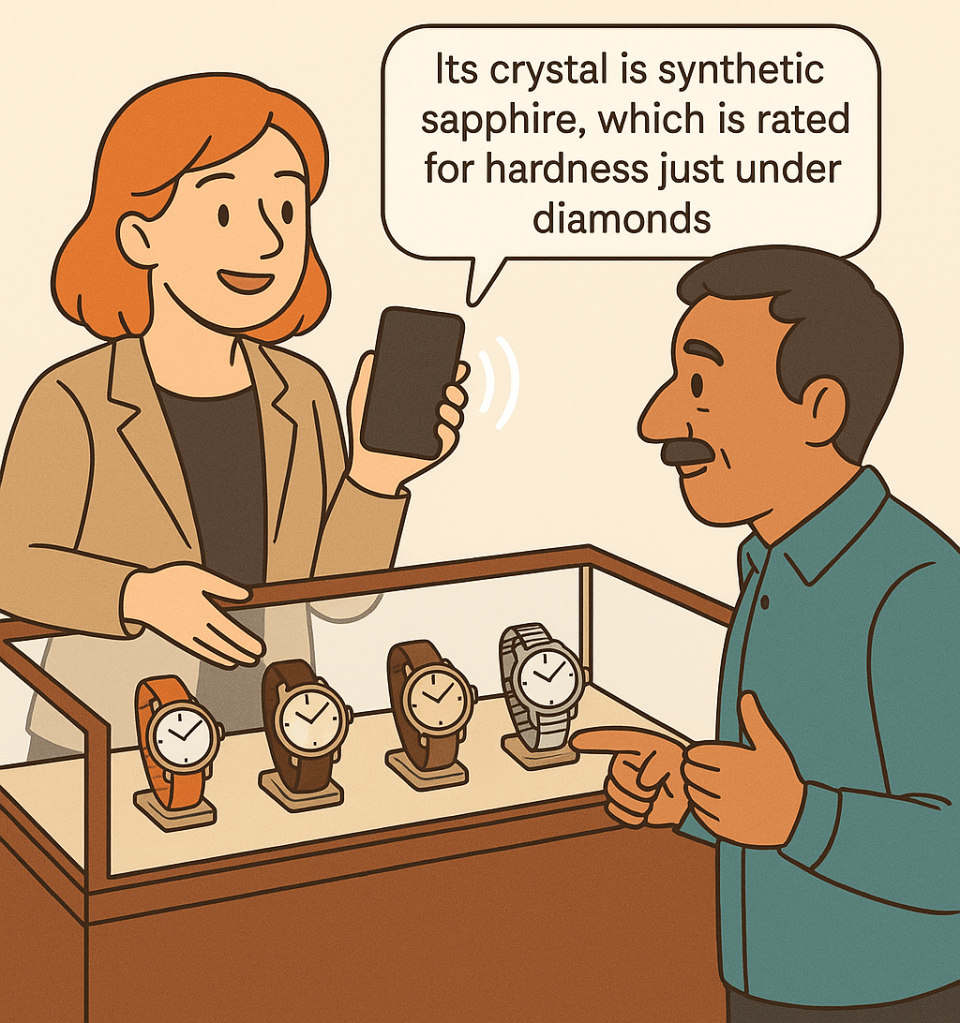
Recently, with the help of ChatGPT, I sold a high-end wristwatch to a Spanish-speaking customer. The person understood some English, but I don’t speak Spanish, so I couldn’t fully understand them. They examined a few of the available watches while also mentioning the word “crystal.” I wasn’t sure about the question and how to respond. As their overall interest in the watches appeared to be waning, I said, “Wait just a minute.”

I quickly found my cellphone, returned to the watch counter, and opened Chat in voice mode. I said, “Chat, I have a customer looking at watches who is interested in their crystals. Can you look at one of the watches and explain its strong points and benefits?”

When Chat responded, “Yes,” I hovered my phone over the watch that my customer had appeared to be most interested in. Immediately, Chat confirmed that it was an excellent timepiece with a crystal of synthetic sapphire, rated for hardness just below diamonds. My customer relaxed, nodded, and showed renewed interest. Chat wasn’t finished and continued by describing other highlights: its excellent water resistance, battery-free accuracy, and the brand’s fine reputation. That assistance sealed the sale.

I’m relatively new to selling high-end wristwatches, and this was actually the second time I had used Chat to help explain to a customer the benefits of a high-end watch. That earlier customer had wondered if a particular watch was shatterproof. I knew it was, but couldn’t explain why with confidence. So, on an impulse, I turned to Chat. It “looked” at the watch, confirmed its durability, explained its highly-rated shatter-resistance characteristics, and then went on to describe, overall, what made it an excellent timepiece. Sold!

The more I experiment with AI and find new ways to use it, the more impressed I become.

— Diana

The Ham Sandwich Heist

Monday, September 01, 2025

Happy Labor Day!

The other afternoon, I took a small break from the big challenge of improving the fencing in my dry lot. I perched myself on a small ladder, and with a protein bar in my hand, watched my Morgan pony, Sunny, working her way with gusto through an allotment of hay. She always eats energetically, and I smile at being reminded of how joyfully a horse approachs even the simplest meal. Also, seeing her, that moment brought back one of my favorite memories of riding the trails with her.

It happened years ago. Sunny had been taking me over a moderately challenging mountain trail and we’d gone a long way. It was time to pause our trip for a lunch break. I slid off Sunny, tied her to a tree branch, and gave her a carrot. She was standing near the log I was sitting on while pulling my lunch from a paper bag: a plain ham sandwich — nothing glamorous, just fuel for our miles ahead. Before I could take a bite, or even realize what was happening, I sensed a whiskered nuzzle near my shoulder, and in one swift move, my entire sandwich was gone — clamped between my horse’s delighted teeth.

She chewed, and I swear, with the satisfaction of a thief who knows she’s won. I watched her eager chewing, and in amazement, for horses are herbivores by design. Ha! Try explaining that to one smack in the middle of discovering the joys of bread and lunch meat. Sunny was enthusiastic, licking her lips as if to say, “Why haven’t you been sharing this all along?”

Of course, that sandwich had to be a one-time treat. Horse folks are well aware that moderation and common sense always comes first in feeding. But that moment sticks with me to this day. It’s one of those horse-unique surprises that makes me laugh anytime I remember it. That sandwich may be long gone, but recalling how it disappeared feeds a fun moment to this day.

Besides, that little incident taught me more about horses. About their endlessly curious nature. From that moment on, while out on the trails, I knew the importance of staying very aware of my eats versus theirs.

Dear Friends, Sunny also loves whole oranges — peel and all — and consumes them with the same sheer delight she once gave to that ham sandwich.

— Diana