
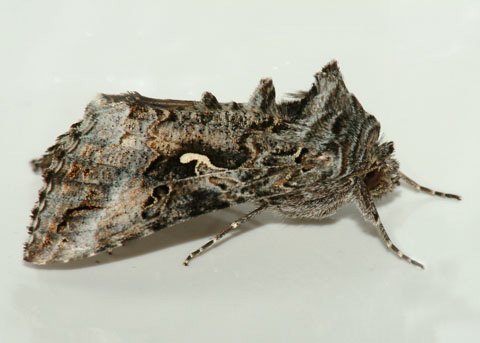
Friday, July 12, 2019
Three days ago, toward evening, I spotted resting on my wooden garage door what appeared to be a giant moth. It had taken refuge for the evening, didn’t even budge as the door rolled up and down. I’m accustomed to seeing insects resting, but never before one nearly a couple of inches long. Here are two views of that moth.

Garage door 1 
Garage door 2
The next day, I visited a local feed store. On its outside stuccoed wall rested a group of similar large moths. My curiosity grew and I photographed a few.

Wing pattern 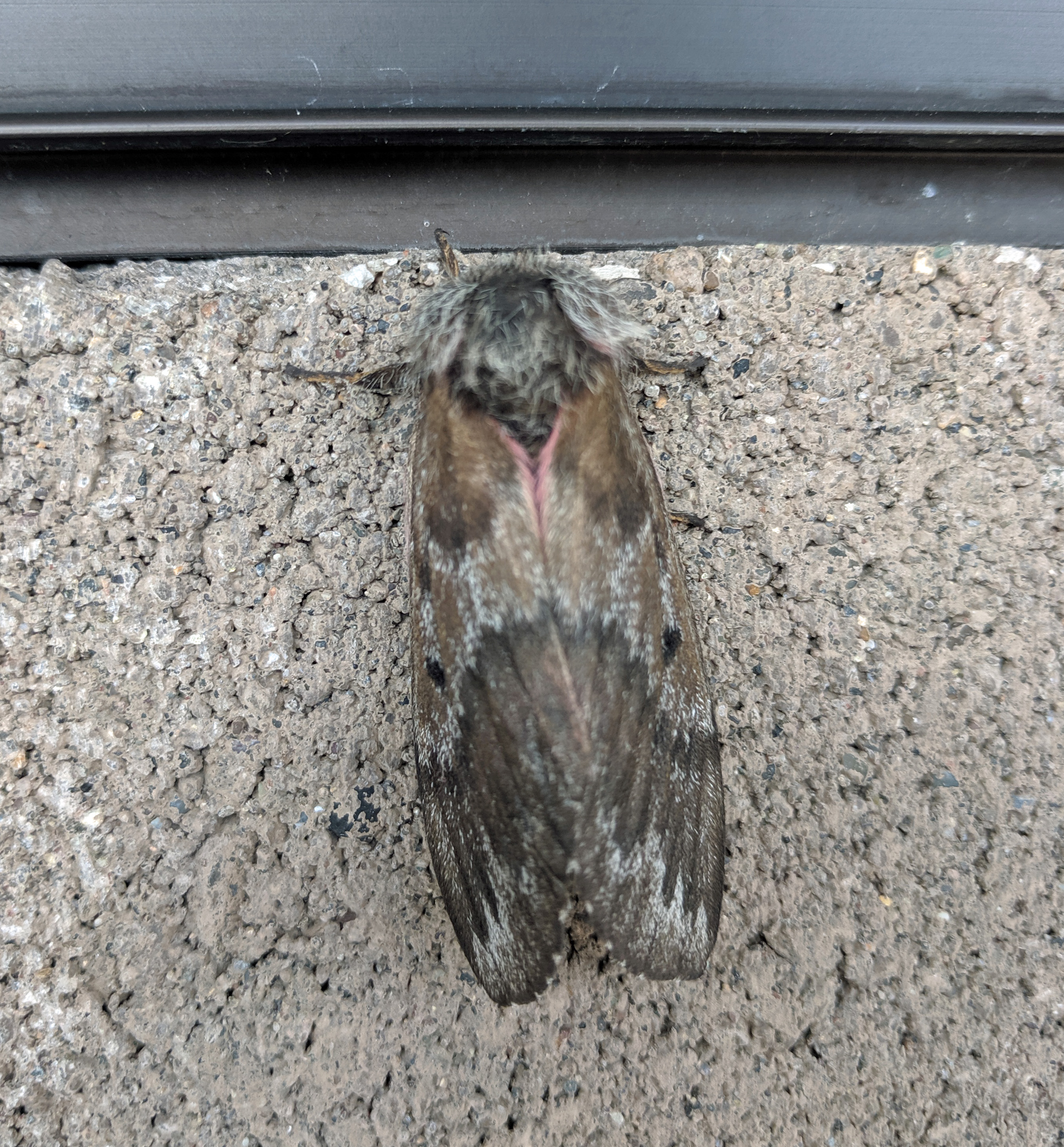
On concrete 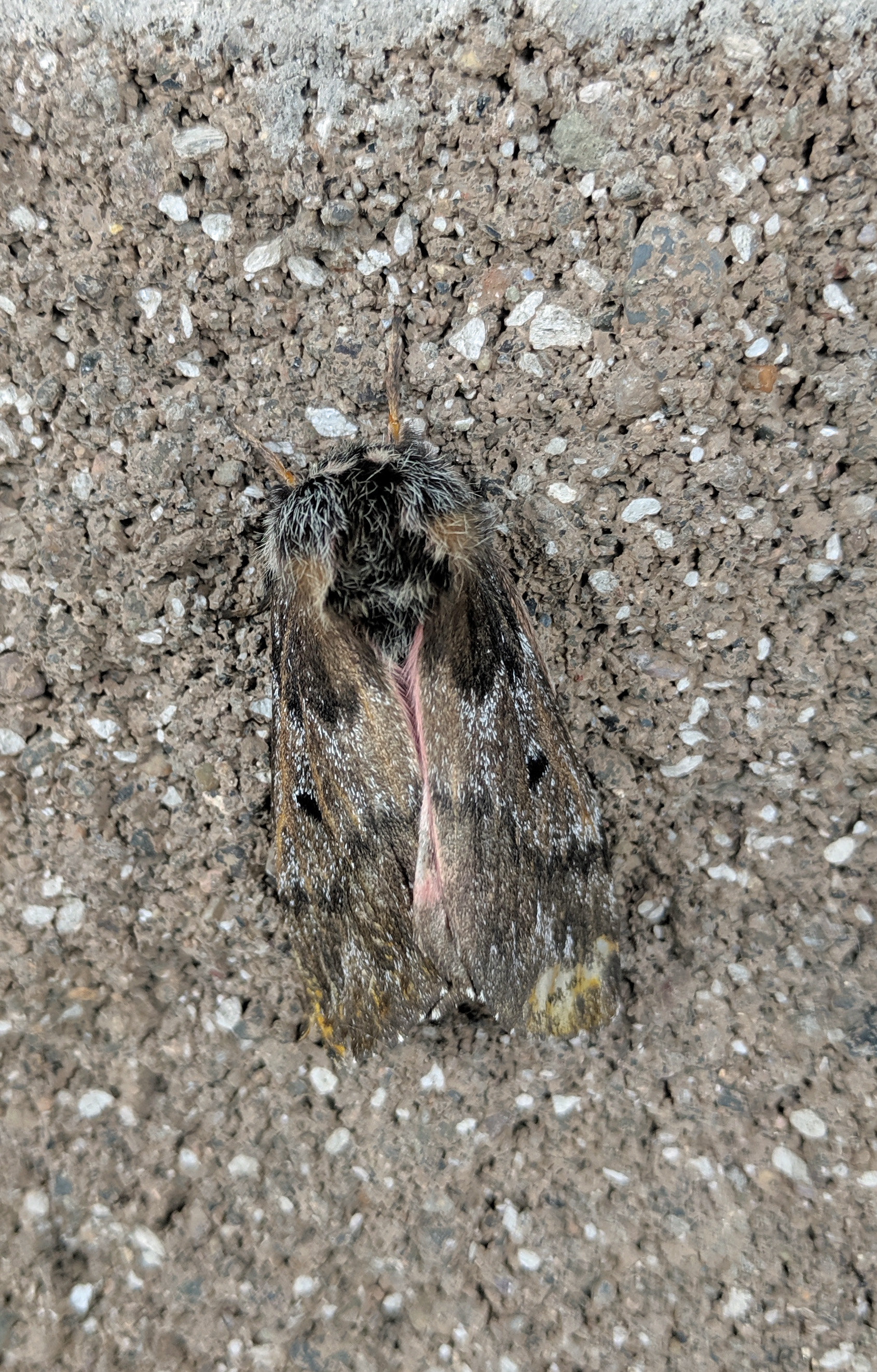
Nearly invisible blend
I’m no expert on butterflies and moths. In fact, only since retiring to Central Oregon and living on a few acres, has this former city gal found myself looking, closely and thoughtfully, at tiny wildlife. Although this particular example, as species go, isn’t exactly tiny.
Research suggests there are about 150,000 species of moths in the world, and there are about 1200 species in the PWN. These local biggies might be Alfalfa Loopers (common to California), Morning-glory prominents (common to Oregon), or maybe others that look similar with different names. Research explains that moths and butterflies mostly consume liquids, or foods from sources that have begun rotting and are liquefying.
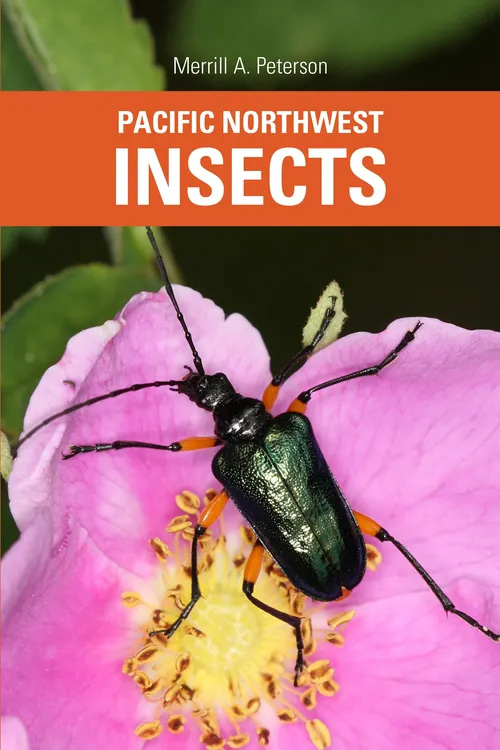
Now these insects have captured my attention, and I must go and try to learn which is who and which is what. One resource will be a recent book which identifies insects and also focuses on PNW moths.
I admit to living with a good dose of obsessional-compulsive behavior. It’s what drives me to move forward and learn. Besides, with increasing information about the environment and its importance, even the smallest creatures take on very large status.
Dear Friends: You will share in the key parts of this learning journey. Diana
 Diana's Morning Blog
I read locally that there has been an influx of Pandora moths this year. Don’t know what they look like.
LikeLiked by 1 person
Those I’m spotting probably are male Pandoras (estimating by coloration). Apparently, the moths appear cyclically and damage forest trees. My first time seeing these impressive creatures.
LikeLike