Woodworking

Women learning woodworking in 1900 (F. B. Johnson photo)

Sunday, September 26, 2011— October’s fullest moon (“Hunter’s”) will rise on the 20th.

I’m doing some woodworking in an outbuilding that’s had various purposes. The previous homeowner built it to house an RV. After I acquired horses and understood how much hay is necessary to keep them, that building became dedicated for storing hay.

Early this year when a new bug bit me, I found other places to store hay. The outbuilding became a hobby workshop.

Long ago in my growing-up days, on recognizing wood’s beauty, I wanted to learn woodworking. The thought just hung around until years later I attended a party in San Diego. The guests were artists, mostly teachers, and I heard a woman speak of building furniture herself for her new home. She suggested to me that a good start would be to acquire a table saw and go for it, by teaching myself to use it.

Maybe woodworking again is wishing to renew creativity and its pleasures. Not so easy with modern tools, so different from those of old. My current table saw has technologies for accuracy and safety that required a relearning. Similar, for a modern drill press and sanding machine. Many of today’s tools are battery operated, lightweight and portable, and some that in the old days I couldn’t heft have become easier to use.

My timing for setting-up was awful. Lumber prices shot-up quickly, became sky-high. The pandemic-interrupted supply chains, along with world-frenzied home-building, made wood a scarce commodity.

Life on an acreage teaches against tossing left-over project pieces. I found scrap lumber and with it practiced using newer tools. Unable to afford durable hardwoods, I used wood scraps to construct needed objects.

A couple of examples. My new magazine rack made from unappealing pressed plywood keeps pulps in one place. My farm-vehicle, Gator, is sporting a pressed-plywood carrier to transport without spills a cup of coffee and keep small tools handy.

Now it’s funny, to find myself loving these ugly, serviceable pieces. I’ve no wish to have them made of quality lumber, looking prettier. I see them as cool, creative one-offs, from my mind and imagination.

Dear Friends: Just “going for it” turns out often to be the “best way”. Diana

Season’s Pricklies

Russian thistle

Saturday, September 25, 2011— October’s fullest moon (“Hunter’s”) will rise on the 20th.

I’m pulling weeds by hand on a strip of land separating my property from the highway. I avoided this until doing became a must. It’s late summer when weeds explode, especially many awful clumps of thorny Russian Thistle. I’m finally driven to be out pulling those massive resistors.

Russian Thistle is one of the ugliest weeds imaginable, and even worse than Scotch thistles that also pop up anywhere. Both varieties have wicked thorns, on stems, branches, and leaves.

Scotch thistle

Bare hands scream while pulling these weeds, and Russian Thistle is worse. Its loose thorns get inside a puller’s gloves, shoes, socks, and pants-legs. After a little pulling, just standing among thistle clusters is painful.

I dislike both spraying and pulling. But spraying is more awful. Now, I’m partly through this season’s pulling and made miserable by invading thorns. Ahead are more unwieldy clumps for removal, before they break away from roots and roll loosely, as tumbleweeds spreading seeds.

Coming rains cause an embryo inside each of 250,000 seeds to sprout.

Immigrant homesteaders, in 1873, destined for South Dakota accidentally brought Russian thistle as contaminated flax seeds. More spreading occurred from contaminated flax leftover in railroad cars and the natural winds. That year occurred during a long period of severe drought over the great plains, with inadequate naturally-growing animal fodder. Imported thistle was intended for growing and supplementing animal feed.

Everywhere now, of course, a single tumbleweed’s trillions of seeds will pop and grow in the-most-minute unoccupied spaces. Oh well!

Dear Friends: Bad weeds, one of the few minuses of caring for large or small acreage. Diana

Sky Tickle

Harvest Moon, in waning gibbous phase, 9-23-21

Friday, September 24, 2011— October’s fullest moon (“Hunter’s”) will rise on the 20th.

September’s full moon although now appearing slightly less round still is a knockout.

Last night while walking uphill after feeding horses, I couldn’t locate the moon. Impossible! An almost full Harvest Moon can’t be invisible in a reasonably clear evening. I searched overhead without seeing it in any of the usual sky places and felt a loss.

But wait! In another moment while rounding a corner of my house, I glimpsed from way high a giant glow, its light streaming through thickly branched junipers. My moon! I moved to find the best view. The sight appealed equally to days ago when Harvest rose at its fullest. This was beautiful, made me rush for a camera.

Through many years, and beyond all other full moons, Septembers’ Harvest Moons have captured my heart.

Dear Friends: As Earth world seems smaller, a spacey sky world tickles more. Diana

Writer’s Dilemma

Thursday, September 23, 2011— October’s fullest moon (“Hunter’s”) will rise on the 20th.

I’ve drafted some novel-length stories. None has seemed particularly impressive but all had grains of possibility. I’ve edited trying to improve each and always been unsuccessful. I become tangled among sections by changing enough action to alter an original story. I’ve failed as an editor of my longer creative efforts.

On short pieces, I’m successful. They’re quick to create. Although self-editing is labor-intensive, short articles allow my brain to keep squarely on stated themes and desired endings.

But longer writings have one or more key themes with multiple branching activities, requiring an editor to focus squarely on the critical trio of subject-action-resolution. While editing and wishing to improve the writing, I fiddle and lose focus by becoming tangled among conflicting possibilities and ideas. One must quit altering to wrap-up a story.

These days, I want to re-explore the old stories. Many passing years have distanced me from early ideas and themes. Maybe re-reading an old draft will renew its possibilities. Maybe finally, I can better edit multiple chapters and gain their relevant closure.

Dear Friends: The materials exist, and so, one should quit thinking, start doing. Diana

Wrap Summer

Wednesday, September 22, 2011— October’s fullest moon (“Hunter’s”) will rise on the 20th.

The weather is changing, daylights becoming shorter. We “moon chasers” were aware while preparing to chase the rise of September’s Harvest Moon. The designated day had been hot enough for t-shirts, but that early evening we took jackets and sweaters. Plus, we left earlier than usual to be in place to witness the full moon’s rise.

Today is the autumnal (fall) equinox, which lasts moments but represents an actual weather shift to winter of 2021. This usually occurs on September 22 or 23 and is a brief moment in time, during which the sun appears directly over the Earth’s equator before crossing into the Southern Hemisphere. At that moment across the globe, there are equal periods of daytime and nighttime.

Technically at this equinox, the Earth’s orbit is at a point where neither hemisphere tilts away from, or toward, the sun. That makes day and night nearly equal, and over most of the globe will be 12 hours of daylight and 12 hours of darkness.

To me, it’s significant that we’re about to enter the “dark season”. As our days become shorter so must our habits, and certainly mine. Folks who like me have equines will decide whether to shoe again or leave horses barefoot (shoes are negatives in snow). We will prepare for altering equine exercise routines through the months ahead with short light and much cold.

Already, my animals show signs of transiting to winter coats. Already, in mornings I am in a heavy jacket while out feeding them. Already, I’m thinking about having to cope with arriving cold weather in unusual patterns.

Dear Friends: Earth weather is less predictable, while solar activities are dependable. Diana

Harvest Moon Rising

Almost clear of the horizon

Tuesday, September 21, 2011— (September’s full moon (“Harvest”) begins its waning phase. October’s full moon (“Hunter’s”) rises on the 20th.)

Yesterday evening, Susie and I headed east to a farmer’s field where we like to go and to await first glimpses of the month’s fullest moon, newly rising. At the destination, we unload cameras and (in the right weather) a cold couple beers, and unfold chairs. We wait for first moon light, share interests, activities, and plans.

That’s our “waiting part”, we’re in a perfect space to achieve our goal. We discovered this small offbeat spot by focusing on technical aspects of what we hoped to accomplish.

Where we sit gives a clear view across the farmer’s large flat acreage, surrounded by a string of bare buttes. From behind one of those buttes will emerge a uniquely bright light reflecting the now-setting sun.

Sun’s last glowing from behind the Cascades
Last spot of sunlight

Susie does our research and determines which compass point will allow first-sighting of a perfectly round globe. We keep watching that point and on-time are rewarded.

A first glimpse of an appearing moon structure is awesome, magnificently and stunningly beautiful. The event gets more exciting as an emerging globe becomes more visible.

The Harvest Moon isn’t a Super Moon, but compared to bigger moons it emerges as equally thrilling or maybe better. Last evening while it was hanging low and most colorful, we tried for best sighted in various ways, through naked eyes, powerful binoculars, and using cameras.

Earlier through our waiting, and now as we photographed, between ourselves and that horizon across the field, the farmer’s herd of alert llamas watched us intently. At a low spot among the buttes, just behind that barn, the moon would rise.

We were treated by natural sounds. There were owls in nearby trees teaching babies to hunt, coyotes yipping and hunting in the distance, and swooshing by a hawk circling the farmer’s field.

And otherwise only silence. And that moon!

Our “chasing team”, with way-in-the-background “vague bumps”, actually are about 50 llamas.

Our background, closer-up

Dear Friends: Susie can spot visible planets, point to their locations, is a wealth of sky knowledge. Diana

Time Passage

Monday, September 20, 2011— (Tonight’s “Harvest” moon will rise nearest to earth and in full phase.)

While checking what’s on Netflix, I found the 1984 film, “Once Upon a Time in America”, by Italian director Sergio Leone, with an outstanding cast. My feelings about watching were mixed, for in “those days” I rose from a theater seat and walked out on the film.

Leone could work in wonderful ways. He creatively used light and space, was fearless about timing action sequences in modes very slow or very fast. As a director, he could reveal much inside and outside to drive a character’s choices and behaviors.

Leone’s films for me have a disturbing quality. This film for example reminded me shortly after it started why I had walked out on it. It’s almost impossible for me to sit and witness ongoing sheer violence, despite a story’s potential for it. To me, great art delivers punches without visual bloodletting, without slicing and hammering.

Maybe Leone was ahead of his time, working on a curve between Old Hollywood fantasies and today’s bang-’em-up, kill ’em options. Current streaming services are filled with choices that rely on fright and violence. Perhaps they’re quickies, cheaper-to-film, and popular enough to justify existence.

By the way, this old movie introduces us to a very young and beautiful Elizabeth McGovern, then in her early twenties. Today we know her from the popular series, “Downton Abbey, in which she’s a mother of three and wife to His Lordship.

Netflix provides an Americanized version of “Once Upon a Time in America”, which prior to releasing Hollywood transformed by cutting and re-sequencing. Critics condem this version and instead applaud Leone’s original or “European Cut”. It’s true to the original film and long has been considered one of the greatest-ever gangster movies.

The original version might be available on the internet, and worth checking out.

Dear Friends: I loved Leone’s “Once Upon A Time In The West,” after many re-watchings. Diana

Hello Fall

Two terrariums (gettyimages ).

Sunday, September 19, 2011— (Tomorrow evening’s “Harvest” moon will rise nearest to earth full.)

Ahead is another rainy morning, and already outside, it’s overcast and blowy. From the barnyard are rooster’s day-opening call strings. Ah well, time to stand up, start moving.

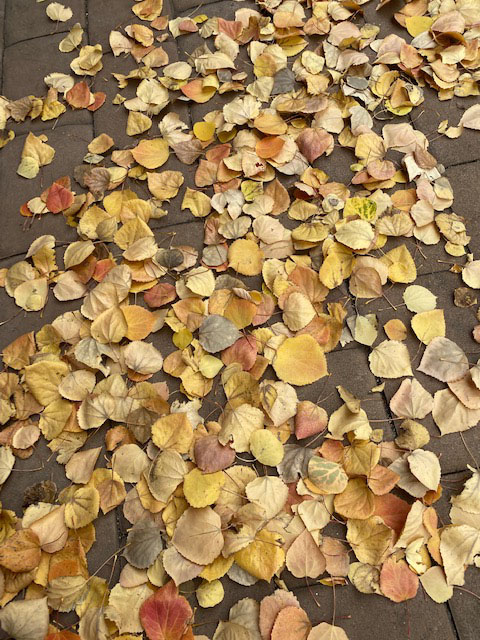
These chillier and damper days encourage hiking. Already here are fall colors to enjoy and memorialize. One way is with a camera. Another is to collect visually attractive plants, leafs, and rocks. Collecting itself is cool, and equally so is finding ways to display items, so they’ll recreate the delight of being outside doing what feels good.

Lately, I’ve been making fun of myself, well sort-of, for staring at the ground. I’m spotting for colorful leaves and unique small stones, and doing so even while leading my trio of equines back and forth to and from John’s pasture.

The other day, I felt guilty as all heck for lifting and pocketing a stone from John’s gravel pathway. I’m no thief, or so I hope, but I’d eyed that stone for over a year.

It’s big as my palm, nearly round, somewhat like a river rock. On first seeing the stone, I picked it up but couldn’t bring myself to take it. Not wanting to lose sight of it, I set it on top of a pile of rocks surrounding John’s garden. That kept it visible through last year. But yesterday, it was among the ground mix.

Today, its atop rocks surrounding my garden. I know John won’t miss it, but, still it’s kind of his.

That’s one example from my ground searches. Right now, interesting are newly fallen leaves from deciduous trees, which locally are few as Central Oregon primarily supports conifers. But aspens and maples do grow and thrive here, becoming incredibly visible in fall, to we who stare at the ground and see dropped leaves.

Taking my “rock thievery” to heart, I’ll listen to an inner voice saying, “Best not to steal”. So, today I’ll pack a vehicle with dogs, take a collection bag, and head upward toward the mountains. While the dogs and I hike, I’ll take from nature’s big bounty whatever’s small, beautiful, and worth memorializing. Back home, I’ll think up ways to be creative and keep both that outing and haul memorable.

Dear Friends: A compliment confirming my vision would be thievery from me of John’s Rock. Diana

Her New Digs

Saturday, September 18, 2011— (In two days the full moon, “Harvest”, rises nearest-to-earth.)

My eleven-year-old hen, Welsummer, is alive and living well in the garage.

She’s the last survivor from my 2010 baby chickens. She’s still healthy and alert although very old for a domestic hen. For most of this year and as a lone chicken, she shared space with my twin goats. This summer I acquired seven new baby chicks. For weeks they lived in my garage, and eventually, were moved into part of Welsummer’s space. A fence separated them and the old hen.

Welsummer considered the babies intruders and when at last they joined her, she ran them away. One new baby turned out to be a rooster. He didn’t forget and after maturing enough, he chased and threatened Welsummer mightily.

My old hen immediately hid and remained out of sight. I wondered whether, if isolated, she’d continue to eat and drink. My worries had been about wanting her to accept the babies, never expected anything like a rooster. Now, having witnessed and expecting more of the same, it was important to reconsider Welsummer’s future.

She had to be moved.

Hurriedly in my garage, I cobbled a temporary pen, layered its bottom with straw, added feeding and watering dishes, and constructed a roost of sorts. Then, I introduced the old hen. She appeared right at home, ate, drank, and that evening perched on her roost.

Since then she’s thrived, and yesterday, became introduced to new digs. She’s inside a large kennel with four-foot-high sides–and wonderful for me, a step-in entry door. There are feeding dishes, a strong roost, and in cold weather the arrangement will include heat lighting.

Everything looks good for Welsummer. I’ll not dismantle the vacated holding cage. Since it’s on a dolly, sometimes she’ll be in it outside and enjoying sunlight.

My Welsummer, viva!

Dear Friends: If it’s possible to work out details, she might gain inside-the-house time. Diana

Glow Lessons

Friday, September 17, 2011— (In three days, the full moon, “Harvest”, will rise nearest to earth.)

Yesterday evening, this eye-catcher above my Oregon ranch is the nearly-full Harvest Moon. Now, it’s three-quarters full, and technically, it’s in a waxing gibbous stage.

A little research helps us understand the variations in moon appearances. Waxing means a moon is receiving more sunlight and appearing fuller each passing day. Gibbous refers to a moon that appears lighted but is less than full. (What’s “Gibbous”? It refers to convexity or swelling, comes from a root word meaning “humped-back”.)

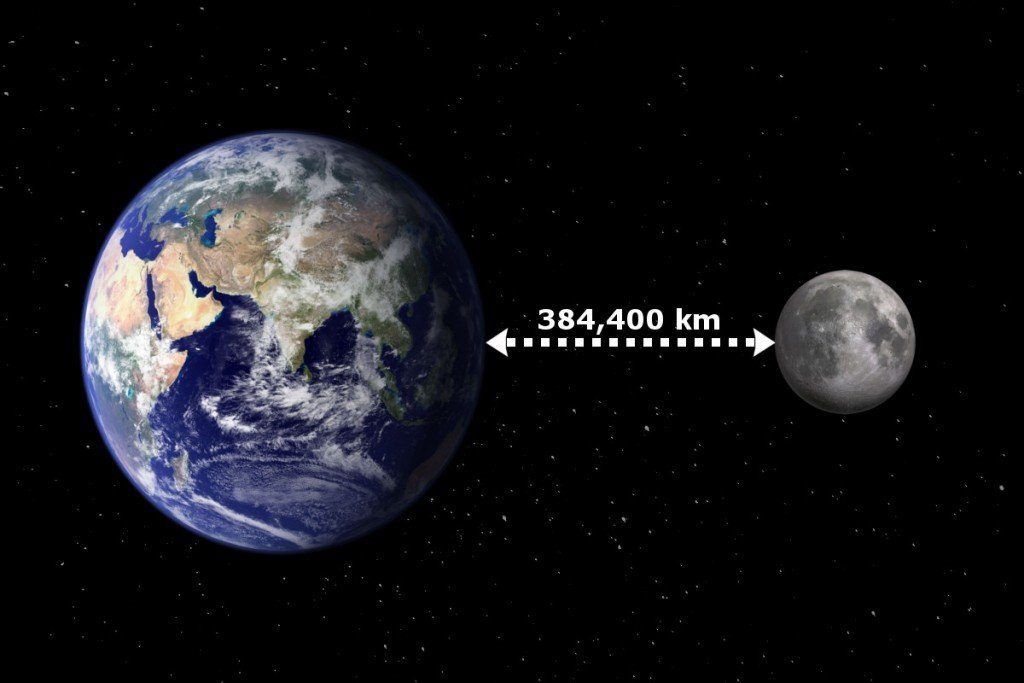
On the 20th, our September moon will be at the point nearest Earth to appear at its fullest. Beginning the very next day, it’ll become a waning moon. That’s because, immediately after a full moon appears nearest to the Earth, waning begins. The waning continues until a next new moon appears, and its changing positions relative to sun and light restart the waxing.

After all that, here’s a closer-up of last night’s huggable waxing three-quarters beauty.

Dear Friends: The solar system awes with unending provisions of motion, beauty, information. Diana