Sound Meanings

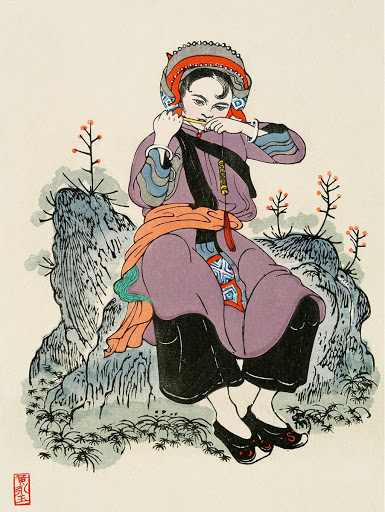
Girl Playing Harmonica (Huang Yongyu)

Monday, September 07, 2020, Labor Day

This day is of appreciating labor, and our progress, socially and affluently, attributable to the historical trio–innovation, production, and labor. This particular Labor Day also is one of remembering labor, because of the pandemic. Many manufacturing processes are truncated or shut down and it’s uncertain as to when a manufacturing revival may occur. We question if things could resume as in the past for much has changed over a brief time.

I want to labor at learning, and have checked online for free courses in the arts and humanities that seem interesting. Lately, I’ve focused on a variety of music-learning. I’ve considered courses on appreciating music and on how to play a harmonica. Wondering about my attraction to these has made me aware that listening to music is like listening to spoken words.

In particular, I’m recalling what it’s like listening to customers while at my part-time job. When someone speaks, I hear tones, rhythms, pauses, high and low sounds, and punctuation forms (coughs, sighs, and throat-clearings). The rates and pitches of these quickly offer insight to a speaker’s state of mind and focus.

Without thinking much about how we listen, we do tune closely as others speak. We hear beyond mere words and sense a speaker’s meanings and suggestions. We listen for openings that may invite our responses. Essentially, technical words applying to a musical scale apply equally to a listening scale: tempo, meter, dynamics, rests, and all.

As to my wanting to learn to play a harmonica, the instrument seems easy for a beginner to approach. That’s superficial though, because learning to play well any instrument eventually requires the comprehension of a technical musical idiom. That is, unless one wants to stick with the primaries: “Happy Birthday” and “Mary Had A Little Lamb”. You get the picture.

Dear Friends: Wishing for you a happy Labor Day with lots of interests. Diana

Cup’a World

Sunday, September 06, 2020

I love learning, and this morning am sipping a cup of Arabica bean coffee, a Cuban roast. All this after yesterday’s coffee-aisle stint and my job of selling a Kirkland coffee. I read closely all the coffee packagings to understand if mine differed and somehow was better. Most coffees (except for Folgers) contained 100% Arabica beans. Some claimed to be “Colombian” (Arabica beans grown in Colombia). I got curious about roasting processes and especially packages marked “Cuban” and “Sumatran”.

Nobody asked about beans, but we know that a seller of coffee should know something beyond taste. During my lunch, with cellphone and the University of Google, I learned lots. Who knew that centuries ago coffee originated in Arabia? Modern Arabian beans, known as Arabica, are in our modern expensive coffees.

Before America’s introduction to new smooth-tasting coffee varieties, our coffees mostly were from robusta (canephora) beans. Robustas are less costly to grow, can be cultivated at lower elevations, are more resistant to pests and diseases (their higher caffeine content is a natural pesticide). These beans have a stronger, harsher taste than the Arabicas, and today mostly are in Folgers, espresso, and instant coffees.

Arabica beans have a taste that’s sweeter and softer, with tones of sugar, fruit, and berries. Their acidity is higher, and a winey taste suggests excellent acidity. These beans are expensive to cultivate, as they’re sensitive to the environment and produce less per acre than robusta. They’re also more are in demand. Production challenges and consumer demands make them costly.

My hot cup of Arabica Cuban-roast smells good, tastes smooth, and is enjoyable. More of the beans are ground-rough and in the frig creating cold-brew coffee. Yesterday’s customers and I fantasized about a time when Cuban coffees were thick, dark, and accompanied by cigars. This cup of mine doesn’t copy that era but pleasantly hints.

Colombian coffee is a class of its own because the country’s high elevations and climate are perfect for growing Arabica beans. The higher the altitude, the better those beans taste. Colombian coffees are lighter, taste richer, and mildly fruity with a chocolatey flavor. All because of Colombia’s ideal weather conditions.

I’ll look forward to brewing Sumatran coffee. It’s Arabica beans are described as producing a smooth drink with lower acidity, but darker and more intense. Sumatra is in Indonesia, its population historically Arabic and predominantly Muslim. Sumatran coffees might more nearly represent earlier Arabic brews. I’ll be learning.

So much fun while focusing on coffees, to be absorbing more about places and products.

Dear Friends: It’s a horse-travel, the forest, and a coffee-travel, the world. Diana

Time Crunch

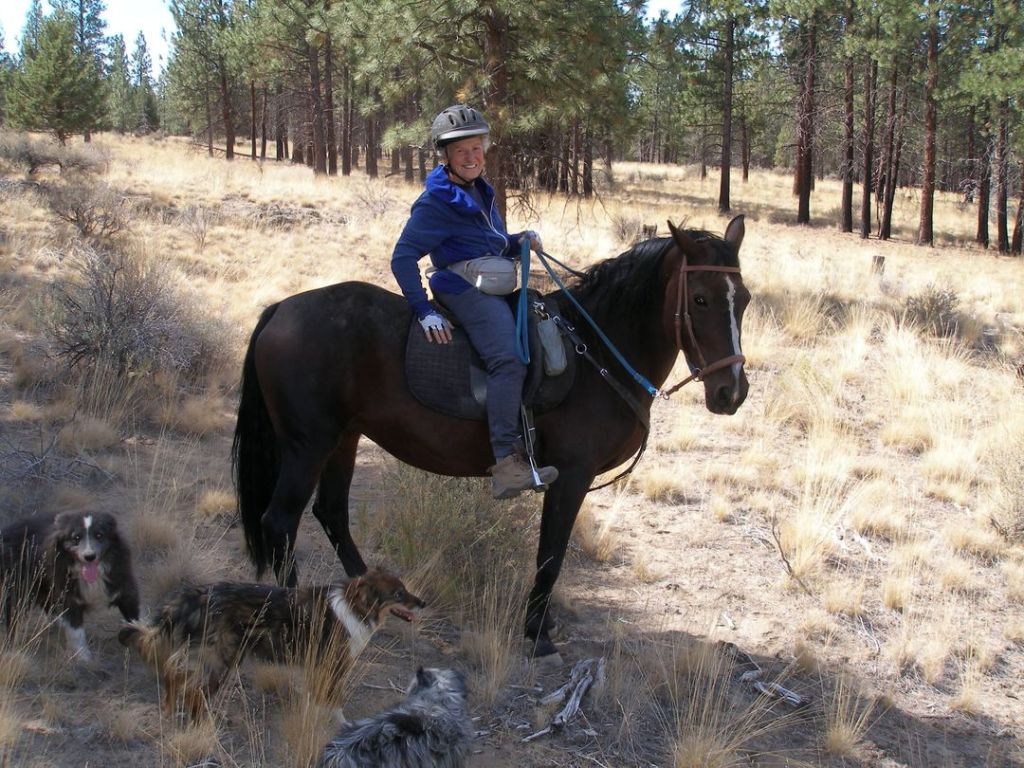
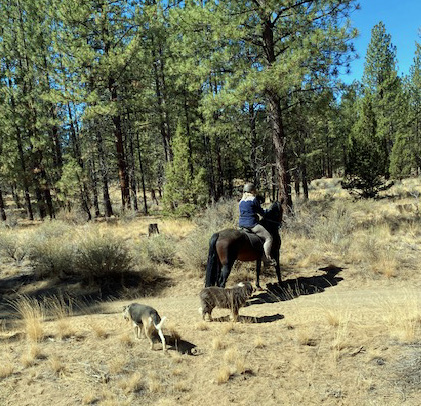
On Rosie, with our dogs

Saturday, September 05, 2020

This morning I can’t focus enough on what topic to write about. I’m due at work a little earlier and must complete animal-related chores before leaving. This forces me to calculate and recalculate the likely amounts of time before leaving to handle this and that.

I began preparing for this last night. Worked until after dark in the barn getting stalls ready for the morning’s animal feedings. Came up to the house later than usual to feed the dogs. I know better than to make Peaches wait for his dinner, for as natural light settles he thinks about roosting.

I apologize in advance to any pets short-shrifted today, and to friends for my brain’s pitiful morning.

Dear Readers: Have a wonderful day, and keep cool if possible. Diana

Learning Again

Friday, September 04, 2020

Returning to work forces me to create time for riding horseback. Yesterday I hurried home, let the horses have hay before riding one and ponying another out to neighborhood streets. We “bumped into” our neighbor, Susie (driving a brand-new car), who said we could cross her property. It’s an easy and quick way to reach a back road going under local power lines.

Her back-property is in a natural state, I’ve crossed it on foot, a rocky acreage with lots of rabbit brush and lacking a well-beaten path. One must decide where’s best next to step. The horses and I crossed moving toward the power-lines, a couple of times mistakenly walking on private properties. Fortunately, nobody complained and we reached our goal.

We first stopped beside a canal where I let the horses graze on their favorite, green and very-sugary grass. Reluctantly, they moved away to walk a mile or so walk beneath power-lines. The animals were agreeable, my ride nice. But returning to the canal and sweet grass area was another story.

I rode Sunni, she was outfitted in a bit-less bridle. This sort of bridle offers a rider at best minimal control. Sunni is kind and easy to get along with, but the green grass ahead made her want to hurry, and of course so too, our ponying horse, Rosie.

Heading toward that grass, I kept us together, and while there allowed time for grazing, before asking them to cross the canal. As we headed toward Susie’s again leaving the grass, both horses were reluctant. As we crossed that natural acreage with no a clear path and me worried about where best to walk, my tension communicated to the horses. They jigged and jogged, Rosie too little appropriately behind, and Sunni’s minimal headdress making my guidance nearly zero.

Upon reaching the street and heading toward home, the horses settled.

Lessons learned and future steps: (1) Cross Susie’s property on foot, tying ribbons to identify a horse-pathway; (2) separately ride each horse across the natural acreage, accustom each to departing and returning to the sweet canal-grass; (3) and have each while in training wearing a headdress that gives a rider appropriate control.

Dear Friends: Whew! Success with horses requires a willingness to cope. Diana

Inner Life

Thursday, September 03, 2020

I awoke from a dream state with a sense of having narrowly escaped a situation of “almost being shanghaied”. What scenario did that come from, shanghaied? What might it have meant? All else that had composed my dream life was gone, disappeared into a thin membrane that’s at-the-ready to absorb “sleep realities”.

Such a curious sort of lingering memory encourages me to try and free associate to it, and try to understand to what it might refer. Curiously, shanghaied isn’t a typical verb in my lexicon. In fact, I cannot recall having used it, but my dream suggests that my inner life allows the word to live in a meaningful way.

I believe that dreams usually represent extensions of concerns that we’ve deemed not important, unwanted, and have tucked away. Meanwhile, our inner under-the-surface lives continue wrestling with them. As we awake and return to reality, our thoughts retain dream fragments.

This isn’t an introduction to some philosophical limb, but to assist in explaining a key outcome from my free associating. The immediate thought that popped into my brain relative to “being shanghaied” was the Blue elderberry bush–that formerly beautiful plant located on my forest horse trail. A couple days ago, I discovered that it’s been stripped clean, its branches now completely naked. Months before, on first coming across the unexpected and lovely plant, I made it a key point on my developing horse trail map, of “The Blue Elderberry Trail”.

Dear Friends: It’s a way of interpreting weird dream elements that often helps. Diana

Seeing Red

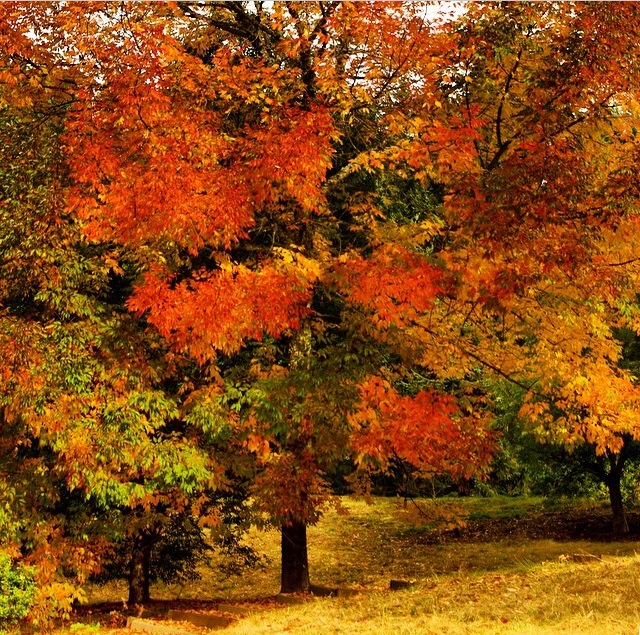
Fall in Bend, OR

Wednesday, September 02, 2020

Hunting season is about to open. I must be aware that a hunter may misidentify Pimmy and shoot at her. Years ago, I brought home a red saddlebag made for llamas that Pimmy can carry. Once, we tried it out during a ride in the Badlands. Pimmy disliked that bag and in vain tried brushing it by rushing beneath the low limbs of desert trees we passed. I decided to set the bag aside.

These days, as Pimmy follows my horses in the forest, we see signs of activity during hunting seasons. The donkey is loose and will need to signal big that, “I’m not wild game”. Her old red llama pack should work fine. I must be creative to make sure it stays on her among the forest’s low-hanging limbs. If I start getting that bag ready now, she might practice wearing it in our next outing.

The horses also need a bit of non-game identification. They should be recognizable as domestic animals since I’m riding and ponying. Nonetheless, it’s best to avoid underestimating the potential eagerness of a shotgun-holder. So my horses will wear red, most likely ribbons tied to their manes. I’ll also look into food-grade sprays that safely might color their butts (and Pimmy’s).

Legal hunting will continue throughout this year’s remaining months. My horses will be out on the trails and maybe looking funny, but hopefully staying safe.

Dear Friends: In these fall months, our forest trails invite at at their most lovely. Diana

Blue’s Gone

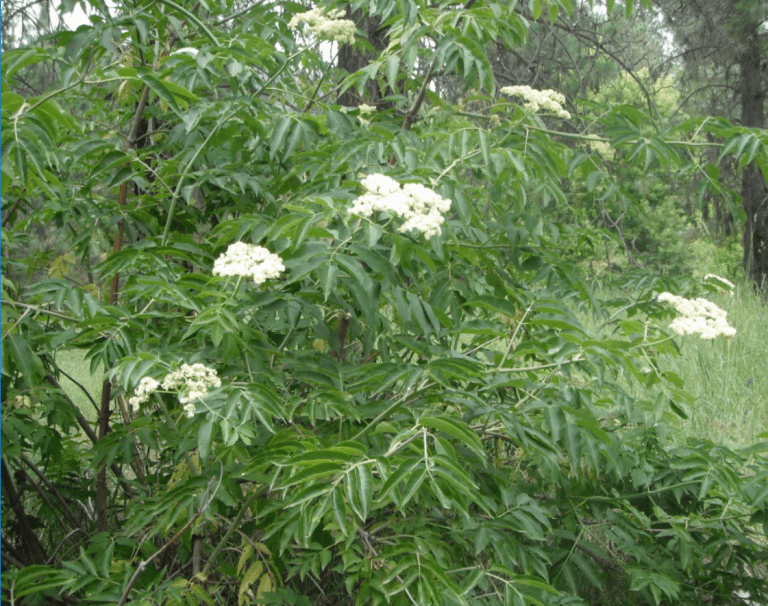
Blue Elderberry

Tuesday, September 01, 2020

Today, sadly, I’m reporting what hopefully only is a near-death. Yesterday, while riding on horseback along one of my favorite trails, I wanted to introduce a riding companion to the forest’s single Blue Elderberry plant. On my trail map, it’s a beautiful key feature, as seen in today’s header photo.

This time, trying to locate that plant was challenging, and here’s why. Now, it’s a mere skeleton of stems with on the ground a few wilting leaves. That recently-healthy, flourishing plant completely has been stripped of leaves and flowers.

Skeleton elderberry

The image was an unexpected devastating blow to my sense of balance and comfort. Throughout this summer, seemingly the forest has little-changed. On seeing the plant, my initial impulse was confusion, wondering what so brutally might have attacked the plant. My companion, a gardner, made the logical suggestion that probably deer were responsible.

The plant’s previous and current conditions have refreshed an understanding that over time everything changes. I know that for everything various stages of existence offer a continuum from the best (or better) to the worst. This sudden change struck me as too brutal and unexpected. I’d be happier to have seen that elderberry going through a natural decline, but things are as they are. In this case, there’s yet hope.

The plant still is rooted, has its branches, and gradually might revive. May it again thrive!

Dear Friends: I know its location, have images and memories, and will be watching. Diana

Forest Trails

Marking the trail

Monday, August 31, 2020

Ahead, more perfect morning hours on horseback, to follow yesterday’s lovely ride.

Several evenings ago, the horses, dogs, and I traveled over two obscure forest trails that recently came to our attention. We found where they connected to create a complete horse-trail loop. It’s special beauty is being almost-entirely off-road. It loops through about three- and one-half miles of forest. A horse walking-only may complete the loop in about an hour. For me, it takes a few minutes longer. Often when I’m riding, my donkey Pimmy follows loosely, and slowly. She wears a bell and occasional pauses to listen for her skews my timing.

Yesterday, our friend Anna rode the loop, too, and had with her a spool of pink ribbon. In today’s header photo she’s across Forest Road 200 and moving Rosie into position. They will pause for Anna to tie a ribbon that shows where the trail continues.

The ribbons make it easier to identify trail points, but keeping entirely on track still means following the dogs. Parts of the trails are very faded, easily might guide humans off-course. Experience has taught that my dogs like trails and tend to stay on them. Following the dogs has solved many trail confusions.

Today, I’ll ride the trails with another friend. The more horses travel over them the more defined they’ll become. It happens that my fellow-rider, Cindy, is a carriage-driver. Maybe she can help to solve another problem, about getting a horse-pulled cart or carriage up and over a very rocky and unavoidable hill. It’s a road point that could hinder driving-access to roadways beyond which appear excellent for the purpose.

Dear Friends: Our changing weather is cool and perfect for riding in the forest. Diana

Wow!

Sunday, August 30, 2020

The other day a book arrived that I couldn’t recall having ordered. It’s A Burst of Light and other essays by Audre Lorde. Soon I remembered that Lorde’s work referenced by a past-writer whose work I’m re-reading after many years. Lorde’s book is a collection of essays and speeches, and scanning a bit of her writing blew me away. She’s a brilliant thinker, an honest, talented writer, and I’m eager to return to her work.

Lorde (1934-92) was African-American, a lesbian, mother, and a civil rights activist. She primarily was a poet, having begun writing poetry as a child. Later she self-described as “thinking in poetry”. From childhood, she felt like a social outcast, was rebellious, and these fed her interests and writings. In the 1950s, while attending college in Mexico, she learned to confirm her identify on personal and artistic levels, as a lesbian and poet. In America, socially it was an early period to be a black person speaking of non-hetrosexual emotions. Lorde never backed from who she was, and her writing, compelling and brilliant, supported her presence.

My nearly-accidental introduction to this writer is exciting. She’s straight from the Great Depression era that introduced many brilliant African-American thinkers and writers. Those who migrated from the Jim Crow South made their voices heard, had plenty of issues, to speak about, be recognized, and acknowledged. Their works deserved and earned appropriate attention.

I’m certain that after reading Lorde, on another morning I’ll speak again of her work.

Dear Friends: The rough road, from a Deep south to Black Lives Matter. Diana

Evening Lights

Miles, exploring

Saturday, September 29, 2020

Yesterday, I finished at work an hour early and rushed home to feed the horses. I was hoping for enough daylight to take them to the forest, to have a ride before dark. We’d be out long as needed to walk only a few miles, so I invited along all the dogs, including my Border Collie, Miles, who for a week has been taking arthritis-easing meds.

While the horses were eating in their stalls, I fed my other critters, prepared dinners for the dogs’ return, and readied the horse trailer. The animals loaded easily and we took off into an approaching dusk. I felt some trepidation about entering the forest on horseback just as dinnertime was beginning for wild animals. But my day’s short working hours offered this rare opportunity for an evening ride.

As hoped for, this outing had enough daylight, the weather was perfect, and our surroundings felt comfortable and non-threatening. The horses traveled on both of the forest trails that we recently had discovered, but this time, we managed to ride on one and at its end connect correctly to the other. The two trails gave our entire ride a “forest experience” by taking us from the trailhead and back with minimal road travel.

In waning light, as we approached my rig, periodically both horses’ heads turned and focused intently toward the west. That’s the direction where our trails lay. From way off, I heard bits of barking, and judging from the horses, the sounds probably were from coyotes beginning to hunt.

Those two trails together go for about three and one-half miles. Walking both takes a horse only about an hour, just right for short outings. Best of all is that lovely environment, riding totally in the forest.

Dear Friends: The dogs loved that outing, and dear Miles did no limping! Diana