Traveling Anew

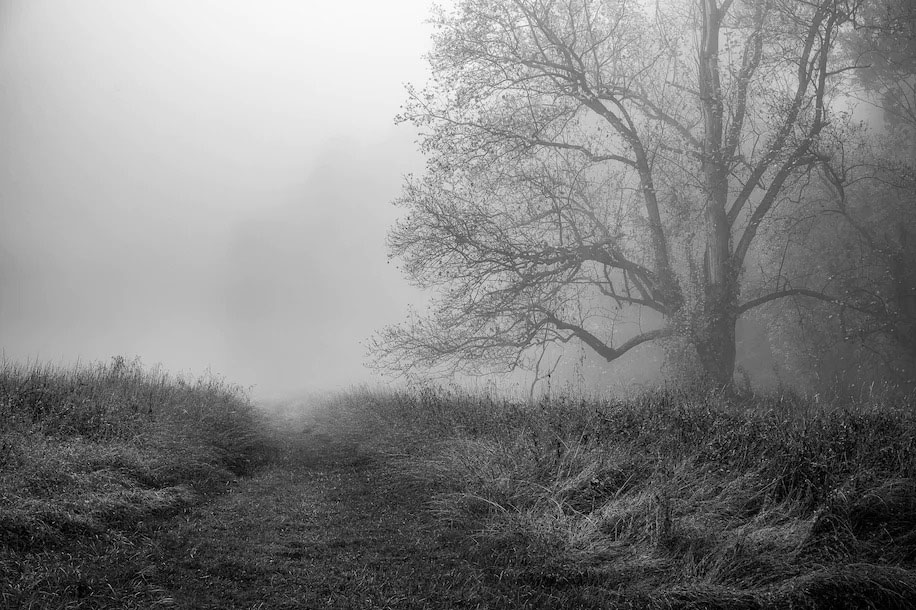
Multiple exposure, “Path Through the Fog”, by Alan Sislen (Washington Post 8/28/21)

Saturday, August 28, 2021 —(On September 20, the full moon, “Harvest”, will rise nearest to earth.)

I’m sipping from a cup containing 2X-caffeine, by Starbucks. It helps me wade through news of America’s winding-down hours in Afghanistan. Bloody awful stuff, referring not to caffeine, but to what’s occurring or could happen in the Middle East.

I remember as a little kid in the fifth or sixth grade, hearing my “geography” teacher talking about the Middle or Far East. I wondered, what’s the difference? Finding an answer didn’t seem important for many years. The question renewed on September 11, 2001.

Kids today and in the future will examine history differently.

For example, there’s a deadline for America’s withdrawal from Afghanistan, set exactly twenty years after the Twin Towers Bombings. This suggests a “connected flow” of distinct activities.

Instead of having to learn separate incidences, kids will learn a parenthesis of activities bound by dates. An entire flow will be captured as the years between 2001 and 2021, as an awfulness of horrors, summarizing the attack and civilian death, the war and combat-failure, and an entire world of comprehension with overwhelming sadness.

I remember learning about WWII in a series of separate large incidents. There was a bombing of Pearl Harbor. There were radio reports of battle engagements and incidents. There were speeches broadcast from America’s President. There’s a date on which war officially ended. There’s an afterwards, too, when America dropped atomic bombs on Japanese cities.

Past learning of history meant organizing and memorizing unique incidents. In the future, a parentheses will capture activities and be bookmarked by the dates of beginning and ending (if “endings” still seem possible).

Dear Friends: Mornings might be improved by avoiding a double caffeine with the news. Diana
Adjustments

Friday, August 27, 2021 —(On September 20, the full moon, “Harvest”, will rise nearest to earth.)

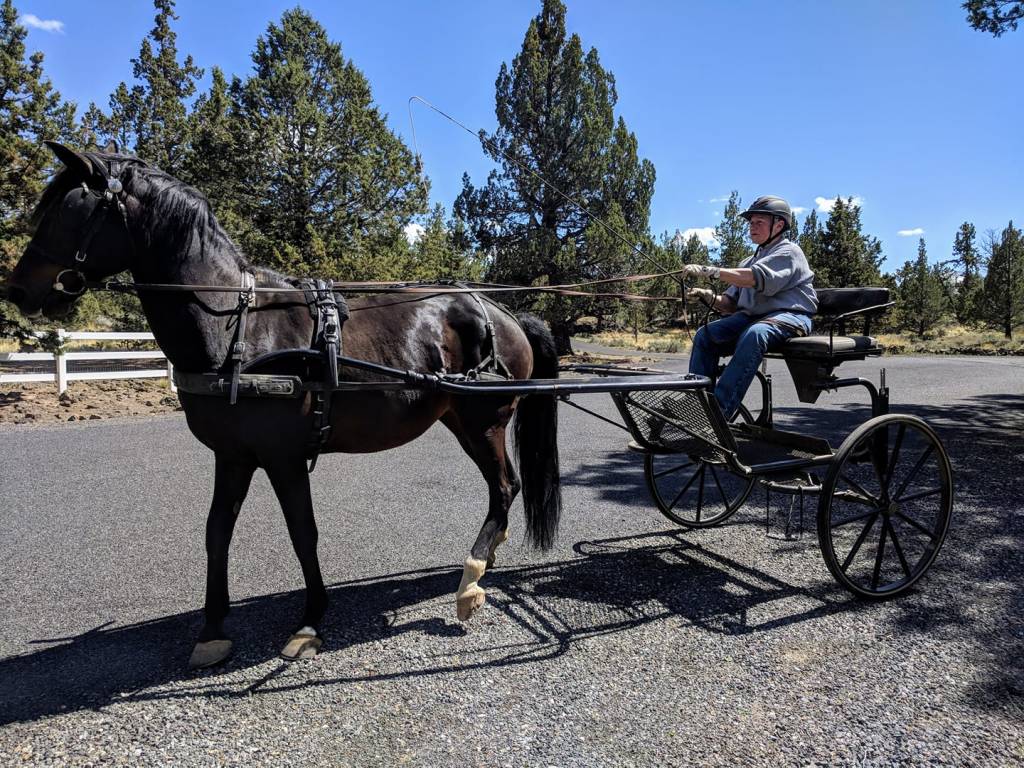
These days, driving either horse is out of the question for each has lost a rear shoe. A horse needs four solidly-working shoes to be driven, because road traction will rasp away bare hooves. Now, both horses are in dry lot until our farrier arrives from California.

His home base is Mammoth where he works on athletic animals, riding and pack mules and donkeys, and jumping and dressage horses. He’s a very skilled craftsman. Although it’s hard for me to not actively work my horses, our farrier is worth waiting for. He has good judgment for hoof needs, his work improves movement.

Horses, like humans, don’t have perfect feet. My pony, Sunni, in front is slightly pigeon-toed. Her sister, Rosie, works back feet as if she’s moving along a tightrope. The farrier grasps how an animal moves and builds shoes that support athleticism by helping to correct weight distribution.

He’s an old fashioned kind of worker. Brings a truck crammed with heavy equipment like saws and welders, gets a fire going, sets up a forge, and hammers away. It’s rare that my horses shoes fail before our farrier returns in six weeks. Sure, by then, their shoes usually are worn thin but they’re still on hooves.

So now, each lacks all four shoes and receives reduced feed. A horse standing around needs less feed, not just to avoid weight gain, but because athletic-level intake makes them “too hot”. In other words, excess energy above that being worked off, makes my horses termite-like. They actively chew on and destroy wood, meaning goodbye to stall insides and the fencing outside.

Next week, the farrier will arrive. That’ll let us start again to drive.

Dear Friends: It’s among “never-dreamed-ofs”, though my years in city and corporation worlds. Diana

Perfect Storm

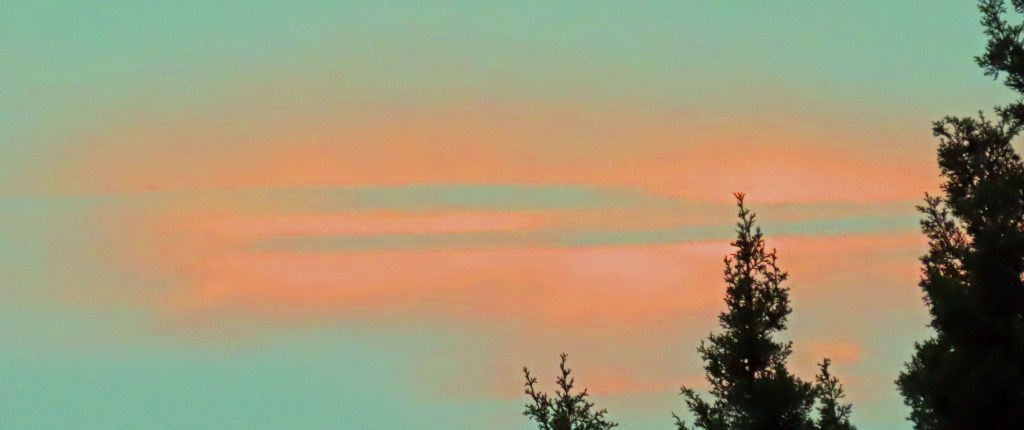
Sunset 8-25-21

Thursday, August 26, 2021 —(On September 20, the full moon, “Harvest”, will rise nearest to earth.)

The evening skies are awesome and compelling. There’s brightness from the sinking sun and fogginess from the smoke-filled atmosphere. It’s interesting what a camera might deliver from overhead.

An atmospheric condition calling attention is changing weather. Several months ago, our temps quickly switched from cold spring to hot summer. Now again and as suddenly, we’ve left hot summer to deal with cool autumn.

There’s no rain, and everywhere needs moisture.

My hay grower had a poor crop, couldn’t provide all his customers needed. He promised more hay, if his second crop yields decently. The hay delivery fellow affirmed the problem. Farmers are doling to customers. Here in Oregon, without melting mountain snow-packs to fill reservoirs, water in short supply means cutting back irrigation allowances.

The lack of rain suggests that second crops won’t yield enough hay to cover shortages. Fortunately, I’ve tended to hoard hay and have enough for my animals until next summer’s cuttings.

America’s lack of water is a dire situation, especially here in the west. Blame water shortages on environmental changes, but also, remember to follow the money. Water overuse and misuse is about politics and pricing, unfair distribution allotments, and inattentive citizens with sloppy-usage habits. There’s an innate human sense that water’s always available.

While a young woman I remember a new public lesson: Don’t Waste Water. I remember learning a new behavior of turning off the faucet while brushing my teeth. From those early awareness days, to these warning of water shortages in dire straits.

Changes in weather patterns, shortages of water, bungles among distribution channels, higher prices for everything, American Military’s hasty departure from a war zone, and so much more. These wrongs are exacerbated by a lingering, ever-frightening pandemic.

Dear Friends: Our world is Earth, needing everyone contributing toward its welfare and longevity. Diana

Animal Nature

Wednesday, August 25, 2021 —(On September 20, the full moon, “Harvest”, will rise nearest to earth.)

This summer, after quitting my part-time job and staying home, I watered a desert-like area beside my house. That brought a variety of critters that delighted me. I decided to keep my inside-outside kitty, an expert small wildlife killer, inside all summer. Max hasn’t been happy about this but he’s adjusted, hangs out on windowsills and stays aware of what happens outside.

Meanwhile, I’ve enjoyed a growing population of bunnies, frogs, garter snakes, birds, and especially chipmunks. Years ago and to my dismay, Max killed off the chipmunks that originally ran around. He killed off baby bunnies and any unlucky birds not tuned to instants of great danger.

This summer at home, I decided to encourage wild little critters.

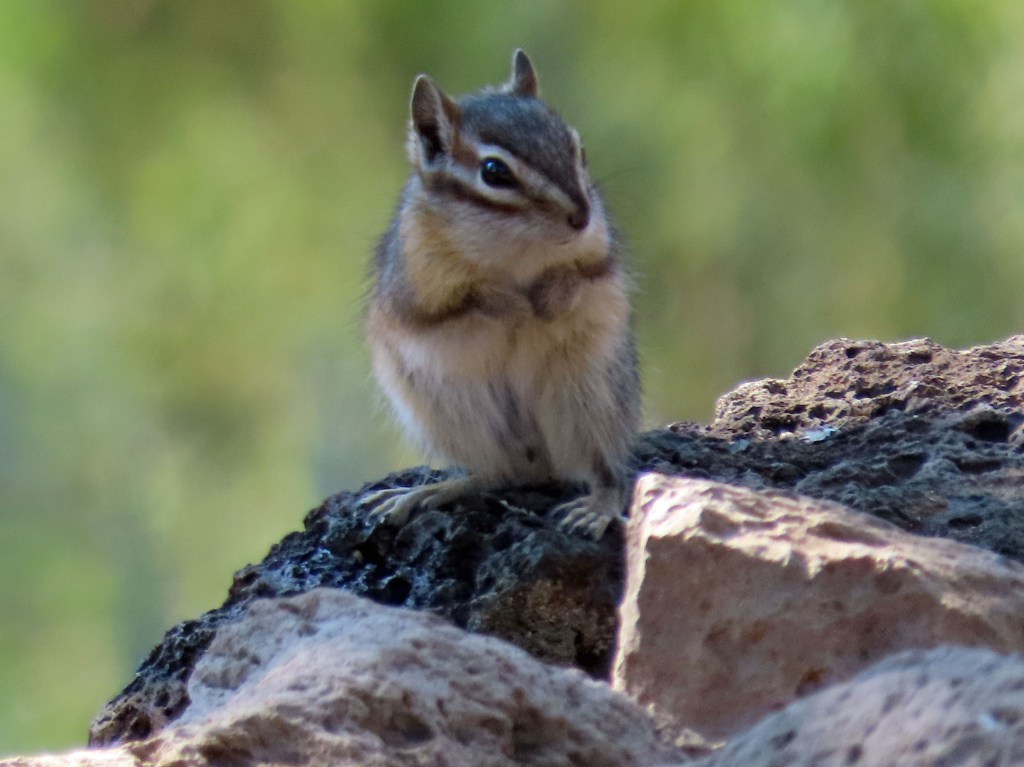
Recently, I set out a ground feeder, added bird seeds, and watched the delighted chipmunks. They showed up, beginning when one discovered the seed stash. Soon another appeared, and finally, an entire family of five or six are dining almost nonstop. I kept adding birdseed and loved watching the chipmunk action.

My bird-food mix included nuts, and birds, especially Jays, also enjoyed the feeder

Chipmunks were my desired customers. I’ve seen partially-tamed ones taking peanuts from a human hand. That was a goal along with photographic opportunities, it would be slow-going. They’re incredibly quick, hopping in and out of a feeder, perching on a rock to eat before hopping again into the feeder. At a slightest disturbance, they rush away down the driveway, trails straight upright toward other properties.

In my RV garage are humane traps, set to capture mice and rats. Occasionally, one yields a trapped chipmunk. Those little squirts are handfuls. They fight wildly for freedom and readily would bite a hand stupid enough to be vulnerable. My traps allow easy releases into the garden area.

Last night, angry screams announced a cat outside, and in Max’s territory. From a windowsill, Max threatened a kitty that didn’t seem frightened, just sat watching my howling beast. A sight of me and sounds of my voice didn’t bother the visitor. When I bumped against something that made a surprising noise, the outside one disappeared. Max shut up and yawned.

As much as it’s a hated thought, I understood that I’m setting up wild critters for destruction. Not from my cat, but by those roaming freely and becoming attracted to noises and scents.

I made a decision, went outside and removed the seed-feeder. The days of easy-food for wild critters are ended.

Dear Friends: Interfering with nature is a poor idea, except for rescuing a critter in need. Diana

Afterwards

Setting, 8-24-21

Tuesday, August 24, 2021 —(On September 20, a fav full moon, “Harvest”, will rise nearest to earth.)

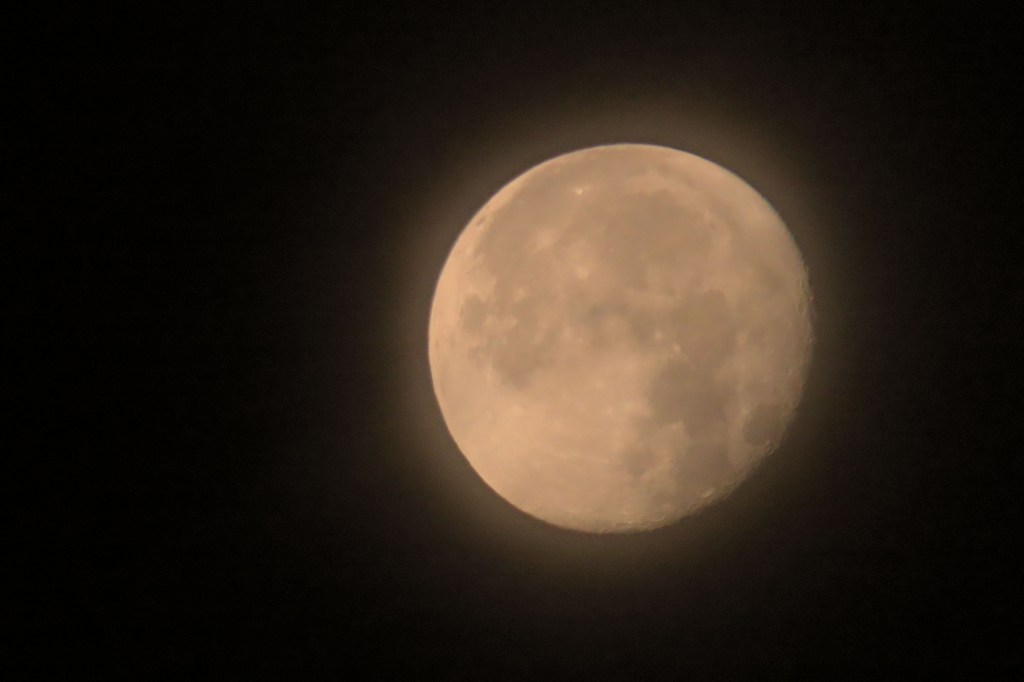
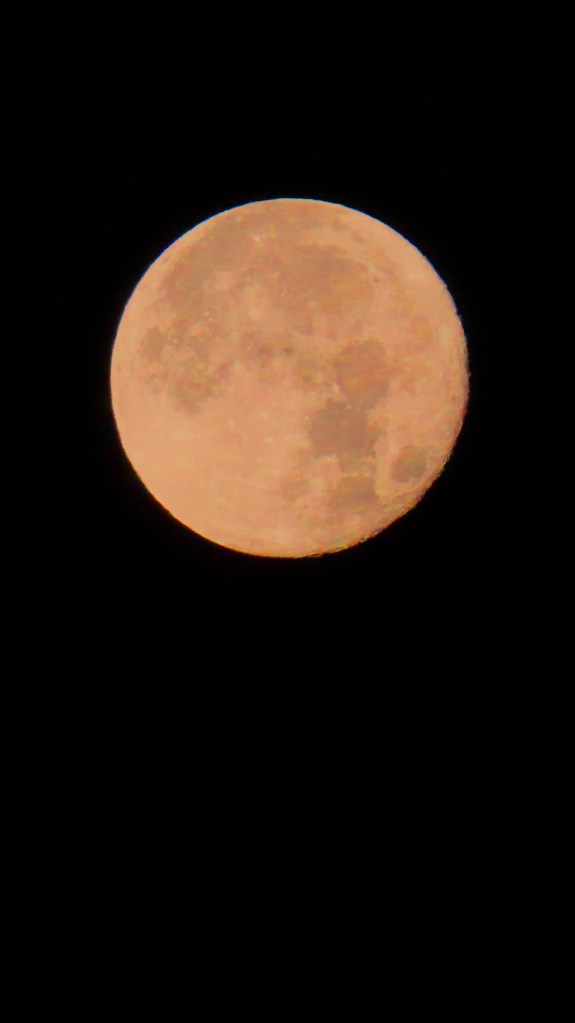
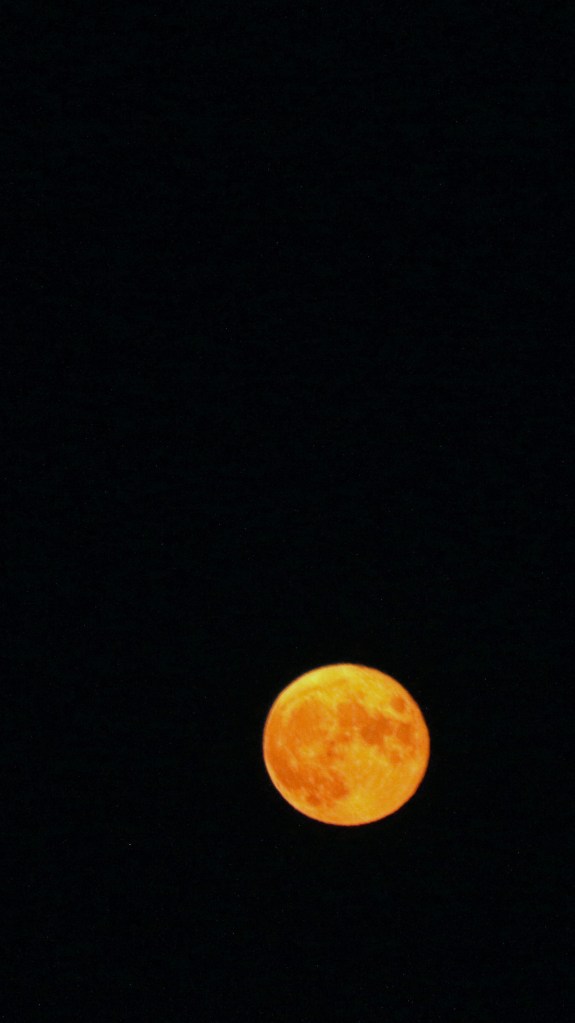
Even after Sunday’s Sturgeon Moon rose at its fullest, on Monday night it remained totally visible and striking. When an upward glance through an appropriate window caught the moon, I stared and felt joyous. Early today, that heavenly floater remained lovely.

Always, like many humans, I feel full moons as special events. Over the years, I’ve blogged about some, and most often, September’s “Harvest Moon”. What makes that moon seem special is that it occurs just as our daylights darken, with earlier evenings making a full moon particularly eye-catching. It’s not a super moon, but maybe psychological wishes make it seem very near. Anyway, September’s attractive light soon will appear and be glorious.

I’ve a growing appreciation of moons in all their phases. Earlier, my appreciation was for them as sudden, beautiful night lights. Now helped by my friend and fellow moon-chaser, Susie, I’ve a changing view. She might have a deep sense of moons somehow being alive up in the sky. We’ve chased several full moon rises, and my innate sense has begun toying with the moon as a living element.

If it seems silly, that’s okay. Similar thoughts are affirmed by many past and current, best and brightest, writers. Humans historically have toyed with ideas about the moon as a living element that offers either, or both, comfort and discomfort. The epitome perhaps is Shakespeare, who perceived the moon as essential and warming, sometimes hopeful and/or devastating, and always as a globe alive.

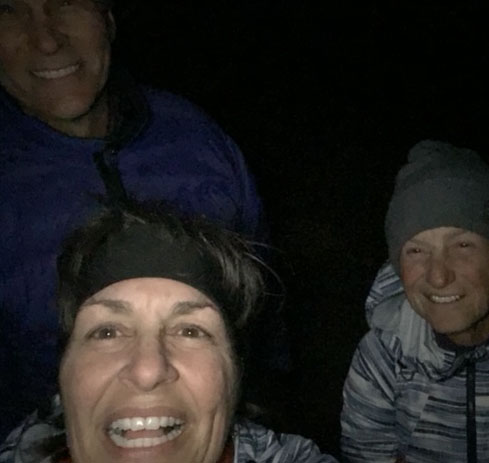
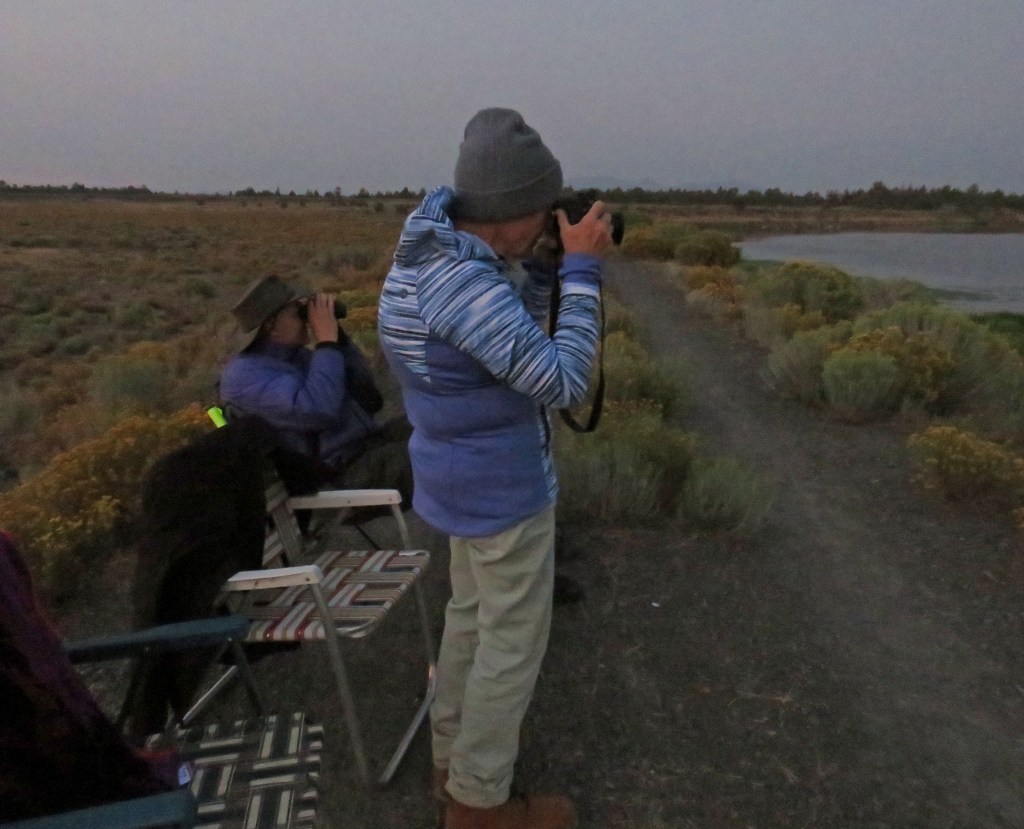
Anyway on Sunday night, and standing beside a body of water in pitch darkness except for moon reflections, our team did manage somehow to capture a selfie. Such as it is, here we are, Dale, Susie, and me.

“Believers”

Dear Friends: While planning ahead be aware, it’s impossible to predict where life might take you. Diana

“Sturgeon Moon” Watchers

Setting “Sturgeon Moon”, 8/23/21

Monday, August 23, 2021 —(On September 20, the “Harvest” Full Moon will rise nearest to earth.)

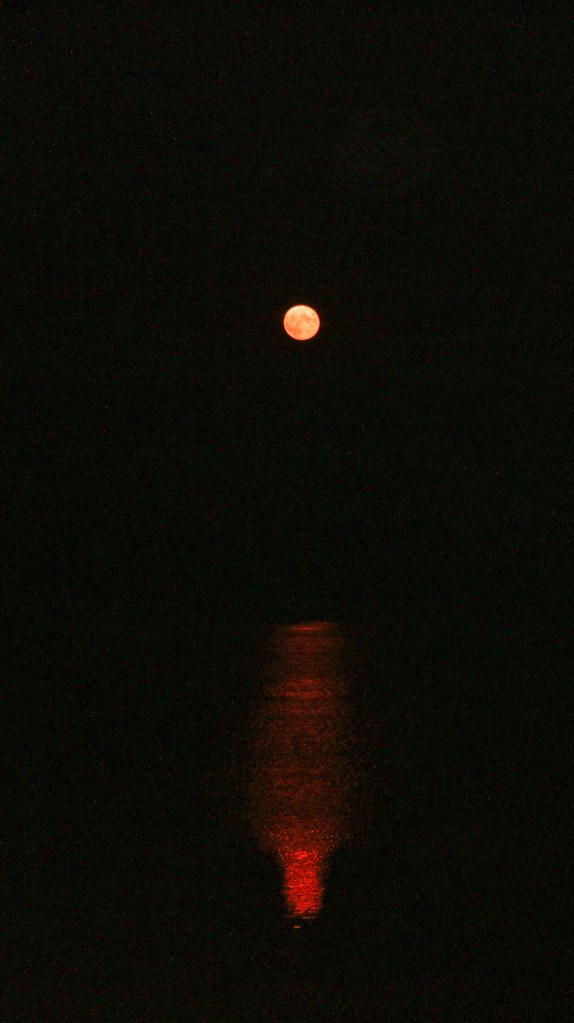
Last evening, Susie, her husband Dale, and I hiked at Hatfield Pond, to see and photograph the rising “Sturgeon” moon. Susie wondered why I’ve not captured the recent lovely moon settings. That’s why this morning’s header photo is sub-captioned, “Moon’s early goodbye”.

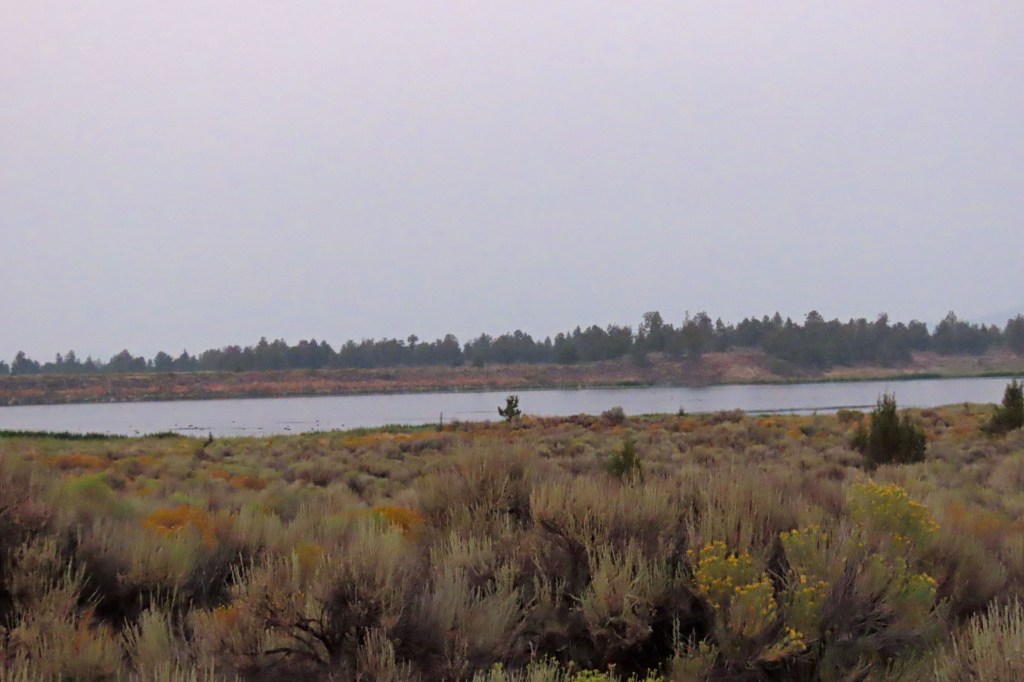
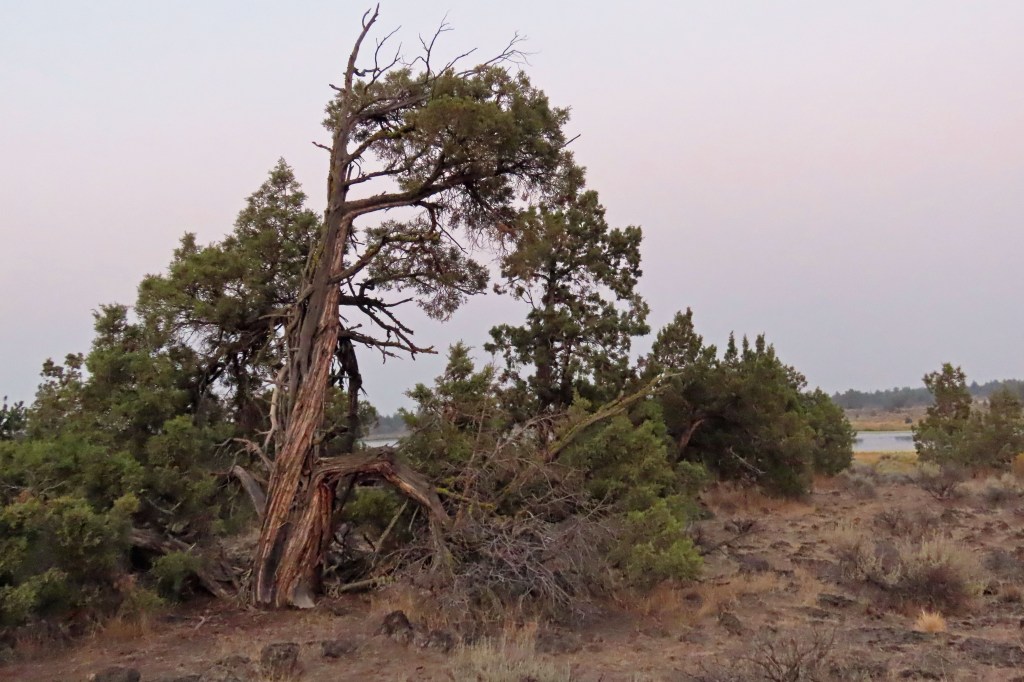
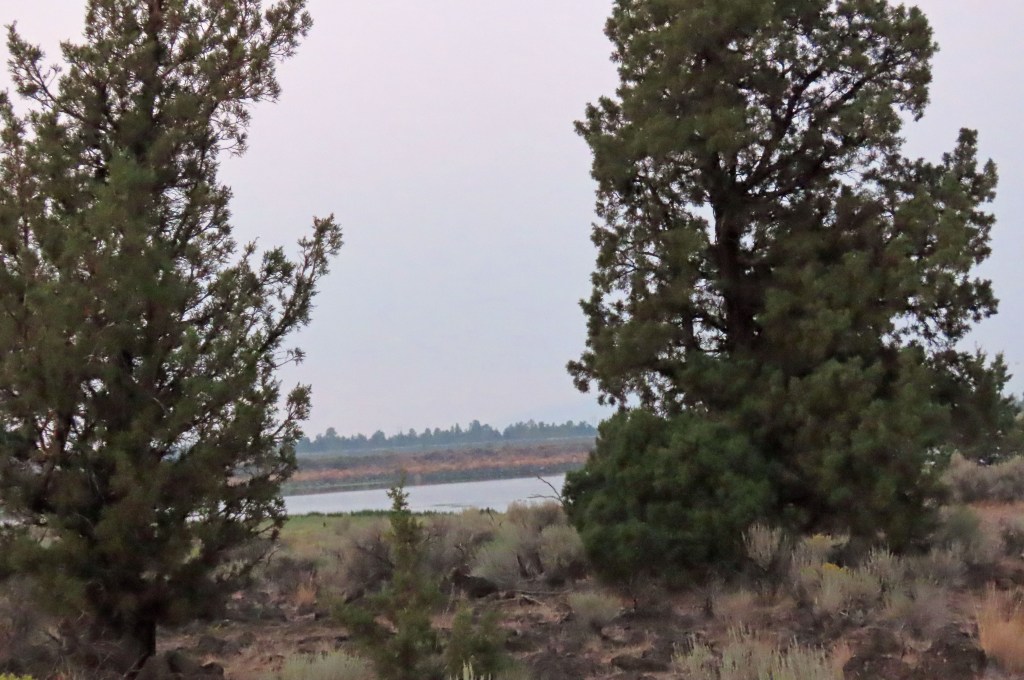
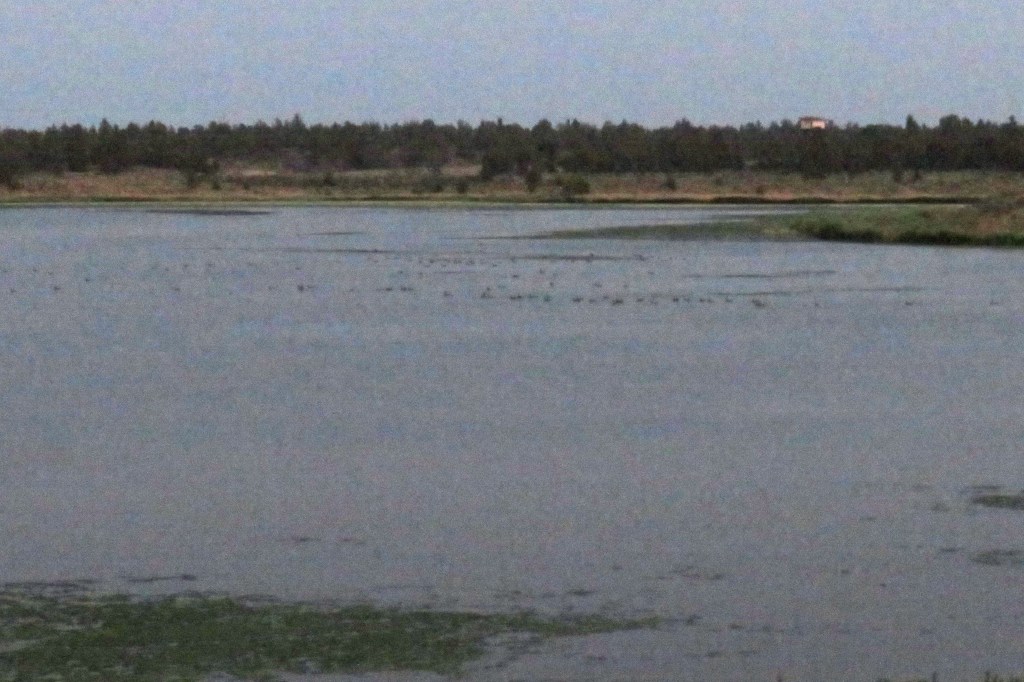
About Hatfield Pond, it’s the reservoir for this area’s reclamation facility. Dale and Susie know it well, but I’d not before been there. It’s a wonderful spot, these are dusk-time glimpses.

Dots across the center are ducks, bunches of them

Beneath last night’s cloudy sky, we set up on an earth bar that divides water holding areas, to hang out awaiting sight of the moon’s rise. Dale with binoculars was spotting sky traffic, while Susie identified distant and barely-visible planets.

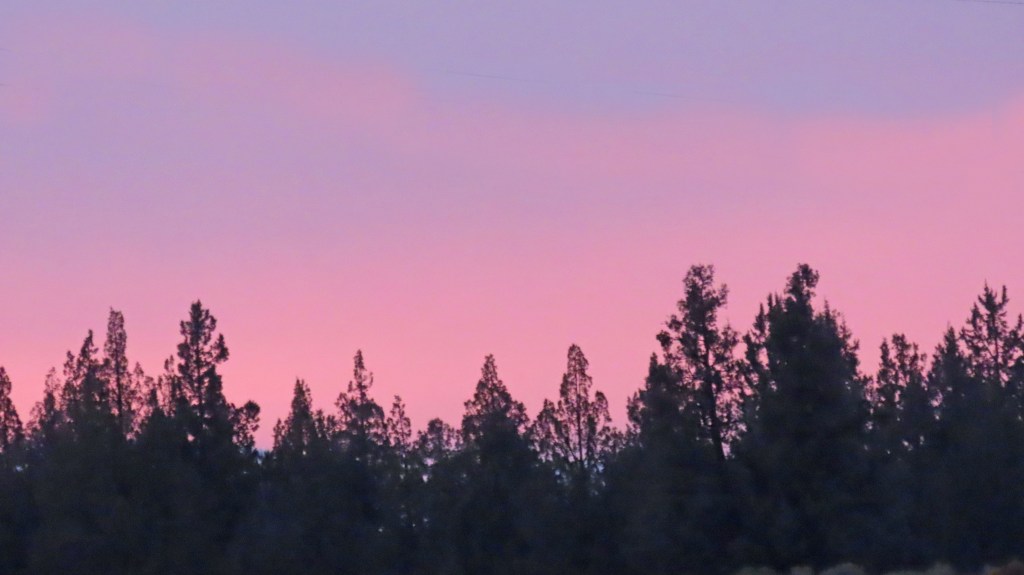
I wanted to photograph a setting sun simultaneous to a rising moon. But with still-heavy wildfire smoke blurring the sky, only a few colors left-over suggested the missing sun’s wake.

Susie and Dale are intrepid outdoors types, who long have know this spot. Susie anticipated that Hatfield would allow for capturing of the moon’s rise and its reflections on water. She was correct, and it’s a sight breath-taking.

Moon Rising
Rising & Reflecting

In that evening’s smoky atmosphere, our run-of-the-mill cameras limited capturing as we had wished. By sticking to the task we managed anyway some worthwhile pictures. The Hatfield site would enhance upcoming moon-rises, like September’s full moon. It’s an all-time favorite, “Harvest Moon”.

We repeatedly tried for a team picture, but total darkness prevented the cameras from picking up images. Anyway, it’s easy to imagine our moon-chasing team: Dale is tall, Susie is beautiful, I’m a shrimp.

Dear Friends: See for yourself in real-time the fullest moons, fun-watching, great-learning events. Diana

Driving In Town

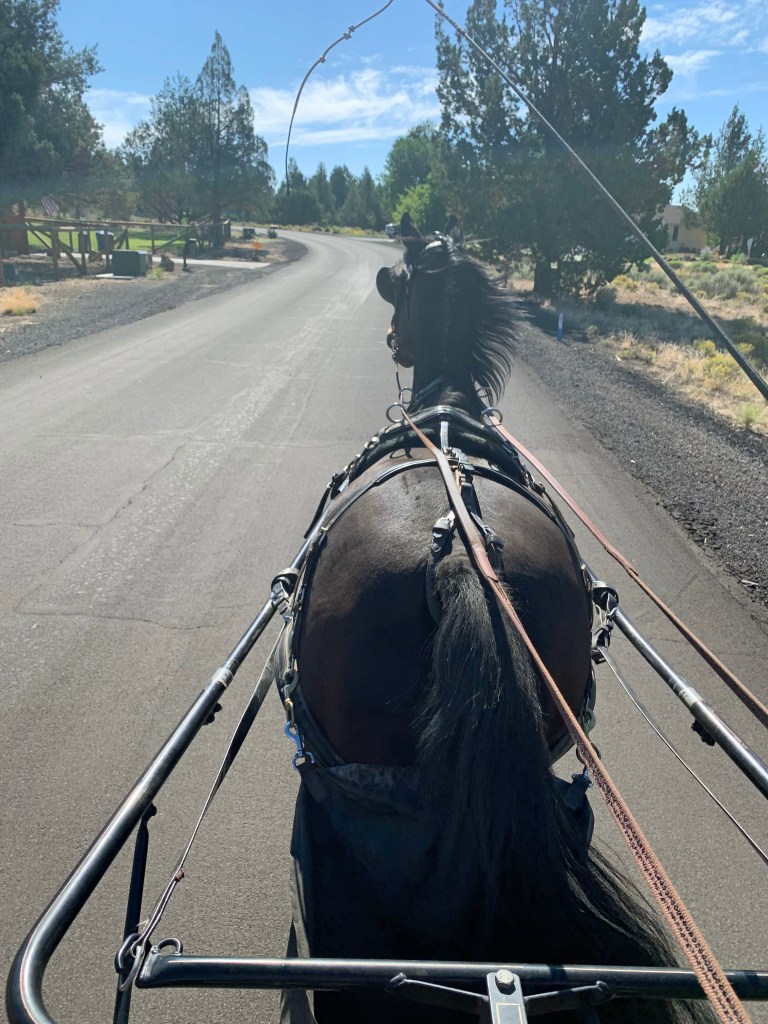
Sunni, photo by Julie Gilbert

Sunday, August 22, 2021 —(Tonight, August’s full “Sturgeon” moon will rise nearest to earth.)

My experiment, taking a horse and cart to drive in one of the city’s quiet neighborhoods, didn’t entirely go as hoped. The drive did occur on pleasant streets, and my horse (Sunni) behaved well.

An advance awareness of several elements had given me pause. Sunni would be faced with a spot of pavement going over a rushing canal. She’d also pass a property with llamas and another with goats. Sunni handled those episodes well, looking and pausing, but like a champion responding to reins and my voice.

We passed a couple of properties with parked horse trailers. There, folks offered thumbs-up and smiles.

I didn’t anticipate the loose dogs. In that relatively quiet neighborhood many folks were walking their dogs. They grabbed their charges, quickly leashed them, and smiled. But my sense was one of creating discomfort. Also, the quiet streets had loose dogs, some with their owners in yards, and all eager to chase and bark at a horse.

Sunni is accustomed to dogs, won’t unnecessarily behave aggressively. But the experience made me aware that about wheels dogs know zilch. We found that a loose dog barking at the horse will chase, staying behind just enough to become caught by a wheel.

Now, unfamiliar city neighborhoods will drop from my attempts to extend our adventures. Experience is teaching me that driving a horse is a better experience in more rural neighborhoods. Mine is good and so are some farther east.

I left the driving cart loaded in the horse trailer. Today, maybe I’ll drive Sunni in a rural city park with rugged territory and less-known except to nearby residents. Public places usually have entrances partially blocked to prohibit vehicles and allow foot traffic. The park that’s on my mind might accommodate a cart.

Well, that was a first experimental out-of-the-area drive! It’s made my quiet residential neighborhood seem more fine for routine driving, to ensure fit, well-muscled horses.

Dear Friends: Our outing landed big wins, too: loading, unloading, and using the cart. Diana

About Those Blues

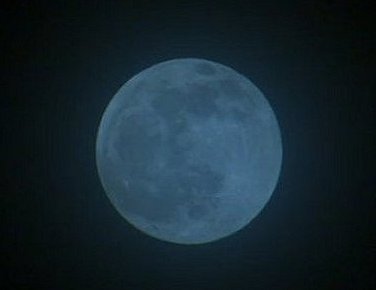
Blue Moon (NASA), using a blue filter

Saturday, August 21, 2021 —(Tomorrow, August’s full “Sturgeon” moon will rise nearest to earth.)

Tomorrow’s full moon will be a seasonal “blue moon”. It won’t appear in the sky as a blue globe, but might offer bluish glows. Maybe my run-of-the-mill cameras can pick up coloration differing from other full moons. To clarify, I’m always pleased with my cameras’ yields, but every month’s full moons are somewhat unique. They keep me hoping to discover, in real-time, even a few more elements making monthly sky shows special and appealing.

Full moons let us see a setting sun and a rising moon nearly at the same time. While outside and photographing a full moon, one almost immediately can turn around to capture a disappearing sun.

A moon rising in the east becomes visible because the Earth has rotated toward the moon enough, so that the moon rises over an horizon. When a moon appears rising and a sun appears setting at almost the same time, it means the sun and moon are on opposite sides of the Earth, letting the moon fully reflect the sun’s light and giving us a full moon.

It’s exciting to anticipate this month’s full moon. What might it offer that’s bluish and apparent? Almost exactly, too, the setting sun should be interesting. If the sun holds onto a smoke-caused and outstandingly intense-red, would its off-coloration affect the rising moon’s lighting and shading?

Here’s some reality according to NASA. A blue-colored moon is the result of water droplets in the air, from certain types of clouds, or from particles thrown into the atmosphere by natural catastrophes, such as volcanic ash and smoke. Moreover, blue-colored moons in photos are from using special blue filters for cameras or in post-processing software.

Well, that’s “blue” from the experts, but who knows? My mortal’s eye will focus upward to see natural moon-hues and might also spot seeming moon-blues. Stay tuned.

Dear Friends: Looking at the sky increases our visual system, and engages our imagination. Diana

Rosie’s Shoe

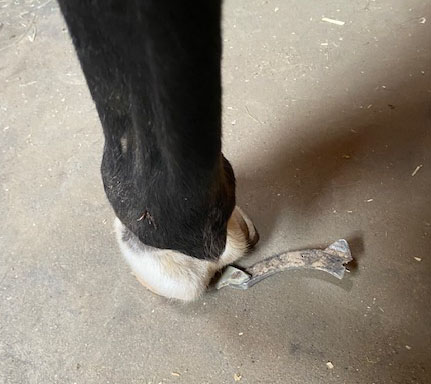
Broken horseshoe

Friday, August 20, 2021 —(In 2 days, August’s full “Sturgeon” moon will rise nearest to earth.)

Rosie showed up for breakfast dragging a hanging-part of her shoe. A problem was that the broken shoe was on her left rear, the leg with arthritic problems that resists being lifted. Another was that the dangling metal could be stepped on by the other rear hoof and cause an accident.

She let me lift her leg to examine. I managed to slice a soft connector and release the broken part. That left on the hoof a broken shoe-part, which by catching onto something could cause an accident.

Our farrier lives in Bishop, CA, and is expected next week to be in Oregon. I texted him with pictures, and he explained how to remove the rest of that shoe. I needed to rasp-down any outside nails, and then, with a shoe-puller remove the remaining metal.

I have a hoof rasp but not a puller. He got in in touch with his close friend, Ashley, who lives here and for whose horses he provides hoof care, a commitment that regularly brings him to Oregon. He texted that long ago he’d given Ashley a hoof-puller.

Upon hearing from him, Ashley, who’s a dedicated horse-person, kindly volunteered to help me.

When she arrived, we first tackled the problem by assessing how well Rosie tolerates a lifting and holding-up of her arthritic leg. Ashley is accustomed to horses that require sensitive handling. She figured out how we could support Rosie’s leg while also working on its hoof.

We managed to hold Rosie’s leg and hoof in a workable position. Here, a note, that the processes of putting on and removing horse shoes calls for physical strength. Mine’s not so great, but Ashley is fit, and also in a good way, she’s stubborn. Working to use the hoof-puller and without giving up, she managed to remove the protruding shoe nails and broken metal.

Thanks, thanks, thanks! for Ashley’s help. It’s a huge relief that Rosie may freely and safely move around. Until the farrier arrives next week, she’s on vacation from driving.

Dear Friends: This reaffirms that a mutual affection for horses brings together new friends. Diana

Smoky Sunset

Last glimpse, sun setting behind the Cascades

Thursday, August 19, 2021 —(In 3 days, August’s full “Sturgeon” moon will rise nearest to earth.)

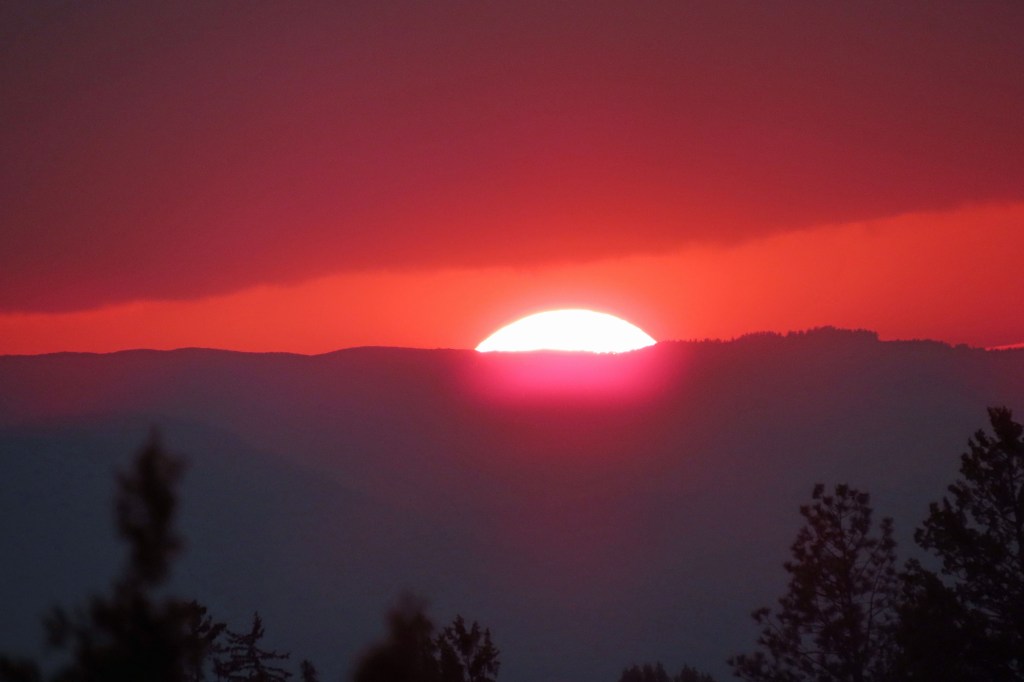
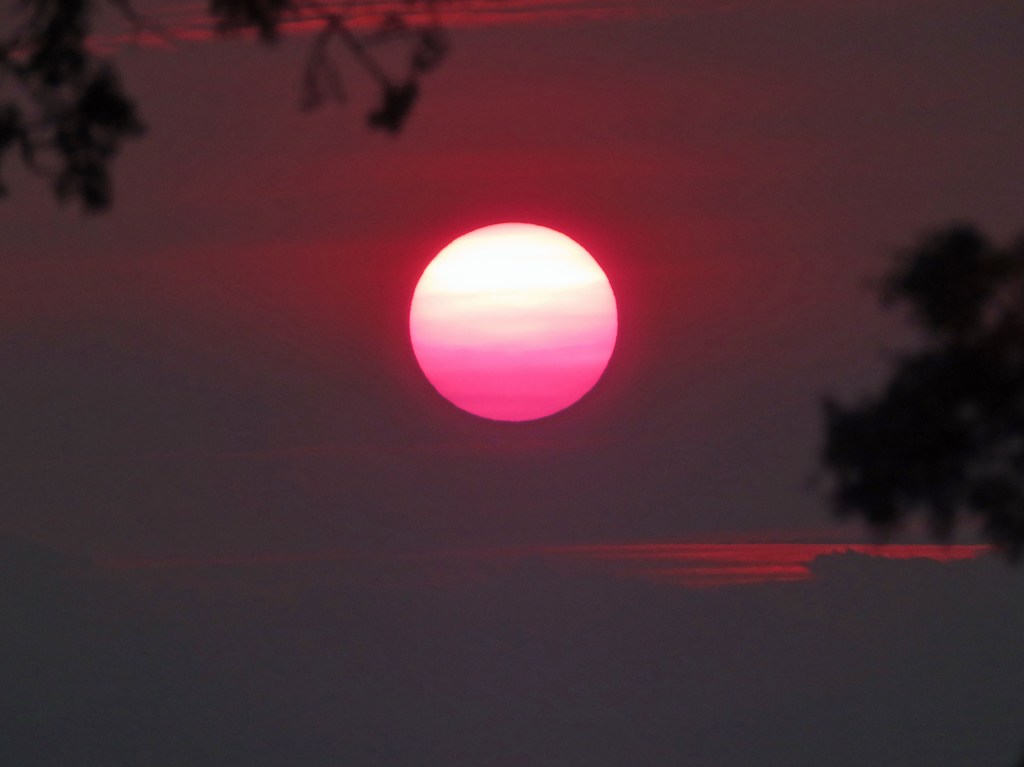
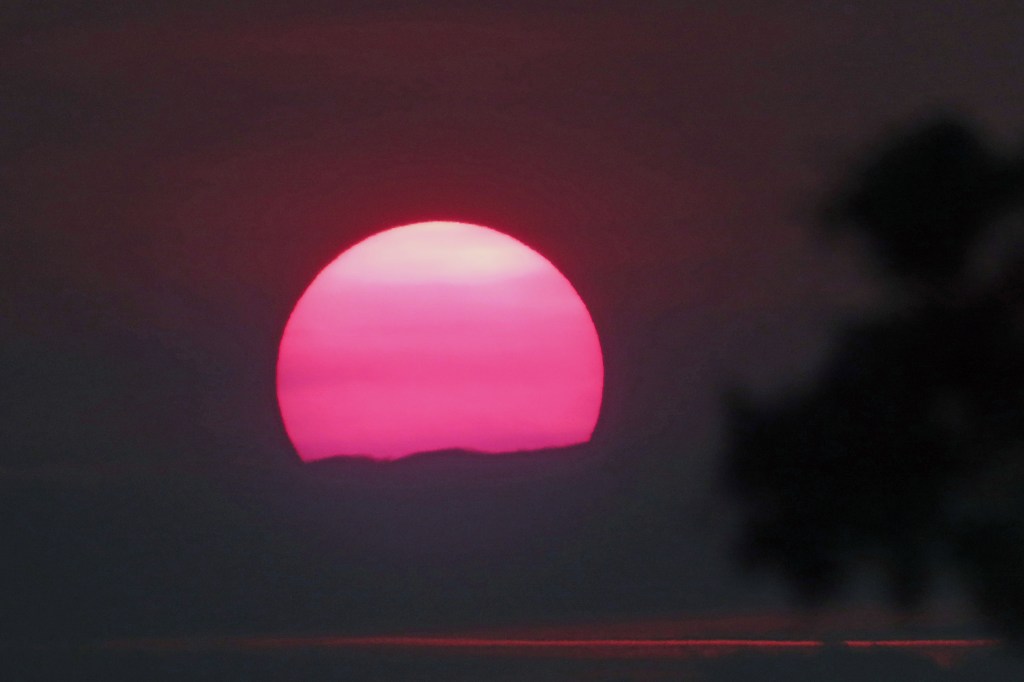
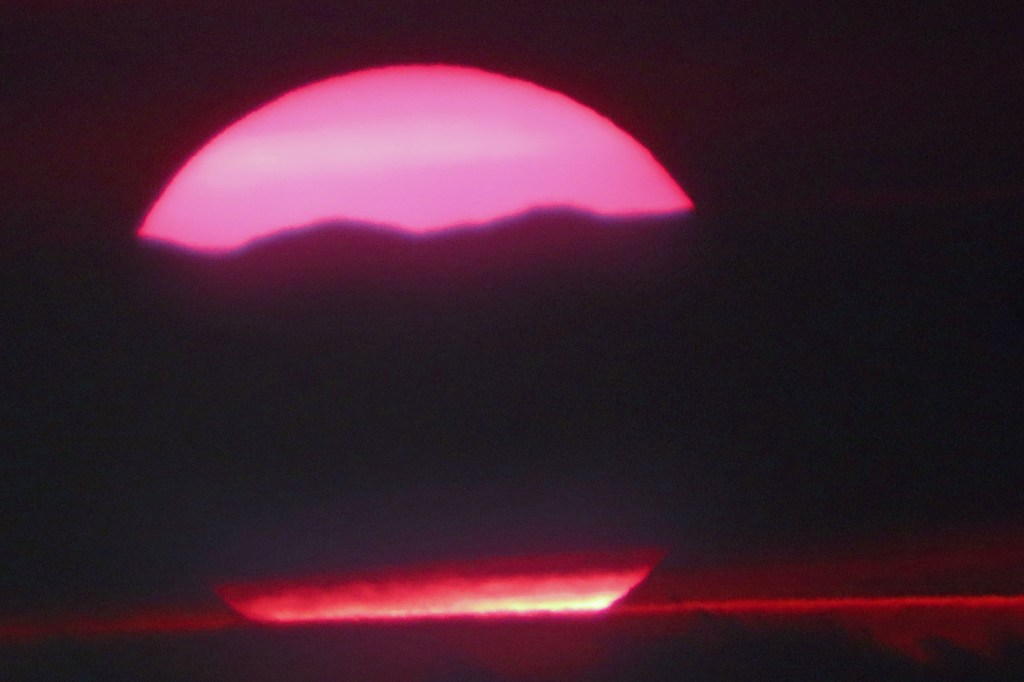
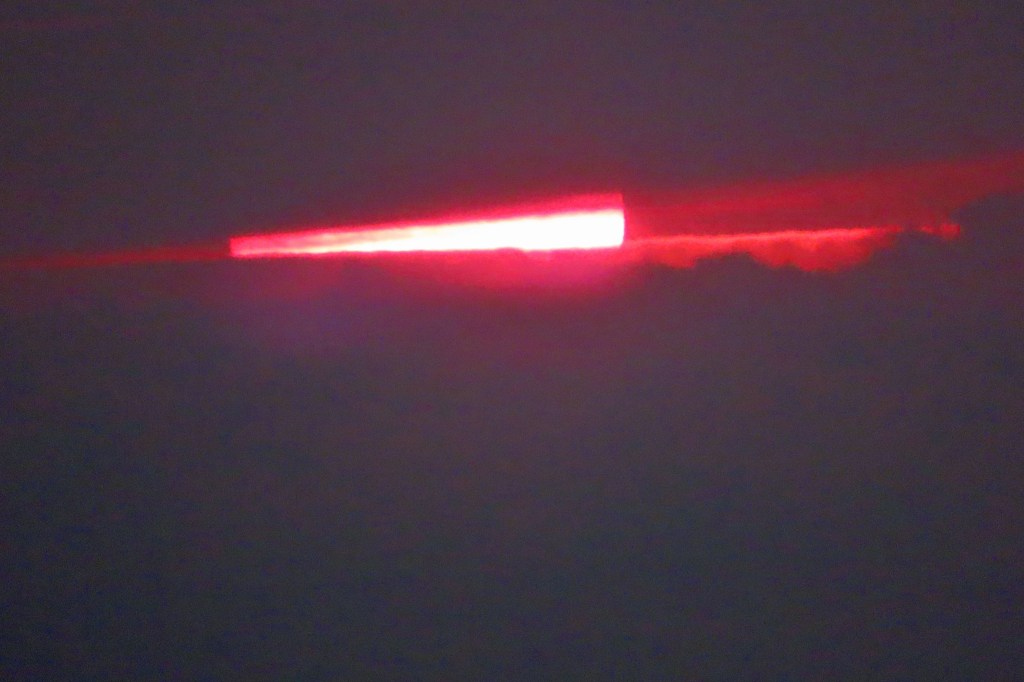
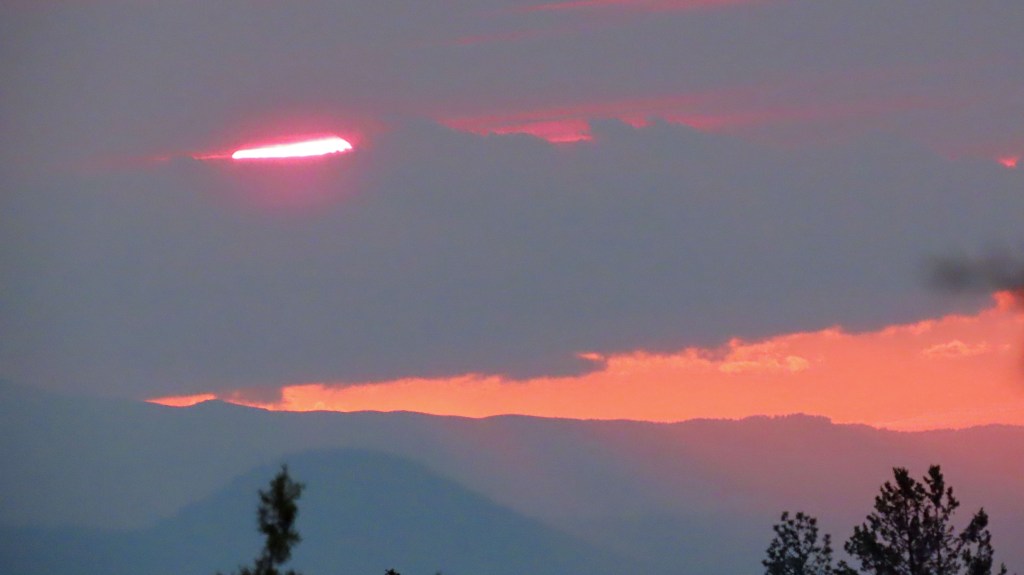
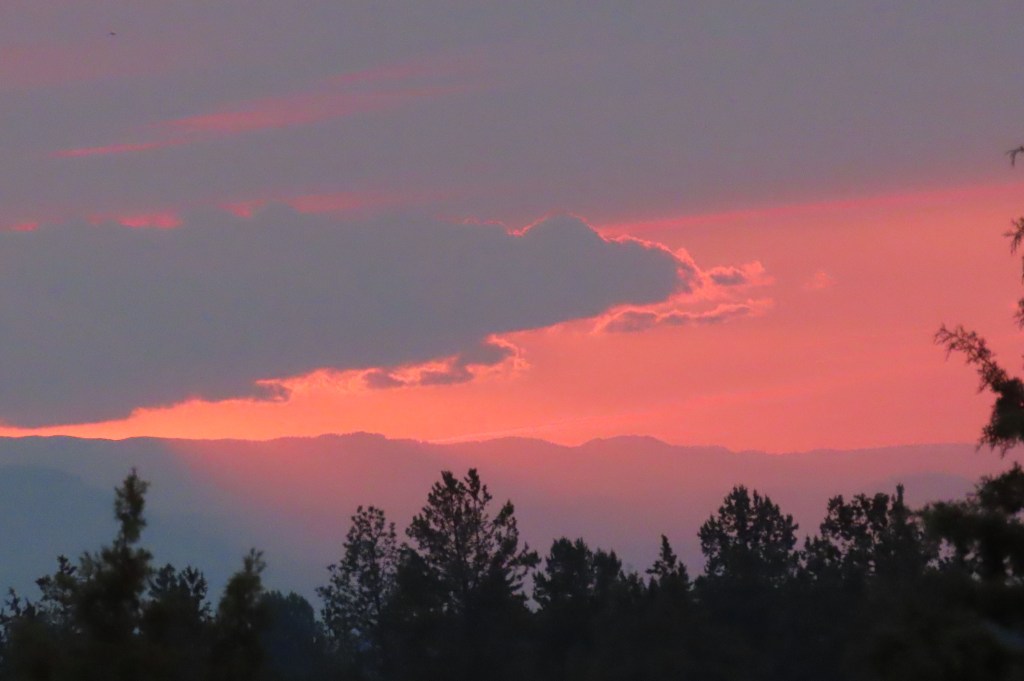
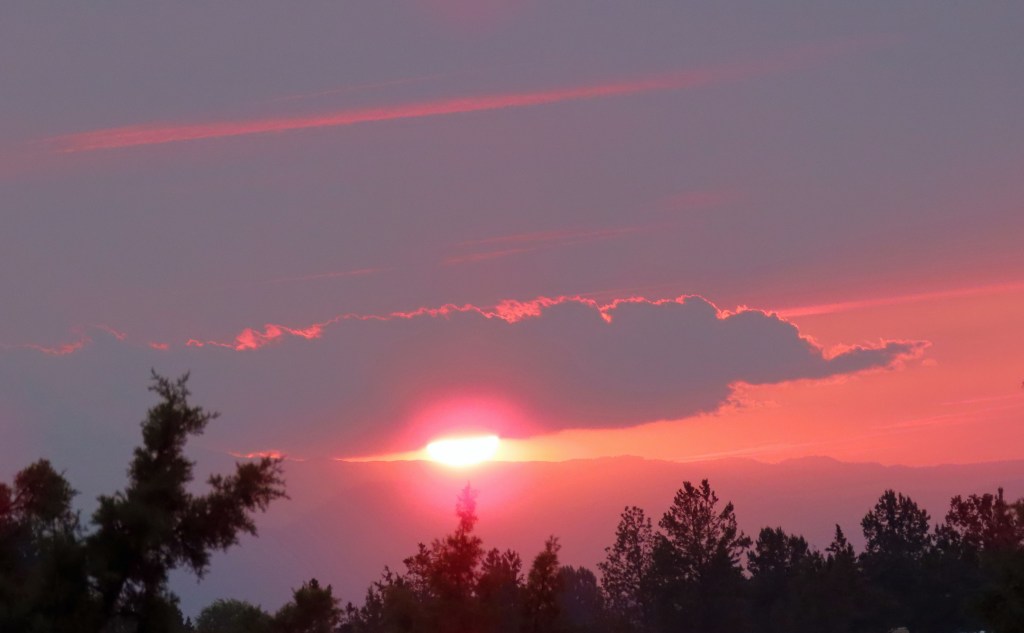
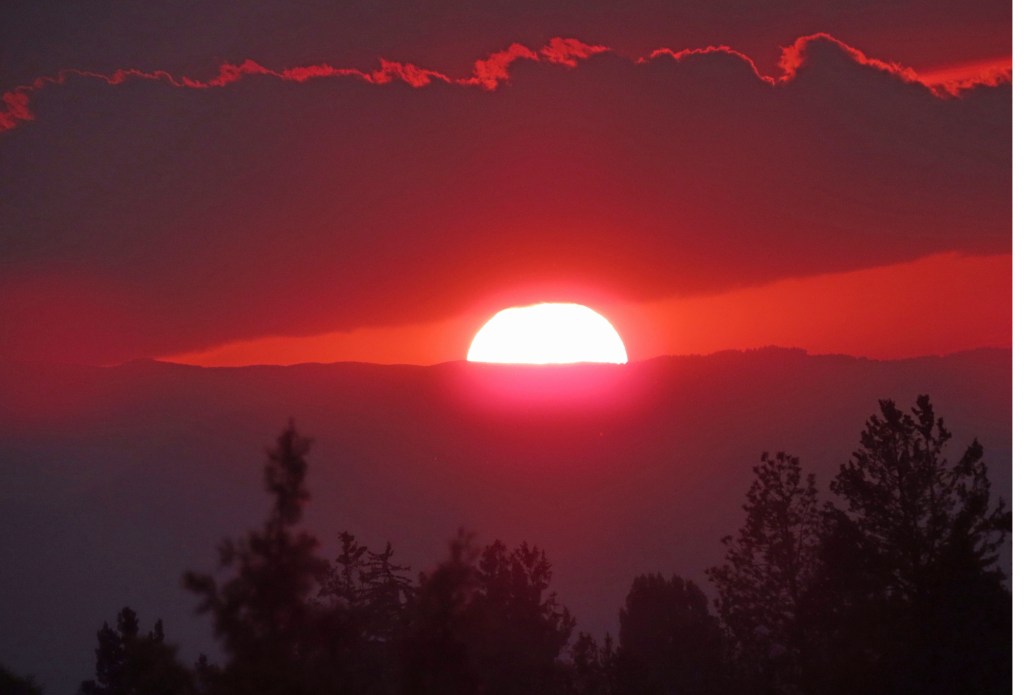
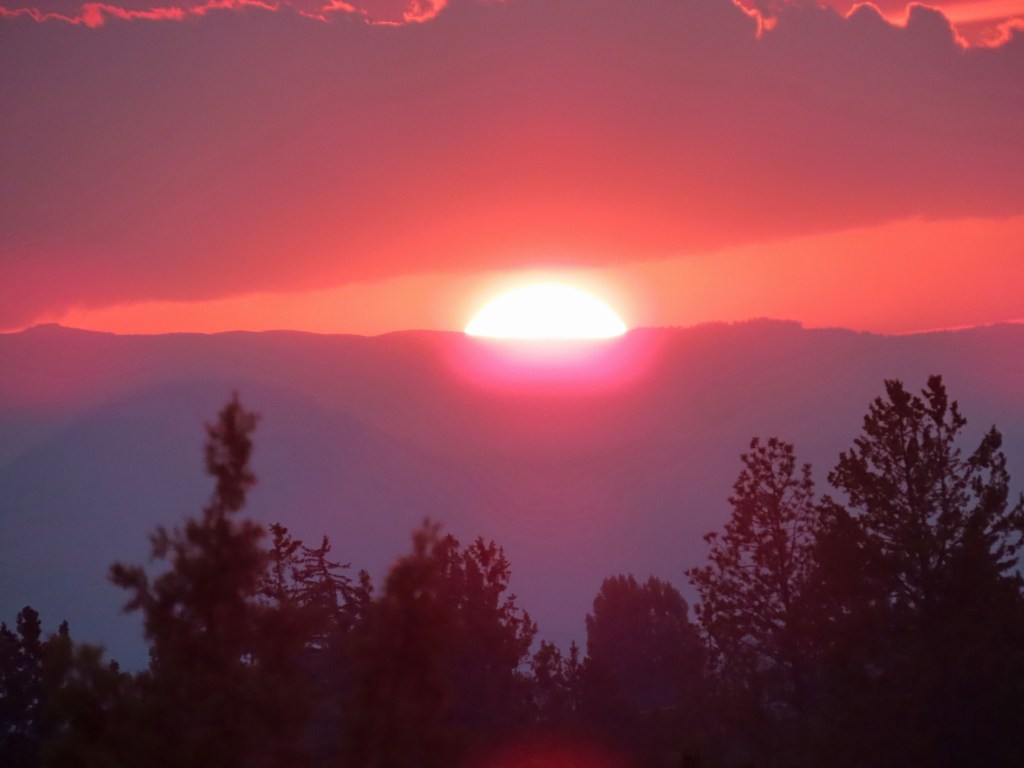
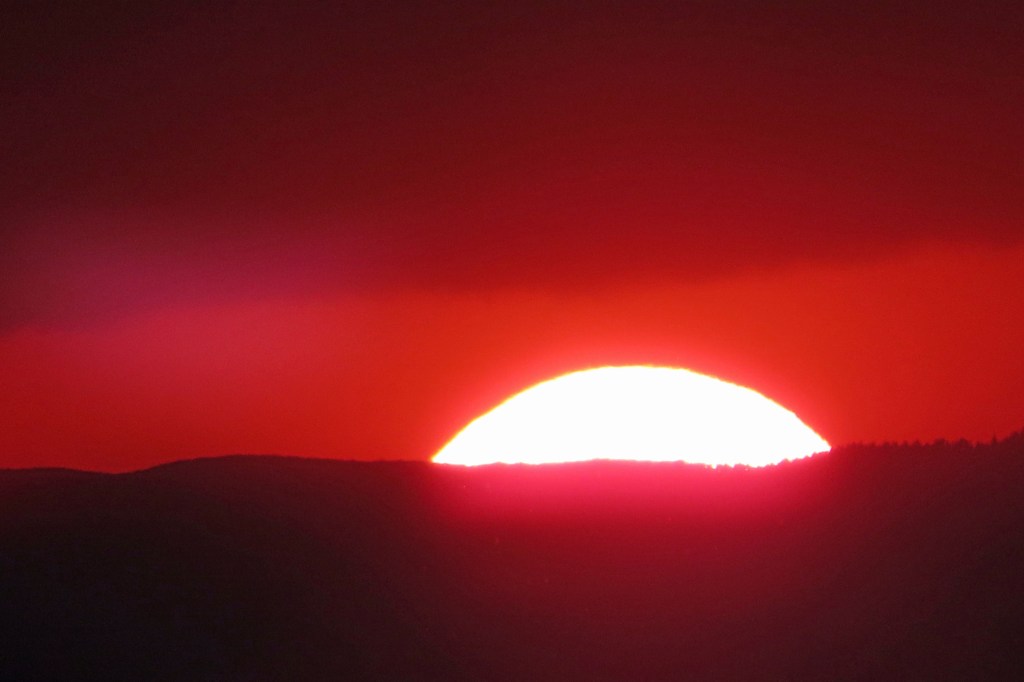
Yesterday evening’s spectacular sunset drew me outside with a camera. I waited, watching that globe gliding downward through various clouds before disappearing among the mountains.

Smoke from wildfires continues to make the sun-ball a fire-red. My cameras cannot pick up enough of that color. Nonetheless, my Canon SX70 Zoom decently-recorded the sun’s bright descent among clouds, and an incredible spread of ambient light among the cloud layers.

These photos reveal the setting sun’s descent and skylights.

First glimpse
Descending into cloud
Working through cloud
Dropping into next cloud
Sun amid cloud, shedding ambient light
Sun hidden, with sky alight
Sun dropping into next cloud
From cloud, lowering toward mountains
Sun becoming lost, and sky alight
Goodbye, to a gorgeous sun

Dear Friends: Looking skyward yields stories, often worth telling and sometimes glorious. Diana