
Tuesday, May 05, 2020
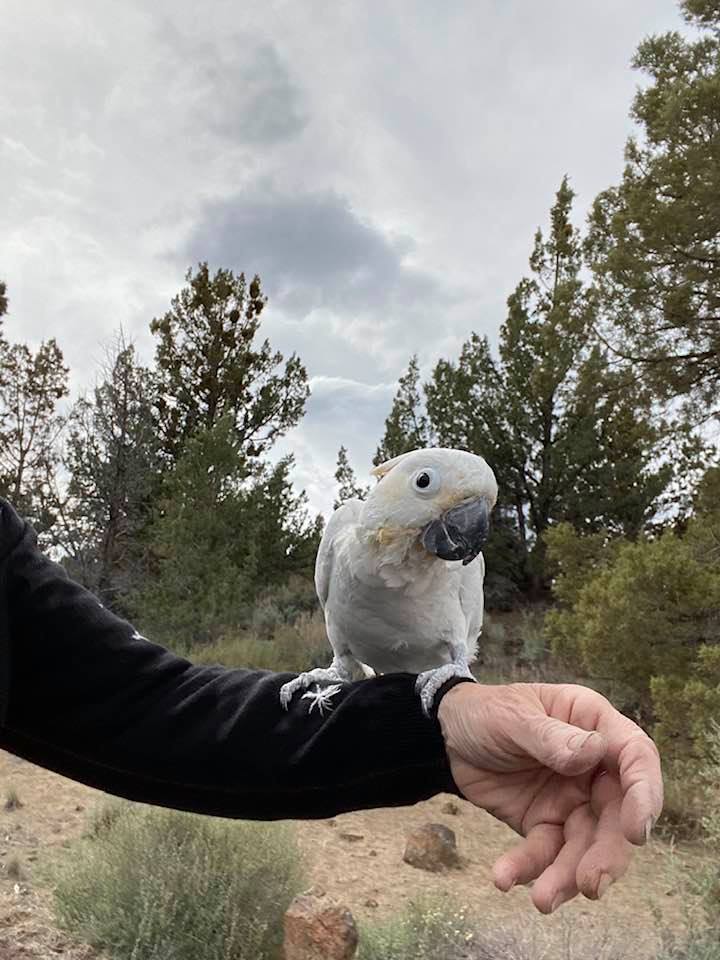
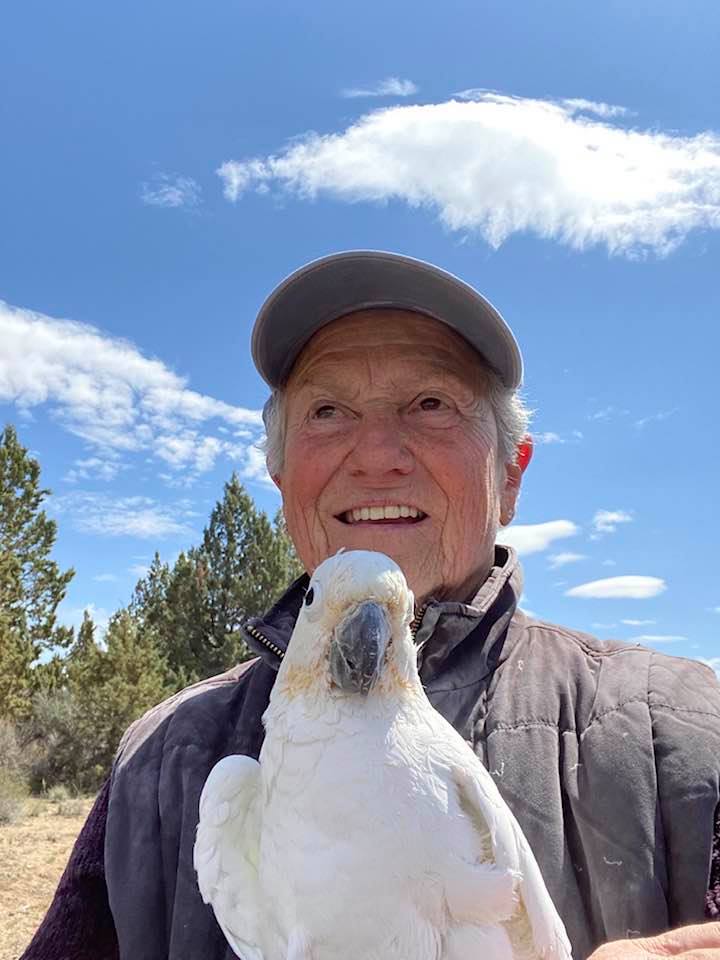
Walking with a smart bird perched on a shoulder or arm is a slow process. For starters, it’s about trying to get that bird to talk or simply talking to it in a one-way dialog. The bird’s listening for a smart bird doesn’t miss a beat. If my bird, Peaches, is silent, he responds physically by cuddling and nuzzling. Sometimes he feels like participating in a conversation. That’s how Peaches and I stroll together.
These days we bump into many neighborhood folks on the streets. Some are old friends like Susie who wondered about all the white that coated my black sweater (it’s powder from parrot wings). Strangers who pass may pause and greet Peaches, with “Hello”. Despite my urging he often refuses to answer. After they pass and are beyond earshot, he pipes, “Bye, bye!”
We’re an odd couple, me and the very white parrot on my arm. As we’re walking, I must appear to be talking to air. There’s no telling why I patter nonstop to a bird that’s also in his own world. Maybe trying to keep him tuned to me, or to teach him a new sight or a word, and to encourage responses in his language or mine.
Suddenly, two geese flying low and passing nearby make Peaches scream for several seconds. Those strangers surprised and frightened him. Something interesting is that Peaches doesn’t appear to scan the sky, as I’ve noticed other smart birds doing, to look for overhead predators. Well, Peaches’ wide vision is incredibly accurate so who knows where he’s looking or what he’s seeing?
Anyway, with Peaches I keep an eye on the sky, after warnings from bird fanciers that a hawk might drop and grab Peaches from my shoulder. That seems unlikely but our neighborhood does have resident hawks. Helpfully, Peaches enjoys standing on my forearm and snuggling against my chest, more protected than when he’s on my shoulder.
Walking slowly and entertaining the bird keeps me looking closely at our surroundings. Here’s a plant that surprised me. I’d never seen it. “Look, Peaches, at this giant Lily of the Valley.” Afterwards, I see it frequently, including on my property. According to my phone app, it’s a currant, interchangeably called a Wax currant, Squaw currant, or White-flowered currant.
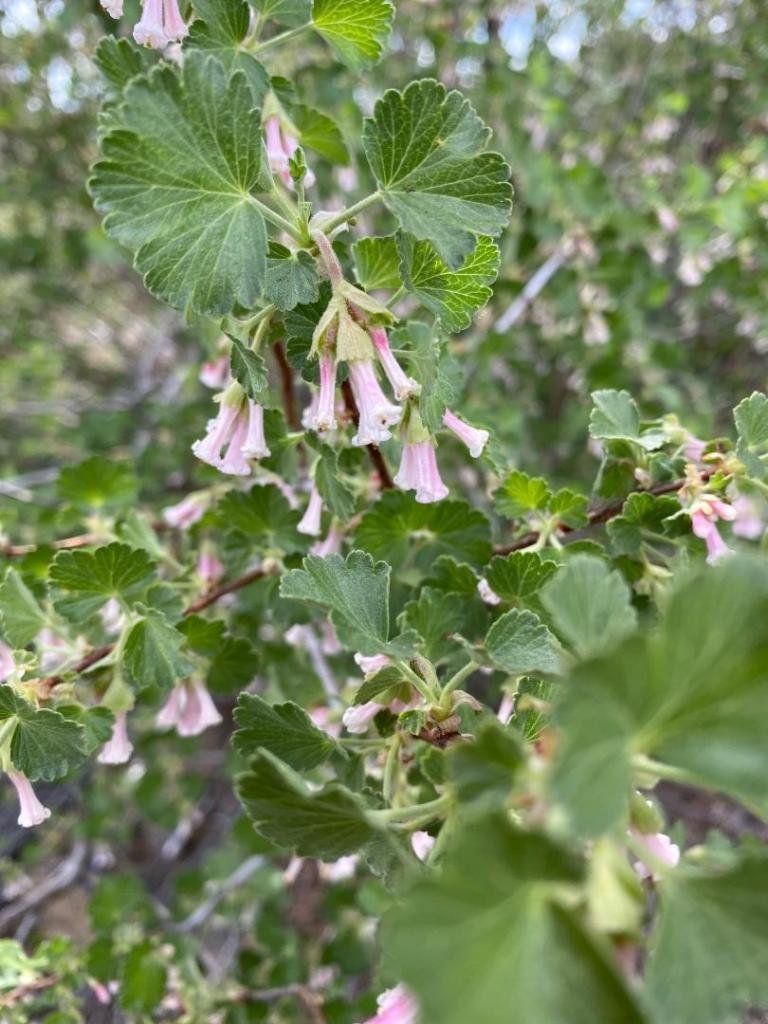
Arriving at my small acreage, Peaches and I enter in a new spot–and voila!–directly beside one of those currants. And now it’s a sight beyond wonderful, for on the plant a huge honeybee working hard hops from flower-to-flower draining them. A fat and healthy bee, probably from a nearby well-kept hive, and I need a picture. Hastening for my cellphone while juggling Peaches is disruptive, and before I can organize, alas, the bee has flown.
I’m hopeful and said to Peaches, “That bee lives in our territory, knows this plant, and will be back. We’ll watch and wait.”
Dear Friends: Outings with Peaches capture so much, we’ll share more with you. Diana



 Diana's Morning Blog