Back To The Future

Tuesday, May 26, 2020

Who killed Laura Palmer?

That’s the key question behind David Lynch’s 1990-91 series, “Twin Peaks”. That early series is available for streaming (free on Hulu). Recently, in 2017, Lynch wrote and produced a brand new “Twin Peaks” series (available also on streaming media).

Always, David Lynch has been a highly-admired and controversial artist who’s made excellent classic, highly praised films. He’s also created works that, while admired are thought confusing and verging on the edge of frightening. I remember watching his beautifully-designed film, “Blue Velvet”, in which suddenly and out of the blue a detective lifts from the grass a human ear. That single activity which shocked viewers wasn’t again referenced directly in the film. It was a caution to the audience that next anything might happen.

In the early 90s and tuning into “Twin Peaks”, I practiced a viewing caution learned earlier from Lynch works. Maybe that’s what preventing my “getting into” the series, failing to understand it, and soon, to quit watching. To be sure, the series received accolades for creativity and execution. But for me, Lynch and “Twin Peaks” became history.

Fast forward, to recent times and Corvid-19, and our many days of self-isolating. Time spent alone in confined spaces may force many of us to self-search and try to identify our core interests. Those who pursue deep interests may have a satisfaction of finding more and maybe better entertainment. It’s that searching that’s helped me to cope through this period.

My reading and watching habits are changing. I’ve more interests in the experiences and viewpoints of international authors. I’m feeling more connections to the film and video arts, from watching, thinking, and evaluating during viewings. All this is to introduce that I’m now re-watching the original “Twin Peaks”. This time, loving it.

What in 1990 seemed quirky, innovative, and frightening, have evolved as norms in the maturing film arts. Now, thirty years later, “Twin Peaks”, seems an entertaining mystery, not frightening nor stressful, as to why this or that bit pops-up and its significance to the story. The series keeps me thinking, but broader expectations and perceptions make me more tolerate of film stories with unexpected flows.

While still housebound, I’m planning to work through the original “Twin Peaks” and then will explore the renewed 2017 series. It’ll be interesting to assess how time and experience might have affected David Lynch’s perceptions and talents.

And I’ll be entertained.

Dear Friends: Are you discovering in self-isolation new or renewed pleasures? Diana
Grant’s Gift

Monday, May 25, 2020

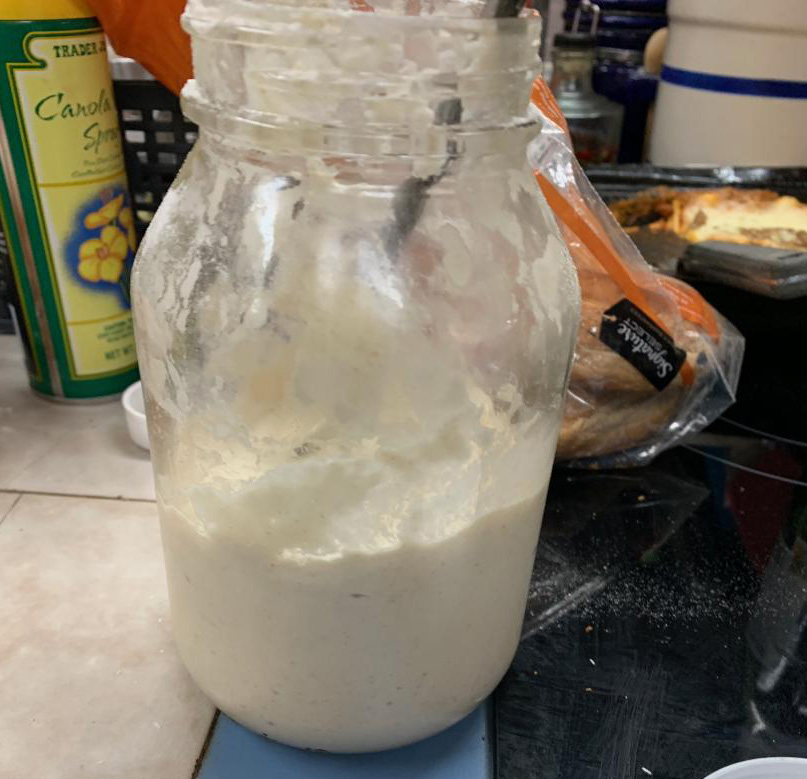
I’m a new mama, as last evening, a sourdough starter from my friend Grant immediately got set into the frig. Grant included instructions about how to feed the living concoction, and now I will learn how to nurture and grow it to use for baking.

I’ve been wondering why many folks have taken to baking through these days of Corvid-19 self-isolation. It’s hard to argue against our common knowledge that consuming baked goods adds weight. And especially when it’s hard or impossible to achieve enough physical activity to offset unwanted weight. Frankly, I’m afraid of baked goods. As a rule, I don’t touch bread.

The last thing I’ve wished to do is bake.

So what finally changed this, who knows? Hasn’t it been stressful these days of staying inside and searching for enough entertainment options? Has it been possible incessantly to sew, knit, read, and/or watch television? Isn’t it nearly impossible now to find for sale a reasonably-priced, simple bread making machine, not also designed to do more, like create jams and jellies?

Memories are moving me toward bread making. I recall days long-ago and living in Los Angeles while working in giant corporations. Even then, I avoided consuming much bread, but weekly did create two loaves. And manually, by mixing ingredients and at proper times hand-kneading. After rolling mixed ingredients into a ball, I’d start pounding on that ball. I’d roll again and pound more on it. The rollings and poundings were highlights, outlets, offsetting the often frustrating corporate situations that foiled my creativity and good humor.

In some ways, the accumulated tension from weeks of semi-isolation resembles my old corporate days. Maybe actually, it’s best to lack a machine. Now I’ll again create bread by hand and pound, a process hastened by Grant’s sourdough starter. That living mix must be fed, it will grow quickly. I’ll soon be forced to start a loaf.

Dear Friends: One step at a time without certainty as to a direction each might take us. Diana

Lessons In A Lockdown

Sunday, May 24, 2020

As a reasonably-informed and well-read American, it’s shocking to discover for myself some celebrated, talented artists beyond those known already to me. If being confined in-house for weeks on end has an upside, for me it’s the excitement of discovering individuals doing excellent work in the arts, who otherwise I’d never have found. I’ll share with you a couple of them.

Tired of clicking on and being disappointed in Netflix’s popular offerings, and following an obscure review, I searched Hulu for a streaming movie entitled, “Wild Rose”. The review caught my attention because the movie’s co-star is Julie Walters, a fine British actress and one of my favorites. She was the only actor that I recognized ahead of streaming the movie.

The film itself is a lightweight, typical story about a talented young woman with lots of personal baggage. She’s a Scot who’s always lived in Glasgow and has dreams of going to Nashville. She’s determined in that way to become a country music singing star. The movie’s lead character, an Irish actress named Jessie Buckley, is an amazing talent. Buckley’s performance owns this film in every way, from her expressive face and movements to her fine singing voice. A viewer can ignore much of the script and flow, but can’t get enough of Jessie Buckley. A role that balances Buckley’s energy is that of Walters as the disapproving mother.

A little research shows that Jessie Buckley is a well-known actor/singer in Europe. Well, where have I been? And surprises keep coming.

Simultaneously my newest reading choice, “The Stone Building and Other Places” by Asli Erdogan, has landed a new shock for not already knowing this talented writer. Erdogan (no relation to the Turkish President) is a Turk who holds a PhD in physics. She worked in technical fields before evolving into a human rights activist and becoming a columnist, and at one time, a political prisoner. She’s written several novels and won literary prizes. Her last two novels were translated into English. One, I’m reading.

I learned about Erdogan while hearing an actress on YouTube reading aloud, in French, one of Erdogan’s books. No telling how I happened to be tuned into that YouTube channel. I didn’t understand a single word of the French, but the sounds had a compelling rhythm that caught my ear. I needed myself to see what those pages said.

Where was I prior to this closed-in period? How little about film and writing do I know? Until recently, never having been forced to explore ways to widen a world of self-isolation, have I been sitting on my hands?

Anyway, it’s appropriate to self-forgive previous blindnesses. What’s essential is to keep moving on trying to learn. Increased global awareness is a benefit, a gift, from searches to distract us from nagging worries about our collective future: changed worldwide societies, international public health issues, and unstable global economics.

Dear Readers: Please share your new discoveries among internationally-known artists. Diana

For Dave

Saturday, May 23, 2020

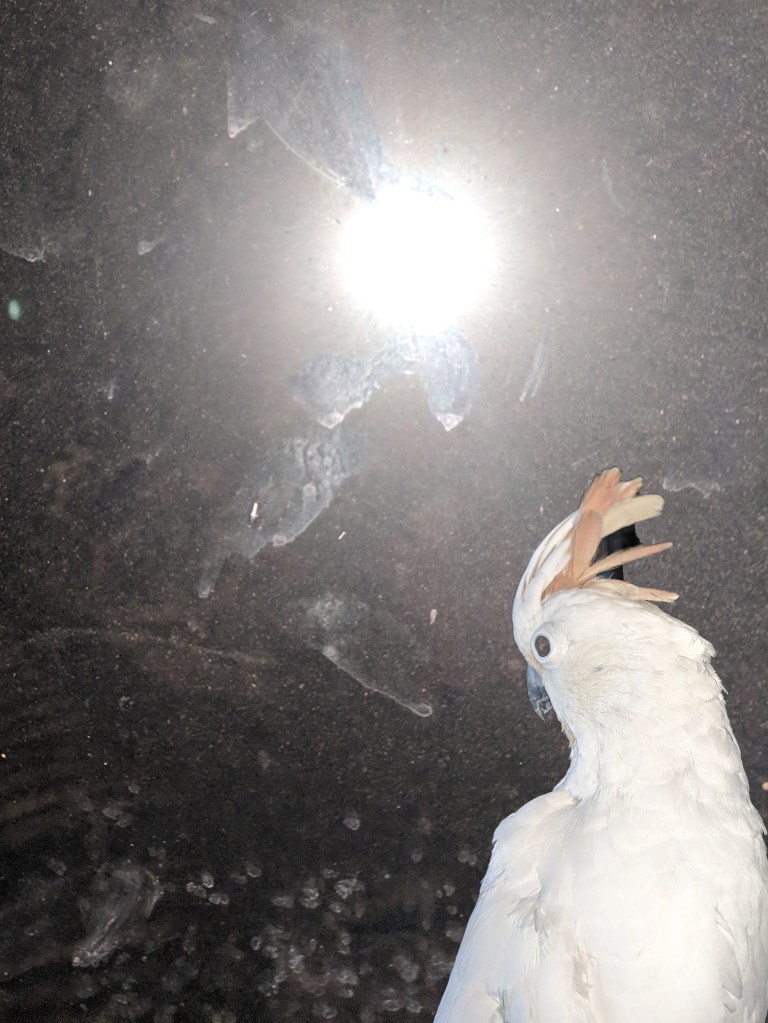
Our temps today will get into the early sixties, hopefully, with minimal winds. I’ll let my Cockatoo, Peaches, perch on my shoulder and we’ll go walking. It’s already warm enough to take Peaches outside, unless there are strong winds that blow against him. Oh for sure, Peaches’ long, flexible toes can hold on tightly. But to stay put, against high winds that shove and fluff his feathers, he must fight. For me, there’s an upside from his wind battles. On returning home, he’s tired and hungry, and doesn’t argue about entering his cage.

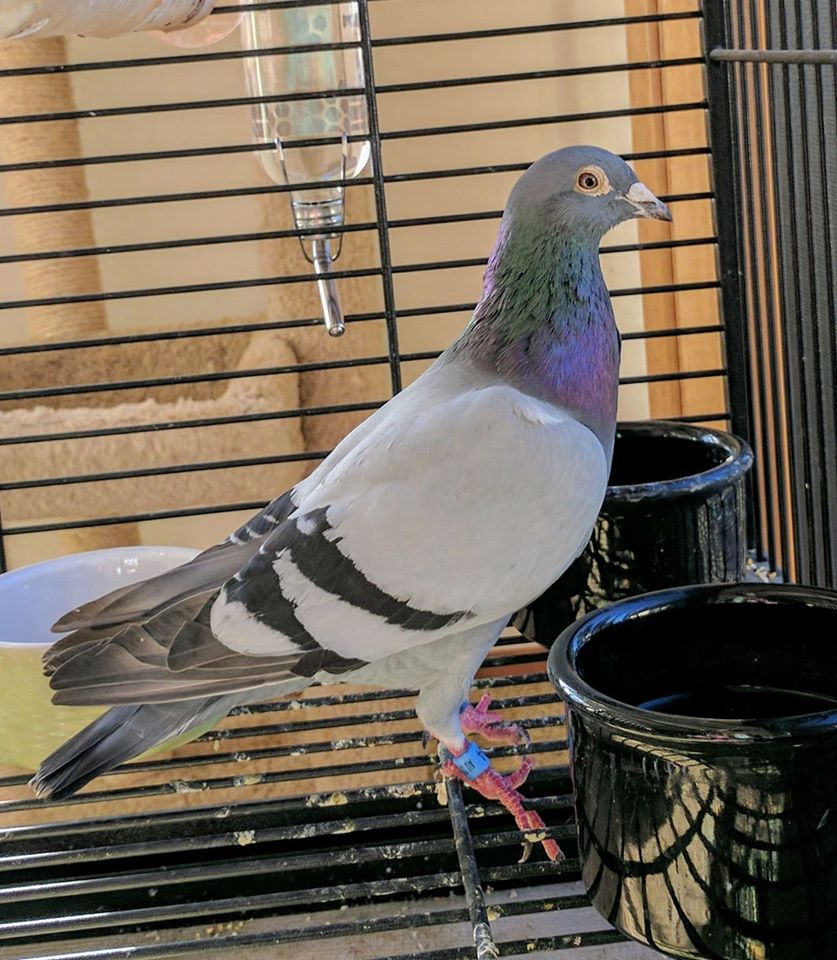
Peaches was domestically bred and hand-raised, imprinted on humans, friendly to handle. My other bird, Gilbert, is a rescued racing pigeon. Gilbert was domestically bred and hand-raised, but not as a shoulder-buddy. His one job was to fly faster than other pigeons. (A racing pigeon can fly for 1,000 miles, and over shorter distances reach speeds to 90 mph.) The racing of pigeons is an ancient sport that continues today. Well-bred racing pigeons can sell for millions of dollars.

It happens that my Gilbert is a failed racer. On his way home to California from Seattle, he got tired and landed to rest in a local barn that belonged to my friend, Dave. Upon finding Gilbert and the bird not dashing in fright, Dave could check leg bands identifying the bird as a racer. Dave tracked the band identifiers to a racing club. He then found the bird’s owner who didn’t want a failed racer. And so, Gilbert came to live with me.

He’s been a quiet fellow, an easy-care bird, doesn’t complain, isn’t frightened of handling but tries to avoid being cuddled. After all, a homing-type pigeon happily will fly away to its “real home”. So, Gilbert never freely gets to hang out with me, but the poor fellow does get cuddlings.

Seeds are the most common pigeon food, but a steady diet of them makes inactive birds fat. Until recently, Gilbert’s food has been a high-quality chicken feed mixed with a high-quality parrot food. He’s a good eater and has thrived. Recently though for Peaches, a small bird who tends to stay lightweight, I sought and purchased a high-quality seed mixture that excludes the very fattening sunflower seeds. I’ve begun to supplement the normal feeds for both birds with small amounts of seeds. Oh my gosh!

They love seeds and Gilbert astonishes me. The pigeon always has refused all supplemental foods. I’ve offered him everything Peaches loves: chopped fruit, raw and cooked veggies, pasta. Gilbert always rejects, and at least eats pellets and stays healthy.

These days, Gilbert waits eagerly inside his cage for a bowl containing a few seeds, raw oats, unsweetened natural wheat cereal, and a couple raw peanuts. Not enough to sway him from pellet foods, and he consumes that entire seed mix.

What I’m realizing is how smart Gilbert really is, and as any bird should be. Until recently, in our normal routine, he ate his pellets, tried to avoid being picked up, tolerated our moments together, and minded his own business. In contrast to Peaches, who’s always squawking for attention or for some of whatever I might be eating. I considered Gilbert boring until recognizing how quickly he zeroed-in on a change, with expectations and behaviors acknowledging our new routine.

My sleepy-eyed guy who seemingly always ignores my movements. I see now that he actually has recognized every one. I’m happily rediscovering Gilbert! Having managed to climb out of the shadow of Peaches, he himself, oh my, is a very cool bird.

Dear Friends: All birds, even the littlest- and dumbest-looking, are very smart! Diana

Time Warps

Friday, May 22, 2020

I scan the papers nowadays not for news but in search of humor. Give me cartoons, puns, unique takes on what’s happening, opinions that stimulate laughter, and unique or even perverse views on living, relationships, and happiness. Gimme some backward bright glances through mirrors.

We need humor to get through our ongoing days of captured, constrictive aloneness, or in our smallish groups of togetherness. Whatever our situations, each day introduces a same starting thought: What’ll I do all this day? Of course, there’s television, food, booze, decks with bird-feeders, and always a bed or couch for napping.

Someone in our neighborhood who’s good at Calligraphy created on craft paper little Tao-ish sayings and using pretty ribbons randomly hung them from tree limbs. We walkers at first were astonished to find them and now we pause often to read and enjoy.

Meanwhile I’ve wondered, what’s with all the online noise about baking? Who can stay indoors without adequate exercise to work off accumulating personal fat–and bake?

I decided to go to markets and look at their baking shelves. Yep, the sellers are low on flour, and if any happens to be in stock, they’ve sold-out the most associated and critical baking supplies. But something was happening to me, and stumbling across a couple five-lb. bags of flour, I grabbed one. I didn’t want to bake but thought maybe others would consider that bag worth some sheckles. I’m becoming desperate, having been laid off from my job and afraid of tampering with stocks that might again rise someday.

That unopened flour got popped into a freezer in my garage. Long ago I learned to freeze in order to ensure the deaths of possible tiny larvae that become irritating pantry moths. Although these days, I might welcome having a little moth company and might enjoy participating in the exercise of trying to eradicate them. Enough now of this, for the personal history behind that idea is another story.

The other day, on opening my garage refrigerator and rediscovering that bag of flour, my interest returned to the indoors world of baking. By now, social media are convincing and surely, there’s more about baking that’s inviting, other than simply working through the process, and afterwards, gobbling warmly delicious, buttery goodies.

Does it still seem to me a good idea to try marketing to others a bag of flour? Or should instead I try to bake something? But how do non-bakers handle the measuring, mixing, kneading, and assessing of doneness? Moreover, what does a non-bread-eater do with breads from the oven? Well, who cares?

I went online to the big outlets for a bread-making machine. Those most affordable and simple are out of stock. Still available are very expensive makers with too many buttons and possibilities. By now, I’m determined to make a loaf of bread, and by gum I added myself to a waiting list for an inexpensive machine that’s currently out of stock. My machine will make breads only, not cakes, jellies, and other such stuff possible from the big machines.

I don’t eat bread, but I’ll make it. The baking will kill time and focus my brain. Then, loaves will let me (similar to New Yorkers who rope-drop newly-baked goods to their lower-floor neighbors) leave randomly on doorsteps in my neighborhood fresh breads.

Dear Friends: Who knows how we’ll all evolve before this Cv-19 era wraps up. Diana

Excellent TV Drama

Thursday, May 21, 2020

At last I became interested and engrossed in a Netflix drama, “Rectify”, and am in the second of its four seasons. Some time ago I tried to watch this, a series too slow to get into, and became bored. This time around has been different. Maybe because of these inside days that tie us longer to our televisions.

“Rectify” is written on two levels, one abstract and philosophical, the other social and political. The story’s main character, Daniel, a man in his late thirties, has just been released from prison after spending 19 years in solitary confinement, on death row. As a teen, he’d been convicted for raping and murdering a teenage girl. New DNA evidence has proved Daniel’s innocence, but the lingering problem is that in early police interviews he did confess to committing the crime.

In the story that follows, Daniel, his family, and a small southern community (that mostly still believes he’s guilty) try adjusting to his unexpected release. As we follow Daniel, often there are flashbacks to his prison life, illustrating how he managed to survive. The key was in books sent by his mother, classics that taught him to think beyond prison walls, to turn his impressions and feelings into abstract thoughts that could elevate his very basic existence.

This series reminds me of work by the brilliant American filmmaker, David Lynch, whose films I intend to seek and view in order to make comparisons. Finding Lynch should be easy these days with so many free-fall streaming opportunities.

Offsetting the abstracts in “Rectify” is sheer street-level drama, built around people with fears, jealousies, anger. There’s a huge split between those wanting to help Daniel and those wanting to rid the community of him. A viewer finds pleasure on two levels. One reminds us that philosophies of living may seem more meaningful than life itself. Another grips our guts, makes us hope for Daniel’s safety but keeps us worried about the degree of his innocence, or why he had confessed.

Dear Readers: If you’re not in a big hurry, “Rectify” is a very worthwhile watch. Diana

Timelessness Living

“Lost In A Snowstorm–We Are Friends” by Charles M. Russell (1888)

Wednesday, May 20, 2020

Today, Google is gifting “Arts & Culture” users with pop-ups of Charles Russell’s “Snowstorm”, a magnificent painting that revives the “old west” and its awesomeness. Here Russell records a Montana non-typical winter of unusually harsh weather. He captures the necessity of horses in transportation and for packing, and moments of a cooperative multicultural gathering.

The painting reveals the raw essence of survival in a tough environment. According to art galleries, the winter of 86-87 was one of Montana’s most severe and nearly destroyed the state’s cattle industry. There were early heavy snows followed by a brief warm spell, and that combination laid an impenetrable layer of ice over the grass.

Over the years, I’ve experienced annual vicissitudes in Central Oregon’s winter weather. Some winters receive minimal or no snow. Others get stretches of snowfalls, deep, and in subnormal temperatures that for weeks freeze everything on the ground.

This Russell painting pushes my memories back to recent harsh winters. I’m sitting before the fireplace and through windows seeing our all-white environment. I’m awed, wondering about such as the difficulties of coping among cattle ranchers in Eastern Oregon.

That winter recorded by Russell seems unimaginable but was real. He uses that landscape to illustrate the most essential elements in tough times–survival, communication, and cooperation. Those are critical elements, recently-again highly recognized, and in the awareness of all people during our recent months of pandemic experience.

Universally, we’ll remember the winter of 2020, as a season potentially destructive to modern civilization’s critical elements–its industry and society.

Dear Friends: Variations of art, new and old, rolling to the forefront are significant. Diana

Rainy-Day Bird

Tuesday, May 19, 2020

Late yesterday afternoon, as I prepared to take my Cockatoo, Peaches, out for a walk, a light rain began falling. The sounds of rain-hitting soon becoming rapid and loud cancelled that bird-outing. I’d been watching Peaches who needing to escape his cage had swung full-on into his favorite OCD behavior, a repeated series of rapid movements in a set pattern, included in each cycle an “eye-blink pause” to check if I see him.

I am watching and do get the message, Peaches needs a diversion. Letting him loose to perch on my shoulder is best far as he’s concerned, but yesterday my cat Maxwell was inside and nearby. If Max happens to be sleeping in a bedroom and closing the door will keep him there, Peaches can be free in the living room. I’m not sure Max could or would try to overcome Peaches who’s awesome beak can break bones. Anyway, I’ll not experiment by letting the bird loose near the cat or dogs.

Peaches loves cardboard, and I save boxes–little ones from small packages and bigger ones from Amazon purchases–and I avoid plastic by removing any tape. When the bird sees me enter the living room and carrying a box, he watches me toss into it a peanut or two. He’s alert, waiting for me to close the box, give it a good rattle and set it at his cage bottom. Immediately Peaches descends and refocuses his OCD by going to work and tearing the entire box into matching puzzle-size pieces. He finds and gobbles the peanuts and keeps tearing until the entire box is in tiny bits.

The size of his “bird-box” gift depends on how long Peaches should stay busy. Yesterday, needing entertainment only until dinner-time, he received a “two-hour box”. It got him out of my hair, and I watched television as Max dozed on my lap.

Dear Friends: A mixed-species, indoors on a rainy afternoon, demands creativity. Diana

Sun’s Out!

Monday, May 18, 2020

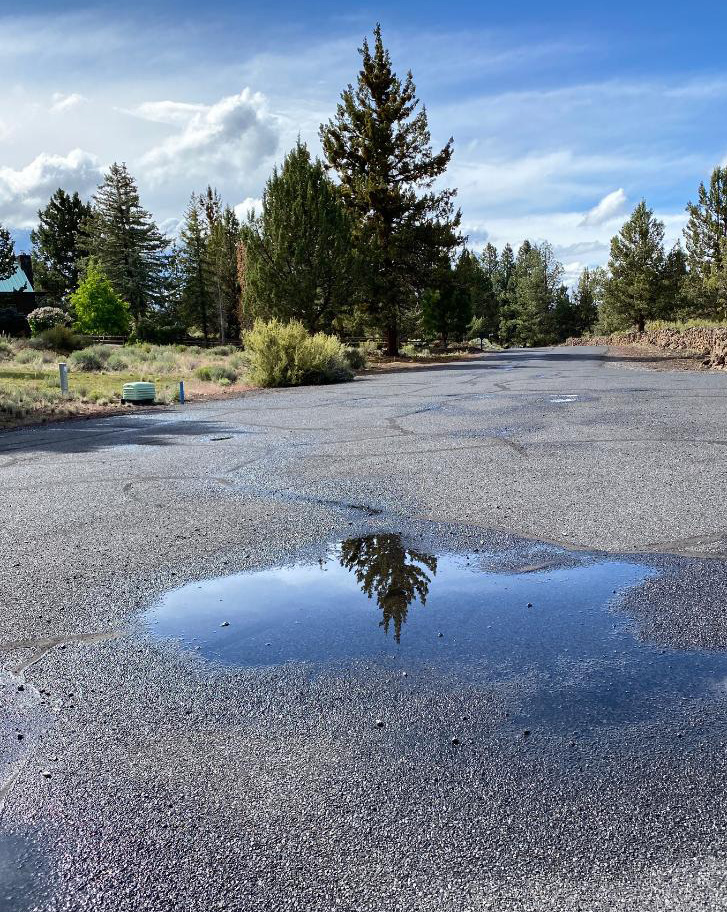
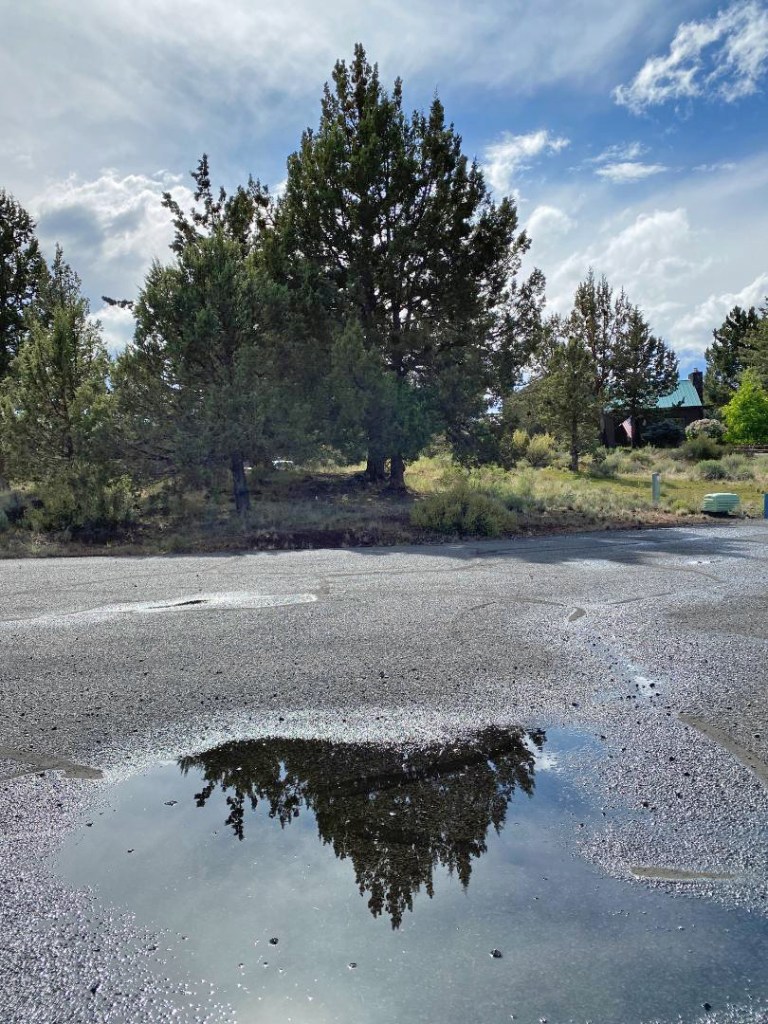
After the rain I went walking with a camera. It was too soon after the moisture had fallen for new plants to spring up. That’ll soon happen, and meanwhile, a welcome sunshine offered much to enjoy.

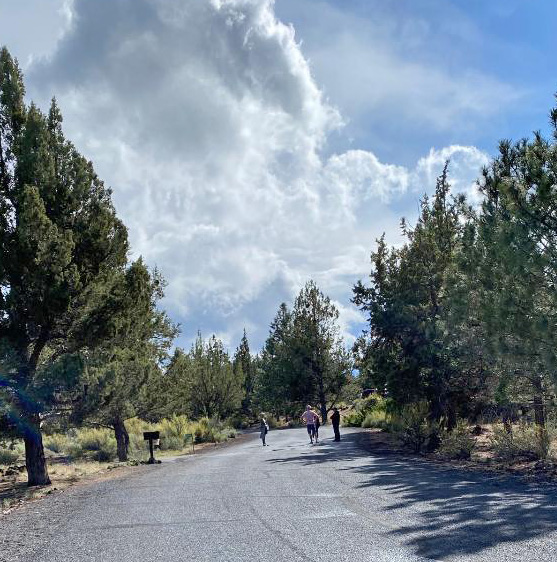
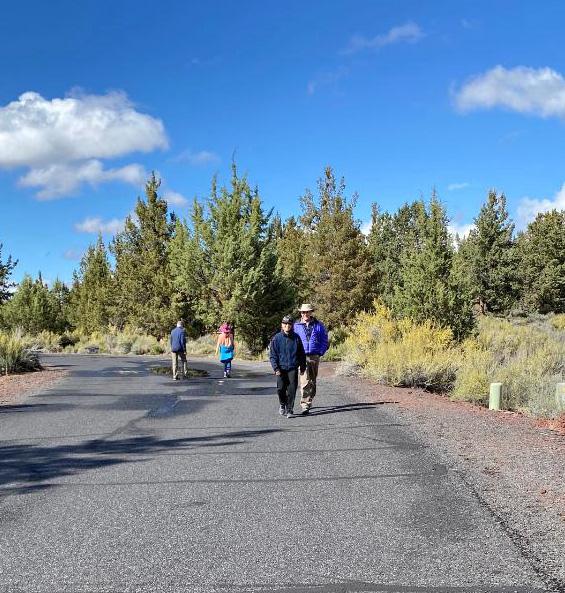
The improved weather and a slightly-looser focus on self-isolating invited a social boon. Many times in traveling this neighborhood, while driving a horse, or on my own two feet, even occasionally on horseback, I’ve never bumped into as many others out walking. In one of the crowded spots, I grabbed a couple photos.

(Those approaching turned out to be my friends, Susie and Dale, taking a break from their business of designing and building specialized ladders for repairing helicopters.)

I should have photographed more folks, for those out and walking seemed in great moods. But my best ideas often dawn too late, and already, I’d neared a last curve where few walkers were in sight.

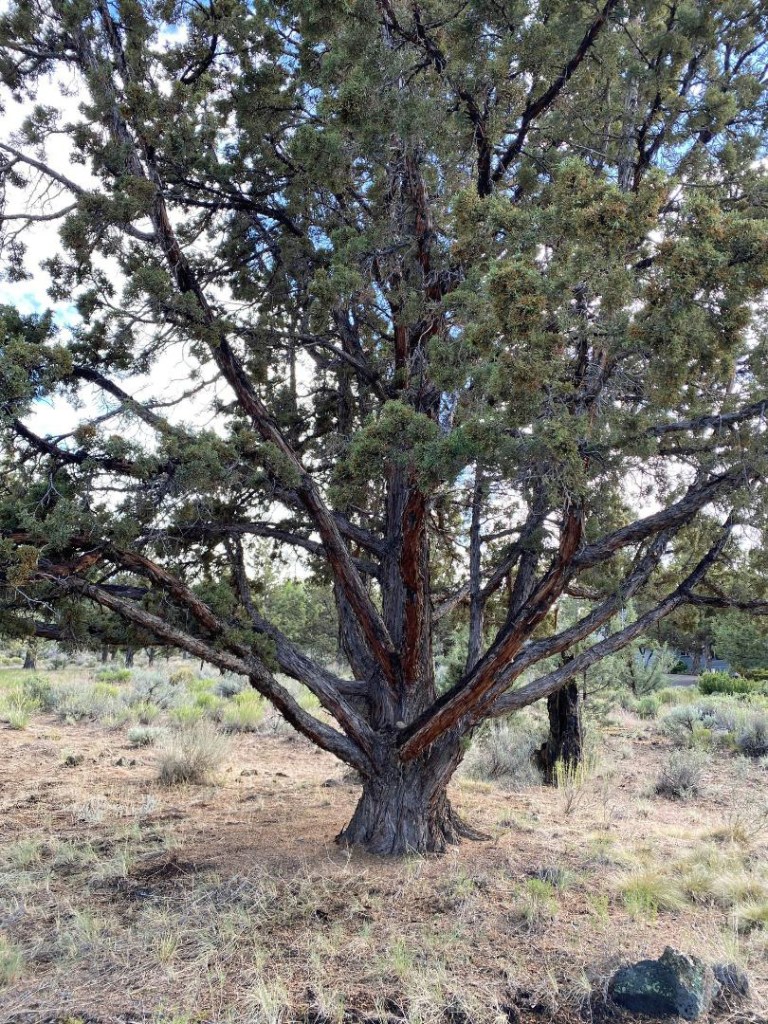
There still were surprises. Like this tree I’d not previously noticed. It’s never been trimmed, is beautiful with many branches spreading healthy and strong. That sight made me feel guilty for having limbed most trees on my property and perhaps losing future beauty.

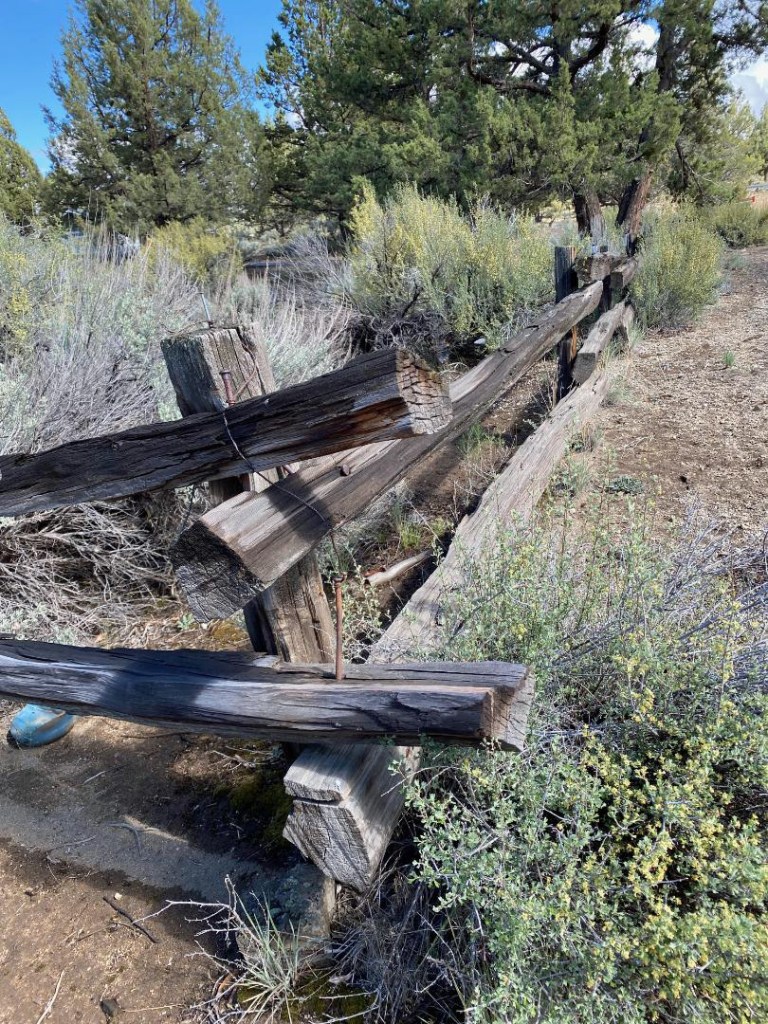
Fenceline

While snapping this interesting fence corner, I heard anxious calls, and turning, saw my neighbor, Brenda (a fellow horse-person), hurrying toward me. She was demanding, “Are you all right!” She explained that she’d noticed my very messy dry lot, an area with horses on it full time that’s always been kept clean. The mess made her fear for my health in this period of semi-isolation, and she’d contacted mutual horse-friends to find if they knew of my status.

I reassured Brenda that I’m fine. Feeling bummed by Cv-19 and our chilly weather, I’d simply decided to ignore the horse area for days. The resulting mess that worried Brenda had made me feel guilty for leaving horses and neighbors to the accumulation. That very morning I’d been out dragging and clearing the area.

Couple of notes to self: (1) The kindness of neighbors eases some concerns about living alone, and (2) Always keep the dry lot noticeably clean.

Dear Friends: A gorgeous and sunny day uplifts and invites us outside. Diana

Lesser Isolated

Backyard Tipi

Sunday, May 17, 2020

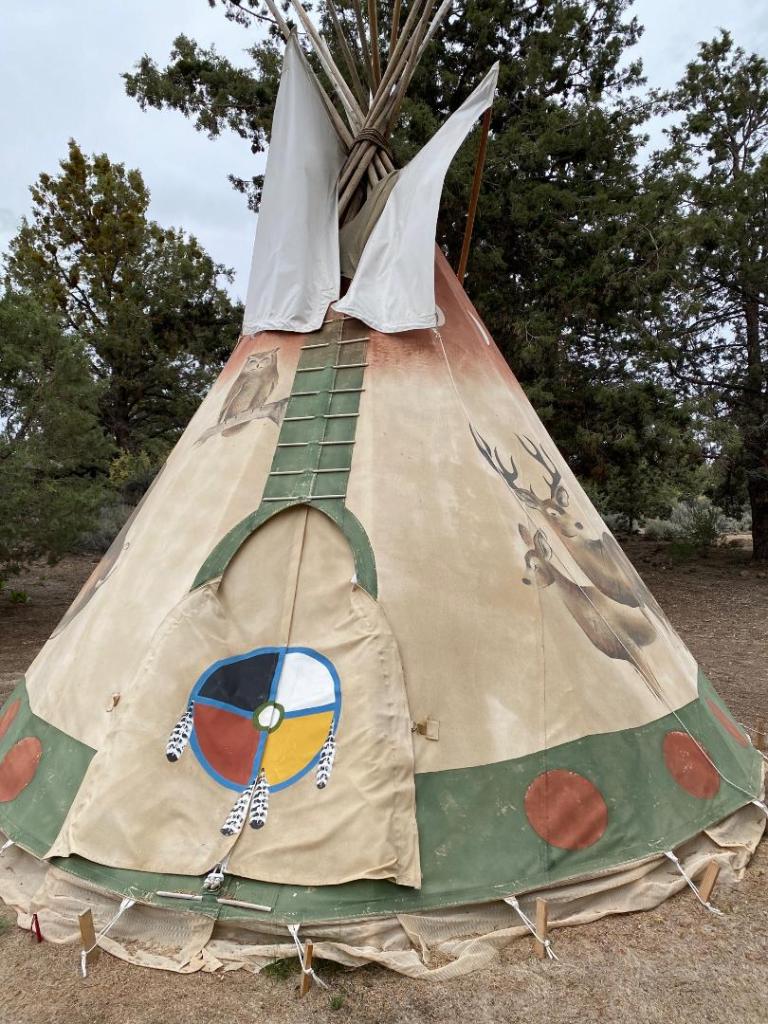
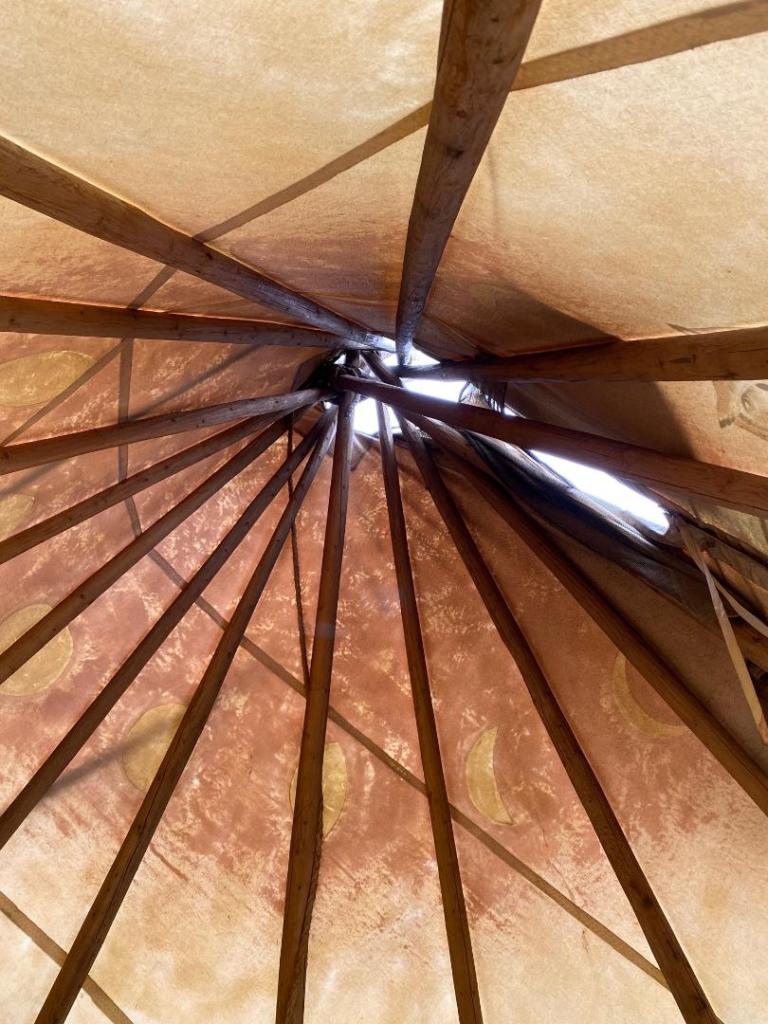
Upon exiting the family tipi of my friend, Susie, I took its photo. We’d relaxed awhile inside that intimate space. It has seats, futon, and rustic little fire pit. We’d been sheltered nicely from winds that blew hard, pushing against the tent’s sturdy fabric. Those winds foreshadowed an anticipated big rain. We were going to take a walk through the neighborhood, were hoping to stay ahead of the moisture.

Inside that shelter, Susie had explained the tipi’s charm, and how her family acquired and installed it. The tent’s crafter is a long-time and famous maker, Nomadics Tipi Makers (located in our area near Tumalo Reservoir). Their tents, all Sioux styled, are sewn and painted locally. Years ago, Nomadics made all the tents for an excellent film, “Dancing With Wolves”. Susie’s family use the tipi as an escape hatch for private moments and for sleep-outs. The cozy enclosure has proved an area perfect also for hosting and entertaining guests.

Upward view

We left that beautiful structure and headed along the street toward a gravel road that would take us under the power lines. Susie has lived in this area many years, she’s intimate with many of the homes and their residents, present and past. A walk with her offers lots of learning about our local history.

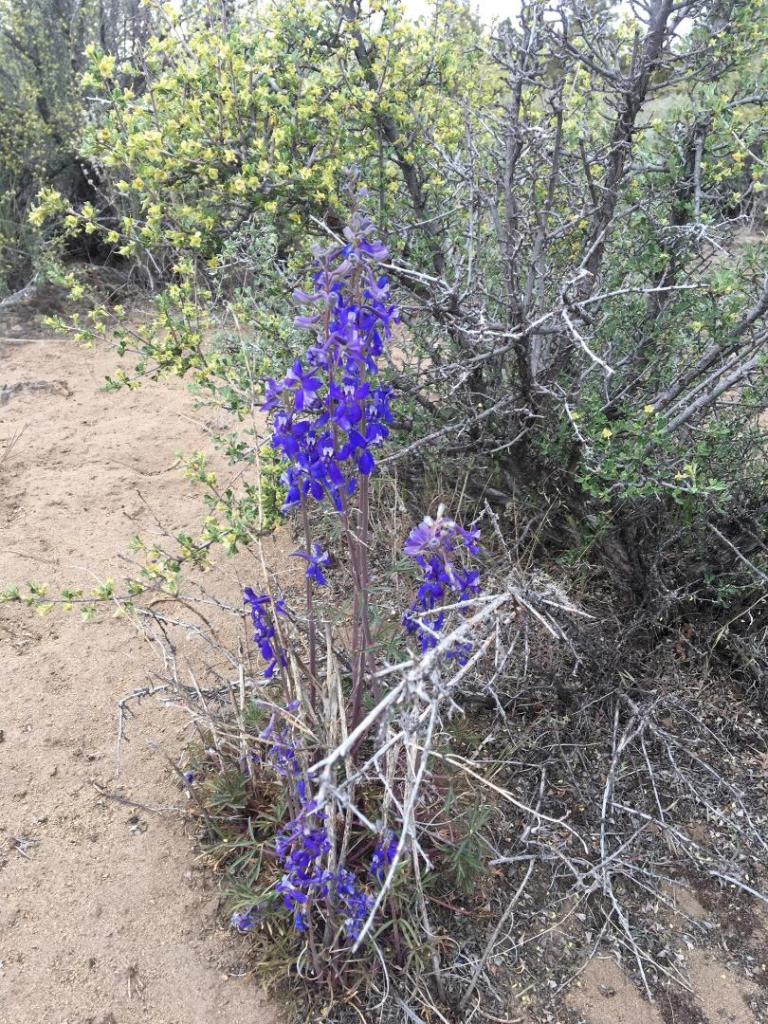
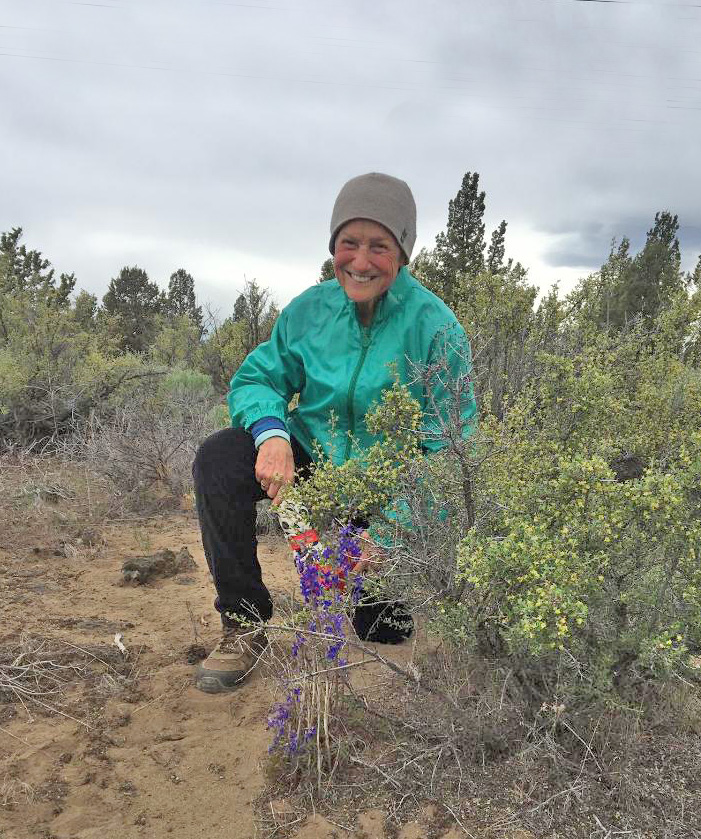
This outing was instructive for me, too, during our mile-long walk on the dirt road stretching under the powerlines. She pointed out distant large homes, explained who now lived or had lived in them, and described how much of our area has changed over the years. When Susie’s quick eye spotted a stand of gorgeous purple flowers blooming among the sagebrush, she took photos.

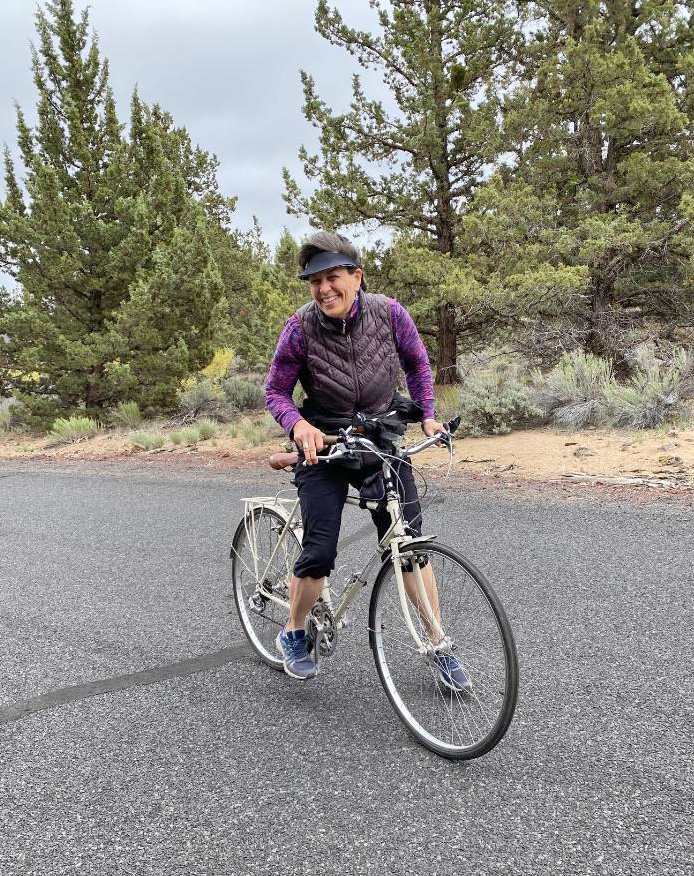
And here’s one of Susie while earlier on her bike coming to meet me. “Oh, no!”, she said on seeing my camera, I look awful.

I disagree, Susie. You’ve a $million smile, and always look great!

Dear Friends: A spontaneous outing really can pep-up the social distancing life. Diana