In an evening so dark that the clouds blocked all starlight, my sudden whim turned into an interesting idea.
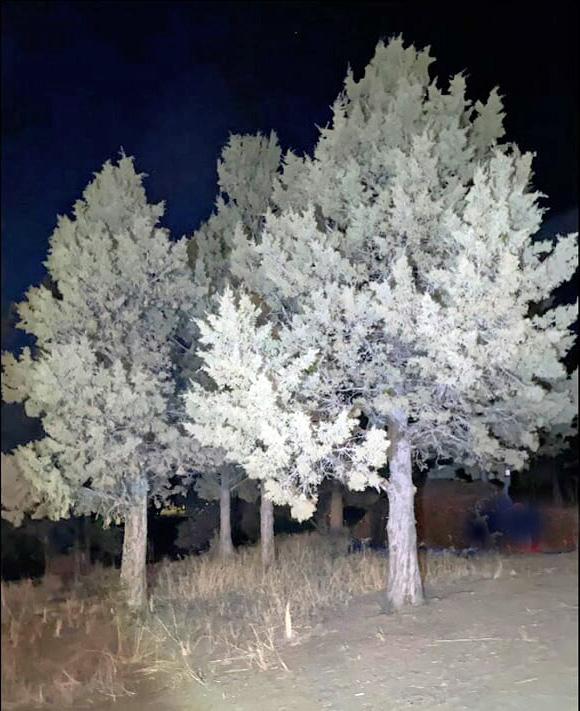
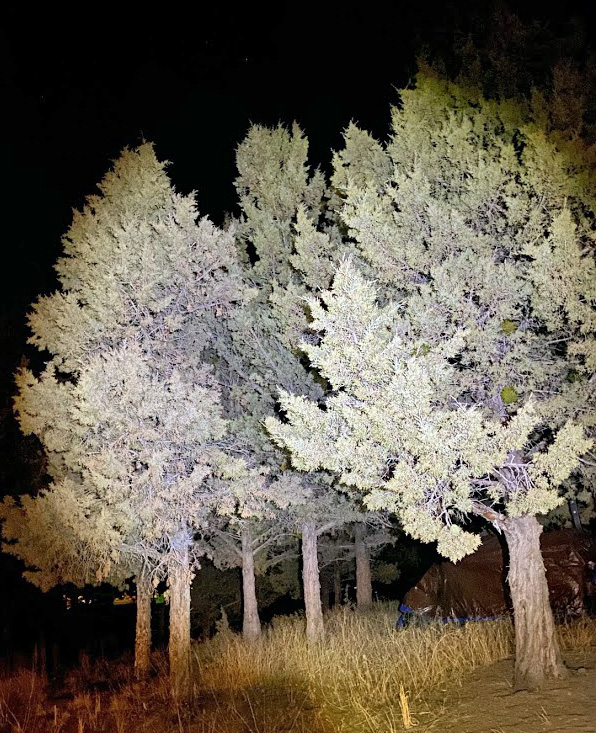
After releasing the horses from their stalls for the evening, and before heading up to the house, I turned off the barn lights and switched on my headlamp. Always interested in the sky, I glanced upwards. My light illuminated the nearby junipers that until that moment to the naked eye had been dark shadows. My sudden light revealed them clearly and in detail against the night sky–an invisible pallet.
Uncertain about my perceptions, I turned to another direction and again looked upward, shining my light on different trees. Against that night sky all the trees appeared equally clear and almost dreamlike.
Headlight Junipers 2
This seemed a discovery worth pursuing. At the time, I hadn’t enough time to play more with my headlight and the night sky. If tonight turns out to be dark and cloudless, I’ll again experiment hoping to learn more about the interesting effects of a bright light on nearly invisible subjects.
These serendipitous photos are encouraging me forward. After capturing the complexity of those trees in intricate detail, I keep thinking that illuminating other objects during dark evenings should reveal equally well or better.
On first glimpsing these tree photos my impulse was to gather a few watercolors and try to recreate a version of the images on a different pallet. On second thought, it’s best that one doesn’t try to get ahead of oneself. My next order of business will be going outside in darkness and experimenting more.
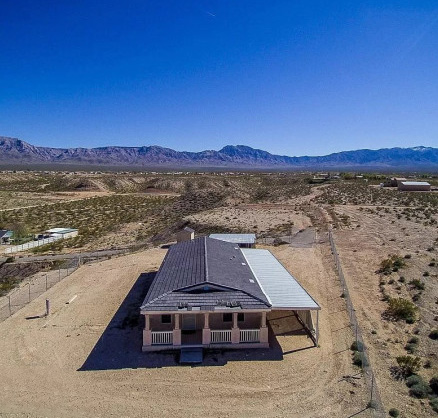
Some weeks ago, after my ailing elder sister’s health had begun failing, a potential buyer discovered her for-sale home in Arizona. My sister herself built that home, situating it on a semi-remote desert plateau. She also purchased its surrounding bare acreage. The plateau and open space brought great privacy, and incredible views of a distant golf course and at nights the faraway lights of Mesquite, Nevada.
Building that home, she was her own contractor. Heaven only knows how she managed to figure out ways to accomplish everything. She somehow got water, electricity, gas, and whatever, through the desert, and up the hill to her flat acre and potential living structure. She installed a septic, turned upon its side when her rocky land couldn’t be dug wide and deep enough for in-ground space. Each accomplishment passed an official inspection.
She researched and found an almost-brand-new manufactured home of 1800 sq. ft., elegant and nicely designed, three bedrooms and two baths. (She had the cash in 2010 to negotiate for this newly deserted, unlived-in home, a fallout in America’s sad, financially-depressed period.) She found how to truck the large structure from another state to Arizona, and then, had to build a reinforced roadway up the steep hill to her plateau. Once the structure was in Arizona and in place, she surrounded the plateau with a six-foot chain-link fence. (An experienced dog trainer, she intended to create a dog-training/boarding business, but didn’t fulfill this part of her dream.)
My sister lived on her plateau for five years before becoming ill with the onset of dementia. In 2015, I went there to help her move to Oregon and arranged for her plateau and surrounding acreage to go onto the market. The realtor and I recognized that my sister’s home required a unique buyer and wouldn’t sell quickly.
It sat nearly untouched for almost five years, until recently, when a single man wanting space, privacy, and a view, found it. The prospective buyer ordered a home inspection–and this just blew me away: After years of very minimal maintenance, this home’s negatives added up to a couple of blown fuses.
My sister, often throughout her life found ways to accomplish unique goals. Even as she aged and performing as her own contractor, she achieved solidly.
As for me, her passing made nill my Power of Attorney, and yesterday I had the task of copying and mailing her Will and Trustee documents to a title company. While gathering those papers, I sat for a while looking over the chachas my sister left behind. As that day progressed, I became increasingly sad, and finally began to recognize the deepening sense of our final parting.
Dear Friends: To my always little-sister-eyes, she’ll remain an amazing individual. Diana
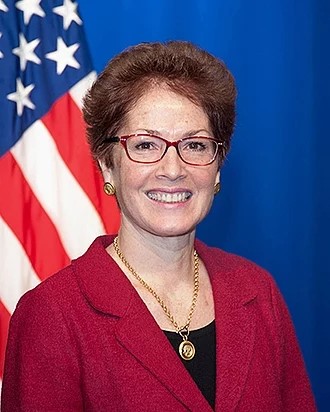
For much of yesterday I sat riveted before a television as former Ambassador Marie Yovanovitch testified before the House Intelligence Committee. I couldn’t pull myself from this witness. She’s soft-spoken, intelligent, and articulate about her former role as the U.S. Ambassador to Ukraine. Her precision in explaining her role in the Foreign Service equally resisted requests to theorize or assume.
Many times in the past I’ve tried to watch witnesses testify before the House or Senate. Often those being questions are slippery and confounding, or simply refuse to answer on fear of self-incrimination. The usual procedures for questioning easily turn into useless efforts.
For the most recent two testimonials (Taylor and Kent preceded Yovanovich) a significant change in procedures occurred. Instead of allowing each side the usual five-minute, alternating-time-blocks to question, for Taylor, Kent, and Yovanovich, each side had 45-minute blocks to question without interruptions to oppose. This changed process made watching much more informative.
The change in process was another element holding me. Each side allotted its 45 minutes to a single attorney who conducted all questioning. Although some squabbling still occurred, those single-questioner sessions were more clear and straightforward.
Above all, the career woman who stood, impressively knowledgeable and courageous, while being questioned for over a five-hours that included conflicts between sides. Yovanovitch surely is a role model for those who will follow. In time ahead, the changes in procedures will be interesting to watch for. Future House and Senate testimonial events will teach if changed questioning and time blocks may continue.
For me it was a rare experience, managing to stay, watch, and listen throughout a committee hearing.
Dear Friends: Quality speaks for itself, whether an individual or a process. Diana
Yesterday, I had the unhappy task of retrieving my sister’s remains, and also picking up official death certificates to fulfill activities associated to her. There’s more ahead in my sister’s journey as I fulfill her clear directions for its completion. She’ll continue to live in my head and heart.
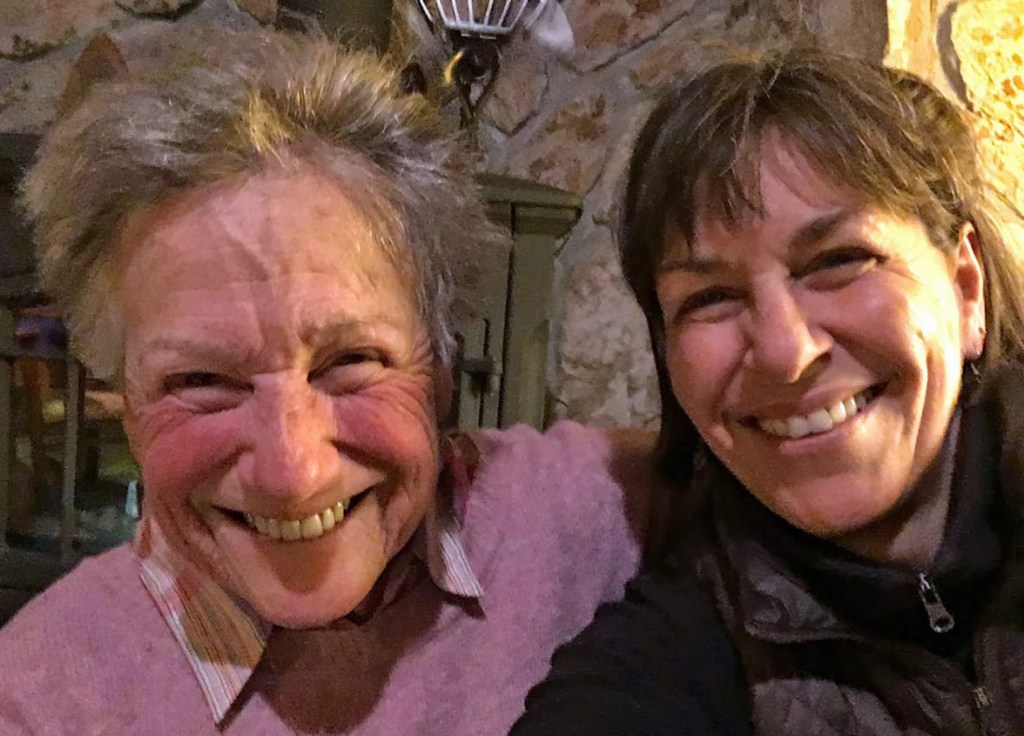
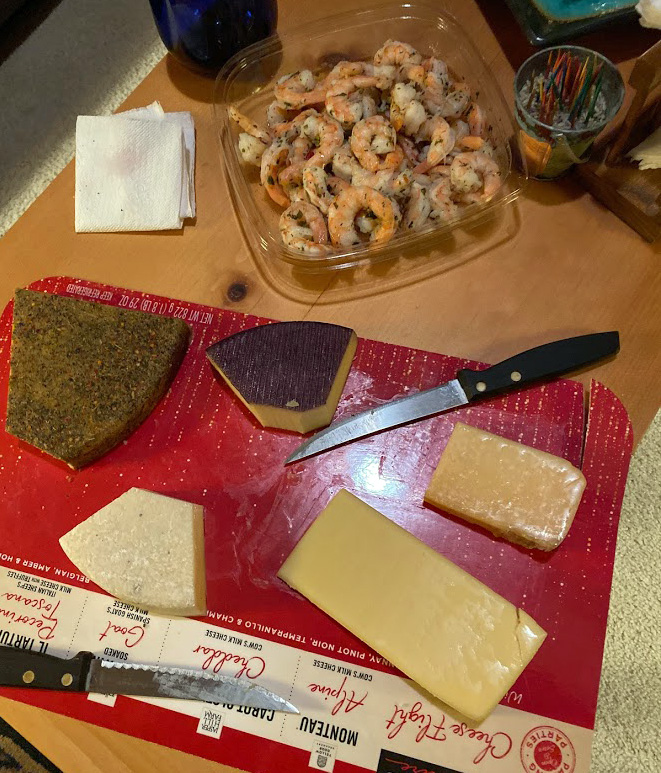
Through this my neighbor Susie has been sympathetic and supportive. She invited me over last night for beer and cheese (our favs), but on that chilly evening we opted for a wonderful Spanish red wine alongside cheeses and spiced shrimp. Seated before a pleasant fireplace, we caught up with one another and she listened to me talk about my sister.
Susie’s current activities are exciting. Right now, her husband Dale is visiting a major Air Force Base to introduce their product, the Heli-Ladder, to officials with jet fighter airplanes. Their Heli-Ladder might be on the verge of becoming a Big Business. There’s also their son’s upcoming wedding and Susie showed me several elegant dresses she’s considering for her upcoming Mother-of-the-Groom role.
My horsey-person eyes opened wide on glimpsing formal cocktail dresses with bling for the first time in over a dozen years. And Susie showed several such dresses. Her eye-catching beautiful selections are delightful for wedding events, and like excited teens, we visualized and assessed the potential of each dress in real time and action.
Throughout my years of horsey activities, the animals have been wonderful as friend-finders, and Susie is one who used to love and ride horses. Last year on hearing my horses’ hoofbeats after the animal began pulling my cart almost daily through our neighborhood, Susie reached out. Our new friendship found much in common.
Over the last week, I’ve felt a bit sorry about not having opted for a public memorial for my sister. Last evening’s sharing of thoughts with Susie was kind and comforting.
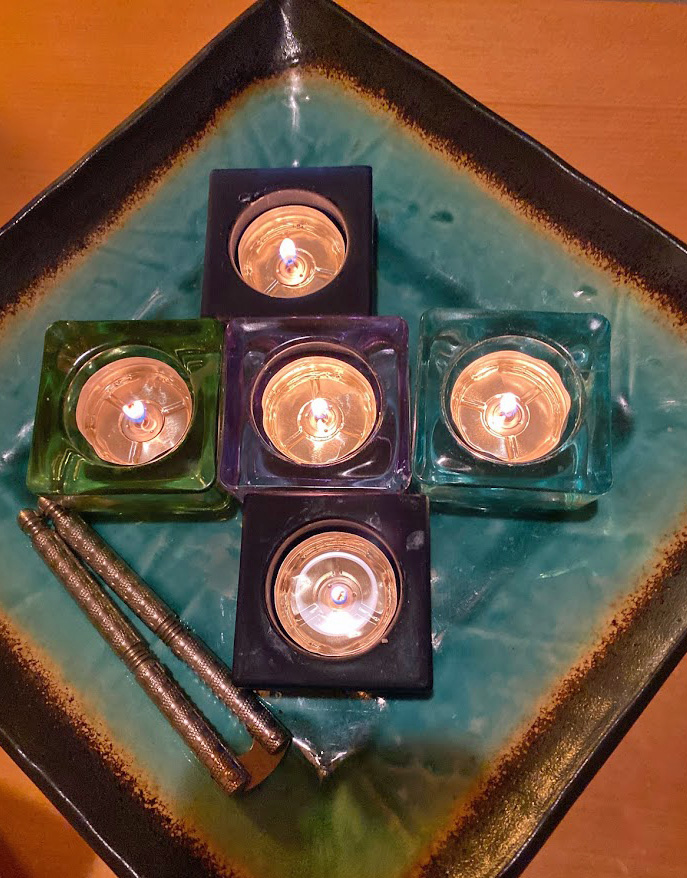
Tea lights
Dear Friends: Real friendship is a collaboration that hasn’t a critical edge. Diana
That November Beaver Full Moon was supposed to show up again on Tuesday night and maybe on Wednesday morning but didn’t because a persistent cloud cover buried it. At least, I felt good for earlier having captured the magnetic image. On Tuesday morning, when it first appeared after working its way through Tuesday night’s clouds, its light bathed the horses and me. Ah, our unpredictable Central Oregon sky.
My research indicated that Wednesday morning would be the Beaver Moon’s last appearance. But it remained a no-show in the overcast sky, and so, I opted to start looking forward to photographing 2019’s next full moon. It’s to occur on December 11, and by then, I should be more skilled in using my camera. The next moon, known as the Mourning Moon, is the last full-globe to light our nights before the winter solstice.
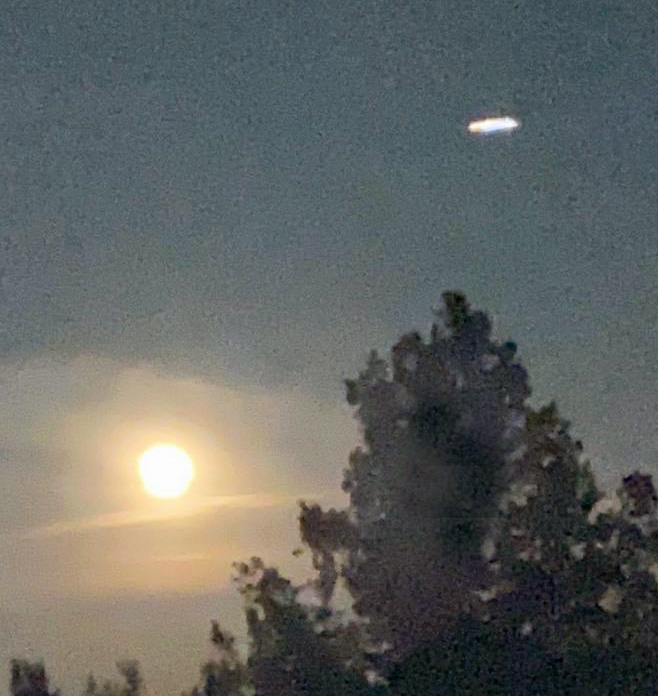
Last evening, imagine my surprise while topping the hill to my house and seeing the Beaver Moon, still lingering and gorgeous. I grabbed my camera and brought the moon closer, snapped a couple of photos. The second capture kind of tickles me for having captured also a jet airplane heading southward from the Redmond Airport.
Wouldn’t it be wonderful to have the technologies and skills to bring into focus two such elements, one very distant and another more near. It’ll become one one my goals!
Last evening after work, I met with a friend and arrived home slightly later than usual. Maybe the later time altered the lighting and allowed my camera to produce a clearer image of the moon. The welcome globe of light remains wonderful after several nights of nearly or full moons.
Curious about the moons, I did some research and learned that November’s moon is a Beaver Moon–or the period of brightest nights when the nocturnal animals are working hardest to build winter dams. This November moon also has other names–Frost Moon, Trading Moon, and Snow Moon (although Snow Moon may refer to February’s Full Moon).
After photographing several November moons, I wondered why so many seemingly-full, or full-seeming moons. The NASA Science website provided lots of information–and the biggest bit is that, at this moment, the actual Beaver Moon is occurring. It’s visible right now–this morning! Over the past three evenings, moons that have appeared full have been precursors to the real Beaver Moon. This Beaver Moon will appear again tonight, and tomorrow (Wednesday) morning, and perhaps also Wednesday night.
I’m grateful for having tried to capture some moons. Those have got me started using my new iPhone’s “tricky” camera. Tonight, the first evening of a visible full Beaver Moon, I’ll be out hoping for a clear sky and to memorialize the event.
Incidentally, in November there’s yet another and final full moon. It occurs prior to the winter solstice and is known as the Mourning Moon. Since the lunar and monthly calendars don’t always match, that Mourning Moon may instead appear in early December. I’ll continue looking toward the sky in hopes of seeing and capturing it.
Dear Friends: “Getting into” the Moon is to grasp the element’s eternal appeal. Diana
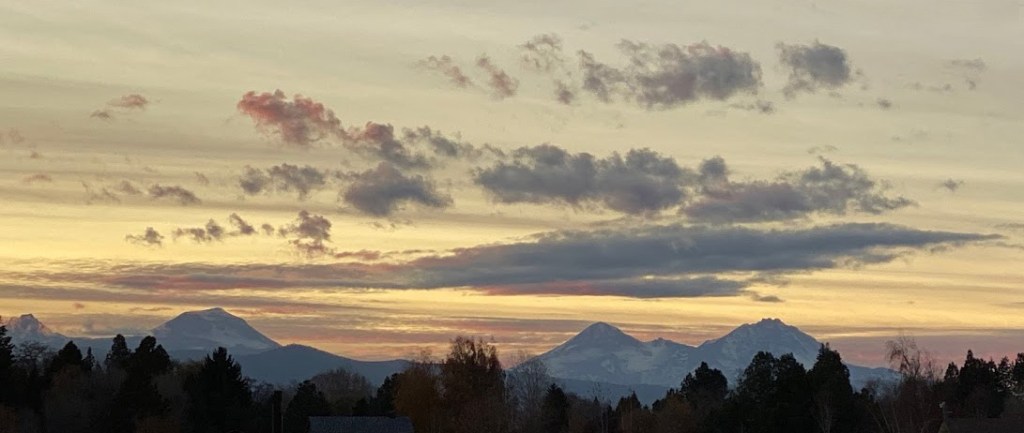
Early yesterday, I snapped this photo slightly before morning’s natural light increased. Toward noon, Central Oregon’s temps began rising toward the high 60s with sunshine aplenty. This photo shows the magical Cascades even before lots of light hits them. Cloudy days bring a slight sense of loss, with mountains hiding behind stretched-out banks of low clouds, which by the way are clues of weather changes ahead.
My truck and horse trailer were parked in an place that interfered with my day’s plans, so I tried to move the vehicles, but found the truck’s battery dead. It’s irritating as all get-out, that an insidious something mechanics can’t identify slowly keeps draining this battery. Now, my moving task became complicated. I brought around the Jeep, strung charging wires from its battery to the truck’s, got the big moose started, and then, ran its motor throughout a recharging process.
This was slow-going. By the time I managed to move the trailer and hook a trickle-charger to the truck battery, daylight had started to diminish, and it was time to attend to the horses. I could hear Rosie-the-Impatient, pawing on the ground and deepening her infamous hole that invariably sinks me low and makes me cuss.
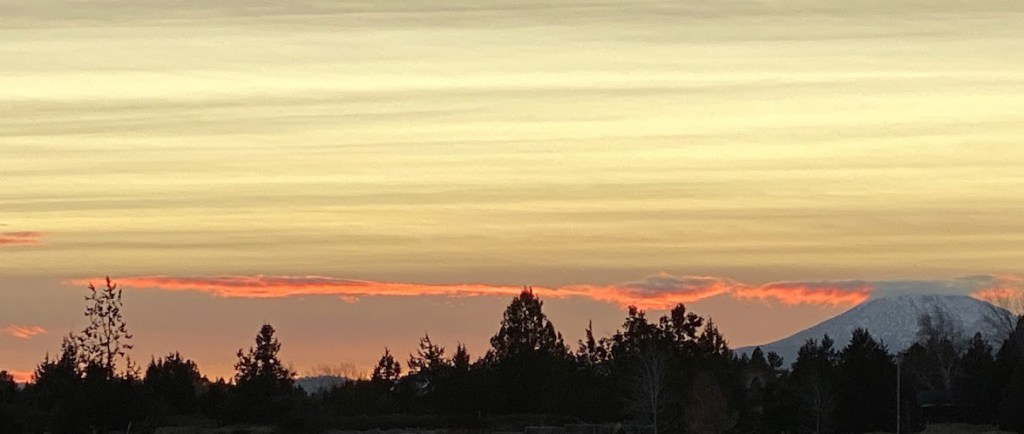
Skipping forward in time, while waiting for water to refill the horse troughs, I glanced over at the Cascades. Over the mountains a gorgeous sky with streaking clouds and a transitional lighting foletold daylight’s fading and the sun’s departure.
That sky reminded me of a previous night’s full, beautiful moon that I’d gone out to capture, but too late, for by then a cloudbank had swallowed it.
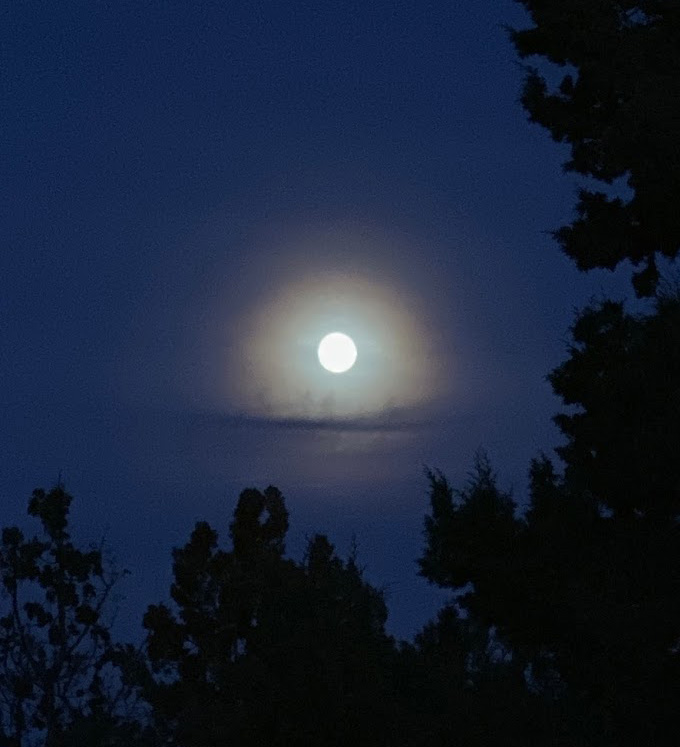
Last evening, later, and after feeding the horses, I walked up to the house under another wonderful moon’s greeting. I was quicker to capture its picture. At first, clouds teasing the moon’s bottom made it look as if Mona Lisa were gazing down with her side-wise, amused glance. This cool image quickly disappeared when the moon rose higher and magnificently.
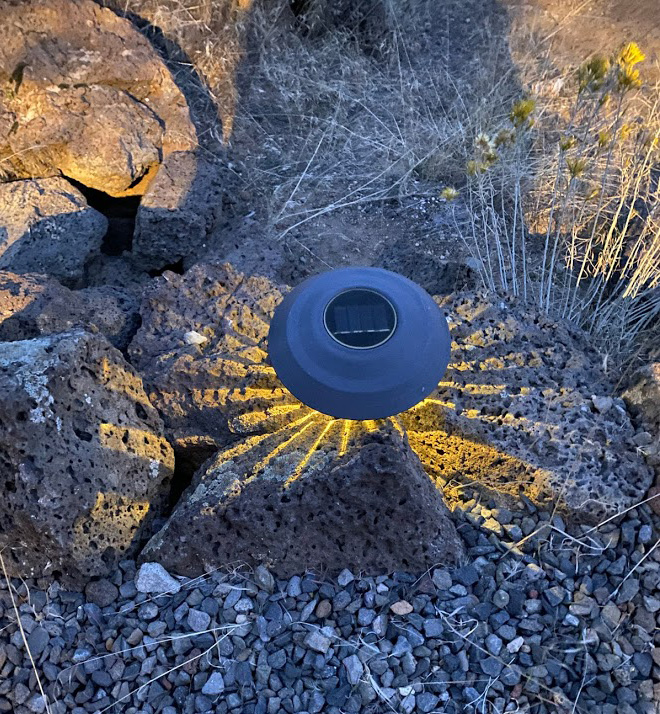
Standing outside my house and watching that moon, my eyes shifted downward to where the light from a lone solar bulb shone up from a lava rock pile. Not long ago, after finding the light broken off from its base and still working, I casually stashed the globe. And thus last night, this gift.
Dear Friends: Isn’t light wonderful, for punctuating time and reflecting moods. Diana
It’s a wonderful thing to live in a neighborhood where deer still roam. The fact is, many fewer come through than almost 15 years ago when I first moved to Bend’s outskirts. Often then, day and night, bunches roamed across my small acreage. My place is part of a long-standing passageway for deer that leave a grazing expanse over west, to easterly grazing opportunities on this side of town. Over time I’ve been sighting fewer deer and sometimes none for days. Around midnight, I often let the dogs out and sometimes they start barking. I assume the deer are passing through, and in the mornings, if hoofprints exist, I like it.
Deer activity has been slowed by an increasing human population and never-ending building of housing and commercial structures. Residents on my side of town also know that deer crossings are hindered by recently installed, fenced, and guarded fields of solar panels. Believe me, those panel fields exist despite the outcries, consternations, and objections of most eastsiders. This county, without due process and advance information to residents, changed a law a year or two before the solar panel fuss. The county’s original law maintained that this side of town could be “farmland only”. The secret change recreated the law to include “solar farms” as “farms”. This allowed for constructing commercial solar facilities on east-side acreages.
I’ll skip all the mishigosh about how sad it is, driving past huge installations that have obliterated previous natural terrains and numerous trees. And how they’ve interfered with traditional natural wildlife trails. The law change is a sad even for animals and most humans alike. Besides reducing deer traffic, some passing animals display injuries from crossing heavy-traffic streets. Some animals die in the roadways.
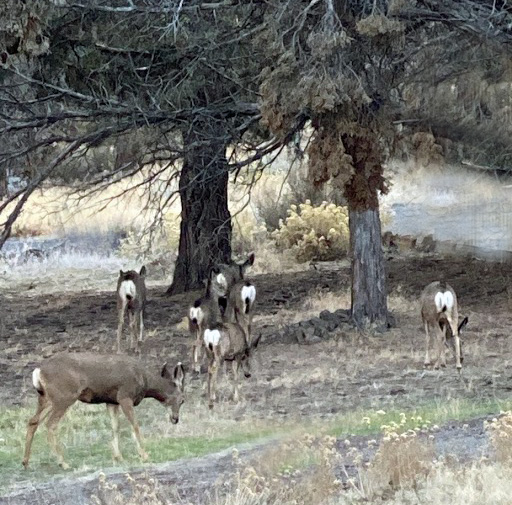
Okay, I’ve unburdened myself on a two-point problem: burgeoning solar farms and diminishing wildlife, specifically deer. Having done this, I’ll describe the sheer delight of walking uphill from my mailbox toward the house and seeing a herd of eight does grazing a few feet to my left. My camera didn’t catch every animal, but most are in the photo. The doe in the foreground alternated between keeping a close eye on me and grazing, the others were unfazed. All were meandering southward toward a busy road crossing that takes them west.
Among residents, deer are controversial and many folks really dislike them. The animals show up in darkness and eat whatever grows that’s good, including special plants like veggies and flowers. Their very sharp hooves seriously can damage a chasing dog. Their sudden appearances on roadways (day or night, especially at night) are potential driving hazards. I’ve learned to share these concerns about living with a deer population. But I appreciate those brave leftovers from a previous world, one that was natural and didn’t have competition from well-funded human interests.
The next time I’m lucky enough to spot our recently-appearing neighborhood buck (an eight-pointer), who watches me with his magnificent head held high, I’ll try to be quick enough to take a picture.
Dear Friends: Whether it’s a buck or some does, the surviving deer are special. Diana
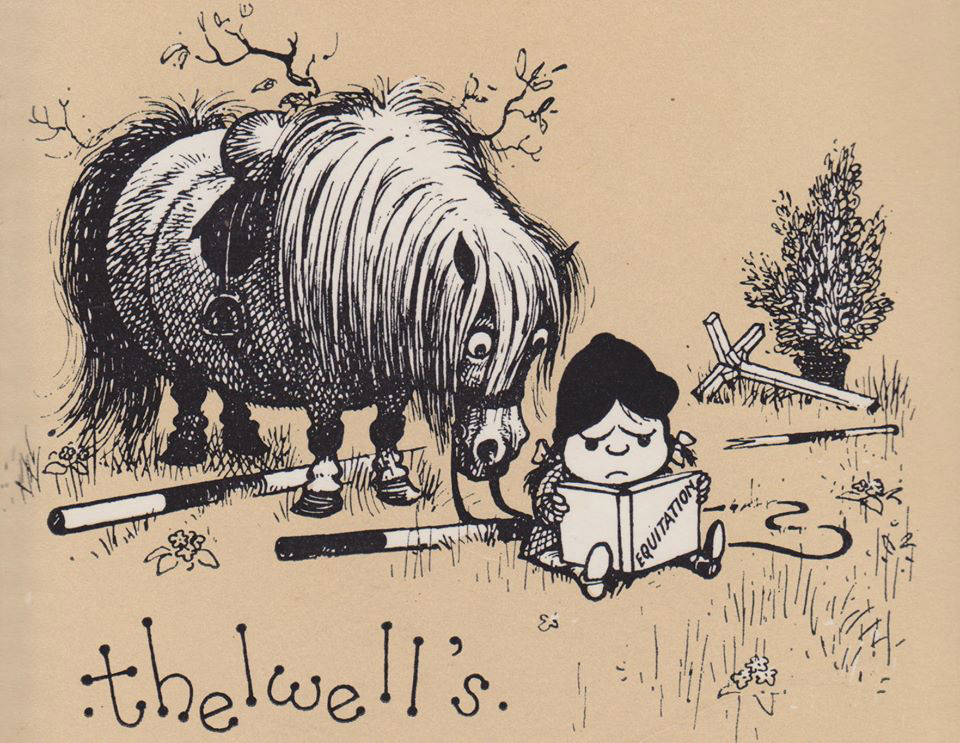
I borrowed this Normal Thelwell cartoon from his Facebook page. His pony-child images perfectly reflect how my mare, Rosie, and I sometimes “don’t get it together”.
Yesterday again, we experienced our joint effort differently. I was using 30-foot ropes (long-lines) to guide Rosie in a routine she understands well. After a walking warm-up, she’s to trot in a circle to the right for ten minutes. Next, she turns and trots in a circle to the left for ten minutes. This repeats over another twenty minutes, and then, Rosie walks to cool down.
At my first signal, Rosie did as asked and trotted to the right for ten minutes, but in turning, maybe an instant when I was loose with a rope, she took off at a full gallop. I stood watching her freely circle the loafing shed, chase Sunni and Pimmy, and gallop in large circles throughout the dry lot while trailing those 30-foot ropes. (Rosie’s blinders don’t interfere for she knows every inch of the lot and fencing).
Lately, that’s happened and I’ve considered seeking a trainer’s help. Typically, the now-free Rosie gallops awhile and then returns to me, waits patiently while I collect her ropes and return us to the work area. When again she starts trotting, if I feel her energy rising, it’s Bingo! she’s off again. There’s no holding Rosie back and she’s delighted.
As in Thelwell’s cartoon, I’ve spent off-hours revisualizing Rosie’s breakaways and trying to figure out how to handle her ropes effectively. In practice, regardless of how I adjust my handling, nothing deters Rosie’s determination and strength.
Typically, after letting her break away and run several times, my most useful response has been to follow while beating a dressage whip against the ground. The action and noise force Rosie to gallop until she’s willing to resume working. Sometimes we manage to finish her workout okay, but sometimes Rosie’s brattiness continues.
Yesterday, my response changed. At Rosie’s first turn-around, in the instant she took off, I immediately grabbed the long whip and followed beating on the ground. The mare galloped on and on, and even when she slowed and appeared tired, I didn’t let her slow or quit. Finally, when she really paused, I set aside the whip, waiting while Rosie walked forward, ropes trailing, and stopped before me. I reached for a rope and let my hand slide along it as I moved behind her and lifted the second rope. Holding both ropes, I asked Rosie to walk forward.
When we resumed working, Rosie circled and reversing directions properly without breaking away. We finished, with her sweaty, foamy, and worn out. In the barn, as I removed her harness, Rosie gobbled fresh apples.
An experienced trainer might know how to prevent such breakaways, but maybe I’ve discovered the solution. It’s a rapid, extended response at a first offense with my whip. By allowing Rosie’s galloping breakaways to succeed once, twice, or three times, before I respond, has made her freedom episodes rewarding enough to encourage the take-offs.
In our remaining days of nice weather, I’ll continue exercising Rosie on the long-lines. Starting today, the instant a misbehavior occurs, I’ll force her galloping to continue until the rascal is worn out.
About, Thelwell, the artist. I understand that when his then-young daughter was learning to ride her pony, he captured many of the duo’s problem moments. For anyone not hands-on familiar with ponies (ah, yes, cute little critters), they definitely have minds of their own. To me, this artist managed better than anyone–more fully and with fun–to capture the realities and humor of horse-handling.
Dear Friends: Big Rosie both is sweet and too-smart, she keeps me on my toes. Diana
My Apple Watch shows which shape of moon to anticipate in each evening’s darkening skies. In last night’s twilight while heading down to feed the horses, I glanced up and saw the rising moon. It was a kind that I love, almost-full and overall slightly lopsided, a shape that to me seems hug-able.
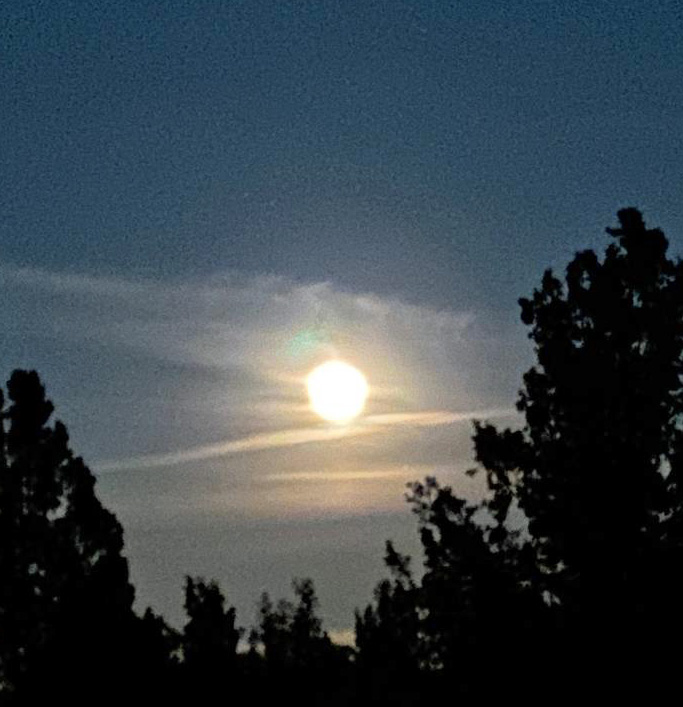
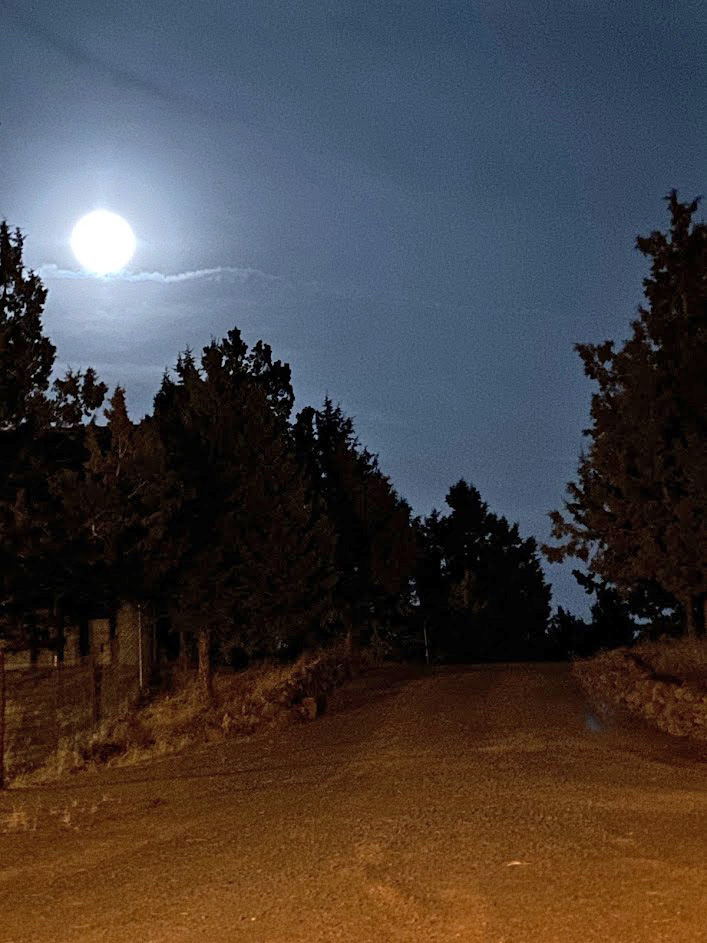
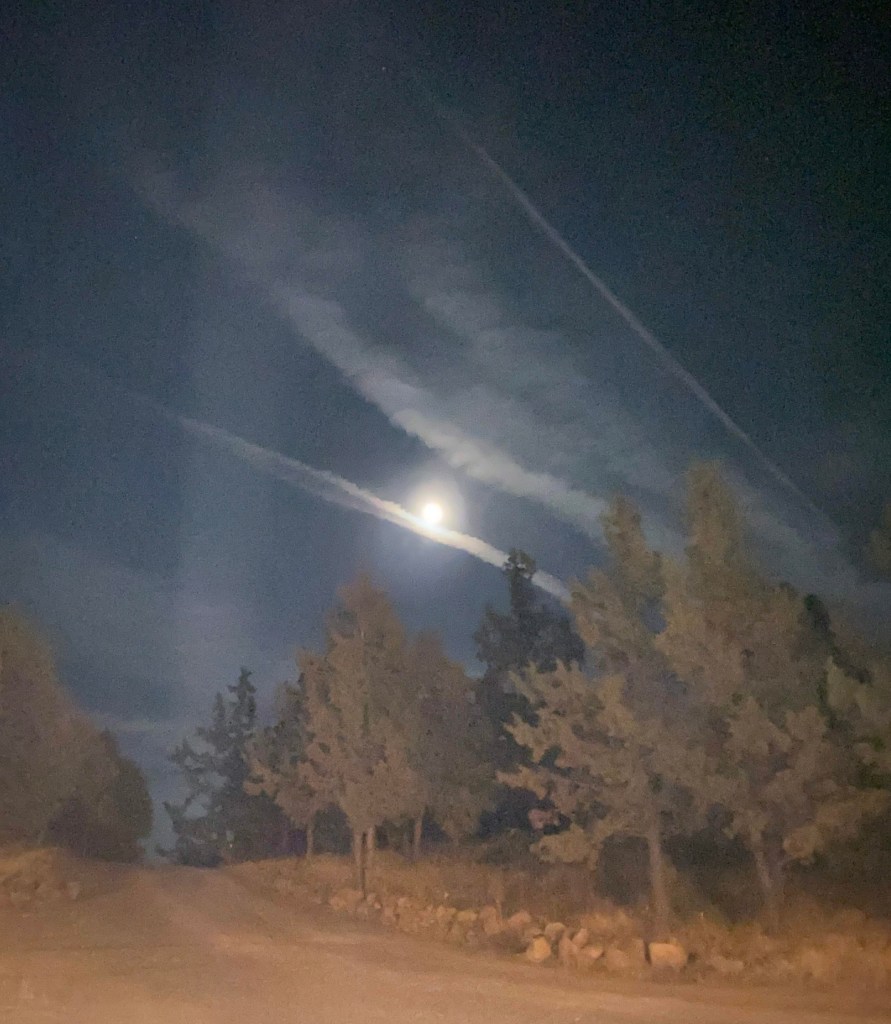
Later in more darkness, I returned to the barn to release horses from their feeding stalls. While preparing to head up toward the house, I saw a changed moon lighting my path, of course still lopsided and lovely, but now neatly framed by slanting streaks of light-yielding clouds. I stopped, stared, and switched off an after-dark headlight while reaching for my iPhone. This new phone makes me do bunches of learning and I’m still too recent a user to go with confidence for good shots, but I really wanted that moon.
My photo isn’t perfect, it sort of resembles a watercolor but doesn’t disappoint. In it the moon appears less sharp and clear than in real time, but overall and with those slanting clouds, the whole seems to work. What makes this visual more cool is how well it captures that interesting moon’s great illumination of my pathway to the house.
In a good photo what’s best is how always it offers more. This one holds yet another element of cool, reminding me of yesterday morning’s pleasant telephone reunion with Tina, a Nevada friend who knew my sister well. For sure, we shared many memories of Elaine, and we also gave ourselves time to catch up with each other. Before we said our goodbyes, Tina told me how much she enjoys the photos in my blogs. After we hung up, I considered her words and how preoccupied I’ve been, the minimal effort given to camera-work. All day, thoughts of cameras nudged up the joy of aiming a camera, to capture forever unique moments and complex senses.
Dear Friends: And, last night, bingo! A serendipitous moon sealed the deal. Diana

 Diana's Morning Blog