Chicken Soup Days

Tuesday, October 08, 2019

This must be short and sweet. I’m battle sneezing fits and chronic tiredness. Odd thing, all this began the day after I received this season’s flu shot.

Mostly, my colds start off like one-day wonders and sometimes the symptoms last only one day, but more often they continue and transition into week-long miseries. Early in this one’s stages, it’s struggling about giving-it-up or moving full-blast toward an event.

In this fall season, many Central Oregon afternoons still are warmed nicely by abundant sunshine. According to a friend, who’s portable and anxious to leave the area before it’s really cold, by mid-next-week local temps will drop into the teens. One day prior to that, he’ll pull out and head somewhere around Las Vegas and will meet up with others. I think of them as “turtle folks”, storing their worldly goods in oversized vehicles for making spontaneous moves from one place to another. My friend’s usual route takes him over familiar roads and weather-friendly locations. His job lets him transition to various cities and return to Central Oregon to work during its cool summers.

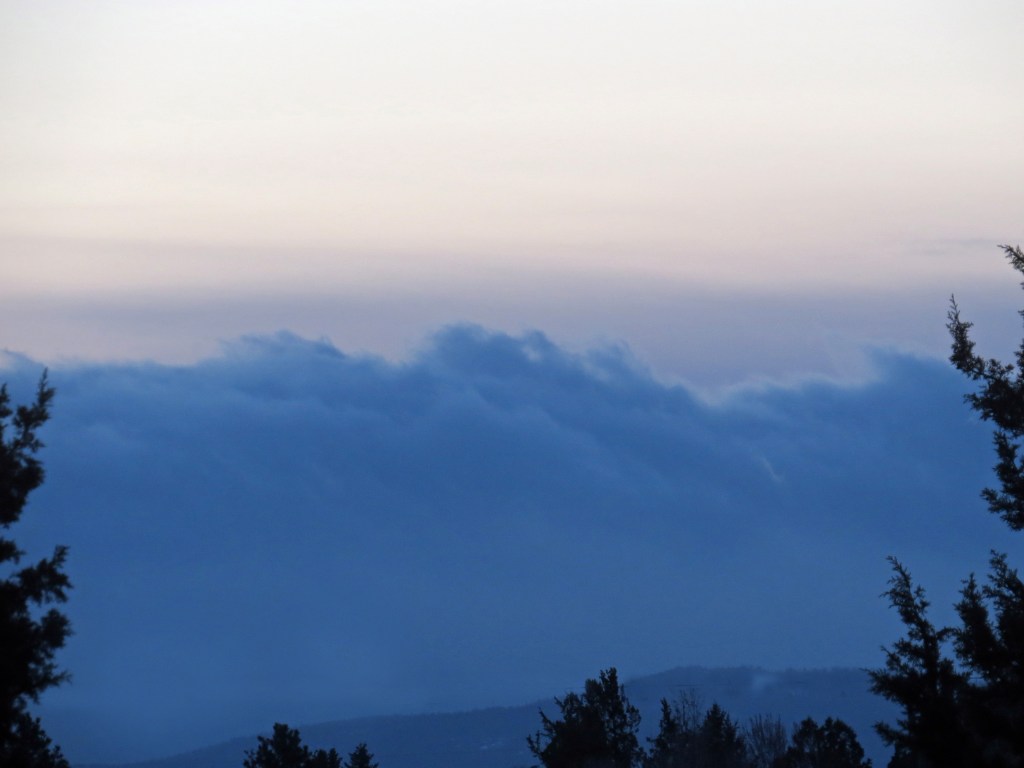
Our warm afternoons dry-out nasal passages enough for me to continue winterizing. Today, I’ll try to be outside stringing electric wire over horse fencing. Last night, the wind blew heavily, and early today, looking toward the horizon, I could see natural warnings about changes ahead. The mountains are clouded over, the sky looks suspicious.

Dear Friends: Many “turtle folks” love their travels and meet-ups with buddies. Diana

Life Lessons

Monday, October 07, 2019

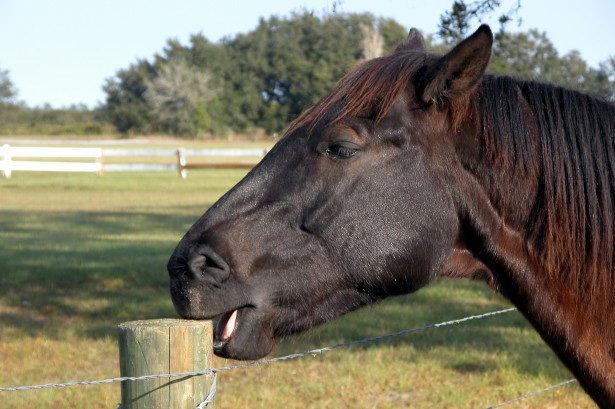
I’ve been wielding a hammer and hauling a reel of wire around the dry lot where my horses spend their time. After stringing wire horizontally, I also strung vertically by going onto my knees in the dirt. Who ever knew I’d be out there, tool-laden and dirt-covered, to electrify fencing! And now, my horse has strolled alongside and is nudging over a box of plastic insulators!

All this is because the horses have been chewing on the fence, not just a bit but enough to narrow dramatically the wood diameters. For awhile, it’s been apparent that electricity isn’t flowing adequately through the fence’s “hot wires”. This has freed the horses to gnaw. I’d been unable to find a handy-person knowledgeable enough to fix this problem, and myself know next-to-nothing about hot wires.

The horses don’t engage in this behavior because they’re “cribbing” as horses often do. Mine don’t seem to need to crib, more likely they’re just bored. It’s hard to blame confined animals, but they’re not who shells out for new fencing if current posts collapse. Recently, a fencing pro’s estimate for a big fix left me gasping. So, I went out to get “stuff”, and started figuring out what to do.

Long story short, now a new wire (and it’s hot) is stretched across horizontal post sides where the horses did most of their chewing. I’d been focused on the top posts, and not until I was out there with hands on noticed that they’d chewed many vertical support posts. Next, I stretched hot wire from the horizontals down the length of the verticals. I switched on the electricity and checked the whole fence. It’s loaded!

That took care of part of the fencing, for the overall job requires more work. I’ve learned that my originally-installed pretty and plastic-clad wire (more visible than bare wire) carries electricity less effectively than plain wire. So tomorrow, if the nice daytime weather holds out, I’ll start re-stringing all the fence wire, changing the pretty for the capable.

I’m a city-gal retiree, who gleefully moved onto a small acreage to relax and enjoy a few horses. Through the years, all this has developed into a new and unpaid career. For example, if the handyman who’s coming this week isn’t capable of repairing my damaged guttering, I’ll probably climb a ladder and try to figure out how to make the fixes myself.

Dear Friends: We can work out most anything by just getting up and trying. Diana

Days of Woe & Worry

Sunday, October 06, 2019

Yesterday evening, CNN offered series of episodes, and served them up over several hours, covering the rise and fall of Richard Nixon. The whole series, entitled “Tricky Dick”, consisted of actual film and tape footage and at-the-time reporters narrating events, and for all key players their actual voices and words. The series includes scenes and words newly revealed by current technology and presented for the first time.

The picture becomes a chilling backwards inspection of the 60s and 70s, a turmoil of high-stakes politics. It reveals the extent to which Nixon was willing to create a distorted reality to achieve his political goals. Included are his key supporters with their willingness to to dip into waters of evil. I watched several episodes before reaching a point where it became impossible to process more evidence of Nixon’s, and his minions, dismissals of decency and mercy, their blatant dishonesty.

In those days, the news media were all over the stories of brutal politics. The Democrat front-runners for president were Eugene McCarthy and Robert Kennedy. Kennedy seemed a surefire winner and this frightened Nixon, but we know how that turned out. In the end, the race between Nixon and Humphrey was close, and we know, too, how that turned out.

My point isn’t to compare the Presidential politics of those days and these days, although some are obvious. What interests me is the extent to which social media have changed the social order. Back in the 60s and 70s, we relied on print press and news figures, like Walter Cronkite, Dan Rather, and others who reported over radio and on television. These effectively informed most Americans of the Watergate episode, its key players, villains, and heroes. Americans knew about Nixon’s resignation from the Presidency and his subsequent pardon of wrongdoing by Gerald Ford.

These days, the internet’s many instant news and opinions fills us with information, reactions, opinions, options, and attempts to predict winners and losers. That crazy time of the Nixon era more or less came and went, becoming a figment of the past as we regained optimism through a gentler President Ford and our ensuing leaders. Well, almost, for there was that Iran-Contra business, and President Clinton’s misbehavior, but those are stories for another day.

Nowadays, social media expands every uttering and position of a public person to the ultimate. Many of these public persons aren’t even interesting, but they have moments in the spotlight because of their opinions and/or money. Our President and other key figures have words and moves publicized in social media frenzies. Daily, new pages or chapters evolve that ultimately will be spliced into series that give us looks back at the early 2000s.

Well, watching the 60s and 70s was tough enough with the footage and voices that have survived over the years. We only can imagine what it would be like in another 50 years, to look back over this era, and try to make sense of it within the-then bigger picture.

Dear Friends: So complicated! We acquiesce to an internet that gives us voices. Diana

A’Changing

Saturday, October 05, 2019

Never could I have visualized myself willing to read online. I’d leave that for x-gens, millennials, and geeks. For me, it’s been a lifetime of reading newspapers, magazines, and books, printed on paper. Here’s what’s best about books: If the writing is good, I enjoy holding it, turning pages, and occasionally pausing to consider and evaluate what’s being communicated. That’s who I am, give me hard-cover books and complex movies.

The avoidance of reading online began changing a few years ago after I made a tough decision to subscribe to online newspapers. They’re cheaper! I began reading articles, at first reluctantly, and finally, without realizing it just clicking and absorbing. There are many very good writers creating for major (and some less major) newspapers; there are fine contributors to high-end magazines. I’ll even admit these days to seeking online contributions of my favorite writers.

Reconsidering my earlier reluctance and what’s driven this change, it’s been a combination of current confusing national and world politics and a desire for explanations. News contributors supply details that may elaborate and help support or sway a reader’s perceptions. So now, I read online. But suddenly, there’s more.

I’ve downloaded to my Kindle a newly-published book. I don’t use a Kindle itself, but my phone’s Kindle app makes a book readable. For the first time, I’m starting to read a book on my phone. Unbelievably, it’s working. I can sit, read, concentrate, and with a touch of my thumb flip pages. This process hasn’t constrained my ability to concentrate and absorb.

Today, one of my subscriptions emailed that I’m eligible for a once-monthly free book. Encouraged by my phone-Kindle experience, I looked at the newspaper’s offerings, and bingo, saw a title I had considered ordering from Amazon. This new deal isn’t available for the Kindle app, and now, I had to install BookShout, another ebook reading app. It’s a little different and maybe less easy to read, but this is moving me beyond Kindle on phone and laptop.

My phone lets me read and listen (when it’s more convenient, like while driving or shopping). The main thing is, I’m making the switch from handheld print to online apps. That I am doing so begs the question, what’s next! For starters, I’ve long been interested in trying to learn code. A friend for many years has begun encouraging me to write for online readers and self-publish. These have seemed beyond my capabilities–like my stumbles in trying to create rope knots–but maybe if one tries everything’s doable.

Anyway this moment is about reading online–something once beyond my wildest imagination.

Dear Friends: Despite ourselves, living pushes us toward new experiences. Diana

Knotty Problem

Friday, October 04, 2019

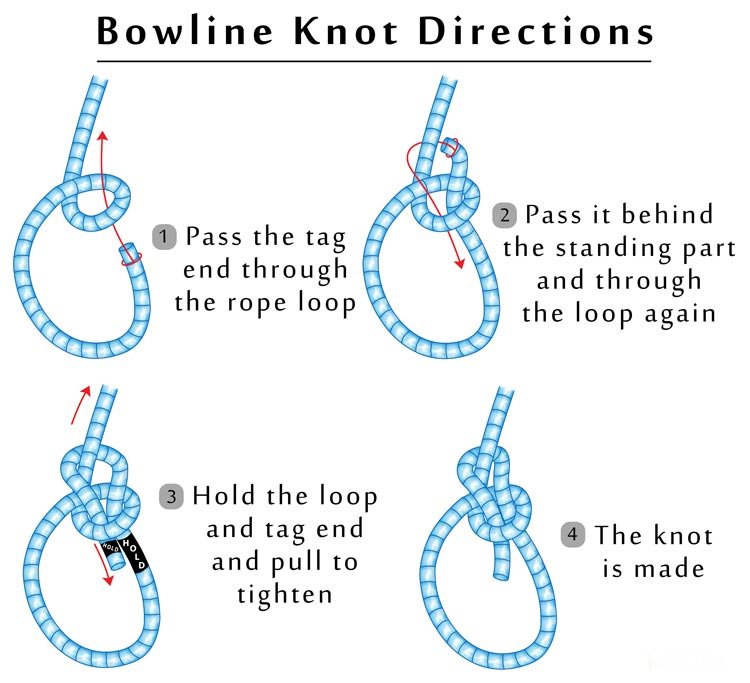
While my friends from Eastern Oregon were visiting, we began playing with bowline knots. The bowline knot dates from ancient times and is easy to create, it doesn’t slip and easily is untied. We played with tying this knot as a handy start to creating a temporary horse training halter to reinforce an animal’s ground manners.

The bowline originally was and still mainly is associated to the sailing world. This knot quickly can create a fixed loop at the end of a rope, strong enough to tether a floating vessel. I repeat, the bowline knot neither tightens or loosens and yet easily may be untied. My visiting friends who introduced it explained it’s usefulness in creating a temporary halter for routine ground work.

All that sounds good, but I found a catch–that one must be able to visualize the workings of a rope being manipulated before recreating an accurate version. This ability to visualize almost entirely has proved beyond my ability to comprehend. I’ve watched YouTube videos of this easily-made knot without being able to translate what I see to the action of my hands. Making things worst, the videos show various ways to create the knot and none help me.

The bowline is a simple knot. It’s even easier to construct by remembering a Boy Scout jingle explaining its formation: “The rabbit goes into the hole and gets frightened, so goes out of the hole, circles the tree, and then goes back into the hole.”

You’d think, wouldn’t you?

In the last week this has been a prime topic and I’ve made some progress. Sometimes while watching television and fiddling with my practice piece of rope, I manage to tie the knot correctly. But creating the knot with a loop has been beyond my capability. Alas, maybe my future with horses won’t include a simple, quick to put on and remove, training halter.

My frustration extends beyond this bowline. I’ve long yearned to create effective knots. Even my books showing simplified ways to create useful knots have failed to help me leap the gap between vision and hands. In the old days, I sighed and chalked my failure of comprehension to genetics. Now, not any more. Even if mine is a physical problem, a lapse between brain and motor skills, I’ll keep trying. This time, I’m determined to study illustrations and practice with my little length of rope, and finally, intend to untie this knotting dilemma.

Dear Friends: Does something so simple, it’s ridiculous, ever baffle you? Diana

Help!

Thursday, October 03, 2019

I live in a relatively small community with an average “permanent population” of under 100,000. True, the large amounts of tourists and family visitors make this place feel much larger than it is, especially when one tries to drive through heavy traffic across town. The last few years have brought vehicles lined at stoplights and crowded shops and restaurants. It’s the opposite to my earliest days here when one zipped across town in a few minutes, parked anyplace, wandered through well-stocked, uncrowded stores with quick check-out cashiers.

This community primarily draws a sports- and retirement-oriented population. So, there’s young and old with reasonably good medical options for a middle Oregon outpost. For hoards of retiring baby boomers wishing to remain active, this place has become a draw. There’s construction everywhere and of every kind from the most expensive to whatever passes as “affordable housing” (surely an oxymoron if ever there was one).

Besides traffic and crowds, my main problem is the construction, which consumes so many skilled crafts persons. It’s become nearly impossible for a not very handy or well connected homeowner to find help. Those tradespersons capable of repairs and services are for weeks-out busy.

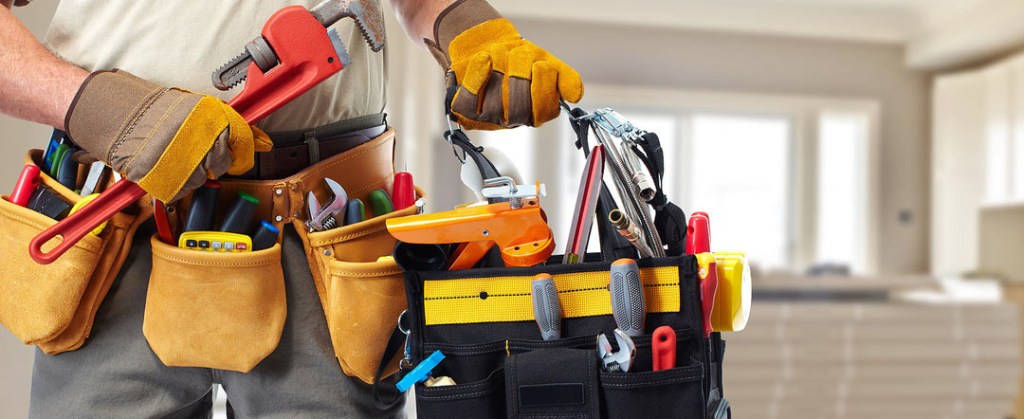
The last big rainstorm impacted my gutters which need fixing before real winter sets in. Several weeks ago, I began calling for help, but you know, all over town gutters had been impacted, and I landed on waiting lists. Help never materialized and meanwhile winter has begun “springing up”. This week, I began looking up handyman services, took a chance, and called a guy with a couple of good reviews. He has a nice voice, says he can repair gutters and could be here early next week.

What’s a person to do?

I’ve been a victim of handymen who couldn’t or didn’t deliver what they promised and overcharged as well. Some have performed work well-enough that it passes as good on a first glance, with only later me discovering the errors, omissions, and needs for rework. I kick myself for not being able to assess better new repair work. Sure, I’ve learned and am maybe a little smarter, but still, today’s circumstances force me to trust another unknown.

Anyway, he’ll be here and we’ll move on. The acid test of his repair (if even he can do the job) will be our next big rain, or heaven forbid a big snow storm. When moisture loads weight on the gutters, here’s hoping they will be able handle it and remain fastened.

Dear Friends: A friend’s guy declares, “If you’re not handsome, be handy!” Diana

Catching Up To Us

Tuesday, October 02, 2019

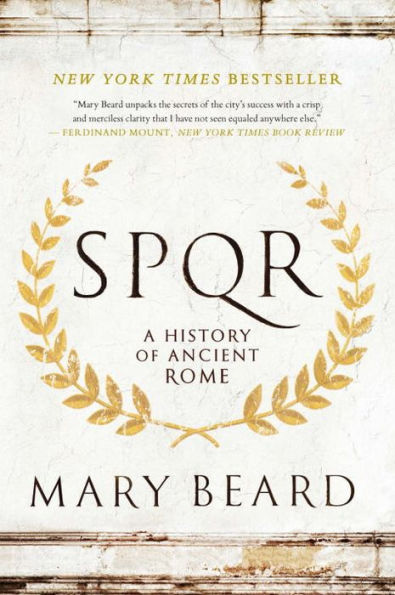
I’ve thought lots about Nancy Pelosi’s comment that, “The times have found us.” It makes sense as I think back over what I know about human social history. This morning, it made more sense. In the wee small hours and sleepless, I began reading a book that for awhile has been at the top of my reading list, entitled, S.P.Q.R.: A History of Ancient Rome, by Mary Beard (2015).

What drew me to this book is a whole story itself, so I’ll cut directly to the chase and explain what about the story of Rome isn’t new or surprising. Actually, it’s fascinating in light of what we’re trying grasp, the nonstop changes occurring in the world’s current societies and in political leadership.

Instead of reaching way back into antiquity and explaining the slow growth of the Roman nation, Beard examines Rome beginning in the year 63 BCE, or about 600 years after the city’s founding. She writes that by 63 BCE, Rome had a million inhabitants. It was a dirty, sloppy city, most residents were very poor, living in filth (sanitation didn’t exist), and paying high rents to a few wealthy residents. The minority who were wealthy owned most of Rome’s properties. They personally lived in relative splendor owning large homes and slaves.

Beard details the social perspectives and political differences between Marcus Tullius Cicero and and Lucius Sergius Catilina. Both men were wealthy, but Catilina had come from a family with more money than Cicero who was self-made. Catilina matured with a passion to liberate Rome’s poor and give them more rights and opportunities. Cicero had become a member of the Senate (the city’s most wealthy and influential men); he was a fabulous orator able to communicate his passion effectively. Catilina lost most of his personal wealth over years because of his combative nature and conflicts to prove his points. The two men fought through conflicts both oratory and physical. Cicero’s ability to communicate won the day, and Rome’s social status quo remaining unchanged.

This 2000-year-old story reads like a modern crime novel. It’s full of courtroom skills and each side’s passions. The winner had the oratory skills to convince a majority of decision makers. While reading, I couldn’t help considering our own 2016 election, the unusual claims, behaviors, and finally, vision-shaking results. Much of what happened then, and is happening since isn’t new. Looking back into human social history can help us conjure up shapes for the future.

Dear Readers: Social dynamics through history teach us that, “then is now”. Diana

Climate Shifts

Early Winter Rolling Over The Cascades

Tuesday, October 01, 2019

Yesterday, after work, I popped into the nursing home where she resides to visit my ailing sister, Elaine. I found her propped up in her hospital bed and watching television, this time not a classic movie, but instead, an old game show that she knew well. Elaine appeared comfortable, in a good mood. She was highly alert without being combative as she is at times. We chatted awhile before I had to hurry home and feed the horses.

They were waiting for the sounds of my vehicle nearing the barn area. The horses cantered and bucked alongside the fence, Rosie blaring her hungry impatience. In that late afternoon–frigid frosty, overcast–and still wearing my Costco garb, with only a light jacket, no gloves, I hurriedly fed the horses and goats. My hands and fingers began stinging and seemed nearly numb before I could return to my car and its welcoming heater.

Up at the house, the dogs chimed in with a welcoming chorus that echoed the horses’ hunger and adding a group insistence to be allowed inside. I entered the house to Peaches’ welcoming, “Hello Hello Hello”, and handed him an unshelled pecan. Next, the four dogs came inside–well, more like “fell inside”–with the whole pack attempting to scramble as one through the sliding door.

And what all day I had looked forward to, the piece de resistance, in that crock pot on my countertop, a warm pot roast. The kitchen smelled wonderful, and dinner was a cinch. There was plenty of roast to share with all the dogs and Peaches. None for my cat, Max, who prefers Fancy Feast, or Gilbert, the rescued racing pigeon, always glued to his usual food (chicken feed and small parrot kibble).

The last day of that invasive early winter ended well at my house with everybody warm and fed. Starting today, our area is supposed to enjoy a string of days that will be more normally fall-like with higher temps and dryer weather. That’ll invite me into action again with the horses.

Dear Friends: A preview of colder weather ahead is a grounding experience. Diana

Early Snow

Monday, September 30, 2019

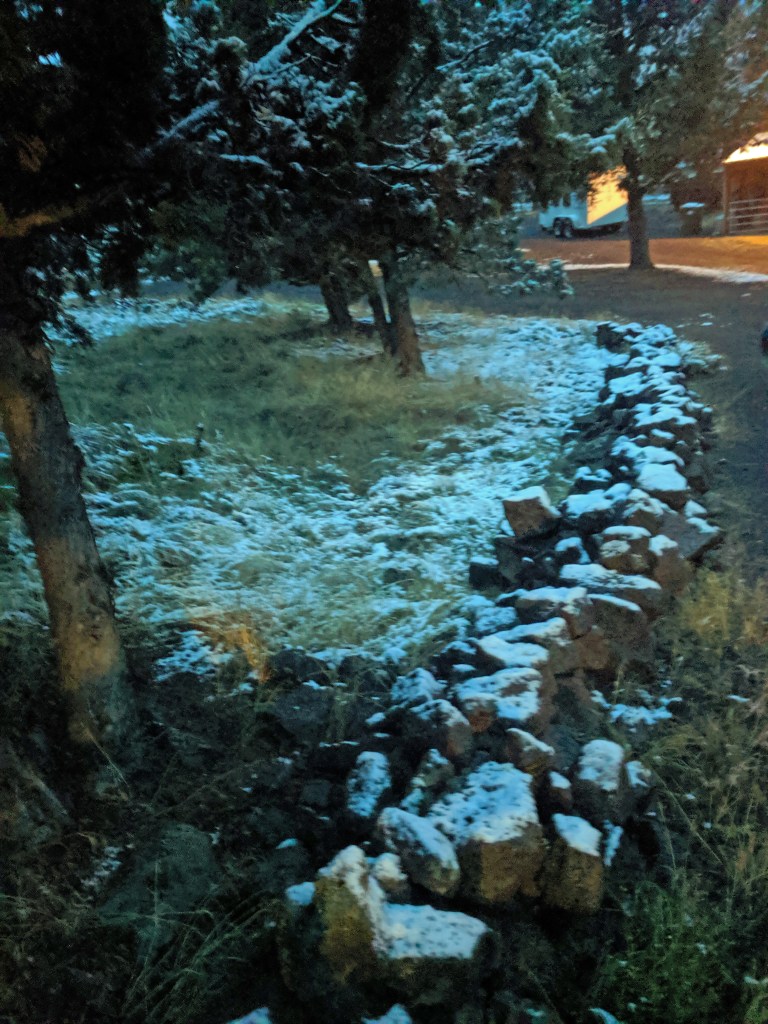
Really, how can it be, that even before getting into October we’re already having snowfalls? Could it be so, that the coming winter will turn out to be colder and snowier than last year’s? Yesterday, why didn’t I mind hurrying through a dawning light to feed the horses while bundled in ski pants and Irish wool? And what about yesterday’s freezing rain, you know, that all-day drizzle?

Already, the house thermostat’s automatic workings have activated the heat pump. It seemed awfully early to go find heated blankets and include them in the bedding. I suppose it’s appropriate to shift into the right frame of mind to deal with a significant seasonal change. Just think, over in Wyoming they’re already having to cope with at least two feet of deep new snow. Last evening, while feeding horses, I looked into the readiness of a snow blower that waits in the barn for the kind of winter that forces it to blow pathways to and from the horses. Today, I’ll check the readiness of another snowblower parked in the garage, for demolishing snow piled around the house and easing navigation, by vehicle or on foot, of my steep driveway.

In the last several weeks, the horses have turned fuzzier. In fact, these days after being driven, their sweating patterns aren’t from overwork, but clearly caused by their much heavier coats. Horse folks in winter’s depth can push bare cold hands deep into a horse’s coat and feel warmth emanating from the animal’s body. Observing my dogs, it’s evident that they, too, have shed themselves of summer hairs, their coats now appearing fluffier and thicker. My Border Collie, Miles, who’s big coat (full of knots and tangles early in the summer) got shaved finally is regrowing. His new coat looks weird but will keep him warm, and once fully reestablished should return him to his handsome self.

Right now, it’s very early as I write. While pausing to let the dogs outside, I see brand new snow shallowly covering, that quickly will melt away. But there’s something disconcerting about facing the white stuff right now, and technically, while it’s still what we know as early fall.

Anyway now, it’s time to stop wondering. I must hurry to climb into those ski pants and button up that great wool sweater. It’s time for my early morning downhill trek to feed the waiting horses.

Dear Friends: Winter generates mixed feelings, but it’s arrival also is exciting. Diana

Readjusting

Sunday, September 29, 2019

It’s a jumble of feelings when house guests depart for home. A renewed emptiness that gets filled by keeping oneself busy. So, I stayed busy all day.

First, off to visit my elderly sister, Elaine, who’s in a care facility. I was relieved to see that she’s not as close to departing from this world as the hospice social worker had me thinking during our phone discussion the night before. Sure, Elaine is skinny as a rail, her stomach tumor apparent, but she holds to an ever-long habit of watching television and frequently making acerbic comments. Her mind still is sharp, her attention span varies, and she does speak of “going home to Nevada,” which I agree with the social worker alludes to another sort of going home. I left there knowing now that I must monitor Elaine’s condition on my own and not become shaken by telephone reports from well-meaning caretakers.

Something got into me about a week ago when I was expecting company, and I began tossing out stuff that’s useful but hasn’t been used, or even searched for, in years. Clothes that I save for various weights as I escalate up and down, and that I don’t want to continue saving. Plastic boxes of various sizes for storage, that I don’t use because stuff in boxes with lids don’t get opened, so the stacked unused boxes take up valuable space. Off to the dump, all of it.

This trip to the dump was easier because Elaine (one of my visitors from Eastern Oregon) demonstrated how to release, for reuse, those tie-down ratchet straps that men invented and ever so easily use often. Elaine pressed a ratchet’s release levers and used a trick to handle the part that stumped me. She simply stood on the ribbon footage, using her weight for leverage, while pulling up on the ratchet to clear it. If you’ve never used this device, be grateful and don’t bother trying to visualize Elaine’s method. But if, like me, you do use them and find yourself unsnarling tangled long ribbons, shoot me a note for details of the “fix procedure”. Anyway, I covered the trailer’s trash for going to the dump with a tarp that I strapped tightly, and later, smoothly emptied the used ratchet tie-downs for another day.

Dear Friends: Now, back to normal, off to my part-time job today. Diana