Wednesday, October 06, 2011— October’s fullest moon (“Hunter’s”) will rise on the 20th.
It’s official, I’m newly employed, part-time in Wilco, this city’s only remaining farm-oriented, walk-in source for feed & supplies. Thankfully, this growing store will be around awhile, and I’ll happily be part of its activities.
Today is my first working day. It’ll center mostly on becoming oriented to the store. My regular work will be as cashier, probably on weekends. If you’re in the store, I can help you check out! Whether you’re shopping or just looking around, be sure to say hello.
I’m rearranging my early morning activities. I’ll continue blogging, but they may be brief until I have a clear and workable routine.
Dear Friends: Periodically, among like-minded others who enjoy plants and animals . Diana
Tuesday, October 05, 2011— October’s fullest moon (“Hunter’s”) will rise on the 20th.
My long-time friend, Linda, sent an article from “The Atlantic”, by Marina Koren, “space writer” for the magazine. Her article, entitled, “The Moon Is Leaving Us”, is subtitled, “And we can’t stop it.” Koren combines scientific observations with her sky-watching sense.
She writes how gravity’s unstoppable forces make the moon drift away inch-by-inch and mega-slowly separate from the earth. Over eons this has happened because our small moon has gravity that thus tugs at its planets. Our ocean-covered planet responds in a shifting of tides.
The moon pulling at oceans forces oceans to pull back. The oceans then make the moon’s orbit speed-up, and so it orbits farther away. Scientists call that distancing, “lunar retreat”. They can measure distancing, and have determined that since time immemorial our moon continually has drifted away.
I’m a relative newcomer to moon technologies, interested to know more about Earth’s relationship to the wonderful small planet that lights the nighttime skies. Scientists find that over more millions of years, the moon will become farther, and thus, much smaller, having many effects on Earth, including greater heat and shorter daylights.
Monday, October 04, 2011— October’s fullest moon (“Hunter’s”) will rise on the 20th.
I’d prefer to keep hitching and driving my horses through this beautiful month, but today our farrier will pull their shoes. Going forward, maybe I’ll have less time to drive, and an unshod horse shouldn’t pull a vehicle. Pulling requires heavy traction that wears-down bare hooves.
We began driving later than optimal this spring, because I had mixed feelings and hesitated for too long. The year before, through the pandemic’s worse months, I rode horseback and enjoyed it. Wanted to do that also this spring, because after a couple of years without driving lessons, I less felt motivated to harness and drive.
Shoeing them this summer was a plunge that began the driving. I actually remembered all the harness parts, and the correct sequences for fitting them onto a horse and removing them. Almost immediately on holding driving reins, I had a sense of how properly to handle them. Best, the horses remembered their jobs.
It’s fun to drive wonderful horses and maintain their excellent conditioning. Regular workouts, on roads and in our dry lot, have stabilized appropriate muscling and weight. Hard exercise lets them graze most afternoons on the sugary grass in my neighbor’s pasture.
Dear Friends: Bye-bye to shoes, howdy to saddles, and anticipating next spring. Diana
Sunday, October 03, 2011— October’s fullest moon (“Hunter’s”) will rise on the 20th.
I measure the speed of passing days by the brief time between one trash pickup day and the next in a week. I seem barely to turn around before it’s time to haul out trash barrels again.
Today begins a new week. It’s when I begin imagining how quickly the next trash day will arrive. They say aging, which accustoms us greatly to normal routines, makes time feel shorter.
My current thoughts about passing time’s ups and downs is because I’m suffering through a dragging time notch. Something new in my atmosphere pounds against my perception of time.
Recently I accepted an offer for part-time work, which made me start anticipating. But the offer isn’t final until after a background check. These waiting hours drag. With less than instant full gratification, passing time equals teeth-grinding. It’s weird, that on one hand I’m busy with time seeming too short, and on the other, anticipating with time lagging and dragging.
Yesterday, I wrote about the sport of freediving and later watched freediving videos. Personally, I’d never freedive, but it’s a sport with near-magical appeal. Consider three minutes of activity that’s all-encompassing, that consumes every fiber of ones being. The action sans breathing lasts 120 seconds, and for a swimmer feels absolutely concrete, finite, real, and meaningful.
I enjoy considering time as having actual meaning. Meaningful time offsets a sense of “taking too long, and “might go wrong”. Meaningful time poo-poos too slow, above-water “three minutes of waiting without breathing”. These ideas bolster me through this time notch.
Dear Friends: The two A’s, anticipating and anxious, interfere with wholeness. Diana
Saturday, October 02, 2011— October’s fullest moon (“Hunter’s”) will rise on the 20th.
I stumbled across an article, in “The Economist”, about freediving, a sport new to me. Its World Championship is this weekend in Kas, Turkey. A Turkish woman, Sahika Ercumen, is a record-holder and will appear at Kas. She plans to make a dive of about 90 meters, putting her to a depth of slightly over 295 feet, or about 98 yards.
The 98 yards caught my eye. I’m used to viewing my property in 100 yard sections. West from the house to the horses is about 100 yards. East from the house to the street is similar. There’s approximately 100 yards between the property’s south and north boundaries.
Around 100 yards is a mega-deep diving. Besides, divers do it without any breathing apparatus..
I find that freediving equates to “breath-hold diving”. A diver without an air tank holds his or her breath as long as possible before resurfacing. Thus, a diver travels only as far as air lasts in the person’s lungs. The sport has physical and mental rewards, from the incredible pushing of oneself to the limits. For this, the most important training is learning to breathe properly.
That Turkish champion, Sahika Ercumen, is 36 years old and has degrees in Nutrition and Dietetics. She’s been active in swimming and underwater sports since she was 13 years old, and today, holds world records from national and international competitions. She’s also Turkey’s first woman freediving instructor.
Ercumen routinely plans dives to last three minutes and reach depths of 90 meters or more. She’s very capable with breathing techniques. On entering water, she can slow her heart and metabolic rates. Her breathing draws oxygenated blood away from her extremities and toward her lungs, which are being compressed to a fraction of their usual size. Her correct breathing lets Ercumen leave air, light, sound, and dive successfully to great depths.
She’s also an activist who conducts underwater social responsibility projects to demonstrate both passion and gratitude for water. She’s officially the “Life Below Water Advocate”, for the United Nations Development Program (UNDP), in Turkey.
This has taken me 100+ yards into new learning, about a sport and an outstanding competitor. This weekend, I’ll try to follow competition and scoring, and of course, while greatly interested in Ercumen’s dive.
Dear Friends: The bigger world introduces a new sport and my new hero, in Turkey! Diana
Friday, October 01, 2011— October’s fullest moon (“Hunter’s”) will rise on the 20th.
It’s nearly unrecognizable, this small city where I live. It’s growing quickly, and not from industries arriving, initiating growth and bringing jobs. It’s because many retirees are restlessly moving here, and because employed individuals, also restless, can work remotely. Today, many people want a small city lifestyle.
Well, today’s small cities are very different from olden days’ smalls.
Our local traffic is heavy. We’re aware of less housing and ballooning home prices. From everywhere loud noises declare heavy construction. There’s no navigating around with ease and speed. Shopping shows many shelves empty of common products.
Yesterday, I realized that this city has only one animal feed store. Oops! This is horse country! It’s cattle, goats, and sheep growing country! There used to be several well-stocked feed stores. With all others gone, the standing store is thriving, and small wonder.
Finally, we ordinary citizens, all non-economists, can understand, “It’s the economy, stupid!” Current economics fluctuating wildly are influenced by factors out of control, like weather, population, pandemic. Almost surreal, in an established country-like environment with large animals and large-animal veterinarians, there’s a single nearby feed store.
Don’t get me wrong. Our economy has many “goods”. Great technology has improved such as health care, internet, communications, records-keeping, and creativity in the arts. We know more advances are in the planning, on the horizon.
We’ve begun aging differently. We’re seeing sixty turning into the new forty, eighty the new sixty, and one-hundred the new eighty.
Dear Friends: We early must plan for lives through longer, less predictable futures. Diana
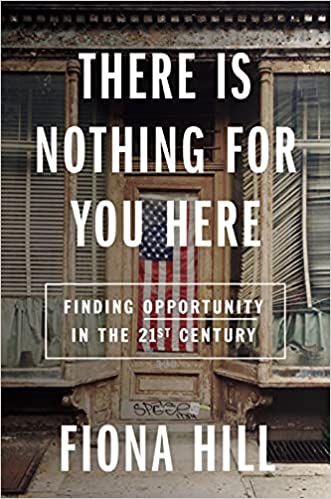
On Tuesday, Hill speaking with Amanpour (photo CNN)
Thursday, September 30, 2011— October’s fullest moon (“Hunter’s”) will rise on the 20th.
In 1991, like so many viewers, I saw on television Anita Hill’s testimony before a judicial selection committee, which consisted of 14 white male Senators, chaired by Senator Joe Biden. That committee was vetting Clarence Thomas for the Supreme Court and listening to Hill’s description of sexual harassment incidences from Thomas. She previously worked for Thomas on the Equal Employment Opportunity Commission.
Hill’s testimony was a first of its kind in a Supreme Court nominee’s hearing. That all-white male panel grilled Hill without mercy, working hard to disregard and dismiss her testimony. Afterwards, the Senate confirmed Thomas’ nomination in a 52-48 vote.
In those days, Hill was a publicity-shy attorney, immersed professionally in arcane aspects of commercial and contract law. After earning a J.D. at Yale in 1980, she primarily focused on legalities associated to her specific areas of interest.
While testifying thirty years ago, Hill appeared unaggressive but direct, seemed personally rather quiet and unassuming. The rumor was that opponents of Thomas’ selection on discovering Hill’s experience had pushed hard for her to appear and testify.
Testifying in 1991
Immediately, Hill’s life changed. She was condemned by many and received death threats. I was incensed by how her testimony had been received, how she had been treated. I wrote a long supportive letter, but couldn’t find a viable address. She was associated with the U. of Oklahoma, so I sent it there, never heard back.
Well, after all, Anita Hill wasn’t so quiet and unassuming. Following her experience, she’s continued moving forward, and today, offers in her new book an expanded understanding of that early 90s experience, its social and legal aspects. Moreover, she has teamed with Christine Blasey Ford, another pained victim of the American judicial selection process. They discuss their experiences, known-injustices to women and other minorities, and speak to changes needed.
Hill’s totally updated, and again in the spotlight as an American lawyer, legal scholar, educator and author. She’s with Brandeis University as a professor of social policy, law, and women’s studies. She’s also on the faculty of that university’s Heller School for Social Policy and Management.
Dear Friends: Hill’s talk with Amanpour, a “don’t miss”, is on streaming and podcast media. Diana
Wednesday, September 29, 2011— October’s fullest moon (“Hunter’s”) will rise on the 20th.
Another rescue, this time a young ring-necked pigeon (“pigeon” is French for dove).
While passing my chicken coop, I saw the chickens pecking at a cornered white object. I looked closely and saw a pigeon. It had flown into a part of my chicken coop entirely fenced except for a small chicken-size opening.
Occasionally, a bird gets through the small door and into that fenced area, immediately becomes anxious, tries to get out. On seeing a trapped bird, I open a people-sized door and encourage the confused captive toward the large opening.
Recently, I saw a Jay bird fly into that all-fenced area and become confused. With its family flying outside, screaming in “Jay-talk”, that bird found the escape. No surprise, for Jays are very smart. Pigeons less so. The one being pecked at had become stunned, was helpless, and couldn’t lift off to fly. Curious chickens pecking at its wounded back were becoming more aggressive.
I rushed inside the coop. My chickens anticipated treats and turned, hurrying to greet me. Inside the more-inner enclosure, I lifted the stunned bird. Besides wishing to help the bird, I happen to like pigeons, gentle non-aggressive birds. My household includes a very sweet pigeon, Gilbert, a rescued racing bird.
Holding the injured pigeon, I left the coop and went to the barn for a “critter carrier”. Took the now-loaded carrier to the garage. After transferring the bird into my parrot’s travel cage, I activated an overhead heat-lamp.
By the time I could locate a bottle of purple spray-on wound disinfectant, the pigeon had awakened and was resistant. Probably it could fly, but best shouldn’t also display the red wound. I sprayed the purple and left the bird to rest an hour under heat. Later it appeared okay.
It fought removal from the cage, but against the gentle pigeon I won. Once we were outside and far from the chicken coop, I lifted my hands. That bird flew mightily away.
Dear Friends: Being at home facilitates rescuing, often very satisfying experiences. Diana
Tuesday, September 28, 2011— October’s fullest moon (“Hunter’s”) will rise on the 20th.
Yesterday’s rain gave this area a much-needed soaking, and today, our chilly high will reach the 50s. Temps during what’s left of this week will be in the 70s for book-perfect weather.
Clearly, we’re into change which fosters mixed feelings. Although becoming used to worrying about weather, how it’s changing and could impact the future, our moment right now brings mixed feelings. We’re enjoying ahead a string of comfortable temps while also anxious about soon-coming very cold weather.
Anyway, I as usual am battling anxiety. It’s an annual “same old”, but it always feels new. For example, a partial list of my, “where is, or are” and “did I do, or not?”
Where are the batteries for heating my coldest-weather jacket? Will the dogs while outside in freezing winds have adequate shelter? How best to alter feeding amounts for horses being far-less exercised? Is now too late to leap-in and try to accomplish all left-overs on my winter-proofing list?
Oh, yeah, how about that danged rooster! Yesterday, he was sporting even fewer feathers and had more exposed bare skin. These are cold nights!
Dear Friends: Another season, a different list, some newer worries, change does this. Diana
Monday, September 27, 2011— October’s fullest moon (“Hunter’s”) will rise on the 20th.
Isn’t this Jersey Giant Rooster a knockout? And how about those extra-long neck and tail feathers?
In sunlight these guys absolutely are beautiful, their black feathers become radiantly iridescent and stunning.
My baby chicks, now about five months old have begun to lay. One, a Jersey Giant, has turned out a rooster. True to breed descriptions he’s a gentle fellow. Recently, the long feathers on his neck have begun disappearing, leaving bald spots. I estimated that cooling weather might have him molting, like my rescued racing pigeon, Gilbert. A couple of times annually, Gilbert, frequently stands, spreads wings, and shakes his body to release what seems billions of feathers.
But uh oh, guess what. Molting isn’t behind Jersey’s situation. Now I see that some of the hens regularly pluck and gobble his gorgeous feathers. Chickens commonly eat feathers, do some plucking and find them on the ground. Most surprising now is Jersey’s casualness about being picked on, plucked at by aggressive hens not satisfied with only a single feather.
Like his neck, Jersey’s tail section shows bald spots.
Previously, I’ve had only one flock of baby chicks. It turned-up two little bantam roosers. The first began breeding and became aggressive toward me. He got re-homed. The second then took over, began breeding, and turned against me. He also got re-homed.
This time, I’m hoping my rooster may stay here living and guarding his hens. Currently we’re facing winter’s approach, and he will need feathering abundant and capable of offsetting frequently-severe cold spells.
Dear Friends: Here’s yet another stumble, into a situation unpredictable and confusing. Diana